SUBSCRIBE TO OUR FREE NEWSLETTER
Daily news & progressive opinion—funded by the people, not the corporations—delivered straight to your inbox.
5
#000000
#FFFFFF
To donate by check, phone, or other method, see our More Ways to Give page.
Daily news & progressive opinion—funded by the people, not the corporations—delivered straight to your inbox.
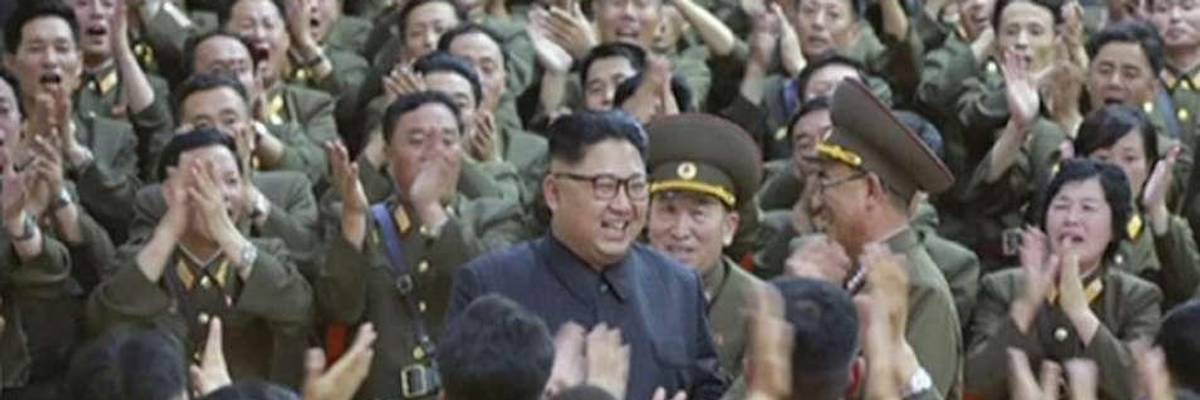
"To leave the world's future in the hands of nationalist blowhards or even prudent practitioners of traditional national statecraft will simply continue the drift toward catastrophe." (Photo: KRT via AP video)
In recent months, advances in the North Korean government's nuclear weapons program have led to a sharp confrontation between the government leaders of the United States and of North Korea. This August, President Donald Trump declared that any more threats from North Korea "will be met with fire and fury like the world has never seen." In turn, Kim Jong Un remarked that he was now contemplating firing nuclear missiles at the U.S. territory of Guam. Heightening the dispute, Trump told the United Nations in mid-September that, if the United States was forced to defend itself or its allies, "we will have no choice but to totally destroy North Korea." Soon thereafter, Trump embellished this with a tweet declaring that North Korea "won't be around much longer."
From the standpoint of heading off nuclear weapons advances by the North Korean regime, this belligerent approach by the U.S. government has shown no signs of success. Every taunt by U.S. officials has drawn a derisive reply from their North Korean counterparts. Indeed, when it comes to nuclear weapons policy, escalating U.S. threats seem to have confirmed the North Korean government's fears of U.S. military attack and, thus, bolstered its determination to enhance its nuclear capabilities. In short, threatening North Korea with destruction has been remarkably counter-productive.
But, leaving aside the wisdom of U.S. policy, why is the U.S. government playing a leading role in this situation at all? The charter of the United Nations, signed by the United States, declares in Article 1 that the United Nations has the responsibility "to maintain international peace and security" and, to that end, is "to take effective collective measures for the prevention and removal of threats to the peace." Not only does the UN charter not grant authority to the United States or any other nation to serve as the guardian of the world, but it declares, in Article 2, that "all members shall refrain in their international relations from the threat or use of force against the territorial integrity or political independence of any state." It's pretty clear that both the U.S. and North Korean governments are violating that injunction.
Moreover, the United Nations is already involved in efforts to limit North Korea's nuclear weapons program. The UN Security Council has not only condemned the behavior of the North Korean government on numerous occasions, but has imposed stiff economic sanctions upon it.
Will further UN action have any more success in dealing with North Korea than the Trump policy has had? Perhaps not, but at least the United Nations would not begin by threatening to incinerate North Korea's 25 million people. Instead, to ease the tense United States-North Korea standoff, the United Nations might offer to serve as a mediator in negotiations. In such negotiations, it could suggest that, in exchange for a halt to the North Korean nuclear weapons program, the United States agree to a peace treaty ending the Korean War of the 1950s and halt U.S. military exercises on North Korea's borders. Giving way to a UN-brokered compromise rather than to U.S. nuclear blackmail might well be appealing to the North Korean government. Meanwhile, the United Nations could keep moving forward with its Treaty on the Prohibition of Nuclear Weapons--a measure both Kim and Trump despise (and might, in their opposition to it, even bring them closer together), but is very appealing to most other countries.
Critics, of course, say that the United Nations is too weak to deal with North Korea or other nations that ignore the will of the world community. And they are not entirely incorrect. Although UN pronouncements and decisions are almost invariably praiseworthy, they are often rendered ineffective by the absence of UN resources and power to enforce them.
But the critics do not follow the logic of their own argument for, if the United Nations is too weak to play a completely satisfactory role in maintaining international peace and security, then the solution is to strengthen it. After all, the answer to international lawlessness is not vigilante action by individual nations but, rather, the strengthening of international law and law enforcement. In the aftermath of the vast chaos and destruction of World War II, that's what the nations of the world claimed they wanted when, in late 1945, they established the United Nations.
Unfortunately, however, as the years passed, the great powers largely abandoned a United Nations-centered strategy based on collective action and world law for the old-fashioned exercise of their own military muscle. Unwilling to accept limits on their national power in world affairs, they and their imitators began engaging in arms races and wars. The current nightmarish nuclear confrontation between the North Korean and U.S. governments is only the latest example of this phenomenon.
Of course, it's not too late to finally recognize that, in a world bristling with nuclear weapons, savage wars, accelerating climate change, rapidly-depleting resources, and growing economic inequality, we need a global entity to take the necessary actions for which no single nation has sufficient legitimacy, power, or resources. And that entity is clearly a strengthened United Nations. To leave the world's future in the hands of nationalist blowhards or even prudent practitioners of traditional national statecraft will simply continue the drift toward catastrophe.
Dear Common Dreams reader, It’s been nearly 30 years since I co-founded Common Dreams with my late wife, Lina Newhouser. We had the radical notion that journalism should serve the public good, not corporate profits. It was clear to us from the outset what it would take to build such a project. No paid advertisements. No corporate sponsors. No millionaire publisher telling us what to think or do. Many people said we wouldn't last a year, but we proved those doubters wrong. Together with a tremendous team of journalists and dedicated staff, we built an independent media outlet free from the constraints of profits and corporate control. Our mission has always been simple: To inform. To inspire. To ignite change for the common good. Building Common Dreams was not easy. Our survival was never guaranteed. When you take on the most powerful forces—Wall Street greed, fossil fuel industry destruction, Big Tech lobbyists, and uber-rich oligarchs who have spent billions upon billions rigging the economy and democracy in their favor—the only bulwark you have is supporters who believe in your work. But here’s the urgent message from me today. It's never been this bad out there. And it's never been this hard to keep us going. At the very moment Common Dreams is most needed, the threats we face are intensifying. We need your support now more than ever. We don't accept corporate advertising and never will. We don't have a paywall because we don't think people should be blocked from critical news based on their ability to pay. Everything we do is funded by the donations of readers like you. When everyone does the little they can afford, we are strong. But if that support retreats or dries up, so do we. Will you donate now to make sure Common Dreams not only survives but thrives? —Craig Brown, Co-founder |
In recent months, advances in the North Korean government's nuclear weapons program have led to a sharp confrontation between the government leaders of the United States and of North Korea. This August, President Donald Trump declared that any more threats from North Korea "will be met with fire and fury like the world has never seen." In turn, Kim Jong Un remarked that he was now contemplating firing nuclear missiles at the U.S. territory of Guam. Heightening the dispute, Trump told the United Nations in mid-September that, if the United States was forced to defend itself or its allies, "we will have no choice but to totally destroy North Korea." Soon thereafter, Trump embellished this with a tweet declaring that North Korea "won't be around much longer."
From the standpoint of heading off nuclear weapons advances by the North Korean regime, this belligerent approach by the U.S. government has shown no signs of success. Every taunt by U.S. officials has drawn a derisive reply from their North Korean counterparts. Indeed, when it comes to nuclear weapons policy, escalating U.S. threats seem to have confirmed the North Korean government's fears of U.S. military attack and, thus, bolstered its determination to enhance its nuclear capabilities. In short, threatening North Korea with destruction has been remarkably counter-productive.
But, leaving aside the wisdom of U.S. policy, why is the U.S. government playing a leading role in this situation at all? The charter of the United Nations, signed by the United States, declares in Article 1 that the United Nations has the responsibility "to maintain international peace and security" and, to that end, is "to take effective collective measures for the prevention and removal of threats to the peace." Not only does the UN charter not grant authority to the United States or any other nation to serve as the guardian of the world, but it declares, in Article 2, that "all members shall refrain in their international relations from the threat or use of force against the territorial integrity or political independence of any state." It's pretty clear that both the U.S. and North Korean governments are violating that injunction.
Moreover, the United Nations is already involved in efforts to limit North Korea's nuclear weapons program. The UN Security Council has not only condemned the behavior of the North Korean government on numerous occasions, but has imposed stiff economic sanctions upon it.
Will further UN action have any more success in dealing with North Korea than the Trump policy has had? Perhaps not, but at least the United Nations would not begin by threatening to incinerate North Korea's 25 million people. Instead, to ease the tense United States-North Korea standoff, the United Nations might offer to serve as a mediator in negotiations. In such negotiations, it could suggest that, in exchange for a halt to the North Korean nuclear weapons program, the United States agree to a peace treaty ending the Korean War of the 1950s and halt U.S. military exercises on North Korea's borders. Giving way to a UN-brokered compromise rather than to U.S. nuclear blackmail might well be appealing to the North Korean government. Meanwhile, the United Nations could keep moving forward with its Treaty on the Prohibition of Nuclear Weapons--a measure both Kim and Trump despise (and might, in their opposition to it, even bring them closer together), but is very appealing to most other countries.
Critics, of course, say that the United Nations is too weak to deal with North Korea or other nations that ignore the will of the world community. And they are not entirely incorrect. Although UN pronouncements and decisions are almost invariably praiseworthy, they are often rendered ineffective by the absence of UN resources and power to enforce them.
But the critics do not follow the logic of their own argument for, if the United Nations is too weak to play a completely satisfactory role in maintaining international peace and security, then the solution is to strengthen it. After all, the answer to international lawlessness is not vigilante action by individual nations but, rather, the strengthening of international law and law enforcement. In the aftermath of the vast chaos and destruction of World War II, that's what the nations of the world claimed they wanted when, in late 1945, they established the United Nations.
Unfortunately, however, as the years passed, the great powers largely abandoned a United Nations-centered strategy based on collective action and world law for the old-fashioned exercise of their own military muscle. Unwilling to accept limits on their national power in world affairs, they and their imitators began engaging in arms races and wars. The current nightmarish nuclear confrontation between the North Korean and U.S. governments is only the latest example of this phenomenon.
Of course, it's not too late to finally recognize that, in a world bristling with nuclear weapons, savage wars, accelerating climate change, rapidly-depleting resources, and growing economic inequality, we need a global entity to take the necessary actions for which no single nation has sufficient legitimacy, power, or resources. And that entity is clearly a strengthened United Nations. To leave the world's future in the hands of nationalist blowhards or even prudent practitioners of traditional national statecraft will simply continue the drift toward catastrophe.
In recent months, advances in the North Korean government's nuclear weapons program have led to a sharp confrontation between the government leaders of the United States and of North Korea. This August, President Donald Trump declared that any more threats from North Korea "will be met with fire and fury like the world has never seen." In turn, Kim Jong Un remarked that he was now contemplating firing nuclear missiles at the U.S. territory of Guam. Heightening the dispute, Trump told the United Nations in mid-September that, if the United States was forced to defend itself or its allies, "we will have no choice but to totally destroy North Korea." Soon thereafter, Trump embellished this with a tweet declaring that North Korea "won't be around much longer."
From the standpoint of heading off nuclear weapons advances by the North Korean regime, this belligerent approach by the U.S. government has shown no signs of success. Every taunt by U.S. officials has drawn a derisive reply from their North Korean counterparts. Indeed, when it comes to nuclear weapons policy, escalating U.S. threats seem to have confirmed the North Korean government's fears of U.S. military attack and, thus, bolstered its determination to enhance its nuclear capabilities. In short, threatening North Korea with destruction has been remarkably counter-productive.
But, leaving aside the wisdom of U.S. policy, why is the U.S. government playing a leading role in this situation at all? The charter of the United Nations, signed by the United States, declares in Article 1 that the United Nations has the responsibility "to maintain international peace and security" and, to that end, is "to take effective collective measures for the prevention and removal of threats to the peace." Not only does the UN charter not grant authority to the United States or any other nation to serve as the guardian of the world, but it declares, in Article 2, that "all members shall refrain in their international relations from the threat or use of force against the territorial integrity or political independence of any state." It's pretty clear that both the U.S. and North Korean governments are violating that injunction.
Moreover, the United Nations is already involved in efforts to limit North Korea's nuclear weapons program. The UN Security Council has not only condemned the behavior of the North Korean government on numerous occasions, but has imposed stiff economic sanctions upon it.
Will further UN action have any more success in dealing with North Korea than the Trump policy has had? Perhaps not, but at least the United Nations would not begin by threatening to incinerate North Korea's 25 million people. Instead, to ease the tense United States-North Korea standoff, the United Nations might offer to serve as a mediator in negotiations. In such negotiations, it could suggest that, in exchange for a halt to the North Korean nuclear weapons program, the United States agree to a peace treaty ending the Korean War of the 1950s and halt U.S. military exercises on North Korea's borders. Giving way to a UN-brokered compromise rather than to U.S. nuclear blackmail might well be appealing to the North Korean government. Meanwhile, the United Nations could keep moving forward with its Treaty on the Prohibition of Nuclear Weapons--a measure both Kim and Trump despise (and might, in their opposition to it, even bring them closer together), but is very appealing to most other countries.
Critics, of course, say that the United Nations is too weak to deal with North Korea or other nations that ignore the will of the world community. And they are not entirely incorrect. Although UN pronouncements and decisions are almost invariably praiseworthy, they are often rendered ineffective by the absence of UN resources and power to enforce them.
But the critics do not follow the logic of their own argument for, if the United Nations is too weak to play a completely satisfactory role in maintaining international peace and security, then the solution is to strengthen it. After all, the answer to international lawlessness is not vigilante action by individual nations but, rather, the strengthening of international law and law enforcement. In the aftermath of the vast chaos and destruction of World War II, that's what the nations of the world claimed they wanted when, in late 1945, they established the United Nations.
Unfortunately, however, as the years passed, the great powers largely abandoned a United Nations-centered strategy based on collective action and world law for the old-fashioned exercise of their own military muscle. Unwilling to accept limits on their national power in world affairs, they and their imitators began engaging in arms races and wars. The current nightmarish nuclear confrontation between the North Korean and U.S. governments is only the latest example of this phenomenon.
Of course, it's not too late to finally recognize that, in a world bristling with nuclear weapons, savage wars, accelerating climate change, rapidly-depleting resources, and growing economic inequality, we need a global entity to take the necessary actions for which no single nation has sufficient legitimacy, power, or resources. And that entity is clearly a strengthened United Nations. To leave the world's future in the hands of nationalist blowhards or even prudent practitioners of traditional national statecraft will simply continue the drift toward catastrophe.