SUBSCRIBE TO OUR FREE NEWSLETTER
Daily news & progressive opinion—funded by the people, not the corporations—delivered straight to your inbox.
5
#000000
#FFFFFF
To donate by check, phone, or other method, see our More Ways to Give page.
Daily news & progressive opinion—funded by the people, not the corporations—delivered straight to your inbox.
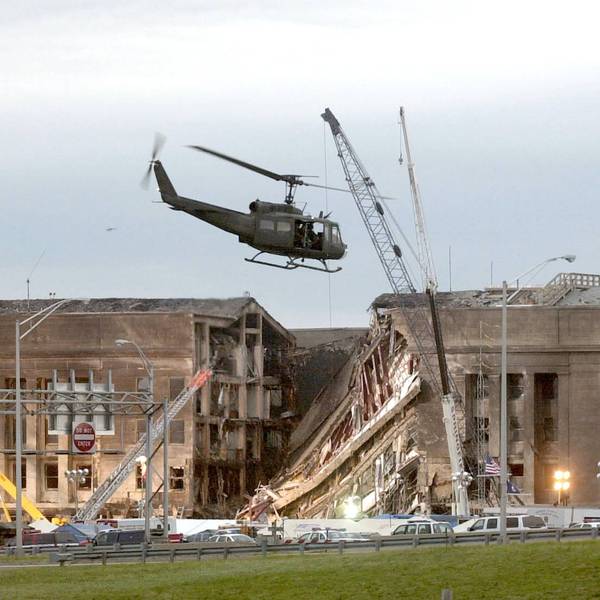
The United States will never forget the September 11th attacks. It is interwoven into the fabric of the nation. Its identity is partially defined by remembering the horror that unfolded that day, but that is part of why a provocative question must be asked: What if America happened to forget the attacks?
For fifteen years, politicians, military leaders, celebrities, corporate executives, as well as the families of those killed on 9/11, have deployed the words "Never Forget" when speaking about the attacks. The words function as a kind of pledge, a loyalty oath to show one's allegiance to the country. Those who do not pledge to "Never Forget" may not be as American as those who openly relive trauma by sharing where they were that day, even if these individuals were nowhere near the World Trade Center or the Pentagon.
Yet, what are people pledging when they reflexively attach these words to memories or statements?
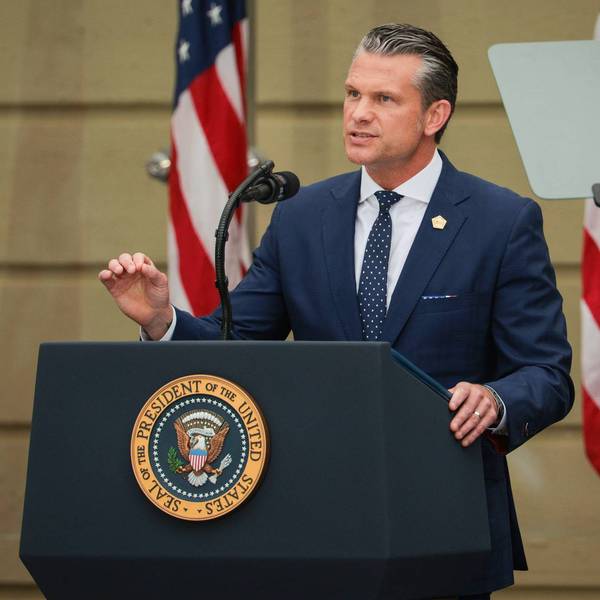
Pentagon Deputy Secretary Bob Work declared at the Pentagon's 9/11 memorial the "enemy" will "fail because all of us as Americans will never forget what we stand for. We will remain steadfast in our determination to stamp out this evil and secure a better future for our children. And we will work together collectively to create a world free from terror and oppression."
Work also said, "We must never allow--never allow--those who were lost to ever fade from our memories...as well as those who have sacrificed in the long wars ever since. And we must continue to allow them to motivate us in our continuing struggle against those who would seek to destroy that which we hold dear."
In other words, "Never Forget" means fighting and supporting endless war in Afghanistan, Iraq, Syria, Libya, Somalia, and Yemen.
For the citizens of these countries, if America forgot 9/11, they might be relieved. It would likely mean an end to much of the carnage they have endured.
The pledge does not allow for reflection on whether war has made Americans safer. It definitely does not allow for reflection on the impact of these wars on the civilian populations of these countries. And if one highlights evidence that war is fueling the extremism, which led to the 9/11 attacks, they are demonized.
Rep. Carolyn Maloney, a congresswoman from New York's 12th District, stated, "'Never Forget' also calls us to remember that we are one nation--and we must remember the way all New Yorkers, and all Americans, came together in the aftermath of this attack on our values and way of life."
This has been expressed by Hillary Clinton, who earlier this year declared, "Americans from every walk of life rallied together with a sense of common purpose on September the 12th. And in the days and weeks and months that followed we had each other's backs." She urged America to "get back to the spirit of those days, the Spirit of 9/12."
Similarly, it was 2009 when radio host Glenn Beck was roundly derided for his 9-12 Project, which he claimed was setup to "bring us all back to the place we were on September 12, 2001," when the country was not obsessed with "red states, blue states, or political parties." Beck believed, "We were united as Americans, standing together to protect the values and principles of the greatest nation ever created" and needed to rekindle that unity.
But the immediate moments after the 9/11 attacks were defined by fear, by threats and vigilante attacks against American Muslims, by declarations of war, by bloodlust calls to avenge the deaths, by policies of torture and indefinite detention, by capturing hundreds of innocent men and depriving them of human rights at Guantanamo, and by the implementation of legislation like the PATRIOT Act, which curtailed civil liberties.
President George W. Bush's declaration, "Either you are with us, or you are with the terrorists," was more emblematic of the moment. In fact, it had bipartisan support. Clinton herself proclaimed on September 12, 2001, "You are either with America in her time of need, or you are not."
"Never Forget" is supposedly a pledge to not allow the deaths on 9/11 to be in vain, but it is not as if America has honored their sacrifice by consulting history so massive deaths do not needlessly occur again. No one is asked to consider the impact of the U.S. funneling arms to extremist groups with members, who have committed deadly acts of terrorism like 9/11. No one is asked to confront U.S. support for dictatorial regimes, which repress their populations.
If one is not convinced that "Never Forget" is merely a jingoistic expression, think of the NFL players, who on the anniversary refrained from showing solidarity with San Francisco 49ers quarterback Colin Kaepernick and protest police brutality. Protesting violence by police is scarcely related to 9/11, and yet anyone kneeling during the national anthem knows they will face vilification perhaps beyond what Kaepernick has endured over the past weeks.
So, let's return to the question: what if America forgot about the September 11th attacks?
It will never happen, but if it ever did, the country would be far less warlike. It would not be a country that felt it was crucial to have 700-1000 military bases around the world. It would be a less fearful nation. It would be more inviting of immigrants and refugees. It would not prejudicially treat thousands of brown-skinned Americans as suspect. And its citizens would not weaponize mourning and appeal to each other to find unity through some shared fear that they may not sufficiently remember a terrible event and through such amnesia make the country vulnerable.
Dear Common Dreams reader, It’s been nearly 30 years since I co-founded Common Dreams with my late wife, Lina Newhouser. We had the radical notion that journalism should serve the public good, not corporate profits. It was clear to us from the outset what it would take to build such a project. No paid advertisements. No corporate sponsors. No millionaire publisher telling us what to think or do. Many people said we wouldn't last a year, but we proved those doubters wrong. Together with a tremendous team of journalists and dedicated staff, we built an independent media outlet free from the constraints of profits and corporate control. Our mission has always been simple: To inform. To inspire. To ignite change for the common good. Building Common Dreams was not easy. Our survival was never guaranteed. When you take on the most powerful forces—Wall Street greed, fossil fuel industry destruction, Big Tech lobbyists, and uber-rich oligarchs who have spent billions upon billions rigging the economy and democracy in their favor—the only bulwark you have is supporters who believe in your work. But here’s the urgent message from me today. It's never been this bad out there. And it's never been this hard to keep us going. At the very moment Common Dreams is most needed, the threats we face are intensifying. We need your support now more than ever. We don't accept corporate advertising and never will. We don't have a paywall because we don't think people should be blocked from critical news based on their ability to pay. Everything we do is funded by the donations of readers like you. When everyone does the little they can afford, we are strong. But if that support retreats or dries up, so do we. Will you donate now to make sure Common Dreams not only survives but thrives? —Craig Brown, Co-founder |
The United States will never forget the September 11th attacks. It is interwoven into the fabric of the nation. Its identity is partially defined by remembering the horror that unfolded that day, but that is part of why a provocative question must be asked: What if America happened to forget the attacks?
For fifteen years, politicians, military leaders, celebrities, corporate executives, as well as the families of those killed on 9/11, have deployed the words "Never Forget" when speaking about the attacks. The words function as a kind of pledge, a loyalty oath to show one's allegiance to the country. Those who do not pledge to "Never Forget" may not be as American as those who openly relive trauma by sharing where they were that day, even if these individuals were nowhere near the World Trade Center or the Pentagon.
Yet, what are people pledging when they reflexively attach these words to memories or statements?
Pentagon Deputy Secretary Bob Work declared at the Pentagon's 9/11 memorial the "enemy" will "fail because all of us as Americans will never forget what we stand for. We will remain steadfast in our determination to stamp out this evil and secure a better future for our children. And we will work together collectively to create a world free from terror and oppression."
Work also said, "We must never allow--never allow--those who were lost to ever fade from our memories...as well as those who have sacrificed in the long wars ever since. And we must continue to allow them to motivate us in our continuing struggle against those who would seek to destroy that which we hold dear."
In other words, "Never Forget" means fighting and supporting endless war in Afghanistan, Iraq, Syria, Libya, Somalia, and Yemen.
For the citizens of these countries, if America forgot 9/11, they might be relieved. It would likely mean an end to much of the carnage they have endured.
The pledge does not allow for reflection on whether war has made Americans safer. It definitely does not allow for reflection on the impact of these wars on the civilian populations of these countries. And if one highlights evidence that war is fueling the extremism, which led to the 9/11 attacks, they are demonized.
Rep. Carolyn Maloney, a congresswoman from New York's 12th District, stated, "'Never Forget' also calls us to remember that we are one nation--and we must remember the way all New Yorkers, and all Americans, came together in the aftermath of this attack on our values and way of life."
This has been expressed by Hillary Clinton, who earlier this year declared, "Americans from every walk of life rallied together with a sense of common purpose on September the 12th. And in the days and weeks and months that followed we had each other's backs." She urged America to "get back to the spirit of those days, the Spirit of 9/12."
Similarly, it was 2009 when radio host Glenn Beck was roundly derided for his 9-12 Project, which he claimed was setup to "bring us all back to the place we were on September 12, 2001," when the country was not obsessed with "red states, blue states, or political parties." Beck believed, "We were united as Americans, standing together to protect the values and principles of the greatest nation ever created" and needed to rekindle that unity.
But the immediate moments after the 9/11 attacks were defined by fear, by threats and vigilante attacks against American Muslims, by declarations of war, by bloodlust calls to avenge the deaths, by policies of torture and indefinite detention, by capturing hundreds of innocent men and depriving them of human rights at Guantanamo, and by the implementation of legislation like the PATRIOT Act, which curtailed civil liberties.
President George W. Bush's declaration, "Either you are with us, or you are with the terrorists," was more emblematic of the moment. In fact, it had bipartisan support. Clinton herself proclaimed on September 12, 2001, "You are either with America in her time of need, or you are not."
"Never Forget" is supposedly a pledge to not allow the deaths on 9/11 to be in vain, but it is not as if America has honored their sacrifice by consulting history so massive deaths do not needlessly occur again. No one is asked to consider the impact of the U.S. funneling arms to extremist groups with members, who have committed deadly acts of terrorism like 9/11. No one is asked to confront U.S. support for dictatorial regimes, which repress their populations.
If one is not convinced that "Never Forget" is merely a jingoistic expression, think of the NFL players, who on the anniversary refrained from showing solidarity with San Francisco 49ers quarterback Colin Kaepernick and protest police brutality. Protesting violence by police is scarcely related to 9/11, and yet anyone kneeling during the national anthem knows they will face vilification perhaps beyond what Kaepernick has endured over the past weeks.
So, let's return to the question: what if America forgot about the September 11th attacks?
It will never happen, but if it ever did, the country would be far less warlike. It would not be a country that felt it was crucial to have 700-1000 military bases around the world. It would be a less fearful nation. It would be more inviting of immigrants and refugees. It would not prejudicially treat thousands of brown-skinned Americans as suspect. And its citizens would not weaponize mourning and appeal to each other to find unity through some shared fear that they may not sufficiently remember a terrible event and through such amnesia make the country vulnerable.
The United States will never forget the September 11th attacks. It is interwoven into the fabric of the nation. Its identity is partially defined by remembering the horror that unfolded that day, but that is part of why a provocative question must be asked: What if America happened to forget the attacks?
For fifteen years, politicians, military leaders, celebrities, corporate executives, as well as the families of those killed on 9/11, have deployed the words "Never Forget" when speaking about the attacks. The words function as a kind of pledge, a loyalty oath to show one's allegiance to the country. Those who do not pledge to "Never Forget" may not be as American as those who openly relive trauma by sharing where they were that day, even if these individuals were nowhere near the World Trade Center or the Pentagon.
Yet, what are people pledging when they reflexively attach these words to memories or statements?
Pentagon Deputy Secretary Bob Work declared at the Pentagon's 9/11 memorial the "enemy" will "fail because all of us as Americans will never forget what we stand for. We will remain steadfast in our determination to stamp out this evil and secure a better future for our children. And we will work together collectively to create a world free from terror and oppression."
Work also said, "We must never allow--never allow--those who were lost to ever fade from our memories...as well as those who have sacrificed in the long wars ever since. And we must continue to allow them to motivate us in our continuing struggle against those who would seek to destroy that which we hold dear."
In other words, "Never Forget" means fighting and supporting endless war in Afghanistan, Iraq, Syria, Libya, Somalia, and Yemen.
For the citizens of these countries, if America forgot 9/11, they might be relieved. It would likely mean an end to much of the carnage they have endured.
The pledge does not allow for reflection on whether war has made Americans safer. It definitely does not allow for reflection on the impact of these wars on the civilian populations of these countries. And if one highlights evidence that war is fueling the extremism, which led to the 9/11 attacks, they are demonized.
Rep. Carolyn Maloney, a congresswoman from New York's 12th District, stated, "'Never Forget' also calls us to remember that we are one nation--and we must remember the way all New Yorkers, and all Americans, came together in the aftermath of this attack on our values and way of life."
This has been expressed by Hillary Clinton, who earlier this year declared, "Americans from every walk of life rallied together with a sense of common purpose on September the 12th. And in the days and weeks and months that followed we had each other's backs." She urged America to "get back to the spirit of those days, the Spirit of 9/12."
Similarly, it was 2009 when radio host Glenn Beck was roundly derided for his 9-12 Project, which he claimed was setup to "bring us all back to the place we were on September 12, 2001," when the country was not obsessed with "red states, blue states, or political parties." Beck believed, "We were united as Americans, standing together to protect the values and principles of the greatest nation ever created" and needed to rekindle that unity.
But the immediate moments after the 9/11 attacks were defined by fear, by threats and vigilante attacks against American Muslims, by declarations of war, by bloodlust calls to avenge the deaths, by policies of torture and indefinite detention, by capturing hundreds of innocent men and depriving them of human rights at Guantanamo, and by the implementation of legislation like the PATRIOT Act, which curtailed civil liberties.
President George W. Bush's declaration, "Either you are with us, or you are with the terrorists," was more emblematic of the moment. In fact, it had bipartisan support. Clinton herself proclaimed on September 12, 2001, "You are either with America in her time of need, or you are not."
"Never Forget" is supposedly a pledge to not allow the deaths on 9/11 to be in vain, but it is not as if America has honored their sacrifice by consulting history so massive deaths do not needlessly occur again. No one is asked to consider the impact of the U.S. funneling arms to extremist groups with members, who have committed deadly acts of terrorism like 9/11. No one is asked to confront U.S. support for dictatorial regimes, which repress their populations.
If one is not convinced that "Never Forget" is merely a jingoistic expression, think of the NFL players, who on the anniversary refrained from showing solidarity with San Francisco 49ers quarterback Colin Kaepernick and protest police brutality. Protesting violence by police is scarcely related to 9/11, and yet anyone kneeling during the national anthem knows they will face vilification perhaps beyond what Kaepernick has endured over the past weeks.
So, let's return to the question: what if America forgot about the September 11th attacks?
It will never happen, but if it ever did, the country would be far less warlike. It would not be a country that felt it was crucial to have 700-1000 military bases around the world. It would be a less fearful nation. It would be more inviting of immigrants and refugees. It would not prejudicially treat thousands of brown-skinned Americans as suspect. And its citizens would not weaponize mourning and appeal to each other to find unity through some shared fear that they may not sufficiently remember a terrible event and through such amnesia make the country vulnerable.