SUBSCRIBE TO OUR FREE NEWSLETTER
Daily news & progressive opinion—funded by the people, not the corporations—delivered straight to your inbox.
5
#000000
#FFFFFF
To donate by check, phone, or other method, see our More Ways to Give page.
Daily news & progressive opinion—funded by the people, not the corporations—delivered straight to your inbox.
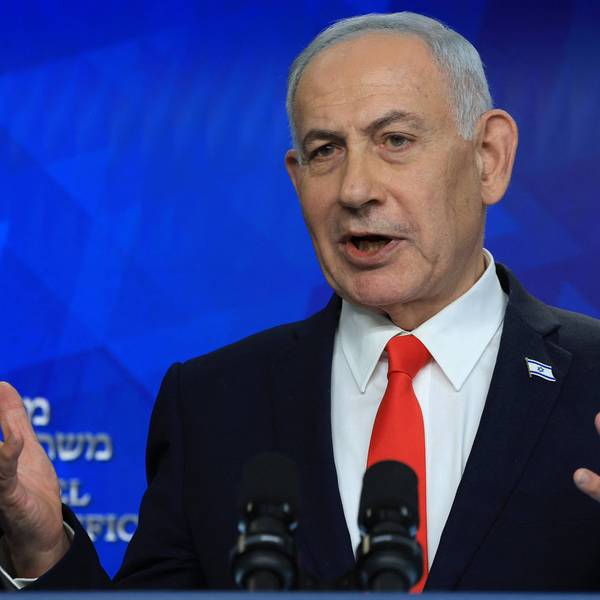
Almost two weeks have passed since Israeli Prime Minister Benjamin Netanyahu's intensely controversial address to Congress, but the dust has not yet settled. The response to the speech is a reflection of growing resentment toward Israeli policies and the power of its lobby in the U.S., but it is also clear that there is a long way to go before the substance of Israel's policies toward Palestinians and belligerent stance toward Iran are meaningfully debated in Congress.
In the weeks leading up to the speech, there was harsh criticism of Netanyahu and Speaker John Boehner (R-Ohio) for engineering Netanyahu's appearance in Congress, accompanied by accelerating numbers of Democratic lawmakers deciding to skip the speech. But the reception afterward was even more bitterly partisan.
Of special note were the comments of two leading Democrats who are strong allies of Israel. After attending the speech, House Minority Leader Nancy Pelosi (D-Calif.) released a statement that said, in part, "I was near tears throughout the Prime Minister's speech -- saddened by the insult to the intelligence of the United States as part of the P5+1 [the U.N. Security Council and Germany] nations, and saddened by the condescension toward our knowledge of the threat." Last Sunday on "Meet the Press," Sen. Dianne Feinstein (D-Calif.), who also attended, said that "[the speech] is something that no ally of the United States would have done. I find it humiliating, embarrassing and very arrogant."
These are extraordinary statements that illustrate how deeply Netanyahu's appearance in Congress and his bellicose language offended even stalwart friends. But all of the critiques focused only on Netanyahu's insult to the American political process. His gibes about negotiating in a "Persian bazaar" and his evocative language about Iran "gobbling up" surrounding countries with its "tentacles of terror" deployed Islamophobic tropes that should have been equally offensive to all members of Congress, who represent a Muslim-American community of roughly equal size to the Jewish-American community.
When Netanyahu returned to Israel, he doubled down on his warmongering stance, repeatedly making comments that negotiations toward a two-state solution are not currently relevant. As the Israeli election season moves into its final days, the leading candidates of the larger Jewish Israeli parties are competing with one another to demonstrate their right-wing bona fides, ranging from Foreign Minister Avigdor Lieberman's appalling suggestion that Palestinian citizens of Israel he deems disloyal be beheaded to the Zionist Camp party's Tzipi Livni assailing Netanyahu's cease-fire this summer with Hamas because, she says, the only way to deal with Hamas is by force. And then there is "center leftist" Isaac Herzog, seen as the peace-seeking alternative in the election, who is speaking out against the Palestinians turning to the International Criminal Court and refusing to take a stand on a settlement freeze.
With no party that can credibly be expected to form a coalition government in Israel proposing any significantly new approach to moving toward an agreement with the Palestinians, whether the speech marks a shift in what will be considered politically appropriate criticism of Israel is still an open question. As Rabbi Eric Yoffie noted in Haaretz, the American Jewish community is "especially concerned that the partisan atmosphere that the speech has sparked and legitimized will drive away Democrats and progressives who have always been a mainstay of the pro-Israel coalition."
The fact that approximately 60 legislators skipped the speech was an unprecedented break in the bipartisan consensus on Israel. But while these lawmakers almost unanimously framed their actions as a signal of their displeasure with the attempt to undermine the president and interfere in U.S. foreign policy, Israeli policies of military control, unequal rights and institutionalized discrimination against Palestinians were not even part of the discussion.
Netanyahu's rhetoric was as bombastic and hypocritical as we've come to expect from him, and the anger toward him was understandably personal. But in fact the issue goes beyond the politics of the personal. Netanyahu is the representative of a government which, regardless of which party is in power, is committed to expanding settlements and maintaining privileged status for Jews at the expense of Palestinians in almost every element of the law. When will U.S. lawmakers address not only Netanyahu's personal behavior, but the Israeli policies that he so vociferously promotes? And even further, when will lawmakers grapple with how U.S. economic, diplomatic and military aid enables Israel to maintain its nearly 48-year-long occupation and human rights violations of Palestinians?
While there is a possibility of the conversation moving forward, there is an equal possibility of it being driven backward. It is well known that AIPAC and other Israel advocacy organizations press their objectives through fear, enforcing their policy prescriptions through political and financial pressure. Whether they are able to enforce this level of discipline on the large numbers of members of Congress who skipped the speech will be an indicator of how deeply the political currents have actually shifted.
This is a moment of opportunity. For those of us who care about a just peace for Israelis and Palestinians, we will need to support those who took a stand and work to expand the newly open conversation about the U.S.-Israel relationship to ensure it includes the rights of Palestinians.
Dear Common Dreams reader, It’s been nearly 30 years since I co-founded Common Dreams with my late wife, Lina Newhouser. We had the radical notion that journalism should serve the public good, not corporate profits. It was clear to us from the outset what it would take to build such a project. No paid advertisements. No corporate sponsors. No millionaire publisher telling us what to think or do. Many people said we wouldn't last a year, but we proved those doubters wrong. Together with a tremendous team of journalists and dedicated staff, we built an independent media outlet free from the constraints of profits and corporate control. Our mission has always been simple: To inform. To inspire. To ignite change for the common good. Building Common Dreams was not easy. Our survival was never guaranteed. When you take on the most powerful forces—Wall Street greed, fossil fuel industry destruction, Big Tech lobbyists, and uber-rich oligarchs who have spent billions upon billions rigging the economy and democracy in their favor—the only bulwark you have is supporters who believe in your work. But here’s the urgent message from me today. It's never been this bad out there. And it's never been this hard to keep us going. At the very moment Common Dreams is most needed, the threats we face are intensifying. We need your support now more than ever. We don't accept corporate advertising and never will. We don't have a paywall because we don't think people should be blocked from critical news based on their ability to pay. Everything we do is funded by the donations of readers like you. When everyone does the little they can afford, we are strong. But if that support retreats or dries up, so do we. Will you donate now to make sure Common Dreams not only survives but thrives? —Craig Brown, Co-founder |
Almost two weeks have passed since Israeli Prime Minister Benjamin Netanyahu's intensely controversial address to Congress, but the dust has not yet settled. The response to the speech is a reflection of growing resentment toward Israeli policies and the power of its lobby in the U.S., but it is also clear that there is a long way to go before the substance of Israel's policies toward Palestinians and belligerent stance toward Iran are meaningfully debated in Congress.
In the weeks leading up to the speech, there was harsh criticism of Netanyahu and Speaker John Boehner (R-Ohio) for engineering Netanyahu's appearance in Congress, accompanied by accelerating numbers of Democratic lawmakers deciding to skip the speech. But the reception afterward was even more bitterly partisan.
Of special note were the comments of two leading Democrats who are strong allies of Israel. After attending the speech, House Minority Leader Nancy Pelosi (D-Calif.) released a statement that said, in part, "I was near tears throughout the Prime Minister's speech -- saddened by the insult to the intelligence of the United States as part of the P5+1 [the U.N. Security Council and Germany] nations, and saddened by the condescension toward our knowledge of the threat." Last Sunday on "Meet the Press," Sen. Dianne Feinstein (D-Calif.), who also attended, said that "[the speech] is something that no ally of the United States would have done. I find it humiliating, embarrassing and very arrogant."
These are extraordinary statements that illustrate how deeply Netanyahu's appearance in Congress and his bellicose language offended even stalwart friends. But all of the critiques focused only on Netanyahu's insult to the American political process. His gibes about negotiating in a "Persian bazaar" and his evocative language about Iran "gobbling up" surrounding countries with its "tentacles of terror" deployed Islamophobic tropes that should have been equally offensive to all members of Congress, who represent a Muslim-American community of roughly equal size to the Jewish-American community.
When Netanyahu returned to Israel, he doubled down on his warmongering stance, repeatedly making comments that negotiations toward a two-state solution are not currently relevant. As the Israeli election season moves into its final days, the leading candidates of the larger Jewish Israeli parties are competing with one another to demonstrate their right-wing bona fides, ranging from Foreign Minister Avigdor Lieberman's appalling suggestion that Palestinian citizens of Israel he deems disloyal be beheaded to the Zionist Camp party's Tzipi Livni assailing Netanyahu's cease-fire this summer with Hamas because, she says, the only way to deal with Hamas is by force. And then there is "center leftist" Isaac Herzog, seen as the peace-seeking alternative in the election, who is speaking out against the Palestinians turning to the International Criminal Court and refusing to take a stand on a settlement freeze.
With no party that can credibly be expected to form a coalition government in Israel proposing any significantly new approach to moving toward an agreement with the Palestinians, whether the speech marks a shift in what will be considered politically appropriate criticism of Israel is still an open question. As Rabbi Eric Yoffie noted in Haaretz, the American Jewish community is "especially concerned that the partisan atmosphere that the speech has sparked and legitimized will drive away Democrats and progressives who have always been a mainstay of the pro-Israel coalition."
The fact that approximately 60 legislators skipped the speech was an unprecedented break in the bipartisan consensus on Israel. But while these lawmakers almost unanimously framed their actions as a signal of their displeasure with the attempt to undermine the president and interfere in U.S. foreign policy, Israeli policies of military control, unequal rights and institutionalized discrimination against Palestinians were not even part of the discussion.
Netanyahu's rhetoric was as bombastic and hypocritical as we've come to expect from him, and the anger toward him was understandably personal. But in fact the issue goes beyond the politics of the personal. Netanyahu is the representative of a government which, regardless of which party is in power, is committed to expanding settlements and maintaining privileged status for Jews at the expense of Palestinians in almost every element of the law. When will U.S. lawmakers address not only Netanyahu's personal behavior, but the Israeli policies that he so vociferously promotes? And even further, when will lawmakers grapple with how U.S. economic, diplomatic and military aid enables Israel to maintain its nearly 48-year-long occupation and human rights violations of Palestinians?
While there is a possibility of the conversation moving forward, there is an equal possibility of it being driven backward. It is well known that AIPAC and other Israel advocacy organizations press their objectives through fear, enforcing their policy prescriptions through political and financial pressure. Whether they are able to enforce this level of discipline on the large numbers of members of Congress who skipped the speech will be an indicator of how deeply the political currents have actually shifted.
This is a moment of opportunity. For those of us who care about a just peace for Israelis and Palestinians, we will need to support those who took a stand and work to expand the newly open conversation about the U.S.-Israel relationship to ensure it includes the rights of Palestinians.
Almost two weeks have passed since Israeli Prime Minister Benjamin Netanyahu's intensely controversial address to Congress, but the dust has not yet settled. The response to the speech is a reflection of growing resentment toward Israeli policies and the power of its lobby in the U.S., but it is also clear that there is a long way to go before the substance of Israel's policies toward Palestinians and belligerent stance toward Iran are meaningfully debated in Congress.
In the weeks leading up to the speech, there was harsh criticism of Netanyahu and Speaker John Boehner (R-Ohio) for engineering Netanyahu's appearance in Congress, accompanied by accelerating numbers of Democratic lawmakers deciding to skip the speech. But the reception afterward was even more bitterly partisan.
Of special note were the comments of two leading Democrats who are strong allies of Israel. After attending the speech, House Minority Leader Nancy Pelosi (D-Calif.) released a statement that said, in part, "I was near tears throughout the Prime Minister's speech -- saddened by the insult to the intelligence of the United States as part of the P5+1 [the U.N. Security Council and Germany] nations, and saddened by the condescension toward our knowledge of the threat." Last Sunday on "Meet the Press," Sen. Dianne Feinstein (D-Calif.), who also attended, said that "[the speech] is something that no ally of the United States would have done. I find it humiliating, embarrassing and very arrogant."
These are extraordinary statements that illustrate how deeply Netanyahu's appearance in Congress and his bellicose language offended even stalwart friends. But all of the critiques focused only on Netanyahu's insult to the American political process. His gibes about negotiating in a "Persian bazaar" and his evocative language about Iran "gobbling up" surrounding countries with its "tentacles of terror" deployed Islamophobic tropes that should have been equally offensive to all members of Congress, who represent a Muslim-American community of roughly equal size to the Jewish-American community.
When Netanyahu returned to Israel, he doubled down on his warmongering stance, repeatedly making comments that negotiations toward a two-state solution are not currently relevant. As the Israeli election season moves into its final days, the leading candidates of the larger Jewish Israeli parties are competing with one another to demonstrate their right-wing bona fides, ranging from Foreign Minister Avigdor Lieberman's appalling suggestion that Palestinian citizens of Israel he deems disloyal be beheaded to the Zionist Camp party's Tzipi Livni assailing Netanyahu's cease-fire this summer with Hamas because, she says, the only way to deal with Hamas is by force. And then there is "center leftist" Isaac Herzog, seen as the peace-seeking alternative in the election, who is speaking out against the Palestinians turning to the International Criminal Court and refusing to take a stand on a settlement freeze.
With no party that can credibly be expected to form a coalition government in Israel proposing any significantly new approach to moving toward an agreement with the Palestinians, whether the speech marks a shift in what will be considered politically appropriate criticism of Israel is still an open question. As Rabbi Eric Yoffie noted in Haaretz, the American Jewish community is "especially concerned that the partisan atmosphere that the speech has sparked and legitimized will drive away Democrats and progressives who have always been a mainstay of the pro-Israel coalition."
The fact that approximately 60 legislators skipped the speech was an unprecedented break in the bipartisan consensus on Israel. But while these lawmakers almost unanimously framed their actions as a signal of their displeasure with the attempt to undermine the president and interfere in U.S. foreign policy, Israeli policies of military control, unequal rights and institutionalized discrimination against Palestinians were not even part of the discussion.
Netanyahu's rhetoric was as bombastic and hypocritical as we've come to expect from him, and the anger toward him was understandably personal. But in fact the issue goes beyond the politics of the personal. Netanyahu is the representative of a government which, regardless of which party is in power, is committed to expanding settlements and maintaining privileged status for Jews at the expense of Palestinians in almost every element of the law. When will U.S. lawmakers address not only Netanyahu's personal behavior, but the Israeli policies that he so vociferously promotes? And even further, when will lawmakers grapple with how U.S. economic, diplomatic and military aid enables Israel to maintain its nearly 48-year-long occupation and human rights violations of Palestinians?
While there is a possibility of the conversation moving forward, there is an equal possibility of it being driven backward. It is well known that AIPAC and other Israel advocacy organizations press their objectives through fear, enforcing their policy prescriptions through political and financial pressure. Whether they are able to enforce this level of discipline on the large numbers of members of Congress who skipped the speech will be an indicator of how deeply the political currents have actually shifted.
This is a moment of opportunity. For those of us who care about a just peace for Israelis and Palestinians, we will need to support those who took a stand and work to expand the newly open conversation about the U.S.-Israel relationship to ensure it includes the rights of Palestinians.