SUBSCRIBE TO OUR FREE NEWSLETTER
Daily news & progressive opinion—funded by the people, not the corporations—delivered straight to your inbox.
5
#000000
#FFFFFF
To donate by check, phone, or other method, see our More Ways to Give page.
Daily news & progressive opinion—funded by the people, not the corporations—delivered straight to your inbox.
Reports in Israeli and Palestinian media say that the two Palestinian resistance groups Hamas and Islamic Jihad have set forth ten conditions for a ceasefire and ten-year truce with Israel.
Israel's Maariv said that an unnamed "senior Palestinian official" passed it a copy of the demands, which have been transmitted by the factions to Egypt.
Reports in Israeli and Palestinian media say that the two Palestinian resistance groups Hamas and Islamic Jihad have set forth ten conditions for a ceasefire and ten-year truce with Israel.
Israel's Maariv said that an unnamed "senior Palestinian official" passed it a copy of the demands, which have been transmitted by the factions to Egypt.
They include an end to all armed hostilities, the end of the siege of Gaza, and the construction of internationally supervised air and seaports.
While Hamas has not as yet officially stated these demands, they are in line with the group's long-standing policy of offering Israel a multi-year truce.
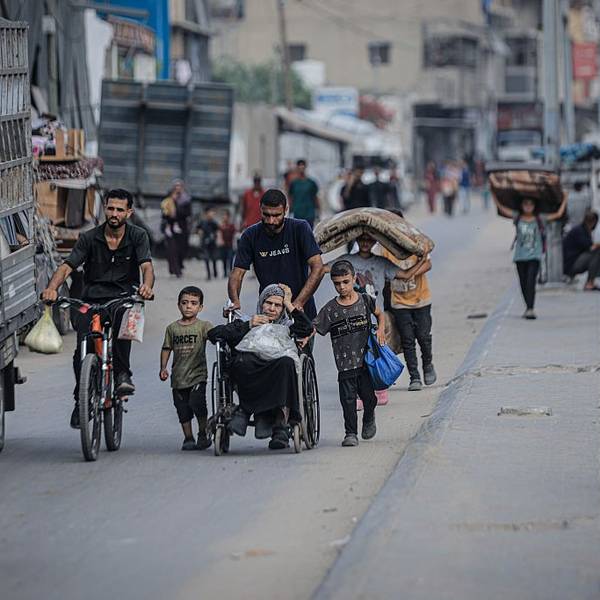
The reported conditions come after nine days of Israeli bombardment of the Gaza Strip that has killed more than 200 people, injured close to 1,400, and destroyed the homes of 8,200 others. Almost 80 percent of the dead, who include more than thirty children, are civilians, according to the UN.
Yesterday, Hamas refused to respond to a unilateral "ceasefire" declared by Israel that would have left the situation of siege on the Gaza Strip unchanged.
The ten conditions were translated by The Electronic Intifada from an Arabic version published by Ma'an News Agency:
Mutual cessation of the war and withdrawal of tanks to previous locations and the return of farmers to work their land in the agricultural border areas.
Release of all the Palestinians detained since 23 June 2014 and improvement of the conditions of Palestinian prisoners, especially the prisoners from Jerusalem, Gaza and Palestinians of the interior [present-day Israel].
Total lifting of the siege of Gaza and opening the border crossings to goods and people and allowing in all food and industrial supplies and construction of a power plant sufficient to supply all of Gaza.
Construction of an international seaport and an international airport supervised by the UN and non-biased countries.
Expansion of the maritime fishing zone to 10 kms and supplying fishermen with larger fishing and cargo vessels.
Converting the Rafah crossing into an international crossing under supervision of the UN and Arab and friendly countries.
Signing a 10-year truce agreement and deployment of international monitors to the borders.
A commitment by the occupation government not to violate Palestinian airspace and easing of conditions for worshipers in al-Aqsa mosque.
The occupation will not interfere in the affairs of the Palestinian government and will not hinder national reconciliation.
Restoration of the border industrial areas and their protection and development.
Dr. Ramy Abdu, chair of the independent group Euro-Mid Observer for Human Rights (euromid.org), told The Electronic Intifada from Gaza City this morning:
I believe that these requirements should have been met years ago. The core of these requirements are not political but purely humanitarian and legally binding. The international community has called many times for their implementation. Palestinians have the right to move in and out freely like others in the world. They have the right to import and export, to control their borders and airspace. Israel argues that it left Gaza, so it should stop controlling the lives of Palestinians.
Abdu noted that his organization recently published a detailed proposal to establish a maritime link from Gaza to the rest of the world with an international role that could "alleviate security concerns."
Dear Common Dreams reader, It’s been nearly 30 years since I co-founded Common Dreams with my late wife, Lina Newhouser. We had the radical notion that journalism should serve the public good, not corporate profits. It was clear to us from the outset what it would take to build such a project. No paid advertisements. No corporate sponsors. No millionaire publisher telling us what to think or do. Many people said we wouldn't last a year, but we proved those doubters wrong. Together with a tremendous team of journalists and dedicated staff, we built an independent media outlet free from the constraints of profits and corporate control. Our mission has always been simple: To inform. To inspire. To ignite change for the common good. Building Common Dreams was not easy. Our survival was never guaranteed. When you take on the most powerful forces—Wall Street greed, fossil fuel industry destruction, Big Tech lobbyists, and uber-rich oligarchs who have spent billions upon billions rigging the economy and democracy in their favor—the only bulwark you have is supporters who believe in your work. But here’s the urgent message from me today. It's never been this bad out there. And it's never been this hard to keep us going. At the very moment Common Dreams is most needed, the threats we face are intensifying. We need your support now more than ever. We don't accept corporate advertising and never will. We don't have a paywall because we don't think people should be blocked from critical news based on their ability to pay. Everything we do is funded by the donations of readers like you. When everyone does the little they can afford, we are strong. But if that support retreats or dries up, so do we. Will you donate now to make sure Common Dreams not only survives but thrives? —Craig Brown, Co-founder |
Reports in Israeli and Palestinian media say that the two Palestinian resistance groups Hamas and Islamic Jihad have set forth ten conditions for a ceasefire and ten-year truce with Israel.
Israel's Maariv said that an unnamed "senior Palestinian official" passed it a copy of the demands, which have been transmitted by the factions to Egypt.
They include an end to all armed hostilities, the end of the siege of Gaza, and the construction of internationally supervised air and seaports.
While Hamas has not as yet officially stated these demands, they are in line with the group's long-standing policy of offering Israel a multi-year truce.
The reported conditions come after nine days of Israeli bombardment of the Gaza Strip that has killed more than 200 people, injured close to 1,400, and destroyed the homes of 8,200 others. Almost 80 percent of the dead, who include more than thirty children, are civilians, according to the UN.
Yesterday, Hamas refused to respond to a unilateral "ceasefire" declared by Israel that would have left the situation of siege on the Gaza Strip unchanged.
The ten conditions were translated by The Electronic Intifada from an Arabic version published by Ma'an News Agency:
Mutual cessation of the war and withdrawal of tanks to previous locations and the return of farmers to work their land in the agricultural border areas.
Release of all the Palestinians detained since 23 June 2014 and improvement of the conditions of Palestinian prisoners, especially the prisoners from Jerusalem, Gaza and Palestinians of the interior [present-day Israel].
Total lifting of the siege of Gaza and opening the border crossings to goods and people and allowing in all food and industrial supplies and construction of a power plant sufficient to supply all of Gaza.
Construction of an international seaport and an international airport supervised by the UN and non-biased countries.
Expansion of the maritime fishing zone to 10 kms and supplying fishermen with larger fishing and cargo vessels.
Converting the Rafah crossing into an international crossing under supervision of the UN and Arab and friendly countries.
Signing a 10-year truce agreement and deployment of international monitors to the borders.
A commitment by the occupation government not to violate Palestinian airspace and easing of conditions for worshipers in al-Aqsa mosque.
The occupation will not interfere in the affairs of the Palestinian government and will not hinder national reconciliation.
Restoration of the border industrial areas and their protection and development.
Dr. Ramy Abdu, chair of the independent group Euro-Mid Observer for Human Rights (euromid.org), told The Electronic Intifada from Gaza City this morning:
I believe that these requirements should have been met years ago. The core of these requirements are not political but purely humanitarian and legally binding. The international community has called many times for their implementation. Palestinians have the right to move in and out freely like others in the world. They have the right to import and export, to control their borders and airspace. Israel argues that it left Gaza, so it should stop controlling the lives of Palestinians.
Abdu noted that his organization recently published a detailed proposal to establish a maritime link from Gaza to the rest of the world with an international role that could "alleviate security concerns."
Reports in Israeli and Palestinian media say that the two Palestinian resistance groups Hamas and Islamic Jihad have set forth ten conditions for a ceasefire and ten-year truce with Israel.
Israel's Maariv said that an unnamed "senior Palestinian official" passed it a copy of the demands, which have been transmitted by the factions to Egypt.
They include an end to all armed hostilities, the end of the siege of Gaza, and the construction of internationally supervised air and seaports.
While Hamas has not as yet officially stated these demands, they are in line with the group's long-standing policy of offering Israel a multi-year truce.
The reported conditions come after nine days of Israeli bombardment of the Gaza Strip that has killed more than 200 people, injured close to 1,400, and destroyed the homes of 8,200 others. Almost 80 percent of the dead, who include more than thirty children, are civilians, according to the UN.
Yesterday, Hamas refused to respond to a unilateral "ceasefire" declared by Israel that would have left the situation of siege on the Gaza Strip unchanged.
The ten conditions were translated by The Electronic Intifada from an Arabic version published by Ma'an News Agency:
Mutual cessation of the war and withdrawal of tanks to previous locations and the return of farmers to work their land in the agricultural border areas.
Release of all the Palestinians detained since 23 June 2014 and improvement of the conditions of Palestinian prisoners, especially the prisoners from Jerusalem, Gaza and Palestinians of the interior [present-day Israel].
Total lifting of the siege of Gaza and opening the border crossings to goods and people and allowing in all food and industrial supplies and construction of a power plant sufficient to supply all of Gaza.
Construction of an international seaport and an international airport supervised by the UN and non-biased countries.
Expansion of the maritime fishing zone to 10 kms and supplying fishermen with larger fishing and cargo vessels.
Converting the Rafah crossing into an international crossing under supervision of the UN and Arab and friendly countries.
Signing a 10-year truce agreement and deployment of international monitors to the borders.
A commitment by the occupation government not to violate Palestinian airspace and easing of conditions for worshipers in al-Aqsa mosque.
The occupation will not interfere in the affairs of the Palestinian government and will not hinder national reconciliation.
Restoration of the border industrial areas and their protection and development.
Dr. Ramy Abdu, chair of the independent group Euro-Mid Observer for Human Rights (euromid.org), told The Electronic Intifada from Gaza City this morning:
I believe that these requirements should have been met years ago. The core of these requirements are not political but purely humanitarian and legally binding. The international community has called many times for their implementation. Palestinians have the right to move in and out freely like others in the world. They have the right to import and export, to control their borders and airspace. Israel argues that it left Gaza, so it should stop controlling the lives of Palestinians.
Abdu noted that his organization recently published a detailed proposal to establish a maritime link from Gaza to the rest of the world with an international role that could "alleviate security concerns."