SUBSCRIBE TO OUR FREE NEWSLETTER
Daily news & progressive opinion—funded by the people, not the corporations—delivered straight to your inbox.
5
#000000
#FFFFFF
To donate by check, phone, or other method, see our More Ways to Give page.
The Olympian is a difficult foe to oppose.
-- Homer, The Iliad
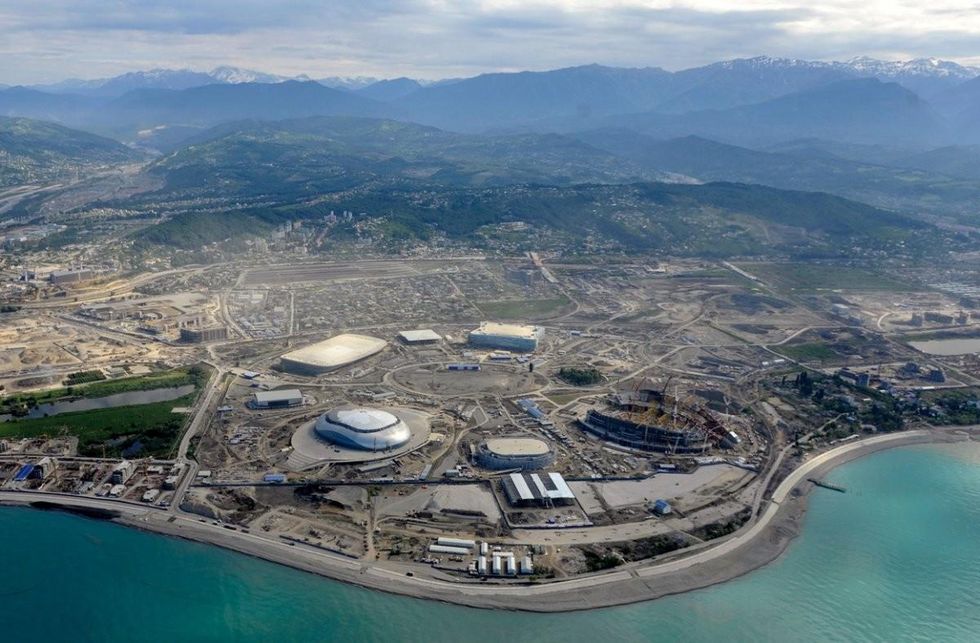
Now that the Olympics are over and Sochi proved itself such a triumph (and eagerly awaits the Winter Paralympic Games that begin almost exactly one week after Mr. Putin invaded Crimea,) we can begin looking forward to the summer Olympics of 2016 in Rio de Janeiro. They will, in some respects, involve the same kinds of things that the Sochi games involved although their conclusion will not be punctuated by Brazil invading another country since that does not happen to comport with its mind-set. There will, however, be similarities in what the two cities experience and a select group of Sochi residents may want to go Rio de Janeiro to describe for its residents how the whole thing worked out for them and what their impoverished residents can anticipate.
Countries that host Olympic games are always eager to show the world their best sides and in the case of the residents of Sochi that meant a number of people living in towns near Olympic facilities contributed to the redevelopment of Sochi in order to help it become the magnificent venue it was.
The village of Vesyoloye on the outskirts of Sochi was typical of the sorts of communities that contributed to the success of the games. On Akatsiy street, for example, the residents have for years had neither running water nor a sewage system. The communal outhouse that the residents enjoyed using was ordered to be torn down by a judge because authorities said it was an eyesore, being adjacent to the new super highway being built. (The judge ordering its destruction told the residents to get an eco toilet. Some residents told reporters they were using buckets instead.) The $635 million highway that was built to get people in and out of Sochi cut many of Vesyoloye's residents off from the city center. One resident on that street told a reporter: "Everyone was looking forward to the Olympics. We just never thought they would leave us bang in the middle of a federal highway!" Thousands of people in Sochi were dislocated and promised new homes that three weeks before the beginning of the games had not been provided. Some Sochi residents who had not been displaced had a new neighbor in the form of a dump that was created to contain Olympic construction waste. Construction waste has polluted rivers and streams. Although the affected residents contributed to the success of the Olympics in their modest ways, none of them was given tickets to any of the events. It should not be hard to organize a group to visit Rio in order to tell its citizens what to anticipate. They may be too late.
Slum dwellings in Rio de Janeiro are called favelas. With the prospect of the Olympics, rents in slum areas for favelas that have wonderful views have begun to climb in anticipation of the games although photos do not make it immediately apparent why visitors to the Olympics would want to stay in such places. Reports suggest that if the dwellings themselves are not desirable, the land beneath them is and prices of the favelas are soaring.
In some areas where the government has made efforts to relocate residents so the slums can be redeveloped in preparation for the World Soccer Cup and the Olympic games, residents have resisted. Commenting on events, Christopher Gaffney, a professor at Rio's Fluminense Federal University said: "These events were supposed to celebrate Brazil's accomplishments, but the opposite is happening. We're seeing an insidious pattern of trampling on the rights of the poor and cost overruns that are a nightmare." Evictions are taking place in slums all over the city. In some places those who refused to move continue to live in the rubble left when their slum dwellings were destroyed. The owner of one slum dwelling that was razed to make way for an express way was told by the government she could accept $2,300 for her house when adjacent residences were selling for $50,000, accept an apartment in a distant housing project or take nothing. The replacement apartment she was given is 35 miles from the center of Rio. Amnesty International says 19,200 people have been moved since 2009. Another advocacy group estimates 100,000 people will eventually be moved to make way for the Olympic facilities. These figures notwithstanding, displaced Rio residents should not feel too bad. For the 2008 Beijing Olympics 1 million people were displaced. For the 1988 Korean summer games 720,000 people were displaced. There is one group of people who should feel bad but don't. The International Olympic Committee.
The International Olympic Committee selects the sites for the games. That Committee can think of nothing worse than having the summer and winter games take place in the same venue every four years thus depriving Committee members of the pleasure of travelling around the world being sumptuously entertained by countries hoping to host the games.
All of the foregoing notwithstanding, there is one thing rich and poor alike can feel good about. At the conclusion of the Brazilian games, Brazil will not invade any of its neighbors.
The Olympian is a difficult foe to oppose.
-- Homer, The Iliad
Now that the Olympics are over and Sochi proved itself such a triumph (and eagerly awaits the Winter Paralympic Games that begin almost exactly one week after Mr. Putin invaded Crimea,) we can begin looking forward to the summer Olympics of 2016 in Rio de Janeiro. They will, in some respects, involve the same kinds of things that the Sochi games involved although their conclusion will not be punctuated by Brazil invading another country since that does not happen to comport with its mind-set. There will, however, be similarities in what the two cities experience and a select group of Sochi residents may want to go Rio de Janeiro to describe for its residents how the whole thing worked out for them and what their impoverished residents can anticipate.
Countries that host Olympic games are always eager to show the world their best sides and in the case of the residents of Sochi that meant a number of people living in towns near Olympic facilities contributed to the redevelopment of Sochi in order to help it become the magnificent venue it was.
The village of Vesyoloye on the outskirts of Sochi was typical of the sorts of communities that contributed to the success of the games. On Akatsiy street, for example, the residents have for years had neither running water nor a sewage system. The communal outhouse that the residents enjoyed using was ordered to be torn down by a judge because authorities said it was an eyesore, being adjacent to the new super highway being built. (The judge ordering its destruction told the residents to get an eco toilet. Some residents told reporters they were using buckets instead.) The $635 million highway that was built to get people in and out of Sochi cut many of Vesyoloye's residents off from the city center. One resident on that street told a reporter: "Everyone was looking forward to the Olympics. We just never thought they would leave us bang in the middle of a federal highway!" Thousands of people in Sochi were dislocated and promised new homes that three weeks before the beginning of the games had not been provided. Some Sochi residents who had not been displaced had a new neighbor in the form of a dump that was created to contain Olympic construction waste. Construction waste has polluted rivers and streams. Although the affected residents contributed to the success of the Olympics in their modest ways, none of them was given tickets to any of the events. It should not be hard to organize a group to visit Rio in order to tell its citizens what to anticipate. They may be too late.
Slum dwellings in Rio de Janeiro are called favelas. With the prospect of the Olympics, rents in slum areas for favelas that have wonderful views have begun to climb in anticipation of the games although photos do not make it immediately apparent why visitors to the Olympics would want to stay in such places. Reports suggest that if the dwellings themselves are not desirable, the land beneath them is and prices of the favelas are soaring.
In some areas where the government has made efforts to relocate residents so the slums can be redeveloped in preparation for the World Soccer Cup and the Olympic games, residents have resisted. Commenting on events, Christopher Gaffney, a professor at Rio's Fluminense Federal University said: "These events were supposed to celebrate Brazil's accomplishments, but the opposite is happening. We're seeing an insidious pattern of trampling on the rights of the poor and cost overruns that are a nightmare." Evictions are taking place in slums all over the city. In some places those who refused to move continue to live in the rubble left when their slum dwellings were destroyed. The owner of one slum dwelling that was razed to make way for an express way was told by the government she could accept $2,300 for her house when adjacent residences were selling for $50,000, accept an apartment in a distant housing project or take nothing. The replacement apartment she was given is 35 miles from the center of Rio. Amnesty International says 19,200 people have been moved since 2009. Another advocacy group estimates 100,000 people will eventually be moved to make way for the Olympic facilities. These figures notwithstanding, displaced Rio residents should not feel too bad. For the 2008 Beijing Olympics 1 million people were displaced. For the 1988 Korean summer games 720,000 people were displaced. There is one group of people who should feel bad but don't. The International Olympic Committee.
The International Olympic Committee selects the sites for the games. That Committee can think of nothing worse than having the summer and winter games take place in the same venue every four years thus depriving Committee members of the pleasure of travelling around the world being sumptuously entertained by countries hoping to host the games.
All of the foregoing notwithstanding, there is one thing rich and poor alike can feel good about. At the conclusion of the Brazilian games, Brazil will not invade any of its neighbors.
The Olympian is a difficult foe to oppose.
-- Homer, The Iliad
Now that the Olympics are over and Sochi proved itself such a triumph (and eagerly awaits the Winter Paralympic Games that begin almost exactly one week after Mr. Putin invaded Crimea,) we can begin looking forward to the summer Olympics of 2016 in Rio de Janeiro. They will, in some respects, involve the same kinds of things that the Sochi games involved although their conclusion will not be punctuated by Brazil invading another country since that does not happen to comport with its mind-set. There will, however, be similarities in what the two cities experience and a select group of Sochi residents may want to go Rio de Janeiro to describe for its residents how the whole thing worked out for them and what their impoverished residents can anticipate.
Countries that host Olympic games are always eager to show the world their best sides and in the case of the residents of Sochi that meant a number of people living in towns near Olympic facilities contributed to the redevelopment of Sochi in order to help it become the magnificent venue it was.
The village of Vesyoloye on the outskirts of Sochi was typical of the sorts of communities that contributed to the success of the games. On Akatsiy street, for example, the residents have for years had neither running water nor a sewage system. The communal outhouse that the residents enjoyed using was ordered to be torn down by a judge because authorities said it was an eyesore, being adjacent to the new super highway being built. (The judge ordering its destruction told the residents to get an eco toilet. Some residents told reporters they were using buckets instead.) The $635 million highway that was built to get people in and out of Sochi cut many of Vesyoloye's residents off from the city center. One resident on that street told a reporter: "Everyone was looking forward to the Olympics. We just never thought they would leave us bang in the middle of a federal highway!" Thousands of people in Sochi were dislocated and promised new homes that three weeks before the beginning of the games had not been provided. Some Sochi residents who had not been displaced had a new neighbor in the form of a dump that was created to contain Olympic construction waste. Construction waste has polluted rivers and streams. Although the affected residents contributed to the success of the Olympics in their modest ways, none of them was given tickets to any of the events. It should not be hard to organize a group to visit Rio in order to tell its citizens what to anticipate. They may be too late.
Slum dwellings in Rio de Janeiro are called favelas. With the prospect of the Olympics, rents in slum areas for favelas that have wonderful views have begun to climb in anticipation of the games although photos do not make it immediately apparent why visitors to the Olympics would want to stay in such places. Reports suggest that if the dwellings themselves are not desirable, the land beneath them is and prices of the favelas are soaring.
In some areas where the government has made efforts to relocate residents so the slums can be redeveloped in preparation for the World Soccer Cup and the Olympic games, residents have resisted. Commenting on events, Christopher Gaffney, a professor at Rio's Fluminense Federal University said: "These events were supposed to celebrate Brazil's accomplishments, but the opposite is happening. We're seeing an insidious pattern of trampling on the rights of the poor and cost overruns that are a nightmare." Evictions are taking place in slums all over the city. In some places those who refused to move continue to live in the rubble left when their slum dwellings were destroyed. The owner of one slum dwelling that was razed to make way for an express way was told by the government she could accept $2,300 for her house when adjacent residences were selling for $50,000, accept an apartment in a distant housing project or take nothing. The replacement apartment she was given is 35 miles from the center of Rio. Amnesty International says 19,200 people have been moved since 2009. Another advocacy group estimates 100,000 people will eventually be moved to make way for the Olympic facilities. These figures notwithstanding, displaced Rio residents should not feel too bad. For the 2008 Beijing Olympics 1 million people were displaced. For the 1988 Korean summer games 720,000 people were displaced. There is one group of people who should feel bad but don't. The International Olympic Committee.
The International Olympic Committee selects the sites for the games. That Committee can think of nothing worse than having the summer and winter games take place in the same venue every four years thus depriving Committee members of the pleasure of travelling around the world being sumptuously entertained by countries hoping to host the games.
All of the foregoing notwithstanding, there is one thing rich and poor alike can feel good about. At the conclusion of the Brazilian games, Brazil will not invade any of its neighbors.