SUBSCRIBE TO OUR FREE NEWSLETTER
Daily news & progressive opinion—funded by the people, not the corporations—delivered straight to your inbox.
5
#000000
#FFFFFF
To donate by check, phone, or other method, see our More Ways to Give page.
A jury of 12 people in Duval County, Fla., could not make a unanimous decision about whether to find Michael Dunn, 47, guilty in connection to the killing of 17-year-old Jordan Davis. The jury did find Dunn guilty of three counts of attempted murder, and of shooting a firearm.
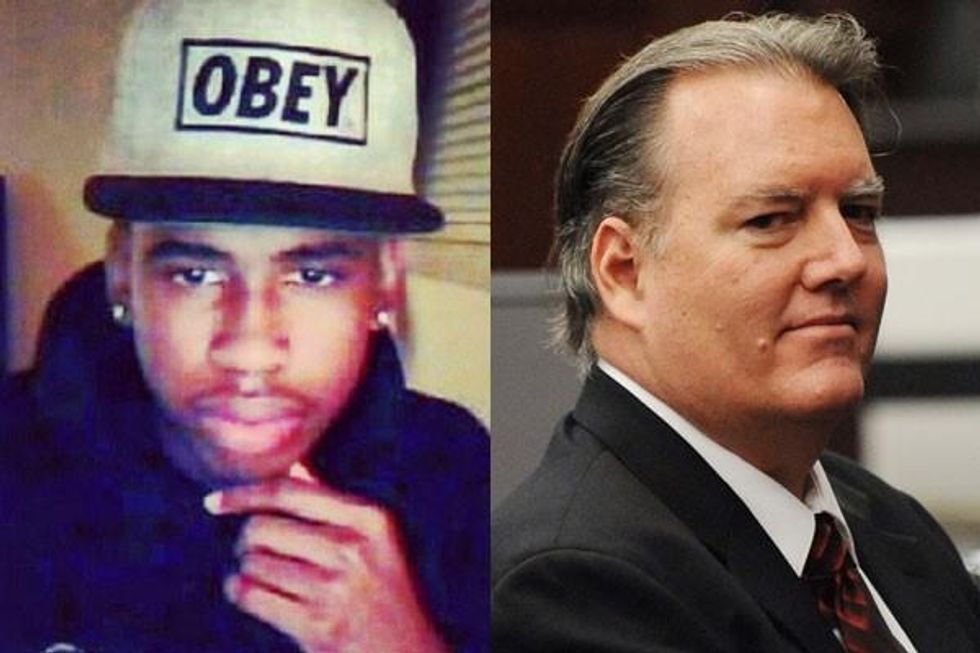
Dunn, who is white, shot and killed Davis, who was black, after complaining about what Dunn described as "thug music" coming from Davis' friend's SUV in a Jacksonville convenience store parking lot in November 2012. Dunn testified that he saw the barrel of a gun in the vehicle--yet an investigation revealed that there was never a weapon in the SUV. He claimed that the vehicle's music was blaring "ridiculously loud," yet he also says he heard Davis threaten to kill him.
Dunn grabbed his semi-automatic pistol from his car's glove compartment, fired nine bullets into the vehicle Davis was occupying, along with Tevin Thompson, Leland Brunson, and Tommie Stornes, and killed Davis. Dunn, along with his fiance, who was purchasing snacks at the convenience store when the killing occurred, returned to the hotel room where the two were staying, ordered pizza and went to sleep. The following morning, they drove home, nearly 200 miles away from Jacksonville. It was then that Dunn finally contacted a friend in law enforcement about turning himself in.
While awaiting trial, Dunn wrote numerous letters that indicate his anxiety over the jury's racial makeup and his deepening prejudice against black people. In one letter, Dunn explains:
"I just got off the phone with you and we were taking about how racist the blacks are up here. The more time I am exposed to these people, the more prejudiced against them I become."
In another, Dunn complains that "jails are full of blacks," and proposes a troubling solution:
"This may sound a bit radical, but if more people would arm themselves and kill these fucking idiots when they're threatening you, eventually they may take the hint and change their behavior."
He also wrote about his plans to find a "slimy civil-law lawyer" to sue Duval County for "reverse-discrimination."
Jurors could not come to one decision about the charge of first degree murder, but did find Dunn guilty for the attempted murders of Tevin Thompson, Leland Brunson, and Tommie Stornes, who were riding in the SUV with Davis the evening of his death.
Dunn has maintained that he was acting in self-defense. The case stems out of Florida--where more than one million people carry concealed weapons--and has consistently drawn parallels to the George Zimmerman case, which ended in a not guilty verdict for Zimmerman in connection to the killing of Trayvon Martin.
A jury of 12 people in Duval County, Fla., could not make a unanimous decision about whether to find Michael Dunn, 47, guilty in connection to the killing of 17-year-old Jordan Davis. The jury did find Dunn guilty of three counts of attempted murder, and of shooting a firearm.
Dunn, who is white, shot and killed Davis, who was black, after complaining about what Dunn described as "thug music" coming from Davis' friend's SUV in a Jacksonville convenience store parking lot in November 2012. Dunn testified that he saw the barrel of a gun in the vehicle--yet an investigation revealed that there was never a weapon in the SUV. He claimed that the vehicle's music was blaring "ridiculously loud," yet he also says he heard Davis threaten to kill him.
Dunn grabbed his semi-automatic pistol from his car's glove compartment, fired nine bullets into the vehicle Davis was occupying, along with Tevin Thompson, Leland Brunson, and Tommie Stornes, and killed Davis. Dunn, along with his fiance, who was purchasing snacks at the convenience store when the killing occurred, returned to the hotel room where the two were staying, ordered pizza and went to sleep. The following morning, they drove home, nearly 200 miles away from Jacksonville. It was then that Dunn finally contacted a friend in law enforcement about turning himself in.
While awaiting trial, Dunn wrote numerous letters that indicate his anxiety over the jury's racial makeup and his deepening prejudice against black people. In one letter, Dunn explains:
"I just got off the phone with you and we were taking about how racist the blacks are up here. The more time I am exposed to these people, the more prejudiced against them I become."
In another, Dunn complains that "jails are full of blacks," and proposes a troubling solution:
"This may sound a bit radical, but if more people would arm themselves and kill these fucking idiots when they're threatening you, eventually they may take the hint and change their behavior."
He also wrote about his plans to find a "slimy civil-law lawyer" to sue Duval County for "reverse-discrimination."
Jurors could not come to one decision about the charge of first degree murder, but did find Dunn guilty for the attempted murders of Tevin Thompson, Leland Brunson, and Tommie Stornes, who were riding in the SUV with Davis the evening of his death.
Dunn has maintained that he was acting in self-defense. The case stems out of Florida--where more than one million people carry concealed weapons--and has consistently drawn parallels to the George Zimmerman case, which ended in a not guilty verdict for Zimmerman in connection to the killing of Trayvon Martin.
A jury of 12 people in Duval County, Fla., could not make a unanimous decision about whether to find Michael Dunn, 47, guilty in connection to the killing of 17-year-old Jordan Davis. The jury did find Dunn guilty of three counts of attempted murder, and of shooting a firearm.
Dunn, who is white, shot and killed Davis, who was black, after complaining about what Dunn described as "thug music" coming from Davis' friend's SUV in a Jacksonville convenience store parking lot in November 2012. Dunn testified that he saw the barrel of a gun in the vehicle--yet an investigation revealed that there was never a weapon in the SUV. He claimed that the vehicle's music was blaring "ridiculously loud," yet he also says he heard Davis threaten to kill him.
Dunn grabbed his semi-automatic pistol from his car's glove compartment, fired nine bullets into the vehicle Davis was occupying, along with Tevin Thompson, Leland Brunson, and Tommie Stornes, and killed Davis. Dunn, along with his fiance, who was purchasing snacks at the convenience store when the killing occurred, returned to the hotel room where the two were staying, ordered pizza and went to sleep. The following morning, they drove home, nearly 200 miles away from Jacksonville. It was then that Dunn finally contacted a friend in law enforcement about turning himself in.
While awaiting trial, Dunn wrote numerous letters that indicate his anxiety over the jury's racial makeup and his deepening prejudice against black people. In one letter, Dunn explains:
"I just got off the phone with you and we were taking about how racist the blacks are up here. The more time I am exposed to these people, the more prejudiced against them I become."
In another, Dunn complains that "jails are full of blacks," and proposes a troubling solution:
"This may sound a bit radical, but if more people would arm themselves and kill these fucking idiots when they're threatening you, eventually they may take the hint and change their behavior."
He also wrote about his plans to find a "slimy civil-law lawyer" to sue Duval County for "reverse-discrimination."
Jurors could not come to one decision about the charge of first degree murder, but did find Dunn guilty for the attempted murders of Tevin Thompson, Leland Brunson, and Tommie Stornes, who were riding in the SUV with Davis the evening of his death.
Dunn has maintained that he was acting in self-defense. The case stems out of Florida--where more than one million people carry concealed weapons--and has consistently drawn parallels to the George Zimmerman case, which ended in a not guilty verdict for Zimmerman in connection to the killing of Trayvon Martin.