
It's the time of year I used to dread. More than just uncomfortably cold, "bleak" perfectly described the short days and gray void that seemed to be endless before and after the winter solstice. But I now look forward to this time as a zero point in my year -- a cold, quiet period that feels absolute and unchangeably essential.
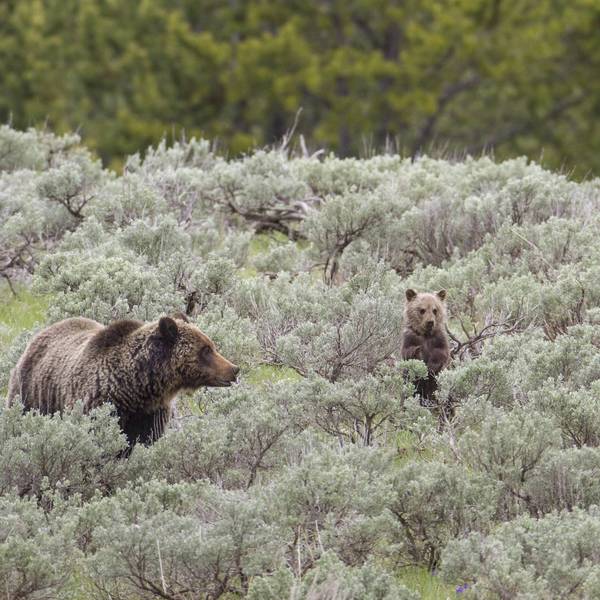
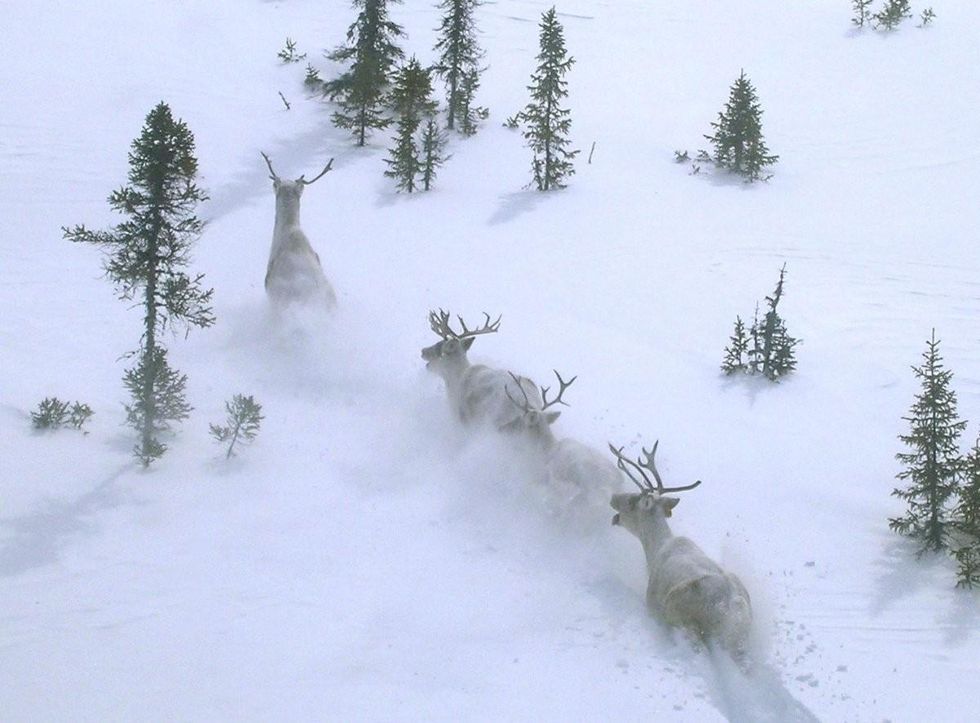
I didn't hear coyotes over the weekend, although I saw a frenzy of tracks made by wildlife of all kinds and a bloody place in the snow where some small animal met its death. The wildness puts me in my place; it's always clear that this is their place, not our family's. We may have property title and pay taxes on it, but the land is principally governed by its wild inhabitants, whose every hill, spring, thicket, rock outcropping and boulder den is their entitlement.
Our land is a useful and quiet place to recalibrate, to reset intentions. But it's not just my own life that needs to be reset. Recently I was reading about conservative efforts to undermine the renewal of the Endangered Species Act. As I looked up at the bald eagle flying lazily over our valley Saturday morning, I had to wonder just who we humans think we are to so little consider the complexity of the living web in which we are allowed to exist. Aside from the folly of allowing our interests to trample those of other species whose fate is necessarily if subtly linked to our own, the hubris of giving ourselves permission to exterminate the habitat, climate, and very species of other inhabitants on our planet is breathtaking.
Raised by an environmentally concerned but deeply pragmatic civil engineer, I fully appreciate the indignation some feel when the fate of big dams, highways, and timber sales hangs on a snail darter or a certain kind of owl, mussel or salamander. "Why not let that one species die in this one particular place, as long as countless other somewhat similar species continue elsewhere?" is an understandable question. But humans struggle to fully understand finely tuned ecosystem relationships, where one mussel species can play an ecosystem role distinct from another.
Thousands of wars have been fought because one human group couldn't restrain their self-interest and instead imposed it on another. Passenger pigeons, bison and countless other species are testimony to a similar lack of restraint against species that couldn't vocalize on their own behalf.
The Endangered Species Act has prevented more than 1,400 extinctions in the past 40 years. Some Republicans propose to gut the act by delisting all species every five years and put the burden of proof back on the government to protect them. Aside from its unwieldy government process, this is wrong-headed in its conception. As human populations continue to grow, we need some way to enforce natural limits to our growth, to protect the world around us. Certainly, we have proven ourselves to be bad custodians without it.
It's the time of year I used to dread. More than just uncomfortably cold, "bleak" perfectly described the short days and gray void that seemed to be endless before and after the winter solstice. But I now look forward to this time as a zero point in my year -- a cold, quiet period that feels absolute and unchangeably essential.
I didn't hear coyotes over the weekend, although I saw a frenzy of tracks made by wildlife of all kinds and a bloody place in the snow where some small animal met its death. The wildness puts me in my place; it's always clear that this is their place, not our family's. We may have property title and pay taxes on it, but the land is principally governed by its wild inhabitants, whose every hill, spring, thicket, rock outcropping and boulder den is their entitlement.
Our land is a useful and quiet place to recalibrate, to reset intentions. But it's not just my own life that needs to be reset. Recently I was reading about conservative efforts to undermine the renewal of the Endangered Species Act. As I looked up at the bald eagle flying lazily over our valley Saturday morning, I had to wonder just who we humans think we are to so little consider the complexity of the living web in which we are allowed to exist. Aside from the folly of allowing our interests to trample those of other species whose fate is necessarily if subtly linked to our own, the hubris of giving ourselves permission to exterminate the habitat, climate, and very species of other inhabitants on our planet is breathtaking.
Raised by an environmentally concerned but deeply pragmatic civil engineer, I fully appreciate the indignation some feel when the fate of big dams, highways, and timber sales hangs on a snail darter or a certain kind of owl, mussel or salamander. "Why not let that one species die in this one particular place, as long as countless other somewhat similar species continue elsewhere?" is an understandable question. But humans struggle to fully understand finely tuned ecosystem relationships, where one mussel species can play an ecosystem role distinct from another.
Thousands of wars have been fought because one human group couldn't restrain their self-interest and instead imposed it on another. Passenger pigeons, bison and countless other species are testimony to a similar lack of restraint against species that couldn't vocalize on their own behalf.
The Endangered Species Act has prevented more than 1,400 extinctions in the past 40 years. Some Republicans propose to gut the act by delisting all species every five years and put the burden of proof back on the government to protect them. Aside from its unwieldy government process, this is wrong-headed in its conception. As human populations continue to grow, we need some way to enforce natural limits to our growth, to protect the world around us. Certainly, we have proven ourselves to be bad custodians without it.
It's the time of year I used to dread. More than just uncomfortably cold, "bleak" perfectly described the short days and gray void that seemed to be endless before and after the winter solstice. But I now look forward to this time as a zero point in my year -- a cold, quiet period that feels absolute and unchangeably essential.
I didn't hear coyotes over the weekend, although I saw a frenzy of tracks made by wildlife of all kinds and a bloody place in the snow where some small animal met its death. The wildness puts me in my place; it's always clear that this is their place, not our family's. We may have property title and pay taxes on it, but the land is principally governed by its wild inhabitants, whose every hill, spring, thicket, rock outcropping and boulder den is their entitlement.
Our land is a useful and quiet place to recalibrate, to reset intentions. But it's not just my own life that needs to be reset. Recently I was reading about conservative efforts to undermine the renewal of the Endangered Species Act. As I looked up at the bald eagle flying lazily over our valley Saturday morning, I had to wonder just who we humans think we are to so little consider the complexity of the living web in which we are allowed to exist. Aside from the folly of allowing our interests to trample those of other species whose fate is necessarily if subtly linked to our own, the hubris of giving ourselves permission to exterminate the habitat, climate, and very species of other inhabitants on our planet is breathtaking.
Raised by an environmentally concerned but deeply pragmatic civil engineer, I fully appreciate the indignation some feel when the fate of big dams, highways, and timber sales hangs on a snail darter or a certain kind of owl, mussel or salamander. "Why not let that one species die in this one particular place, as long as countless other somewhat similar species continue elsewhere?" is an understandable question. But humans struggle to fully understand finely tuned ecosystem relationships, where one mussel species can play an ecosystem role distinct from another.
Thousands of wars have been fought because one human group couldn't restrain their self-interest and instead imposed it on another. Passenger pigeons, bison and countless other species are testimony to a similar lack of restraint against species that couldn't vocalize on their own behalf.
The Endangered Species Act has prevented more than 1,400 extinctions in the past 40 years. Some Republicans propose to gut the act by delisting all species every five years and put the burden of proof back on the government to protect them. Aside from its unwieldy government process, this is wrong-headed in its conception. As human populations continue to grow, we need some way to enforce natural limits to our growth, to protect the world around us. Certainly, we have proven ourselves to be bad custodians without it.