

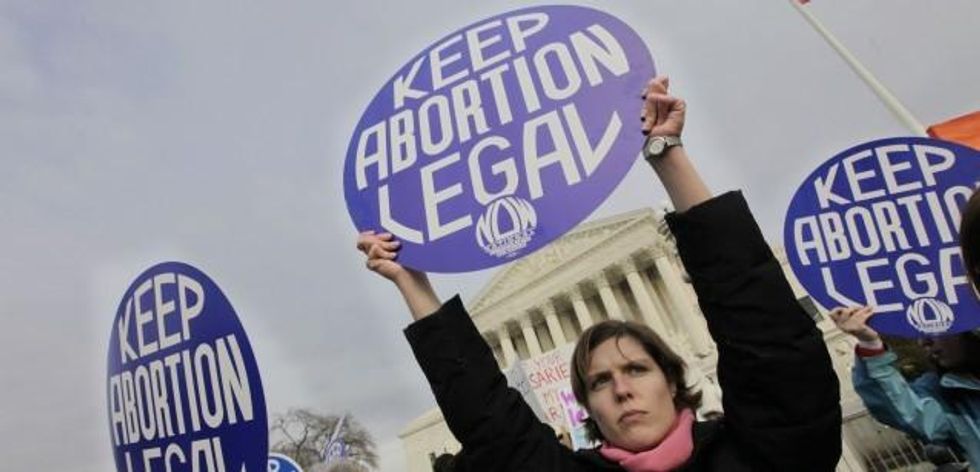
And New Mexico isn't the only state where the anti-choice community is gearing up for another fight. Here are four other states to keep an eye on, since they represent some of the next battlegrounds for reproductive rights:
Back in August, West Virginia's attorney general launched an investigation into abortion clinics to determine whether they're adhering to all of the proper safety regulations. Reproductive rights supporters quickly objected, pointing out that AG Patrick Morrisey (R) is on a politically-motivated crusade against legal health facilities. These type of investigations don't typically turn up any evidence -- in fact, after House Republicans conducted a nationwide probe into the abortion clinics in all 50 states, they found only that they're all very safe -- but they can signal the first step in state officials' attempt to force clinics to shut down. Morrisey's tactics have been compared to Virginia AG Ken Cuccinelli (R), another conservative state official who did everything in his power to target abortion abortions.
This week, a new poll sponsored by Planned Parenthood found that the majority of West Virginia voters don't actually support imposing additional regulations on abortion clinics. And once the survey respondents learned about Morrissey's effort to go after clinics, they were more likely to oppose him.
Abortion opponents in Tennessee are already preparing for their own fight over a ballot initiative. Next November, when Amendment 1 is up for consideration, voters will decide whether to give their state the power to restrict abortion more stringently than it currently does. Right now, Tennessee's constitution has even broader protections for reproductive rights than the U.S. constitution. The state's Supreme Court decided that some types of restrictions -- specifically, mandatory waiting periods and forced counseling laws -- are unconstitutional because they go too far to limit women's right to choose an abortion.
But Amendment 1 would change that. If voters approve the ballot initiative, they'll essentially be overturning that Supreme Court decision and restoring their lawmakers' power to enact waiting periods and counseling requirements.
The fight is already gaining momentum, since abortion opponents anticipate significant resistance. Jim Bob and Michelle Duggar, who star in the TLC reality show "19 Kids and Counting," have been making public appearances in Tennessee to drum up public support for Amendment 1.
Georgia
Just like in Tennessee, abortion opponents in Georgia appear to be laying the groundwork for harsh abortion clinic restrictions. Georgia Right to Life, along with other state-level anti-choice groups, recently released the results from their own investigation into abortion clinics. The report draws comparisons between Georgia's abortion providers and the illegal abortion doctor Kermit Gosnell, who was convicted of murder for butchering infants in his unsanitary Philadelphia-area clinic. Abortion opponents are increasingly conflating Gosnell's crimes with legal abortion clinics to leverage public support for unnecessary restrictions.
Georgia officials have been slipping other types of abortion restrictions under the radar, too. At the end of the summer, the health board voted to ban the state's 650,000 public employees from using their insurance plans to cover abortion services -- a measure that the legislature failed to advance during its last session. Since lawmakers weren't able to get that abortion restriction through, the members of the health board simply circumvented them to enact it anyway.
Michigan
Restricting insurance coverage for abortion services is becoming a popular tactic to attack people's access to this type of health care. Particularly since the health reform law gives each state some flexibility in how to manage abortion coverage, anti-choice groups have seized on the opportunity to ban abortion coverage outright in Obamacare's new insurance marketplaces.
Michigan is poised to be the latest state to employ this tactic. Anti-abortion activists in Michigan have turned in more than 315,000 signatures to put this type of initiative before state lawmakers. That measure is moving forward this week, and is expected to easily pass in the GOP-dominated legislature.
This is yet another instance of the anti-choice community circumventing the typical legislative process to impose additional road blocks to women's right to choose an abortion. Gov. Rick Snyder (R) actually vetoed this insurance restriction last year, saying it would go too far to interfere in the private insurance market. That's why abortion opponents decided to collect enough signatures to provoke a "citizen-initiated" vote on the issue. If state lawmakers approve the measure, it will immediately become law, even without Snyder's signature -- and if lawmakers reject it, the measure will be put up for voters' consideration on the 2014 ballot.
And New Mexico isn't the only state where the anti-choice community is gearing up for another fight. Here are four other states to keep an eye on, since they represent some of the next battlegrounds for reproductive rights:
Back in August, West Virginia's attorney general launched an investigation into abortion clinics to determine whether they're adhering to all of the proper safety regulations. Reproductive rights supporters quickly objected, pointing out that AG Patrick Morrisey (R) is on a politically-motivated crusade against legal health facilities. These type of investigations don't typically turn up any evidence -- in fact, after House Republicans conducted a nationwide probe into the abortion clinics in all 50 states, they found only that they're all very safe -- but they can signal the first step in state officials' attempt to force clinics to shut down. Morrisey's tactics have been compared to Virginia AG Ken Cuccinelli (R), another conservative state official who did everything in his power to target abortion abortions.
This week, a new poll sponsored by Planned Parenthood found that the majority of West Virginia voters don't actually support imposing additional regulations on abortion clinics. And once the survey respondents learned about Morrissey's effort to go after clinics, they were more likely to oppose him.
Abortion opponents in Tennessee are already preparing for their own fight over a ballot initiative. Next November, when Amendment 1 is up for consideration, voters will decide whether to give their state the power to restrict abortion more stringently than it currently does. Right now, Tennessee's constitution has even broader protections for reproductive rights than the U.S. constitution. The state's Supreme Court decided that some types of restrictions -- specifically, mandatory waiting periods and forced counseling laws -- are unconstitutional because they go too far to limit women's right to choose an abortion.
But Amendment 1 would change that. If voters approve the ballot initiative, they'll essentially be overturning that Supreme Court decision and restoring their lawmakers' power to enact waiting periods and counseling requirements.
The fight is already gaining momentum, since abortion opponents anticipate significant resistance. Jim Bob and Michelle Duggar, who star in the TLC reality show "19 Kids and Counting," have been making public appearances in Tennessee to drum up public support for Amendment 1.
Georgia
Just like in Tennessee, abortion opponents in Georgia appear to be laying the groundwork for harsh abortion clinic restrictions. Georgia Right to Life, along with other state-level anti-choice groups, recently released the results from their own investigation into abortion clinics. The report draws comparisons between Georgia's abortion providers and the illegal abortion doctor Kermit Gosnell, who was convicted of murder for butchering infants in his unsanitary Philadelphia-area clinic. Abortion opponents are increasingly conflating Gosnell's crimes with legal abortion clinics to leverage public support for unnecessary restrictions.
Georgia officials have been slipping other types of abortion restrictions under the radar, too. At the end of the summer, the health board voted to ban the state's 650,000 public employees from using their insurance plans to cover abortion services -- a measure that the legislature failed to advance during its last session. Since lawmakers weren't able to get that abortion restriction through, the members of the health board simply circumvented them to enact it anyway.
Michigan
Restricting insurance coverage for abortion services is becoming a popular tactic to attack people's access to this type of health care. Particularly since the health reform law gives each state some flexibility in how to manage abortion coverage, anti-choice groups have seized on the opportunity to ban abortion coverage outright in Obamacare's new insurance marketplaces.
Michigan is poised to be the latest state to employ this tactic. Anti-abortion activists in Michigan have turned in more than 315,000 signatures to put this type of initiative before state lawmakers. That measure is moving forward this week, and is expected to easily pass in the GOP-dominated legislature.
This is yet another instance of the anti-choice community circumventing the typical legislative process to impose additional road blocks to women's right to choose an abortion. Gov. Rick Snyder (R) actually vetoed this insurance restriction last year, saying it would go too far to interfere in the private insurance market. That's why abortion opponents decided to collect enough signatures to provoke a "citizen-initiated" vote on the issue. If state lawmakers approve the measure, it will immediately become law, even without Snyder's signature -- and if lawmakers reject it, the measure will be put up for voters' consideration on the 2014 ballot.
And New Mexico isn't the only state where the anti-choice community is gearing up for another fight. Here are four other states to keep an eye on, since they represent some of the next battlegrounds for reproductive rights:
Back in August, West Virginia's attorney general launched an investigation into abortion clinics to determine whether they're adhering to all of the proper safety regulations. Reproductive rights supporters quickly objected, pointing out that AG Patrick Morrisey (R) is on a politically-motivated crusade against legal health facilities. These type of investigations don't typically turn up any evidence -- in fact, after House Republicans conducted a nationwide probe into the abortion clinics in all 50 states, they found only that they're all very safe -- but they can signal the first step in state officials' attempt to force clinics to shut down. Morrisey's tactics have been compared to Virginia AG Ken Cuccinelli (R), another conservative state official who did everything in his power to target abortion abortions.
This week, a new poll sponsored by Planned Parenthood found that the majority of West Virginia voters don't actually support imposing additional regulations on abortion clinics. And once the survey respondents learned about Morrissey's effort to go after clinics, they were more likely to oppose him.
Abortion opponents in Tennessee are already preparing for their own fight over a ballot initiative. Next November, when Amendment 1 is up for consideration, voters will decide whether to give their state the power to restrict abortion more stringently than it currently does. Right now, Tennessee's constitution has even broader protections for reproductive rights than the U.S. constitution. The state's Supreme Court decided that some types of restrictions -- specifically, mandatory waiting periods and forced counseling laws -- are unconstitutional because they go too far to limit women's right to choose an abortion.
But Amendment 1 would change that. If voters approve the ballot initiative, they'll essentially be overturning that Supreme Court decision and restoring their lawmakers' power to enact waiting periods and counseling requirements.
The fight is already gaining momentum, since abortion opponents anticipate significant resistance. Jim Bob and Michelle Duggar, who star in the TLC reality show "19 Kids and Counting," have been making public appearances in Tennessee to drum up public support for Amendment 1.
Georgia
Just like in Tennessee, abortion opponents in Georgia appear to be laying the groundwork for harsh abortion clinic restrictions. Georgia Right to Life, along with other state-level anti-choice groups, recently released the results from their own investigation into abortion clinics. The report draws comparisons between Georgia's abortion providers and the illegal abortion doctor Kermit Gosnell, who was convicted of murder for butchering infants in his unsanitary Philadelphia-area clinic. Abortion opponents are increasingly conflating Gosnell's crimes with legal abortion clinics to leverage public support for unnecessary restrictions.
Georgia officials have been slipping other types of abortion restrictions under the radar, too. At the end of the summer, the health board voted to ban the state's 650,000 public employees from using their insurance plans to cover abortion services -- a measure that the legislature failed to advance during its last session. Since lawmakers weren't able to get that abortion restriction through, the members of the health board simply circumvented them to enact it anyway.
Michigan
Restricting insurance coverage for abortion services is becoming a popular tactic to attack people's access to this type of health care. Particularly since the health reform law gives each state some flexibility in how to manage abortion coverage, anti-choice groups have seized on the opportunity to ban abortion coverage outright in Obamacare's new insurance marketplaces.
Michigan is poised to be the latest state to employ this tactic. Anti-abortion activists in Michigan have turned in more than 315,000 signatures to put this type of initiative before state lawmakers. That measure is moving forward this week, and is expected to easily pass in the GOP-dominated legislature.
This is yet another instance of the anti-choice community circumventing the typical legislative process to impose additional road blocks to women's right to choose an abortion. Gov. Rick Snyder (R) actually vetoed this insurance restriction last year, saying it would go too far to interfere in the private insurance market. That's why abortion opponents decided to collect enough signatures to provoke a "citizen-initiated" vote on the issue. If state lawmakers approve the measure, it will immediately become law, even without Snyder's signature -- and if lawmakers reject it, the measure will be put up for voters' consideration on the 2014 ballot.