

For those suffering from too much quality time with their families, the chain stores are poised to offer an escape by opening Thanksgiving Day. Before your dinner is digested, you can flee the table to vie for pole position at the big box entrance like Roman chariot drivers and prepare to do battle for one of those few really cheap "door-buster" flat-screens.
And it's not just shoppers jockeying for position. Americans are about to drop a big chunk of change during this holiday season, (an average of $738 on gifts, decor, greeting cards and other items) and every retailer is looking for their piece.
For many years, corporate chains and online giants have garnered an ever-greater share of our spending at the holidays and year-round. That means not only a greater share of revenue being funneled into fewer hands, but big challenges for our communities as downtowns struggle and opportunities for residents to run their own business decrease, diminishing their local multiplier effect.
But evidence suggests healthy wind of change in the winter air. In a recent survey for Deluxe Corporation, 35 percent of respondents said they preferred to do their in-person holiday shopping at small businesses - up sharply from 27 percent in 2012.
This reinforces a survey earlier this year by the Institute for Local Self-Reliance, which found 68 percent of business owners felt more people recognized the benefits of buying locally than the previous year.
More importantly, it showed concrete results in shifting consumer spending. Independent businesses in communities with grassroots business alliances trumpeting those benefits of buying locally reported an average revenue increase of 8.6% over the previous year, compared to 3.4% among independents in other communities. More than 100 such local business alliances have formed in the past decade.
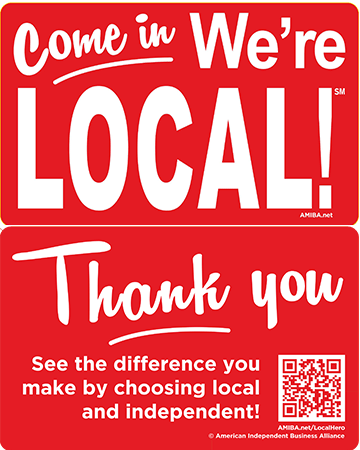
Combined with the recent rise of nationwide campaigns like Small Business Saturday and Shift Your Shopping, awareness is growing rapidly about the many benefits of choosing local and independent.
While some of those reasons appear altruistic, the Localization Movement is gaining momentum largely because citizens are recognizing our long-term self-interest involves building more self-reliant and vibrant communities from within. And those who choose to shift more of their shopping locally often report pleasant surprises from their choice.
Equally important, there's rising recognition that cheapness does not equal value. Admittedly, the big box stores and online giants usually can win a battle based on cheapness alone (though perceived differences in price far exceed reality). But that cheap table, bicycle or coffee-maker quickly ceases to be a "bargain" when it breaks down prematurely or that ski jacket rips upon it first branch-scrape.
As craftsmanship has gone from an everyday value to rarity, we've learned low prices at the expense of reliability and durability are no bargain at all.
Of course, none of this means we need to swear off shopping online or making an occasional chain store visit. But we should look for ways to integrate widely-held values into our purchasing decisions. Shifting even one more shopping trip to independent community-based businesses this season would create dramatic, positive changes in our local economies and induce many new jobs nationwide.
This is partly because your local independent businesses help employ many more people than you'll see on the sales floor. Local businessesare interdependent, using services of area accountants, architects, graphic designers, sign-makers, webmasters, suppliers and many other higher-skilled positions to help them. When sales shift from locals to chains, some of these local jobs also disappear - cloning another chain outpost requires little outside support other than construction.
Similarly, local non-profit organizations depend largely on the contributions of local businesses that, in turn, depend on our patronage. If we value local business support for our kids' sports teams or favorite charities, we must recognize they literally can't do it without us.
The long-term relationships fostered by local business also cement commitment to civic institutions like schools, churches, and fraternal leagues that aid not just economic prosperity, but community cohesion and trust.
So do yourself, and your community a favor this year by shifting a bit more spending to your local merchants, both on Small Business Saturday and beyond. Along with helping your neighbors and community, you may just find "going local" turns holiday shopping into a far more relaxing and enjoyable experience: one that rewards both you and your community.
For those suffering from too much quality time with their families, the chain stores are poised to offer an escape by opening Thanksgiving Day. Before your dinner is digested, you can flee the table to vie for pole position at the big box entrance like Roman chariot drivers and prepare to do battle for one of those few really cheap "door-buster" flat-screens.
And it's not just shoppers jockeying for position. Americans are about to drop a big chunk of change during this holiday season, (an average of $738 on gifts, decor, greeting cards and other items) and every retailer is looking for their piece.
For many years, corporate chains and online giants have garnered an ever-greater share of our spending at the holidays and year-round. That means not only a greater share of revenue being funneled into fewer hands, but big challenges for our communities as downtowns struggle and opportunities for residents to run their own business decrease, diminishing their local multiplier effect.
But evidence suggests healthy wind of change in the winter air. In a recent survey for Deluxe Corporation, 35 percent of respondents said they preferred to do their in-person holiday shopping at small businesses - up sharply from 27 percent in 2012.
This reinforces a survey earlier this year by the Institute for Local Self-Reliance, which found 68 percent of business owners felt more people recognized the benefits of buying locally than the previous year.
More importantly, it showed concrete results in shifting consumer spending. Independent businesses in communities with grassroots business alliances trumpeting those benefits of buying locally reported an average revenue increase of 8.6% over the previous year, compared to 3.4% among independents in other communities. More than 100 such local business alliances have formed in the past decade.
Combined with the recent rise of nationwide campaigns like Small Business Saturday and Shift Your Shopping, awareness is growing rapidly about the many benefits of choosing local and independent.
While some of those reasons appear altruistic, the Localization Movement is gaining momentum largely because citizens are recognizing our long-term self-interest involves building more self-reliant and vibrant communities from within. And those who choose to shift more of their shopping locally often report pleasant surprises from their choice.
Equally important, there's rising recognition that cheapness does not equal value. Admittedly, the big box stores and online giants usually can win a battle based on cheapness alone (though perceived differences in price far exceed reality). But that cheap table, bicycle or coffee-maker quickly ceases to be a "bargain" when it breaks down prematurely or that ski jacket rips upon it first branch-scrape.
As craftsmanship has gone from an everyday value to rarity, we've learned low prices at the expense of reliability and durability are no bargain at all.
Of course, none of this means we need to swear off shopping online or making an occasional chain store visit. But we should look for ways to integrate widely-held values into our purchasing decisions. Shifting even one more shopping trip to independent community-based businesses this season would create dramatic, positive changes in our local economies and induce many new jobs nationwide.
This is partly because your local independent businesses help employ many more people than you'll see on the sales floor. Local businessesare interdependent, using services of area accountants, architects, graphic designers, sign-makers, webmasters, suppliers and many other higher-skilled positions to help them. When sales shift from locals to chains, some of these local jobs also disappear - cloning another chain outpost requires little outside support other than construction.
Similarly, local non-profit organizations depend largely on the contributions of local businesses that, in turn, depend on our patronage. If we value local business support for our kids' sports teams or favorite charities, we must recognize they literally can't do it without us.
The long-term relationships fostered by local business also cement commitment to civic institutions like schools, churches, and fraternal leagues that aid not just economic prosperity, but community cohesion and trust.
So do yourself, and your community a favor this year by shifting a bit more spending to your local merchants, both on Small Business Saturday and beyond. Along with helping your neighbors and community, you may just find "going local" turns holiday shopping into a far more relaxing and enjoyable experience: one that rewards both you and your community.
For those suffering from too much quality time with their families, the chain stores are poised to offer an escape by opening Thanksgiving Day. Before your dinner is digested, you can flee the table to vie for pole position at the big box entrance like Roman chariot drivers and prepare to do battle for one of those few really cheap "door-buster" flat-screens.
And it's not just shoppers jockeying for position. Americans are about to drop a big chunk of change during this holiday season, (an average of $738 on gifts, decor, greeting cards and other items) and every retailer is looking for their piece.
For many years, corporate chains and online giants have garnered an ever-greater share of our spending at the holidays and year-round. That means not only a greater share of revenue being funneled into fewer hands, but big challenges for our communities as downtowns struggle and opportunities for residents to run their own business decrease, diminishing their local multiplier effect.
But evidence suggests healthy wind of change in the winter air. In a recent survey for Deluxe Corporation, 35 percent of respondents said they preferred to do their in-person holiday shopping at small businesses - up sharply from 27 percent in 2012.
This reinforces a survey earlier this year by the Institute for Local Self-Reliance, which found 68 percent of business owners felt more people recognized the benefits of buying locally than the previous year.
More importantly, it showed concrete results in shifting consumer spending. Independent businesses in communities with grassroots business alliances trumpeting those benefits of buying locally reported an average revenue increase of 8.6% over the previous year, compared to 3.4% among independents in other communities. More than 100 such local business alliances have formed in the past decade.
Combined with the recent rise of nationwide campaigns like Small Business Saturday and Shift Your Shopping, awareness is growing rapidly about the many benefits of choosing local and independent.
While some of those reasons appear altruistic, the Localization Movement is gaining momentum largely because citizens are recognizing our long-term self-interest involves building more self-reliant and vibrant communities from within. And those who choose to shift more of their shopping locally often report pleasant surprises from their choice.
Equally important, there's rising recognition that cheapness does not equal value. Admittedly, the big box stores and online giants usually can win a battle based on cheapness alone (though perceived differences in price far exceed reality). But that cheap table, bicycle or coffee-maker quickly ceases to be a "bargain" when it breaks down prematurely or that ski jacket rips upon it first branch-scrape.
As craftsmanship has gone from an everyday value to rarity, we've learned low prices at the expense of reliability and durability are no bargain at all.
Of course, none of this means we need to swear off shopping online or making an occasional chain store visit. But we should look for ways to integrate widely-held values into our purchasing decisions. Shifting even one more shopping trip to independent community-based businesses this season would create dramatic, positive changes in our local economies and induce many new jobs nationwide.
This is partly because your local independent businesses help employ many more people than you'll see on the sales floor. Local businessesare interdependent, using services of area accountants, architects, graphic designers, sign-makers, webmasters, suppliers and many other higher-skilled positions to help them. When sales shift from locals to chains, some of these local jobs also disappear - cloning another chain outpost requires little outside support other than construction.
Similarly, local non-profit organizations depend largely on the contributions of local businesses that, in turn, depend on our patronage. If we value local business support for our kids' sports teams or favorite charities, we must recognize they literally can't do it without us.
The long-term relationships fostered by local business also cement commitment to civic institutions like schools, churches, and fraternal leagues that aid not just economic prosperity, but community cohesion and trust.
So do yourself, and your community a favor this year by shifting a bit more spending to your local merchants, both on Small Business Saturday and beyond. Along with helping your neighbors and community, you may just find "going local" turns holiday shopping into a far more relaxing and enjoyable experience: one that rewards both you and your community.