As far back as the 1970's Herman Daly proposed an alternative, which he called The Index of Sustainable Welfare.
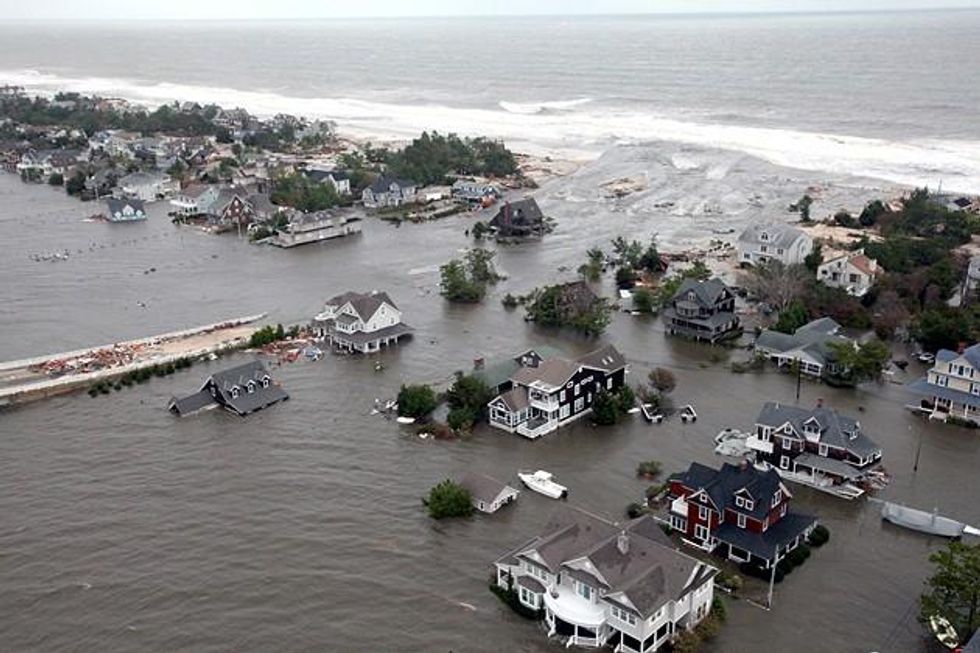
By now, a critique of GDP is a staple of editorials and oped pieces (sort of like this article). Invariably, the authors of these critiques point out that many cash transactions don't add value to society, but show up as growth in the GDP. Hurricane Sandy, divorces, malpractice suits, the BP spill - each of these involves cash transfers that get booked as adding value to the economy, but they clearly do not. Similarly working in the home, volunteering, parenting and activities which add do value to society but do not involve cash transactions, don't register on the GDP.
These articles and alternatives generally generate enthusiastic head bobs among the cognoscenti for a week or so, and then we go right back to monitoring GDP growth as if our lives depended upon it.
But maybe we've been looking at this all wrong.
If you Google "gross" you will get a number of meanings. The first to show up is "unattractively large or bloated." The second, the one we've been using in GDP, refers to the total amount of something, as opposed to net.
If we apply the first definition to Gross Domestic Product, we get unattractively large, bloated Domestic Product. This makes a great deal of sense, because that's exactly what our growth-at-all-costs economy has become: bloated to the point of being dangerous.
For starters, we consume 1.5 Earth's worth of stuff each year. That is, we consume more resources than can be renewed, which means we are depleting natural capital. So we are creating debt and calling it wealth. If we continue on our current trend, by 2050 we will be using over 2 Earth's worth of natural capital.
You want gross? Nothing could be grosser than continuing to exploit fossil fuels. As the recently released IPCC report noted, we have to leave most of the known fossil fuel reserves in the ground, if we are to have a 66% chance of staying below 2C and avoiding catastrophy. In reality, even this grim forecast is probably exceedingly optimistic - if you check the geologic record, last time this much carbon was added to the atmosphere it raised temperatures by 5C (9F) globally and raised temperatures in the Arctic to 23C (74F), a full 18F warmer than climate models forecast.
Or take plastics. Talk about gross. We make about 100 million tons of plastics each year, and most if it gets thrown away. Plastics take hundreds of years or more to degrade, so the stuff accumulates - every decade we'll add another billion or so tons to the biosphere. Already we have a giant garbage heap at least twice the size of Texas in the north Pacific composed largely of plastics. Some estimates put it at twice the size of the continental US - the difference in size depends on the concentrations used to define its boundaries. But either way, that's big and gross, and getting bigger and grosser each year.
The ubiquity and persistence of plastics means it ends up in the guts and bellies of animals across the globe and throughout the seas. You want gross? Watch this short clip, A Message from the Gyre.
But plastics are merely a visible reminder of how other - more sinister - persistent chemicals are accumulating in our ecosystems. Within the last half century, the blubber from large marine mammals has accumulated enough persistent organic pollutants (POPs), that it would be considered a hazardous waste under federal law.
This stuff too, accumulates at staggering amounts and can last for a century or longer.
The combined effect of these pollutants - carbon, plastics, and POPs are like a time bomb set to go off on our children and their children.
The flip side of our explosion in waste generation is the rate at which we are consuming non-renewable resources. Some 88% of vital non-renewable resources are already depleting to the point of scarcity, another time bomb for the generations to follow, causing shortages and price increases, just as they try to tackle the now inevitable consequences of global warming - which will be the most expensive and challenging endeavor humans have ever attempted.
How does GDP book this depletion? As added wealth.
Our Gross Domestic Product is the equivalent of an obscenely obese person waddling into a fast food restaurant dressed in spandex in search of supersized not-so-happy meals, passing starving children on the way. Gross, indeed.
There are alternatives. Bhutan uses a Gross Happiness scale. The State of Maryland is experimenting with what they call the Genuine Progress Indicator. But as Gustave Speth notes in a comprehensive critique of our growth at all costs economy, they all require that we abandon growth as the sine qua non of economic policy.
Not bloody likely.
As far back as the 1970's Herman Daly proposed an alternative, which he called The Index of Sustainable Welfare.
By now, a critique of GDP is a staple of editorials and oped pieces (sort of like this article). Invariably, the authors of these critiques point out that many cash transactions don't add value to society, but show up as growth in the GDP. Hurricane Sandy, divorces, malpractice suits, the BP spill - each of these involves cash transfers that get booked as adding value to the economy, but they clearly do not. Similarly working in the home, volunteering, parenting and activities which add do value to society but do not involve cash transactions, don't register on the GDP.
These articles and alternatives generally generate enthusiastic head bobs among the cognoscenti for a week or so, and then we go right back to monitoring GDP growth as if our lives depended upon it.
But maybe we've been looking at this all wrong.
If you Google "gross" you will get a number of meanings. The first to show up is "unattractively large or bloated." The second, the one we've been using in GDP, refers to the total amount of something, as opposed to net.
If we apply the first definition to Gross Domestic Product, we get unattractively large, bloated Domestic Product. This makes a great deal of sense, because that's exactly what our growth-at-all-costs economy has become: bloated to the point of being dangerous.
For starters, we consume 1.5 Earth's worth of stuff each year. That is, we consume more resources than can be renewed, which means we are depleting natural capital. So we are creating debt and calling it wealth. If we continue on our current trend, by 2050 we will be using over 2 Earth's worth of natural capital.
You want gross? Nothing could be grosser than continuing to exploit fossil fuels. As the recently released IPCC report noted, we have to leave most of the known fossil fuel reserves in the ground, if we are to have a 66% chance of staying below 2C and avoiding catastrophy. In reality, even this grim forecast is probably exceedingly optimistic - if you check the geologic record, last time this much carbon was added to the atmosphere it raised temperatures by 5C (9F) globally and raised temperatures in the Arctic to 23C (74F), a full 18F warmer than climate models forecast.
Or take plastics. Talk about gross. We make about 100 million tons of plastics each year, and most if it gets thrown away. Plastics take hundreds of years or more to degrade, so the stuff accumulates - every decade we'll add another billion or so tons to the biosphere. Already we have a giant garbage heap at least twice the size of Texas in the north Pacific composed largely of plastics. Some estimates put it at twice the size of the continental US - the difference in size depends on the concentrations used to define its boundaries. But either way, that's big and gross, and getting bigger and grosser each year.
The ubiquity and persistence of plastics means it ends up in the guts and bellies of animals across the globe and throughout the seas. You want gross? Watch this short clip, A Message from the Gyre.
But plastics are merely a visible reminder of how other - more sinister - persistent chemicals are accumulating in our ecosystems. Within the last half century, the blubber from large marine mammals has accumulated enough persistent organic pollutants (POPs), that it would be considered a hazardous waste under federal law.
This stuff too, accumulates at staggering amounts and can last for a century or longer.
The combined effect of these pollutants - carbon, plastics, and POPs are like a time bomb set to go off on our children and their children.
The flip side of our explosion in waste generation is the rate at which we are consuming non-renewable resources. Some 88% of vital non-renewable resources are already depleting to the point of scarcity, another time bomb for the generations to follow, causing shortages and price increases, just as they try to tackle the now inevitable consequences of global warming - which will be the most expensive and challenging endeavor humans have ever attempted.
How does GDP book this depletion? As added wealth.
Our Gross Domestic Product is the equivalent of an obscenely obese person waddling into a fast food restaurant dressed in spandex in search of supersized not-so-happy meals, passing starving children on the way. Gross, indeed.
There are alternatives. Bhutan uses a Gross Happiness scale. The State of Maryland is experimenting with what they call the Genuine Progress Indicator. But as Gustave Speth notes in a comprehensive critique of our growth at all costs economy, they all require that we abandon growth as the sine qua non of economic policy.
Not bloody likely.
As far back as the 1970's Herman Daly proposed an alternative, which he called The Index of Sustainable Welfare.
By now, a critique of GDP is a staple of editorials and oped pieces (sort of like this article). Invariably, the authors of these critiques point out that many cash transactions don't add value to society, but show up as growth in the GDP. Hurricane Sandy, divorces, malpractice suits, the BP spill - each of these involves cash transfers that get booked as adding value to the economy, but they clearly do not. Similarly working in the home, volunteering, parenting and activities which add do value to society but do not involve cash transactions, don't register on the GDP.
These articles and alternatives generally generate enthusiastic head bobs among the cognoscenti for a week or so, and then we go right back to monitoring GDP growth as if our lives depended upon it.
But maybe we've been looking at this all wrong.
If you Google "gross" you will get a number of meanings. The first to show up is "unattractively large or bloated." The second, the one we've been using in GDP, refers to the total amount of something, as opposed to net.
If we apply the first definition to Gross Domestic Product, we get unattractively large, bloated Domestic Product. This makes a great deal of sense, because that's exactly what our growth-at-all-costs economy has become: bloated to the point of being dangerous.
For starters, we consume 1.5 Earth's worth of stuff each year. That is, we consume more resources than can be renewed, which means we are depleting natural capital. So we are creating debt and calling it wealth. If we continue on our current trend, by 2050 we will be using over 2 Earth's worth of natural capital.
You want gross? Nothing could be grosser than continuing to exploit fossil fuels. As the recently released IPCC report noted, we have to leave most of the known fossil fuel reserves in the ground, if we are to have a 66% chance of staying below 2C and avoiding catastrophy. In reality, even this grim forecast is probably exceedingly optimistic - if you check the geologic record, last time this much carbon was added to the atmosphere it raised temperatures by 5C (9F) globally and raised temperatures in the Arctic to 23C (74F), a full 18F warmer than climate models forecast.
Or take plastics. Talk about gross. We make about 100 million tons of plastics each year, and most if it gets thrown away. Plastics take hundreds of years or more to degrade, so the stuff accumulates - every decade we'll add another billion or so tons to the biosphere. Already we have a giant garbage heap at least twice the size of Texas in the north Pacific composed largely of plastics. Some estimates put it at twice the size of the continental US - the difference in size depends on the concentrations used to define its boundaries. But either way, that's big and gross, and getting bigger and grosser each year.
The ubiquity and persistence of plastics means it ends up in the guts and bellies of animals across the globe and throughout the seas. You want gross? Watch this short clip, A Message from the Gyre.
But plastics are merely a visible reminder of how other - more sinister - persistent chemicals are accumulating in our ecosystems. Within the last half century, the blubber from large marine mammals has accumulated enough persistent organic pollutants (POPs), that it would be considered a hazardous waste under federal law.
This stuff too, accumulates at staggering amounts and can last for a century or longer.
The combined effect of these pollutants - carbon, plastics, and POPs are like a time bomb set to go off on our children and their children.
The flip side of our explosion in waste generation is the rate at which we are consuming non-renewable resources. Some 88% of vital non-renewable resources are already depleting to the point of scarcity, another time bomb for the generations to follow, causing shortages and price increases, just as they try to tackle the now inevitable consequences of global warming - which will be the most expensive and challenging endeavor humans have ever attempted.
How does GDP book this depletion? As added wealth.
Our Gross Domestic Product is the equivalent of an obscenely obese person waddling into a fast food restaurant dressed in spandex in search of supersized not-so-happy meals, passing starving children on the way. Gross, indeed.
There are alternatives. Bhutan uses a Gross Happiness scale. The State of Maryland is experimenting with what they call the Genuine Progress Indicator. But as Gustave Speth notes in a comprehensive critique of our growth at all costs economy, they all require that we abandon growth as the sine qua non of economic policy.
Not bloody likely.