
SUBSCRIBE TO OUR FREE NEWSLETTER
Daily news & progressive opinion—funded by the people, not the corporations—delivered straight to your inbox.
5
#000000
#FFFFFF
To donate by check, phone, or other method, see our More Ways to Give page.


Daily news & progressive opinion—funded by the people, not the corporations—delivered straight to your inbox.
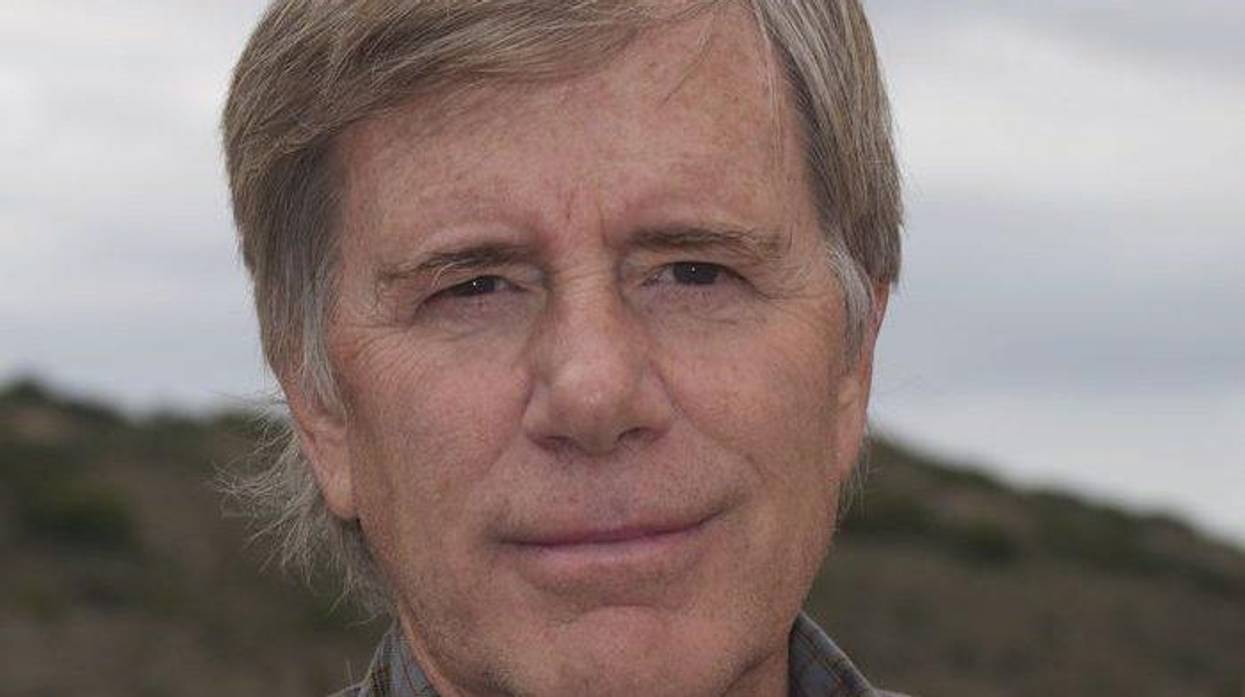
It is with deep sadness and heartache that Common Dreams announces the tragic death earlier this week of longtime contributor and devoted environmental and political activist John Atcheson.
Atcheson's family shared with sorrow that John was killed in a car accident in San Diego, California on Monday evening, not far from his home. He was 71 years old.
"We know that John touched many lives and was beloved by those who knew him. While our grief is indescribable, celebrating his life is a way to share our favorite memories, his favorite songs, and build our sense of gratitude for each moment we shared with him," his wife, Linda Pratt, said in a statement on behalf of the family. "He is a shining star and will remain in our hearts forever."
"John Atcheson has been one of Common Dreams' smartest, most inspiring voices over the past 15 years. A great writer. Politically astute. Unapologetically progressive. His death is a huge loss to Common Dreams and the whole progressive community."
--Craig Brown, Common DreamsA passionate voice on these pages for over a decade and a half, John's untimely death was a shock to staff and we collectively send our deepest condolences to his family and friends as well as the countless readers who were informed, challenged, and inspired by his writing and political critique.
"John Atcheson has been one of Common Dreams' smartest, most inspiring voices over the past 15 years," said Craig Brown, co-founder and executive director. "A great writer. Politically astute. Unapologetically progressive. His death is a huge loss to Common Dreams and the whole progressive community."
Born on Dec. 13, 1948 in New Jersey, Atcheson--who leaves behind two children, two stepchildren, and three grandchildren--was revered by his family as a dedicated father and grandfather.
After growing up mostly in Pompton Plains, New Jersey and later Bethesda, Maryland where attended high school. John served in the U.S. Army and later received his degree in geology. Professionally, John served a long and successful career in environmental protection, first at the Environmental Protection Agency and later at the Department of Energy, where he focused on energy efficiency and renewable energy. He was a lifelong lover of nature who hiked and explored the great wild spaces of North America and elsewhere throughout his life. John authored two published books. The first, a novel, titled, A Being Darkly Wise, and the second a work of non-fiction titled, WTF, America? How the US Went Off the Rails and How to Get It Back On Track.
In a eulogy shared with Common Dreams by high school friend Taki Alexis, Atcheson is described as "a man of warmth, humor and a spirit of generosity that lifted us all." Known as Atchee by his childhood pals, John's personality was known to be infectious. "One cold winter day John and I rode a pair of quiet, competent motorcycles over a rise and onto a snow driven field where a herd of deer were grazing," he wrote. "As we were calm they didn't scatter and we romped along together for a long while... even the deer wanted to pal around with Atchee."
After retiring in 2009 and moving to California to be with Linda, whom he married in 2010, he dedicated more time to both his writing and activism.
"He lived fully, touched the hearts and minds of so many, and embodied thoughtfulness and compassion," the family said in their remembrance of him. "We can only cover tiny fractions of his journey, which ended much too soon."
Atcheson's life will be celebrated with a private memorial service with family and close friends next week. His family members request anyone wishing to honor John's life and spirit make a contribution to any nonprofit aligned with his strong commitment to environmental protection and climate justice. One example, an organization in which he was actively engaged, is the San Diego-based Stay Cool for Grandkids.
What We Do or Don't Do
Reading through the digital archive that includes hundreds of John's columns dating from 2004 to late 2019, readers can witness the breadth of his knowledge and his unwavering commitment to social justice, a more equal society, and the essential need to fight like hell for a better future for the world's people and natural systems.
It was in a 2004 column when John declared with urgency that "we have to act now" on the climate crisis. This was well into the Bush era but prior to Hurricane Katrina. That devastating event opened many people's eyes in the U.S. to the intensifying dangers of a warming planet, but it was no surprise to those who had already been paying attention to, and taking seriously, the scientific warnings. Before there was 350.org or Green New Deals or global climate strikes, there were people like John sounding the alarm as best and as loud as they could.
And John was not afraid to put his body on the line. In 2011, as the growing climate justice movement targeted President Barack Obama for his refusal to deny a construction permit for the Keystone XL tar sands pipeline, Atcheson was among 46 others who--on a hot August day in Washington, D.C. and as part of a larger wave that summer--risked arrest outside the White House.
What made him do it? It wasn't optimism, he confessed.
"The truth is, I am not optimistic that our actions will change the direction of this particular fossil fueled juggernaut," he wrote at the time. So then what was his reason? "The plain fact is, in an age filled with cynicism," he explained, "I needed to feel hopeful."
But it was not a branded, unearned hope. It was the feeling of hopefulness that only the witnessing of bravery and solidarity in extraordinary times can inspire. With humanity facing down the threat of pending climate catastrophe, "now is a time that cries out for the power of hope," John wrote. "Never before in the short history of humans, has there been such a time."
He continued:
What we do--or don't do--in the next few years will quite literally influence the kind of planet our progeny live on. Indeed, it will shape the world for hundreds of generations to come.
What an awesome responsibility for a once puny species to possess.
What a challenge to face, without hope.
A few short years. That's all we have to choose the kind of future we bequeath the planet for geologic ages to come.
We can leave a legacy of a world in which hope flourishes and dreams prosper, or we can leave a legacy in which hopes are diminished and most dreams are nightmares.
Those are now our choices. Our only choices. We cannot kick the can down the road--we've run out of road. We've run out of time.
Hyperbole? Radical enviro propaganda? Liberal hysteria?
Hardly.
And he never stopped calling for action and detailing for readers the perils--whether under Bush, Obama, or the current president--of business-as-usual energy policies or center-of-the-road politics.
The Establishment's Failure and the Need for Progressive Rebellion
John was relentless in his effort to expose the failure of a Democratic Party establishment that consistently strays from the promises made to working-class people and the progressive mantle the party claims in word but repeatedly fails in deed.
"When neoliberals and centrists defend 'the system' or warn against upending it, they're more likely expressing concerns about their losing their personal power base than they are about the party winning elections," he wrote last fall.
"The time to follow polls is long gone," John asserted. "If we are to restore our freedoms, we must shape polls, not follow them. Fortunately, leading a progressive rebellion against the oligarchy is not only the moral thing to do; it's smart politics, too."
So while he suffered fools not lightly, he never wavered from a commitment to talk sense to them.
"What we do--or don't do--in the next few years will quite literally influence the kind of planet our progeny live on. Indeed, it will shape the world for hundreds of generations to come. What an awesome responsibility for a once puny species to possess. What a challenge to face, without hope."
--John Atcheson, 2011
For those who missed it, Atcheson in 2017 wrote, "What They Say vs. What They Mean: An Inside-the-Beltway Glossary"--an indispensable resource if you're an upstart (or aging) progressive looking to get a grip on the insanity of mainstream politics.
"Given the absurdity of our political process and the media's malfeasance, our national well of stupidity is deep and wide," Atcheson lamented in 2013 while he railed against one of his favorite targets, the corporate news industry.
"Without a press devoted to honesty and accuracy," he wrote in 2012, "our ship of state runs on yarns, myths, and the modern day equivalent of 'bread and circuses,' and we are at the mercy of the evil, the foolish, and the ignorant."
Frequently forced to denounce the corporate media's obsession with balance--"making it puke out nonsense as if it were news"--Atcheson did so with gusto. "One can achieve balance by putting a ton of bullshit on one side of the scale, and a ton of gold on the other," he explained in a column last November, "but that doesn't make them equivalent."
He understood better than most why Hillary Clinton likely lost in 2016 and how President Donald Trump won, but never lost sight of the "long game" needed to attain true progressive victories.
Ends as Beginnings and What Hope Feels Like
Atcheson made his dedication to future generations clear in his climate activism, and that also brings us back to that day outside the White House in 2012. Before being handcuffed and dragged away for trying to stop a pipeline that he believed would likely be built anyway (but notably has not been)--what did it feel like to a person like John who never gave up on the effort to change minds or influence readers even though he was wide-eyed about the intense realities of this troubled yet beautiful world?
It felt like hope, he wrote.
Not optimism, but hope.
And as Robert Kennedy said, "Each time a person stands up for an ideal, or acts to improve the lot of others, or strikes out against injustice, he sends forth a tiny ripple of hope, and crossing each other from a million different centers of energy and daring, these ripples build a current that can sweep down the mightiest walls of oppression and resistance."
Hope begets action, but action also begets hope. And who knows. Perhaps the tiny ripples of some 2,000 citizens willing to risk arrest are the beginning of a vast tide; a tsunami of change that will sweep away the foolishness that now dominates our country.
One can always hope.
In this writer's final correspondence with John last month he commented, "Interesting times, eh?" In response, I wrote dryly, "The End Times are always interesting."
Though it's certain he got the joke, he didn't let it slide.
"Every ending is a beginning," he wrote back. "Trite, but true."
He then added, "I do believe in history's dialectic"--and left it at that.
Like so many other writers and activists who toil for justice with no offer of reward and little reason to believe victory will be won, John proved--in a manner uniquely his own and one that we who hold common dreams will never forget--that our objections to injustice we voice and the political battles we wage do matter. They matter profoundly and he knew it.
In one of his most-read and widely shared articles of 2019, he concluded in a way that was not subtle: "What's needed is a people's revolution and a radical insurgency that restores government to the governed," he wrote. "Nothing short of that will prevent future Trumps, or solve our very real problems."
We owe you much and we thank you and we will miss you, John Atcheson.
So we mourn.
And--because "hope begets action, but action also begets hope," and because "every ending is a beginning"--together we fight on.
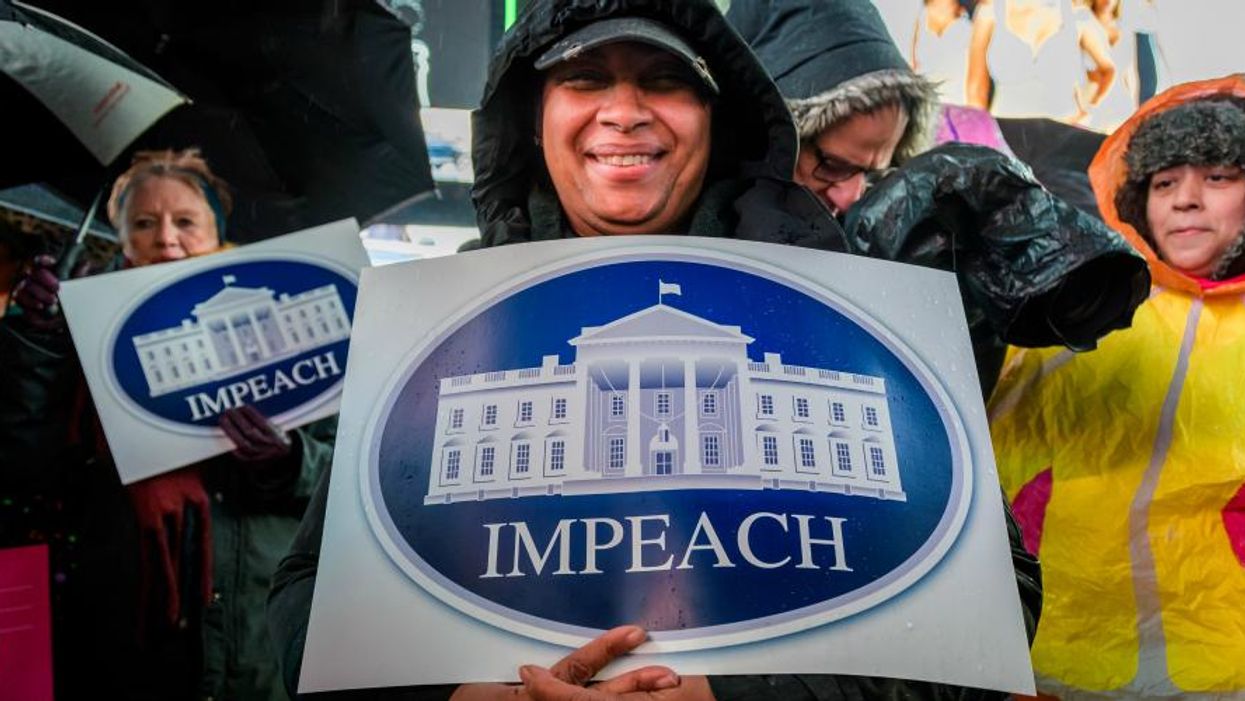
Republicans are mounting an effective defense against impeachment that is without foundation, but is likely to prove effective. Essentially, they are all repeating the same lies in unison, over and over again, taking advantage of something called the "illusory truth effect," which causes people to confuse repetition with truth.
A less kind--but perhaps more accurate--characterization of what they're doing would be to invoke Goebbels "big lie," a tactic that relied on audacious lies repeated over and over.
They're ignoring the validity of Trump's actual crimes, instead focusing on process and a series of distractions. There's a reason for that, of course. The evidence of Trump's crimes is overwhelming and incontrovertible.
Let's look at their objections and examine them against the facts.
Big Lie #1: Trump didn't commit an impeachable offense
Their first claim is that no laws were broken, or that there was no offense that meets the high hurdle of impeachment established in the Constitution, and that the evidence is based on heresy. They repeat ad nauseum that treason and bribery were not mentioned in the articles of impeachment, while ignoring the rest of Article II, which states that "high crimes and misdemeanors" are also a basis for impeachment.
But, we know--from his own words and the words of his chief of staff and his Ambassador to the European Union--that Trump attempted to blackmail the new Ukrainian leader by withholding tax payer money appropriated by Congress to help the Ukraine in their war with Russia, in order to get dirt on Joe Biden. In short, he compromised our and our ally's national security for his own personal gain. In the words of Representative Jayapal, "Trump is the smoking gun."
This is so much more than a high crime or misdemeanor--it is an abuse of his position that is unprecedented in U.S. history, and it is precisely the kind of offense the Founders envisioned when they expanded the grounds for impeachment from just bribery and treason.
Trump compounded this by obstructing the pursuit of justice in a number of ways, again, in broad daylight. The Founders created a government based on checks and balances between the three branches of government. Trump has subverted the system by instructing his staff not to honor subpoenas and refusing to provide documents. This is both unprecedented and it amounts to prima facie evidence of his guilt.
Big Lie #2: This is a partisan witch hunt designed to overturn the election
Republicans say Democrats have been trying to get rid of this President since he was elected. As Rep. Steny Hoyer (D-MD) noted, the Democrat Party as a whole voted against impeachment three times before Trump's latest egregious crime. The reality is, Trump left them no choice, this time. His violations threatened the thin and delicate fabric of the rule of law. The US has the oldest written constitution in the world, and it has survived and remained effective because throughout our history there has been a commitment to honor the principles and customs that give force to the mere words written on the thin parchment, however eloquent those words are.
In fact, Democrats didn't pursue clear and obvious violations of the Emoluments Clause, and they declined to pursue an obvious obstruction of justice case established in the Mueller Report. Pelosi knew that impeachment was never going to be a winning political issue, and that's why she held back those in the Party who wanted to aggressively pursue Trump's many and obvious violations of the law.
But the seriousness of Trump's total disregard of the separation of powers, and his serial violations of both law and decency left her no choice. To not impeach would be to sanctify an imperial presidency that would be little different than a monarchy.
As for "ignoring the will of the people" and trying to overturn the 2016 election, it's worth noting that Trump lost the popular vote by about 3 million. If the people's will were followed, Trump would not be in the White House.
Big Lie #3: Democrats are impeaching Trump because they're afraid he'll win in 2020
The nature of Trump's crimes also explains why the Democrats didn't simply "wait until the next election," and let the people decide. We expect our Representatives to safeguard the Constitution, and they take an oath to do so. Not impeaching Trump would be a violation of that oath and of the people's trust, in addition to creating an Imperial Presidency.
Here again, the evidence that this is a flat out lie and an attempt to discredit the need to impeach is overwhelming.
Trump loses to each of the three top Democratic candidates in virtually every poll; Democrats swept the table in 2018 and they've won the majority of elections since. The evidence suggests Trump will lose in 2020, and ironically, impeaching him probably works in his favor, politically.
Big Lie #4: Democrats are ignoring the people's business by focusing on impeachment
The Democratic House has passed 50 consequential bills, including such popular measures as lowering the cost of prescription drugs, protecting people from being dropped by insurance companies for preexisting conditions, insuring fair elections, requiring background checks for gun purchases, climate legislation--the list is extensive and important. These bills were supported by the majority of Americans, and they were opposed by most House Republicans. Now they are languishing in Moscow Mitch McConnell's legislative grave yard, formerly known as the Senate.
If time and the people's will were an issue, Republicans in the House would be voting for the bills they've fought against, and Mitch McConnell wouldn't be sitting on them, he'd be introducing them for a vote.
Why the Big Lie is likely to work
The real jury in impeachment trials are the people. As I said in the beginning, the Republican strategy of telling the big lie will probably work for them. The overwhelming majority of Americans are fed up with government in general and partisan bickering in particular, and they have little faith in government.
Both parties have contributed to this: Democrats by abandoning the New Deal and adopting a centrist, corporate friendly strategy that has benefited the 1 percent, and punished everyone else; and Republicans by adopting a strategy specifically designed to discredit government, and empower oligarchs. (see Lewis Powell's infamous manifesto, or "WTF, America? How the US Went Off the Rails and How to Get It Back on Track").
This means a sizable number of people will tune out the whole process, and another chunk of folks will believe the lies. By positioning themselves as "outsiders" Republicans ride the very wave of dissatisfaction they themselves created, and Democrats--having abandoned the values that made them a majority party and gave them credibility--won't be trusted enough to convince people this is anything other than the usual partisan bickering they come to loathe.
If Democrats say one thing, and Republicans say another, and it's obvious one of them is intentionally lying, what is the "big story?"
For most of the mainstream media, it's not the lying. Their big story is the conflict. This is, literally, a complete failure of the press's obligations to a free society as envisioned by the Founders.
Clearly, the fact that one of the nation's major political parties is routinely and consistently lying about so many things should be big news.
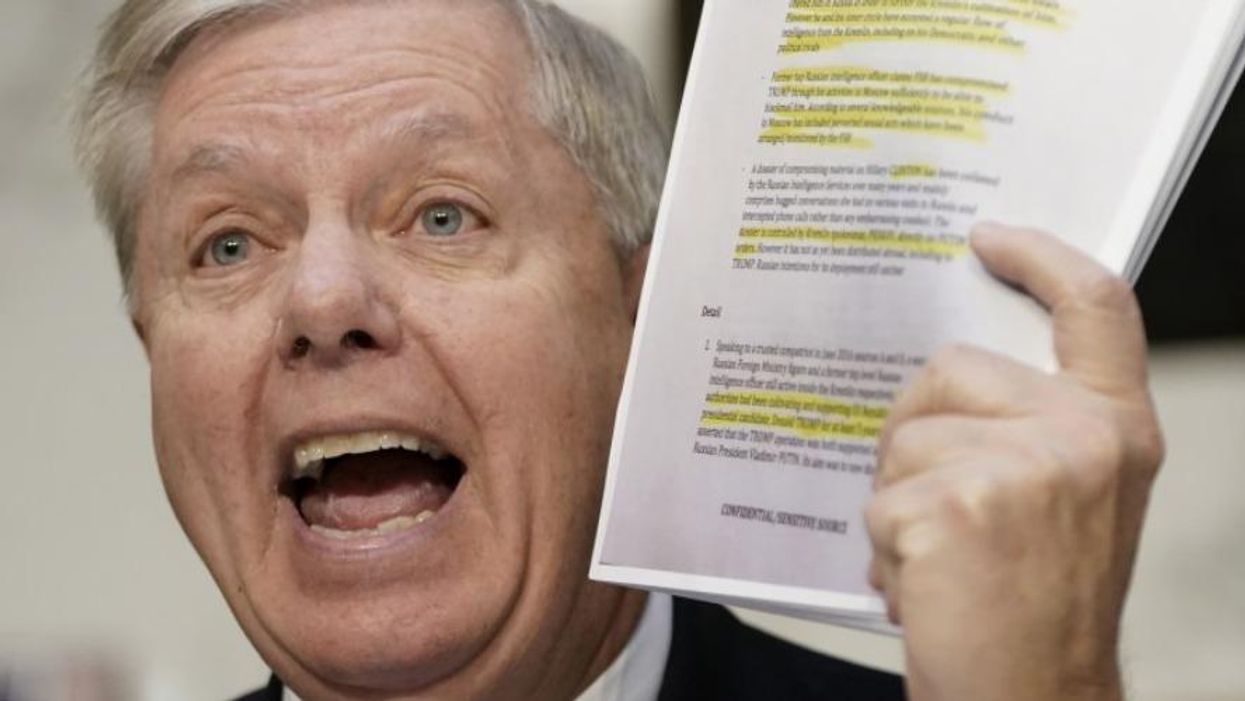
Take the Horowitz Report produced by the DOJ Inspector General's office. Read it, and it's clear it completely discredits Republican claims that their investigation of the links between Trump's cohorts and Russia was politically motivated. It states that the investigation was not undertaken for political reasons. Yes, they do note some procedural lapses, but to conflate that into what Trump and Barr are saying--that the report finds the FBI guilty of a politically motivated hit job--is a bald-faced and obviously intentional lie.
While a few stories do note--somewhere near paragraph 3 or 4--that the facts support one and not the other party's position, that's typically not the lede. For example, the New York Times story on December 10th on the FBI report carried the following headline: "Trump and Barr Criticize FBI Director Over Report on Russian Inquiry." That's news? But the fact that both men have been lying about the report for two days isn't? Why?
We can get part of the answer by looking at how the mainstream media covered the Afghanistan Papers. When the Washington Post broke the story its headline read, "At War with the Truth." Follow up stories in the media used words like "lie"; "mislead"; and "failed to tell the truth" in their the coverage. In short, the lying was the lede, and rightly so.
So, what's the difference? Well, Afghanistan was a bi-partisan lie. Both parties deceived Americans about our prospects.
But when Trump, Barr, McConnell and Republicans lie about an issue, it can't be the lede because that wouldn't be "balanced."
Look, the fact that one major party routinely lies to the American people about just about anything and everything--from climate change, to attempted blackmail, to deficit-exploding tax cuts, to inviting Russia to influence our elections ... even about the forecast path of a hurricane for god's sake--should be big news. And it should be the top of the TV news, the front-page headline, and the lead story on radio programs.
The fact that Trump and Barr are criticizing the FBI Director for not rebutting his Inspector General, or the fact that they completely mischaracterize what Horowitz said in his report--to the point where their statements are 180 degrees from what the report actually said is not the big news. But the fact that they're blatantly and obviously lying is. And it's important news.
Yes, the Post keeps a tally on Trump's prodigious lying, but it's kept apart from the news stories, which continue to report the he-said, she-said "balanced" stories that leave their chronic lying outside the context of the daily news.
Again, the Post's headline on their Afghanistan story was "at war with the truth," while their headline on Horowitz's IG report was, "FBI was justified in opening Trump campaign probe, but case plagued by 'serious failures,' inspector general finds."
So balanced, but so misleading.
Look, the "serious failures" were procedural. Providing misleading information on a FISA application should certainly be examined, and remedies should be sought. But that in no way equates in importance or scope to the main finding, that the investigation was not politically motivated. Making mere procedural improprieties a co-equal part of the headline completely distorts what the report said, gives fuel to crackpot and delusional stories being hawked by Trump and the Republicans, and is frankly, just bad journalism.
But it's not just the Post and the Times. It's MSNBC, CNN, and NPR--the whole alphabet soup of so-called liberal or centrist news outlets--that continue to enable lies and liars by according their mendacity the same weight and import as truth. In the words of Eric Sevareid, written about Joseph McCarthy's rein of hate:
Our rigid formulae of so-called objectivity ... have given the lie the same prominence and impact that truth is given; they have elevated the influence of fools to that of wise men; the ignorant to the level of the learned; the evil to the level of the good.
Journalism's first allegiance should be to truth and accuracy in reporting, in the service of an informed populace. This is the rationale behind the First Amendment, and while the press has not always and universally realized this aspiration, it has done well enough that the people could ultimately spot a demagogue posing as their savior.
In an age where Fox News or Sinclair can and do regularly amplify the lies of rightwing would-be despots, at a time when social media can cavalierly expose billions to complete and utter nonsense, the legitimate media has a responsibility to tell the truth, to provide context, and to call a liar, a liar. And it's even more important to tell the people when an entire political party is consistently and routinely and publicly lying about issues that go to the core of our Republic's viability.
Indeed, this is exactly why our Founders saw fit to give them protections under the First Amendment. Jefferson famously said he'd prefer a free press without government over a government without a free press.
But the press is no longer free. It is enslaved by capitalists who would rather make money than tell the truth.
That's why the Big Lie works. That's why it is eroding 232 years of freedom, and that's why Trump, Barr, McConnell and their sycophants get to misinform the people. And that's why Trump will be exonerated by the Senate, and why he may even win in 2020.
If journalism is the first draft of history, the press is missing three of the biggest stories of our time. Of course, the Democrats' inability to articulate anything like a coherent message doesn't help. Let's take a look at what they're missing.
Republicans' blockade of legislation
Mitch McConnell's legislative blockade has gotten some attention, although nowhere near as much as it deserves. As of July of this year, the House had sent over 49 major bills, including such popular measures as lowering the cost of prescription drugs, protecting people from being dropped by insurance companies for preexisting conditions, insuring fair elections, requiring background checks for gun purchases, climate legislation - the list is extensive and important. Yet each of these - which are supported by the vast majority of Americans - has been blocked by McConnell and his Republican Senate.
As bad as McConnell's do-nothing Senate has been, it is only a symptom of a much more serious disease. Specifically, Republicans know little about governing, and care less. This is because they are essentially anti-government. For going on four decades now, Republicans have run - and won - on an anti-government platform, that disdains governance, and McConnell's legislative graveyard is merely the latest symptom of that trend.
But the press ignores both McConnel's malfeasance, and the larger issue of a significant portion of the country electing anti-government extremists to ...well ... govern.
Democrats' embrace of centrism, their abandonment of labor and working class Americans, and their decline in popularity
If you want to understand how anti-government incompetents keep getting elected, all you have to do is examine the Democrats' steady and inexorable abandonment of the poor and middle-class. Beginning in the late 1970's and accelerating since, the party has systematically embraced the interests of corporations and the rich over the interests of the people, and the party's power has declined in lockstep with the trend.
By trying to appeal to people while representing plutocrats, they've left the majority of the voters with no one to actually represent them, and the people know it. As their slice of the American pie shrank, and their political power evaporated, many of them took to voting for anti-government types who shared their contempt and anger at the governing establishment. This is the answer to the centrist Democrats' perpetual incredulity that some 40 percent of the people support an incompetent thug like Trump, and miscreants like McConnell, Nunes, and Hunter keep getting returned to Congress.
Meanwhile, the Democrats in control of the party continue to push the fantasy that progressives will fair badly in middle America, and that the key to defeating Trump and the Republicans is to run a moderate or centrist. And the press repeats this absurdity, and virtually ignores candidates like Sanders and Warren, or gives them negative coverage when they deign cover them. This artificially props up centrist candidates like Biden in the polls and primaries, even though they are destined to fair badly in the general election. Doubt that? Remember the "progressive who got things done" while coddling and consorting with Wall Street, big banks and corporations? A centrist candidate would be an instant replay.
When the media and both political parties represent the interests of the oligarchy, attempts to prop up corporate centrists will fail, and surprises like Trump will be inevitable.
Calling policies supported by the majority of Americans radical or extreme, while calling rightwing corporate-sponsored policies centrist
One of the most dangerous failures of the press is to label as extreme, that which is merely prudent, particularly when the majority of Americans support it. Indeed, one wonders how things like the Green New Deal or Medicare for All or increased taxes on the rich can be called extreme when they are supported by the overwhelming majority of Americans. An extremist position is defined as an outlier - as furthest from the center -- so who, exactly is it that gets to define ideas with 60, 70 or more percent support - the very definition of the center -- as "extreme?"
The answer, of course, is corporations, the rich, and the politicians and mainstream media who are owned in whole or in part, by them.
The absurdity and extremism of America's "wealth not health" care system is best captured by the reaction of British folks of all stripes when they learn of the costs of that system to real people.
Similarly, the idea that the Green New Deal - which is not only supported by the majority of Americans, but is also the only proposal that will avert catastrophic warming, and the only one that is rooted in the science of what is necessary to stay below a 1.5 C temperature rise - has been supported by upwards of 60 percent of Americans. Hardly an outlier. More importantly, the rest of the so-called centrist political compromises are tantamount to trying to cross the Grand Canyon in a series of ten-foot leaps.
There are other issues the mainstream media and the corporate wing of the Democratic Party are labeling extreme that are, in fact, mainstream, such as free college, assault weapon bans, a national minimum wage, taxes on the rich, laws to get money out of politics and eliminate Gerrymandering and voter suppression ... the list is nearly endless.
Unfortunately, as long as oligarchs control both the Democratic Party and the mainstream media, you'll be told they are extremist positions that will get Trump reelected. The reality is the opposite. A centrist will leave the millions of progressive voters on the sidelines, and the angry 40 percent will turn out in force and reelect the demagogue.
Last week there were two reports released on climate change. The first warned that most nations were falling short of their commitments under the Paris agreement and that time was running out to avoid going above a 1.5degC increase in temperature. The second warned of impending tipping points and suggested a different way of formulating policy that might help us avoid the worst consequences of climate change.
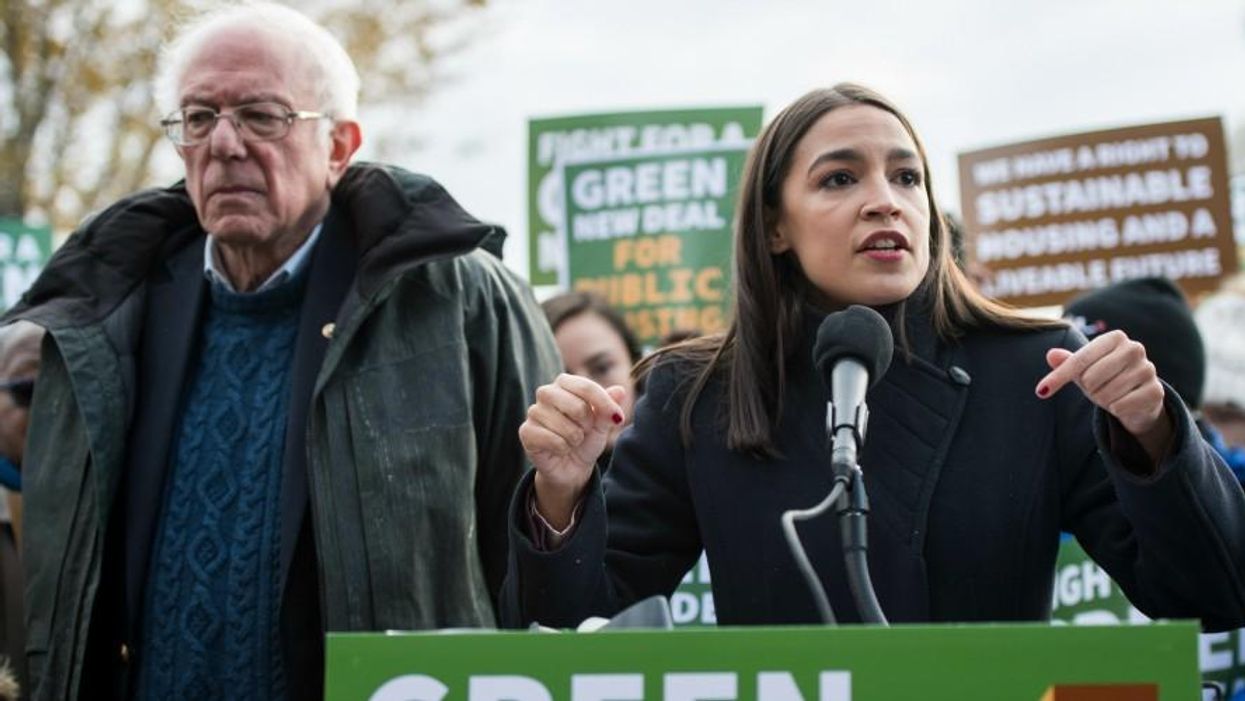
We need a Green New Deal of the scale Sen. Bernie Sanders has proposed. Nothing else deals with the reality of climate change and averts its worst effects.
Taken together, they explain why the so-called moderate's proposals to mitigate climate change are a prelude to disaster.
On Sept. 26, the U.N. released their Emissions Gap Report and it noted that most nations are not meeting the goals they agreed to under the Paris agreement. As a result, the world is now heading toward a 3.2degC rise in temperature by the end of the century. This would have devastating, ecosystem-destroying, and irreversible consequences.
The report goes on to say we must begin to reduce greenhouse gas emissions by 7.6 percent a year, beginning next year--or about a month from now--to stay below a 1.5degC temperature increase. Even a 1.5degC increase, scientists warn, will cause extensive and possibly irreversible increases in sea levels, more droughts, more frequent storms and heat waves, mass migrations of climate refugees, and increases in extinctions, but temperatures above that risk even more devastating consequences.
But the fact is, the U.N.'s forecast is in many ways conservative, and the actual temperature increases are likely to be higher than forecast, and to arrive sooner. One of the troubling assumptions in the Intergovernmental Panel on Climate Change's latest forecasts is that our carbon budgets are larger than previously thought, because the atmosphere is less sensitive to emissions than earlier forecasts assumed.
The second report, authored by some of the world's leading climate scientists, explains that in the future, the climate is likely to be more sensitive to a given amount of emissions, not less, because tipping points can cause rapid increases in atmospheric concentrations of greenhouse gases, either by compromising carbon sinks or causing the rapid release of natural stores of carbon.
Assumptions about carbon budgets make a big difference in terms of gauging how much time we have left to act. For example, the new carbon budgets the IPCC began using in 2018 suggest we have about nine years of current emissions remaining before we warm by 1.5degC; under the old budget, we only had three years.
But because of feedbacks, the expanded carbon budgets being used by the IPCC are likely to be exposing us to significantly higher risks.
There's ample evidence suggesting that the carbon sinks are getting compromised. For example, there was a great deal of celebration about the fact that human emissions of carbon had flat-lined between 2014 and 2017, but the dirty little secret is that even though emissions held steady, atmospheric concentrations of carbon dioxide continued to go up--indeed, they went up faster than in previous years. In both 2015 and 2016 the atmospheric concentrations went up by 3 parts per million (ppm), which was double the rate of increase between 1990 and 2000.
Many scientists attributed this to the intense El Nino occurring at that time. During El Nino periods, the sinks--natural systems which absorb carbon--are not as effective.
But there is increasing evidence that the sinks are becoming permanently compromised, which means that a higher proportion of the carbon we emit will stay in the atmosphere. In fact, even before the El Nino, research was showing that carbon sinks were becoming less effective at removing carbon from the atmosphere.
This means that in the future, more of the carbon emitted by humans will remain in the atmosphere--the exact opposite of what the adjusted numbers in the latest IPCC report assume. It also means that even if we do manage to cut carbon emissions in the very near term, we may not have an equivalent cut in atmospheric concentrations, which means warming could continue to go up despite our cuts.
So what does this mean in terms of action we need to take to prevent a global catastrophe?
The second report says we must we move from looking at needed actions through the lens of neoclassical economics--the current framework employed by the IPCC--to a risk assessment model.
The underlying assumption of the neoclassical economic framework is that there's some optimal balance between mitigating warming and maintaining a healthy economy. More than a decade ago, The Stern Review showed that the costs of climate change exceeded the costs of mitigating climate change over the long or medium term, and as climate change has progressed from a distant threat to a current reality the notion of some optimized equilibrium point between the costs and benefits of mitigating it has become untenable. Nevertheless, it is still a widespread belief that this mythical balance exists. The policies suggested by this assumption include carbon taxes, carbon fees and dividends, and/or subsidies for renewable and carbon-free energy technologies.
On the other hand, a risk management framework focuses on minimizing or avoiding risk. The greater the potential risk, the less certain the science needs to be to invoke action. Obviously, with a risk like climate change that is global, irreversible in any time frame other than geological, proximate in terms of time, and catastrophic, risk avoidance takes precedence over any consideration of cost.
The policies implied by a risk management framework include bans, mandatory phaseouts, and other market interventions that are determined by need, not optimal allocation of costs and benefits. And the need is to phase-out fossil fuels beginning immediately and switch to clean renewables. That means immediately ceasing development of new fossil fuel resources and leaving most of the proven reserves we've already found in the ground.
Bottom line: it's too late to rely on the market to solve the crisis we've put ourselves in. No politically acceptable tax or fee will foster the magnitude of change we need, in the time we need it.
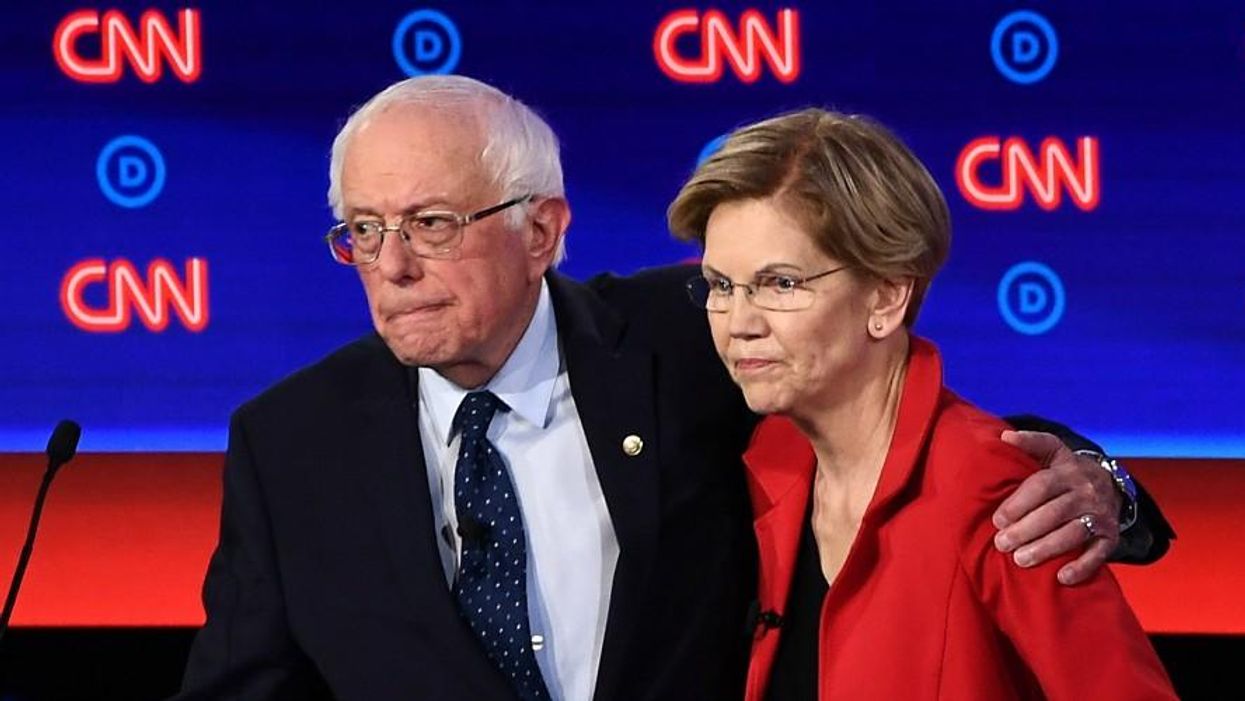
In short, we need a Green New Deal of the scale Sen. Bernie Sanders (I-Vt.) has proposed. Nothing else deals with the reality of climate change and averts its worst effects. The plans proposed by neoliberals and other "reasonable" people amount to applying trim tabs to a sinking ship.
There are two ways to practice politics: you can either follow polls or shape them. For four decades now, Democrats have been poll followers, and Republicans have been poll shapers.
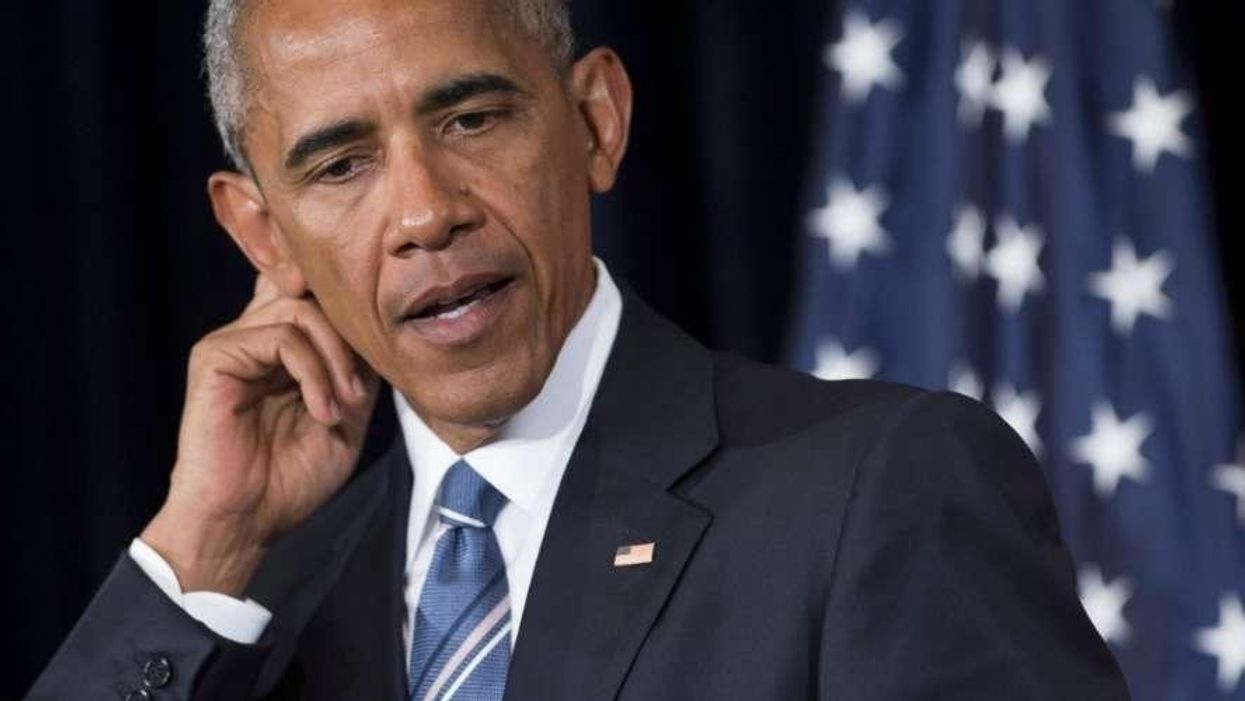
Recently, President Obama urged the Democrats to continue being poll followers, saying, "The average American doesn't think we have to completely tear down the system and remake it." The evidence suggests he's wrong about that, but even if he isn't, Democrats need to change the mind of the average American, not be led by it.
Here's why. "The system" was designed by and for corporate America and the ultra-rich, and it has robbed people of their power and their livelihood, and undermined the Democratic Party.
Back in 1968--4 years after conservatives got slaughtered in the national elections, Republicans had begun the process of shaping polls, first by engaging racism, xenophobia, greed, anger and hate in Nixon's southern strategy, and later, by investing in a comprehensive and strategic effort aimed at discrediting government as a force for good, and celebrating the free market as the deliverer of all good things by pure serendipity. The campaign was based largely on a blueprint penned by Lewis Powell in 1971, and it was launched in earnest with the election of Ronald "government is the problem" Reagan in 1980. Today, the modern Republican Party is a product of both strategies.
Democrats, meanwhile, responded by preemptively capitulating to the rightward sweep of politics. Rather than confronting the conservative challenge to New Deal values, they began to follow the polls and the polls - shaped by the corporatist's coup--dragged them ever further to the right, and ever further away from politics as if people mattered.
This whole rightward drift is nothing less than a Kabuki Dance engineered by the oligarchy. That's "the system" we now inhabit.
First let's look at how it's hurt the American people
By now, this is a familiar story, but it bears repeating in this time of a daily news cycle that routinely abandons the big story describing the downward sweep of the arc of history and the decline of a civil society, for the latest symptom of that larger malady--Trump.
From the late 1940's until the late 70's, income in the US grew at about the same rate for every sector of the population. In fact, the bottom 50 percent gained a bit more than the upper echelons of the economy.
Back in 1980, the share of national income going to the top 1 percent was just a bit over 10 percent and the bottom 50 percent's share of all income was about 20 percent. By 2015, that situation had reversed, with the top 1 percent getting about 20 percent of the national income pie, and the bottom 50 percent getting 10 percent.
The story is worse when it comes to distribution of wealth. From the late 40's until 1980, the share of wealth held by the top 1 percent fell slowly but steadily until, in 1980, the top 1 per cent held about 24 percent of all household wealth.
But today, the ultra-wealthy--the top .01 percent--now have as much wealth as the bottom 90 percent of Americans. And the three wealthiest individuals in America now have as much wealth as the bottom half of all Americans.
And it's not just wealth and income. Corporations and the rich have amassed enormous power and influence over government, too. As Gilens and Paige put it in their landmark study:
When the preferences of economic elites and the stands of organized interest groups are controlled for, the preferences of the average American appear to have only a minuscule, near-zero, statistically non-significant impact upon public policy. (emphasis added).
Bottom line: people have steadily lost power and money since the 1980's, while corporations and the rich have dramatically increased their share of wealth and power over that time.
The Demise of the Democrats
The story for the Democratic Party is just as bleak. After the Great Depression, until the 70's, the Democrats were a majority party, with half of all voters registering as Democratic, and only about a quarter registering as Republican. Today, they are near parity.
In 1978, Democrats controlled both legislative branches in thirty-one states, while Republicans had majorities in only eleven.
By 2016, Republicans controlled both legislatures and the governorship in twenty-five states, while Democrats controlled all three institutions in just six states. Nebraska, which has a unicameral, nonpartisan legislature, isn't counted in this total.
Republicans controlled both legislative bodies in thirty-two states, while Democrats did in just thirteen.Currently thirty-four states have a Republican governor, while only fifteen are headed by a Democrat, and one--Alaska--is headed by an independent.
But since Sanders' 2016 run, there's been a revolt, with progressive poll shapers attempting to take over the Democratic Party, and as a result, Democrats have been making gains again, taking over the House and sweeping the off-year elections.
"The system" is broken, immoral, and anti-democratic
When neoliberals and centrists talk about "the system," they'd like us to think about the democratic republic defined by the Constitution and the Bill of Rights, and the nearly two centuries of respect and practice that governed those implementing the Enlightenment values contained in these documents. But that system is gone. It has been replaced by an oligarchy.
The time to follow polls is long gone. If we are to restore our freedoms, we must shape polls, not follow them. Fortunately, leading a progressive rebellion against the oligarchy is not only the moral thing to do; it's smart politics, too.
When neoliberals and centrists defend "the system" or warn against upending it, they're more likely expressing concerns about their losing their personal power base than they are about the Party winning elections.
But that's "the system" that enabled Trump to win in the first place.
Remember "no collusion," Trump's go-to line on the Mueller investigation? It was brilliant in its own way. Trump's crimes were pretty clear: soliciting aid from a foreign government and obstructing justice--and there was ample evidence that he'd done both. But "no collusion" avoided mentioning criminal behavior, because collusion has no real meaning in strictly legal terms, and it is a word that most people simply don't use.
Many in the media picked it up, led by the conservative bubble news run by Fox and Clear Channel, and in the end, it served Trump well. The crimes seemed vague, and so did the standards his behavior should be judged against. It didn't have to be that way. If Democrats and the media had used words like "illegally soliciting aid from a foreign government" and "receiving illegal contributions of value from a foreign government," the crimes would have seemed more tangible and so would have the attempts to cover them up and obstruct inquiry into them.
Well, Mr. Trump has gone one better with the Ukrainian scandal, with his constant use of quid pro quo. Here again, there are plain and obvious words that describe what Trump did. Committing extortion and blackmail for private gain, using taxpayer money to do it, and compromising national security for his own benefit, pretty much sums up his actions. And each is a clearly an impeachable offense, and each is understood by most people.
But this is Trump's unique genius. Yes, you read that right. He may not be a "stable genius" but he does know how to control the public narrative better than most politicians, and certainly better than the hapless Democrats.
One of the things he does well is to change the subject, by doing or saying something outrageous, a tactic he learned from his mentor, Roy Cohn.
But his use of language is where he really distinguishes himself.
Quid pro quo has now entered the impeachment debate as the operative word. The standard against which all things must be measured. And this time his framing of the issue has broken out of the Fox bubble; the broader press has picked it up and repeated it again and again. But what does it mean? What legal line does it imply? No one knows, because again, it's not a legal term. Moreover, it's not a phrase people use, so even the moral boundaries his crimes cross are obscured by its usage.
For example, on November 11th, the New York Time's lead editorial was a lengthy rebuttal to Trump and his supporters' various attempts to defend themselves against charges of extortion and blackmail - but their entire argument was framed by whether Trump's offense was a quid pro quo. This, just 3 days after 33 writers explained - in an open letter published in the New York Times op-ed page, no less - why the media has to stop using the phrase quid pro quo.
Trump's one real talent is that he's a natural rhetorician. Rhetoric is the "the art of effective speaking or writing." Its three cardinal rules are: 1) use simple words; 2) repeat, repeat, repeat; and 3) use figures of speech such as similes, metaphors, alliteration, hyperbole ... rhetoricians have catalogued some 250 of them.
Rhetoric was developed in ancient Greece for use in legal disputes by the Sophists, from which we get the word sophistry, which means "the use of fallacious arguments, especially with the intention of deceiving."
Trump is constantly using rhetorical devices in the name of sophistry. His conversation with Zelensky was "perfect"--a simple word and an example of hyperbole. His references to Joe Biden as "Sleepy Joe"--a figure of speech based on something called an antonomasia - substitutes a characteristic for the name. Trump used antonomasia to wipe out the entire field of candidates competing with him in the 2015 debates leading up to the 2016 election. Remember "Low energy Jeb" or "Little Marco?" One of his more brilliant recent creations is "Quid Pro Joe," which combines rhyming, simple words, and antonomasia in a virtual Molotov cocktail of deception and distortion.
It's not that Trump understands rhetoric. He doesn't. But he's like an idiot savant, in that he has an innate capacity to use rhetoric effectively.
Sadly, few people are trained in rhetoric these days, including those in the media. If repetition is one of the rhetorical cornerstones of sophistry, then the mainstream media are one of his biggest allies in his deception campaign. Some would argue that their malfeasance is intentional, a result of the media being owned by corporations. Others would suggest that the press just loves to feed controversy, because controversy sells. There's probably an element of truth to both, but an inordinate amount of the media's abysmal coverage of Trump and the impeachment process is a result of ignorance - an ignorance shared in equal measure by the Democratic Party and the press.
When you combine this with the media's and the Democrat's other mutual failing--constantly pitching the idea that the way to win elections is by appealing to centrists, and that progressives are on the political fringe - there's a real danger that this common criminal will not only retain office in the face of impeachment, but could win in 2020. And unlike their clumsy use of language, this particular line is a result of fat cats and corporations buying the party and owning the media.
As long as the media and the Democratic Party allow Trump to impose his rhetorical frame on the impeachment process, the prospect of four more years of Trump remains a clear and present danger.
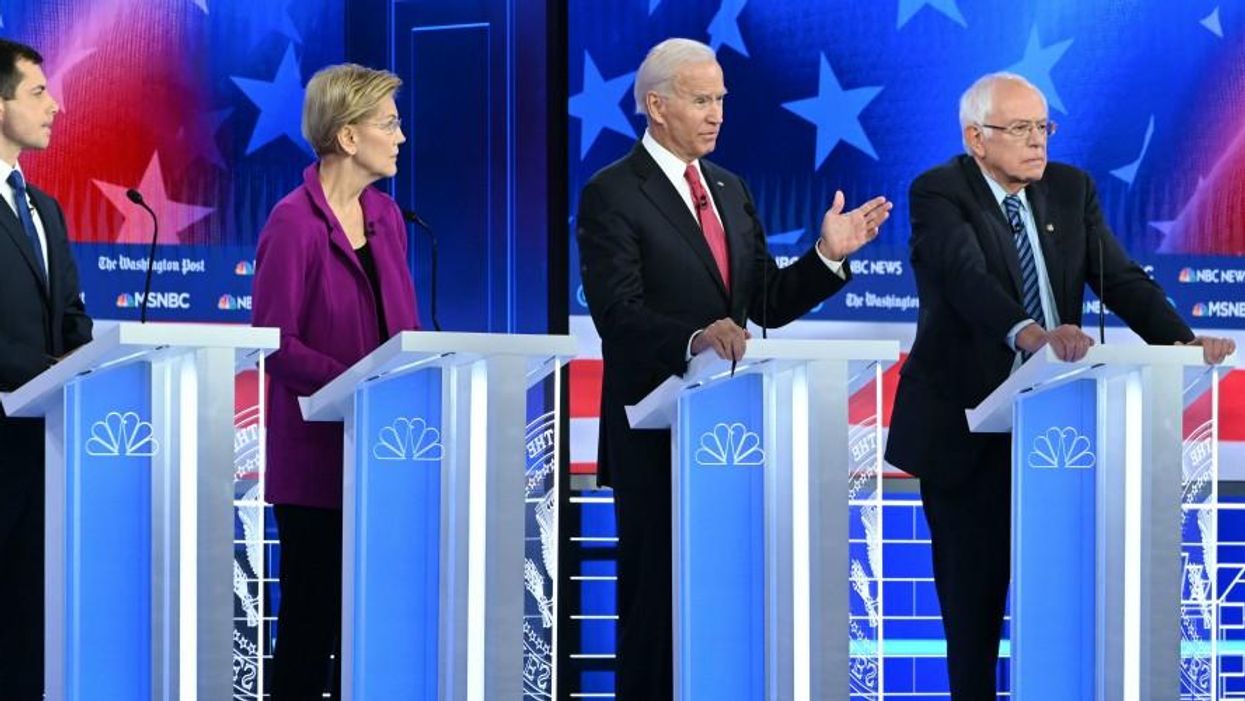
Both Sanders and Warren have come up with viable plans for funding Medicare for all. The neoliberal establishment and the conservatives have been going after Sanders' approach by raising the specter of-middle class tax increases. Sanders seems to trust that people will understand that if the tax increase is less than what they're paying now for health care, they'll come out ahead. One hopes he's right, but after a four-decade long propaganda campaign against government in general and taxes in particular, it's an uphill fight.
Both plans have their advantages, but the establishment needs a different tack to take on Warren's proposal, since she's taken middle-class tax increases off the table.
A recent op-ed by Megan McArdle in the Washington Post was one of the early assaults, and the others that have followed echo her criticisms in one way or another. Essentially, she claims that Warren's math works out, but the political and economic assumptions are "ludicrous."
McArdle has two main problems that she claims make the assumptions in Warren's proposal ludicrous. First, she says Warren's estimates for cutting costs under Medicare for All are politically and economically unachievable and second, she says that Warren's plans for raising revenue are even "... more exquisitely incredible." Together, she says they are "crazier than keeping a pet rhinoceros."
Let's take a moment to make an observation - Did you ever notice that the less substance a pundit has to bring to the debate, the more hyperbole, figures of speech and adverbs and adjectives he or she uses? If you want to see this phenomenon brought to its logical - or illogical -- conclusion, just listen to Trump.
But now to the substance of the arguments, themselves.
The first disagreement Mc Ardle has with Warren is how much can be cut from existing costs. Warren (and most folks who study the issue, as opposed to those pontificating about it) says we can cut nearly a third of the current costs. Uniformed critics scoff at this. But are they right to? No, it turns out.
Private health insurance charges between 12 percent to 18 percent overhead on top of health care costs, and experts suggest it's about 14.4 on average. Since Medicare cuts overhead to less than 2 percent, there's a savings of 12 percent without even touching current prices or costs.
The US pays twice what Canadians do for pharmaceuticals and three times what the Brits do. Since drugs make up 20 percent of health care costs, that's another 10 to 13 percent cut, bringing our reductions to about 24 percent, and so far, no one in the medical care provider community has suffered a single cut. Essentially, we're there.
But even if we needed further cuts to make it pencil out, they're easily achievable.
For example, according to a study by the non-partisan Congressional Budget Office on average, Medicare patients pay about half what those on private insurance pay for hospital admissions, and since hospital care makes up about a third of all health care costs, that means we could cut another 16 percent or so from the costs of hospitalization. CBO found that there were similar saving available from physician compensation. In fact, even if payments to doctors weren't cut, there are substantial savings available because a single payer approach simplifies billing and cuts administrative costs. One estimate suggests that for every ten doctors providing care, it requires seven additional people doing billing related activities.
The point is, there's so much fat in our current system, we could easily cut the 30 percent that Warren proposes cutting, and still have enough to keep a pet rhinoceros - in just about every Americans living room. Nothing ludicrous here.
Now how about Mc Ardle's criticism of Warren's plans for raising the remaining revenue needed to fund MFA?
For starters, she claims that the net effect of Warren's revenue proposals would be that billionaires would be taxed at a rate of 66% -- something that doesn't actually pencil out, but let's give it to her. According to Mc Ardle, this would "destroy" their wealth. Really? The very worst this would do is make someone who's earning a billion dollars a year into someone who is earning 333 million dollars a year. Oh, the pain! And it's worth remembering that the top earners were taxed at between 70 and 90 percent in the 50's and 60's during the most rapid and equally shared period of economic growth in US history.
But this criticism ignores what we know about the multiplier effect of putting money in the hands of those who are most likely to spend it.
As any economist worth his or her salt will tell you, on net, society-wide, taxing wealth, corporations and the rich doesn't destroy wealth, it creates it, if it puts more money in the hands of the middle class and the poor. Here's why. Not surprisingly, a consumer economy does best when consumers have and spend money. And the more money that the middle class and the poor have, the higher the proportion of money in the system that gets spent. Billionaires -- or even millionaires -- simply can't spend all their money. There's only so many yachts and jets they can buy. So, the higher the proportion of money in their hands, the less in circulation, and the less economic growth we experience. Oh, and these days, the rich pay a lower percent of their income on taxes than the bottom half of households so the current system isn't only economically inefficient, it's morally wrong.
This is why the CBO rated programs that put money in the hands of those who would spend it - the poor and those with limited credit -- as one of the most powerful economic stimuli we have in our fiscal arsenal, and why tax cuts for the rich and corporations have negligible or even negative effect on economic growth.
One other thing ... the financial transaction tax proposed by Warren will also create wealth, although it could have an effect on liquidity. Here's why. Flash trading and rapid churning of securities means companies lack patient capital. Volatility has costs in terms of planning and investing in capital improvements. Applying a transaction tax reduces flash trading and rapid churning of securities and this, too can be good for the economy.
If Ms. McArdle and her fellow critics are serious about their critiques, they're guilty of having sharp pencils, but dull minds. But one suspects, however, that their criticisms have more to do the other "isms," such as a blind devotion to capitalism, or an unreasonable fear and loathing of socialism.
Either way, Americans should be neither surprised, nor fooled when corporate shills, those motivated by ideological "isms," or those on the take from corporations or the ultra-rich attempt to discredit Medicare for All. It's not about the math; it's not about the cost to the middle class. It's about greed, ideology, ignorance or an unholy alliance of all three.
By the way, you know what is ludicrous? The wealthiest country in the world, having 30 million people uninsured, and another 50 million underinsured, paying twice as much for inferior care. Sanders and Warren have both shown we can afford to do better.
The other day, while listening to that liberal bastion, NPR, the newscaster mentioned that another witness had given testimony that would be damaging to Trump in the House's impeachment inquiry. In a transition so seamless it was an integral part of the story, the anchor immediately went on to say that Republicans claim the process is flawed, illegitimate, and partisan.
Well, yes. But is this news? Of course, they object to the process. Don't criminals object to being arrested? Don't speeders object to getting a speeding ticket? The only reason to give the Republicans' objection essentially equivalent status to damning testimony in a Presidential impeachment inquiry would be if it were valid.
But it isn't. Not even close. And NPR isn't alone in this false "balance" which infects the entire mainstream media, making it puke out nonsense as if it were news.
Republicans are mounting a counter-narrative that is not only baseless and intentionally deceptive, but it is also motivated by a dangerous tendency to put loyalty to party above loyalty to country. Things like the constitution, the rule of law, and the truth are swept aside in order to preserve the party's grip on power.
Remember those Republican Congressmen storming the Sensitive Compartmented Information Facility - a highly secure meeting room - just before Deputy Assistant Defense Secretary Laura Cooper gave damning testimony confirming Trump's use of public money and abuse of national security policy to blackmail Ukraine? Many of those demanding entry were, in fact, members of one of the committees in charge of the investigation and therefore allowed entry. This whole charade was simply a desperate attempt to change the narrative from Trump's increasingly obvious guilt to one about a flawed process. And of course there was a press conference, and of course, the press repeated Matt Gaetz' utter nonsense about Democrats running a "kangaroo court."
Yes, Vox and a few others noted that the Republican's stunt may have compromised national security; and yes, many deplored the lack of decorum, and yes, there were calls for less partisan behavior - as if both sides were equally at fault for the riot.
But those are the least of the problems with the media's coverage of the impeachment proceedings.
When even the so-called liberal media's response to any impeachment story is a knee-jerk reaction that gives equal time and credence to Republican talking points and red herrings, something is deeply wrong with the media in America.
And it didn't begin with Trump's impeachment.
In a recent column, Paul Krugman pointed out, once again, that the media has given credence to the Republican's hypocrisy on budget deficits for decades now. The on-again-off-again hysteria over the deficits corresponds precisely with who's in power. When Democrats control the White House, deficits are horrible, no-good, evil things to be avoided at all costs. When Republicans are and they want to pass a deficit exploding tax cut, no worries.
And the media has been complicit in giving their obvious lies legitimate coverage. It's all done in the name of "balance," an attribute NPR has lately taken to bragging about in their news.
One of the beneficiaries of the partisan political food fight is cable news, as partisans from both sides constantly tune in to get their "side" reinforced. Fanning the national id has been profitable for them.
Social media gets clicks galore and the nation descends into rabid screaming matches as each side squares off in preparation for the now dreaded Thanksgiving Dinner where Uncle Al holds forth on the latest conspiracy theories and threatens civil war if Trump is impeached.
If discourse in the US has descended into the level of the insane, it's because the media doesn't treat idiotic red herrings and bald-faced lies as what they are - attempts to distract, deceive, and destroy. And it's not just Rush Limbaugh and Fox News. Their misinformation campaigns couldn't withstand a concerted effort to actually inform Americans by the rest of the media. But that's not what they do.
The Ukraine incident is - if it occurred as witnesses and Trump himself have described it -- a high crime. It appears - by his own words - that Trump used the public's money in an attempt to extort a personal political favor from an ally, putting them at risk and compromising the US's security in the process. Certainly, it's an impeachable offense, if he did it, and certainly, it must be investigated.
When Republicans storm a secure facility; knowingly lie about economic policy; block legitimate inquiries into impeachable offenses; deny climate science; or roll back environmental, health and safety regulations, the real news story should be that one of our major political parties has gone off the rails and turned bat-shit crazy, not a he-said, she-said appeal featuring balanced reporting, and bemoaning partisanship - which the media itself inflames by according the same weight to utter nonsense and lies as it does to factual reporting.
One can achieve balance by putting a ton of bullshit on one side of the scale, and a ton of gold on the other, but that doesn't make them equivalent. Unfortunately, our media doesn't see fit to report the fact, that's what's going on.
It doesn't help that they also present the progressive candidates and policies that most Americans favor as unpopular, costly, or ... gasp ... socialist, while they present the neoliberals in charge of the Democratic Party as "prudent" and popular. This makes obvious the role of big money in our politics and media for both parties.
But it's one thing to be beholden to corporate money, and quite another to be beholden to corporate money and to be conducting an assault on government that is - literally - dangerously tyrannical.
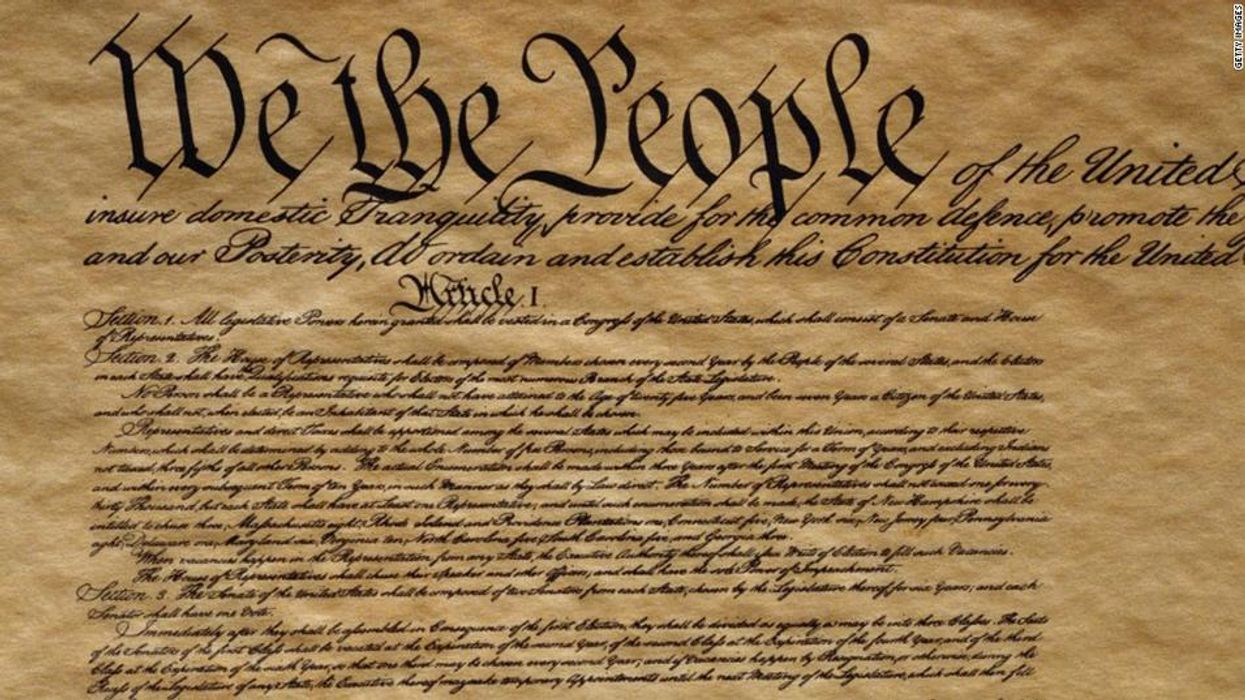
The Constitution was written on fragile parchment. It has no power other than the history of respect, reverence and custom supporting the principles written upon it since it was ratified 231 years ago.
The real story in journalism today is that one party has abandoned that respect and reverence. It is a party that hates government, yet wants to govern. It is a party that puts power over principle. It is a party that routinely lies. It is a party that rejects science, the Enlightenment, and seeks to usher in a New Dark Age. And finally, it is a party that threatens the principles and institutions we rely on for whatever semblance of freedom remains.
That's what should be in the headlines; that's what should be leading off the news at 7; that's what should be blaring from the radio. It's the story of our time, and it's barely being told.
Despite the yammering by the mainstream media and the neoliberals running the Democratic Party--not to mention Republicans and Fox News--the overwhelming majority of voters support progressive issues on a case-by-case basis, and the majority support the candidates who espouse them. Doubt that? See here, or here, or here, or any poll based the issues, not on political labels that--as a result of a four decades long branding effort funded by the oligarchy--have ceased to represent any real political perspective.
As for the majority supporting the progressive candidates, Sanders' and Warren's combined share of the voters exceeds Biden's by a factor of two, and both poll far better than Trump.
So you would think that Democrats would embrace progressivism and progressive candidates, but you'd be wrong. Instead, they're mounting a campaign against them with misinformation, distortion, innuendo, and that old time favorite--fear.
Neoliberal centrists and their allies in the mainstream media are using three main arguments in their combined assault on progressives.
First, they say we can't afford the programs progressives are advocating.
The two programs neoliberals most love to criticize as too costly are The Green New Deal and Medicare for All.
The notion that we can't afford the Green New Deal is as ludicrous as it is dangerous. If temperatures are allowed to increase by 3.7 C--about what full implementation of the Paris Agreement would accomplish, and about what the centrists are pushing--climate change would still impose some $551 trillion in damages. So-called moderates are essentially saying we can't afford to prevent $551 trillion in damages. This is madness, pure and simple, and there's nothing "moderate" about it, with climate change already causing unprecedented flooding, wildfires, droughts, storms and heat waves.
In essence, the moderates are trying to portray policies allowing for the destruction of our planetary life support system as prudent. The one thing science and reality is telling us is that climate change is here, now, and it will get worse far sooner than we'd previously predicted.
With the cost of renewable energy now less than fossil fuels in most cases, and with electric vehicles being as cheap as internal combustion cars, solutions are not only available, they're cost effective. Combined with aggressive tree-planting and land management, we could dramatically cut carbon in the near term, at relatively little cost.
But somehow, avoiding $551 trillion in damages while working to assure the transition to clean energy creates jobs and prosperity isn't "prudent" to moderates.
How about Medicare for All? Well, as Stephen Marks showed in a recent article, it's pretty easy to pay for it without imposing additional costs on low and middle income Americans. In fact, the cuts Marks outlined came up with a surplus after paying for Medicare for all. Marks' approach involved expanding the payroll tax above the current cap, and applying it to capital gains. Others have shown how a more rational defense budget could make us safer while freeing up substantial amounts of money for M4A. By the way, if you doubt that we can safely cut our Defense budget, consider this: the US currently has military troops in 138 nations, or about 70 percent of the countries in the world, and it's spending hundreds of billions on weapons even the military says it doesn't want. We don't have a Department of Defense, we're funding a Department of Offense.
The point is, by cutting costs, taxing the wealthy and corporations at levels they've historically been taxed, and adjusting bloated budgets for defense, there are many ways we could fund M4A without impacting the poor and middle class.
At the end of the day, the reason progressive policies such as free tuition, M4A, and the GND are portrayed as unaffordable is because the vast majority of income and wealth in this country now goes to the ultra-rich, who have a lower tax rate than the rest of Americans. And the so-called centrists want to keep it that way, even if it means 30 million Americans go without medical insurance, and the planet withers in a life-threatening permanent heat wave.
Second, they say the way to win is to get some centrists back from Trump. No. Real centrists are a rare breed, and pinning your hopes on getting a few to switch sides will be futile, for two reasons.
First, they're not about to go from Trump to an elitist neoliberal who calls him or herself a moderate. It was the policies and the hypocrisy of the neoliberals that drove them to Trump in the first place. He's their protest vote; their Molotov cocktail tossed in the face of Democrats who promised the moon around election time, then represented Wall Street, corporations, the ultra-rich and big banks the rest of the time. The fact is, Sanders and Warren are more likely to win back a few disgruntled centrists precisely because they understand this and back policies that matter to the people.
Second, there's simply not enough of them. If you add up left leaning Independents and Democrats they equal about 48 percent of the electorate, while right leaning Independents and Republicans add up to 39 percent of the electorate. Real centrists comprise only about 7 percent.
The real key to victory in electoral politics is the no shows. And with the majority of people holding progressive views, the way to get no-shows to show is not to back centrist policies, it's to run on values that favor the people, and that are supported by the majority of Americans.
But this brings us to the next shibboleth raised by neoliberals and centrists.
Third, they say that progressives need to focus--they are all over the place, and that's not how change happens. Here, Democrats need to take a lesson from Republicans, who managed a sweeping change in our national political dialogue in a few short decades.
They did it by focusing on values and principles (albeit ones that favored only the rich and powerful for the most part), not specific policies.
As Kevin Drum put it:
Every American over the age of ten knows what the GOP and the conservative movement stand for. Sing it with me now: low taxes, small government, strong defense, traditional families. See? You know the tune, and the harmony line, too...Everybody knows what the conservative brand stands for, because the conservative leadership has spent four decades nurturing a consistent brand identity for themselves.
And it delivered results.
If you go back to the early sixties, about half the people identified as Democrat, and only about a quarter Republican. At the same time, about 80 percent trusted government to do the right thing most of the time. Today, only about 17 percent do, and only 3 percent believe government "does what's right" just about always, and Democrats make up only about 31 percent of the voters.
Today's neoliberal Democrat is ideologically closer to yesterday's Republican, and Republicans? Well, they're the new know-nothing party, immune to facts, impermeable to truth, and consumed by hate, fear, greed, anger, xenophobia and racism.
That's change. That's a virtual revolution. And the failure of Democrats to confront the Republican narrative by embracing values that put people first explains a big part of why their party has shrunk by 40 percent over the past five decades.
Wait, did someone say revolution? Isn't that exactly what Sanders has been calling for? In fact, he's already started it. Back in 2015 when he was advocating Medicare for All, the press ridiculed him and said America wasn't ready for "happy dreams." Today, the majority of Americans favor it, as well as the GND, free tuition, a $15 minimum wage, sane gun laws, a repeal of Trump's tax cuts for the rich, overturning Citizen's United and getting money out of politics and a host of other "socialist" priorities.
The Revolution, it seems, is here. Democrats ignore it at their peril.