

That was the week that was. -Title of a British TV program in the 1960s
The editorial page of the Wall Street Journal has a way of taking the fun out of lots of things. Two events occurred during the week of September 15th that caused me to think that in a world consumed by violence and hatred there might be modest cause for optimism. Thanks to the editorial page, I have learned that my excitement about the advent of one event was premature, if not entirely misplaced and I eagerly await its judgment on the second.
The first event was the news from Tehran that its new president seemed to be a different sort from the clown qua president Mahmoud Ahmadinejad, who had preceded him. The new president, Hassan Rouhani, had responded with conciliatory tones to a letter from President Obama in which Mr. Obama suggested relations between Iran and the western world could improve if Tehran were willing to "cooperate with the international community, keep [its] commitments and remove ambiguities." There appears to be concern among those who know such things that if Mr. Rouhani does not act quickly to inject sense into Iran's policies vis a vis the rest of the world, he will soon be sidelined by hardliners in the government. Mr. Rouhani's words were not the only encouraging signs following his election. The military was given a backseat in governance and there have been domestic liberalizations, including the freeing of 18 political prisoners. Although after his election he declined to take an opportunity presented to him during a press conference to disavow his predecessor's assertion that the holocaust was a fiction, in an interview in New York during his visit to the United Nations he told Christiane Amanpour that the holocaust was "reprehensible and condemnable." Not all the news was good, however. In late August the authorities began a crackdown on women deemed inappropriately attired. That notwithstanding, the news from Tehran was welcomed by many. Not by the editorial page of the Wall Street Journal.
In commenting on Mr. Obama's response to the recent election by writing a friendly letter to the new president, the editorial page observed that Mr. Obama has never "taken no for an answer from Tehran. Despite being rebuffed for five years, he sent another entreaty after Mr. Rouhani's election in June." The writers are of the school that once there have been sufficient rebuffs from a presumed adversary the prudent course is to make no further attempt to achieve a rapprochement but instead continue to inflict pain on the citizens of the country whose leaders seemed intransigent, as if there were some virtue in abandoning the hope of bringing adversaries to the table. Now that I have learned why I should not be as enthusiastic about Mr. Rouhani's response as I was, I am waiting for the WSJ to advise me why the other event last week is not as hopeful as it seems. That event was, of course, Pope Francis's comments suggesting that the Roman Catholic Church should alter its doctrinaire approach to certain issues.
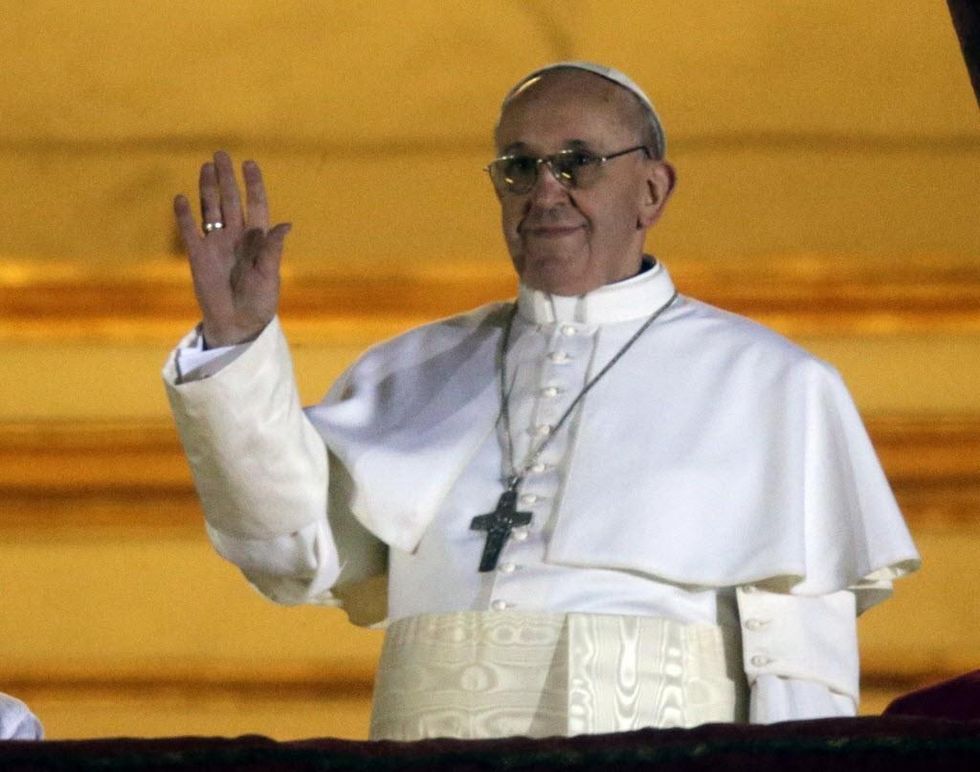
In an interview with a Jesuit publication the Pope observed that the church had become "obsessed" with abortion, gay marriage and contraception, and said the "pastoral ministry cannot be obsessed with the transmission of a disjointed multitude of doctrines to be imposed insistently. We have to find a new balance, otherwise even the moral edifice of the church is likely to fall like a house of cards. . . ." Those words sounded like a chorus of heavenly angels to many who heard them since it suggested that the new Pope was more in tune with the 21st Century than his predecessor and his predecessor's predecessor had been. The women in the church were also thrilled to hear what the Pope said, more especially because one month following his installation he had endorsed the attack on the Leadership Conference of Women Religious (LCRW) that was begun under his predecessor.
News of his interview was accompanied by a couple of sour notes. The first was sung when the Pope, speaking to a group of gynecologists at the Vatican, said that abortions were a symptom of a throw away culture and Catholic doctors should not perform them, hardly a surprising statement that does not gainsay his opposition to the church's unremitting focus on abortion and the other issues to which he referred. The enthusiasm of the women had to be further tempered by what he did the day after his interview was published. In reshuffling some key positions in the church he left in place Archbishop Gerhard Mueller, prefect of the Congregation for the Doctrine of the Faith who is in charge of investigating the Leadership Conference of Women Religious Nuns who are suspected of opposing the church's position on the priesthood and homosexuality.
The foregoing notwithstanding, thoughtful people cannot help but be encouraged by what the Pope has said and how he has acted since being elected, notwithstanding the foregoing. Enthusiasm aside, I will wait for the editors of WSJ editorial page to let me know why I, as in the case of Iran, am wrong to feel encouraged. They are a Wise Set of Journalists.
That was the week that was. -Title of a British TV program in the 1960s
The editorial page of the Wall Street Journal has a way of taking the fun out of lots of things. Two events occurred during the week of September 15th that caused me to think that in a world consumed by violence and hatred there might be modest cause for optimism. Thanks to the editorial page, I have learned that my excitement about the advent of one event was premature, if not entirely misplaced and I eagerly await its judgment on the second.
The first event was the news from Tehran that its new president seemed to be a different sort from the clown qua president Mahmoud Ahmadinejad, who had preceded him. The new president, Hassan Rouhani, had responded with conciliatory tones to a letter from President Obama in which Mr. Obama suggested relations between Iran and the western world could improve if Tehran were willing to "cooperate with the international community, keep [its] commitments and remove ambiguities." There appears to be concern among those who know such things that if Mr. Rouhani does not act quickly to inject sense into Iran's policies vis a vis the rest of the world, he will soon be sidelined by hardliners in the government. Mr. Rouhani's words were not the only encouraging signs following his election. The military was given a backseat in governance and there have been domestic liberalizations, including the freeing of 18 political prisoners. Although after his election he declined to take an opportunity presented to him during a press conference to disavow his predecessor's assertion that the holocaust was a fiction, in an interview in New York during his visit to the United Nations he told Christiane Amanpour that the holocaust was "reprehensible and condemnable." Not all the news was good, however. In late August the authorities began a crackdown on women deemed inappropriately attired. That notwithstanding, the news from Tehran was welcomed by many. Not by the editorial page of the Wall Street Journal.
In commenting on Mr. Obama's response to the recent election by writing a friendly letter to the new president, the editorial page observed that Mr. Obama has never "taken no for an answer from Tehran. Despite being rebuffed for five years, he sent another entreaty after Mr. Rouhani's election in June." The writers are of the school that once there have been sufficient rebuffs from a presumed adversary the prudent course is to make no further attempt to achieve a rapprochement but instead continue to inflict pain on the citizens of the country whose leaders seemed intransigent, as if there were some virtue in abandoning the hope of bringing adversaries to the table. Now that I have learned why I should not be as enthusiastic about Mr. Rouhani's response as I was, I am waiting for the WSJ to advise me why the other event last week is not as hopeful as it seems. That event was, of course, Pope Francis's comments suggesting that the Roman Catholic Church should alter its doctrinaire approach to certain issues.
In an interview with a Jesuit publication the Pope observed that the church had become "obsessed" with abortion, gay marriage and contraception, and said the "pastoral ministry cannot be obsessed with the transmission of a disjointed multitude of doctrines to be imposed insistently. We have to find a new balance, otherwise even the moral edifice of the church is likely to fall like a house of cards. . . ." Those words sounded like a chorus of heavenly angels to many who heard them since it suggested that the new Pope was more in tune with the 21st Century than his predecessor and his predecessor's predecessor had been. The women in the church were also thrilled to hear what the Pope said, more especially because one month following his installation he had endorsed the attack on the Leadership Conference of Women Religious (LCRW) that was begun under his predecessor.
News of his interview was accompanied by a couple of sour notes. The first was sung when the Pope, speaking to a group of gynecologists at the Vatican, said that abortions were a symptom of a throw away culture and Catholic doctors should not perform them, hardly a surprising statement that does not gainsay his opposition to the church's unremitting focus on abortion and the other issues to which he referred. The enthusiasm of the women had to be further tempered by what he did the day after his interview was published. In reshuffling some key positions in the church he left in place Archbishop Gerhard Mueller, prefect of the Congregation for the Doctrine of the Faith who is in charge of investigating the Leadership Conference of Women Religious Nuns who are suspected of opposing the church's position on the priesthood and homosexuality.
The foregoing notwithstanding, thoughtful people cannot help but be encouraged by what the Pope has said and how he has acted since being elected, notwithstanding the foregoing. Enthusiasm aside, I will wait for the editors of WSJ editorial page to let me know why I, as in the case of Iran, am wrong to feel encouraged. They are a Wise Set of Journalists.
That was the week that was. -Title of a British TV program in the 1960s
The editorial page of the Wall Street Journal has a way of taking the fun out of lots of things. Two events occurred during the week of September 15th that caused me to think that in a world consumed by violence and hatred there might be modest cause for optimism. Thanks to the editorial page, I have learned that my excitement about the advent of one event was premature, if not entirely misplaced and I eagerly await its judgment on the second.
The first event was the news from Tehran that its new president seemed to be a different sort from the clown qua president Mahmoud Ahmadinejad, who had preceded him. The new president, Hassan Rouhani, had responded with conciliatory tones to a letter from President Obama in which Mr. Obama suggested relations between Iran and the western world could improve if Tehran were willing to "cooperate with the international community, keep [its] commitments and remove ambiguities." There appears to be concern among those who know such things that if Mr. Rouhani does not act quickly to inject sense into Iran's policies vis a vis the rest of the world, he will soon be sidelined by hardliners in the government. Mr. Rouhani's words were not the only encouraging signs following his election. The military was given a backseat in governance and there have been domestic liberalizations, including the freeing of 18 political prisoners. Although after his election he declined to take an opportunity presented to him during a press conference to disavow his predecessor's assertion that the holocaust was a fiction, in an interview in New York during his visit to the United Nations he told Christiane Amanpour that the holocaust was "reprehensible and condemnable." Not all the news was good, however. In late August the authorities began a crackdown on women deemed inappropriately attired. That notwithstanding, the news from Tehran was welcomed by many. Not by the editorial page of the Wall Street Journal.
In commenting on Mr. Obama's response to the recent election by writing a friendly letter to the new president, the editorial page observed that Mr. Obama has never "taken no for an answer from Tehran. Despite being rebuffed for five years, he sent another entreaty after Mr. Rouhani's election in June." The writers are of the school that once there have been sufficient rebuffs from a presumed adversary the prudent course is to make no further attempt to achieve a rapprochement but instead continue to inflict pain on the citizens of the country whose leaders seemed intransigent, as if there were some virtue in abandoning the hope of bringing adversaries to the table. Now that I have learned why I should not be as enthusiastic about Mr. Rouhani's response as I was, I am waiting for the WSJ to advise me why the other event last week is not as hopeful as it seems. That event was, of course, Pope Francis's comments suggesting that the Roman Catholic Church should alter its doctrinaire approach to certain issues.
In an interview with a Jesuit publication the Pope observed that the church had become "obsessed" with abortion, gay marriage and contraception, and said the "pastoral ministry cannot be obsessed with the transmission of a disjointed multitude of doctrines to be imposed insistently. We have to find a new balance, otherwise even the moral edifice of the church is likely to fall like a house of cards. . . ." Those words sounded like a chorus of heavenly angels to many who heard them since it suggested that the new Pope was more in tune with the 21st Century than his predecessor and his predecessor's predecessor had been. The women in the church were also thrilled to hear what the Pope said, more especially because one month following his installation he had endorsed the attack on the Leadership Conference of Women Religious (LCRW) that was begun under his predecessor.
News of his interview was accompanied by a couple of sour notes. The first was sung when the Pope, speaking to a group of gynecologists at the Vatican, said that abortions were a symptom of a throw away culture and Catholic doctors should not perform them, hardly a surprising statement that does not gainsay his opposition to the church's unremitting focus on abortion and the other issues to which he referred. The enthusiasm of the women had to be further tempered by what he did the day after his interview was published. In reshuffling some key positions in the church he left in place Archbishop Gerhard Mueller, prefect of the Congregation for the Doctrine of the Faith who is in charge of investigating the Leadership Conference of Women Religious Nuns who are suspected of opposing the church's position on the priesthood and homosexuality.
The foregoing notwithstanding, thoughtful people cannot help but be encouraged by what the Pope has said and how he has acted since being elected, notwithstanding the foregoing. Enthusiasm aside, I will wait for the editors of WSJ editorial page to let me know why I, as in the case of Iran, am wrong to feel encouraged. They are a Wise Set of Journalists.