

SUBSCRIBE TO OUR FREE NEWSLETTER
Daily news & progressive opinion—funded by the people, not the corporations—delivered straight to your inbox.
5
#000000
#FFFFFF
To donate by check, phone, or other method, see our More Ways to Give page.
Daily news & progressive opinion—funded by the people, not the corporations—delivered straight to your inbox.

The Trump Administration has imposed sanctions against more than 1,000 Iranian entities, including Iran's Ayatollah Ali Khamenei, targeting almost every significant sector of that nation's economy. But recently it reversed course, backing off its threat to sanction a top Iranian diplomat, Foreign Minister Mohammad Javad Zarif, in response to concerns that it would foreclose any diplomatic recourse.
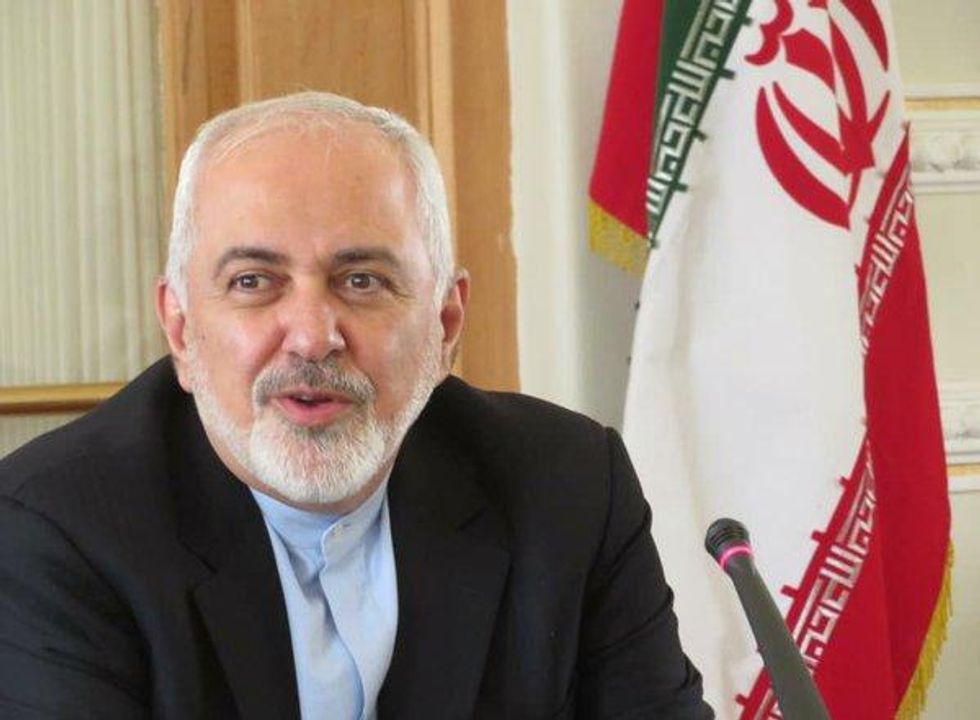
Targeting Zarif--who lived in the United States for thirty years, including high school, college, and graduate school--is particularly ironic, given that he is a leading moderate voice in Tehran. Unlike most autocratic regimes, where power is centralized in a political party, a military junta, or a single dictator, Iran's government is divided between conservative clerics, the moderate president, the military, the parliament, and other forces.
Successful diplomacy with Iran depends on cultivating ties with the moderates and isolating the extremists. By treating the Iranian regime as a monolith and targeting Zarif, the Trump Administration risks closing one of the few remaining avenues for defusing the crisis.
Despite not formally sanctioning him, the Trump Administration is still intent on isolating the diplomat. The State Department is limiting Zarif's movements to a six-block area between United Nations headquarters, the Iranian mission, and the residence of Iran's UN ambassador.
Successful diplomacy with Iran depends on cultivating ties with the moderates and isolating the extremists.
This is a far greater limitation than the United States imposed on such notorious figures as Libya's Muammar Gaddafi and Zarif's rival, hardline former Iranian president Mahmoud Ahmadinejad, who was allowed to speak at Columbia University, various media outlets, and elsewhere. It would appear that the Trump Administration is more afraid of moderation than extremism.
In February, we were among a small group of American scholars and peace activists who met with Zarif at the Iranian Foreign Ministry in Tehran. Zarif described how the nuclear deal was the result of ten years of posturing and two years of intense, painstaking negotiations, during which he and Secretary of State John Kerry met no fewer than fifty times to hammer out every line in the agreement.
Zarif was able to convince his government, over the objections of hardliners, to agree to destroy billions of dollars' worth of nuclear facilities and material and accept a strict inspections regime in return for the lifting of debilitating sanctions.
Iran has honored its agreement, as confirmed repeatedly by the International Atomic Energy Agency. But--in response to the United States breaking its part of the agreement by re-imposing sanctions and forcing others to do so--Iran earlier this month increased its stockpiles of enriched uranium. From the Iranian perspective, it makes no sense to stick to an agreement that the United States has violated by withdrawing and imposing crushing sanctions, while the rest of the world does little to ease the blows.
Despite the unpopularity of the Iranian regime, which was evident in our conversations with ordinary Iranians, anger at the United States for reneging on the deal and re-imposing sanctions runs across the political spectrum.
The United States' big mistake in Vietnam was failing to recognize that the power attained by the Communists came from their ability to rally the nationalist sentiments of their people. Massive U.S. military force only strengthened the resistance against what civilians saw as foreign invaders. Similarly, the Islamist leaders of Iran have been successful in appealing to nationalism when they feel their country is unfairly targeted.
Indeed, we saw far more flags and nationalist symbols on display in Iran than religious imagery. Iranians are among the most stridently nationalistic people in the world. Pride in their nation's 2,500-year history is universal. In talking to ordinary Iranians during our visit, while we found widespread anger at the corruption and heavy hand of the Iranian regime, people also believe that their government is right to resist U.S. sanctions and military threats. They would rather risk a war than give in.
Iranians wonder why they should accede to Trump Administration demands that they totally eliminate their nuclear program, which under the strictures of the seven-nation nuclear agreement would not result in a single nuclear bomb, while their neighbors Israel, Pakistan, and India continue to develop their nuclear arsenals. Iranians also wonder why they should bow to U.S. demands to eliminate ballistic missiles while rivals Israel and Saudi Arabia continue to develop theirs with U.S. assistance.
Every criticism the Trump Administration levels against Iran--its suppression of women and religious minorities, lack of free and fair elections, ongoing human rights abuses, support for oppressive governments and extremist militias, a growing military arsenal, intervention in regional conflicts--can be made for Saudi Arabia, a major U.S. ally and purchaser of billions of dollars' worth of U.S. weaponry. In fact, Saudi Arabia is arguably worse on every one of these counts.
Saudi military spending is several times that of Iran, even though it has less than one-third of Iran's 82 million people. Even Israel and the United Arab Emirates, each with less than one-tenth of Iran's population, has a higher military budget than Iran. The United States' Gulf allies spend at least eight times more on their militaries than does Iran. Add to that advantage, the thousands of U.S. troops, along with dozens of Navy ships (include two aircraft carriers), B-52 bombers, and over thirty military bases surrounding Iran on three sides. Trump's insistence that Iran poses a serious threat to regional security is absurd.
Like it or not, the Trump Administration must accept the fact that Iran has been a regional power for close to two and a half millennia. Imposing brutal sanctions, threatening Iran with obliteration, and marginalizing moderate voices like Zarif's is not going to change that.
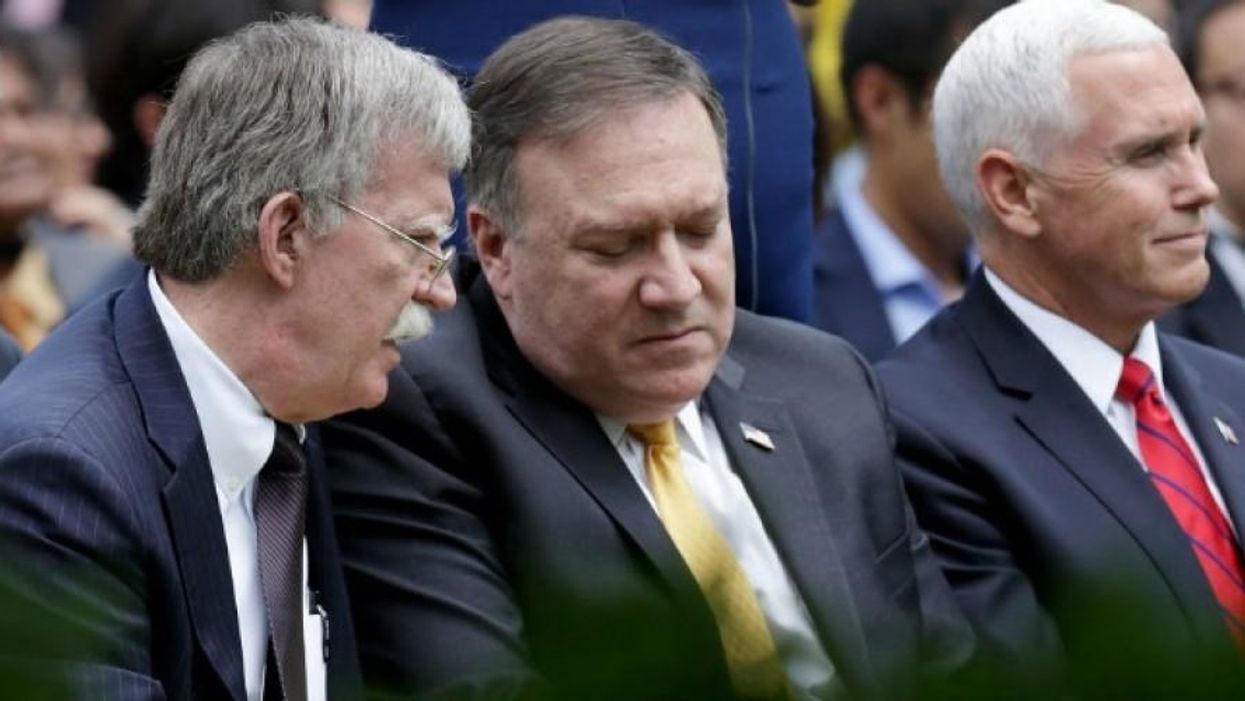
Here's the foreign policy question of questions in 2019: Are President Donald Trump, Israeli Prime Minister Benjamin Netanyahu, and Saudi Crown Prince Mohammed bin Salman, all severely weakened at home and with few allies abroad, reckless enough to set off a war with Iran? Could military actions designed to be limited -- say, a heightening of the Israeli bombing of Iranian forces inside Syria, or possible U.S. cross-border attacks from Iraq, or a clash between American and Iranian naval ships in the Persian Gulf -- trigger a wider war?
Worryingly, the answers are: yes and yes. Even though Western Europe has lined up in opposition to any future conflict with Iran, even though Russia and China would rail against it, even though most Washington foreign policy experts would be horrified by the outbreak of such a war, it could happen.
Despite growing Trump administration tensions with Venezuela and even with North Korea, Iran is the likeliest spot for Washington's next shooting war. Years of politically charged anti-Iranian vituperation might blow up in the faces of President Trump and his two most hawkish aides, Secretary of State Mike Pompeo and National Security Advisor John Bolton, setting off a conflict with potentially catastrophic implications.
Such a war could quickly spread across much of the Middle East, not just to Saudi Arabia and Israel, the region's two major anti-Iranian powers, but Iraq, Syria, Lebanon, Yemen, and the various Persian Gulf states. It might indeed be, as Iranian President Hassan Rouhani suggested last year (unconsciously echoing Iran's former enemy, Iraqi ruler Saddam Hussein) the "mother of all wars."
With Bolton and Pompeo, both well-known Iranophobes, in the driver's seat, few restraints remain on President Trump when it comes to that country. White House Chief of Staff John Kelly, National Security Advisor H.R. McMaster, and Secretary of Defense Jim Mattis, President Trump's former favorite generals who had urged caution, are no longer around. And though the Democratic National Committee passed a resolution last month calling for the United States to return to the nuclear agreement that President Obama signed, there are still a significant number of congressional Democrats who believe that Iran is a major threat to U.S. interests in the region.
During the Obama years, it was de rigueur for Democrats to support the president's conclusion that Iran was a prime state sponsor of terrorism and should be treated accordingly. And the congressional Democrats now leading the party on foreign policy -- Eliot Engel, who currently chairs the House Foreign Affairs Committee, and Bob Menendez and Ben Cardin, the two ranking Democrats on the Senate Foreign Relations Committee -- were opponents of the 2015 nuclear accord (though all three now claim to have changed their minds).
Deadly Flashpoints for a Future War
On the roller coaster ride that is Donald Trump's foreign policy, it's hard to discern what's real and what isn't, what's rhetoric and what's not. When it comes to Iran, it's reasonable to assume that Trump, Bolton, and Pompeo aren't planning an updated version of the unilateral invasion of Iraq that President George W. Bush launched in the spring of 2003.
Yet by openly calling for the toppling of the government in Tehran, by withdrawing from the Iran nuclear agreement and reimposing onerous sanctions to cripple that country's economy, by encouraging Iranians to rise up in revolt, by overtly supporting various exile groups (and perhaps covertly even terrorists), and by joining with Israel and Saudi Arabia in an informal anti-Iranian alliance, the three of them are clearly attempting to force the collapse of the Iranian regime, which just celebrated the 40th anniversary of the 1979 Islamic revolution.
There are three potential flashpoints where limited skirmishes, were they to break out, could quickly escalate into a major shooting war.
The first is in Syria and Lebanon. Iran is deeply involved in defending Syrian President Bashar al-Assad (who only recently returned from a visit to Tehran) and closely allied with Hezbollah, the Lebanese Shiite political party with a potent paramilitary arm. Weeks ago, Israeli Prime Minister Netanyahu openly boasted that his country's air force had successfully taken out Iranian targets in Syria. In fact, little noticed here, dozens of such strikes have taken place for more than a year, with mounting Iranian casualties.
Until now, the Iranian leadership has avoided a direct response that would heighten the confrontation with Israel, just as it has avoided unleashing Hezbollah, a well-armed, battle-tested proxy force. That could, however, change if the hardliners in Iran decided to retaliate. Should this simmering conflict explode, does anyone doubt that President Trump would soon join the fray on Israel's side or that congressional Democrats would quickly succumb to the administration's calls to back the Jewish state?
Next, consider Iraq as a possible flashpoint for conflict. In February, a blustery Trump told CBS's Face the Nation that he intends to keep U.S. forces in Iraq "because I want to be looking a little bit at Iran because Iran is the real problem." His comments did not exactly go over well with the Iraqi political class, since many of that country's parties and militias are backed by Iran.
Trump's declaration followed a Wall Street Journal report late last year that Bolton had asked the Pentagon -- over the opposition of various generals and then-Secretary of Defense Mattis -- to prepare options for "retaliatory strikes" against Iran. This roughly coincided with a couple of small rocket attacks against Baghdad's fortified Green Zone and the airport in Basra, Iraq's Persian Gulf port city, neither of which caused any casualties. Writing in Foreign Affairs, however, Pompeo blamed Iran for the attacks, which he called "life-threatening," adding, "Iran did not stop these attacks, which were carried out by proxies it has supported with funding, training, and weapons." No "retaliatory strikes" were launched, but plans do undoubtedly now exist for them and it's not hard to imagine Bolton and Pompeo persuading Trump to go ahead and use them -- with incalculable consequences.
Finally, there's the Persian Gulf itself. Ever since the George W. Bush years, the U.S. Navy has worried about possible clashes with Iran's naval forces in those waters and there have been a number of high-profile incidents. The Obama administration tried (but failed) to establish a hotline of sorts that would have linked U.S. and Iranian naval commanders and so made it easier to defuse any such incident, an initiative championed by then-Chairman of the Joint Chiefs Admiral Mike Mullen, a longtime opponent of war with Iran.
Under Trump, however, all bets are off. Last year, he requested that Mattis prepare plans to blow up Iran's "fast boats," small gunboats in the Gulf, reportedly asking, "Why don't we sink them?" He's already reinforced the U.S. naval presence there, getting Iran's attention. Not surprisingly, the Iranian leadership has responded in kind. Earlier this year, President Hassan Rouhani announced that his country had developed submarines capable of launching cruise missiles against naval targets. The Iranians also began a series of Persian Gulf war games and, in late February, test fired one of those sub-launched missiles.
Add in one more thing: in an eerie replay of a key argument George Bush and Dick Cheney used for going to war with Iraq in 2003, in mid-February the right-wing media outlet Washington Times ran an "exclusive" report with this headline: "Iran-Al Qaeda Alliance may provide legal rationale for U.S. military strikes."
Back in 2002, the Office of Special Plans at Secretary of Defense Donald Rumsfeld's Pentagon, under the supervision of neoconservatives Paul Wolfowitz and Douglas Feith, spent months trying to prove that al-Qaeda and Iraq were in league. The Washington Times piece, citing Trump administration sources, made a similar claim -- that Iran is now aiding and abetting al-Qaeda with a "clandestine sanctuary to funnel fighters, money, and weapons across the Middle East." It added that the administration is seeking to use this information to establish "a potential legal justification for military strikes against Iran or its proxies." Needless to say, few are the terrorism experts or Iran specialists who would agree that Iran has anything like an active relationship with al-Qaeda.
Will the Hardliners Triumph in Iran as in Washington?
The Trump administration is, in fact, experiencing increasing difficulty finding allies ready to join a new Coalition of the Willing to confront Iran. The only two charter members so far, Israel and Saudi Arabia, are, however, enthusiastic indeed. Last month, Prime Minister Netanyahu was heard remarking that Israel and its Arab allies want war with Iran.
At a less-than-successful mid-February summit meeting Washington organized in Warsaw, Poland, to recruit world leaders for a future crusade against Iran, Netanyahu was heard to say in Hebrew: "This is an open meeting with representatives of leading Arab countries that are sitting down together with Israel in order to advance the common interest of war with Iran." (He later insisted that the correct translation should have been "combating Iran," but the damage had already been done.)
That Warsaw summit was explicitly designed to build an anti-Iranian coalition, but many of America's allies, staunchly opposing Trump's decision to pull out of the Iran nuclear accord, would have nothing to do with it. In an effort to mollify the Europeans, in particular, the United States and Poland awkwardly renamed it: "The Ministerial to Promote a Future of Peace and Security in the Middle East."
The name change, however, fooled no one. As a result, Vice President Pence and Secretary of State Pompeo were embarrassed by a series of no-shows: the French, the Germans, and the European Union, among others, flatly declined to send ministerial-level representatives, letting their ambassadors in Warsaw stand in for them. The many Arab nations not in thrall to Saudi Arabia similarly sent only low-level delegations. Turkey and Russia boycotted altogether, convening a summit of their own in which Presidents Vladimir Putin and Recep Tayyip Erdogan met with Iran's Rouhani.
Never the smoothest diplomat, Pence condemned, insulted, and vilified the Europeans for refusing to go along with Washington's wrecking-ball approach. He began his speech to the conference by saying: "The time has come for our European partners to withdraw from the Iran nuclear deal." He then launched a direct attack on Europe's efforts to preserve that accord by seeking a way around the sanctions Washington had re-imposed: "Sadly, some of our leading European partners... have led the effort to create mechanisms to break up our sanctions. We call it an effort to break American sanctions against Iran's murderous revolutionary regime."
That blast at the European allies should certainly have brought to mind Secretary of Defense Rumsfeld's disparaging comments in early 2003 about Germany and France, in particular, being leaders of the "old Europe." Few allies then backed Washington's invasion plans, which, of course, didn't prevent war. Europe's reluctance now isn't likely to prove much of a deterrent either.
But Pence is right that the Europeans have taken steps to salvage the Iran nuclear deal, otherwise known as the Joint Comprehensive Plan of Action (JCPOA). In particular, they've created a "special purpose vehicle" known as INSTEX (Instrument for Supporting Trade Exchanges) designed "to support legitimate trade with Iran," according to a statement from the foreign ministers of Germany, France, and Great Britain. It's potentially a big deal and, as Pence noted, explicitly designed to circumvent the sanctions Washington imposed on Iran after Trump's break with the JCPOA.
INSTEX has a political purpose, too. The American withdrawal from the JCPOA was a body blow to President Rouhani, Foreign Minister Javad Zarif, and other centrists in Tehran who had taken credit for, and pride in, the deal between Iran and the six world powers (the United States, France, Germany, Britain, Russia, and China) that signed the agreement. That deal had been welcomed in Iran in part because it seemed to ensure that country's ability to expand its trade to the rest of the world, including its oil exports, free of sanctions.
Even before Trump abandoned the deal, however, Iran was already finding U.S. pressure overwhelming and, for the average Iranian, things hadn't improved in any significant way. Worse yet, in the past year the economy had taken a nosedive, the currency had plunged, inflation was running rampant, and strikes and street demonstrations had broken out, challenging the government and its clerical leadership. Chants of "Death to the Dictator!" -- not heard since the Green Movement's revolt against President Mahmoud Ahmadinejad's reelection in 2009 -- once again resounded in street demonstrations.
At the end of February, it seemed as if Trump, Bolton, and Pompeo had scored a dangerous victory when Zarif, Iran's well-known, Western-oriented foreign minister, announced his resignation. Moderates who supported the JCPOA, including Rouhani and Zarif, have been under attack from the country's hardliners since Trump's pullout. As a result, Zarif's decision was widely assumed to be a worrisome sign that those hardliners had claimed their first victim.
There was even unfounded speculation that, without Zarif, who had worked tirelessly with the Europeans to preserve what was left of the nuclear pact, Iran itself might abandon the accord and resume its nuclear program. And there's no question that the actions and statements of Bolton, Pompeo, and crew have undermined Iran's moderates, while emboldening its hardliners, who are making I-told-you-so arguments to Ayatollah Ali Khamenei, the country's supreme leader.
Despite the internal pressure on Zarif, however, his resignation proved short-lived indeed: Rouhani rejected it, and there was an upsurge of support for him in Iran's parliament. Even General Qassem Soleimani, a major figure in that country's Islamic Revolutionary Guard Corps (IRGC) and the commander of the Quds Force, backed him. As it happens, the Quds Force, an arm of the IRGC, is responsible for Iran's paramilitary and foreign intelligence operations throughout the region, but especially in Iraq and Syria. That role has allowed Soleimani to assume responsibility for much of Iran's foreign policy in the region, making him a formidable rival to Zarif -- a tension that undoubtedly contributed to his brief resignation and it isn't likely to dissipate anytime soon.
According to analysts and commentators, it appears to have been a ploy by Zarif (and perhaps Rouhani, too) to win a vote of political confidence and it appears to have strengthened their hand for the time being.
Still, the Zarif resignation crisis threw into stark relief the deep tensions within Iranian politics and raised a key question: As the Trump administration accelerates its efforts to seek a confrontation, will they find an echo among Iranian hardliners who'd like nothing more than a face-off with the United States?
Maybe that's exactly what Bolton and Pompeo want. If so, prepare yourself: another American war unlikely to work out the way anyone in Washington dreams is on the horizon.

The Joint Comprehensive Plan of Action (JCPOA) was as much a domestic initiative as it was a foreign policy endeavor, as analysts such as Reza Marashi and Ariane Tabatabai have been saying. It's a way for the Iranian leadership to come to terms with its own crimes and mistakes during the catastrophic presidency of Iran's tin-pot clown, Mahmoud Ahmadinejad. By pursuing the nuclear deal and a normalized portfolio of relations with Europe and the United States, President Hassan Rouhani and Ayatollah Ali Khamanei sought to secure the revolution by preventing a repeat of the Ahmadinejad years and the return of the hard line.
Repetition appears to be an enduring condition of Iran-US relations. Late in 2003, with the war in Iraq just entering its insurgent stage, the refrain "boys go to Baghdad, but real men go to Tehran" gained circulation within neoconservative circles. Overthrowing Saddam Hussein was to be the first step in a wider transformation. Plenty of men and women did go to Iraq, good Americans sent to fight in a bad war. They went in numbers not nearly enough to meet the need for the next war, if and when it should come to Iran.
Despite the Iraq debacle, the Trump administration is singing the same song. But post-JCPOA, with America's options and allies greatly reduced, nothing short of a military draft will provide the manpower needed to bring about the type of regime change that the president and his advisers so eagerly want in Iran.
And yet change was already ongoing in Iran. Trump's willful decision to exit from the nuclear agreement directly undermines the coalition led by Hassan Rouhani that had been slowly normalizing, even secularizing, the political scene after the chaos of the Ahmadinejad years. At the same time, the end of the JCPOA strengthens the hand of Rouhani's hardline rivals, anti-democratic forces who happen to agree with the American president that the deal signed by Iran and the P5+1 in Vienna was "the worst deal ever," and for whom foreign conflict presents a welcome opportunity to renew the country's flagging revolutionary spirit.
There is also growing evidence that Trump's actions have hardened the hearts of ordinary Iranians. The expansion of punitive measures including sanctions against Iran, the population in the Middle East with some of the most positive feelings towards the United States, has moved majorities to defend what was otherwise a deeply unpopular political system. Pushed against the wall, Iranians across the ideological spectrum have rallied around the flag. War will only harden their defiance.
Selling a War
Whereas the Bush adventure in Iraq was a war of choice disguised as a battle for security, the Iran war will be largely sold as a tragedy in which the US had no choice. Secretary of State Mike Pompeo's address at the Heritage Foundation last month was the first step in that campaign. Having closed the door on the JCPOA, Pompeo nailed upon it a list of 12 impossible conditions for the elimination of sanctions against Iran that include giving inspectors unqualified access to all sites in Iran and an end to its ballistic missile program, non-starters for a government whose first priority is the preservation of its own sovereignty. Pompeo, who championed regime change in Tehran well before joining the administration and who in his previous role as CIA director testified before Congress that Iran had abided by the terms of the deal struck in Vienna, surely understood that his wish list represented a narrative for war.
Pompeo's manifesto reflected the long-standing animus towards Iran of Trump and his current national security team, particularly National Security Advisor John Bolton, whose.foreign policy views were too fringe for even the George W. Bush administration. Bolton has been a consistent, and well compensated voice, for regime change in Iran, undeterred by the likely costs in lives and treasure. "The declared policy of the United States should be the overthrow of the mullahs' regime in Tehran," proclaimed Bolton last July before a gathering of Mojahedin-e Khalq (MEK) cultists, "And that's why, before 2019, we here will celebrate in Tehran!"
Standing in the way of a full rush to war is Secretary of Defense James Mattis, the only principal in the administration with actual skin in the game. Despite what Politico described in 2016 as a decades-long "grudge against Iran," Mattis gained firsthand knowledge of Iranian operational capability, as well as the limitations of American power, during his tenure in Afghanistan and Iraq, experiences that have turned him into what passes as the voice of the reason within the administration. The former Marine general recognizes that, with the Pentagon already hamstrung by its forever wars in the Middle East, a shooting war with Iran would effectively mean the end of America's all-volunteer force and quite possibly its position as the world's sole superpower.
To its credit, the administration has distinguished itself from its Republican predecessor by not (yet) starting a new major conflict. It is more likely to stumble into calamity rather than charge into the storm as Bush did. War makes for poor simulacra, and it is unlikely that its management will be well served War makes for poor simulacra, and it is unlikely that its management will be well served by the Trump administration's taste for performative displays of alpha-male toughness. If the British inherited their empire in a fit of absent-mindedness, Trump may yet lose America's in a paroxysm of incompetence.
Boys Go to Baghdad...
My first encounter with the phrase came late in 2003 when, newly enrolled in graduate school, I gathered in the department lounge with a group of first-year students for an ad hoc session on foreign policy. With the Bush administration still mobilizing consent for America's second go-around with Iraq, a very conservative, very well connected classmate shared with us what he was hearing from his friends inside the government. Overthrowing Saddam Hussein was but the first step in a larger project, he said in a whisper, as if to make us accomplices in a tragic conspiracy. Iran would be next. "Boys go to Baghdad," he intoned, "but men go to Tehran."
That same classmate is now a tenured professor at a prominent liberal arts school on the East Coast, Bush is comfortably retired and ensconced in a Dallas suburb, and his vice-president is a regular consultant to conservative foreign policy forces.
Foreign policy emerges from the character and quality of a country's domestic politics, no matter what the realists may say about security dilemmas and offshore balancing. America never came to terms with what it did in Iraq, or how it got itself there in the first place. Apart from a truly egregious bombing or murder in Baghdad, Americans hardly notice that U.S. forces are still there, 15 years later. Most Americans never had to answer for the war, the costs of battle borne by others. It may be that the next greatest U.S. failure will be to allow the sort of people who pulled the country into folly in 2003 to come back in 2018 to do the same elsewhere.

The remarkable face to face meeting of the leaders of North and South Korea is being watched with hope by many observers, given the long decades of enmity between the two and the recent nuclear sabre-rattling of President Trump.
At least in my circles, I see virtually no one condemning the meeting, though many are skeptical that it will lead to any practical result.
Winston Churchill said, "Meeting jaw to jaw is better than war." Harold Macmillan later misquoted it as 'it is better to jaw-jaw than to war-war,' which is the quote that has stuck in the popular imagination. The meaning is much the same in either case, and the maxim is little attended to in either of its forms.
The administration of George W. Bush was notorious for trying to pretend that those states it viewed as enemies did not exist. Bush's officials and diplomats tried not even to be in the same room with an Iranian diplomat, and Syria was likewise thoroughly scrubbed from existence. Of course, Iran and Syria were still there, and arguably handily defeated Bush's Iraq boondoggle. Ignoring them did not equal defeating them. Moreover, both ignoring and boycotting them in some ways backfired. The US sanctions on Syria may have played a role in tipping it into insecurity. They were intended to do so, but it is difficult to see how the US benefited, whereas Iran came out on top.
In contrast, King Abdullah of Saudi Arabia on several occasions hosted Iranian government figures in Riyadh.
Now, the new Saudi regime of King Salman and his son, crown prince Mohammed Bin Salman, have adopted the old Bush policy. They are all about denigrating rival states that don't toe their party line, and about shunning them.
So here's an idea.
Bin Salman should meet Iranian President Hassan Rouhani for a wideranging discussion of their regional conflicts and Cold War. Even the quirky populist, President Mahmoud Ahmadinejad, had been brought over for consultations by the previous king. In contrast, Rouhani is an experienced negotiator and a man of wide culture, and meeting him would be a hundred times more productive than meeting his predecessor.
Given that Bin Salman likes to kidnap people and put them in a golden cage while he squeezes them, any meeting he conducts with Rouhani should probably be on neutral ground, lest the Iranian president end up be Ritzed.
Muscat in Oman would work. Or Yerevan, Armenia.
Saudi Arabia's Bin Salman feels as though he is losing to Iran regionally. Iraq's Shiite-led government tilts to Tehran. So does the secular one-party Baath state in Syria, inasmuch as both Damascus and the ayatollahs want to repress Sunni fundamentalists (some of them allied with Saudi Arabia). Lebanon's current cabinet has a slight majority of Hizbullah and its allies (including Christian allies), though the prime minister is a dual Lebanese-Saudi national. Bin Salman blames his failures in the Yemen war on Iranian support for the Zaydi Helpers of God (Houthis), though Iran's touch there is likely very light and most of the weapons the Houthis have are American, transferred to them by friendly elements in the Yemeni army. Zaydis, and many Yemeni Sunnis, would be mobilized against a Saudi invasion whether Iran existed or not.
Two decades ago, three of these states- Lebanon, Iraq and Yemen- were Saudi allies, and Syria was relatively unimportant.
The geopolitical struggle is made all the more momentous because of Iran's small, civilian nuclear enrichment program, which has now largely been mothballed as a result of the 2015 UNSC Iran deal (JCPOA). Saudi Arabia, like Israel, remains deeply skeptical of Iran's ultimate intentions.
New Secretary of State Mike Pompeo's first order of business appears to be to sabotage the 2015 Iran deal in cahoots with Likud PM Binyamin Netanyahu and MbS. (More on that anon).
So the Saudi-Iran standoff has some resemblances to that between the two Koreas. If the leaders of the latter two are widely recognized as being wise to meet, then why wouldn't it be equally desirable for MbS to sit face to face with Rouhani?

Butcher of Damascus. Gasser of children. Baby Killer of Syria. Tool of Moscow. Cruel despot. Monster.
These are all names the western media and politicians routinely heap on Syria's president, Bashar al-Assad. He has now become the top Mideast villain, the man we love to hate.
As a veteran Mideast watcher, I find all this hard to swallow. Compared to other brutal Mideast leaders, Assad is pretty weak tea. The US/British propaganda effort to paint Assad in blackest colors is having a difficult time.
Mideast leaders who toe the US line and make nice to Israel are invariably called 'statesmen' or 'president' by the American government and its increasingly tame media. There's good old President Abdel Fattah al-Sisi in Egypt, the military dictator who crushed that nation's only democracy and imposed an iron-fisted rule. But we will never hear from the US media of Egypt's political murders, disappearances, secret prisons and torture. Or that Egypt has been one of the world's most draconian police states since the era of Anwar Sadat and successor Hosni Mubarak.
Saudi rulers are reverently treated by the US media and government in spite of leading the world in executions. Last year, 44 people were publicly beheaded. In some years, around 150 people have been beheaded in Saudi Arabia, often a quarter of them Pakistani guest workers. Having been arrested by the Saudi religious police, I can tell you that the kingdom is a police state with sand dunes and camels. Saudi vassal states Bahrain and the Emirates are better, but not much.
Morocco, a key US ally, is notorious for its ghastly prisons and brutal torture. Iraq and Afghanistan, now under US control, are even worse. Israel, the largest recipient of US aid, holds close to 7,000 Palestinian political prisoners, among them 400 children, and is gunning down Palestinian demonstrators on the Gaza border.
Syria has always been a repressive police state. I recall watching 'spies' being hanged in front of my hotel. Its various police forces are notorious for brutality and torture. In fact, until recently, the US actually sent captive suspects to Syria to be tortured and jailed.
That was before Washington made the decision to overthrow Syria's legitimate government ('regime' in DC talk) as the first step in attacking Iran.
But Damascus was no worse a human rights abuser than Cairo, Amman, Rabat and Riyadh, all US vassals.
While looking at the current western hate campaigns against Syria and Iran, keep in mind the history of the modern Mideast. We are again seeing the 1914 era lies from London about Belgian babies speared on German bayonets.
Any Arab or Iranian leader who sought an independent policy or refused the tutelage of London and then Washington was delegitimized, excoriated, and demonized. Remember the Iranian leader Mohammed Mossadegh overthrown in a CIA coup? The renowned Egyptian leader, Gamal Abdel Nasser, whom the British branded 'Hitler on the Nile?' Or the late, murdered Libyan Muammar Khadaffi, called 'Mad Dog of the Mideast' by President Ronald Reagan? Imam Khomeini of Iran and President Ahmadinejad, both favored targets of western media invective, and both compared to the much overused Hitler. Saddam Hussein, the 'Butcher of Baghdad,' and that modern Dr Fu Manchu, Osama bin Laden, the all-time favorite Muslim arch villain.
Of course, there's nothing new in this nasty name-calling. During the Victorian Era, Britain's press demonized arch villains like 'the Mad Mullah,' the Mahdi, the Fakir of Ipi, and Nana Sahib of the 1857 Indian uprising against British imperial rule.
Bashar al-Assad was a mild-mannered ophthalmologist living in London with his British-born wife. When his rash elder brother Basil was killed in a car crash, Bashar was compelled to return to Syria and become the nominal political leader after the death of his very tough, ruthless father, Hafez al-Assad. Bashar's main role was mediating between powerful factions in Damascus and trying to modernize his nation.
In 2011, the US, Britain, Israel and Saudi Arabia ignited an uprising in Syria using often fanatical jihadists. The shy, retiring Bashar was forced to become war leader in a bloody civil conflict as his nation disintegrated.
President Trump, whose B-52 bombers are ravaging the Mideast, Afghanistan, Somalia and Yemen calls al-Assad a 'monster.' Some of his relatives are indeed ruthless. But very many Syrians think of Assad as their nation's only hope of returning to normalcy.
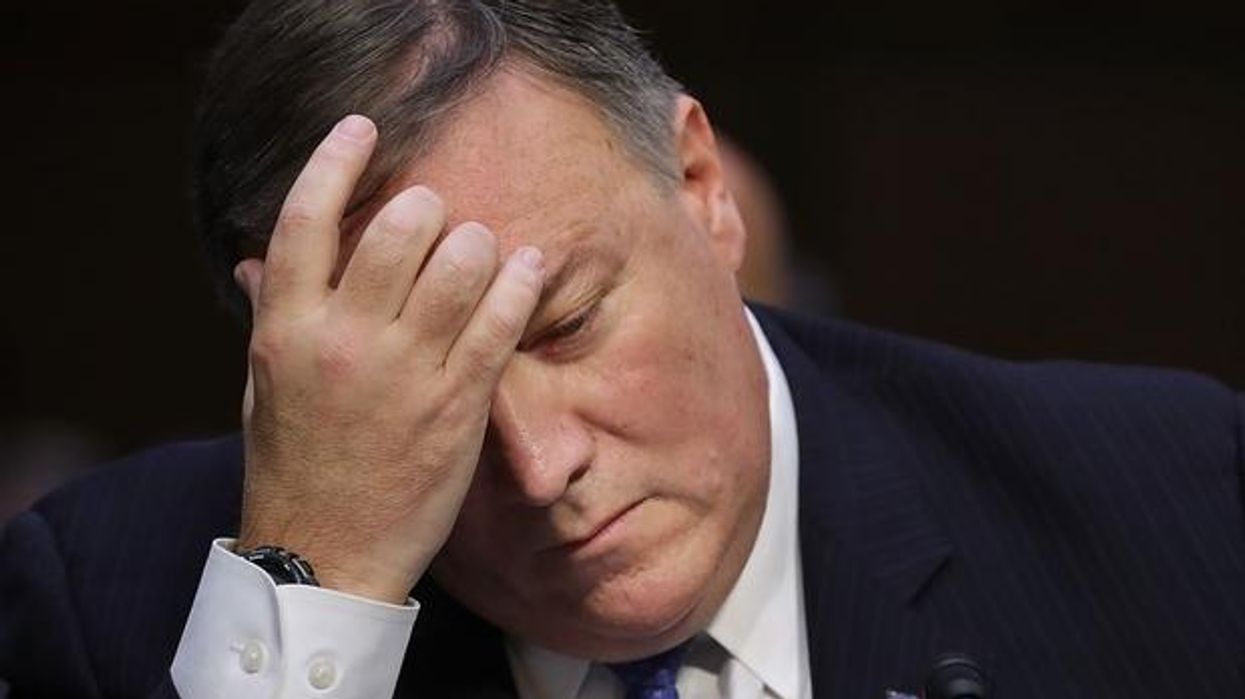
On Tuesday, US President Donald Trump fired Secretary of State Rex Tillerson and appointed the hawkish CIA chief, Mike Pompeo, to replace him.
Tillerson, who'd come to government service as the CEO of Exxon-Mobil, one of the largest energy companies in the world, often butted heads with Trump's free-wheeling, chaotic style of decision-making regarding foreign policy.
Tillerson had also been severely criticised by both veteran US diplomats and members of Congress over his plans to vastly downsize the State Department and his inability to fill critical ambassadorial posts.
Pompeo served four terms in the House of Representatives representing Kansas, and is a member of the Trump inner circle. He is known to cater to Trump's peculiar briefing style in which he dispenses with written material and receives his daily briefing in oral form with plenty of Powerpoint slides.
Pompeo holds extreme views on critical national security issues like Iran. While Tillerson spoke approvingly of the P5+1 nuclear deal, Pompeo attacked it mercilessly and derided the clerical regime. He tweeted: "I look forward to rolling back this disastrous deal with the world's largest state sponsor of terrorism."
He is known for taking positions which adhere slavishly to those of Israeli Prime Minister Benjamin Netanyahu. In further comments about the nuclear deal, Pompeo said: "[It] won't stop Iran from getting a nuclear bomb and places Israel at more risk. [The] theory that post-sanctions Iran will moderate is a joke - they want to annihilate Israel, now buying Russian missiles."
"Not only might the nuclear agreement with Iran be cancelled, but the US may support actual military action either against Iran directly or against its forces fighting in Syria."
No Iranian leader has ever explicitly called for the "annihilation" of Israel. When Iran's leaders have offered seemingly bellicose statements about Israel, it is always in response to direct threats by Israeli leaders against Iran. Further, the nuclear deal was never meant to stop Iran from ever obtaining a nuclear weapon. It was meant to delay that process for a decade or more, which it has done.
Pompeo also raised a criticism of the Iran deal which had been dismissed out of hand by the Obama administration as unreasonably draconian: "Ceasing to call for the destruction of Israel should have been a condition of the Iran Deal - along with release of innocent American hostages."
This represents the Israeli "kitchen-sink" approach to torpedoing negotiations: you throw every possible demand into the kitchen sink knowing your interlocutor will object. Then you walk away blaming him for the impasse. That offers you the opportunity to adopt a more aggressive approach against him.
Pompeo's nomination is opposed by the leading national Muslim-American group, the Council on American-Islamic Relations (CAIR), which noted his harshly Islamophobic views. He received a major award from ACT for America, an organisation designated by the Southern Poverty Legal Center as a hate group.
CAIR released this statement: "Those, like Mr Pompeo, who have expressed Islamophobic views and have been associated with an anti-Muslim hate group...should have no role in our nation's government, let alone at the highest levels of policy-making," said CAIR national executive director Nihad Awad. "These appointments have the potential to harm our nation's image and our relations with key players in the international community."
Returning to the nuclear deal, Trump himself has not cancelled it. But with Pompeo's promotion, the world can expect an elevation in the hostile rhetoric from the White House, and now State Department, against Iran.
"With the accession of figures like Pompeo and Bolton to positions of power in the Trump administration, we face a nightmarish Dr. Strangelove scenario."
Not only might the nuclear agreement be cancelled, but the US may support actual military action either against Iran directly or against its forces fighting in Syria. It's conceivable that the US might intervene more forcefully in Syria, as has Russia.
Interestingly, Netanyahu visited the White House last week and had talks with Trump. Presumably, Syria and Iran were high on their agenda. An Israeli journalist writing in Maariv discussed the threat represented by several major corruption scandals besetting Netanyahu.
He alluded to the possibility of a military confrontation with Iran regarding Syria, which could be a prelude to new elections.
Separately, a confidential Israeli source told me that the nation's security cabinet met last weekend to deliberate on a "major military operation" in Syria, presumably to confront the forces of Iran and its regional ally, Hezbollah. It's reasonable to assume that Netanyahu, at the least, sought Trump's approval for the attack; and at the most sought American participation in it.
All of this means a more hawkish, muscular American foreign policy in which force is used more readily and more aggressively. Tillerson's dismissal may also lead to the sacking of other figures in the Trump national security team who haven't adapted to the Trump "style".
Among them could be National Security Advisor HR McMaster, who lately has been regularly reported as on his way out. Though McMaster has been known too as a hawk on Iran and North Korea, he has been pragmatic and buttoned-down in his approach to national security. This has conflicted with Trump's fly-by-the-seat-of-his pants approach.
The addition of another hawk such as John Bolton into the mix (he has been touted as a replacement for chief of staff John Kelly or McMaster, should he be fired) could send US foreign and national security careening into uncharted waters. Bolton is known for his strident anti-Muslim views.
Bolton was particularly popular among a small but influential group of hardline anti-Islam activists, the "counter-jihad" movement, who believed the US government was being infiltrated by Islamists and that Islamic law was quietly taking over the US legal system.
He has been allied with arch-Islamophobe, Pam Geller, and wrote a forward to her book espousing her crackpot views. He was one of the Bush administration officials who trumpeted the false claim that Iraq's Saddam Hussein had nuclear weapons.
He also shares Pompeo and Trump's harsh views on Iran. In a 2015 New York Times op-ed he advocated a military attack by Israel and/or the US on Iran's nuclear facilities: "Time is terribly short, but a strike can still succeed. Such action should be combined with vigorous American support for Iran's opposition, aimed at regime change in Tehran."
Clearly, Bolton does not believe in diplomacy. Rather, he prefers war and the aggressive projection of American power as the best means of securing American interests in the world.
With the accession of figures like Pompeo and Bolton to positions of power in the Trump administration, we face a nightmarish Dr Strangelove scenario. As you may recall, that film ends with an air force officer gleefully riding a nuclear bomb as it drops on its Russian target.

The last time Iranians went out onto the streets in large numbers, they were protesting what they thought was a stolen election.
It was 2009, and hardliner Mahmoud Ahmadinejad had convincingly won the presidency with roughly 63 percent to reformer Mir-Hossein Mousavi's approximately 34 percent. Adopting their campaign's green color, Mousavi's supporters thronged the streets in protest.
These Green Movement adherents were mostly middle class and concentrated in the major cities. Ahmadinejad, by contrast, attracted the support of the more religious, the less well-off and the rural--a sizable constituency that the Green Movement routinely underestimated.
Now it's their turn to take to the streets: these members of the Iranian working class who live in the boonies, who have not benefited from the economic changes of the reformists. This is a group that analyst Esfandyar Batmanghelidj calls the "forgotten men and women" of modern Iran.
The current demonstrations are leaderless, and the demands are all over the map. In general, however, today's protesters seem more concerned with economic issues than political ones, though the two are inextricably linked. For instance, unlike in 2009, the most recent demonstrations have nothing to do with election fraud. After all, the last presidential election went off without a hitch, and some of the same people who protested in 2009 returned to the streets in May 2017 to celebrate the reelection of reformer Hassan Rouhani.
On the economic side, meanwhile, the reformers around Rouhani promised a big boost as a result of the nuclear deal with the United States, the European Union and other countries. And, indeed, the economy has grown, mostly as a result of an uptick in oil exports. The growth rate in 2016 was 6.4 percent--a remarkable turnabout from the nearly 2 percent contraction in 2015. That certainly helped Rouhani win reelection in May last year.
But this wealth has not trickled down fast enough. Unemployment has been rising from around 10 percent in 2015 to over 12 percent today. The youth unemployment rate, meanwhile, hovers around 30 percent, which mirrors the conditions in a number of Middle Eastern countries on the eve of the Arab Spring. Moreover, large price increases in staples like eggs and gas have hit the poorer segments of society hard, and the population is bracing for more of the same in 2018.
Iranian society is sharply divided between haves and have-nots, its rate of economic inequality comparable to that of the Philippines. The current unrest reflects the thwarted economic ambitions of a falling working class, not the thwarted political ambitions of a rising middle class.
Iranians are also protesting corruption, which has long been a central feature of economic and political life in the country. There have been the predictable scandals associated with fraud in the oil industry. The earthquake in November toppled many houses built by the state, revealing corruption in the construction industry. The underground economy encouraged by the sanctions regime has also generated a pervasive culture of bribery. And many Iranians view the high salaries that go to some government employees as a form of corruption as well.
Initially, it seems, the protests originated not with reformists, like the Green Movement, but with hardliners hoping to focus anger on Rouhani. The protests broke out, for instance, in religious centers Qom and Mashhad. Writes Ahmad Sadri, "The right-wing powerful duo of the city of Mashhad, Ebrahim Raisi (the embittered rival of Rouhani in the recent elections) and his famously simple-minded father-in-law, Ahmad Alamolhoda, struck the first match by staging a small anti-Rouhani demonstration, blaming the high price of consumer goods on the Rouhani government."
The conservatives opened a Pandora's box of resentments. Protesters in other cities have subsequently denounced the Ayatollah Khamenei and the Revolutionary Guard. They've even sung the praises of the deposed shah and called for the return of his son.
This is a protest of profound disillusionment.
Washington's Response
The Rouhani government banked on a big dividend coming from the 2015 nuclear deal.
It needed this infusion of capital from outside because, in reality, Rouhani has rather narrow room for maneuver on economic issues. The religious establishment holds all the trump cards when it comes to governance. A large state-owned sector and extensive public services absorb a large chunk of the government budget. Wages and salaries take up around 40 percent of the budget--and social security a little over 30 percent. In a "semi-state sector" bolstered by an opaque privatization process, conservative institutions like the Revolutionary Guards hold considerable sway and are often resistant to any reform.
Rouhani needed leverage from outside the system because he controlled so few levers within the system. The nuclear deal was supposed to reduce sanctions, expand Iranian exports and attract a new wave of foreign investment. Some sanctions have been lifted (but not all). Some exports have spiked (mostly oil). But the foreign investment has been slow to materialize.
True, some European firms, such as the French energy firm Total, have dipped their toes into the Iranian market. And Boeing secured a major civilian airplane deal.
But opposition to economic engagement with Iran was strong in Washington, even during the Obama administration. In the wake of their defeat on the nuclear deal, hardliners in Congress were eager to apply new sanctions against Iran and reduce what little investment was flowing toward the country. Granted, it's not easy to navigate the business environment inside Iran. But the United States didn't make it any easier.
The Trump administration hasn't been shy about voicing its opposition to the Iran nuclear deal. Even before the latest protests broke out, the administration was also exploring ways of killing the Boeing aircraft deal, as well as the Total investment. Suffice it to say, Trump is not interested in any kind of engagement with the Iranian government.
As soon as the protests broke out in Iran in December, Trump gleefully took to Twitter to support the people in the streets and castigate the Rouhani government. "The people of Iran are finally acting against the brutal and corrupt Iranian regime," Trump tweeted. "All of the money that President Obama so foolishly gave them went into terrorism and into their 'pockets.' The people have little food, big inflation and no human rights. The U.S. is watching!"
For Trump, the protests vindicate his argument that the government in Tehran is illegitimate. That the protests have resulted at least in part from U.S. policies to squeeze Iran is immaterial to Trump and his supporters in Congress.
This has been their strategy all along. "The policy of the United States should be regime change in Iran," Sen. Tom Cotton (R-Ark.) has said. "I don't see how anyone can say America can be safe as long as you have in power a theocratic despotism." Sanctions are not designed to extract a "better deal" from Tehran or even to dissuade it from engaging in "bad behavior" in the region. That's a canard to make the United States appear to be playing by the rules of respecting sovereignty.
The punditocracy, meanwhile, has largely come out in support of the protests, with people on both sides of the nuclear deal laying down their differences to side with the street. Here's Daniel Shapiro and Mark Dubowitz in Politico:
We are long-time friends who have disagreed vehemently on the wisdom of President Barack Obama's nuclear deal with Iran; Dan is Obama's former ambassador to Israel, and Mark is one of that agreement's most persistent critics. But we agree with equal passion that Americans, regardless of party or position on the nuclear deal, should be supporting the aspirations of Iranians to be free from their brutal and corrupt rulers.
But what are Shapiro and Dubowitz supporting exactly? By all means, the Iranian government should permit freedom of assembly. It should not respond to the protests with violence. And who cannot sympathize with people who are fed up with unemployment and corruption and want to exercise their right of self-determination?
But these protests are not the Green Movement. The current demonstrators don't have a single, coherent program. They don't appear to have rallied behind anything to replace the current government. They are, like the groundswell of support for Donald Trump, a movement defined by opposition to the status quo. It's not immediately clear what alternative system such protesters would support, but it's just as likely to be something religiously populist along the lines of Ahmadinejad as anything resembling secular liberalism.
Barack Obama received criticism from the Left and the Right for not throwing U.S. support behind the Green Movement. The stakes were clearer then--a hardline president with dubious legitimacy on one side versus a mass movement with leaders and a program. Today, the stakes are considerably muddier. But Trump, who cares so little about Iranians that he's blocked them from entering the United States regardless of their affiliations, is interested only in the larger game: scoring points against Obama and the Iranian leadership and scoring points for Saudi Arabia and Israel.
Come January 13, when Trump has another opportunity to cancel U.S. participation in the nuclear agreement, he will likely do so in the name of the Iranian people, the very ones who have taken to the streets because Trump and others like him are determined to make sure that the agreement ultimately doesn't provide any real economic benefits to the Iranian people. His supporters on the Right are already giving him the ammunition to gun down the deal in this way.
What Goes Around
Trump immediately identified the protesters as his kind of people--angry at political elites, upset that economic "reforms" have not benefited them, disgusted with the corruption of the system. Trump knows a "throw the bums out" kind of movement when he sees one.
The groundswell of anger in Iran matches the rage felt by people all over the world at the greed and cluelessness of their leaders. So far, manipulative so-called populists have managed to translate this anger into electoral success--in Hungary, Russia, the Philippines and the United States. The most likely political actor to take advantage of this anger in Iran would walk and talk like Ahmadinejad and embrace positions that are more anti-American, anti-Saudi and anti-Israel than those of the current government.
Trump should be careful when he supports a movement in Iran like that, and not just because it probably wouldn't produce a more U.S.-friendly regime. Trump is already facing something similar. After all, the president is now undeniably a member of the political elite. He's the one implementing economic reforms that don't benefit the vast majority. He's the one making gobs of money off of the system. And, as in Iran, he's the one backed by powerful religious fanatics.
In short, Trump is now the bum that a growing movement wants to throw out of the White House. When the time comes, will Mark Dubowitz and his conservative brethren similarly defend American citizens who aspire "to be free from their brutal and corrupt rulers"?
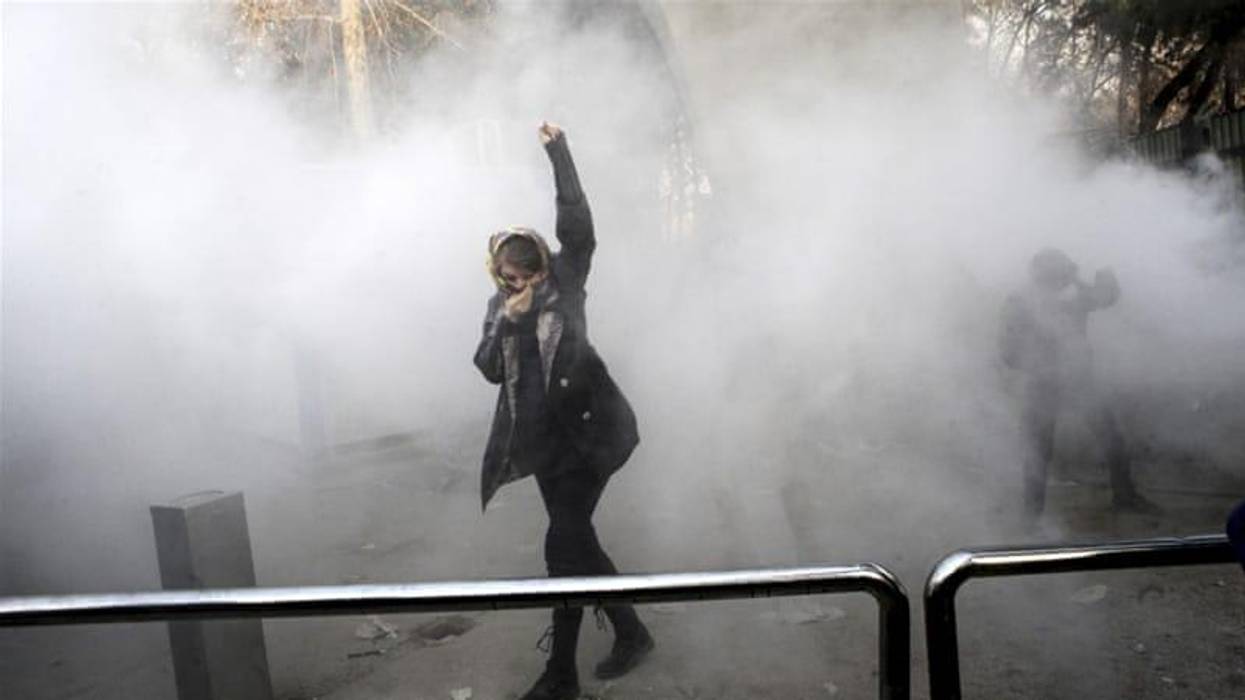
The Islamic Republic of Iran is the platypus of humanity's political evolution.
Episodic Iranian unrest, from the focused, reformist uprising of 2009 (led by middle-class protesters of Tehran) to the current, wildly rejectionist riots (spearheaded by the underclass and the unemployed in the poor neighborhoods of provincial towns) cannot be understood in isolation from that melange of procedural democracy and obscurantist theocracy that was crammed into the constitution of revolutionary Iran, four decades ago.
Deep within Iran's authoritarian system there is a tiny democratic heart, complete with elective, presidential and parliamentary chambers, desperately beating against an unyielding, theocratic exoskeleton. That palpitating democratic heart has prolonged the life of the system - despite massive mismanagement of the domestic and international affairs by the revolutionary elites.
But it has failed to soften the authoritarian carapace. The reform movement has failed in its mission because the constitution grants three quarters of the political power to the office of the "Supreme Leader": an unelected, permanent appointment whereby a "religious jurist" gains enormous powers, including command of the armed forces and foreign policy, veto power over presidential cabinets and parliamentary initiatives, and the world's most formidable Pretorian Guard (IRGC), with military, paramilitary, intelligence, judicial and extrajudicial powers to enforce the will of its master.
The democratically-elected president and parliament (let alone the media and ordinary citizens) have no prayer of checking the powers of the Supreme Leader. As a result, the system has remained opaque, blind to its own flaws, resistant to growth and incapable of adaptation to its evolving internal and external environments.
"Unlike the present riots, the 2009 movement had a well-defined political vision and a seasoned leadership which was quickly arrested, prosecuted and imprisoned."
These uprisings express the frustration of the people with that obdurate rigidity.
It took a decade after the revolution of 1978 for the democracy movement to gain self-consciousness, in the mind of a segment of the cadre elite of the revolution, at the disappointing end of the Iran-Iraq war in 1988.
It took another decade for this sentiment to gestate before it took political shape in the wave that carried President Mohammed Khatami to power in 1997. The empowered reformists aimed to strengthen the democratic component of the Republic while softening its theocratic and authoritarian casing.
They failed in this mission because the ruling theocrats would not brook the slightest diminishment of their power. They fought Khatami tooth and nail and sabotaged his plans. They created, in the words of the first reformist president, a "crisis every nine days" to break him.
The failure of the reformers resulted in a popular malaise. As hopes of reforming the Islamic Republic were frustrated, many stayed away from the polls in 2005 elections. This allowed the rise of a neo-conservative counter elite headed by the firebrand, Mahmoud Ahmadinejad.
The ensuing international isolation and precipitous devaluation of the currency sobered the people enough to send them back to the polls in 2009, to depose the dangerous lunatic who had climbed to the office of presidency. When Ahmadinejad was declared the winner, the perception of a stolen election led to immense street demonstrations that came to be known as the Green Uprising.
Unlike the present riots, the 2009 movement had a well-defined political vision and a seasoned leadership which was quickly arrested, prosecuted and imprisoned. Street demonstrations were brutally suppressed.
Ahmadinejad's second term was even more disastrous than his first. The near economic collapse under the UN-imposed sanctions, and rampant profiteering due to the ubiquitous black market in everything from cancer drugs to selling oil in international markets, persuaded people to once again return to the polls.
In the 2013 elections, people elected Hassan Rouhani, a moderate cleric who promised international normalisation and economic prosperity, but not hardcore reform or liberalisation. The reformers extended an olive branch to the autocratic right-wing establishment to let the bygones of 2009 be bygones.
But the Supreme Leader arrogantly rejected the gesture. Far from being ashamed of what they had done, the ruling theocrats had decided to transform the suppression of the Green Uprising into a foundational myth for their neo-fundamentalist cult. Not even the emerging regional threats by a new Arab/Israeli alliance and the election of a blatantly anti-Iran president in the United States persuaded the right wing to put aside their "anti-reformist" sentiments.
In his first term, Rouhani managed to check the hyperinflation and the runaway unemployment while concluding a historic agreement with Iran's iconic adversary, the US. But his second term did not start auspiciously.
First, Rouhani appeared to buckle under right-wing pressures when he appointed a relatively conservative cabinet: A disappointing pattern people had already seen in President Khatami's second term. To make matters worse, the Americans under Trump (or, as he is known in Iran, the American Ahmadinejad) started to renege on the promises of the nuclear deal. Hopes for a quick recovery had now been dashed.
Further fuel was added to the volatile mix as a series of mammoth corruption schemes came to the light. Then, under pressure from the right wing, President Rouhani decided to justify raising taxes on gasoline by revealing the massive, entitlement budget for religious foundations that was imposed on him by powers that be. It is hard to overestimate the anger this profligacy inspired in people.
The straw that broke the proverbial camel's back was a mere rise in the price of eggs. The right-wing powerful duo of the city of Mashad, Ebrahim Raisi (the embittered rival of Rouhani in the recent elections) and his famously simple-minded father-in-law, Ahmad Alamolhoda, struck the first match by staging a small anti-Rouhani demonstration, blaming the high price of consumer goods on the Rouhani government.
This was the proximate cause of the current unrest, which must be seen only as a trigger, rather than its driving force. The sudden spread of these riots has led to the speculation that they are instigated by extraterritorial enemies such as the Saudi-Israeli-US alliance. But, as there is nothing new about that sort of anti-regime agitation, it is unlikely that they were causally significant.
As long as Iran does not radically modify its institution of the office of the Supreme Leader, and as long as the democratic element of that system remains marginalised and powerless to express the wishes of the people and reduce tensions through legal representation, riots and uprisings will be an immanent and permanent feature of the Islamic Republic of Iran.
Maybe, under a benevolent despot, all these powers would be put to effective use. But Iran and its neighbours on all sides are no exception to British historian Lord Acton's rule: "Power tends to corrupt, and absolute power corrupts absolutely. Great men are almost always bad men."

The Saudi war in Yemen is really directed at...Iran. Donald Trump's first overseas visit to Saudi Arabia and Israel was specifically targeted at...Iran. The Saudi-led isolation of Qatar is actually about...Iran.
The escalation of U.S. military actions against the Syria government is... well, do I really need to spell this out any further?
Donald Trump has identified several number-one enemies to target. Throughout the campaign, he emphasized the importance of throwing the full weight of the Pentagon against the Islamic State. More recently, his secretary of defense, Jim Mattis, identified North Korea as "the most urgent and dangerous threat to peace and security."
Other threats that have appeared at one time or another in the administration's rotation include China, Cuba, the mainstream media, former FBI director James Comey, and Shakespeare (for writing Julius Caesar and then somehow, from the grave, persuading the Public Theater to run a scandalous version of it).
Through it all, however, Iran has loomed as the primary bogeyman of the Trump crowd. Fear of Iranian influence has prompted the administration to all but cancel the 2015 nuclear deal, intensify a number of proxy wars, consider pushing for regime change in Tehran, and even intervene in the mother of all battles between the Shia and Sunni variants of Islam.
You're worried about Trump and the nuclear football? The prospect of blowback from an all-out U.S. assault on the Islamic State keeps you up at night? A preemptive strike against North Korea, which Mattis acknowledges would be disastrous, has you rethinking that upcoming trip to Seoul?
Sure, those are all dystopian possibilities. But if I had to choose a more likely catastrophe, it would be a direct confrontation between the United States and Iran. After all, everything seems to be pointing in that direction.
The Fate of the Deal
The nuclear deal that Iran signed with the five permanent members of the UN Security Council plus Germany and the European Union is hanging by a thread. Trump made no bones about his distaste for this Joint Comprehensive Plan of Action (JCPOA). He promised to tear it up.
He hasn't done so. It's not just that he's gotten pushback from the usual suspects in Washington (diplomats, foreign policy mavens, talking heads, journalists). Even members of his inner circle seem to see value in the agreement. Mattis, who is otherwise hawkish on Iran, has stood by the JCPOA and diplomacy more generally. Secretary of State Rex Tillerson has, albeit reluctantly, acknowledged that Iran has lived up to its side of the agreement. Then there are all the American jobs on the line from the Iranian purchase of Boeing jets.
Even though Trump hasn't torn up the agreement, he has certainly attempted to give it a good crumple. He has directed the Treasury Department to apply additional sanctions on Iran's missile program. He's considering the option of declaring the Revolutionary Guards a terrorist organization. Congress, meanwhile, is pursuing its own complementary set of sanctions against Iran (though, because it's bundled with sanctions against Russia, the legislation may not meet Trump's approval).
None of this violates the terms of the JCPOA. But it challenges the spirit of the accord.
Adding insult to injury, Trump damned Iran with faint condolences after the recent terrorist attacks in Tehran. "We grieve and pray for the innocent victims of the terrorist attacks in Iran, and for the Iranian people, who are going through such challenging times," Trump wrote. "We underscore that states that sponsor terrorism risk falling victim to the evil they promote."
Talk about bad taste. After September 11, Iranians gathered for candlelight vigils to mourn the mostly American victims of the attacks. The Iranian government didn't say anything about chickens coming home to roost after U.S. military interventions in the Middle East, for that would have been inappropriate (though accurate).
But Iran might yet have to make a statement that echoes Trump's tone-deaf remark: States that tear up international agreements risk falling victim to the evil they promote.
Proxy Wars
The conflict is escalating in Syria, where Iran backs the regime of Bashar al-Assad and the United States supports a shifting set of anti-regime groups.
Both countries could decide to team up against the Islamic State. And indeed, Iran launched a missile attack against ISIS in Syria this last weekend in retaliation for the terrorist attacks in Tehran. As after September 11, when Tehran and Washington briefly worked together, cooperation against Sunni extremists would seem a no-brainer.
But the would-be caliphate, having lost most of Mosul and now teetering on the verge of conceding its capital in Raqqa, is shrinking at a rapid clip. Which may well explain why the United States has been wading deeper into the Syrian conflict. For the first time since the war in Syria began, U.S. forces shot down a Syrian government plane this last weekend. It's only the latest in a series of attacks on Assad's forces, according to The Atlantic:
Three times in the last month, the U.S. military has come into direct conflict with the combined forces of the Assad regime, Iran-supported Shiite militias, Hezbollah, and possibly even Iran's elite Islamic Revolutionary Guards Corps. The clashes have reportedly resulted in the deaths of a small number of pro-regime forces, and are much more strategically important than the much-ballyhooed U.S. air strike on the al-Shayrat airfield back in April in response to the Assad regime's use of chemical weapons.
Several administration figures, notably Ezra Cohen-Watnick and Derek Harvey in the National Security Council, are eager to confront Assad and his Iranian backers more aggressively. Mattis, however, has reportedly opposed several of their risky propositions. Regardless of the Pentagon chief's somewhat more risk-averse behavior, both Iran and the United States are maneuvering to control as much territory as possible in the vacuum created by the collapse of ISIS.
Even The Washington Post, which generally supports the JCPOA, is enthusiastic about the U.S. intervening more forcefully in the new great game in Syria. "The United States doesn't have a strategic reason to control southern and eastern Syria," The Post editorial board opines, "but it does have a vital interest in preventing Iran from establishing a dominion from Tehran to the Mediterranean with Russia's support."
How soon the Post forgets. The Iraq War against Saddam Hussein begat the war against the anti-occupation forces, which in turn generated a war against the Islamic State, which now promises to escalate into a war against the axis of Russia, Iran, and Syria. Thus have so-called national interests morphed into endless war.
Meanwhile, over in Yemen, the Saudis are bogged down in a war of their own that's going nowhere (except in producing a severe humanitarian crisis). The Trump administration has been mulling for several months a boost in U.S. participation in that war. At the least, this would mean lifting certain restrictions on the assistance Washington is already providing the Saudi-led coalition -- surveillance, refueling, and the like. Then there are the additional arms that Trump wants to provide Riyadh.
Now that the Navy SEALS have conducted two raids in Yemen under Trump -- the most recent taking place last month -- the prospect of more permanent boots on the ground may not be far off. Recall how the United States became involved in Vietnam to help out the failing French in order to prevent presumed Soviet expansion.
Yemen, where we may yet send troops to help the failing Saudis prevent presumed Iranian expansion, is the very definition of quagmire.
Regime Change?
Last week, Rex Tillerson was testifying in front of the Senate Foreign Relations Committee. In response to a query from Ted Poe (R-TX), a big fan of the Iranian radical group Mojahedin-e Khalq (MEK) and its efforts to destabilize Iran, Tillerson said,
Our policy towards Iran is to push back on this hegemony, contain their ability to develop obviously nuclear weapons, and to work toward support of those elements inside of Iran that would lead to a peaceful transition of that government.
It was the first public indication of regime-change sentiment from the administration.
But it's not the only sign. Cohen-Watnick, the liaison on the NSC to the intelligence community, has reportedly confessed to other administration officials of his desire to oust the Iranian regime through espionage. And the fellow that's now leading the Iran operation at CIA is Michael D'Andrea, otherwise known as the "dark prince," a long-time operative who is fully capable of pursuing the harder line that Cohen-Watnick wants to see.
But wait, didn't Iranians just overwhelmingly back the reformist Hassan Rouhani in elections last month? This popular government has engaged in domestic reforms and external engagement of the "Great Satan." In other words, Iranians have changed their own regime -- peacefully -- since the days of the more confrontational Mahmoud Ahmadinejad. Of course, Washington has overturned the wishes of Iranian voters in the past, helping to overthrow Mohammed Mossadegh in 1953.
Whenever oil interests (Tillerson) intersect with chickenhawk ambitions (Bannon), talk of regime change is sure to follow.
Clash of Civilizations
When Donald Trump said a few nice things about Islam on his first foreign trip to Saudi Arabia, liberals back home breathed a sigh of relief. At least the new president wouldn't follow senior advisor Steve Bannon's more extreme narrative of a new crusade against the infidels.
"This is not a battle between different faiths, different sects, or different civilizations," Trump said. "This is a battle between barbaric criminals who seek to obliterate human life, and decent people of all religions who seek to protect it. This is a battle between good and evil."
But even as he rejected the larger religious frame, Trump has embraced a different kind of war: a clash within a civilization. The battle lines between Sunni and Shia have hardened throughout the Middle East, and Trump is wading into this mess firmly on the side of the Sunni. And not just any Sunnis, but the most extreme Wahhabi version of Sunni Islam as represented by the ruling sheikhs of Saudi Arabia.
Let's be clear: Trump is not making a doctrinal statement by siding with extremist Sunnis. He knows nothing about Islam and is not interested in learning. This is about power -- who will control the Middle East.
In the past, however, the United States in its infinite naivete thought that it could control outcomes on the ground in the region. Today, that naivete has developed into a kind of aggressive ignorance as the Trump administration simply follows the Saudi lead, with Israel pushing from behind. In this way, the United States will be propelled toward war with Iran.
But wait, actually, Donald Trump himself anticipated this outcome.
Back in 2013, Trump said,
We will end up going to war with Iran because we have people who don't know what the hell they are doing. Every single thing that this administration and our president does is a failure.
Who knew that Donald Trump could be so prescient? The president has proven himself high-performing in at least this one regard: self-fulfilling prophecies.
I speak about the Middle East to people of various political persuasions around the US, from leftist college students to conservatives on AM radio talk shows. Most Americans are wary of further US military intervention in the region and ask intelligent questions about this very complicated topic. But I inevitably run into people advocating conspiracy theories--from both the left and right.
I speak about the Middle East to people of various political persuasions around the US, from leftist college students to conservatives on AM radio talk shows. Most Americans are wary of further US military intervention in the region and ask intelligent questions about this very complicated topic. But I inevitably run into people advocating conspiracy theories--from both the left and right.
Conspiracy theories, although seemingly quite radical and anti-government, actually divert attention from the very real evils that exist in the region.
Here are six of the most common myths:
1. The US created the Islamic State
Some leftists argue that the US created al-Qaeda in order to fight the USSR in Afghanistan in the 1980s. Now it's done the same with the Islamic State (ISIS or IS) in order to sow dissention in Iraq and Syria.
The theory got even wider credence when Donald Trump declared that President Barak Obama was the "founder" of IS and "the co-founder was crooked Hilary Clinton."
Ah, where to start? The US didn't create either al-Qaeda or the Islamic State. Yes, the US backed the most right-wing mujahedeen in Afghanistan in the 1980s. But those reactionaries, some of whom later formed al-Qaeda, always had their own agenda. They took money and arms from the US while planning to attack the US and its allies at a later time.
The Islamic State, then known as al-Qaeda in Iraq (AQI), formed in Iraq as one of the many groups fighting the 2003 US occupation. The US and Iraqi Sunnis defeated AQI militarily in the 2007 Anbar surge. AQI regrouped, moved to Syria, and emerged as IS in 2014.
The US has been bombing IS since 2014 and is organizing ground assaults on IS-controlled cities in Iraq and Syria--hardly the sign of an alliance. The US occupation of Iraq laid the political basis for the formation of IS but did not create it.
2. The US was the secret instigator of all the Arab Spring uprisings.
A few journalists and book authors on the left point to the failures of the Arab Spring and that most regimes in the region remain pro-US. They argue that the US instigated the Arab Spring demonstrations in order to emerge a stronger power at the end of the day. One commentator even claims the US had planned the Arab Spring five years in advance.
Funny, that's not what almost everyone said at the beginning of 2011. When the people of Tunisia rose up and young people occupied Tahrir Square in Cairo, leftists and progressives correctly argued that these were immensely popular movements against local dictators and US domination. Even Iran's clerical rulers tried to take credit for the uprisings, calling Egypt an "Islamic Liberation Movement."
The two main actors who opposed the Arab Spring were al-Qaeda, which had no visible support at the time, and the US government. Vice President Biden expressed strong US support for Egyptian dictator Hosni Mubarak just a few days before he fell from power.
It's often forgotten now, but Arab Spring demonstrations continued for months throughout the region, and for years in Saudi Arabia and Bahrain. Are these demonstrators bravely protesting against US-allied regimes somehow instigated by the US?
3. The Syria uprising was not a popular movement but instead was instigated by the US in order to remove the anti-imperialist Assad.
Not surprisingly, the Assad government makes this argument. It is surprising, however, that a small number of American leftists fall for it.
Just a few weeks after the uprising began in Syria in March 2011, Assad called the demonstrators terrorists backed by Saudi Arabia, Israel, and the US. In reality, the protestors were a mixture of civil society activists and conservative political Islamists, the same combination of folks who rose up throughout the region. The Assad regime cracked down hard, beating, arresting, torturing and killing protestors.
Although there had been scattered armed attacks from the beginning, armed conflict only became dominant towards the end of 2011 and early 2012. By 2014 extremists such as the al-Qaeda-affiliated Nusra Front and the Islamic State came to dominate the armed opposition.
Assad cheerleaders argue that he is an anti-imperialist and a key player in the "Resistance Front," consisting of countries that support the Palestinians and oppose Israel. There's only one problem with that claim. Palestinians living in Gaza and the West Bank don't support Assad. Hamas, the party controlling Gaza, broke with Assad and backed the popular uprising starting in 2011.
Fatah and the PLO, the dominant forces in the West Bank, are officially neutral but have a long history of conflict with the Assad family. Hafez al-Assad, the current president's father, jailed PLO activists and tried to replace Yasser Arafat with a pro-Syrian leader. Bashar al-Assad never allowed the PLO to organize within Syria.
Of course, the US, Saudi Arabia, Israel, and Turkey have all armed rebel groups, including extremists such as the IS. They each seek to install a government in Syria favorable to their views. But being attacked by imperialists and their allies doesn't make you an anti-imperialist.
4. Iran is the number one state sponsor of terrorism in the world.
This falsehood is promoted by many leading politicians in the US as well as by the rulers of Saudi Arabia and other Arab dictatorships. They argue that Iran supports Hezbollah in Lebanon and the Houthi movement in Yemen, along with Shia insurgents in Saudi Arabia and Bahrain. James "Mad Dog" Mattis, Trump's nominee for Secretary of State, even claims that Iran cooperates with the Islamic State in a common terrorist campaign against the US.
Iran certainly asserts its political and military presence in the region, seeking to lead an anti-US/anti-Israeli alliance stretching from Lebanon through Syria, Iraq, Bahrain and Yemen. The Iran-backed groups are conservative political Islamists (mostly Shia) who engage in armed struggle, but they have genuine popular support. Hezbollah, for example, is both part of the ruling coalition in the Lebanese Parliament and an armed militia. Some of the groups have used terrorist tactics, such as intentionally blowing up civilians, but they are not the same as terrorist groups such as the Islamic State.
As for Mad Dog's assertions, he's simply creating a conspiracy myth. The Islamic State has attempted to launch terrorist attacks inside Iran, and Iran is fighting the IS in both Iraq and Syria. Mad Dog's misinformation campaign seeks to lump together everyone opposed to US policy into one block and gin up popular support for an eventual military attack on Iran.
Saudi Arabia is a far bigger supporter of terrorist groups than Iran. It supports the Al Qaeda affiliated Syrian Conquest Front (formerly al Nusra) and backs terrorist groups in Pakistan and Afghanistan, including the Taliban.
But since Saudi Arabia is key to US oil interests and a military ally, by definition, it can't be listed as a state sponsor of terrorism.
5. The US intentionally creates failed states like Libya in order to keep the region in turmoil.
Advocates of this view look at conditions in Libya today, the result of US and European intervention, and say that the US always intended to create a failed state. That view doesn't square with reality.
The US, France, Britain, and other Western powers became involved in Libya, in large part, because of its oil. Those countries wanted to overthrow dictator Muammar Gaddafi in order to keep Libyan oil flowing over the long run on terms favorable to Western oil companies.
Yet today Libya has almost completely stopped exporting oil, leading to an estimated 8.3% drop in GDP, according to a World Bank report. Since when do imperialist countries conspire to cut off their own oil supplies?
In reality, the US and its allies implemented a series of plans aimed at reestablishing Western domination of Libya--but they keep failing.
Plan A: Use Western air superiority to help pro-Western rebels quickly overthrow Gaddafi. Failure #1: the quick overthrow lasted almost eight months.
Plan B: Find a former government official friendly to Washington to install as strongman and hold elections that US-backed parties would surely win. Failure #2: US-backed Mahmoud Jibril became interim prime minister, but he lasted only seven months. The parliament has little popular support.
Plan C: Using the CIA, find militia groups willing to ally with the US. Failure #3: the CIA attempted to make alliances with various militias, but those efforts blew up during the infamous attack on the Benghazi CIA annex in 2012, resulting in the death of the US ambassador.
The US certainly carried out policies that resulted in a failed state, but that was not the goal.
6. The Bush administration planned the 9/11 attacks in order to further repression and start wars in the Middle East.
This one is the granddaddy of all modern conspiracy theories, promulgated by both the left and right. Even right-wing populist and former president of Iran, Mahmoud Ahmadinejad, gave credence to the view. The theory attracts support because the US has engaged in false flag operations in the past, for example, trying to blame communists for the 1953 CIA coup in Iran.
I won't spend time debunking the phony assertions that the World Trade Center was wired with explosives in advance. The editors of Popular Mechanics have done an excellent job criticizing that and many other falsehoods.
Please consider a major flaw that is rarely discussed, the attack on the Pentagon. 9/11 Truthers claim the US fired a missile into the Pentagon, as seen by the cylindrical shaped destruction of the building. This is consistent with the assertion that government operatives, not al-Qaeda hijackers, caused the devastation in New York.
Well, in fact, thousands of commuters on Washington DC freeways saw the airplane descending towards the Pentagon. An AP news photo showed part of the airplane fuselage sitting on the front lawn of the Pentagon that day.
And, if a missile had hit the Pentagon, what happened to American Airlines #77 that left Dulles Airport that morning? Well, answer some 9/11 Truthers, it was forced to land at a secret location and all the passengers were gassed to death. Think of the omniscient power of the conspirators!
The Bush administration did not plan 9/11, but it did take full advantage of America's anger and fear. It used 9/11 to invade and occupy Afghanistan and Iraq, pass the repressive Patriot Act, and engage in widespread torture and abuse in Guantanamo and secret CIA sites scattered around the world. That's reason enough to oppose the US government. Conspiracy theories simply divert attention from the government's real crimes.
All of the conspiracy advocates share a common methodology. They look at the situation as it exists after the fact and then create a fictional narrative showing that today's crisis was planned all along.
They overestimate the power of the US empire while underestimating the power of ordinary people to make change. If the Bush Administration murdered almost 3,000 people on 9/11 and successfully covered it up, how can we possibility fight back? If the US-created Arab Spring caused chaos, why should anyone rise up against their oppressors?
Pardon me for my optimism. But I don't believe in conspiracy theories and still believe in the power of ordinary people to make fundamental change.