
Believers all, I suppose. And the dead? Perhaps it requires a medical report to understand this many dead. Shot in the face, most of them, several in the eyes, many in the chest. I saw only one body which they claimed was shot in the back. Most of the faces they showed me were bearded. A massacre? Most certainly. And these were only a few of the dead. What on earth did General Abdul-Fattah al-Sisi intend to do when he called on Egyptians to give their support to him on the streets on Friday?
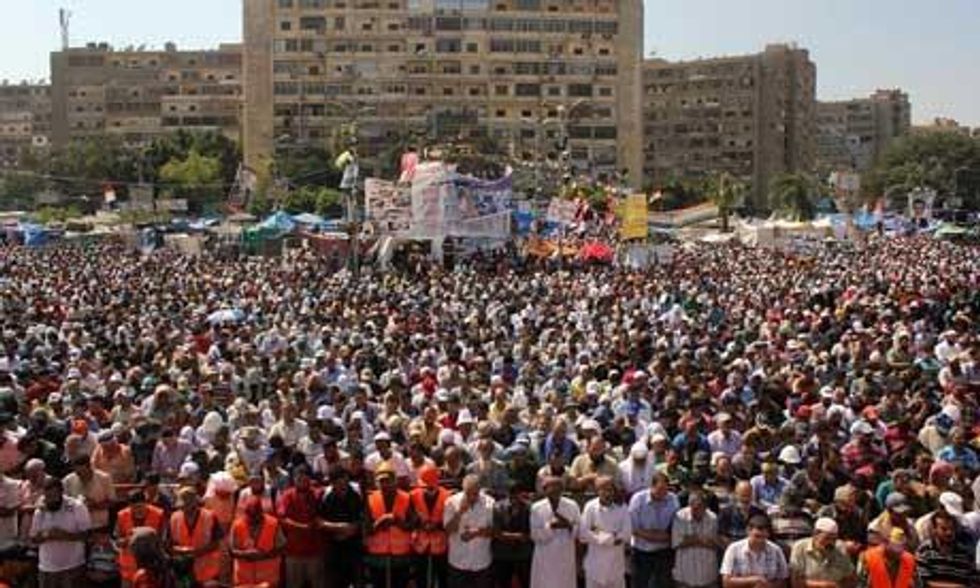
These killings took place in the hours before dawn. The police, everyone said, opened fire, first with birdshot, then with live rounds as members of the Muslim Brotherhood led by Mohamed Morsi paraded close to the tomb of President Anwar Sadat - himself assassinated 23 years ago by an Islamist called Khalid al-Islambouli, a lieutenant in the Egyptian army no less - not far from the mosque. Who fired first? Well, all the dead were Muslim Brothers or their friends or family. There were no dead policemen.
The Brotherhood said its people were unarmed, which may well be true, although I have to say that a man guarding a car park near the mosque who directed me to the hospital was holding a Kalashnikov rifle. Living in Beirut, I have grown used to seeing guns in the hands of young men, but I was a little shocked to see this man in a blue T-shirt holding an automatic weapon. But he was the only armed man I saw.
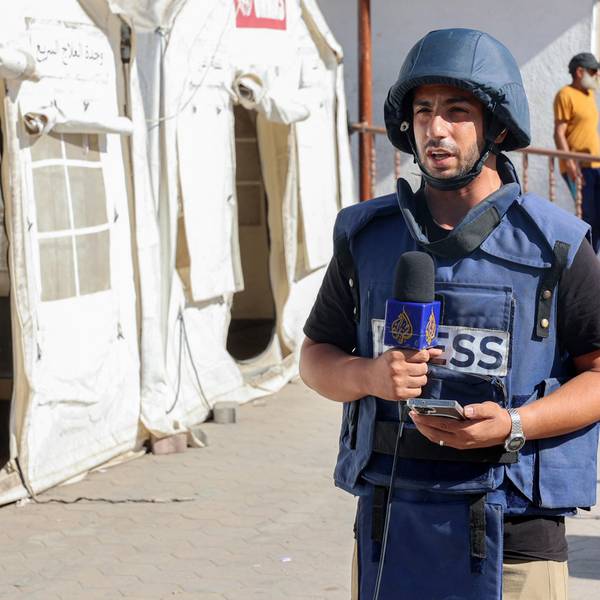
But why did this have to happen? Ahmed Habib, a doctor, told me that in all his life he had never experienced dead on this scale - and you have to remember that I was seeing only some of the Egyptians who died - and that he had used up two weeks' worth of medical equipment in just a few hours. "Look at the blood on my clothes," he shouted at me. Many of the doctors lay outside the room of the dead, sleeping on the dirty floor, exhausted after trying to save lives all through the morning.
No one blamed the army - which lets al-Sisi off the hook as a general but not as the coup leader who demanded that the people of Egypt support his battle against "terrorism". Nor does it let him off the hook as a father. The general has three sons and a daughter, but the 37 dead men I saw were also children of Egypt who deserve, surely, some compassion. That they belonged to the Brotherhood - if they all did - does not make them "terrorists". On Friday night, I told several friends that I feared there would be dead on the streets of Cairo. Does this mean that I, a mere foreigner, feared the mortuary room I saw and that al-Sisi - a lofty general - could not have predicted this?
"We are told we are a minority now, so we don't deserve to live," another doctor told me. I didn't like the propaganda line but these were dramatic minutes in a room packed with dead bodies, so many that medical staff were literally tripping on the corpses and their shrouds. They were taken from the room on stretchers under the flash of cameras - no one missed the opportunity of Brotherhood martyrdom and many times was God's name invoked outside - and inserted into ambulances that queued beside the mosque in the midday heat.
Many people said the things people always say when confronted by tragedy. That they would never give way, that they would die rather than submit to military rule - this in a country, remember, where we must believe that the coup that happened didn't happen - and that God was greater than life itself, certainly greater than al-Sisi, a statement which the general would, of course, agree with. Dr Habib insisted that there was an afterlife which - being in a place of death - I admit I did ask him to prove. "Because we are not animals, to eat food and drink water all our lives. Do you think that is the only reason for our being?"
Behind the hospital were many men who had been wounded in the feet, some of them groaning with pain. But it was the dead who caught our attention, so newly killed that their faces had not yet taken on the mark of death. One paramedic had difficulty closing the eyes of a corpse and had to ask a doctor for help. In death, it seems, you must always appear to be asleep. And, cliche as it might be, I wonder if that is now the state of Egypt.
Believers all, I suppose. And the dead? Perhaps it requires a medical report to understand this many dead. Shot in the face, most of them, several in the eyes, many in the chest. I saw only one body which they claimed was shot in the back. Most of the faces they showed me were bearded. A massacre? Most certainly. And these were only a few of the dead. What on earth did General Abdul-Fattah al-Sisi intend to do when he called on Egyptians to give their support to him on the streets on Friday?
These killings took place in the hours before dawn. The police, everyone said, opened fire, first with birdshot, then with live rounds as members of the Muslim Brotherhood led by Mohamed Morsi paraded close to the tomb of President Anwar Sadat - himself assassinated 23 years ago by an Islamist called Khalid al-Islambouli, a lieutenant in the Egyptian army no less - not far from the mosque. Who fired first? Well, all the dead were Muslim Brothers or their friends or family. There were no dead policemen.
The Brotherhood said its people were unarmed, which may well be true, although I have to say that a man guarding a car park near the mosque who directed me to the hospital was holding a Kalashnikov rifle. Living in Beirut, I have grown used to seeing guns in the hands of young men, but I was a little shocked to see this man in a blue T-shirt holding an automatic weapon. But he was the only armed man I saw.
But why did this have to happen? Ahmed Habib, a doctor, told me that in all his life he had never experienced dead on this scale - and you have to remember that I was seeing only some of the Egyptians who died - and that he had used up two weeks' worth of medical equipment in just a few hours. "Look at the blood on my clothes," he shouted at me. Many of the doctors lay outside the room of the dead, sleeping on the dirty floor, exhausted after trying to save lives all through the morning.
No one blamed the army - which lets al-Sisi off the hook as a general but not as the coup leader who demanded that the people of Egypt support his battle against "terrorism". Nor does it let him off the hook as a father. The general has three sons and a daughter, but the 37 dead men I saw were also children of Egypt who deserve, surely, some compassion. That they belonged to the Brotherhood - if they all did - does not make them "terrorists". On Friday night, I told several friends that I feared there would be dead on the streets of Cairo. Does this mean that I, a mere foreigner, feared the mortuary room I saw and that al-Sisi - a lofty general - could not have predicted this?
"We are told we are a minority now, so we don't deserve to live," another doctor told me. I didn't like the propaganda line but these were dramatic minutes in a room packed with dead bodies, so many that medical staff were literally tripping on the corpses and their shrouds. They were taken from the room on stretchers under the flash of cameras - no one missed the opportunity of Brotherhood martyrdom and many times was God's name invoked outside - and inserted into ambulances that queued beside the mosque in the midday heat.
Many people said the things people always say when confronted by tragedy. That they would never give way, that they would die rather than submit to military rule - this in a country, remember, where we must believe that the coup that happened didn't happen - and that God was greater than life itself, certainly greater than al-Sisi, a statement which the general would, of course, agree with. Dr Habib insisted that there was an afterlife which - being in a place of death - I admit I did ask him to prove. "Because we are not animals, to eat food and drink water all our lives. Do you think that is the only reason for our being?"
Behind the hospital were many men who had been wounded in the feet, some of them groaning with pain. But it was the dead who caught our attention, so newly killed that their faces had not yet taken on the mark of death. One paramedic had difficulty closing the eyes of a corpse and had to ask a doctor for help. In death, it seems, you must always appear to be asleep. And, cliche as it might be, I wonder if that is now the state of Egypt.
Believers all, I suppose. And the dead? Perhaps it requires a medical report to understand this many dead. Shot in the face, most of them, several in the eyes, many in the chest. I saw only one body which they claimed was shot in the back. Most of the faces they showed me were bearded. A massacre? Most certainly. And these were only a few of the dead. What on earth did General Abdul-Fattah al-Sisi intend to do when he called on Egyptians to give their support to him on the streets on Friday?
These killings took place in the hours before dawn. The police, everyone said, opened fire, first with birdshot, then with live rounds as members of the Muslim Brotherhood led by Mohamed Morsi paraded close to the tomb of President Anwar Sadat - himself assassinated 23 years ago by an Islamist called Khalid al-Islambouli, a lieutenant in the Egyptian army no less - not far from the mosque. Who fired first? Well, all the dead were Muslim Brothers or their friends or family. There were no dead policemen.
The Brotherhood said its people were unarmed, which may well be true, although I have to say that a man guarding a car park near the mosque who directed me to the hospital was holding a Kalashnikov rifle. Living in Beirut, I have grown used to seeing guns in the hands of young men, but I was a little shocked to see this man in a blue T-shirt holding an automatic weapon. But he was the only armed man I saw.
But why did this have to happen? Ahmed Habib, a doctor, told me that in all his life he had never experienced dead on this scale - and you have to remember that I was seeing only some of the Egyptians who died - and that he had used up two weeks' worth of medical equipment in just a few hours. "Look at the blood on my clothes," he shouted at me. Many of the doctors lay outside the room of the dead, sleeping on the dirty floor, exhausted after trying to save lives all through the morning.
No one blamed the army - which lets al-Sisi off the hook as a general but not as the coup leader who demanded that the people of Egypt support his battle against "terrorism". Nor does it let him off the hook as a father. The general has three sons and a daughter, but the 37 dead men I saw were also children of Egypt who deserve, surely, some compassion. That they belonged to the Brotherhood - if they all did - does not make them "terrorists". On Friday night, I told several friends that I feared there would be dead on the streets of Cairo. Does this mean that I, a mere foreigner, feared the mortuary room I saw and that al-Sisi - a lofty general - could not have predicted this?
"We are told we are a minority now, so we don't deserve to live," another doctor told me. I didn't like the propaganda line but these were dramatic minutes in a room packed with dead bodies, so many that medical staff were literally tripping on the corpses and their shrouds. They were taken from the room on stretchers under the flash of cameras - no one missed the opportunity of Brotherhood martyrdom and many times was God's name invoked outside - and inserted into ambulances that queued beside the mosque in the midday heat.
Many people said the things people always say when confronted by tragedy. That they would never give way, that they would die rather than submit to military rule - this in a country, remember, where we must believe that the coup that happened didn't happen - and that God was greater than life itself, certainly greater than al-Sisi, a statement which the general would, of course, agree with. Dr Habib insisted that there was an afterlife which - being in a place of death - I admit I did ask him to prove. "Because we are not animals, to eat food and drink water all our lives. Do you think that is the only reason for our being?"
Behind the hospital were many men who had been wounded in the feet, some of them groaning with pain. But it was the dead who caught our attention, so newly killed that their faces had not yet taken on the mark of death. One paramedic had difficulty closing the eyes of a corpse and had to ask a doctor for help. In death, it seems, you must always appear to be asleep. And, cliche as it might be, I wonder if that is now the state of Egypt.