SUBSCRIBE TO OUR FREE NEWSLETTER
Daily news & progressive opinion—funded by the people, not the corporations—delivered straight to your inbox.
5
#000000
#FFFFFF
To donate by check, phone, or other method, see our More Ways to Give page.
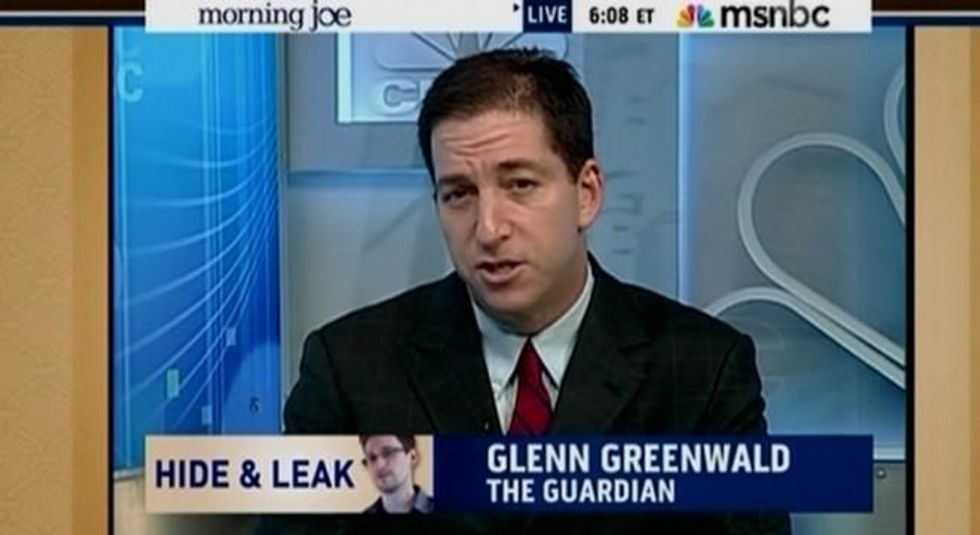
I offer one observation about the story that has consumed the worlds of journalism and politics for the last eight days: leaks describing how vast is the United States government's electronic monitoring of communications. Near the center of that story is Glenn Greenwald, the Guardian columnist who was one of three journalists that the leaker, Edward Snowden, chose to trust.
It will. Which brings me to my one observation. This should have been obvious from many prior events trending in the same direction, but as things stand today the proposition is clear to all but the most resistant minds in legacy media: The professional stance that proscribes all political commitments and discourages journalists from having a clear view or taking a firm position on matters in dispute (you can call it objectivity, if you like, or viewlessness, which I like better) is one way of doing good work. A very different professional stance, where the conclusions that you come to by staring at the facts and thinking through the issues serve to identify your journalism... this is another way of doing good work.
They are both valid. They are both standard. (And "traditional.") They are both major league. Greenwald operates in the second fashion, but the language we have for this style -- calling him a blogger or an advocate, hoping that these shorthands convey what's different about him -- is not very illuminating. "Blurring the line between opinion pieces and straight reporting..." is not very illuminating.
My intervention:
Politics: none is what most of the editors and reporters at the Washington Post practice and preach. (But not all.) It is not the natural, inevitable or "right" way to do journalism, but rather a form of persuasion in which journalists try to get us to accept their account of the way things are by foreswearing any political commitment, avoiding overt displays of opinion, and eluding strong conclusions via quotation or summary of competing arguments.
Of course they also try to persuade us by pointing to irrefutable facts, uncovering new information, and being accurate, truthful and fair, but this does not distinguish them from...
Politics: some is what the journalists at the Guardian practice and preach. It is not the natural or inevitable way to do journalism, but a form of persuasion in which journalists try to get us to accept their account by being up front about their commitments, grounding their freely-expressed opinions in fact, and arriving at conclusions through the sound conduct of public argument.
"None" journalists have certain advantages over their "some" colleagues, but the reverse is also true. If you want to appear equally sympathetic to all potential sources, politics: none is the way to go. If you want to avoid pissing off the maximum number of users, politics: none gets it done. (This has commercial implications. They are obvious.) But: if you're persuaded that transparency is the better route to trust, politics: some is the better choice. And if you want to attract sources who themselves have a political commitment or have come to a conclusion about matters contested within the political community, being open about your politics can be an advantage. That is the lesson that Glenn Greenwald has been teaching the profession of journalism for the last week. Edward Snowden went to him because of his commitments. This has implications for reporters committed to the "no commitments" style.
I know Glenn. Glenn is a pro. I mean that in different ways. Obviously he gets paid to write his columns. But he is also an independent force in drawing traffic, reader reaction and dollar support. He is methodical. He is responsible. He thinks the public should know what's going on. He spends most of his time verifying, digging and writing, delivering information in the form of public argument about what the government is really doing. Familiar in the arts of denunciation and the joys of savage critique, he is also trained as a litigator. He is good at dividing what can be documented from what can be said because the documentation is missing.
This is the life of a political journalist, although it is equally correct to say that Glenn is a lawyer who writes about the fate of the republic rather than practicing law. He is also an activist, if we mean by that someone who thinks his fellow citizens should wake up and change things, and who participates himself within the limits of the forms he has chosen. With Greenwald the forms are writing, blogging, researching, political commentary in the "reported opinion" style, public speaking and appearing on television. He is good at all of them.
Edward Snowden's decision to leak to Greenwald, and Glenn's domination of newsland for several days tells us that politics: none is just one way of excelling at political journalism. I do not think it invalid. It simply has to share the stage with politics: some. Together they make for a strong press.
I offer one observation about the story that has consumed the worlds of journalism and politics for the last eight days: leaks describing how vast is the United States government's electronic monitoring of communications. Near the center of that story is Glenn Greenwald, the Guardian columnist who was one of three journalists that the leaker, Edward Snowden, chose to trust.
It will. Which brings me to my one observation. This should have been obvious from many prior events trending in the same direction, but as things stand today the proposition is clear to all but the most resistant minds in legacy media: The professional stance that proscribes all political commitments and discourages journalists from having a clear view or taking a firm position on matters in dispute (you can call it objectivity, if you like, or viewlessness, which I like better) is one way of doing good work. A very different professional stance, where the conclusions that you come to by staring at the facts and thinking through the issues serve to identify your journalism... this is another way of doing good work.
They are both valid. They are both standard. (And "traditional.") They are both major league. Greenwald operates in the second fashion, but the language we have for this style -- calling him a blogger or an advocate, hoping that these shorthands convey what's different about him -- is not very illuminating. "Blurring the line between opinion pieces and straight reporting..." is not very illuminating.
My intervention:
Politics: none is what most of the editors and reporters at the Washington Post practice and preach. (But not all.) It is not the natural, inevitable or "right" way to do journalism, but rather a form of persuasion in which journalists try to get us to accept their account of the way things are by foreswearing any political commitment, avoiding overt displays of opinion, and eluding strong conclusions via quotation or summary of competing arguments.
Of course they also try to persuade us by pointing to irrefutable facts, uncovering new information, and being accurate, truthful and fair, but this does not distinguish them from...
Politics: some is what the journalists at the Guardian practice and preach. It is not the natural or inevitable way to do journalism, but a form of persuasion in which journalists try to get us to accept their account by being up front about their commitments, grounding their freely-expressed opinions in fact, and arriving at conclusions through the sound conduct of public argument.
"None" journalists have certain advantages over their "some" colleagues, but the reverse is also true. If you want to appear equally sympathetic to all potential sources, politics: none is the way to go. If you want to avoid pissing off the maximum number of users, politics: none gets it done. (This has commercial implications. They are obvious.) But: if you're persuaded that transparency is the better route to trust, politics: some is the better choice. And if you want to attract sources who themselves have a political commitment or have come to a conclusion about matters contested within the political community, being open about your politics can be an advantage. That is the lesson that Glenn Greenwald has been teaching the profession of journalism for the last week. Edward Snowden went to him because of his commitments. This has implications for reporters committed to the "no commitments" style.
I know Glenn. Glenn is a pro. I mean that in different ways. Obviously he gets paid to write his columns. But he is also an independent force in drawing traffic, reader reaction and dollar support. He is methodical. He is responsible. He thinks the public should know what's going on. He spends most of his time verifying, digging and writing, delivering information in the form of public argument about what the government is really doing. Familiar in the arts of denunciation and the joys of savage critique, he is also trained as a litigator. He is good at dividing what can be documented from what can be said because the documentation is missing.
This is the life of a political journalist, although it is equally correct to say that Glenn is a lawyer who writes about the fate of the republic rather than practicing law. He is also an activist, if we mean by that someone who thinks his fellow citizens should wake up and change things, and who participates himself within the limits of the forms he has chosen. With Greenwald the forms are writing, blogging, researching, political commentary in the "reported opinion" style, public speaking and appearing on television. He is good at all of them.
Edward Snowden's decision to leak to Greenwald, and Glenn's domination of newsland for several days tells us that politics: none is just one way of excelling at political journalism. I do not think it invalid. It simply has to share the stage with politics: some. Together they make for a strong press.
I offer one observation about the story that has consumed the worlds of journalism and politics for the last eight days: leaks describing how vast is the United States government's electronic monitoring of communications. Near the center of that story is Glenn Greenwald, the Guardian columnist who was one of three journalists that the leaker, Edward Snowden, chose to trust.
It will. Which brings me to my one observation. This should have been obvious from many prior events trending in the same direction, but as things stand today the proposition is clear to all but the most resistant minds in legacy media: The professional stance that proscribes all political commitments and discourages journalists from having a clear view or taking a firm position on matters in dispute (you can call it objectivity, if you like, or viewlessness, which I like better) is one way of doing good work. A very different professional stance, where the conclusions that you come to by staring at the facts and thinking through the issues serve to identify your journalism... this is another way of doing good work.
They are both valid. They are both standard. (And "traditional.") They are both major league. Greenwald operates in the second fashion, but the language we have for this style -- calling him a blogger or an advocate, hoping that these shorthands convey what's different about him -- is not very illuminating. "Blurring the line between opinion pieces and straight reporting..." is not very illuminating.
My intervention:
Politics: none is what most of the editors and reporters at the Washington Post practice and preach. (But not all.) It is not the natural, inevitable or "right" way to do journalism, but rather a form of persuasion in which journalists try to get us to accept their account of the way things are by foreswearing any political commitment, avoiding overt displays of opinion, and eluding strong conclusions via quotation or summary of competing arguments.
Of course they also try to persuade us by pointing to irrefutable facts, uncovering new information, and being accurate, truthful and fair, but this does not distinguish them from...
Politics: some is what the journalists at the Guardian practice and preach. It is not the natural or inevitable way to do journalism, but a form of persuasion in which journalists try to get us to accept their account by being up front about their commitments, grounding their freely-expressed opinions in fact, and arriving at conclusions through the sound conduct of public argument.
"None" journalists have certain advantages over their "some" colleagues, but the reverse is also true. If you want to appear equally sympathetic to all potential sources, politics: none is the way to go. If you want to avoid pissing off the maximum number of users, politics: none gets it done. (This has commercial implications. They are obvious.) But: if you're persuaded that transparency is the better route to trust, politics: some is the better choice. And if you want to attract sources who themselves have a political commitment or have come to a conclusion about matters contested within the political community, being open about your politics can be an advantage. That is the lesson that Glenn Greenwald has been teaching the profession of journalism for the last week. Edward Snowden went to him because of his commitments. This has implications for reporters committed to the "no commitments" style.
I know Glenn. Glenn is a pro. I mean that in different ways. Obviously he gets paid to write his columns. But he is also an independent force in drawing traffic, reader reaction and dollar support. He is methodical. He is responsible. He thinks the public should know what's going on. He spends most of his time verifying, digging and writing, delivering information in the form of public argument about what the government is really doing. Familiar in the arts of denunciation and the joys of savage critique, he is also trained as a litigator. He is good at dividing what can be documented from what can be said because the documentation is missing.
This is the life of a political journalist, although it is equally correct to say that Glenn is a lawyer who writes about the fate of the republic rather than practicing law. He is also an activist, if we mean by that someone who thinks his fellow citizens should wake up and change things, and who participates himself within the limits of the forms he has chosen. With Greenwald the forms are writing, blogging, researching, political commentary in the "reported opinion" style, public speaking and appearing on television. He is good at all of them.
Edward Snowden's decision to leak to Greenwald, and Glenn's domination of newsland for several days tells us that politics: none is just one way of excelling at political journalism. I do not think it invalid. It simply has to share the stage with politics: some. Together they make for a strong press.