SUBSCRIBE TO OUR FREE NEWSLETTER
Daily news & progressive opinion—funded by the people, not the corporations—delivered straight to your inbox.
5
#000000
#FFFFFF
To donate by check, phone, or other method, see our More Ways to Give page.
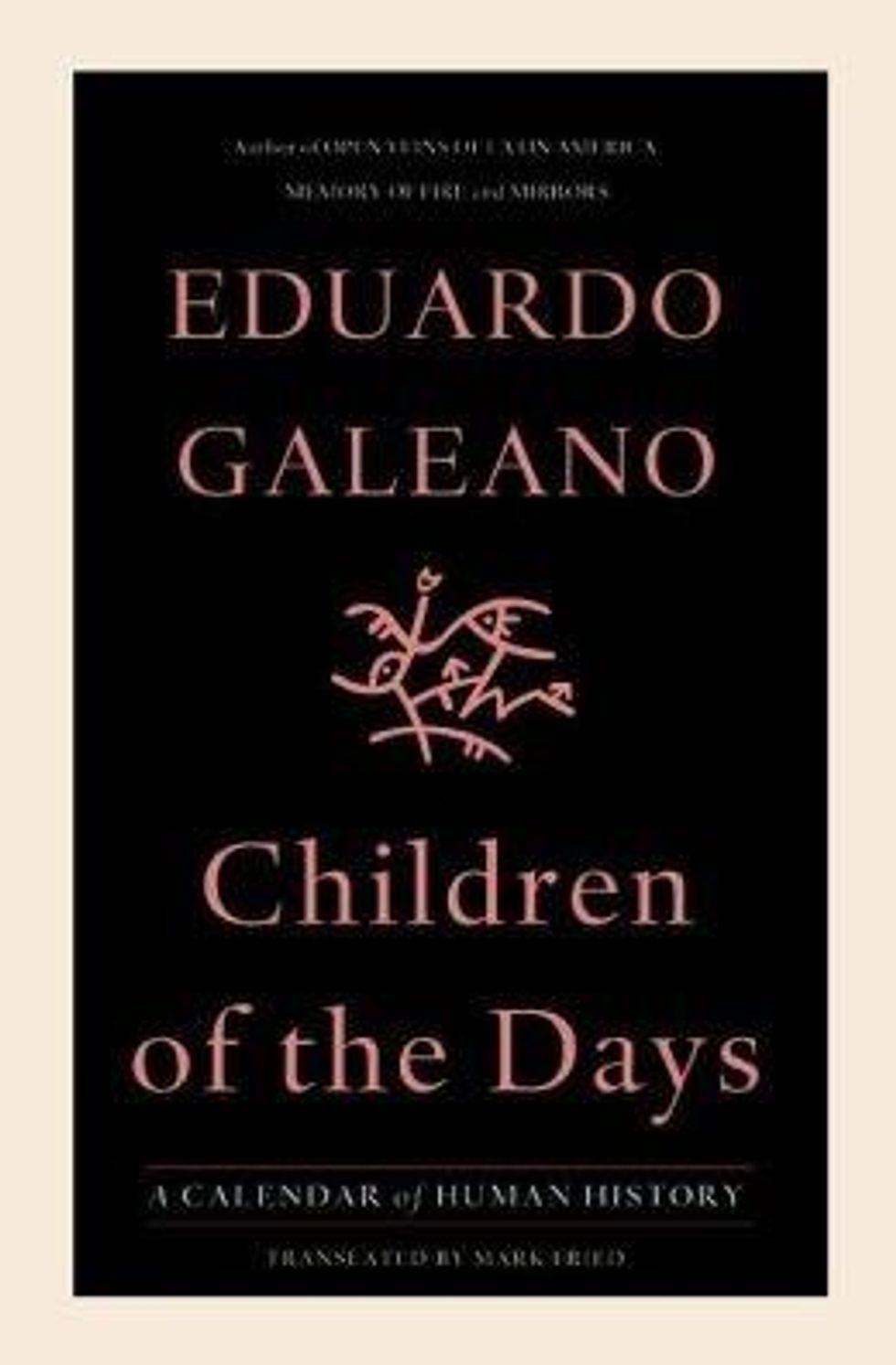
[A bow to Eduardo Galeano on the publication of his new book Children of the Days: A Calendar of Human History. Excerpts from the book can be read by clicking here.]
As a teenager, you dreamed of being a writer and I imagine you dream of it still. When young, you were a cartoonist and, ever since, you've noted the exaggeration in our world. You were the editor-in-chief of a newspaper and, with the skills you honed, you've never stopped editing our history -- from our first myths to late last night. You were imprisoned and it left you with an understanding of how we've imprisoned this planet and its inhabitants. You went into exile and so grasp the way many in this uprooted world of ours never feel, or are allowed to feel, at home.
You've traveled this planet so widely that, as a friend of yours once told you, "If it's true what they say about the road being made by walking, you must be the commissioner of public works." And on those travels, you've discovered that boundaries between states (and states of mind) are not to be trusted, so as a writer you've never felt cowed by categories or hesitated to merge journalism, history, scholarship, and the thrilling feel of fiction, of recreating other worlds so intensely that we seem to inhabit them ourselves.
And none of this would have happened if your youthful dream -- to be a soccer player -- had come true. Instead, you've played "the beautiful game" on the page. You've even explained our unjust, unequal world by noting the only place where North and South meet on "an equal footing" -- a soccer field at the mouth of the Amazon River that the Equator cuts right through, "so each team plays one half in the South and the other half in the North."
You're so well known in Latin America that, when Venezuelan President Hugo Chavez met President Barack Obama, the only gift he chose to give him was a copy your early book Open Veins of Latin America, whose subtitle explains why it remains so relevant 42 years after its publication: "five centuries of the pillage of a continent."
Your work has been translated into 28 languages, which is undoubtedly part of the reason you mourn the loss of words on this planet. You have a way of finding people. Your first English translator, Cedric Belfrage, was a former British journalist who covered the silent movies in Hollywood for the Beaverbrook press, helped found the left-wing National Guardian in the U.S., was deported in the McCarthy period, and ended up in Mexico. You seem to have known everyone who was anyone, for better and sometimes worse, over the last several thousand years, and many who could have been someone if their circumstances and the powers-that-be hadn't made that impossible. You've taken us with you to visit Sor Juana Ines de la Cruz as she first enters a convent in "New Spain," studies "the things God created" that were forbidden to women, is set upon by the Inquisition, forced to renounce literature, and "chooses silence, or accepts it, and so America loses its best poet."
You've been with Ben Franklin as he sends up a kite and discovers "that heavenly fires and thunders express not the wrath of God but electricity in the atmosphere," while his sister Jane "resembling him in talent and strength of will," has a child every two years and toils raising those that live, forgotten by history, but not by you. You've been with Joseph Stalin's son Yakov, after his suicide attempt, when his father standing at his hospital bedside tells him, "You can't even get that right."
You somehow take our embattled world and tell its many stories in ways no one else can. And perhaps because people sense the storyteller in you, they regularly -- I've seen this myself -- come up to you and spill their guts. So one more volume from you, Children of the Days: A Calendar of Human History, a daily prayer book for our moment, is cause for elation. We should celebrate you for stealing the fire of the gods, like the Cakchiquels, descended from the Mayas, who reputedly hid it "in their mountain caves," or in your case, in your books which, from Open Veins to Children of the Days, burn ever bright.
[A bow to Eduardo Galeano on the publication of his new book Children of the Days: A Calendar of Human History. Excerpts from the book can be read by clicking here.]
As a teenager, you dreamed of being a writer and I imagine you dream of it still. When young, you were a cartoonist and, ever since, you've noted the exaggeration in our world. You were the editor-in-chief of a newspaper and, with the skills you honed, you've never stopped editing our history -- from our first myths to late last night. You were imprisoned and it left you with an understanding of how we've imprisoned this planet and its inhabitants. You went into exile and so grasp the way many in this uprooted world of ours never feel, or are allowed to feel, at home.
You've traveled this planet so widely that, as a friend of yours once told you, "If it's true what they say about the road being made by walking, you must be the commissioner of public works." And on those travels, you've discovered that boundaries between states (and states of mind) are not to be trusted, so as a writer you've never felt cowed by categories or hesitated to merge journalism, history, scholarship, and the thrilling feel of fiction, of recreating other worlds so intensely that we seem to inhabit them ourselves.
And none of this would have happened if your youthful dream -- to be a soccer player -- had come true. Instead, you've played "the beautiful game" on the page. You've even explained our unjust, unequal world by noting the only place where North and South meet on "an equal footing" -- a soccer field at the mouth of the Amazon River that the Equator cuts right through, "so each team plays one half in the South and the other half in the North."
You're so well known in Latin America that, when Venezuelan President Hugo Chavez met President Barack Obama, the only gift he chose to give him was a copy your early book Open Veins of Latin America, whose subtitle explains why it remains so relevant 42 years after its publication: "five centuries of the pillage of a continent."
Your work has been translated into 28 languages, which is undoubtedly part of the reason you mourn the loss of words on this planet. You have a way of finding people. Your first English translator, Cedric Belfrage, was a former British journalist who covered the silent movies in Hollywood for the Beaverbrook press, helped found the left-wing National Guardian in the U.S., was deported in the McCarthy period, and ended up in Mexico. You seem to have known everyone who was anyone, for better and sometimes worse, over the last several thousand years, and many who could have been someone if their circumstances and the powers-that-be hadn't made that impossible. You've taken us with you to visit Sor Juana Ines de la Cruz as she first enters a convent in "New Spain," studies "the things God created" that were forbidden to women, is set upon by the Inquisition, forced to renounce literature, and "chooses silence, or accepts it, and so America loses its best poet."
You've been with Ben Franklin as he sends up a kite and discovers "that heavenly fires and thunders express not the wrath of God but electricity in the atmosphere," while his sister Jane "resembling him in talent and strength of will," has a child every two years and toils raising those that live, forgotten by history, but not by you. You've been with Joseph Stalin's son Yakov, after his suicide attempt, when his father standing at his hospital bedside tells him, "You can't even get that right."
You somehow take our embattled world and tell its many stories in ways no one else can. And perhaps because people sense the storyteller in you, they regularly -- I've seen this myself -- come up to you and spill their guts. So one more volume from you, Children of the Days: A Calendar of Human History, a daily prayer book for our moment, is cause for elation. We should celebrate you for stealing the fire of the gods, like the Cakchiquels, descended from the Mayas, who reputedly hid it "in their mountain caves," or in your case, in your books which, from Open Veins to Children of the Days, burn ever bright.
[A bow to Eduardo Galeano on the publication of his new book Children of the Days: A Calendar of Human History. Excerpts from the book can be read by clicking here.]
As a teenager, you dreamed of being a writer and I imagine you dream of it still. When young, you were a cartoonist and, ever since, you've noted the exaggeration in our world. You were the editor-in-chief of a newspaper and, with the skills you honed, you've never stopped editing our history -- from our first myths to late last night. You were imprisoned and it left you with an understanding of how we've imprisoned this planet and its inhabitants. You went into exile and so grasp the way many in this uprooted world of ours never feel, or are allowed to feel, at home.
You've traveled this planet so widely that, as a friend of yours once told you, "If it's true what they say about the road being made by walking, you must be the commissioner of public works." And on those travels, you've discovered that boundaries between states (and states of mind) are not to be trusted, so as a writer you've never felt cowed by categories or hesitated to merge journalism, history, scholarship, and the thrilling feel of fiction, of recreating other worlds so intensely that we seem to inhabit them ourselves.
And none of this would have happened if your youthful dream -- to be a soccer player -- had come true. Instead, you've played "the beautiful game" on the page. You've even explained our unjust, unequal world by noting the only place where North and South meet on "an equal footing" -- a soccer field at the mouth of the Amazon River that the Equator cuts right through, "so each team plays one half in the South and the other half in the North."
You're so well known in Latin America that, when Venezuelan President Hugo Chavez met President Barack Obama, the only gift he chose to give him was a copy your early book Open Veins of Latin America, whose subtitle explains why it remains so relevant 42 years after its publication: "five centuries of the pillage of a continent."
Your work has been translated into 28 languages, which is undoubtedly part of the reason you mourn the loss of words on this planet. You have a way of finding people. Your first English translator, Cedric Belfrage, was a former British journalist who covered the silent movies in Hollywood for the Beaverbrook press, helped found the left-wing National Guardian in the U.S., was deported in the McCarthy period, and ended up in Mexico. You seem to have known everyone who was anyone, for better and sometimes worse, over the last several thousand years, and many who could have been someone if their circumstances and the powers-that-be hadn't made that impossible. You've taken us with you to visit Sor Juana Ines de la Cruz as she first enters a convent in "New Spain," studies "the things God created" that were forbidden to women, is set upon by the Inquisition, forced to renounce literature, and "chooses silence, or accepts it, and so America loses its best poet."
You've been with Ben Franklin as he sends up a kite and discovers "that heavenly fires and thunders express not the wrath of God but electricity in the atmosphere," while his sister Jane "resembling him in talent and strength of will," has a child every two years and toils raising those that live, forgotten by history, but not by you. You've been with Joseph Stalin's son Yakov, after his suicide attempt, when his father standing at his hospital bedside tells him, "You can't even get that right."
You somehow take our embattled world and tell its many stories in ways no one else can. And perhaps because people sense the storyteller in you, they regularly -- I've seen this myself -- come up to you and spill their guts. So one more volume from you, Children of the Days: A Calendar of Human History, a daily prayer book for our moment, is cause for elation. We should celebrate you for stealing the fire of the gods, like the Cakchiquels, descended from the Mayas, who reputedly hid it "in their mountain caves," or in your case, in your books which, from Open Veins to Children of the Days, burn ever bright.