

SUBSCRIBE TO OUR FREE NEWSLETTER
Daily news & progressive opinion—funded by the people, not the corporations—delivered straight to your inbox.
5
#000000
#FFFFFF
To donate by check, phone, or other method, see our More Ways to Give page.
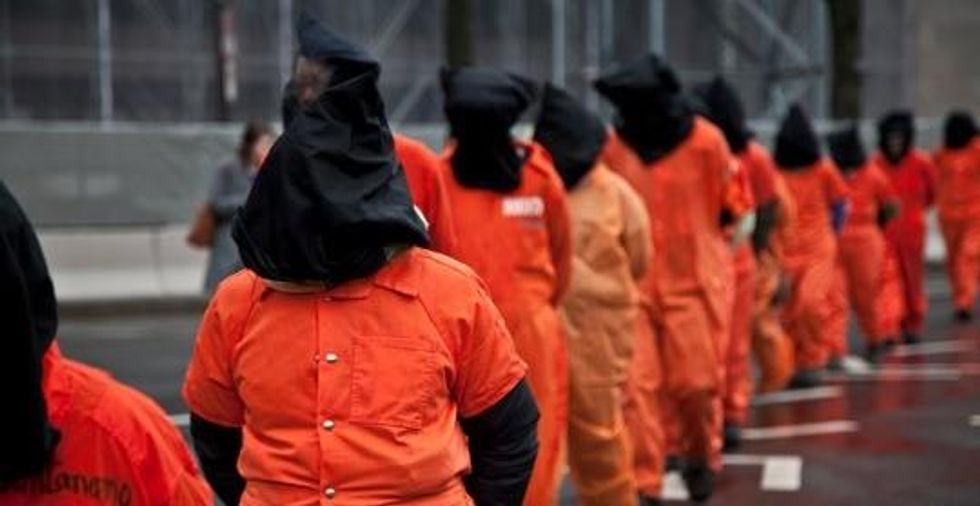
Ms. Pillay's statement came shortly before guards at the Guantanamo Bay facility had fired "four non-lethal rounds" at prisoners, to force them into isolated one-man cells in an attempt to end their hunger strike. Lawyers for the inmates at Guantanamo have said that most of the 166 prisoners presently held at Guantanamo are staging a hunger strike to protest their indefinite detention and other human rights violations.
One of the main arguments for denying constitutional protection to the Guantanamo prisoners rests on the allegation that Guantanamo is in Cuba, off American soil. Yet, respect for basic human dignity fostered by the Bill of Rights is not limited by nationality and territory. And if the US Constitution were not enough, international human rights law (customary and treaty-based), extends such protection.
While legal condemnation awaits the final word of a Supreme Court or supranational tribunal with enforcing capabilities, the inhumane treatment of prisoners at Guantanamo has been repeatedly condemned by international human rights organizations. The UN Commissioner for Human Rights pronouncement confirms once more that prisoners were subjected to cruel and inhuman treatment.
Many of the responses to allegations of torture at Guantanamo from commanding officers of the US army have been ethically suspect. Equally troubling from the medical and ethical perspective has been the collaboration of US Army doctors and other health personnel in the torture and mistreatment of prisoners.
Already in 2004, Dr Robert Jay Lifton had warned that there has been "increasing evidence that doctors, nurses and medics have been compliant in torture and other illegal procedures in Iraq, Afghanistan and Guantanamo Bay." The International Committee of the Red Cross (ICRC) charged that US interrogators engaged the participation of medical personnel in what the committee called "a flagrant violation of medical ethics."
In an article published in April 2011, Physicians for Human Rights (PHR) experts stated that medical doctors and mental health professionals at the Guantanamo facility neglected or concealed evidence of torture and ill treatment of prisoners including bone fractures, lacerations and symptoms of post-traumatic stress disorder.
Doctors and medical personnel aiding or abetting torturers challenge the medical profession with one of its most crucial ethical dilemmas. The Declaration of Tokyo--agreed in 1975 by the World Medical Association--has a firm ethical prescription: "The doctor shall not countenance, condone or participate in the practice of torture or cruel, inhuman or degrading procedures, whatever the offence of which the victim of such procedures is suspected, accused or guilty, and whatever the victim's beliefs or motives, and in all situations, including armed conflict and civil strife."
The moral and legal challenge confronting the United States is to continue its war on terrorism while adhering to international human rights standards, which are not in conflict with the protections offered by the US Constitution. As Ms. Navi Pillay stated, "We must be clear about this: the United States is in clear breach not just of its own commitments, but also of international laws and standards that it is obliged to uphold. When other countries breach these standards, the U.S. -quite rightly- strongly criticizes them for it."
The United States' government should seriously investigate and prosecute all allegations of torture and cruel and inhuman treatment of Guantanamo inmates - not because of the international outcry it has provoked, but because it is the right thing to do.
Ms. Pillay's statement came shortly before guards at the Guantanamo Bay facility had fired "four non-lethal rounds" at prisoners, to force them into isolated one-man cells in an attempt to end their hunger strike. Lawyers for the inmates at Guantanamo have said that most of the 166 prisoners presently held at Guantanamo are staging a hunger strike to protest their indefinite detention and other human rights violations.
One of the main arguments for denying constitutional protection to the Guantanamo prisoners rests on the allegation that Guantanamo is in Cuba, off American soil. Yet, respect for basic human dignity fostered by the Bill of Rights is not limited by nationality and territory. And if the US Constitution were not enough, international human rights law (customary and treaty-based), extends such protection.
While legal condemnation awaits the final word of a Supreme Court or supranational tribunal with enforcing capabilities, the inhumane treatment of prisoners at Guantanamo has been repeatedly condemned by international human rights organizations. The UN Commissioner for Human Rights pronouncement confirms once more that prisoners were subjected to cruel and inhuman treatment.
Many of the responses to allegations of torture at Guantanamo from commanding officers of the US army have been ethically suspect. Equally troubling from the medical and ethical perspective has been the collaboration of US Army doctors and other health personnel in the torture and mistreatment of prisoners.
Already in 2004, Dr Robert Jay Lifton had warned that there has been "increasing evidence that doctors, nurses and medics have been compliant in torture and other illegal procedures in Iraq, Afghanistan and Guantanamo Bay." The International Committee of the Red Cross (ICRC) charged that US interrogators engaged the participation of medical personnel in what the committee called "a flagrant violation of medical ethics."
In an article published in April 2011, Physicians for Human Rights (PHR) experts stated that medical doctors and mental health professionals at the Guantanamo facility neglected or concealed evidence of torture and ill treatment of prisoners including bone fractures, lacerations and symptoms of post-traumatic stress disorder.
Doctors and medical personnel aiding or abetting torturers challenge the medical profession with one of its most crucial ethical dilemmas. The Declaration of Tokyo--agreed in 1975 by the World Medical Association--has a firm ethical prescription: "The doctor shall not countenance, condone or participate in the practice of torture or cruel, inhuman or degrading procedures, whatever the offence of which the victim of such procedures is suspected, accused or guilty, and whatever the victim's beliefs or motives, and in all situations, including armed conflict and civil strife."
The moral and legal challenge confronting the United States is to continue its war on terrorism while adhering to international human rights standards, which are not in conflict with the protections offered by the US Constitution. As Ms. Navi Pillay stated, "We must be clear about this: the United States is in clear breach not just of its own commitments, but also of international laws and standards that it is obliged to uphold. When other countries breach these standards, the U.S. -quite rightly- strongly criticizes them for it."
The United States' government should seriously investigate and prosecute all allegations of torture and cruel and inhuman treatment of Guantanamo inmates - not because of the international outcry it has provoked, but because it is the right thing to do.
Ms. Pillay's statement came shortly before guards at the Guantanamo Bay facility had fired "four non-lethal rounds" at prisoners, to force them into isolated one-man cells in an attempt to end their hunger strike. Lawyers for the inmates at Guantanamo have said that most of the 166 prisoners presently held at Guantanamo are staging a hunger strike to protest their indefinite detention and other human rights violations.
One of the main arguments for denying constitutional protection to the Guantanamo prisoners rests on the allegation that Guantanamo is in Cuba, off American soil. Yet, respect for basic human dignity fostered by the Bill of Rights is not limited by nationality and territory. And if the US Constitution were not enough, international human rights law (customary and treaty-based), extends such protection.
While legal condemnation awaits the final word of a Supreme Court or supranational tribunal with enforcing capabilities, the inhumane treatment of prisoners at Guantanamo has been repeatedly condemned by international human rights organizations. The UN Commissioner for Human Rights pronouncement confirms once more that prisoners were subjected to cruel and inhuman treatment.
Many of the responses to allegations of torture at Guantanamo from commanding officers of the US army have been ethically suspect. Equally troubling from the medical and ethical perspective has been the collaboration of US Army doctors and other health personnel in the torture and mistreatment of prisoners.
Already in 2004, Dr Robert Jay Lifton had warned that there has been "increasing evidence that doctors, nurses and medics have been compliant in torture and other illegal procedures in Iraq, Afghanistan and Guantanamo Bay." The International Committee of the Red Cross (ICRC) charged that US interrogators engaged the participation of medical personnel in what the committee called "a flagrant violation of medical ethics."
In an article published in April 2011, Physicians for Human Rights (PHR) experts stated that medical doctors and mental health professionals at the Guantanamo facility neglected or concealed evidence of torture and ill treatment of prisoners including bone fractures, lacerations and symptoms of post-traumatic stress disorder.
Doctors and medical personnel aiding or abetting torturers challenge the medical profession with one of its most crucial ethical dilemmas. The Declaration of Tokyo--agreed in 1975 by the World Medical Association--has a firm ethical prescription: "The doctor shall not countenance, condone or participate in the practice of torture or cruel, inhuman or degrading procedures, whatever the offence of which the victim of such procedures is suspected, accused or guilty, and whatever the victim's beliefs or motives, and in all situations, including armed conflict and civil strife."
The moral and legal challenge confronting the United States is to continue its war on terrorism while adhering to international human rights standards, which are not in conflict with the protections offered by the US Constitution. As Ms. Navi Pillay stated, "We must be clear about this: the United States is in clear breach not just of its own commitments, but also of international laws and standards that it is obliged to uphold. When other countries breach these standards, the U.S. -quite rightly- strongly criticizes them for it."
The United States' government should seriously investigate and prosecute all allegations of torture and cruel and inhuman treatment of Guantanamo inmates - not because of the international outcry it has provoked, but because it is the right thing to do.

