

Boeing, the aircraft manufacturing giant from Seattle, helped defeat a Republican proposal in Washington state that would have forced government agencies to get approval to buy unmanned aerial vehicles, popularly known as drones, and to obtain a warrant before using them to conduct surveillance on individuals.
On February 7, 2013, David Taylor, a Republican member of the state legislature, introduced a bill to regulate drone use. The proposed law quickly won support from several Democratic party politicians on the state Public Safety Committee.
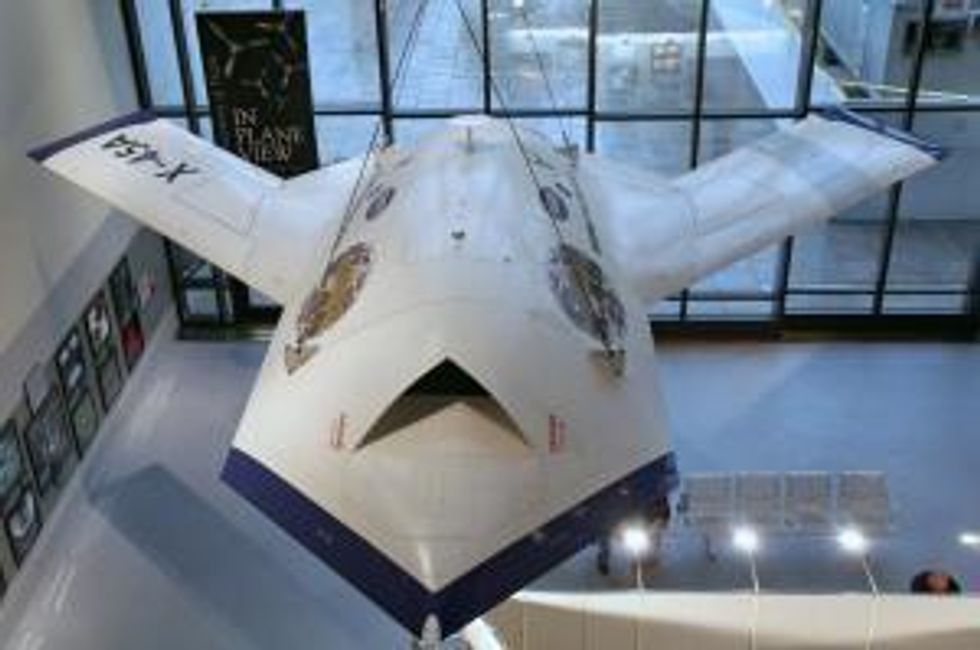
Alarmed by the growing bipartisan coalition, Boeing jumped into the fray. "We believe that as the technology matures, best practices and new understanding will emerge, and that it would be counterproductive to rush into regulating a burgeoning industry," Boeing spokeswoman Sue Bradley wrote in a statement. (The company makes a variety of drones from the Unmanned Little Bird and the A160 Hummingbird helicopters to the ScanEagle which has been used in Iran and Iraq and the proposed new X-45C combat aircraft)
After the company approached several lawmakers, Frank Chopp, the Democratic speaker of the House of Representatives in Washington state, canceled a scheduled March 13 vote on the bill. Instead Jeff Morris, another Democrat who chairs the House Technology and Economic Development Committee, was asked to lead a "more comprehensive study of surveillance issues."
"This is all about profit," said a disappointed Taylor. "This is about profit over people's rights."
While local and state use of drones has been limited to short pilot projects so far, concern about the federal use of drones has been on the rise in the last few months especially as the Obama administration has refused to divulge details on how drones are used by government authorities like the Department of Justice and the Department of Homeland Security's Customs and Border Protection agency. Republicans in the U.S. Congress have even voted to ask the Pentagon to reveal whether it is using drones inside the U.S.
Privacy groups have raised questions about what might be legally possible. "We don't believe that there are actually any federal statutes that would provide limits on drone surveillance in the United States," says Amie Stepanovich, director of the Domestic Surveillance Project at the Electronic Privacy Information Center. "The privacy laws that do exist are very targeted [and] don't encompass the type of surveillance that drones are able to conduct."
To date lawmakers in some 32 states have introduced bills to restrict drone use. While none have been voted into law (North Dakota and Oklahoma both opposed such laws in order to attract more investment in their states), last month the city of Charlottesville, Virginia, pledged not to conduct drone surveillance and voted in favor of a resolution that calls on the federal and state governments to adopt laws banning "information obtained from the domestic use of drones from being introduced into a Federal or State court."
Some believe that the use of drones for surveillance is just the first step towards using them for more deadly purposes within the U.S. "The belief that weaponized drones won't be used on US soil is patently irrational. Of course they will be. It's not just likely but inevitable," writes Glenn Greenwald, the UK Guardian columnist and former constitutional lawyer. "Police departments are already speaking openly about how their drones 'could be equipped to carry nonlethal weapons such as Tasers or a bean-bag gun.'
Greenwald applauds the proposed new laws to regulate drones that are being introduced in states from Texas to Massachusetts which he says "affords a real opportunity to forge an enduring coalition in defense of core privacy and other rights that transcends partisan allegiance, by working toward meaningful limits on their use."
Boeing, the aircraft manufacturing giant from Seattle, helped defeat a Republican proposal in Washington state that would have forced government agencies to get approval to buy unmanned aerial vehicles, popularly known as drones, and to obtain a warrant before using them to conduct surveillance on individuals.
On February 7, 2013, David Taylor, a Republican member of the state legislature, introduced a bill to regulate drone use. The proposed law quickly won support from several Democratic party politicians on the state Public Safety Committee.
Alarmed by the growing bipartisan coalition, Boeing jumped into the fray. "We believe that as the technology matures, best practices and new understanding will emerge, and that it would be counterproductive to rush into regulating a burgeoning industry," Boeing spokeswoman Sue Bradley wrote in a statement. (The company makes a variety of drones from the Unmanned Little Bird and the A160 Hummingbird helicopters to the ScanEagle which has been used in Iran and Iraq and the proposed new X-45C combat aircraft)
After the company approached several lawmakers, Frank Chopp, the Democratic speaker of the House of Representatives in Washington state, canceled a scheduled March 13 vote on the bill. Instead Jeff Morris, another Democrat who chairs the House Technology and Economic Development Committee, was asked to lead a "more comprehensive study of surveillance issues."
"This is all about profit," said a disappointed Taylor. "This is about profit over people's rights."
While local and state use of drones has been limited to short pilot projects so far, concern about the federal use of drones has been on the rise in the last few months especially as the Obama administration has refused to divulge details on how drones are used by government authorities like the Department of Justice and the Department of Homeland Security's Customs and Border Protection agency. Republicans in the U.S. Congress have even voted to ask the Pentagon to reveal whether it is using drones inside the U.S.
Privacy groups have raised questions about what might be legally possible. "We don't believe that there are actually any federal statutes that would provide limits on drone surveillance in the United States," says Amie Stepanovich, director of the Domestic Surveillance Project at the Electronic Privacy Information Center. "The privacy laws that do exist are very targeted [and] don't encompass the type of surveillance that drones are able to conduct."
To date lawmakers in some 32 states have introduced bills to restrict drone use. While none have been voted into law (North Dakota and Oklahoma both opposed such laws in order to attract more investment in their states), last month the city of Charlottesville, Virginia, pledged not to conduct drone surveillance and voted in favor of a resolution that calls on the federal and state governments to adopt laws banning "information obtained from the domestic use of drones from being introduced into a Federal or State court."
Some believe that the use of drones for surveillance is just the first step towards using them for more deadly purposes within the U.S. "The belief that weaponized drones won't be used on US soil is patently irrational. Of course they will be. It's not just likely but inevitable," writes Glenn Greenwald, the UK Guardian columnist and former constitutional lawyer. "Police departments are already speaking openly about how their drones 'could be equipped to carry nonlethal weapons such as Tasers or a bean-bag gun.'
Greenwald applauds the proposed new laws to regulate drones that are being introduced in states from Texas to Massachusetts which he says "affords a real opportunity to forge an enduring coalition in defense of core privacy and other rights that transcends partisan allegiance, by working toward meaningful limits on their use."
Boeing, the aircraft manufacturing giant from Seattle, helped defeat a Republican proposal in Washington state that would have forced government agencies to get approval to buy unmanned aerial vehicles, popularly known as drones, and to obtain a warrant before using them to conduct surveillance on individuals.
On February 7, 2013, David Taylor, a Republican member of the state legislature, introduced a bill to regulate drone use. The proposed law quickly won support from several Democratic party politicians on the state Public Safety Committee.
Alarmed by the growing bipartisan coalition, Boeing jumped into the fray. "We believe that as the technology matures, best practices and new understanding will emerge, and that it would be counterproductive to rush into regulating a burgeoning industry," Boeing spokeswoman Sue Bradley wrote in a statement. (The company makes a variety of drones from the Unmanned Little Bird and the A160 Hummingbird helicopters to the ScanEagle which has been used in Iran and Iraq and the proposed new X-45C combat aircraft)
After the company approached several lawmakers, Frank Chopp, the Democratic speaker of the House of Representatives in Washington state, canceled a scheduled March 13 vote on the bill. Instead Jeff Morris, another Democrat who chairs the House Technology and Economic Development Committee, was asked to lead a "more comprehensive study of surveillance issues."
"This is all about profit," said a disappointed Taylor. "This is about profit over people's rights."
While local and state use of drones has been limited to short pilot projects so far, concern about the federal use of drones has been on the rise in the last few months especially as the Obama administration has refused to divulge details on how drones are used by government authorities like the Department of Justice and the Department of Homeland Security's Customs and Border Protection agency. Republicans in the U.S. Congress have even voted to ask the Pentagon to reveal whether it is using drones inside the U.S.
Privacy groups have raised questions about what might be legally possible. "We don't believe that there are actually any federal statutes that would provide limits on drone surveillance in the United States," says Amie Stepanovich, director of the Domestic Surveillance Project at the Electronic Privacy Information Center. "The privacy laws that do exist are very targeted [and] don't encompass the type of surveillance that drones are able to conduct."
To date lawmakers in some 32 states have introduced bills to restrict drone use. While none have been voted into law (North Dakota and Oklahoma both opposed such laws in order to attract more investment in their states), last month the city of Charlottesville, Virginia, pledged not to conduct drone surveillance and voted in favor of a resolution that calls on the federal and state governments to adopt laws banning "information obtained from the domestic use of drones from being introduced into a Federal or State court."
Some believe that the use of drones for surveillance is just the first step towards using them for more deadly purposes within the U.S. "The belief that weaponized drones won't be used on US soil is patently irrational. Of course they will be. It's not just likely but inevitable," writes Glenn Greenwald, the UK Guardian columnist and former constitutional lawyer. "Police departments are already speaking openly about how their drones 'could be equipped to carry nonlethal weapons such as Tasers or a bean-bag gun.'
Greenwald applauds the proposed new laws to regulate drones that are being introduced in states from Texas to Massachusetts which he says "affords a real opportunity to forge an enduring coalition in defense of core privacy and other rights that transcends partisan allegiance, by working toward meaningful limits on their use."