SUBSCRIBE TO OUR FREE NEWSLETTER
Daily news & progressive opinion—funded by the people, not the corporations—delivered straight to your inbox.
5
#000000
#FFFFFF
To donate by check, phone, or other method, see our More Ways to Give page.
Russia and the US are squabbling over whose human rights abuses are bigger. After the US signed the Magnitsky Act, which blacklists any Russian deemed to be a human rights violator, Russia has retaliated by barring American couples from adopting Russian children, 60,000 of whom have found new families in the US since 1992. Perhaps this is how the cold war really ends: not with a bang, but a series of petty policy disputes that savage individual lives and leave both countries looking sordid.
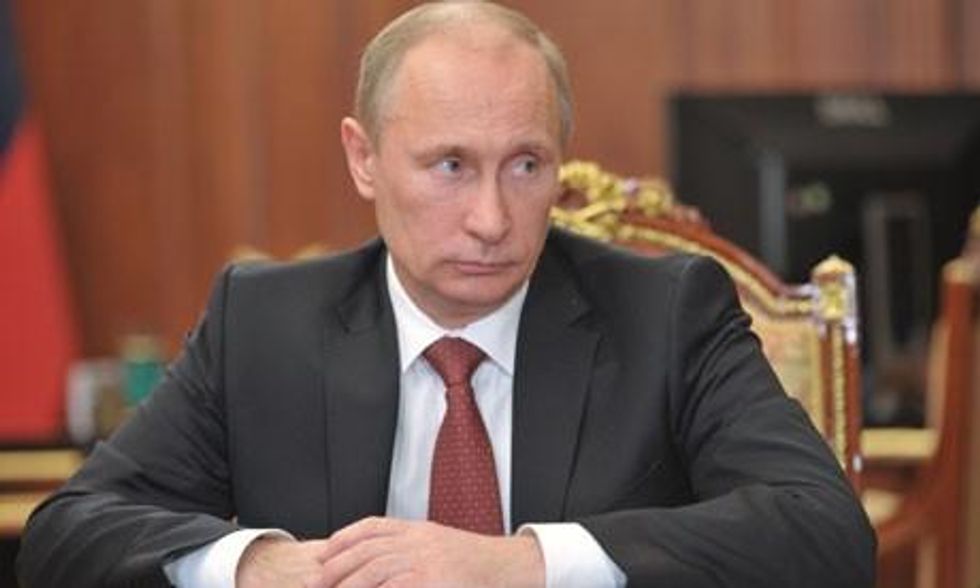
The uncomfortable truth is that underneath the posturing, Vladimir Putin has a point. The international adoption trade is a shady business - the perfect micro-example of how America's concept of itself as a benevolent superpower is so often at odds with reality.
About 25,000 babies are adopted across borders every year; half of them go to the US. However loving the prospective parents, in many nations there exists, according to the children's rights charity Terre des Hommes, "an industry around adoption in which profit, rather than the best interests of the child, takes centre stage".
The shadows began to gather in 1989, when the dire state of Romania's state-run orphanages came to the west's attention after the collapse of communism. This was followed by the Balkans conflict in the early 1990s, and yet more horror stories of state institutions stuffed with neglected war orphans. A flood of concerned families swooped in to adopt the babies. Demand quickly began to exceed supply.
Unscrupulous middlemen saw a chance, in the confusion of war, to make money. Children with living parents were bartered, abducted and palmed off to Americans and northern Europeans who paid large sums to have a child of their own.
Not all the adopted children thrived, as the populations "back home" are painfully aware. In 2008 Dima Yakovlev, a Russian toddler adopted by Americans, died after being left in a sweltering car for hours. His adopted parents were found not guilty of involuntary manslaughter. Russia's new bill is named after Dima Yakovlev.
The problems with the international adoption trade extend beyond eastern Europe. In Nepal over the last decade hundreds of children were coerced from their families with promises of a better education and then sold without their parents' knowledge to American couples. Before overseas adoption was put on hold in the country, the industry brought in millions of dollars annually.
It gets worse. In Nigeria last year police raided an alleged "baby farm" where teenage girls were kept prisoner and forced to produce babies for sale. With rickety controls and high stakes at play - large profits on one hand and couples craving a child on the other - the potential for abuse is endless. Proper regulation is urgently needed.
What makes Americans so desperate to adopt children from overseas? Right now there are 23,000 American children waiting to be adopted. Most of them, however, are older than prospective parents would like - between five and 16. Also, most prospective adoptive parents in the US are white, and a great many of the children available for adoption are black or Latino. There are many reasons why a white American couple might want to adopt a child from Russia, Romania or Ukraine, rather than be matched with a black child from their home state, but race is no doubt one of them. The more you look at the overseas adoption business, the less the US looks like a nation of philanthropists.
The legislation to fix this problem already exists. The Hague convention on international adoption provides, at least in theory, protection against "the abuse, sale of or traffic in children". One of the many things that makes the Hague relatively toothless is that Russia has not ratified the treaty. Given that Russia is the largest exporter of children for adoption to America, and given its sudden professed concerns about the safety of Russian children sent overseas, this seems a major oversight.
And there's the rub. Moscow doesn't need to ban Americans from adopting children from Russian orphanages. If it really cares about its kids, all Russia needs to do is to sign the Hague convention and work with other nations that have done the same to ensure its directives are followed and, where necessary, tightened. Adoption across borders can and does produce a great many happy endings, and there's no reason to prevent it entirely.
Ultimately, though, this is not about the rights of children. This is about the pride of once great nations. This is about Russia thumbing its nose at America. When superpowers and former superpowers squabble, lives are ruined. The international adoption trade urgently needs an overhaul - but playing politics with children's futures is no way to start the process.
Russia and the US are squabbling over whose human rights abuses are bigger. After the US signed the Magnitsky Act, which blacklists any Russian deemed to be a human rights violator, Russia has retaliated by barring American couples from adopting Russian children, 60,000 of whom have found new families in the US since 1992. Perhaps this is how the cold war really ends: not with a bang, but a series of petty policy disputes that savage individual lives and leave both countries looking sordid.
The uncomfortable truth is that underneath the posturing, Vladimir Putin has a point. The international adoption trade is a shady business - the perfect micro-example of how America's concept of itself as a benevolent superpower is so often at odds with reality.
About 25,000 babies are adopted across borders every year; half of them go to the US. However loving the prospective parents, in many nations there exists, according to the children's rights charity Terre des Hommes, "an industry around adoption in which profit, rather than the best interests of the child, takes centre stage".
The shadows began to gather in 1989, when the dire state of Romania's state-run orphanages came to the west's attention after the collapse of communism. This was followed by the Balkans conflict in the early 1990s, and yet more horror stories of state institutions stuffed with neglected war orphans. A flood of concerned families swooped in to adopt the babies. Demand quickly began to exceed supply.
Unscrupulous middlemen saw a chance, in the confusion of war, to make money. Children with living parents were bartered, abducted and palmed off to Americans and northern Europeans who paid large sums to have a child of their own.
Not all the adopted children thrived, as the populations "back home" are painfully aware. In 2008 Dima Yakovlev, a Russian toddler adopted by Americans, died after being left in a sweltering car for hours. His adopted parents were found not guilty of involuntary manslaughter. Russia's new bill is named after Dima Yakovlev.
The problems with the international adoption trade extend beyond eastern Europe. In Nepal over the last decade hundreds of children were coerced from their families with promises of a better education and then sold without their parents' knowledge to American couples. Before overseas adoption was put on hold in the country, the industry brought in millions of dollars annually.
It gets worse. In Nigeria last year police raided an alleged "baby farm" where teenage girls were kept prisoner and forced to produce babies for sale. With rickety controls and high stakes at play - large profits on one hand and couples craving a child on the other - the potential for abuse is endless. Proper regulation is urgently needed.
What makes Americans so desperate to adopt children from overseas? Right now there are 23,000 American children waiting to be adopted. Most of them, however, are older than prospective parents would like - between five and 16. Also, most prospective adoptive parents in the US are white, and a great many of the children available for adoption are black or Latino. There are many reasons why a white American couple might want to adopt a child from Russia, Romania or Ukraine, rather than be matched with a black child from their home state, but race is no doubt one of them. The more you look at the overseas adoption business, the less the US looks like a nation of philanthropists.
The legislation to fix this problem already exists. The Hague convention on international adoption provides, at least in theory, protection against "the abuse, sale of or traffic in children". One of the many things that makes the Hague relatively toothless is that Russia has not ratified the treaty. Given that Russia is the largest exporter of children for adoption to America, and given its sudden professed concerns about the safety of Russian children sent overseas, this seems a major oversight.
And there's the rub. Moscow doesn't need to ban Americans from adopting children from Russian orphanages. If it really cares about its kids, all Russia needs to do is to sign the Hague convention and work with other nations that have done the same to ensure its directives are followed and, where necessary, tightened. Adoption across borders can and does produce a great many happy endings, and there's no reason to prevent it entirely.
Ultimately, though, this is not about the rights of children. This is about the pride of once great nations. This is about Russia thumbing its nose at America. When superpowers and former superpowers squabble, lives are ruined. The international adoption trade urgently needs an overhaul - but playing politics with children's futures is no way to start the process.
Russia and the US are squabbling over whose human rights abuses are bigger. After the US signed the Magnitsky Act, which blacklists any Russian deemed to be a human rights violator, Russia has retaliated by barring American couples from adopting Russian children, 60,000 of whom have found new families in the US since 1992. Perhaps this is how the cold war really ends: not with a bang, but a series of petty policy disputes that savage individual lives and leave both countries looking sordid.
The uncomfortable truth is that underneath the posturing, Vladimir Putin has a point. The international adoption trade is a shady business - the perfect micro-example of how America's concept of itself as a benevolent superpower is so often at odds with reality.
About 25,000 babies are adopted across borders every year; half of them go to the US. However loving the prospective parents, in many nations there exists, according to the children's rights charity Terre des Hommes, "an industry around adoption in which profit, rather than the best interests of the child, takes centre stage".
The shadows began to gather in 1989, when the dire state of Romania's state-run orphanages came to the west's attention after the collapse of communism. This was followed by the Balkans conflict in the early 1990s, and yet more horror stories of state institutions stuffed with neglected war orphans. A flood of concerned families swooped in to adopt the babies. Demand quickly began to exceed supply.
Unscrupulous middlemen saw a chance, in the confusion of war, to make money. Children with living parents were bartered, abducted and palmed off to Americans and northern Europeans who paid large sums to have a child of their own.
Not all the adopted children thrived, as the populations "back home" are painfully aware. In 2008 Dima Yakovlev, a Russian toddler adopted by Americans, died after being left in a sweltering car for hours. His adopted parents were found not guilty of involuntary manslaughter. Russia's new bill is named after Dima Yakovlev.
The problems with the international adoption trade extend beyond eastern Europe. In Nepal over the last decade hundreds of children were coerced from their families with promises of a better education and then sold without their parents' knowledge to American couples. Before overseas adoption was put on hold in the country, the industry brought in millions of dollars annually.
It gets worse. In Nigeria last year police raided an alleged "baby farm" where teenage girls were kept prisoner and forced to produce babies for sale. With rickety controls and high stakes at play - large profits on one hand and couples craving a child on the other - the potential for abuse is endless. Proper regulation is urgently needed.
What makes Americans so desperate to adopt children from overseas? Right now there are 23,000 American children waiting to be adopted. Most of them, however, are older than prospective parents would like - between five and 16. Also, most prospective adoptive parents in the US are white, and a great many of the children available for adoption are black or Latino. There are many reasons why a white American couple might want to adopt a child from Russia, Romania or Ukraine, rather than be matched with a black child from their home state, but race is no doubt one of them. The more you look at the overseas adoption business, the less the US looks like a nation of philanthropists.
The legislation to fix this problem already exists. The Hague convention on international adoption provides, at least in theory, protection against "the abuse, sale of or traffic in children". One of the many things that makes the Hague relatively toothless is that Russia has not ratified the treaty. Given that Russia is the largest exporter of children for adoption to America, and given its sudden professed concerns about the safety of Russian children sent overseas, this seems a major oversight.
And there's the rub. Moscow doesn't need to ban Americans from adopting children from Russian orphanages. If it really cares about its kids, all Russia needs to do is to sign the Hague convention and work with other nations that have done the same to ensure its directives are followed and, where necessary, tightened. Adoption across borders can and does produce a great many happy endings, and there's no reason to prevent it entirely.
Ultimately, though, this is not about the rights of children. This is about the pride of once great nations. This is about Russia thumbing its nose at America. When superpowers and former superpowers squabble, lives are ruined. The international adoption trade urgently needs an overhaul - but playing politics with children's futures is no way to start the process.