
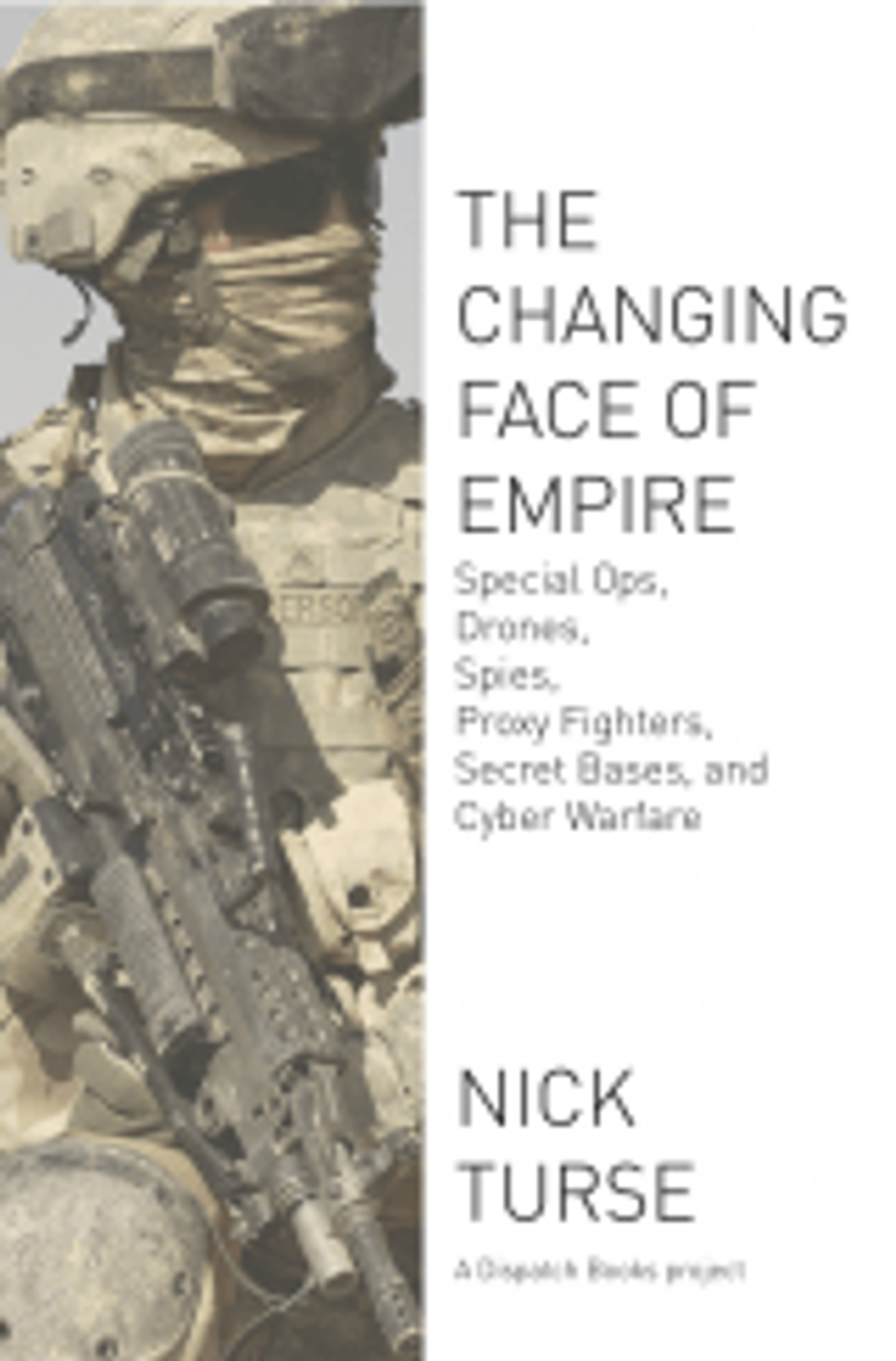
It wasn't an everyday event, the arrival in TomDispatch's email inbox of a letter of complaint from Colonel Tom Davis, director of public affairs at USAFRICOM. It began, "Greetings from U.S. Africa Command, we read the recent [Nick Turse] article 'Secret Wars, Secret Bases, and the Pentagon's 'New Spice Route' in Africa' with great interest." Colonel Davis suggested that his team had, in fact, found "inaccuracies and misrepresentations that we would like to address" in the piece (now part of Turse's latest book, The Changing Face of Empire: Special Ops, Drones, Proxy Fighters, Secret Bases, and Cyberwarfare). Col. Davis indicated as well that he expected us to make the necessary changes and so "correct the record," and that Andy Breslau, the head of the Nation Institute, which supports TomDispatch, would certainly want to know about this as well! (And indeed, Col. Davis wrote him directly.)
What followed was a copious 3,000-word document, clearly researched by committee at AFRICOM. For some, such a letter and enclosure might have seemed like a polite attempt at intimidation. ("I would venture that the Nation Institute, with Andy Breslau as its president, would have those same ideals on professional reporting and would want the inaccuracies and misrepresentations addressed as well.")
Me, I was thrilled. Hey, the folks at AFRICOM read TomDispatch! Better yet, our reporting had gotten under their skin -- enough for them to feel compelled to reply, and even better yet, those "inaccuracies and misrepresentations" were nothing of the sort, as Nick Turse indicated in his several-thousand-word, point-by-point response, published alongside Col. Davis's critique at this site. It was a remarkably civil exchange about the changing world of American war-making, now laid out in full in Dispatch Books's The Changing Face of Empire, just published today. And it was a great hit for TomDispatch.
Think of it as just one more small, unintended consequence of the acts of the U.S. national security community. Take, on a far larger scale, the Obama administration's decision that the CIA should facilitate the arming of Syria's rebels through our Arab "allies." Ever since, arms have been flowing from Saudi Arabia and Qatar to Syrian rebel fighters. Only recently, however, the New York Times reported that Washington is increasingly disturbed -- again those unintended consequences -- that the weapons "are going to hard-line Islamic jihadists, and not the more secular opposition groups that the West wants to bolster."
Of course, anyone faintly familiar with the way, three decades ago, the Saudi fundamentalist monarchy funneled weaponry to the most extreme of the Afghan mujahedeen commanders fighting the Soviets (as did the U.S. at Saudi and Pakistani request) and so armed our future enemies, will hardly be shocked by this supposedly surprising turn of events. You would think that, every now and then, a few of history's lessons would penetrate the minds of our top national security officials and that they would actually think before acting. But generally speaking, no such luck.
Instead of correcting Nick Turse's "inaccuracies and misrepresentations," they would do well to buy piles of his new book and hand them out to every ranking officer. They might learn something not just about follies past, but follies to come.
It wasn't an everyday event, the arrival in TomDispatch's email inbox of a letter of complaint from Colonel Tom Davis, director of public affairs at USAFRICOM. It began, "Greetings from U.S. Africa Command, we read the recent [Nick Turse] article 'Secret Wars, Secret Bases, and the Pentagon's 'New Spice Route' in Africa' with great interest." Colonel Davis suggested that his team had, in fact, found "inaccuracies and misrepresentations that we would like to address" in the piece (now part of Turse's latest book, The Changing Face of Empire: Special Ops, Drones, Proxy Fighters, Secret Bases, and Cyberwarfare). Col. Davis indicated as well that he expected us to make the necessary changes and so "correct the record," and that Andy Breslau, the head of the Nation Institute, which supports TomDispatch, would certainly want to know about this as well! (And indeed, Col. Davis wrote him directly.)
What followed was a copious 3,000-word document, clearly researched by committee at AFRICOM. For some, such a letter and enclosure might have seemed like a polite attempt at intimidation. ("I would venture that the Nation Institute, with Andy Breslau as its president, would have those same ideals on professional reporting and would want the inaccuracies and misrepresentations addressed as well.")
Me, I was thrilled. Hey, the folks at AFRICOM read TomDispatch! Better yet, our reporting had gotten under their skin -- enough for them to feel compelled to reply, and even better yet, those "inaccuracies and misrepresentations" were nothing of the sort, as Nick Turse indicated in his several-thousand-word, point-by-point response, published alongside Col. Davis's critique at this site. It was a remarkably civil exchange about the changing world of American war-making, now laid out in full in Dispatch Books's The Changing Face of Empire, just published today. And it was a great hit for TomDispatch.
Think of it as just one more small, unintended consequence of the acts of the U.S. national security community. Take, on a far larger scale, the Obama administration's decision that the CIA should facilitate the arming of Syria's rebels through our Arab "allies." Ever since, arms have been flowing from Saudi Arabia and Qatar to Syrian rebel fighters. Only recently, however, the New York Times reported that Washington is increasingly disturbed -- again those unintended consequences -- that the weapons "are going to hard-line Islamic jihadists, and not the more secular opposition groups that the West wants to bolster."
Of course, anyone faintly familiar with the way, three decades ago, the Saudi fundamentalist monarchy funneled weaponry to the most extreme of the Afghan mujahedeen commanders fighting the Soviets (as did the U.S. at Saudi and Pakistani request) and so armed our future enemies, will hardly be shocked by this supposedly surprising turn of events. You would think that, every now and then, a few of history's lessons would penetrate the minds of our top national security officials and that they would actually think before acting. But generally speaking, no such luck.
Instead of correcting Nick Turse's "inaccuracies and misrepresentations," they would do well to buy piles of his new book and hand them out to every ranking officer. They might learn something not just about follies past, but follies to come.
It wasn't an everyday event, the arrival in TomDispatch's email inbox of a letter of complaint from Colonel Tom Davis, director of public affairs at USAFRICOM. It began, "Greetings from U.S. Africa Command, we read the recent [Nick Turse] article 'Secret Wars, Secret Bases, and the Pentagon's 'New Spice Route' in Africa' with great interest." Colonel Davis suggested that his team had, in fact, found "inaccuracies and misrepresentations that we would like to address" in the piece (now part of Turse's latest book, The Changing Face of Empire: Special Ops, Drones, Proxy Fighters, Secret Bases, and Cyberwarfare). Col. Davis indicated as well that he expected us to make the necessary changes and so "correct the record," and that Andy Breslau, the head of the Nation Institute, which supports TomDispatch, would certainly want to know about this as well! (And indeed, Col. Davis wrote him directly.)
What followed was a copious 3,000-word document, clearly researched by committee at AFRICOM. For some, such a letter and enclosure might have seemed like a polite attempt at intimidation. ("I would venture that the Nation Institute, with Andy Breslau as its president, would have those same ideals on professional reporting and would want the inaccuracies and misrepresentations addressed as well.")
Me, I was thrilled. Hey, the folks at AFRICOM read TomDispatch! Better yet, our reporting had gotten under their skin -- enough for them to feel compelled to reply, and even better yet, those "inaccuracies and misrepresentations" were nothing of the sort, as Nick Turse indicated in his several-thousand-word, point-by-point response, published alongside Col. Davis's critique at this site. It was a remarkably civil exchange about the changing world of American war-making, now laid out in full in Dispatch Books's The Changing Face of Empire, just published today. And it was a great hit for TomDispatch.
Think of it as just one more small, unintended consequence of the acts of the U.S. national security community. Take, on a far larger scale, the Obama administration's decision that the CIA should facilitate the arming of Syria's rebels through our Arab "allies." Ever since, arms have been flowing from Saudi Arabia and Qatar to Syrian rebel fighters. Only recently, however, the New York Times reported that Washington is increasingly disturbed -- again those unintended consequences -- that the weapons "are going to hard-line Islamic jihadists, and not the more secular opposition groups that the West wants to bolster."
Of course, anyone faintly familiar with the way, three decades ago, the Saudi fundamentalist monarchy funneled weaponry to the most extreme of the Afghan mujahedeen commanders fighting the Soviets (as did the U.S. at Saudi and Pakistani request) and so armed our future enemies, will hardly be shocked by this supposedly surprising turn of events. You would think that, every now and then, a few of history's lessons would penetrate the minds of our top national security officials and that they would actually think before acting. But generally speaking, no such luck.
Instead of correcting Nick Turse's "inaccuracies and misrepresentations," they would do well to buy piles of his new book and hand them out to every ranking officer. They might learn something not just about follies past, but follies to come.