SUBSCRIBE TO OUR FREE NEWSLETTER
Daily news & progressive opinion—funded by the people, not the corporations—delivered straight to your inbox.
5
#000000
#FFFFFF
To donate by check, phone, or other method, see our More Ways to Give page.
This month, a group of environmental nonprofits said they would challenge the federal government's removal of Endangered Species Act protections for wolves in Wyoming. Since there are only about 328 wolves in a state with a historic blood thirst for the hides of these top predators, the nonprofits are probably right that lacking protection, Wyoming wolves are toast.
Many Americans, even as they view the extermination of a species as morally anathema, struggle to grasp the tangible effects of the loss of wolves. It turns out that, far from being freeloaders on the top of the food chain, wolves have a powerful effect on the well-being of the ecosystems around them -- from the survival of trees and riverbank vegetation to, perhaps surprisingly, the health of the populations of their prey.
An example of this can be found in Wyoming's Yellowstone National Park, where wolves were virtually wiped out in the 1920s and reintroduced in the '90s. Since the wolves have come back, scientists have noted an unexpected improvement in many of the park's degraded stream areas.
Stands of aspen and other native vegetation, once decimated by overgrazing, are now growing up along the banks. This may have something to do with changing fire patterns, but it is also probably because elk and other browsing animals behave differently when wolves are around. Instead of eating greenery down to the soil, they take a bite or two, look up to check for threats, and keep moving. The greenery can grow tall enough to reproduce.
Beavers, despite being on the wolf's menu, also benefit when their predators are around. The healthy vegetation encouraged by the presence of wolves provides food and shelter to beavers. Beavers in turn go on to create dams that help keep rivers clean and lessen the effects of drought. Beaver activity also spreads a welcome mat for thronging biodiversity. Bugs, amphibians, fish, birds and small mammals find the water around dams to be an ideal habitat.
So the beavers keep the rivers from drying up while, at the same time, healthy vegetation keeps the rivers from flooding, and all this biological interaction helps maintain rich soil that better sequesters carbon -- that stuff we want to get out of the atmosphere and back into the ground. In other words, by helping to maintain a healthy ecosystem, wolves are connected to climate change: without them, these landscapes would be more vulnerable to the effects of those big weather events we will increasingly experience as the planet warms.
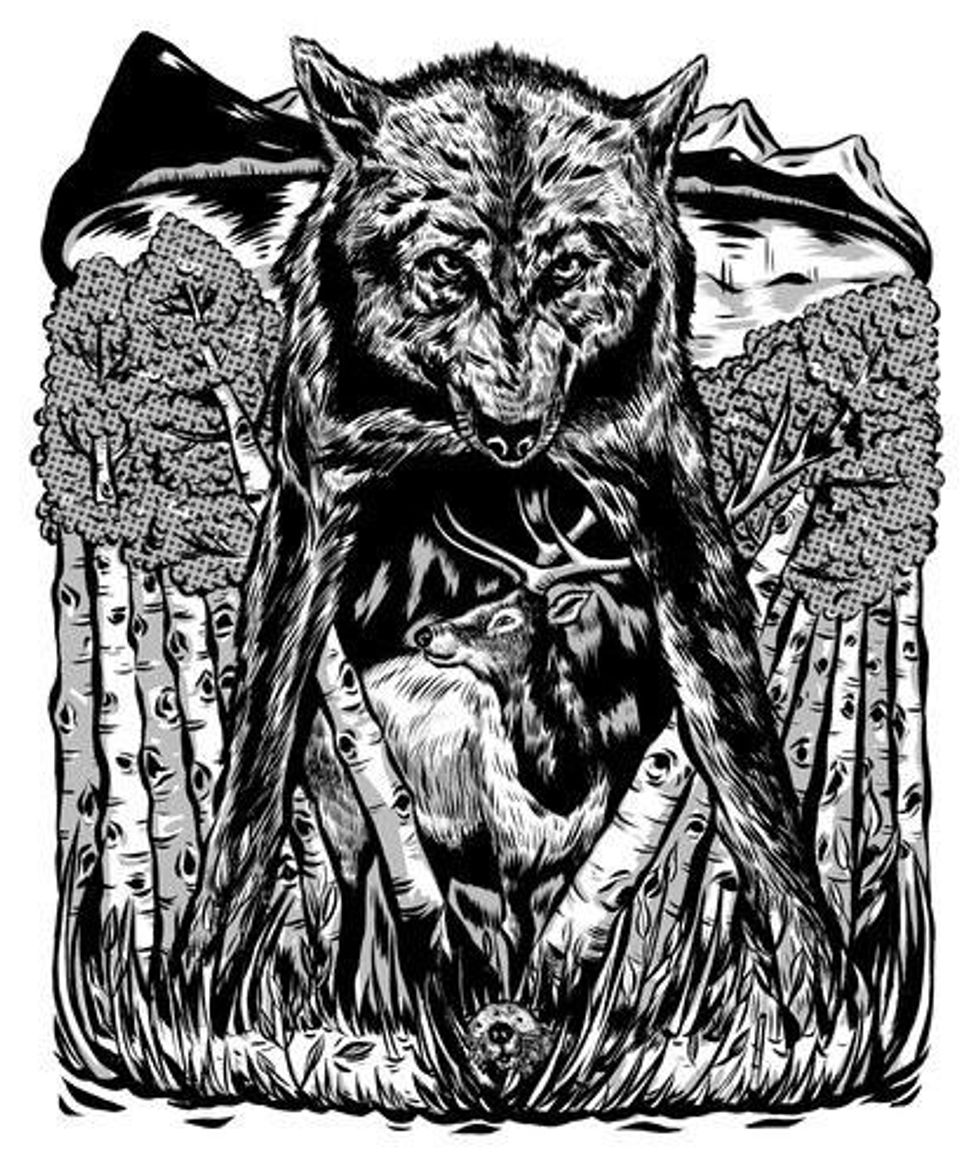
Scientists call this sequence of impacts down the food chain a "trophic cascade." The wolf is connected to the elk is connected to the aspen is connected to the beaver. Keeping these connections going ensures healthy, functioning ecosystems, which in turn support human life.
Another example is the effect of sea otters on kelp, which provides food and shelter for a host of species. Like the aspen for the elk, kelp is a favorite food of sea urchins. By hunting sea urchins, otters protect the vitality of the kelp and actually boost overall biodiversity. Without them, the ecosystem tends to collapse; the coastal reefs become barren, and soon not much lives there.
Unfortunately, sea otters are in the cross hairs of a conflict equivalent to the "wolf wars." Some communities in southeast Alaska want to allow the hunting of sea otters in order to decrease their numbers and protect fisheries. But the rationale that eliminating the predator increases the prey is shortsighted and ignores larger food-web dynamics. A degraded ecosystem will be far less productive over all.
Having fewer fish wouldn't just hurt fishermen: it would also endanger the other end of the trophic scale -- the phytoplankton that turn sunshine into plant material, and as every student of photosynthesis knows, create oxygen and sequester carbon. In lakes, predator fish keep the smaller fish from eating all the phytoplankton, thus sustaining the lake's rate of carbon uptake.
Around the planet, large predators are becoming extinct at faster rates than other species. And losing top predators has an outsize effect on the rate of loss of many other species below them on the food chain as well as on the plant life that is so important to the balance of our ecosystems.
So what can be done? For one thing, we have begun to realize that parks like Yellowstone are not the most effective means of conservation. Putting a boundary around an expanse of wilderness is an intuitive idea not borne out by the science. Many top predators must travel enormous distances to find mates and keep populations from becoming inbred. No national park is big enough for wolves, for example. Instead, conservation must be done on a continental scale. We can still erect our human boundaries -- around cities and towns, mines and oil fields -- but in order to sustain a healthy ecosystem, we need to build in connections so that top predators can move from one wild place to another.
Many biologists have warned that we are approaching another mass extinction. The wolf is still endangered and should be protected in its own right. But we should also recognize that bringing all the planet's threatened and endangered species back to healthy numbers -- as well as mitigating the effects of climate change -- means keeping top predators around.
This month, a group of environmental nonprofits said they would challenge the federal government's removal of Endangered Species Act protections for wolves in Wyoming. Since there are only about 328 wolves in a state with a historic blood thirst for the hides of these top predators, the nonprofits are probably right that lacking protection, Wyoming wolves are toast.
Many Americans, even as they view the extermination of a species as morally anathema, struggle to grasp the tangible effects of the loss of wolves. It turns out that, far from being freeloaders on the top of the food chain, wolves have a powerful effect on the well-being of the ecosystems around them -- from the survival of trees and riverbank vegetation to, perhaps surprisingly, the health of the populations of their prey.
An example of this can be found in Wyoming's Yellowstone National Park, where wolves were virtually wiped out in the 1920s and reintroduced in the '90s. Since the wolves have come back, scientists have noted an unexpected improvement in many of the park's degraded stream areas.
Stands of aspen and other native vegetation, once decimated by overgrazing, are now growing up along the banks. This may have something to do with changing fire patterns, but it is also probably because elk and other browsing animals behave differently when wolves are around. Instead of eating greenery down to the soil, they take a bite or two, look up to check for threats, and keep moving. The greenery can grow tall enough to reproduce.
Beavers, despite being on the wolf's menu, also benefit when their predators are around. The healthy vegetation encouraged by the presence of wolves provides food and shelter to beavers. Beavers in turn go on to create dams that help keep rivers clean and lessen the effects of drought. Beaver activity also spreads a welcome mat for thronging biodiversity. Bugs, amphibians, fish, birds and small mammals find the water around dams to be an ideal habitat.
So the beavers keep the rivers from drying up while, at the same time, healthy vegetation keeps the rivers from flooding, and all this biological interaction helps maintain rich soil that better sequesters carbon -- that stuff we want to get out of the atmosphere and back into the ground. In other words, by helping to maintain a healthy ecosystem, wolves are connected to climate change: without them, these landscapes would be more vulnerable to the effects of those big weather events we will increasingly experience as the planet warms.
Scientists call this sequence of impacts down the food chain a "trophic cascade." The wolf is connected to the elk is connected to the aspen is connected to the beaver. Keeping these connections going ensures healthy, functioning ecosystems, which in turn support human life.
Another example is the effect of sea otters on kelp, which provides food and shelter for a host of species. Like the aspen for the elk, kelp is a favorite food of sea urchins. By hunting sea urchins, otters protect the vitality of the kelp and actually boost overall biodiversity. Without them, the ecosystem tends to collapse; the coastal reefs become barren, and soon not much lives there.
Unfortunately, sea otters are in the cross hairs of a conflict equivalent to the "wolf wars." Some communities in southeast Alaska want to allow the hunting of sea otters in order to decrease their numbers and protect fisheries. But the rationale that eliminating the predator increases the prey is shortsighted and ignores larger food-web dynamics. A degraded ecosystem will be far less productive over all.
Having fewer fish wouldn't just hurt fishermen: it would also endanger the other end of the trophic scale -- the phytoplankton that turn sunshine into plant material, and as every student of photosynthesis knows, create oxygen and sequester carbon. In lakes, predator fish keep the smaller fish from eating all the phytoplankton, thus sustaining the lake's rate of carbon uptake.
Around the planet, large predators are becoming extinct at faster rates than other species. And losing top predators has an outsize effect on the rate of loss of many other species below them on the food chain as well as on the plant life that is so important to the balance of our ecosystems.
So what can be done? For one thing, we have begun to realize that parks like Yellowstone are not the most effective means of conservation. Putting a boundary around an expanse of wilderness is an intuitive idea not borne out by the science. Many top predators must travel enormous distances to find mates and keep populations from becoming inbred. No national park is big enough for wolves, for example. Instead, conservation must be done on a continental scale. We can still erect our human boundaries -- around cities and towns, mines and oil fields -- but in order to sustain a healthy ecosystem, we need to build in connections so that top predators can move from one wild place to another.
Many biologists have warned that we are approaching another mass extinction. The wolf is still endangered and should be protected in its own right. But we should also recognize that bringing all the planet's threatened and endangered species back to healthy numbers -- as well as mitigating the effects of climate change -- means keeping top predators around.
This month, a group of environmental nonprofits said they would challenge the federal government's removal of Endangered Species Act protections for wolves in Wyoming. Since there are only about 328 wolves in a state with a historic blood thirst for the hides of these top predators, the nonprofits are probably right that lacking protection, Wyoming wolves are toast.
Many Americans, even as they view the extermination of a species as morally anathema, struggle to grasp the tangible effects of the loss of wolves. It turns out that, far from being freeloaders on the top of the food chain, wolves have a powerful effect on the well-being of the ecosystems around them -- from the survival of trees and riverbank vegetation to, perhaps surprisingly, the health of the populations of their prey.
An example of this can be found in Wyoming's Yellowstone National Park, where wolves were virtually wiped out in the 1920s and reintroduced in the '90s. Since the wolves have come back, scientists have noted an unexpected improvement in many of the park's degraded stream areas.
Stands of aspen and other native vegetation, once decimated by overgrazing, are now growing up along the banks. This may have something to do with changing fire patterns, but it is also probably because elk and other browsing animals behave differently when wolves are around. Instead of eating greenery down to the soil, they take a bite or two, look up to check for threats, and keep moving. The greenery can grow tall enough to reproduce.
Beavers, despite being on the wolf's menu, also benefit when their predators are around. The healthy vegetation encouraged by the presence of wolves provides food and shelter to beavers. Beavers in turn go on to create dams that help keep rivers clean and lessen the effects of drought. Beaver activity also spreads a welcome mat for thronging biodiversity. Bugs, amphibians, fish, birds and small mammals find the water around dams to be an ideal habitat.
So the beavers keep the rivers from drying up while, at the same time, healthy vegetation keeps the rivers from flooding, and all this biological interaction helps maintain rich soil that better sequesters carbon -- that stuff we want to get out of the atmosphere and back into the ground. In other words, by helping to maintain a healthy ecosystem, wolves are connected to climate change: without them, these landscapes would be more vulnerable to the effects of those big weather events we will increasingly experience as the planet warms.
Scientists call this sequence of impacts down the food chain a "trophic cascade." The wolf is connected to the elk is connected to the aspen is connected to the beaver. Keeping these connections going ensures healthy, functioning ecosystems, which in turn support human life.
Another example is the effect of sea otters on kelp, which provides food and shelter for a host of species. Like the aspen for the elk, kelp is a favorite food of sea urchins. By hunting sea urchins, otters protect the vitality of the kelp and actually boost overall biodiversity. Without them, the ecosystem tends to collapse; the coastal reefs become barren, and soon not much lives there.
Unfortunately, sea otters are in the cross hairs of a conflict equivalent to the "wolf wars." Some communities in southeast Alaska want to allow the hunting of sea otters in order to decrease their numbers and protect fisheries. But the rationale that eliminating the predator increases the prey is shortsighted and ignores larger food-web dynamics. A degraded ecosystem will be far less productive over all.
Having fewer fish wouldn't just hurt fishermen: it would also endanger the other end of the trophic scale -- the phytoplankton that turn sunshine into plant material, and as every student of photosynthesis knows, create oxygen and sequester carbon. In lakes, predator fish keep the smaller fish from eating all the phytoplankton, thus sustaining the lake's rate of carbon uptake.
Around the planet, large predators are becoming extinct at faster rates than other species. And losing top predators has an outsize effect on the rate of loss of many other species below them on the food chain as well as on the plant life that is so important to the balance of our ecosystems.
So what can be done? For one thing, we have begun to realize that parks like Yellowstone are not the most effective means of conservation. Putting a boundary around an expanse of wilderness is an intuitive idea not borne out by the science. Many top predators must travel enormous distances to find mates and keep populations from becoming inbred. No national park is big enough for wolves, for example. Instead, conservation must be done on a continental scale. We can still erect our human boundaries -- around cities and towns, mines and oil fields -- but in order to sustain a healthy ecosystem, we need to build in connections so that top predators can move from one wild place to another.
Many biologists have warned that we are approaching another mass extinction. The wolf is still endangered and should be protected in its own right. But we should also recognize that bringing all the planet's threatened and endangered species back to healthy numbers -- as well as mitigating the effects of climate change -- means keeping top predators around.