SUBSCRIBE TO OUR FREE NEWSLETTER
Daily news & progressive opinion—funded by the people, not the corporations—delivered straight to your inbox.
5
#000000
#FFFFFF
To donate by check, phone, or other method, see our More Ways to Give page.
Baghdad was once the capital of an empire and the centre of the Islamic world, but at 1,250 years old, the Iraqi city is a far cry from its past glories after being ravaged by years of war and sanctions.
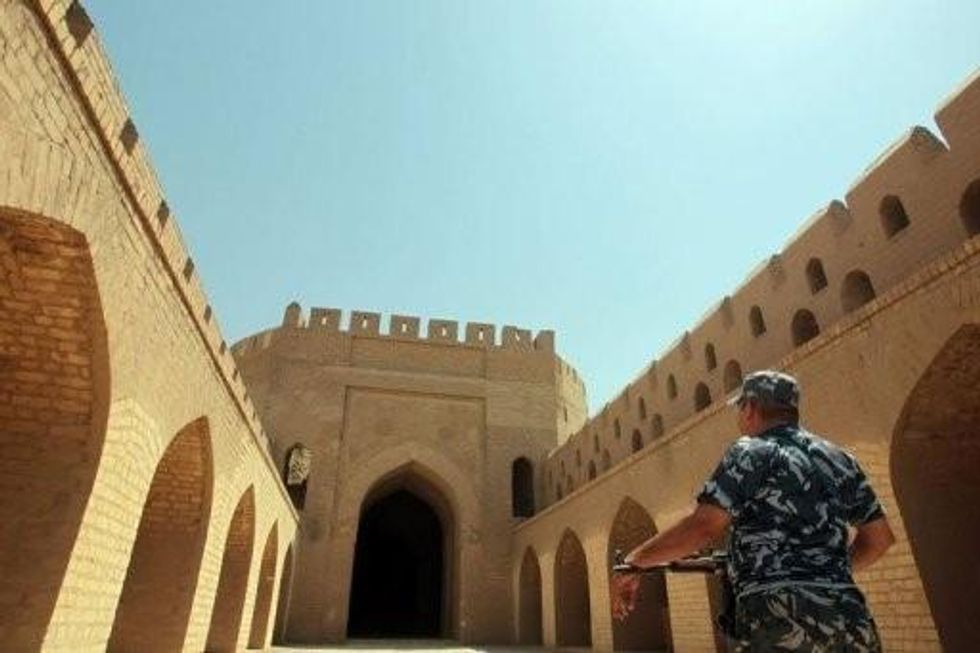
Construction of the city on the bank of the Tigris River began in July 762 AD under Abbasid Caliph Abu Jaafar al-Mansur, and it has since played a pivotal role in Arab and Islamic civilisations.
"Baghdad represented the economic centre of the Abbasid Empire, and it was used as a starting point for controlling other neighbouring regions to enhance Islamic power," said Issam al-Faili, a professor of political history at Mustansiriyah University.
"Baghdad witnessed a renaissance of thought through translation, which was usually mastered by Jews and the Christians, and became a destination for intellectuals, poets and scholars from all parts of the world, and a centre for craftsmen and a city of construction," Faili said.
"Baghdad today, after it was the capital of the world, has become one of the most miserable cities," he said.
British consultancy firm Mercer ranked Baghdad as the worst place in the world to live in its 2010 Quality of Living Survey.
The city has been conquered several times in its history, the first in 1258 when the Mongols destroyed Baghdad.
It was captured in 1831 by the Ottomans, in 1917 by the British, and in 2003 by a US-led coalition that overthrew dictator Saddam Hussein but also ended up unleashing internecine violence that killed tens of thousands of people.
Baghdad was a modern capital known for its nightlife in the 1970s, but it has fallen into gloomy disrepair in the years of conflict since.
Saddam started a war with Iraq in 1980 that lasted for eight years, and then launched a disastrous invasion of Kuwait in 1990 only to be forced out in 1991.
Iraq was hit by a harsh regime of international sanctions over the Kuwait invasion, and later lived under an ever-present threat of bombings, assassinations, gun battles and death squad killings in the years after 2003.
Even now, government employees, including high-ranking officers in the security forces, are frequently gunned down in the streets.
Concrete blast walls still surround official buildings, hotels, and other structures that could be the target of attacks.
Despite its long history, there are only fleeting signs of historic buildings on even its oldest streets. Ugly, uninspired concrete boxes are far more common.
Checkpoints cause massive traffic jams, and security forces in the city are armed for war, with equipment including assault rifles, machine guns and armoured vehicles.
Baghdad's streets are often strewn with rubbish and riven by potholes. What public works projects there are move at a glacial pace.
Spider webs of power cables criss-cross many streets, linking houses to private generators -- a testament to the failure of the government electricity grid to provide citizens with consistent power.
The government is headquartered in a heavily fortified area known as the Green Zone, which is defended, among other things, by newly acquired US-made Abrams tanks.
Entry to the area requires passing through a Byzantine series of security checks, some of which are of questionable value in deterring attacks, and journalists' cameras are regarded with deep suspicion.
While Baghdad was once the centre of an empire, the Iraqi government has been paralysed by political crises for almost eight months, during which it has accomplished little.
"Baghdad today is like Baghdad of yesterday in terms of the luxury that was enjoyed by the caliph and his family in the days of the Abbasid era, while the people were in misery," Faili said.
Corruption is widespread, and while Iraq takes in billions of dollars a month in oil revenues, signs of it benefiting the general public are hard to find.
Iraq has made some efforts to return its capital to regional prominence, hosting a summit of Arab leaders in March and talks between world powers and Iran on the Islamic republic's controversial nuclear programme in May.
Preparations for those events cost around $1 billion, although the impact of that outlay for most Iraqis was limited.
Iraqi writer and journalist Rifaat Mahmud said that the "issue of restoring Baghdad to what it was is a difficult matter, and cannot be achieved in circumstances such as those in which the neglected city now lives.
"Baghdad needs what we can call a miracle to regain its form and heritage and at least a part of its past."
Baghdad was once the capital of an empire and the centre of the Islamic world, but at 1,250 years old, the Iraqi city is a far cry from its past glories after being ravaged by years of war and sanctions.
Construction of the city on the bank of the Tigris River began in July 762 AD under Abbasid Caliph Abu Jaafar al-Mansur, and it has since played a pivotal role in Arab and Islamic civilisations.
"Baghdad represented the economic centre of the Abbasid Empire, and it was used as a starting point for controlling other neighbouring regions to enhance Islamic power," said Issam al-Faili, a professor of political history at Mustansiriyah University.
"Baghdad witnessed a renaissance of thought through translation, which was usually mastered by Jews and the Christians, and became a destination for intellectuals, poets and scholars from all parts of the world, and a centre for craftsmen and a city of construction," Faili said.
"Baghdad today, after it was the capital of the world, has become one of the most miserable cities," he said.
British consultancy firm Mercer ranked Baghdad as the worst place in the world to live in its 2010 Quality of Living Survey.
The city has been conquered several times in its history, the first in 1258 when the Mongols destroyed Baghdad.
It was captured in 1831 by the Ottomans, in 1917 by the British, and in 2003 by a US-led coalition that overthrew dictator Saddam Hussein but also ended up unleashing internecine violence that killed tens of thousands of people.
Baghdad was a modern capital known for its nightlife in the 1970s, but it has fallen into gloomy disrepair in the years of conflict since.
Saddam started a war with Iraq in 1980 that lasted for eight years, and then launched a disastrous invasion of Kuwait in 1990 only to be forced out in 1991.
Iraq was hit by a harsh regime of international sanctions over the Kuwait invasion, and later lived under an ever-present threat of bombings, assassinations, gun battles and death squad killings in the years after 2003.
Even now, government employees, including high-ranking officers in the security forces, are frequently gunned down in the streets.
Concrete blast walls still surround official buildings, hotels, and other structures that could be the target of attacks.
Despite its long history, there are only fleeting signs of historic buildings on even its oldest streets. Ugly, uninspired concrete boxes are far more common.
Checkpoints cause massive traffic jams, and security forces in the city are armed for war, with equipment including assault rifles, machine guns and armoured vehicles.
Baghdad's streets are often strewn with rubbish and riven by potholes. What public works projects there are move at a glacial pace.
Spider webs of power cables criss-cross many streets, linking houses to private generators -- a testament to the failure of the government electricity grid to provide citizens with consistent power.
The government is headquartered in a heavily fortified area known as the Green Zone, which is defended, among other things, by newly acquired US-made Abrams tanks.
Entry to the area requires passing through a Byzantine series of security checks, some of which are of questionable value in deterring attacks, and journalists' cameras are regarded with deep suspicion.
While Baghdad was once the centre of an empire, the Iraqi government has been paralysed by political crises for almost eight months, during which it has accomplished little.
"Baghdad today is like Baghdad of yesterday in terms of the luxury that was enjoyed by the caliph and his family in the days of the Abbasid era, while the people were in misery," Faili said.
Corruption is widespread, and while Iraq takes in billions of dollars a month in oil revenues, signs of it benefiting the general public are hard to find.
Iraq has made some efforts to return its capital to regional prominence, hosting a summit of Arab leaders in March and talks between world powers and Iran on the Islamic republic's controversial nuclear programme in May.
Preparations for those events cost around $1 billion, although the impact of that outlay for most Iraqis was limited.
Iraqi writer and journalist Rifaat Mahmud said that the "issue of restoring Baghdad to what it was is a difficult matter, and cannot be achieved in circumstances such as those in which the neglected city now lives.
"Baghdad needs what we can call a miracle to regain its form and heritage and at least a part of its past."
Baghdad was once the capital of an empire and the centre of the Islamic world, but at 1,250 years old, the Iraqi city is a far cry from its past glories after being ravaged by years of war and sanctions.
Construction of the city on the bank of the Tigris River began in July 762 AD under Abbasid Caliph Abu Jaafar al-Mansur, and it has since played a pivotal role in Arab and Islamic civilisations.
"Baghdad represented the economic centre of the Abbasid Empire, and it was used as a starting point for controlling other neighbouring regions to enhance Islamic power," said Issam al-Faili, a professor of political history at Mustansiriyah University.
"Baghdad witnessed a renaissance of thought through translation, which was usually mastered by Jews and the Christians, and became a destination for intellectuals, poets and scholars from all parts of the world, and a centre for craftsmen and a city of construction," Faili said.
"Baghdad today, after it was the capital of the world, has become one of the most miserable cities," he said.
British consultancy firm Mercer ranked Baghdad as the worst place in the world to live in its 2010 Quality of Living Survey.
The city has been conquered several times in its history, the first in 1258 when the Mongols destroyed Baghdad.
It was captured in 1831 by the Ottomans, in 1917 by the British, and in 2003 by a US-led coalition that overthrew dictator Saddam Hussein but also ended up unleashing internecine violence that killed tens of thousands of people.
Baghdad was a modern capital known for its nightlife in the 1970s, but it has fallen into gloomy disrepair in the years of conflict since.
Saddam started a war with Iraq in 1980 that lasted for eight years, and then launched a disastrous invasion of Kuwait in 1990 only to be forced out in 1991.
Iraq was hit by a harsh regime of international sanctions over the Kuwait invasion, and later lived under an ever-present threat of bombings, assassinations, gun battles and death squad killings in the years after 2003.
Even now, government employees, including high-ranking officers in the security forces, are frequently gunned down in the streets.
Concrete blast walls still surround official buildings, hotels, and other structures that could be the target of attacks.
Despite its long history, there are only fleeting signs of historic buildings on even its oldest streets. Ugly, uninspired concrete boxes are far more common.
Checkpoints cause massive traffic jams, and security forces in the city are armed for war, with equipment including assault rifles, machine guns and armoured vehicles.
Baghdad's streets are often strewn with rubbish and riven by potholes. What public works projects there are move at a glacial pace.
Spider webs of power cables criss-cross many streets, linking houses to private generators -- a testament to the failure of the government electricity grid to provide citizens with consistent power.
The government is headquartered in a heavily fortified area known as the Green Zone, which is defended, among other things, by newly acquired US-made Abrams tanks.
Entry to the area requires passing through a Byzantine series of security checks, some of which are of questionable value in deterring attacks, and journalists' cameras are regarded with deep suspicion.
While Baghdad was once the centre of an empire, the Iraqi government has been paralysed by political crises for almost eight months, during which it has accomplished little.
"Baghdad today is like Baghdad of yesterday in terms of the luxury that was enjoyed by the caliph and his family in the days of the Abbasid era, while the people were in misery," Faili said.
Corruption is widespread, and while Iraq takes in billions of dollars a month in oil revenues, signs of it benefiting the general public are hard to find.
Iraq has made some efforts to return its capital to regional prominence, hosting a summit of Arab leaders in March and talks between world powers and Iran on the Islamic republic's controversial nuclear programme in May.
Preparations for those events cost around $1 billion, although the impact of that outlay for most Iraqis was limited.
Iraqi writer and journalist Rifaat Mahmud said that the "issue of restoring Baghdad to what it was is a difficult matter, and cannot be achieved in circumstances such as those in which the neglected city now lives.
"Baghdad needs what we can call a miracle to regain its form and heritage and at least a part of its past."