SUBSCRIBE TO OUR FREE NEWSLETTER
Daily news & progressive opinion—funded by the people, not the corporations—delivered straight to your inbox.
5
#000000
#FFFFFF
To donate by check, phone, or other method, see our More Ways to Give page.
Many people are following the presidential election closely with the idea that the outcome will have a major impact on national policy. However, according to Steven Pearlstein, a veteran Washington Post columnist and reporter, it may not matter who wins the election. In a column last week, Pearlstein told readers that the top executives of some of the country's largest companies are getting together to craft a budget package that they will try to push through Congress and get the president to sign.
While Pearlstein clearly sees these backroom meetings of corporate chieftains in positive terms (he refers to them as "grown-ups" who have been noticeably absent from the conversation about the budget), the rest of us might view this plotting a bit differently. As Pearlstein openly acknowledges, this corporate coup is an end-run around the electorate. As corrupt as the political process may have become, at least we will get a vote in the election. Pearlstein's plotters are not inviting the rest of us into the conversation.
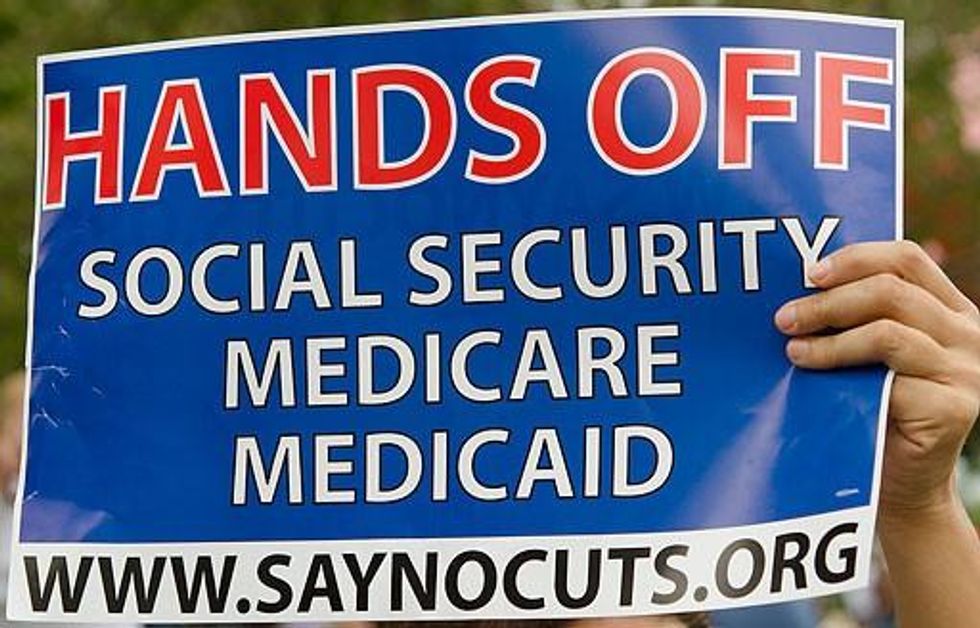
Many of the same folks who brought the economy to ruin just a few years ago are now going to come up with a plan that is supposed to set the budget and the economy on a forward path. At the center of their proposal are big cuts in Social Security and Medicare.
The most popular Social Security cut among this gang is a reduction in the annual cost-of-living adjustment (COLA) by 0.3 percentage points. They are betting that ordinary people are too dumb to notice this cut since it is a relatively small amount each year.
However, the effect of this cut accumulates into a much bigger deal over time. After 10 years it is roughly 3 percent, after 20 years it would be close to 6 percent, and after 30 years it would be close to 9 percent.
If we assume that an average retiree collects benefits for 20 years, this implies an average cut in their benefits of 3 percent. Is that a big deal? Well, there are a lot of would-be Social Security cutters who are screaming bloody murder because President Obama wants to increase the tax rate on a portion of their income by a bit more than 3 percentage points. This means that if President Obama's proposal to increase taxes on the richest 2 percent is a big deal, then the plan to cut the Social Security COLA is also a big deal.
The corporate CEO crew is also considering a plan to raise the normal retirement age for Social Security to 69. And, they want to reduce the benefit formula for high income workers which, incredibly, they define as people who earn more than $40,000 a year.
Their main trick for Medicare is to raise the age of eligibility from 65 to 67. Apparently our CEO gang has not discovered that the health insurance market for older people is a disaster. They also continue to promote the misconception that the problem is Medicare and Medicaid.
These programs are actually much more efficient than private insurers. The real problem is our private sector health care system, which already costs more than twice as much per person as the average in other wealthy countries, with few obvious benefits in outcomes.
The scary budget projections that our CEOs like to tout assume that health care costs will exceed 20 percent of GDP in a decade. That would imply costs of more than $34,000 for a family of four in today's economy. And these costs are projected to keep growing through time.
The normal response to this situation would be to focus on the need to fix the health care system. But many of Pearlstein's CEOs profit from the waste in the health care system, so they would rather cut our Medicare benefits.
So there you have it, the richest people in the country -- the big gainers from economic growth over the last three decades -- have plans to cut Social Security and Medicare benefits for current and future retirees.
To get some perspective on this story, the typical near-retiree has about $180,000 in wealth including everything, such as the equity in their home, their 401(k) and any other savings. That is what our CEO gang makes in a week. The average Social Security check of $1,200 a month is more than half of the income for two-thirds of seniors and more than 90 percent for one third. Yet, the CEOs think seniors are living too well.
But wait, there's more. We're all paying for their campaign to take away our Social Security and Medicare. We do this through several different channels.
First, many of these CEO- and honcho-types come from Wall Street. For example, Erskine Bowles, the co-chair of President Obama's deficit commission, is a director of Morgan Stanley in one of his day jobs. Had it not been for the taxpayers' generosity, the bank that Mr. Bowles directs would have died in the fall of 2008, so it would not be around to pay him his six-figure stipend.
The other way we are paying for this corporate effort to cut our Social Security and Medicare is by virtue of the fact that we allow the CEOs to pay for their campaign with pre-tax dollars. If most of want to give $100 to a political candidate or political cause we have to first pay taxes on our income and then make the campaign contribution out of what we have left.
However, if you are a CEO who wants to cut Social Security and Medicare, the Supreme Court says you can make your contributions with pre-tax dollars, in effect deducting this contribution as if you were giving money to charity. According to Pearlstein, the CEOs "charitable" contribution for cutting Social Security and Medicare will be on the order of $278 million.
For most of us, that sum would be real money, but not for CEOs who control trillions of dollars. And, with the rest of us subsidizing through our tax dollars this effort to cut our Social Security and Medicare, how can the CEOs not take up Pearlstein's call?
Many people are following the presidential election closely with the idea that the outcome will have a major impact on national policy. However, according to Steven Pearlstein, a veteran Washington Post columnist and reporter, it may not matter who wins the election. In a column last week, Pearlstein told readers that the top executives of some of the country's largest companies are getting together to craft a budget package that they will try to push through Congress and get the president to sign.
While Pearlstein clearly sees these backroom meetings of corporate chieftains in positive terms (he refers to them as "grown-ups" who have been noticeably absent from the conversation about the budget), the rest of us might view this plotting a bit differently. As Pearlstein openly acknowledges, this corporate coup is an end-run around the electorate. As corrupt as the political process may have become, at least we will get a vote in the election. Pearlstein's plotters are not inviting the rest of us into the conversation.
Many of the same folks who brought the economy to ruin just a few years ago are now going to come up with a plan that is supposed to set the budget and the economy on a forward path. At the center of their proposal are big cuts in Social Security and Medicare.
The most popular Social Security cut among this gang is a reduction in the annual cost-of-living adjustment (COLA) by 0.3 percentage points. They are betting that ordinary people are too dumb to notice this cut since it is a relatively small amount each year.
However, the effect of this cut accumulates into a much bigger deal over time. After 10 years it is roughly 3 percent, after 20 years it would be close to 6 percent, and after 30 years it would be close to 9 percent.
If we assume that an average retiree collects benefits for 20 years, this implies an average cut in their benefits of 3 percent. Is that a big deal? Well, there are a lot of would-be Social Security cutters who are screaming bloody murder because President Obama wants to increase the tax rate on a portion of their income by a bit more than 3 percentage points. This means that if President Obama's proposal to increase taxes on the richest 2 percent is a big deal, then the plan to cut the Social Security COLA is also a big deal.
The corporate CEO crew is also considering a plan to raise the normal retirement age for Social Security to 69. And, they want to reduce the benefit formula for high income workers which, incredibly, they define as people who earn more than $40,000 a year.
Their main trick for Medicare is to raise the age of eligibility from 65 to 67. Apparently our CEO gang has not discovered that the health insurance market for older people is a disaster. They also continue to promote the misconception that the problem is Medicare and Medicaid.
These programs are actually much more efficient than private insurers. The real problem is our private sector health care system, which already costs more than twice as much per person as the average in other wealthy countries, with few obvious benefits in outcomes.
The scary budget projections that our CEOs like to tout assume that health care costs will exceed 20 percent of GDP in a decade. That would imply costs of more than $34,000 for a family of four in today's economy. And these costs are projected to keep growing through time.
The normal response to this situation would be to focus on the need to fix the health care system. But many of Pearlstein's CEOs profit from the waste in the health care system, so they would rather cut our Medicare benefits.
So there you have it, the richest people in the country -- the big gainers from economic growth over the last three decades -- have plans to cut Social Security and Medicare benefits for current and future retirees.
To get some perspective on this story, the typical near-retiree has about $180,000 in wealth including everything, such as the equity in their home, their 401(k) and any other savings. That is what our CEO gang makes in a week. The average Social Security check of $1,200 a month is more than half of the income for two-thirds of seniors and more than 90 percent for one third. Yet, the CEOs think seniors are living too well.
But wait, there's more. We're all paying for their campaign to take away our Social Security and Medicare. We do this through several different channels.
First, many of these CEO- and honcho-types come from Wall Street. For example, Erskine Bowles, the co-chair of President Obama's deficit commission, is a director of Morgan Stanley in one of his day jobs. Had it not been for the taxpayers' generosity, the bank that Mr. Bowles directs would have died in the fall of 2008, so it would not be around to pay him his six-figure stipend.
The other way we are paying for this corporate effort to cut our Social Security and Medicare is by virtue of the fact that we allow the CEOs to pay for their campaign with pre-tax dollars. If most of want to give $100 to a political candidate or political cause we have to first pay taxes on our income and then make the campaign contribution out of what we have left.
However, if you are a CEO who wants to cut Social Security and Medicare, the Supreme Court says you can make your contributions with pre-tax dollars, in effect deducting this contribution as if you were giving money to charity. According to Pearlstein, the CEOs "charitable" contribution for cutting Social Security and Medicare will be on the order of $278 million.
For most of us, that sum would be real money, but not for CEOs who control trillions of dollars. And, with the rest of us subsidizing through our tax dollars this effort to cut our Social Security and Medicare, how can the CEOs not take up Pearlstein's call?
Many people are following the presidential election closely with the idea that the outcome will have a major impact on national policy. However, according to Steven Pearlstein, a veteran Washington Post columnist and reporter, it may not matter who wins the election. In a column last week, Pearlstein told readers that the top executives of some of the country's largest companies are getting together to craft a budget package that they will try to push through Congress and get the president to sign.
While Pearlstein clearly sees these backroom meetings of corporate chieftains in positive terms (he refers to them as "grown-ups" who have been noticeably absent from the conversation about the budget), the rest of us might view this plotting a bit differently. As Pearlstein openly acknowledges, this corporate coup is an end-run around the electorate. As corrupt as the political process may have become, at least we will get a vote in the election. Pearlstein's plotters are not inviting the rest of us into the conversation.
Many of the same folks who brought the economy to ruin just a few years ago are now going to come up with a plan that is supposed to set the budget and the economy on a forward path. At the center of their proposal are big cuts in Social Security and Medicare.
The most popular Social Security cut among this gang is a reduction in the annual cost-of-living adjustment (COLA) by 0.3 percentage points. They are betting that ordinary people are too dumb to notice this cut since it is a relatively small amount each year.
However, the effect of this cut accumulates into a much bigger deal over time. After 10 years it is roughly 3 percent, after 20 years it would be close to 6 percent, and after 30 years it would be close to 9 percent.
If we assume that an average retiree collects benefits for 20 years, this implies an average cut in their benefits of 3 percent. Is that a big deal? Well, there are a lot of would-be Social Security cutters who are screaming bloody murder because President Obama wants to increase the tax rate on a portion of their income by a bit more than 3 percentage points. This means that if President Obama's proposal to increase taxes on the richest 2 percent is a big deal, then the plan to cut the Social Security COLA is also a big deal.
The corporate CEO crew is also considering a plan to raise the normal retirement age for Social Security to 69. And, they want to reduce the benefit formula for high income workers which, incredibly, they define as people who earn more than $40,000 a year.
Their main trick for Medicare is to raise the age of eligibility from 65 to 67. Apparently our CEO gang has not discovered that the health insurance market for older people is a disaster. They also continue to promote the misconception that the problem is Medicare and Medicaid.
These programs are actually much more efficient than private insurers. The real problem is our private sector health care system, which already costs more than twice as much per person as the average in other wealthy countries, with few obvious benefits in outcomes.
The scary budget projections that our CEOs like to tout assume that health care costs will exceed 20 percent of GDP in a decade. That would imply costs of more than $34,000 for a family of four in today's economy. And these costs are projected to keep growing through time.
The normal response to this situation would be to focus on the need to fix the health care system. But many of Pearlstein's CEOs profit from the waste in the health care system, so they would rather cut our Medicare benefits.
So there you have it, the richest people in the country -- the big gainers from economic growth over the last three decades -- have plans to cut Social Security and Medicare benefits for current and future retirees.
To get some perspective on this story, the typical near-retiree has about $180,000 in wealth including everything, such as the equity in their home, their 401(k) and any other savings. That is what our CEO gang makes in a week. The average Social Security check of $1,200 a month is more than half of the income for two-thirds of seniors and more than 90 percent for one third. Yet, the CEOs think seniors are living too well.
But wait, there's more. We're all paying for their campaign to take away our Social Security and Medicare. We do this through several different channels.
First, many of these CEO- and honcho-types come from Wall Street. For example, Erskine Bowles, the co-chair of President Obama's deficit commission, is a director of Morgan Stanley in one of his day jobs. Had it not been for the taxpayers' generosity, the bank that Mr. Bowles directs would have died in the fall of 2008, so it would not be around to pay him his six-figure stipend.
The other way we are paying for this corporate effort to cut our Social Security and Medicare is by virtue of the fact that we allow the CEOs to pay for their campaign with pre-tax dollars. If most of want to give $100 to a political candidate or political cause we have to first pay taxes on our income and then make the campaign contribution out of what we have left.
However, if you are a CEO who wants to cut Social Security and Medicare, the Supreme Court says you can make your contributions with pre-tax dollars, in effect deducting this contribution as if you were giving money to charity. According to Pearlstein, the CEOs "charitable" contribution for cutting Social Security and Medicare will be on the order of $278 million.
For most of us, that sum would be real money, but not for CEOs who control trillions of dollars. And, with the rest of us subsidizing through our tax dollars this effort to cut our Social Security and Medicare, how can the CEOs not take up Pearlstein's call?