SUBSCRIBE TO OUR FREE NEWSLETTER
Daily news & progressive opinion—funded by the people, not the corporations—delivered straight to your inbox.
5
#000000
#FFFFFF
To donate by check, phone, or other method, see our More Ways to Give page.
Here in La Paz, Mexico, a two-hour drive north along the coastline from Cabo, Mexico, the people held their own summit, as the G20 leaders and rich corporate elite met inside a militarized security barrier, in posh hotel rooms with shimmering seaside vistas. It was impossible for protesters to get closer to the official summit, though some tried to find a bus driver willing to brave the checkpoints and the security guards with automatic guns slung over their shoulders. Locals were told that no one could enter Cabo unless they were a documented resident.
Activists with the Peoples Summit, Cumbre de los Pueblos, went on a colorful march down the main tourist strip in La Paz on the evening before the official G20 summit was slated to begin. Several hundred strong, the march poured into the main plaza of the town, La Kioska, and held a rally and a rock concert. The Peoples Summit also contained two and a half days of energetic panel discussions and workshops on topics like capital flows, offshore tax havens, and climate change and adaptation.
The most enthusiastic discussions, though, were less reform-oriented - feminism, the financialization of nature, mining, workers' struggles, corporate tourism development - discussions on creating our own solutions outside the security barrier in Cabo. Many summit participants felt that the hopes of the people cannot be expressed through the dry and corrupted policies of the G20.
Much of this spirit of change is expressed in the Statement of the Peoples Summit Against G20, a document that was put out by the summit participants. It was also felt through the words of the participants.
"We need system change, not reform," said Romulo Torres, Peru, with the network LATINDADD. "If a new system doesn't begin, none of the other changes will be important."
"We do not recognize the people who govern for us," said one local activist who spoke with a mask on, in the Zapatista tradition. "Solutions come from the streets. They come from what we do in our homes. That's where solutions come from... We are the 99 percent and we will not obey."
" Capitalism is alienation," said one feminist speaker from La Paz. "If we want to take down capitalism, we have to take down alienation."
"The only way to oppose capitalism is through direct action," said Imelda Garibay, La Paz, a local student activist. "We do not recognize the G20. The G20 is responsible for depleting the resources of the earth."
A passionate and valuable part the conference were Las Mujeres, the women. Feminist@s at the conference were loud, visionary, and full of life. A "Feminist Views on the G20" conference had been held the week before in Mexico City, and the energy from that conference was carried into the Peoples Summit. Many women shared their bold visions for "un buen via," a good life that blends community with respect, tradition, and connection with the earth.
"I want to make a proposal. The proposal is community," said Julieta Paredes, a feminist@ from Bolivia. "We're telling to the world that individualism and collective individualism... is destroying us."
"We are in love with life. We are in love with the future," said Paredes, speaking - and singing - at the rally at the end of Sunday's march.
A lively discussion took place about the position of women in the movement for a better world.
"We must have equal representation of women and men, otherwise we are not being progressive" said one feminist@ from Oaxaca.
"It's very important that we contribute our part from different perspectives," said feminist@ Marta. "We must use all forms of struggle, We must be creative. Governments are using all possible means to exploit us, so we must use all possible means."
The discussion concluded with summit participants working to amplify female-identified voices at the conference and taking steps toward equal representation in panelists and speakers.
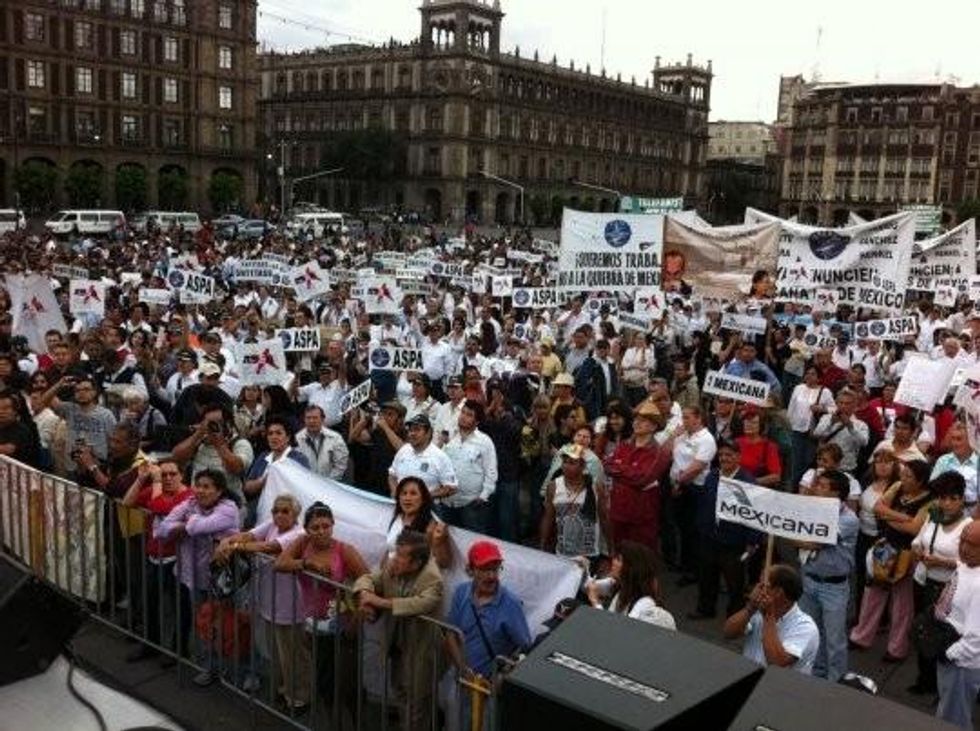
Last week, I had marched with thousands in Mexico City against the G20. There was something beautiful about the moment we marched into the Zocolo, carrying a banner that read "G20 --> G7billion" with friends from Occupy London, the M15 movement in Spain, the "Yo Soy 132" movement in Mexico, the Our World is Not for Sale network, and many more. The resistance here in the region of Cabo would be an incredible force, except that these are tourist towns, and the people are too poor to take a vacation. But everywhere in Mexico, resistance was visible.
Summit participants included activists who had been offered the opportunity to meet with the Mexican government to discuss G20 issues with Mexican government officials. Global justice activists such as Hector de la Cueva of the Mexican Action Network Against Free Trade had been invited to participate, but had turned down offers to participate in the government's photo op.
The proposed meetings were a "farce," said la Cuerva. "They were done by an authoritarian, anti-democratic, violent government."
Everyone in Cabo had been told they had to have identification on them at all times. They were told that the schools would be closed, and the hospitals were only for G20 dignitaries and related personnel. I spoke with one woman who had a pregnant family member in Cabo. They were told that the hospital would not be available, even if she were giving birth. They were lucky: The baby was born last week.
The communities in the region of Cabo work in seafood processing plants and mining operations. They work in the hotels and the restaurants that serve tourists.
If the G20's policies are bullets, like Calderon said, the people of La Paz have been hit hard. They have felt the wrath of "foreign investment" development strategies in the mega-hotel projects that are surrounded by devastated shanties in which poverty and drug addiction are rampant. The workers who sometimes work 15 hours per day processing seafood eaten by Koreans and Americans, with the profits going to a Korean company, understand "lowering barriers to trade" better than anyone. The fishing and farming communities that are under threat of being poisoned by a foreign-owned cyanide-leaching gold mine may know the pain of "competitive" and "business friendly" environments. They feel these "bullets," and they know them well.
But they are survivors.
The people of La Paz have dreams, and they have poetry. Many of them are acutely aware that they are being exploited. I was inspired by how open their eyes were, and their hearts also.
The words of the La Paz Zapatista: "We will not obey."
Here in La Paz, Mexico, a two-hour drive north along the coastline from Cabo, Mexico, the people held their own summit, as the G20 leaders and rich corporate elite met inside a militarized security barrier, in posh hotel rooms with shimmering seaside vistas. It was impossible for protesters to get closer to the official summit, though some tried to find a bus driver willing to brave the checkpoints and the security guards with automatic guns slung over their shoulders. Locals were told that no one could enter Cabo unless they were a documented resident.
Activists with the Peoples Summit, Cumbre de los Pueblos, went on a colorful march down the main tourist strip in La Paz on the evening before the official G20 summit was slated to begin. Several hundred strong, the march poured into the main plaza of the town, La Kioska, and held a rally and a rock concert. The Peoples Summit also contained two and a half days of energetic panel discussions and workshops on topics like capital flows, offshore tax havens, and climate change and adaptation.
The most enthusiastic discussions, though, were less reform-oriented - feminism, the financialization of nature, mining, workers' struggles, corporate tourism development - discussions on creating our own solutions outside the security barrier in Cabo. Many summit participants felt that the hopes of the people cannot be expressed through the dry and corrupted policies of the G20.
Much of this spirit of change is expressed in the Statement of the Peoples Summit Against G20, a document that was put out by the summit participants. It was also felt through the words of the participants.
"We need system change, not reform," said Romulo Torres, Peru, with the network LATINDADD. "If a new system doesn't begin, none of the other changes will be important."
"We do not recognize the people who govern for us," said one local activist who spoke with a mask on, in the Zapatista tradition. "Solutions come from the streets. They come from what we do in our homes. That's where solutions come from... We are the 99 percent and we will not obey."
" Capitalism is alienation," said one feminist speaker from La Paz. "If we want to take down capitalism, we have to take down alienation."
"The only way to oppose capitalism is through direct action," said Imelda Garibay, La Paz, a local student activist. "We do not recognize the G20. The G20 is responsible for depleting the resources of the earth."
A passionate and valuable part the conference were Las Mujeres, the women. Feminist@s at the conference were loud, visionary, and full of life. A "Feminist Views on the G20" conference had been held the week before in Mexico City, and the energy from that conference was carried into the Peoples Summit. Many women shared their bold visions for "un buen via," a good life that blends community with respect, tradition, and connection with the earth.
"I want to make a proposal. The proposal is community," said Julieta Paredes, a feminist@ from Bolivia. "We're telling to the world that individualism and collective individualism... is destroying us."
"We are in love with life. We are in love with the future," said Paredes, speaking - and singing - at the rally at the end of Sunday's march.
A lively discussion took place about the position of women in the movement for a better world.
"We must have equal representation of women and men, otherwise we are not being progressive" said one feminist@ from Oaxaca.
"It's very important that we contribute our part from different perspectives," said feminist@ Marta. "We must use all forms of struggle, We must be creative. Governments are using all possible means to exploit us, so we must use all possible means."
The discussion concluded with summit participants working to amplify female-identified voices at the conference and taking steps toward equal representation in panelists and speakers.
Last week, I had marched with thousands in Mexico City against the G20. There was something beautiful about the moment we marched into the Zocolo, carrying a banner that read "G20 --> G7billion" with friends from Occupy London, the M15 movement in Spain, the "Yo Soy 132" movement in Mexico, the Our World is Not for Sale network, and many more. The resistance here in the region of Cabo would be an incredible force, except that these are tourist towns, and the people are too poor to take a vacation. But everywhere in Mexico, resistance was visible.
Summit participants included activists who had been offered the opportunity to meet with the Mexican government to discuss G20 issues with Mexican government officials. Global justice activists such as Hector de la Cueva of the Mexican Action Network Against Free Trade had been invited to participate, but had turned down offers to participate in the government's photo op.
The proposed meetings were a "farce," said la Cuerva. "They were done by an authoritarian, anti-democratic, violent government."
Everyone in Cabo had been told they had to have identification on them at all times. They were told that the schools would be closed, and the hospitals were only for G20 dignitaries and related personnel. I spoke with one woman who had a pregnant family member in Cabo. They were told that the hospital would not be available, even if she were giving birth. They were lucky: The baby was born last week.
The communities in the region of Cabo work in seafood processing plants and mining operations. They work in the hotels and the restaurants that serve tourists.
If the G20's policies are bullets, like Calderon said, the people of La Paz have been hit hard. They have felt the wrath of "foreign investment" development strategies in the mega-hotel projects that are surrounded by devastated shanties in which poverty and drug addiction are rampant. The workers who sometimes work 15 hours per day processing seafood eaten by Koreans and Americans, with the profits going to a Korean company, understand "lowering barriers to trade" better than anyone. The fishing and farming communities that are under threat of being poisoned by a foreign-owned cyanide-leaching gold mine may know the pain of "competitive" and "business friendly" environments. They feel these "bullets," and they know them well.
But they are survivors.
The people of La Paz have dreams, and they have poetry. Many of them are acutely aware that they are being exploited. I was inspired by how open their eyes were, and their hearts also.
The words of the La Paz Zapatista: "We will not obey."
Here in La Paz, Mexico, a two-hour drive north along the coastline from Cabo, Mexico, the people held their own summit, as the G20 leaders and rich corporate elite met inside a militarized security barrier, in posh hotel rooms with shimmering seaside vistas. It was impossible for protesters to get closer to the official summit, though some tried to find a bus driver willing to brave the checkpoints and the security guards with automatic guns slung over their shoulders. Locals were told that no one could enter Cabo unless they were a documented resident.
Activists with the Peoples Summit, Cumbre de los Pueblos, went on a colorful march down the main tourist strip in La Paz on the evening before the official G20 summit was slated to begin. Several hundred strong, the march poured into the main plaza of the town, La Kioska, and held a rally and a rock concert. The Peoples Summit also contained two and a half days of energetic panel discussions and workshops on topics like capital flows, offshore tax havens, and climate change and adaptation.
The most enthusiastic discussions, though, were less reform-oriented - feminism, the financialization of nature, mining, workers' struggles, corporate tourism development - discussions on creating our own solutions outside the security barrier in Cabo. Many summit participants felt that the hopes of the people cannot be expressed through the dry and corrupted policies of the G20.
Much of this spirit of change is expressed in the Statement of the Peoples Summit Against G20, a document that was put out by the summit participants. It was also felt through the words of the participants.
"We need system change, not reform," said Romulo Torres, Peru, with the network LATINDADD. "If a new system doesn't begin, none of the other changes will be important."
"We do not recognize the people who govern for us," said one local activist who spoke with a mask on, in the Zapatista tradition. "Solutions come from the streets. They come from what we do in our homes. That's where solutions come from... We are the 99 percent and we will not obey."
" Capitalism is alienation," said one feminist speaker from La Paz. "If we want to take down capitalism, we have to take down alienation."
"The only way to oppose capitalism is through direct action," said Imelda Garibay, La Paz, a local student activist. "We do not recognize the G20. The G20 is responsible for depleting the resources of the earth."
A passionate and valuable part the conference were Las Mujeres, the women. Feminist@s at the conference were loud, visionary, and full of life. A "Feminist Views on the G20" conference had been held the week before in Mexico City, and the energy from that conference was carried into the Peoples Summit. Many women shared their bold visions for "un buen via," a good life that blends community with respect, tradition, and connection with the earth.
"I want to make a proposal. The proposal is community," said Julieta Paredes, a feminist@ from Bolivia. "We're telling to the world that individualism and collective individualism... is destroying us."
"We are in love with life. We are in love with the future," said Paredes, speaking - and singing - at the rally at the end of Sunday's march.
A lively discussion took place about the position of women in the movement for a better world.
"We must have equal representation of women and men, otherwise we are not being progressive" said one feminist@ from Oaxaca.
"It's very important that we contribute our part from different perspectives," said feminist@ Marta. "We must use all forms of struggle, We must be creative. Governments are using all possible means to exploit us, so we must use all possible means."
The discussion concluded with summit participants working to amplify female-identified voices at the conference and taking steps toward equal representation in panelists and speakers.
Last week, I had marched with thousands in Mexico City against the G20. There was something beautiful about the moment we marched into the Zocolo, carrying a banner that read "G20 --> G7billion" with friends from Occupy London, the M15 movement in Spain, the "Yo Soy 132" movement in Mexico, the Our World is Not for Sale network, and many more. The resistance here in the region of Cabo would be an incredible force, except that these are tourist towns, and the people are too poor to take a vacation. But everywhere in Mexico, resistance was visible.
Summit participants included activists who had been offered the opportunity to meet with the Mexican government to discuss G20 issues with Mexican government officials. Global justice activists such as Hector de la Cueva of the Mexican Action Network Against Free Trade had been invited to participate, but had turned down offers to participate in the government's photo op.
The proposed meetings were a "farce," said la Cuerva. "They were done by an authoritarian, anti-democratic, violent government."
Everyone in Cabo had been told they had to have identification on them at all times. They were told that the schools would be closed, and the hospitals were only for G20 dignitaries and related personnel. I spoke with one woman who had a pregnant family member in Cabo. They were told that the hospital would not be available, even if she were giving birth. They were lucky: The baby was born last week.
The communities in the region of Cabo work in seafood processing plants and mining operations. They work in the hotels and the restaurants that serve tourists.
If the G20's policies are bullets, like Calderon said, the people of La Paz have been hit hard. They have felt the wrath of "foreign investment" development strategies in the mega-hotel projects that are surrounded by devastated shanties in which poverty and drug addiction are rampant. The workers who sometimes work 15 hours per day processing seafood eaten by Koreans and Americans, with the profits going to a Korean company, understand "lowering barriers to trade" better than anyone. The fishing and farming communities that are under threat of being poisoned by a foreign-owned cyanide-leaching gold mine may know the pain of "competitive" and "business friendly" environments. They feel these "bullets," and they know them well.
But they are survivors.
The people of La Paz have dreams, and they have poetry. Many of them are acutely aware that they are being exploited. I was inspired by how open their eyes were, and their hearts also.
The words of the La Paz Zapatista: "We will not obey."