SUBSCRIBE TO OUR FREE NEWSLETTER
Daily news & progressive opinion—funded by the people, not the corporations—delivered straight to your inbox.
5
#000000
#FFFFFF
To donate by check, phone, or other method, see our More Ways to Give page.
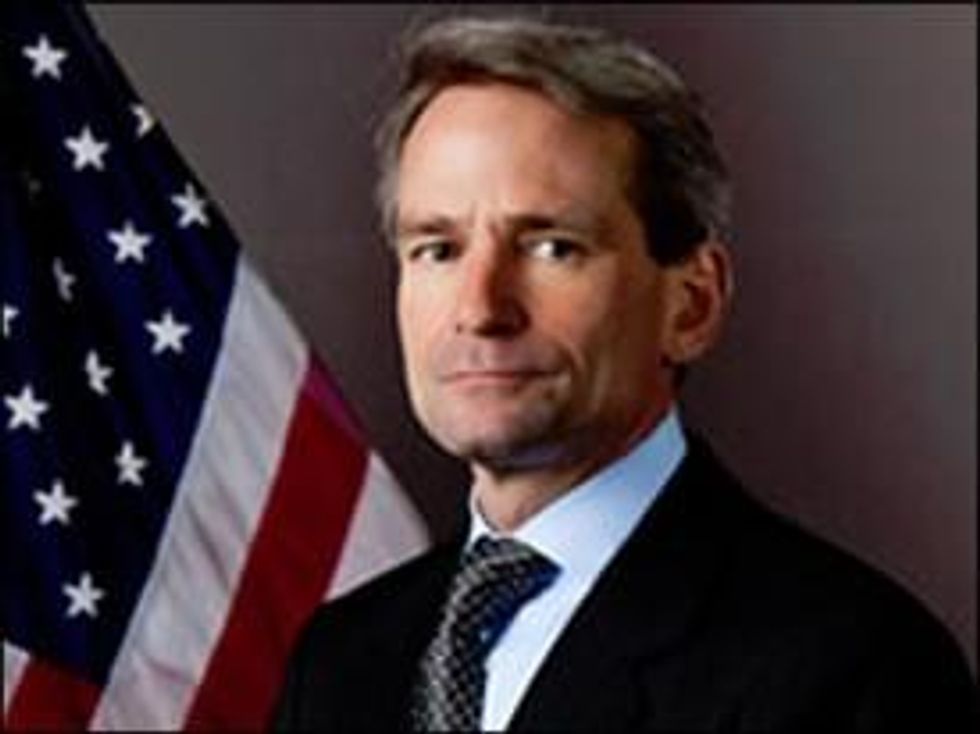
On Tuesday, the Senate voted down a Republican resolution that would have blocked the National Labor Relations Board's new election rule, the latest in a series of recent GOP efforts to undermine the board. Now, attention has returned to the real scandal at the board -- the funneling of confidential information by GOP member Terence Flynn to groups involved in litigation and lobbying against the labor board. Two days after the Senate vote, it emerged that Flynn's disclosure of deliberative information to a Romney advisor and others was more extensive and more serious than reported last month by the Inspector General (IG) of the NLRB.
The original accusations against Flynn were extremely serious.
To recap: The IG's report documents several allegations of potentially illegal conduct. At the request of Peter Kirsanow, a former Republican NLRB member who represents the National Association of Manufacturers in litigation, Flynn misused board resources to aid a pending lawsuit seeking to block the board's new election rule.
Flynn had extensive contact with Peter Schaumber, another former GOP member who was then a senior advisor to Mitt Romney. He edited a National Review article by Schaumber attacking the board, and helped Schaumber prepare for Fox News interviews and a congressional hearing on the board. The Romney campaign was noticeably silent when the IG's report was initially released, but facing the prospect of more damaging revelations, a campaign aide stated Thursday that Schaumber had resigned as an advisor last December, which, if correct, makes the campaign's earlier silence even more curious.
Moreover, for someone who had extensive exchanges with outside parties, Flynn remembered remarkably little during his investigatory interview with the IG.
Flynn "didn't recall" sending or forwarding emails to Schaumber and Kirsanow, why he had done so, or know what they would use the information for; nor did he remember reading emails from them; nor that he had edited Schaumber's writings; nor that he had neglected to disclose that he was requesting information on behalf of Kirsanow; nor did he know that Kirsanow and Schaumber were involved in litigation and lobbying against the board. And when questioned about emails he did not recall sending or forwarding, Flynn did not know that he needed authorization to share this information, or understand that it was confidential, and stated his comments about board deliberations were simply speculation, and not statements of fact.
Flynn had many exchanges with Schaumber, who has been a vocal conservative critic of the board but has declined to comment on the scandal. In one notable exchange, Schaumber requested information from Flynn in order to better advise an employer that wanted "help to avoid unionization." In other words, a chief counsel of the NLRB - which is charged with protecting workers' right to form a union - provided information so that a former chair of the NLRB could assist an employer that was attempting to prevent its employees from forming a union.
Denying any wrongdoing, Flynn complains that the scandal is emblematic of the "mean-spirited political theatrics" that dominate DC discourse. But before he disclosed the information, Flynn was warned that even if his comments were restricted to technical information - which clearly they were not - he should not contact former colleagues on sensitive topics so as to avoid the appearance, and the reality, that he was providing interested parties with "inside information that is not available to the general public."
Mean-spirited political theatrics is an apt description of the GOP's scandalous hypocrisy on the NLRB. Candidate Romney blasted the "out of control" NLRB for daring to enforce the law, but has said nothing about a real scandal involving one of his own advisors. Representative Issa, who rarely remains silent on a scandal, has hounded the board with subpoenas for the past year, but has refused to investigate these serious accusations. And GOP members of the House Education and Workforce Committee did not even want to release the IG's report, and then blamed the scandal on President Obama's recess appointments to the board.
This is the kind of skullduggery that happens when a party no longer believes that workers' rights matter.
On Tuesday, the Senate voted down a Republican resolution that would have blocked the National Labor Relations Board's new election rule, the latest in a series of recent GOP efforts to undermine the board. Now, attention has returned to the real scandal at the board -- the funneling of confidential information by GOP member Terence Flynn to groups involved in litigation and lobbying against the labor board. Two days after the Senate vote, it emerged that Flynn's disclosure of deliberative information to a Romney advisor and others was more extensive and more serious than reported last month by the Inspector General (IG) of the NLRB.
The original accusations against Flynn were extremely serious.
To recap: The IG's report documents several allegations of potentially illegal conduct. At the request of Peter Kirsanow, a former Republican NLRB member who represents the National Association of Manufacturers in litigation, Flynn misused board resources to aid a pending lawsuit seeking to block the board's new election rule.
Flynn had extensive contact with Peter Schaumber, another former GOP member who was then a senior advisor to Mitt Romney. He edited a National Review article by Schaumber attacking the board, and helped Schaumber prepare for Fox News interviews and a congressional hearing on the board. The Romney campaign was noticeably silent when the IG's report was initially released, but facing the prospect of more damaging revelations, a campaign aide stated Thursday that Schaumber had resigned as an advisor last December, which, if correct, makes the campaign's earlier silence even more curious.
Moreover, for someone who had extensive exchanges with outside parties, Flynn remembered remarkably little during his investigatory interview with the IG.
Flynn "didn't recall" sending or forwarding emails to Schaumber and Kirsanow, why he had done so, or know what they would use the information for; nor did he remember reading emails from them; nor that he had edited Schaumber's writings; nor that he had neglected to disclose that he was requesting information on behalf of Kirsanow; nor did he know that Kirsanow and Schaumber were involved in litigation and lobbying against the board. And when questioned about emails he did not recall sending or forwarding, Flynn did not know that he needed authorization to share this information, or understand that it was confidential, and stated his comments about board deliberations were simply speculation, and not statements of fact.
Flynn had many exchanges with Schaumber, who has been a vocal conservative critic of the board but has declined to comment on the scandal. In one notable exchange, Schaumber requested information from Flynn in order to better advise an employer that wanted "help to avoid unionization." In other words, a chief counsel of the NLRB - which is charged with protecting workers' right to form a union - provided information so that a former chair of the NLRB could assist an employer that was attempting to prevent its employees from forming a union.
Denying any wrongdoing, Flynn complains that the scandal is emblematic of the "mean-spirited political theatrics" that dominate DC discourse. But before he disclosed the information, Flynn was warned that even if his comments were restricted to technical information - which clearly they were not - he should not contact former colleagues on sensitive topics so as to avoid the appearance, and the reality, that he was providing interested parties with "inside information that is not available to the general public."
Mean-spirited political theatrics is an apt description of the GOP's scandalous hypocrisy on the NLRB. Candidate Romney blasted the "out of control" NLRB for daring to enforce the law, but has said nothing about a real scandal involving one of his own advisors. Representative Issa, who rarely remains silent on a scandal, has hounded the board with subpoenas for the past year, but has refused to investigate these serious accusations. And GOP members of the House Education and Workforce Committee did not even want to release the IG's report, and then blamed the scandal on President Obama's recess appointments to the board.
This is the kind of skullduggery that happens when a party no longer believes that workers' rights matter.
On Tuesday, the Senate voted down a Republican resolution that would have blocked the National Labor Relations Board's new election rule, the latest in a series of recent GOP efforts to undermine the board. Now, attention has returned to the real scandal at the board -- the funneling of confidential information by GOP member Terence Flynn to groups involved in litigation and lobbying against the labor board. Two days after the Senate vote, it emerged that Flynn's disclosure of deliberative information to a Romney advisor and others was more extensive and more serious than reported last month by the Inspector General (IG) of the NLRB.
The original accusations against Flynn were extremely serious.
To recap: The IG's report documents several allegations of potentially illegal conduct. At the request of Peter Kirsanow, a former Republican NLRB member who represents the National Association of Manufacturers in litigation, Flynn misused board resources to aid a pending lawsuit seeking to block the board's new election rule.
Flynn had extensive contact with Peter Schaumber, another former GOP member who was then a senior advisor to Mitt Romney. He edited a National Review article by Schaumber attacking the board, and helped Schaumber prepare for Fox News interviews and a congressional hearing on the board. The Romney campaign was noticeably silent when the IG's report was initially released, but facing the prospect of more damaging revelations, a campaign aide stated Thursday that Schaumber had resigned as an advisor last December, which, if correct, makes the campaign's earlier silence even more curious.
Moreover, for someone who had extensive exchanges with outside parties, Flynn remembered remarkably little during his investigatory interview with the IG.
Flynn "didn't recall" sending or forwarding emails to Schaumber and Kirsanow, why he had done so, or know what they would use the information for; nor did he remember reading emails from them; nor that he had edited Schaumber's writings; nor that he had neglected to disclose that he was requesting information on behalf of Kirsanow; nor did he know that Kirsanow and Schaumber were involved in litigation and lobbying against the board. And when questioned about emails he did not recall sending or forwarding, Flynn did not know that he needed authorization to share this information, or understand that it was confidential, and stated his comments about board deliberations were simply speculation, and not statements of fact.
Flynn had many exchanges with Schaumber, who has been a vocal conservative critic of the board but has declined to comment on the scandal. In one notable exchange, Schaumber requested information from Flynn in order to better advise an employer that wanted "help to avoid unionization." In other words, a chief counsel of the NLRB - which is charged with protecting workers' right to form a union - provided information so that a former chair of the NLRB could assist an employer that was attempting to prevent its employees from forming a union.
Denying any wrongdoing, Flynn complains that the scandal is emblematic of the "mean-spirited political theatrics" that dominate DC discourse. But before he disclosed the information, Flynn was warned that even if his comments were restricted to technical information - which clearly they were not - he should not contact former colleagues on sensitive topics so as to avoid the appearance, and the reality, that he was providing interested parties with "inside information that is not available to the general public."
Mean-spirited political theatrics is an apt description of the GOP's scandalous hypocrisy on the NLRB. Candidate Romney blasted the "out of control" NLRB for daring to enforce the law, but has said nothing about a real scandal involving one of his own advisors. Representative Issa, who rarely remains silent on a scandal, has hounded the board with subpoenas for the past year, but has refused to investigate these serious accusations. And GOP members of the House Education and Workforce Committee did not even want to release the IG's report, and then blamed the scandal on President Obama's recess appointments to the board.
This is the kind of skullduggery that happens when a party no longer believes that workers' rights matter.