SUBSCRIBE TO OUR FREE NEWSLETTER
Daily news & progressive opinion—funded by the people, not the corporations—delivered straight to your inbox.
5
#000000
#FFFFFF
To donate by check, phone, or other method, see our More Ways to Give page.
If you flip on a local television station and watch for an hour or so, you're likely to see at least one: a political ad that attacks a local or national candidate.
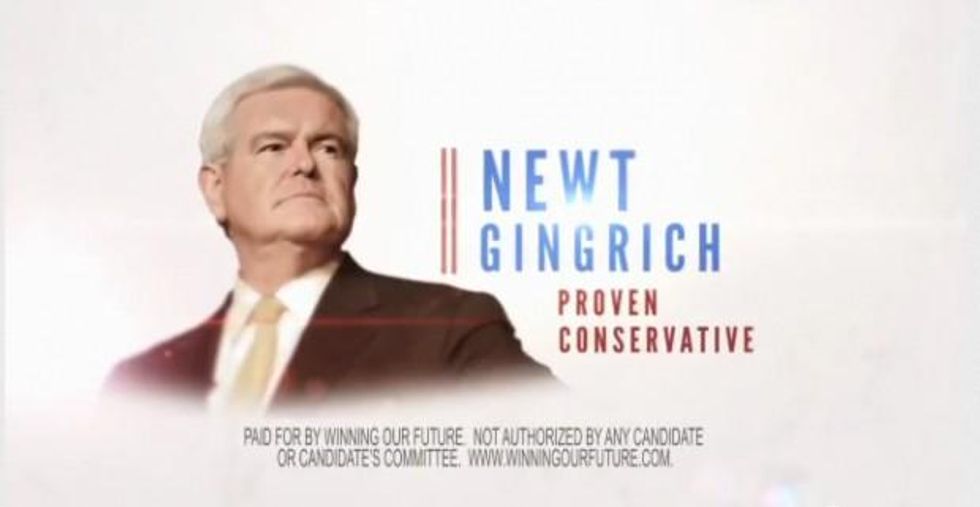
If you live in any of the "battleground states," you'll see many, many more -- up to 12 political ads an hour.
Viewers in Iowa fell under a barrage of these ads leading up to Tuesday's caucuses. This on-air onslaught offers the rest of us a preview of what television viewing will be like as Election Day 2012 draws closer.
It's estimated that American television viewers will see such political ads aired more than 200,000 times by the first week in November. What we're far less likely to see is any explanation of who really sponsors these ads, what interests they represent and whether the content of the attacks is true.
Federal Election Commission rules require any political advertiser to tag its ad with the name of the group that is "responsible for the content of the message." But viewers rarely know the true sources of funding and power behind the names.
And the local television stations that profit from airing often misleading ads aren't eager to reveal much more. But these broadcasters face a more powerful obligation to disclose, not from the FEC but from the Federal Communications Commission, which is weighing whether or not to hold them to doing it in a truly accessible way.
Shedding Sunlight on Attack Ads
Existing lax disclosure rules explain the proliferation of ads from benevolent-sounding front groups like Concerned Taxpayers of America, Restore Our Future, Make Us Great Again and Citizens for a Responsible Government. The names might sound right and patriotic at the end of a 30-second spot, but they don't tell the whole story.
The Concerned Taxpayers of America has blanketed parts of the country with ads calling for a grassroots revolt against "stifling government bureaucracy." What viewers likely don't know is that CTA's populist front is merely the creation of two shadowy corporate spenders -- a Maryland concrete company and a New York hedge fund manager.
The FEC isn't willing to address the lack of transparency in these ads. The Supreme Court's 2010 Citizens United decision lifted restrictions on corporate political spending, making its ability to rein them in even more difficult. The FCC, however, has a federal mandate to ensure that broadcasters "fully and fairly disclose the true identity of the person or persons, or corporation, committee, association or other unincorporated group" paying for commercials.
The good news is that the FCC is finally taking a few initial steps toward such full and fair disclosure. Broadcasters are already required to maintain "public inspection files" listing the names of groups that purchase political advertising time, the cost involved and the names of executives at these organizations. The FCC has asked for public comments on a proposed rule that would force broadcasters to move this information out of dusty file cabinets and onto the Internet. If broadcasters put this data online, people will be able to access vital information without having to schlep down to their local stations.
Unfortunately, many broadcasters are reluctant to make this data more broadly accessible. In a recently filed comment to the FCC, the National Association of Broadcasters urged the agency to drop its effort to make it easier for the public to ferret out this information. The NAB argued that requiring broadcasters to post their political file online would place an unnecessary burden on local stations. Another group of broadcasters warned the FCC against any effort "to stimulate such examinations" of a station's public records by their viewers.
You read that right. In 2012, broadcasters fear a stimulated viewing public -- or at least one that wants to learn more about how local TV stations operate.
The Public Return on Investment
Before Americans vote, we need to know who is trying to influence us and why. And the FCC needs to hold broadcasters' feet to the fire -- especially in an election year in which media companies will enrich themselves with a projected $3 billion in revenue from these same ads.
Broadcasters enjoy free access to our airwaves; in exchange, they're supposed to fulfill the news and information needs of the communities in which they broadcast. They can start by more fully disclosing the names of both the front groups that place political ads and the main financial interests that bankroll these commercials.
Requiring broadcasters to put all of this political information online is a change that needs to happen now, before misleading political ads muddy our elections any further.
If you flip on a local television station and watch for an hour or so, you're likely to see at least one: a political ad that attacks a local or national candidate.
If you live in any of the "battleground states," you'll see many, many more -- up to 12 political ads an hour.
Viewers in Iowa fell under a barrage of these ads leading up to Tuesday's caucuses. This on-air onslaught offers the rest of us a preview of what television viewing will be like as Election Day 2012 draws closer.
It's estimated that American television viewers will see such political ads aired more than 200,000 times by the first week in November. What we're far less likely to see is any explanation of who really sponsors these ads, what interests they represent and whether the content of the attacks is true.
Federal Election Commission rules require any political advertiser to tag its ad with the name of the group that is "responsible for the content of the message." But viewers rarely know the true sources of funding and power behind the names.
And the local television stations that profit from airing often misleading ads aren't eager to reveal much more. But these broadcasters face a more powerful obligation to disclose, not from the FEC but from the Federal Communications Commission, which is weighing whether or not to hold them to doing it in a truly accessible way.
Shedding Sunlight on Attack Ads
Existing lax disclosure rules explain the proliferation of ads from benevolent-sounding front groups like Concerned Taxpayers of America, Restore Our Future, Make Us Great Again and Citizens for a Responsible Government. The names might sound right and patriotic at the end of a 30-second spot, but they don't tell the whole story.
The Concerned Taxpayers of America has blanketed parts of the country with ads calling for a grassroots revolt against "stifling government bureaucracy." What viewers likely don't know is that CTA's populist front is merely the creation of two shadowy corporate spenders -- a Maryland concrete company and a New York hedge fund manager.
The FEC isn't willing to address the lack of transparency in these ads. The Supreme Court's 2010 Citizens United decision lifted restrictions on corporate political spending, making its ability to rein them in even more difficult. The FCC, however, has a federal mandate to ensure that broadcasters "fully and fairly disclose the true identity of the person or persons, or corporation, committee, association or other unincorporated group" paying for commercials.
The good news is that the FCC is finally taking a few initial steps toward such full and fair disclosure. Broadcasters are already required to maintain "public inspection files" listing the names of groups that purchase political advertising time, the cost involved and the names of executives at these organizations. The FCC has asked for public comments on a proposed rule that would force broadcasters to move this information out of dusty file cabinets and onto the Internet. If broadcasters put this data online, people will be able to access vital information without having to schlep down to their local stations.
Unfortunately, many broadcasters are reluctant to make this data more broadly accessible. In a recently filed comment to the FCC, the National Association of Broadcasters urged the agency to drop its effort to make it easier for the public to ferret out this information. The NAB argued that requiring broadcasters to post their political file online would place an unnecessary burden on local stations. Another group of broadcasters warned the FCC against any effort "to stimulate such examinations" of a station's public records by their viewers.
You read that right. In 2012, broadcasters fear a stimulated viewing public -- or at least one that wants to learn more about how local TV stations operate.
The Public Return on Investment
Before Americans vote, we need to know who is trying to influence us and why. And the FCC needs to hold broadcasters' feet to the fire -- especially in an election year in which media companies will enrich themselves with a projected $3 billion in revenue from these same ads.
Broadcasters enjoy free access to our airwaves; in exchange, they're supposed to fulfill the news and information needs of the communities in which they broadcast. They can start by more fully disclosing the names of both the front groups that place political ads and the main financial interests that bankroll these commercials.
Requiring broadcasters to put all of this political information online is a change that needs to happen now, before misleading political ads muddy our elections any further.
If you flip on a local television station and watch for an hour or so, you're likely to see at least one: a political ad that attacks a local or national candidate.
If you live in any of the "battleground states," you'll see many, many more -- up to 12 political ads an hour.
Viewers in Iowa fell under a barrage of these ads leading up to Tuesday's caucuses. This on-air onslaught offers the rest of us a preview of what television viewing will be like as Election Day 2012 draws closer.
It's estimated that American television viewers will see such political ads aired more than 200,000 times by the first week in November. What we're far less likely to see is any explanation of who really sponsors these ads, what interests they represent and whether the content of the attacks is true.
Federal Election Commission rules require any political advertiser to tag its ad with the name of the group that is "responsible for the content of the message." But viewers rarely know the true sources of funding and power behind the names.
And the local television stations that profit from airing often misleading ads aren't eager to reveal much more. But these broadcasters face a more powerful obligation to disclose, not from the FEC but from the Federal Communications Commission, which is weighing whether or not to hold them to doing it in a truly accessible way.
Shedding Sunlight on Attack Ads
Existing lax disclosure rules explain the proliferation of ads from benevolent-sounding front groups like Concerned Taxpayers of America, Restore Our Future, Make Us Great Again and Citizens for a Responsible Government. The names might sound right and patriotic at the end of a 30-second spot, but they don't tell the whole story.
The Concerned Taxpayers of America has blanketed parts of the country with ads calling for a grassroots revolt against "stifling government bureaucracy." What viewers likely don't know is that CTA's populist front is merely the creation of two shadowy corporate spenders -- a Maryland concrete company and a New York hedge fund manager.
The FEC isn't willing to address the lack of transparency in these ads. The Supreme Court's 2010 Citizens United decision lifted restrictions on corporate political spending, making its ability to rein them in even more difficult. The FCC, however, has a federal mandate to ensure that broadcasters "fully and fairly disclose the true identity of the person or persons, or corporation, committee, association or other unincorporated group" paying for commercials.
The good news is that the FCC is finally taking a few initial steps toward such full and fair disclosure. Broadcasters are already required to maintain "public inspection files" listing the names of groups that purchase political advertising time, the cost involved and the names of executives at these organizations. The FCC has asked for public comments on a proposed rule that would force broadcasters to move this information out of dusty file cabinets and onto the Internet. If broadcasters put this data online, people will be able to access vital information without having to schlep down to their local stations.
Unfortunately, many broadcasters are reluctant to make this data more broadly accessible. In a recently filed comment to the FCC, the National Association of Broadcasters urged the agency to drop its effort to make it easier for the public to ferret out this information. The NAB argued that requiring broadcasters to post their political file online would place an unnecessary burden on local stations. Another group of broadcasters warned the FCC against any effort "to stimulate such examinations" of a station's public records by their viewers.
You read that right. In 2012, broadcasters fear a stimulated viewing public -- or at least one that wants to learn more about how local TV stations operate.
The Public Return on Investment
Before Americans vote, we need to know who is trying to influence us and why. And the FCC needs to hold broadcasters' feet to the fire -- especially in an election year in which media companies will enrich themselves with a projected $3 billion in revenue from these same ads.
Broadcasters enjoy free access to our airwaves; in exchange, they're supposed to fulfill the news and information needs of the communities in which they broadcast. They can start by more fully disclosing the names of both the front groups that place political ads and the main financial interests that bankroll these commercials.
Requiring broadcasters to put all of this political information online is a change that needs to happen now, before misleading political ads muddy our elections any further.