SUBSCRIBE TO OUR FREE NEWSLETTER
Daily news & progressive opinion—funded by the people, not the corporations—delivered straight to your inbox.
5
#000000
#FFFFFF
To donate by check, phone, or other method, see our More Ways to Give page.
Recently, the Congressional Budget Office released a report on income inequality which found that the incomes of the top 1% nearly tripled between 1979 and 2007, whereas those of the middle class increased by less than forty percent. In his 2007 study, Jared Bernstein found that the after-tax income of the top 1% was 21 times higher than that of middle income families in 2005, compared to "only" 8 times higher in 1979. Indeed, inequality has been on the increase.
The burgeoning Occupy Wall Street movement, and its slogan, "We are the 99%," is drawing critical attention to the grossly unequal distribution of income and wealth in the U.S. Critiques include the injustice of the high incomes (and lack of incarceration) of Wall Street executives, given that their illegal actions caused the unemployment and homelessness of millions; the corrupting influence on the democratic process of the concentration of wealth in the hands of a few; and the basic indecency of the top 1% having much more than they could ever spend, while millions of Americans lack housing, health care, even food.
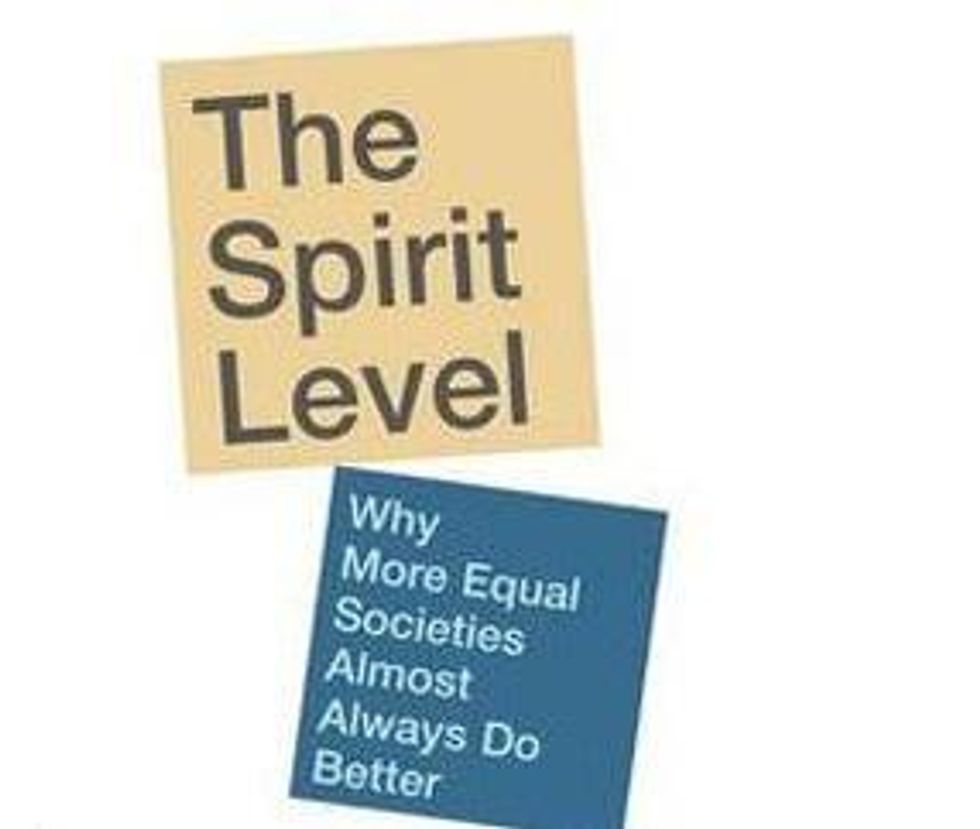
But there any many other serious societal problems associated with inequality which are not so obvious, and which have received little attention from the Occupy movement or the media. According to researchers Richard Wilkinson and Kate Pickett, more equal societies outperformed less equal ones in fifteen key ways:
In sum, income inequality is bad for our health, and for our society. This finding greatly strengthens the case for policies aimed at making our income distribution more equal.
The Occupy Movement's call for greater income equality also receives support from another finding of Wilkinson and Pickett. They found that reductions in the level of inequality improve social well-being more than do increases in GDP. This finding runs counter to a basic tenet of our economic policy - that GDP is the best measure of well-being. It suggests that pro-growth policies which lead to increased inequality may in fact make people worse off, even if they increase GDP. Conversely, increasing taxes on the rich would not only increase fairness, but also could increase well-being, even if they were to reduce GDP by discouraging capital investment.
It is time that we the people, and our representatives in Washington, realize how unhealthy inequality is for us and for our society. We should all applaud the Occupy Movement for bringing this problem to public attention, and we should join them in demanding that public officials act decisively to reverse this unhealthy trend. While the top 1% can use their economic advantage and associated power to further enhance their wealth, we encourage them instead to join the 99% in pushing for more equality--as Warren Buffet, Skip Gates, and others have -and, perhaps, also improve their health and well-being in the process. We should all seek the redistribution of income -- to "spread the wealth around' as put by then candidate Barack Obama to Joe the plumber -- with more benefits then either likely considered at the time.
Recently, the Congressional Budget Office released a report on income inequality which found that the incomes of the top 1% nearly tripled between 1979 and 2007, whereas those of the middle class increased by less than forty percent. In his 2007 study, Jared Bernstein found that the after-tax income of the top 1% was 21 times higher than that of middle income families in 2005, compared to "only" 8 times higher in 1979. Indeed, inequality has been on the increase.
The burgeoning Occupy Wall Street movement, and its slogan, "We are the 99%," is drawing critical attention to the grossly unequal distribution of income and wealth in the U.S. Critiques include the injustice of the high incomes (and lack of incarceration) of Wall Street executives, given that their illegal actions caused the unemployment and homelessness of millions; the corrupting influence on the democratic process of the concentration of wealth in the hands of a few; and the basic indecency of the top 1% having much more than they could ever spend, while millions of Americans lack housing, health care, even food.
But there any many other serious societal problems associated with inequality which are not so obvious, and which have received little attention from the Occupy movement or the media. According to researchers Richard Wilkinson and Kate Pickett, more equal societies outperformed less equal ones in fifteen key ways:
In sum, income inequality is bad for our health, and for our society. This finding greatly strengthens the case for policies aimed at making our income distribution more equal.
The Occupy Movement's call for greater income equality also receives support from another finding of Wilkinson and Pickett. They found that reductions in the level of inequality improve social well-being more than do increases in GDP. This finding runs counter to a basic tenet of our economic policy - that GDP is the best measure of well-being. It suggests that pro-growth policies which lead to increased inequality may in fact make people worse off, even if they increase GDP. Conversely, increasing taxes on the rich would not only increase fairness, but also could increase well-being, even if they were to reduce GDP by discouraging capital investment.
It is time that we the people, and our representatives in Washington, realize how unhealthy inequality is for us and for our society. We should all applaud the Occupy Movement for bringing this problem to public attention, and we should join them in demanding that public officials act decisively to reverse this unhealthy trend. While the top 1% can use their economic advantage and associated power to further enhance their wealth, we encourage them instead to join the 99% in pushing for more equality--as Warren Buffet, Skip Gates, and others have -and, perhaps, also improve their health and well-being in the process. We should all seek the redistribution of income -- to "spread the wealth around' as put by then candidate Barack Obama to Joe the plumber -- with more benefits then either likely considered at the time.
Recently, the Congressional Budget Office released a report on income inequality which found that the incomes of the top 1% nearly tripled between 1979 and 2007, whereas those of the middle class increased by less than forty percent. In his 2007 study, Jared Bernstein found that the after-tax income of the top 1% was 21 times higher than that of middle income families in 2005, compared to "only" 8 times higher in 1979. Indeed, inequality has been on the increase.
The burgeoning Occupy Wall Street movement, and its slogan, "We are the 99%," is drawing critical attention to the grossly unequal distribution of income and wealth in the U.S. Critiques include the injustice of the high incomes (and lack of incarceration) of Wall Street executives, given that their illegal actions caused the unemployment and homelessness of millions; the corrupting influence on the democratic process of the concentration of wealth in the hands of a few; and the basic indecency of the top 1% having much more than they could ever spend, while millions of Americans lack housing, health care, even food.
But there any many other serious societal problems associated with inequality which are not so obvious, and which have received little attention from the Occupy movement or the media. According to researchers Richard Wilkinson and Kate Pickett, more equal societies outperformed less equal ones in fifteen key ways:
In sum, income inequality is bad for our health, and for our society. This finding greatly strengthens the case for policies aimed at making our income distribution more equal.
The Occupy Movement's call for greater income equality also receives support from another finding of Wilkinson and Pickett. They found that reductions in the level of inequality improve social well-being more than do increases in GDP. This finding runs counter to a basic tenet of our economic policy - that GDP is the best measure of well-being. It suggests that pro-growth policies which lead to increased inequality may in fact make people worse off, even if they increase GDP. Conversely, increasing taxes on the rich would not only increase fairness, but also could increase well-being, even if they were to reduce GDP by discouraging capital investment.
It is time that we the people, and our representatives in Washington, realize how unhealthy inequality is for us and for our society. We should all applaud the Occupy Movement for bringing this problem to public attention, and we should join them in demanding that public officials act decisively to reverse this unhealthy trend. While the top 1% can use their economic advantage and associated power to further enhance their wealth, we encourage them instead to join the 99% in pushing for more equality--as Warren Buffet, Skip Gates, and others have -and, perhaps, also improve their health and well-being in the process. We should all seek the redistribution of income -- to "spread the wealth around' as put by then candidate Barack Obama to Joe the plumber -- with more benefits then either likely considered at the time.