SUBSCRIBE TO OUR FREE NEWSLETTER
Daily news & progressive opinion—funded by the people, not the corporations—delivered straight to your inbox.
5
#000000
#FFFFFF
To donate by check, phone, or other method, see our More Ways to Give page.
Daily news & progressive opinion—funded by the people, not the corporations—delivered straight to your inbox.
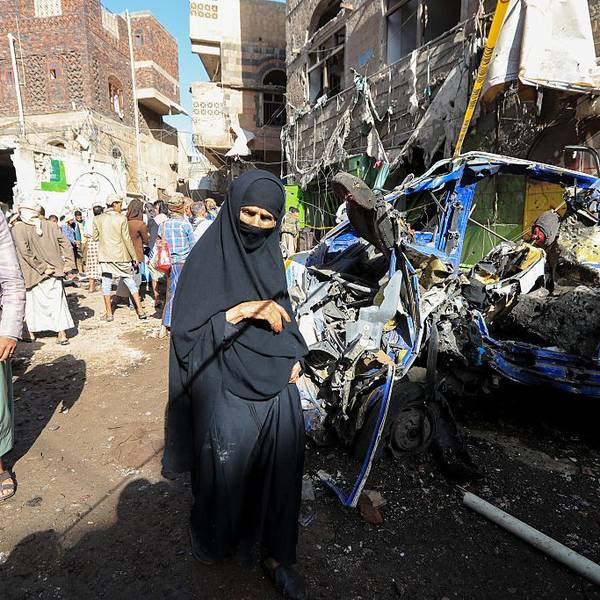
The health and well being of Yemen's children is at greater risk than ever before. Conflicts rage throughout the country. On March 8, UNICEF stated that the violent protests now taking place in Yemen are affecting children's well being, who should be protected at all costs. UNICEF also said that a number of schools in al-Mansoura and al-Mu'alla districts in the Aden governorate were being attacked by demonstrators and putting children's lives at risk.
The health and well being of Yemen's children is at greater risk than ever before. Conflicts rage throughout the country. On March 8, UNICEF stated that the violent protests now taking place in Yemen are affecting children's well being, who should be protected at all costs. UNICEF also said that a number of schools in al-Mansoura and al-Mu'alla districts in the Aden governorate were being attacked by demonstrators and putting children's lives at risk.
The seven-year-long war in Northern Yemen has produced a generation of children who have grown up in violence. It is estimated that children make 60 percent of the roughly 300,000 people who have been displaced and had to flee their homes in terror. As a result of this, many children bear the scars of war which have manifested in a variety of psychological symptoms and have threatened their proper development.
Because of the situation of abject poverty, many children are trafficked to Saudi Arabia, often with the support of their parents who are promised a bright future for their children by intermediaries. They end up, in many cases, being abused and some fall prey to adults who involve them in prostitution, drug-trafficking and other illicit activities. Some escape and return to Yemen only to become "street children" in the country's main cities and where many continue a cycle of abuse and lawlessness. A UNICEF study showed that there are more than 30,000 street children in Yemen.
The phenomenon of street children in Yemen can be traced back to the 1990s, when the economic situation in the country deteriorated. Today, the number of street children is rapidly increasing and includes children of other governorates who came to live in Sanaa city, children from poor families living there and children from refugee families coming mainly from Somalia.
Although the rights of children are enshrined in the Convention on the Rights of the Child, to which Yemen is a signatory, the situation of the children in Yemen is shameful, according to the Director of the Democratic School for Human Rights, Mr.Jamal al-Shami. According to Mr. al-Shami, children are exposed to violence in homes, in schools and on the streets, and about 60 percent among them are exposed to torture in prisons.
Due to lack of economic resources and poverty in their families children often work in difficult and dangerous jobs and may end up exploited by gangs and subject to abuse. "The ministry has carried out a number of projects dealing with child labor, and it is preparing a project to monitor the worst forms of child labor in a number of Yemeni governorates," said Mona Ali Salem, chairwoman of the Child Labor Unit in the Ministry of Social Affairs and Labour.
The situation for Yemeni girls is worse than for boys in almost all social indicators. Poverty and lack of awareness has discouraged many poor parents from having their children, particularly girls, educated. According to the United Nations Development Programme (UNDP) approximately 52 percent of girls attend primary school, compared to 86 percent of boys. In rural areas, where 72 percent of Yemen's population lives, fewer than one in three girls go to school. Despite some recent improvements in enrollment, education statistics in Yemen are among the worst in the Arab world.
Violence throughout the country affects everybody, including children, who grow up in an atmosphere of danger and lawlessness. In Yemen, there are three times as many guns as there are people, and boys learn to carry out an AK-47 from an early age. Five hundred to six hundred children are killed or wounded every year through direct involvement in tribal combat in the country, according to some estimates.
Disruptions caused by conflict have a negative impact on children and youngster's health, education and well being. As Geert Cappelaere, UNICEF's Yemen representative stated, "Ignoring the plight of Yemeni youngsters who are short of food, education and security is not only cruel but dangerous."
Dear Common Dreams reader, It’s been nearly 30 years since I co-founded Common Dreams with my late wife, Lina Newhouser. We had the radical notion that journalism should serve the public good, not corporate profits. It was clear to us from the outset what it would take to build such a project. No paid advertisements. No corporate sponsors. No millionaire publisher telling us what to think or do. Many people said we wouldn't last a year, but we proved those doubters wrong. Together with a tremendous team of journalists and dedicated staff, we built an independent media outlet free from the constraints of profits and corporate control. Our mission has always been simple: To inform. To inspire. To ignite change for the common good. Building Common Dreams was not easy. Our survival was never guaranteed. When you take on the most powerful forces—Wall Street greed, fossil fuel industry destruction, Big Tech lobbyists, and uber-rich oligarchs who have spent billions upon billions rigging the economy and democracy in their favor—the only bulwark you have is supporters who believe in your work. But here’s the urgent message from me today. It's never been this bad out there. And it's never been this hard to keep us going. At the very moment Common Dreams is most needed, the threats we face are intensifying. We need your support now more than ever. We don't accept corporate advertising and never will. We don't have a paywall because we don't think people should be blocked from critical news based on their ability to pay. Everything we do is funded by the donations of readers like you. When everyone does the little they can afford, we are strong. But if that support retreats or dries up, so do we. Will you donate now to make sure Common Dreams not only survives but thrives? —Craig Brown, Co-founder |
The health and well being of Yemen's children is at greater risk than ever before. Conflicts rage throughout the country. On March 8, UNICEF stated that the violent protests now taking place in Yemen are affecting children's well being, who should be protected at all costs. UNICEF also said that a number of schools in al-Mansoura and al-Mu'alla districts in the Aden governorate were being attacked by demonstrators and putting children's lives at risk.
The seven-year-long war in Northern Yemen has produced a generation of children who have grown up in violence. It is estimated that children make 60 percent of the roughly 300,000 people who have been displaced and had to flee their homes in terror. As a result of this, many children bear the scars of war which have manifested in a variety of psychological symptoms and have threatened their proper development.
Because of the situation of abject poverty, many children are trafficked to Saudi Arabia, often with the support of their parents who are promised a bright future for their children by intermediaries. They end up, in many cases, being abused and some fall prey to adults who involve them in prostitution, drug-trafficking and other illicit activities. Some escape and return to Yemen only to become "street children" in the country's main cities and where many continue a cycle of abuse and lawlessness. A UNICEF study showed that there are more than 30,000 street children in Yemen.
The phenomenon of street children in Yemen can be traced back to the 1990s, when the economic situation in the country deteriorated. Today, the number of street children is rapidly increasing and includes children of other governorates who came to live in Sanaa city, children from poor families living there and children from refugee families coming mainly from Somalia.
Although the rights of children are enshrined in the Convention on the Rights of the Child, to which Yemen is a signatory, the situation of the children in Yemen is shameful, according to the Director of the Democratic School for Human Rights, Mr.Jamal al-Shami. According to Mr. al-Shami, children are exposed to violence in homes, in schools and on the streets, and about 60 percent among them are exposed to torture in prisons.
Due to lack of economic resources and poverty in their families children often work in difficult and dangerous jobs and may end up exploited by gangs and subject to abuse. "The ministry has carried out a number of projects dealing with child labor, and it is preparing a project to monitor the worst forms of child labor in a number of Yemeni governorates," said Mona Ali Salem, chairwoman of the Child Labor Unit in the Ministry of Social Affairs and Labour.
The situation for Yemeni girls is worse than for boys in almost all social indicators. Poverty and lack of awareness has discouraged many poor parents from having their children, particularly girls, educated. According to the United Nations Development Programme (UNDP) approximately 52 percent of girls attend primary school, compared to 86 percent of boys. In rural areas, where 72 percent of Yemen's population lives, fewer than one in three girls go to school. Despite some recent improvements in enrollment, education statistics in Yemen are among the worst in the Arab world.
Violence throughout the country affects everybody, including children, who grow up in an atmosphere of danger and lawlessness. In Yemen, there are three times as many guns as there are people, and boys learn to carry out an AK-47 from an early age. Five hundred to six hundred children are killed or wounded every year through direct involvement in tribal combat in the country, according to some estimates.
Disruptions caused by conflict have a negative impact on children and youngster's health, education and well being. As Geert Cappelaere, UNICEF's Yemen representative stated, "Ignoring the plight of Yemeni youngsters who are short of food, education and security is not only cruel but dangerous."
The health and well being of Yemen's children is at greater risk than ever before. Conflicts rage throughout the country. On March 8, UNICEF stated that the violent protests now taking place in Yemen are affecting children's well being, who should be protected at all costs. UNICEF also said that a number of schools in al-Mansoura and al-Mu'alla districts in the Aden governorate were being attacked by demonstrators and putting children's lives at risk.
The seven-year-long war in Northern Yemen has produced a generation of children who have grown up in violence. It is estimated that children make 60 percent of the roughly 300,000 people who have been displaced and had to flee their homes in terror. As a result of this, many children bear the scars of war which have manifested in a variety of psychological symptoms and have threatened their proper development.
Because of the situation of abject poverty, many children are trafficked to Saudi Arabia, often with the support of their parents who are promised a bright future for their children by intermediaries. They end up, in many cases, being abused and some fall prey to adults who involve them in prostitution, drug-trafficking and other illicit activities. Some escape and return to Yemen only to become "street children" in the country's main cities and where many continue a cycle of abuse and lawlessness. A UNICEF study showed that there are more than 30,000 street children in Yemen.
The phenomenon of street children in Yemen can be traced back to the 1990s, when the economic situation in the country deteriorated. Today, the number of street children is rapidly increasing and includes children of other governorates who came to live in Sanaa city, children from poor families living there and children from refugee families coming mainly from Somalia.
Although the rights of children are enshrined in the Convention on the Rights of the Child, to which Yemen is a signatory, the situation of the children in Yemen is shameful, according to the Director of the Democratic School for Human Rights, Mr.Jamal al-Shami. According to Mr. al-Shami, children are exposed to violence in homes, in schools and on the streets, and about 60 percent among them are exposed to torture in prisons.
Due to lack of economic resources and poverty in their families children often work in difficult and dangerous jobs and may end up exploited by gangs and subject to abuse. "The ministry has carried out a number of projects dealing with child labor, and it is preparing a project to monitor the worst forms of child labor in a number of Yemeni governorates," said Mona Ali Salem, chairwoman of the Child Labor Unit in the Ministry of Social Affairs and Labour.
The situation for Yemeni girls is worse than for boys in almost all social indicators. Poverty and lack of awareness has discouraged many poor parents from having their children, particularly girls, educated. According to the United Nations Development Programme (UNDP) approximately 52 percent of girls attend primary school, compared to 86 percent of boys. In rural areas, where 72 percent of Yemen's population lives, fewer than one in three girls go to school. Despite some recent improvements in enrollment, education statistics in Yemen are among the worst in the Arab world.
Violence throughout the country affects everybody, including children, who grow up in an atmosphere of danger and lawlessness. In Yemen, there are three times as many guns as there are people, and boys learn to carry out an AK-47 from an early age. Five hundred to six hundred children are killed or wounded every year through direct involvement in tribal combat in the country, according to some estimates.
Disruptions caused by conflict have a negative impact on children and youngster's health, education and well being. As Geert Cappelaere, UNICEF's Yemen representative stated, "Ignoring the plight of Yemeni youngsters who are short of food, education and security is not only cruel but dangerous."