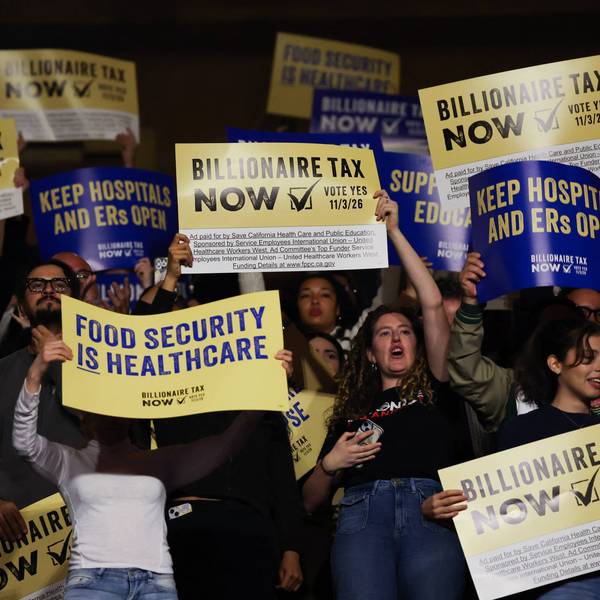

The Need to Tax the Wealthy
The quest to increase taxes on the wealthy is not a gratuitous attack
on upper income households; it is driven by the need to raise more
revenue to run the government. While many deficit hawks been
irresponsible in raising fears of an impending collapse of the American
government, the projected deficits for years following the recovery are
in fact larger than is desirable.
There are areas of American
spending at the federal government level that could be reasonably cut,
but even after we have zeroed out the "waste, fraud, and abuse"
category of federal spending we will still likely need additional
revenue of between 1-2%t of GDP to keep budget deficits in an
acceptable range. That leaves a choice between increasing taxes on the
wealthy or imposing more taxes on the middle class.
The vast
majority of the income gains in the United States over the last three
decades have gone to the richest 5% of the population, largely as a
result of policies that were explicitly designed to redistribute income
upwards. Therefore it is far more appropriate to tax the richest 5%t of
families who have prospered than the broad middle class who have
suffered.
Of course taxes can be designed in a better or worse
manner. The best way to increase taxes on the wealthy, in addition to
allowing the Bush tax cuts to expire, would be to apply a modest
financial transactions tax (FTT).
There is a long history in
both the United States and the rest of the world with FTT. Until 1964,
the United States imposed a tax of 0.12% on new stock issues and 0.04%
on stock trades. Britain still has a tax of 0.25% on each stock sale or
purchase, raising five billion pounds a year. This would be equivalent
to roughly $30 billion a year in the American economy.
Robert
Pollin and I calculated that a scaled set of FTT on stock, futures,
options and other financial instruments could raise approximately $150
billion a year. This would go far towards bringing the long-term budget
deficit down to a manageable level.
A FTT would be hugely
progressive. While many middle income families own stock, their
holdings are dwarfed by the holdings of the wealthy. Furthermore, few
middle income families are active traders. Their intention is to hold
their stock to support their retirement or their kids' education, not
to shuffle it around on a daily or hourly basis. Some mutual funds do
engage in frequent trading. An FTT would encourage investors to move
their money to funds that are less active traders, thereby allowing
them to escape most of the impact of the FTT.
Most of the burden
of the FTT will fall on wealthy individuals who are active traders and
also on the financial industry itself. Either way, the tax will be
overwhelmingly borne by the wealthy. By raising the cost of trading,
the tax will discourage the trading that provides the revenue for the
financial industry. A well-designed tax should also discourage the
creation of exotic assets that may serve little useful purpose, since
it could lead to the tax being paid multiple times. For example, the
holder of an option on a stock would both pay the tax on the purchase
and sale of the option and also on the purchase and sale of the stock
itself, if the option was ever exercised.
While most taxes
impose some economic cost in addition to the revenue raised, a FTT may
actually increase economic efficiency. By discouraging financial
transactions that are entirely rent-seeking in nature, a FTT will
reduce the resources used up by the financial sector, without affecting
at all its ability to serve the productive economy. The reduction in
trading volume will of course reduce liquidity to some extent, but
American financial markets will still be quite liquid. Even with a
0.25% tax on a stock sale or purchase, transaction costs will still
only be raised back to their mid-80s levels. And, the United States had
a large and very liquid stock market in the 80s.
There also is a
powerful element of justice in imposing a FTT in the current situation.
The main reason that the budget situation has deteriorated so much in
the last two years has been the damage caused by the irresponsibility
and greed of the financial industry. In this way, a FTT can be seen as
sort of a user tax, where the industry is effectively forced to pay for
some of the damage caused by its practices, just as we might like to
tax the output of industries that pollute our air or water.
In
short, there is a very good argument for increasing taxes on the
wealthy given the current budget situation. The alternative is taxing
those who are not wealthy. And, there is no better way to tax the
wealthy than to tax their gambling in financial markets. A financial
transactions tax will raise revenue at the same time that it makes the
economy more productive. This is a genuine win-win situation.
An Urgent Message From Our Co-Founder
Dear Common Dreams reader, It’s been nearly 30 years since I co-founded Common Dreams with my late wife, Lina Newhouser. We had the radical notion that journalism should serve the public good, not corporate profits. It was clear to us from the outset what it would take to build such a project. No paid advertisements. No corporate sponsors. No millionaire publisher telling us what to think or do. Many people said we wouldn't last a year, but we proved those doubters wrong. Together with a tremendous team of journalists and dedicated staff, we built an independent media outlet free from the constraints of profits and corporate control. Our mission has always been simple: To inform. To inspire. To ignite change for the common good. Building Common Dreams was not easy. Our survival was never guaranteed. When you take on the most powerful forces—Wall Street greed, fossil fuel industry destruction, Big Tech lobbyists, and uber-rich oligarchs who have spent billions upon billions rigging the economy and democracy in their favor—the only bulwark you have is supporters who believe in your work. But here’s the urgent message from me today. It's never been this bad out there. And it's never been this hard to keep us going. At the very moment Common Dreams is most needed, the threats we face are intensifying. We need your support now more than ever. We don't accept corporate advertising and never will. We don't have a paywall because we don't think people should be blocked from critical news based on their ability to pay. Everything we do is funded by the donations of readers like you. When everyone does the little they can afford, we are strong. But if that support retreats or dries up, so do we. Will you donate now to make sure Common Dreams not only survives but thrives? —Craig Brown, Co-founder |
The quest to increase taxes on the wealthy is not a gratuitous attack
on upper income households; it is driven by the need to raise more
revenue to run the government. While many deficit hawks been
irresponsible in raising fears of an impending collapse of the American
government, the projected deficits for years following the recovery are
in fact larger than is desirable.
There are areas of American
spending at the federal government level that could be reasonably cut,
but even after we have zeroed out the "waste, fraud, and abuse"
category of federal spending we will still likely need additional
revenue of between 1-2%t of GDP to keep budget deficits in an
acceptable range. That leaves a choice between increasing taxes on the
wealthy or imposing more taxes on the middle class.
The vast
majority of the income gains in the United States over the last three
decades have gone to the richest 5% of the population, largely as a
result of policies that were explicitly designed to redistribute income
upwards. Therefore it is far more appropriate to tax the richest 5%t of
families who have prospered than the broad middle class who have
suffered.
Of course taxes can be designed in a better or worse
manner. The best way to increase taxes on the wealthy, in addition to
allowing the Bush tax cuts to expire, would be to apply a modest
financial transactions tax (FTT).
There is a long history in
both the United States and the rest of the world with FTT. Until 1964,
the United States imposed a tax of 0.12% on new stock issues and 0.04%
on stock trades. Britain still has a tax of 0.25% on each stock sale or
purchase, raising five billion pounds a year. This would be equivalent
to roughly $30 billion a year in the American economy.
Robert
Pollin and I calculated that a scaled set of FTT on stock, futures,
options and other financial instruments could raise approximately $150
billion a year. This would go far towards bringing the long-term budget
deficit down to a manageable level.
A FTT would be hugely
progressive. While many middle income families own stock, their
holdings are dwarfed by the holdings of the wealthy. Furthermore, few
middle income families are active traders. Their intention is to hold
their stock to support their retirement or their kids' education, not
to shuffle it around on a daily or hourly basis. Some mutual funds do
engage in frequent trading. An FTT would encourage investors to move
their money to funds that are less active traders, thereby allowing
them to escape most of the impact of the FTT.
Most of the burden
of the FTT will fall on wealthy individuals who are active traders and
also on the financial industry itself. Either way, the tax will be
overwhelmingly borne by the wealthy. By raising the cost of trading,
the tax will discourage the trading that provides the revenue for the
financial industry. A well-designed tax should also discourage the
creation of exotic assets that may serve little useful purpose, since
it could lead to the tax being paid multiple times. For example, the
holder of an option on a stock would both pay the tax on the purchase
and sale of the option and also on the purchase and sale of the stock
itself, if the option was ever exercised.
While most taxes
impose some economic cost in addition to the revenue raised, a FTT may
actually increase economic efficiency. By discouraging financial
transactions that are entirely rent-seeking in nature, a FTT will
reduce the resources used up by the financial sector, without affecting
at all its ability to serve the productive economy. The reduction in
trading volume will of course reduce liquidity to some extent, but
American financial markets will still be quite liquid. Even with a
0.25% tax on a stock sale or purchase, transaction costs will still
only be raised back to their mid-80s levels. And, the United States had
a large and very liquid stock market in the 80s.
There also is a
powerful element of justice in imposing a FTT in the current situation.
The main reason that the budget situation has deteriorated so much in
the last two years has been the damage caused by the irresponsibility
and greed of the financial industry. In this way, a FTT can be seen as
sort of a user tax, where the industry is effectively forced to pay for
some of the damage caused by its practices, just as we might like to
tax the output of industries that pollute our air or water.
In
short, there is a very good argument for increasing taxes on the
wealthy given the current budget situation. The alternative is taxing
those who are not wealthy. And, there is no better way to tax the
wealthy than to tax their gambling in financial markets. A financial
transactions tax will raise revenue at the same time that it makes the
economy more productive. This is a genuine win-win situation.
The quest to increase taxes on the wealthy is not a gratuitous attack
on upper income households; it is driven by the need to raise more
revenue to run the government. While many deficit hawks been
irresponsible in raising fears of an impending collapse of the American
government, the projected deficits for years following the recovery are
in fact larger than is desirable.
There are areas of American
spending at the federal government level that could be reasonably cut,
but even after we have zeroed out the "waste, fraud, and abuse"
category of federal spending we will still likely need additional
revenue of between 1-2%t of GDP to keep budget deficits in an
acceptable range. That leaves a choice between increasing taxes on the
wealthy or imposing more taxes on the middle class.
The vast
majority of the income gains in the United States over the last three
decades have gone to the richest 5% of the population, largely as a
result of policies that were explicitly designed to redistribute income
upwards. Therefore it is far more appropriate to tax the richest 5%t of
families who have prospered than the broad middle class who have
suffered.
Of course taxes can be designed in a better or worse
manner. The best way to increase taxes on the wealthy, in addition to
allowing the Bush tax cuts to expire, would be to apply a modest
financial transactions tax (FTT).
There is a long history in
both the United States and the rest of the world with FTT. Until 1964,
the United States imposed a tax of 0.12% on new stock issues and 0.04%
on stock trades. Britain still has a tax of 0.25% on each stock sale or
purchase, raising five billion pounds a year. This would be equivalent
to roughly $30 billion a year in the American economy.
Robert
Pollin and I calculated that a scaled set of FTT on stock, futures,
options and other financial instruments could raise approximately $150
billion a year. This would go far towards bringing the long-term budget
deficit down to a manageable level.
A FTT would be hugely
progressive. While many middle income families own stock, their
holdings are dwarfed by the holdings of the wealthy. Furthermore, few
middle income families are active traders. Their intention is to hold
their stock to support their retirement or their kids' education, not
to shuffle it around on a daily or hourly basis. Some mutual funds do
engage in frequent trading. An FTT would encourage investors to move
their money to funds that are less active traders, thereby allowing
them to escape most of the impact of the FTT.
Most of the burden
of the FTT will fall on wealthy individuals who are active traders and
also on the financial industry itself. Either way, the tax will be
overwhelmingly borne by the wealthy. By raising the cost of trading,
the tax will discourage the trading that provides the revenue for the
financial industry. A well-designed tax should also discourage the
creation of exotic assets that may serve little useful purpose, since
it could lead to the tax being paid multiple times. For example, the
holder of an option on a stock would both pay the tax on the purchase
and sale of the option and also on the purchase and sale of the stock
itself, if the option was ever exercised.
While most taxes
impose some economic cost in addition to the revenue raised, a FTT may
actually increase economic efficiency. By discouraging financial
transactions that are entirely rent-seeking in nature, a FTT will
reduce the resources used up by the financial sector, without affecting
at all its ability to serve the productive economy. The reduction in
trading volume will of course reduce liquidity to some extent, but
American financial markets will still be quite liquid. Even with a
0.25% tax on a stock sale or purchase, transaction costs will still
only be raised back to their mid-80s levels. And, the United States had
a large and very liquid stock market in the 80s.
There also is a
powerful element of justice in imposing a FTT in the current situation.
The main reason that the budget situation has deteriorated so much in
the last two years has been the damage caused by the irresponsibility
and greed of the financial industry. In this way, a FTT can be seen as
sort of a user tax, where the industry is effectively forced to pay for
some of the damage caused by its practices, just as we might like to
tax the output of industries that pollute our air or water.
In
short, there is a very good argument for increasing taxes on the
wealthy given the current budget situation. The alternative is taxing
those who are not wealthy. And, there is no better way to tax the
wealthy than to tax their gambling in financial markets. A financial
transactions tax will raise revenue at the same time that it makes the
economy more productive. This is a genuine win-win situation.