
US Economy: The Worst Is Yet to Come
Since the U.S. economy showed positive growth for the last quarter, some commentators in the business press are saying that we are not necessarily going to have a recession, or that if there is one it will be mild. This is a bit like the proverbial story of the man who jumped out of a window 60 floors up, and then said "so far, so good," as he passed the 30th floor.
The United States accumulated a massive, $8 trillion housing bubble during the decade from 1996-2006. Only about 40 percent of that bubble has now deflated. House prices are still falling at a 20 percent annual rate (over the last quarter). This means that the worst is yet to come, including another wave of mortgage defaults and write-downs. Even homeowners who are not in trouble will borrow increasingly less against their homes, reducing their spending.
President Bush says we are not in a recession. One commonly-used definition of a recession is two consecutive quarters of declining output (GDP). The first quarter of 2008 came in at 0.6 percent, although it would have been negative if not for inventory accumulation. So by this definition we cannot say with certainty that the recession has started, although it could well have started this quarter. Of course, for most Americans it has felt like a recession hit some time ago, with real wages flat since the end of 2002, and household income not growing for most of the six-and-a-half year economic expansion.
The National Bureau of Economic Research will eventually decide on the official onset of the recession, but even its definition is arbitrary. All the indicators of a serious recession are swirling around us. The economy has lost jobs for four months in a row, which has never happened without a recession. Consumer confidence has dropped to a 28 year low -- a level not seen since Jimmy Carter was president. Home foreclosure filings are up 65 percent over last year. And now commercial real estate prices are heading south, dropping 6.2 percent in the first quarter.
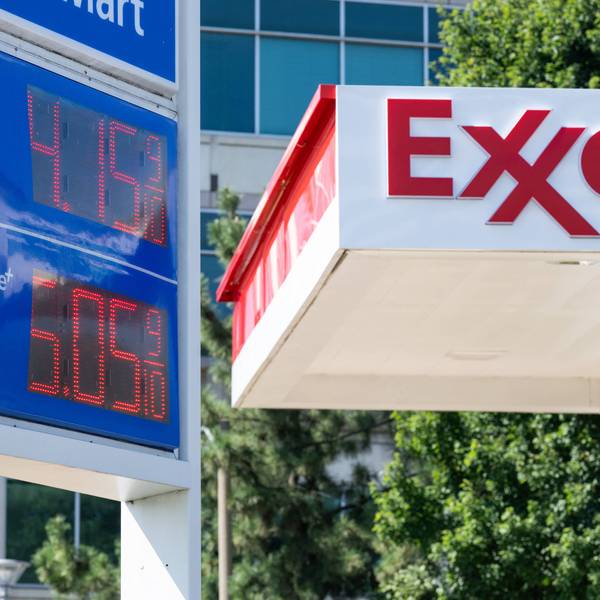
With oil prices hitting record highs, and the Fed beginning to worry more about inflation, more restrictive lending practices and other fallout from the credit crunch, the near-term economic future looks even dimmer.
Some look to exports to lead the recovery, but these are only 11 percent of GDP, and consumption is about 70 percent. Still, the fall in the dollar over the last six years is helping -- making our exports more competitive and reducing the subsidy that we have been giving to imports for many years. In a sign of how economic illiteracy prevails in the United States, most people (thanks largely to what they hear and read in the media) see the dollar's decline as bad economic news.
We are facing the prospect of millions losing their homes, their jobs, their retirement savings, their health insurance, and their livelihoods.
This serious economic situation greatly raises the stakes of the 2008 election. What will the government do to help the victims of economic mismanagement, to provide health insurance, and to restart the economy? Is it really more important to spend billions each week on the occupation of Iraq?
So far the government hasn't done much. The stimulus package now taking effect, at about one percent of GDP and much of it likely to be saved, is quite small. The major legislation that Congress is considering for the housing crisis would mainly bailout lenders and investors while doing little for most underwater homeowners.
The voice of the people has yet to be heard on these questions in the halls of power. It had better get a lot louder, soon.
An Urgent Message From Our Co-Founder
Dear Common Dreams reader, It’s been nearly 30 years since I co-founded Common Dreams with my late wife, Lina Newhouser. We had the radical notion that journalism should serve the public good, not corporate profits. It was clear to us from the outset what it would take to build such a project. No paid advertisements. No corporate sponsors. No millionaire publisher telling us what to think or do. Many people said we wouldn't last a year, but we proved those doubters wrong. Together with a tremendous team of journalists and dedicated staff, we built an independent media outlet free from the constraints of profits and corporate control. Our mission has always been simple: To inform. To inspire. To ignite change for the common good. Building Common Dreams was not easy. Our survival was never guaranteed. When you take on the most powerful forces—Wall Street greed, fossil fuel industry destruction, Big Tech lobbyists, and uber-rich oligarchs who have spent billions upon billions rigging the economy and democracy in their favor—the only bulwark you have is supporters who believe in your work. But here’s the urgent message from me today. It's never been this bad out there. And it's never been this hard to keep us going. At the very moment Common Dreams is most needed, the threats we face are intensifying. We need your support now more than ever. We don't accept corporate advertising and never will. We don't have a paywall because we don't think people should be blocked from critical news based on their ability to pay. Everything we do is funded by the donations of readers like you. When everyone does the little they can afford, we are strong. But if that support retreats or dries up, so do we. Will you donate now to make sure Common Dreams not only survives but thrives? —Craig Brown, Co-founder |
Since the U.S. economy showed positive growth for the last quarter, some commentators in the business press are saying that we are not necessarily going to have a recession, or that if there is one it will be mild. This is a bit like the proverbial story of the man who jumped out of a window 60 floors up, and then said "so far, so good," as he passed the 30th floor.
The United States accumulated a massive, $8 trillion housing bubble during the decade from 1996-2006. Only about 40 percent of that bubble has now deflated. House prices are still falling at a 20 percent annual rate (over the last quarter). This means that the worst is yet to come, including another wave of mortgage defaults and write-downs. Even homeowners who are not in trouble will borrow increasingly less against their homes, reducing their spending.
President Bush says we are not in a recession. One commonly-used definition of a recession is two consecutive quarters of declining output (GDP). The first quarter of 2008 came in at 0.6 percent, although it would have been negative if not for inventory accumulation. So by this definition we cannot say with certainty that the recession has started, although it could well have started this quarter. Of course, for most Americans it has felt like a recession hit some time ago, with real wages flat since the end of 2002, and household income not growing for most of the six-and-a-half year economic expansion.
The National Bureau of Economic Research will eventually decide on the official onset of the recession, but even its definition is arbitrary. All the indicators of a serious recession are swirling around us. The economy has lost jobs for four months in a row, which has never happened without a recession. Consumer confidence has dropped to a 28 year low -- a level not seen since Jimmy Carter was president. Home foreclosure filings are up 65 percent over last year. And now commercial real estate prices are heading south, dropping 6.2 percent in the first quarter.
With oil prices hitting record highs, and the Fed beginning to worry more about inflation, more restrictive lending practices and other fallout from the credit crunch, the near-term economic future looks even dimmer.
Some look to exports to lead the recovery, but these are only 11 percent of GDP, and consumption is about 70 percent. Still, the fall in the dollar over the last six years is helping -- making our exports more competitive and reducing the subsidy that we have been giving to imports for many years. In a sign of how economic illiteracy prevails in the United States, most people (thanks largely to what they hear and read in the media) see the dollar's decline as bad economic news.
We are facing the prospect of millions losing their homes, their jobs, their retirement savings, their health insurance, and their livelihoods.
This serious economic situation greatly raises the stakes of the 2008 election. What will the government do to help the victims of economic mismanagement, to provide health insurance, and to restart the economy? Is it really more important to spend billions each week on the occupation of Iraq?
So far the government hasn't done much. The stimulus package now taking effect, at about one percent of GDP and much of it likely to be saved, is quite small. The major legislation that Congress is considering for the housing crisis would mainly bailout lenders and investors while doing little for most underwater homeowners.
The voice of the people has yet to be heard on these questions in the halls of power. It had better get a lot louder, soon.
Since the U.S. economy showed positive growth for the last quarter, some commentators in the business press are saying that we are not necessarily going to have a recession, or that if there is one it will be mild. This is a bit like the proverbial story of the man who jumped out of a window 60 floors up, and then said "so far, so good," as he passed the 30th floor.
The United States accumulated a massive, $8 trillion housing bubble during the decade from 1996-2006. Only about 40 percent of that bubble has now deflated. House prices are still falling at a 20 percent annual rate (over the last quarter). This means that the worst is yet to come, including another wave of mortgage defaults and write-downs. Even homeowners who are not in trouble will borrow increasingly less against their homes, reducing their spending.
President Bush says we are not in a recession. One commonly-used definition of a recession is two consecutive quarters of declining output (GDP). The first quarter of 2008 came in at 0.6 percent, although it would have been negative if not for inventory accumulation. So by this definition we cannot say with certainty that the recession has started, although it could well have started this quarter. Of course, for most Americans it has felt like a recession hit some time ago, with real wages flat since the end of 2002, and household income not growing for most of the six-and-a-half year economic expansion.
The National Bureau of Economic Research will eventually decide on the official onset of the recession, but even its definition is arbitrary. All the indicators of a serious recession are swirling around us. The economy has lost jobs for four months in a row, which has never happened without a recession. Consumer confidence has dropped to a 28 year low -- a level not seen since Jimmy Carter was president. Home foreclosure filings are up 65 percent over last year. And now commercial real estate prices are heading south, dropping 6.2 percent in the first quarter.
With oil prices hitting record highs, and the Fed beginning to worry more about inflation, more restrictive lending practices and other fallout from the credit crunch, the near-term economic future looks even dimmer.
Some look to exports to lead the recovery, but these are only 11 percent of GDP, and consumption is about 70 percent. Still, the fall in the dollar over the last six years is helping -- making our exports more competitive and reducing the subsidy that we have been giving to imports for many years. In a sign of how economic illiteracy prevails in the United States, most people (thanks largely to what they hear and read in the media) see the dollar's decline as bad economic news.
We are facing the prospect of millions losing their homes, their jobs, their retirement savings, their health insurance, and their livelihoods.
This serious economic situation greatly raises the stakes of the 2008 election. What will the government do to help the victims of economic mismanagement, to provide health insurance, and to restart the economy? Is it really more important to spend billions each week on the occupation of Iraq?
So far the government hasn't done much. The stimulus package now taking effect, at about one percent of GDP and much of it likely to be saved, is quite small. The major legislation that Congress is considering for the housing crisis would mainly bailout lenders and investors while doing little for most underwater homeowners.
The voice of the people has yet to be heard on these questions in the halls of power. It had better get a lot louder, soon.