The Threat of Hope in Latin America
When Manuel Rozental got home one night last month, friends told him two strange men had been asking questions about him. In this close-knit indigenous community in southwestern Colombia ringed by soldiers, right-wing paramilitaries and left-wing guerrillas, strangers asking questions about you is never a good thing.
The Association of Indigenous Councils of Northern Cauca, which leads a political movement that is autonomous from all those armed forces, held an emergency meeting. They decided that Rozental, their communications coordinator, who had been instrumental in campaigns for agrarian reform and against a Free Trade Agreement with the United States, had to get out of the country...fast.
They were certain that those strangers had been sent to kill Rozental...the only question was, by whom? The US-backed national government, which notoriously uses right-wing paramilitaries to do its dirty work? Or was it the Fuerzas Armadas Revolucionarias de Colombia (FARC), Latin America's oldest Marxist guerrilla army, which does its dirty work all on its own? Oddly, both were distinct possibilities. Despite being on opposing sides of a forty-one-year civil war, the Uribe government and the FARC wholeheartedly agree that life would be infinitely simpler without Cauca's increasingly powerful indigenous movement.
Prominent indigenous leaders in northern Cauca have been kidnapped or assassinated by the FARC, which seeks to be the exclusive voice of Colombia's poor. And indigenous authorities had been informed that the FARC wanted Rozental dead. For months rumors had been circulated that he was the worst thing you can be in the books of a left-wing guerrilla movement: a CIA agent. But that doesn't mean the strangers were FARC assassins, because there had been other rumors too, spread through the media by government officials. They held that Rozental was the worst thing you can be in the books of a right-wing, Bush-bankrolled politician: "an international terrorist."
On October 27 the Indigenous Council, representing the roughly 110,000 Nasa Indians in the region, issued an angry communique "Manuel is no terrorist. He is no paramilitary. He is no agent of the CIA. He is a part of our community who must not be silenced by bullets." The Nasa leaders say they know why Rozental, now living in exile in Canada, has come under threat. It is the same reason that this past April two peaceful indigenous villages in Northern Cauca were turned into war zones after the FARC attacked police posts in the town centers, giving the government an excuse for a full-scale occupation.
All of this is happening because the indigenous movement is on a roll. In the past year the Nasa of northern Cauca have held the largest antigovernment protests in recent Colombian history and organized local referendums against free trade that had a turnout of 70 percent, higher than any official election (with a near unanimous "no" result). And in September thousands took over two large haciendas, forcing the government to make good on a long-promised land settlement. All these actions unfolded under the protection of the Nasa's unique Indigenous Guard, who patrol their territory armed only with sticks.
In a country ruled by M-16s, AK-47s, pipe bombs and Black Hawk helicopters, this combination of militancy and nonviolence is unheard of. And that is the quiet miracle the Nasa have accomplished: They revived the hope killed when paramilitaries systematically slaughtered left-wing politicians, including dozens of elected officials and two Union Patritica presidential candidates. At the end of the bloody campaign in the early nineties, the FARC understandably concluded that engaging in open politics was a suicide mission. The key to the Nasa's success, Rozental says, is that they are not trying to take over state institutions, which "have lost all legitimacy." They are instead "building a new legitimacy based on an indigenous and popular mandate that has grown out of participatory congresses, assemblies and elections. Our process and our alternative institutions have put the official democracy to shame. That's why the government is so angry."
The Nasa have shattered the illusion, cherished by both sides, that Colombia's conflict can be reduced to a binary war. Their free-trade referendums have been imitated by nonindigenous unions, students, farmers and local politicians nationwide; their land takeovers have inspired other indigenous and peasant groups to do the same. A year ago 60,000 marched demanding peace and autonomy; last month those same demands were echoed by simultaneous marches in thirty-two of Colombia's provinces. Each action, explains Hector Mondragon, well-known Colombian economist and activist, "has had a multiplier effect."
Across Latin America a similarly explosive multiplier effect is under way, with indigenous movements redrawing the continent's political map, demanding not just "rights" but a reinvention of the state along deeply democratic lines. In Bolivia and Ecuador, indigenous groups have shown they have the power to topple governments. In Argentina, when mass protests ousted five presidents in 2001 and '02, the words of Mexico's Zapatistas were shouted on the streets of Buenos Aires. At this writing, George W. Bush is on his way to Argentina, where he will discover that the spirit of that revolt is alive and well.
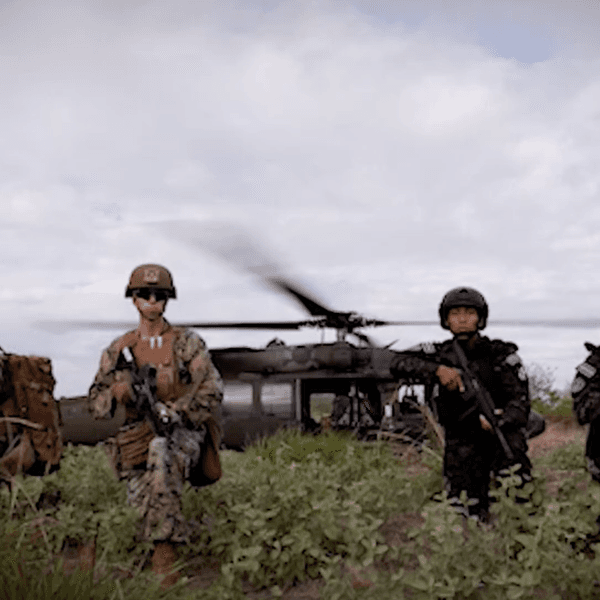
As in northern Cauca, governments attempt to brand these indigenous-inspired movements as terrorist. And not surprisingly Washington is offering military and ideological assistance: There has been a marked increase in US troop activity near the Bolivian border in Paraguay, and a recent study by the National Intelligence Council warned that indigenous movements, although peaceful now, could "consider more drastic means" in the future.
Indigenous movements are indeed a threat to the exhausted free-trade policies Bush is currently hawking, with ever fewer buyers, across Latin America. Their power comes not from terror but from a new terror-resistant strain of hope, one so sturdy it can take root in the midst of Colombia's seemingly hopeless civil war. And if it can grow there, it can take root anywhere.
An Urgent Message From Our Co-Founder
Dear Common Dreams reader, It’s been nearly 30 years since I co-founded Common Dreams with my late wife, Lina Newhouser. We had the radical notion that journalism should serve the public good, not corporate profits. It was clear to us from the outset what it would take to build such a project. No paid advertisements. No corporate sponsors. No millionaire publisher telling us what to think or do. Many people said we wouldn't last a year, but we proved those doubters wrong. Together with a tremendous team of journalists and dedicated staff, we built an independent media outlet free from the constraints of profits and corporate control. Our mission has always been simple: To inform. To inspire. To ignite change for the common good. Building Common Dreams was not easy. Our survival was never guaranteed. When you take on the most powerful forces—Wall Street greed, fossil fuel industry destruction, Big Tech lobbyists, and uber-rich oligarchs who have spent billions upon billions rigging the economy and democracy in their favor—the only bulwark you have is supporters who believe in your work. But here’s the urgent message from me today. It's never been this bad out there. And it's never been this hard to keep us going. At the very moment Common Dreams is most needed, the threats we face are intensifying. We need your support now more than ever. We don't accept corporate advertising and never will. We don't have a paywall because we don't think people should be blocked from critical news based on their ability to pay. Everything we do is funded by the donations of readers like you. When everyone does the little they can afford, we are strong. But if that support retreats or dries up, so do we. Will you donate now to make sure Common Dreams not only survives but thrives? —Craig Brown, Co-founder |
When Manuel Rozental got home one night last month, friends told him two strange men had been asking questions about him. In this close-knit indigenous community in southwestern Colombia ringed by soldiers, right-wing paramilitaries and left-wing guerrillas, strangers asking questions about you is never a good thing.
The Association of Indigenous Councils of Northern Cauca, which leads a political movement that is autonomous from all those armed forces, held an emergency meeting. They decided that Rozental, their communications coordinator, who had been instrumental in campaigns for agrarian reform and against a Free Trade Agreement with the United States, had to get out of the country...fast.
They were certain that those strangers had been sent to kill Rozental...the only question was, by whom? The US-backed national government, which notoriously uses right-wing paramilitaries to do its dirty work? Or was it the Fuerzas Armadas Revolucionarias de Colombia (FARC), Latin America's oldest Marxist guerrilla army, which does its dirty work all on its own? Oddly, both were distinct possibilities. Despite being on opposing sides of a forty-one-year civil war, the Uribe government and the FARC wholeheartedly agree that life would be infinitely simpler without Cauca's increasingly powerful indigenous movement.
Prominent indigenous leaders in northern Cauca have been kidnapped or assassinated by the FARC, which seeks to be the exclusive voice of Colombia's poor. And indigenous authorities had been informed that the FARC wanted Rozental dead. For months rumors had been circulated that he was the worst thing you can be in the books of a left-wing guerrilla movement: a CIA agent. But that doesn't mean the strangers were FARC assassins, because there had been other rumors too, spread through the media by government officials. They held that Rozental was the worst thing you can be in the books of a right-wing, Bush-bankrolled politician: "an international terrorist."
On October 27 the Indigenous Council, representing the roughly 110,000 Nasa Indians in the region, issued an angry communique "Manuel is no terrorist. He is no paramilitary. He is no agent of the CIA. He is a part of our community who must not be silenced by bullets." The Nasa leaders say they know why Rozental, now living in exile in Canada, has come under threat. It is the same reason that this past April two peaceful indigenous villages in Northern Cauca were turned into war zones after the FARC attacked police posts in the town centers, giving the government an excuse for a full-scale occupation.
All of this is happening because the indigenous movement is on a roll. In the past year the Nasa of northern Cauca have held the largest antigovernment protests in recent Colombian history and organized local referendums against free trade that had a turnout of 70 percent, higher than any official election (with a near unanimous "no" result). And in September thousands took over two large haciendas, forcing the government to make good on a long-promised land settlement. All these actions unfolded under the protection of the Nasa's unique Indigenous Guard, who patrol their territory armed only with sticks.
In a country ruled by M-16s, AK-47s, pipe bombs and Black Hawk helicopters, this combination of militancy and nonviolence is unheard of. And that is the quiet miracle the Nasa have accomplished: They revived the hope killed when paramilitaries systematically slaughtered left-wing politicians, including dozens of elected officials and two Union Patritica presidential candidates. At the end of the bloody campaign in the early nineties, the FARC understandably concluded that engaging in open politics was a suicide mission. The key to the Nasa's success, Rozental says, is that they are not trying to take over state institutions, which "have lost all legitimacy." They are instead "building a new legitimacy based on an indigenous and popular mandate that has grown out of participatory congresses, assemblies and elections. Our process and our alternative institutions have put the official democracy to shame. That's why the government is so angry."
The Nasa have shattered the illusion, cherished by both sides, that Colombia's conflict can be reduced to a binary war. Their free-trade referendums have been imitated by nonindigenous unions, students, farmers and local politicians nationwide; their land takeovers have inspired other indigenous and peasant groups to do the same. A year ago 60,000 marched demanding peace and autonomy; last month those same demands were echoed by simultaneous marches in thirty-two of Colombia's provinces. Each action, explains Hector Mondragon, well-known Colombian economist and activist, "has had a multiplier effect."
Across Latin America a similarly explosive multiplier effect is under way, with indigenous movements redrawing the continent's political map, demanding not just "rights" but a reinvention of the state along deeply democratic lines. In Bolivia and Ecuador, indigenous groups have shown they have the power to topple governments. In Argentina, when mass protests ousted five presidents in 2001 and '02, the words of Mexico's Zapatistas were shouted on the streets of Buenos Aires. At this writing, George W. Bush is on his way to Argentina, where he will discover that the spirit of that revolt is alive and well.
As in northern Cauca, governments attempt to brand these indigenous-inspired movements as terrorist. And not surprisingly Washington is offering military and ideological assistance: There has been a marked increase in US troop activity near the Bolivian border in Paraguay, and a recent study by the National Intelligence Council warned that indigenous movements, although peaceful now, could "consider more drastic means" in the future.
Indigenous movements are indeed a threat to the exhausted free-trade policies Bush is currently hawking, with ever fewer buyers, across Latin America. Their power comes not from terror but from a new terror-resistant strain of hope, one so sturdy it can take root in the midst of Colombia's seemingly hopeless civil war. And if it can grow there, it can take root anywhere.
When Manuel Rozental got home one night last month, friends told him two strange men had been asking questions about him. In this close-knit indigenous community in southwestern Colombia ringed by soldiers, right-wing paramilitaries and left-wing guerrillas, strangers asking questions about you is never a good thing.
The Association of Indigenous Councils of Northern Cauca, which leads a political movement that is autonomous from all those armed forces, held an emergency meeting. They decided that Rozental, their communications coordinator, who had been instrumental in campaigns for agrarian reform and against a Free Trade Agreement with the United States, had to get out of the country...fast.
They were certain that those strangers had been sent to kill Rozental...the only question was, by whom? The US-backed national government, which notoriously uses right-wing paramilitaries to do its dirty work? Or was it the Fuerzas Armadas Revolucionarias de Colombia (FARC), Latin America's oldest Marxist guerrilla army, which does its dirty work all on its own? Oddly, both were distinct possibilities. Despite being on opposing sides of a forty-one-year civil war, the Uribe government and the FARC wholeheartedly agree that life would be infinitely simpler without Cauca's increasingly powerful indigenous movement.
Prominent indigenous leaders in northern Cauca have been kidnapped or assassinated by the FARC, which seeks to be the exclusive voice of Colombia's poor. And indigenous authorities had been informed that the FARC wanted Rozental dead. For months rumors had been circulated that he was the worst thing you can be in the books of a left-wing guerrilla movement: a CIA agent. But that doesn't mean the strangers were FARC assassins, because there had been other rumors too, spread through the media by government officials. They held that Rozental was the worst thing you can be in the books of a right-wing, Bush-bankrolled politician: "an international terrorist."
On October 27 the Indigenous Council, representing the roughly 110,000 Nasa Indians in the region, issued an angry communique "Manuel is no terrorist. He is no paramilitary. He is no agent of the CIA. He is a part of our community who must not be silenced by bullets." The Nasa leaders say they know why Rozental, now living in exile in Canada, has come under threat. It is the same reason that this past April two peaceful indigenous villages in Northern Cauca were turned into war zones after the FARC attacked police posts in the town centers, giving the government an excuse for a full-scale occupation.
All of this is happening because the indigenous movement is on a roll. In the past year the Nasa of northern Cauca have held the largest antigovernment protests in recent Colombian history and organized local referendums against free trade that had a turnout of 70 percent, higher than any official election (with a near unanimous "no" result). And in September thousands took over two large haciendas, forcing the government to make good on a long-promised land settlement. All these actions unfolded under the protection of the Nasa's unique Indigenous Guard, who patrol their territory armed only with sticks.
In a country ruled by M-16s, AK-47s, pipe bombs and Black Hawk helicopters, this combination of militancy and nonviolence is unheard of. And that is the quiet miracle the Nasa have accomplished: They revived the hope killed when paramilitaries systematically slaughtered left-wing politicians, including dozens of elected officials and two Union Patritica presidential candidates. At the end of the bloody campaign in the early nineties, the FARC understandably concluded that engaging in open politics was a suicide mission. The key to the Nasa's success, Rozental says, is that they are not trying to take over state institutions, which "have lost all legitimacy." They are instead "building a new legitimacy based on an indigenous and popular mandate that has grown out of participatory congresses, assemblies and elections. Our process and our alternative institutions have put the official democracy to shame. That's why the government is so angry."
The Nasa have shattered the illusion, cherished by both sides, that Colombia's conflict can be reduced to a binary war. Their free-trade referendums have been imitated by nonindigenous unions, students, farmers and local politicians nationwide; their land takeovers have inspired other indigenous and peasant groups to do the same. A year ago 60,000 marched demanding peace and autonomy; last month those same demands were echoed by simultaneous marches in thirty-two of Colombia's provinces. Each action, explains Hector Mondragon, well-known Colombian economist and activist, "has had a multiplier effect."
Across Latin America a similarly explosive multiplier effect is under way, with indigenous movements redrawing the continent's political map, demanding not just "rights" but a reinvention of the state along deeply democratic lines. In Bolivia and Ecuador, indigenous groups have shown they have the power to topple governments. In Argentina, when mass protests ousted five presidents in 2001 and '02, the words of Mexico's Zapatistas were shouted on the streets of Buenos Aires. At this writing, George W. Bush is on his way to Argentina, where he will discover that the spirit of that revolt is alive and well.
As in northern Cauca, governments attempt to brand these indigenous-inspired movements as terrorist. And not surprisingly Washington is offering military and ideological assistance: There has been a marked increase in US troop activity near the Bolivian border in Paraguay, and a recent study by the National Intelligence Council warned that indigenous movements, although peaceful now, could "consider more drastic means" in the future.
Indigenous movements are indeed a threat to the exhausted free-trade policies Bush is currently hawking, with ever fewer buyers, across Latin America. Their power comes not from terror but from a new terror-resistant strain of hope, one so sturdy it can take root in the midst of Colombia's seemingly hopeless civil war. And if it can grow there, it can take root anywhere.