

SUBSCRIBE TO OUR FREE NEWSLETTER
Daily news & progressive opinion—funded by the people, not the corporations—delivered straight to your inbox.
5
#000000
#FFFFFF
To donate by check, phone, or other method, see our More Ways to Give page.
Daily news & progressive opinion—funded by the people, not the corporations—delivered straight to your inbox.
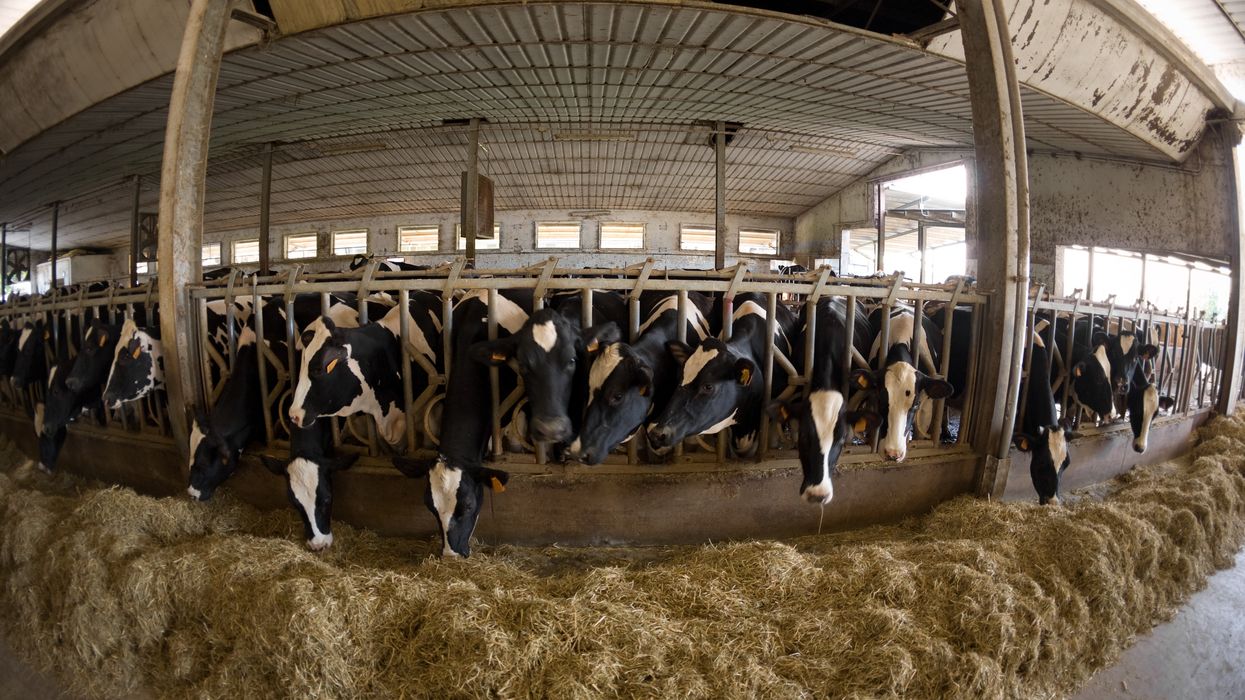
There are better responses to the climate crisis that also treat rural people and our land, air, and water with respect.
There has been much media hype about manure digesters and how they will “solve” climate change by capturing and burning methane from confined animal feeding operations or CAFOs—aka factory farms. Billions in taxpayer handouts and other incentives through pollution offset trading markets are encouraging factory farms to expand and profit from their waste stream. Some economists now speculate that factory farms are earning more from making methane than milk!
A recent Friends of the Earth and Socially Responsible Agriculture Project report
goes even further, suggesting that if the U.S. really wanted to reduce it’s agricultural contribution towards greenhouse gases, it would make more sense for regulators to phase out or split up CAFOs and shift taxpayer support towards smaller grass-based livestock operations instead.
Sadly, the misguided notion of manure digesters as a “solution” to the climate crisis is nothing new. Back in 2009 at the United Nations Climate Change Conference in Copenhagen, I almost fell off my chair when then-U.S. Department of Agriculture (USDA) Secretary Tom Vilsack announced that manure digesters on factory farms were going to be a key part of former President Barack Obama’s climate change agenda. He later admitted that less than 10% of dairy farms (ie CAFOs) would be large enough to qualify for these USDA digester grants—another example of how federal policies support industrial agribusiness to the detriment of smaller farmers.
Intentional factory farm production and subsequent “climate smart” combustion of methane is not only oxymoronic, but will undermine the future prospect of life here on Earth.
This manure digester building binge has ramped up even more under President Joe Biden—with Vilsack once again back at the helm of the USDA. The latest Instititue for Agriculture and Trade Policy report critiquing the Environmental Quality Incentive Program (EQIP) reveals just how much of this popular USDA effort has been hijacked by a small elite number of CAFOs, to the detriment of the majority of farmers who have their EQIP applications declined. Encouraging livestock grazing is NOT front and center among “climate smart” practices promoted under EQIP and the Natural Resources Conservation Service—that star role is held by waste lagoons and manure digesters.
A typical CAFO digester for 2000 dairy cows costs over $2 million, with EQIP covering up to $400,000. But there are many other funds available, such as through the Rural Energy for America Program (REAP), which bankrolled $78 million for digesters in the last decade. The recent Inflation Reduction Act (IRA) added another $250 million to EQIP, along with another $2 billion for REAP, including a brand new 30% tax credit for all new digesters built.
The current trough of taxpayer funding for the manure methane industrial complex is long and deep, but there is even more potential revenue to be milked. In Wisconsin alone there are now 15 manure digesters getting money for their methane offsetting of 1.3 million carbon credits available through the California Cap and Trade System. How does this work? Build a methane digester in Wisconsin, claim that by burning off this really bad methane it is equal to reducing the impact of so many tons of carbon dioxide emitted in California, and then get a bonus check for that hard offset work! The value of one carbon credit on the California market as of April 2023 was $28.66.
The problem with this taxpayer mandated and subsidized “cap and trade” system is that it does not necessarily reduce overall greenhouse gas emissions—it just moves pollution around (and the atmosphere doesn’t care about your zipcode). Worse yet, if your offset claims prove to be bogus and corrupt, the climate crisis ends up much worse. This was exactly the case when Midwest activists alerted California officials that some of the Wisconsin CAFOs claiming methane offset credits were really engaged in wire fraud, since their digesters were either broken or not effectively functioning to capture methane as claimed. More details can be found in the SRAP expose of this 21st century Ponzi style scheme. Along with many allies, Family Farm Defenders has been diligently opposing such corporatized pollution trading mechanisms through the Alliance Against Farm Bill Offsets, whether they involve offsets for carbon sequestration pipelines, manure digesters, or “no-till” GMO monocultures.
My gut reaction 15 years ago to Vilsack’s manure digester panacea to global climate change remains true today—why pay to fix a problem that doesn’t even need to exist? Countless studies have shown that the most cost effective, eco-friendly, and often quite profitable form of animal husbandry—including dairying—is managed rotational grazing. If animals are just allowed to enjoy pasture outside (as they prefer and are meant to do by mother nature) and then also allowed to deposit their manure in a healthy perennial ecosystem, one does not end up with a methane crisis. It is only when one decides to confine thousands of animals in a warehouse, offer them nothing but TMR to consume (with dubious components like feather meal and ethanol leftovers), liquefy millions of gallons of their manure, and then store it in massive anaerobic lagoons, that one creates a pollutant 80+ times worse than carbon dioxide.
Sure, one can always capture and burn the methane that doesn’t leak from a CAFO digester to make electricity or run a vehicle (which means more greenhouse gas pollution), but you still have the leftover sludge (aka digestate) to deal with. This is loaded with nitrates, phosphorous, and—depending upon what other waste gets dumped into the digester—PFAS, pharmaceuticals, agrochemicals, heavy metals—which will then seep into the ground and became part of runoff, contributing to tainted wells, beach closures, toxic fish, the list goes on and on. Besides methane, there are other toxic CAFO gases—such as hydrogen sulfide, ammonia, and nitrous oxide—that cause chronic headaches for neighboring residents and hurt anyone else downwind.
And let’s not forget the ever present danger of methane explosions and lagoon ruptures. When a massive lagoon leaked on a hog factory farm in Wayne County, North Carolina, in May 2022, spilling into the nearby Nahunta Swamp, it was revealed that hundreds of rotting pigs, along with deli meat and discarded hotdogs, were part of the digester feedstock to make the methane being sold to Duke Energy. Closer to home, just ask anyone who lives near Waunakee, Wisconsin, what it was like to have a poorly designed and managed digester both explode and also leak 400,000+ gallons of fresh manure into Lake Mendota about a decade ago. This single disaster set back Yahara Watershed cleanup efforts for years. It would have been so much cheaper, simpler, and less disastrous for Wisconsin state and Dane County taxpayers to have promoted composting instead (which some better CAFOs actually do, without lagoons).
In November 2022 Kari Lydersen wrote a disturbing investigation, chronicling the many risks to farm workers from factory farms and their manure digesters. She tells one story of Bob Baenziger, Jr., retired Army veteran and former offshore oil rig diver, who died in 2021 as a hired contractor trying to fix a broken cable in an Iowa manure digester. Drowning in such a squalid pool is something straight out of Dante’s Inferno. The same year Samuel Antonio Padilla Castro, a Honduran immigrant, was working a 12-hour shift at the Fair Oaks Farm in Indiana when his clothing was caught in manure handling equipment, strangling him to death. His death left behind a widow, three children, and a token $10,500 Occupational Safety and Health Administration fine. Austin Frerick’s profile of the McCloskey family, which owns Fair Oaks Farm, in his new book, Barons, reveals more of the underbelly of this “Dairy Disneyland,” including their role as digester cheerleaders. Another Fair Oaks tourist and digester advocate he mentions is Tom Vilsack.
Our current “get big or get out” farm policy does not have much time or interest in agroecological approaches for healthier food that also ensure food sovereignty. Instead, corporate agribusiness is allowed to manipulate commodity markets—driving out what little competition exists from smaller farmers and local processors. The political allies of the food giants then ensure that taxpayers help underwrite the largest industrialized operations left standing, since they are the easiest to vertically integrate into the dominant oligopoly structure. Is it any surprise to see agribusiness lobbyists and their academic apologists now touting manure digesters as “climate smart” just in time for Earth Day and pushing for pollution trading offset schemes within the 2024 Farm Bill?
Thankfully, there are better responses to the climate crisis that also treat rural people and our land, air, and water with respect. Existing federal initiatives such as the Conservation Reserve Program could be expanded to better direct payments to farmers who are already doing so much responsible land and climate stewardship—without carbon offset peddlers skimming 25% off the top. The EQIP and REAP programs need to be overhauled to severely limit or even eliminate CAFO lagoon and digester grants and earmark more towards smaller grass-based diversified operations instead. This is the gist behind the EQIP Reform Act, introduced by Sen. Cory Booker (D-N.J.) and Rep. Mike Lee (R-Utah) last year as part of the Farm Bill debate.
More generally, factory farms must be treated as a pollution point source, subject to all the monitoring, regulation, and liability required for any other industrial operation. Why should CAFOs evade the common sense oversight that other businesses respect? Defending local control also remains critical. Last year grassroots activists in St. Croix County were able to push back and shut down a massive digester proposal near New Richmond, Wisconsin, being aggressively promoted by Nature Energy, a Shell Oil subsidiary. Thousands of folks recently responded to a statewide action alert successfully demanding that Wisconsin Gov. Tony Evers veto CAFO industry-crafted preemption legislation that would have hamstrung the right to pass ordinances that would restrict their manure digesters and other rural mal-development projects. Democratic direct action can get the goods!
NASA space probes have revealed that there is a massive ocean of liquid methane on Titan, one of the moons circling Saturn. There is also not any life that we know of on Titan… Intentional factory farm production and subsequent “climate smart” combustion of methane is not only oxymoronic, but will undermine the future prospect of life here on Earth. Farmers can feed the world and the cool the planet—without the false promise of manure digesters.
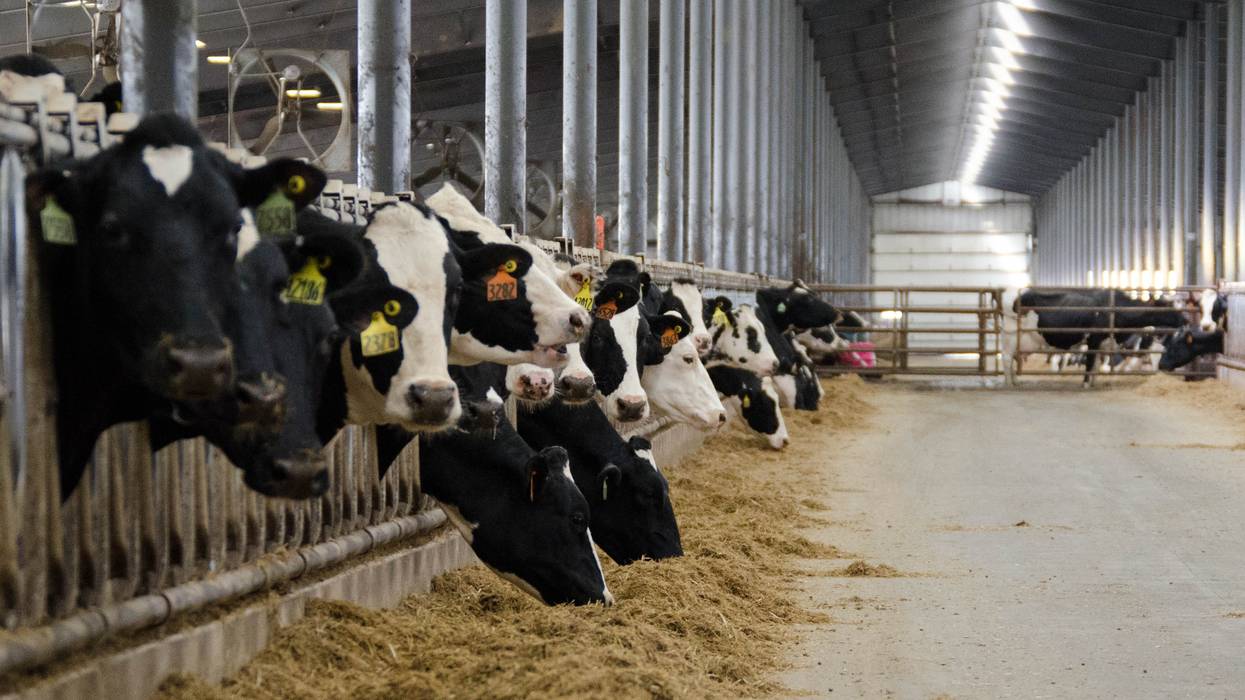
"Secretary Vilsack can't keep his head in the sand anymore, because this letter delivers the message loud and clear," said a Center for Biological Diversity campaigner.
More than 250 advocacy groups, scientists, and other experts on Thursday urged U.S. Secretary of Agriculture Tom Vilsack to "stop disregarding the science on the climate cost of meat and dairy in high-consuming countries like the United States, and advancing the industries that are driving agricultural emissions."
The coalition's letter—spearheaded by the Center for Biological Diversity—came after Vilsack attended the United Nations Climate Change Conference (COP28) last month and was asked if he was hearing about cutting meat consumption as a climate solution.
According to Politico, Vilsack responded that "I don't hear much about that," but "I did hear about the important role that strategies for methane reduction could play in making the current livestock industry more sustainable."
"We have to address our meat-heavy diets now, or the climate emergency will force us to."
The letter pushes back, highlighting that "in addition to numerous panels discussing this topic at COP28, the United States joined more than 150 nations in signing the Emirates Declaration on Sustainable Agriculture, Resilient Food Systems, and Climate Action."
"Furthermore, during the first-ever Food, Agriculture, and Water Day at COP, which you personally attended, the U.N. Food and Agriculture Organization launched a highly publicized roadmap to align food systems with the Paris agreement," the letter adds. "The FAO roadmap specifically identifies the inclusion of environmental considerations in national dietary guidelines as well as the importance of improving school food and public procurement programs as effective government actions."
Despite industry pressure, the meat and dairy sector's contributions to the climate emergency as well as the related crises of the accelerated spread of disease, biodiversity loss, deforestation, and water pollution were documented and acknowledged by scientists, campaigners, and governments long before COP28—which was flooded by lobbyists for not only fossil fuel giants but also Big Ag.
As the letter details:
The Intergovernmental Panel on Climate Change not only identified dietary shifts, including meat reduction, as a vital climate mitigation strategy needed to meet the urgent emissions-reduction targets but emphasized the urgency to act. Research has shown that even if the energy sector immediately became climate-neutral, we still would not be able to achieve the reductions necessary to avoid catastrophic climate change without reducing meat and dairy consumption.
Additionally, the Kunming-Montreal Global Biodiversity Framework for the Conference on Biodiversity reaffirms the need to reduce animal protein under Target 16. Reducing animal protein is specifically named in the International Union for Conservation of Nature's Global Species Action Plan to achieve the Kunming-Montreal goals. Studies show that climate and biodiversity action must be aligned and failing to do so impedes our ability to address either crisis and further threatens food security.
"The science shows sustainable dietary shifts are key in high-consuming nations like the United States. Changes to production alone are not enough," the letter asserts. "The United States must take a leading role in reducing food system emissions with strategies that address both production and consumption of animal-based foods."
The U.S. Department of Agriculture "has repeatedly been urged by scientists (including its own scientific advisory committees), environmental experts, and public health advocates over the past decade to address excessive meat and dairy consumption in food and nutrition policy," the coalition wrote to Vilsack. "Under your leadership, the USDA has instead relied on false solutions such as feed additives, which have minimal impact in reducing emissions and aren't scalable, and biogas, which worsens the problem of pollution and greenhouse gas emissions."
The groups have three key demands for the USDA chief:
"Secretary Vilsack can't keep his head in the sand anymore, because this letter delivers the message loud and clear," said Jennifer Molidor, a senior food campaigner at the Center for Biological Diversity, in a statement. "We have to address our meat-heavy diets now, or the climate emergency will force us to."

"Our government is working tirelessly to pad the multibillion-dollar profits of domestic agribusiness corporations by pushing GE corn," said one U.S. environmental group.
Environmental groups on Tuesday accused the Biden administration of putting the profits of big agribusiness over public health and critical pollinators by attempting to obstruct the Mexican government's ongoing push to ban genetically engineered corn.
"The U.S.'s shameful efforts to strong-arm Mexico into accepting GE corn it has rejected is nothing short of 21st-century imperialism,” Lori Ann Burd, environmental health director at the U.S.-based Center for Biological Diversity. "Our government is working tirelessly to pad the multibillion-dollar profits of domestic agribusiness corporations by pushing GE corn, even though our glyphosate-drenched GE cornfields are playing an outsized role in driving catastrophic declines in vital pollinator populations."
The group's statement came after Mexico issued a new decree earlier this week that scraps the country's original January 2024 deadline to halt imports of GMO corn for livestock feed and industrial use, a move widely seen as a concession to the U.S., which has been pressuring its southern neighbor to drop the ban since Mexican President Andrés Manuel López Obrador (AMLO) first announced it in 2020.
But Mexico—the largest destination for U.S. corn exports—reiterated its intention to prohibit GE corn for human consumption by 2024 in its latest decree. Mexico is also aiming to ban imports and use of glyphosate, a cancer-linked chemical that is often sprayed on genetically engineered corn.
The new decree instructs Mexican authorities to "revoke and refrain from granting permits for the release into the environment in Mexico of genetically modified corn seeds."
Mexican officials have repeatedly argued that GE corn and the associated use of glyphosate pose threats to human health and pollinators, as well as domestic production.
"We have to put the right to life, the right to health, the right to a healthy environment ahead of economic and business [interests]," Víctor Suárez Carrera, Mexico's undersecretary of food and competitiveness, told Reuters in 2021.
Viridiana Lázaro, food and agriculture campaigner at Greenpeace Mexico, said Tuesday that "the ban of GE corn is the first step to transform Mexico's agriculture system from one industrialized, based on pesticides, and dependent on transnational corporations to an agro-ecological system that offers solutions to soil fertility, local pest problems, allows crop diversification, and protects biodiversity and health of farmers and consumers."
"To carry out the gradual substitution of genetically modified corn for animal feed and industrial corn for human consumption, as is stated in the new decree, is a broad challenge and, in order to ensure that it does not remain only on paper, public policies aimed at the agroecological transition must be issued in order to achieve it," Lázaro continued. "Also, we must ensure that glyphosate and GE corn do not improperly end up in dough and tortillas, which studies have demonstrated has happened before."
"The United States has refused to respect Mexico's choice, instead working tirelessly to bully the country into accepting GE corn in order to protect the short-term profits of U.S. agribusiness giants."
The U.S. government claims that Mexico's plans, which have also drawn fierce opposition from industry lobbying groups, would run afoul of provisions in the United States-Mexico-Canada Agreement (USMCA) and harm American farmers. The Biden administration has threatened to take legal action under the USMCA if Mexico doesn't reverse course.
The USMCA entered into force in 2020 and replaced the North American Free Trade Agreement (NAFTA), under which U.S. corn flooded the Mexican market.
In a statement on Tuesday, U.S. Agriculture Secretary Tom Vilsack said he is "disappointed" that Mexico is still pushing ahead with its proposed ban on genetically modified corn. An estimated 90% of U.S. corn production is genetically modified.
"The U.S. believes in and adheres to a science-based, rules-based trading system and remains committed to preventing disruptions to bilateral agricultural trade and economic harm to U.S. and Mexican producers," Vilsack added. "We are carefully reviewing the details of the new decree and intend to work with [the United States Trade Representative] to ensure our science-based, rules-based commitment remains firm."
Tom Haag, president of the National Corn Growers Association, a lobbying group, declared that "singling out corn—our number one ag export to Mexico—and hastening an import ban on numerous food-grade uses makes USMCA a dead letter unless it's enforced."
This week's back-and-forth between the U.S. and Mexico marks a significant escalation in the yearslong trade dispute over the proposed ban on GE corn and glyphosate.
In February 2021, The Guardian reported that "internal government emails reveal Monsanto owner Bayer AG and industry lobbyist CropLife America have been working closely with U.S. officials to pressure Mexico into abandoning its intended ban on glyphosate, a pesticide linked to cancer that is the key ingredient in Monsanto's Roundup weedkillers."
The Center for Biological Diversity noted in a Tuesday press release that "the United States has, for months, exerted heavy pressure on Mexico to accept U.S.-produced corn that is genetically engineered to withstand what would normally be a deadly dose of pesticides."
"Corn's historical role in Mexican diets and culture—and current concerns about the impacts of glyphosate and genetic contamination of Mexico's many varieties of heirloom corn—prompted its leaders to ban GE corn for human consumption and phase out glyphosate," the group added. "The United States has refused to respect Mexico's choice, instead working tirelessly to bully the country into accepting GE corn in order to protect the short-term profits of U.S. agribusiness giants."

"This is great news for the forest, the salmon, the wildlife, and the people who depend on intact ecosystems to support their ways of life and livelihoods," said one advocate.
Indigenous and green groups on Wednesday applauded the Biden administration for reinstating protections for millions of acres of wilderness in Alaska's Tongass National Forest that were lifted during a Trump-era regulatory rollback spree.
The United States Department of Agriculture (USDA) announced Wednesday that it has finalized protections for the Tongass National Forest by restoring "longstanding roadless protections to 9.37 million acres of roadless areas that support the ecological, economic, and cultural values of Southeastern Alaska."
The Roadless Rule was established in 2001 to protect wilderness areas in U.S. national forests from roads and logging. The administration of former President Donald Trump rescinded the rule in 2020 amid a flurry of regulatory rollbacks, prompting a lawsuit from a coalition of Indigenous, conservation, and business organizations. The Biden administration subsequently committed to reviving the Roadless Rule in 2021.
"As our nation's largest national forest and the largest intact temperate rainforest in the world, the Tongass National Forest is key to conserving biodiversity and addressing the climate crisis," U.S. Agriculture Secretary Tom Vilsack said in a statement Wednesday. "Restoring roadless protections listens to the voices of tribal nations and the people of Southeast Alaska while recognizing the importance of fishing and tourism to the region's economy."
According to the advocacy group Defenders of Wildlife:
The Tongass contains rare expanses of pristine old-growth forest and as many as 17,000 miles of creeks, rivers, and lakes. These waters abound with all five species of Pacific salmon, which anchor the economy of Southeast Alaska. Approximately 1 million visitors come from all over the U.S. and internationally each year to see its glaciers, old-growth forests, and abundant wildlife.
The Tongass supports an incredible array of biodiversity and is home to the Alexander Archipelago wolf, brown bears, bald eagles, northern goshawks, and Pacific marten, among others. The Tongass is also one of the world's largest carbon reservoirs, storing the equivalent of about 8% of the carbon stored in all the U.S. forests combined. In addition, a broad coalition of tribal leaders, outdoor recreation businesses, and conservationists in Southeast Alaska have fought to preserve the region's remaining cedar, hemlock, and Sitka spruce trees.
"The restoration of National Roadless Rule protections for the Tongass National Forest is a great first step in honoring the voices of the many tribal governments and tribal citizens who spoke out in favor of Roadless Rule protections for the Tongass," said Naawéiyaa Tagaban, the environmental justice strategy lead at Native Movement. "We are grateful to the Biden administration for taking this first step toward long-term protections for the Tongass. We hope that going forward true long-term protections will be established that do not rely on a rule which can be changed at the whim of a presidential administration."
"The administration must look to tribal sovereignty and Indigenous stewardship as the true long-term solution for protections in the Tongass," Tagaban added. "Tlingit, Haida, and Tsimshian people have lived in and managed the Tongass national forest for generations; true protections will look like the restoration of lands into Indigenous ownership."
Kate Glover, senior attorney at EarthJustice, said her group applauds the Forest Service "for making good on its commitment to tribes and to the climate by restoring the Roadless Rule across the Tongass. This is great news for the forest, the salmon, the wildlife, and the people who depend on intact ecosystems to support their ways of life and livelihoods."
Teague Whalen, who owns Tongass Teague, asserted that "there are two uncompromising realities for the survival of life on this planet: clean air and clean water."
"My hiking tours into the Tongass begin at the literal end of our road, where the Roadless Rule reinstatement will ensure that the Tongass can continue to be a lasting carbon sink," Whalen added.
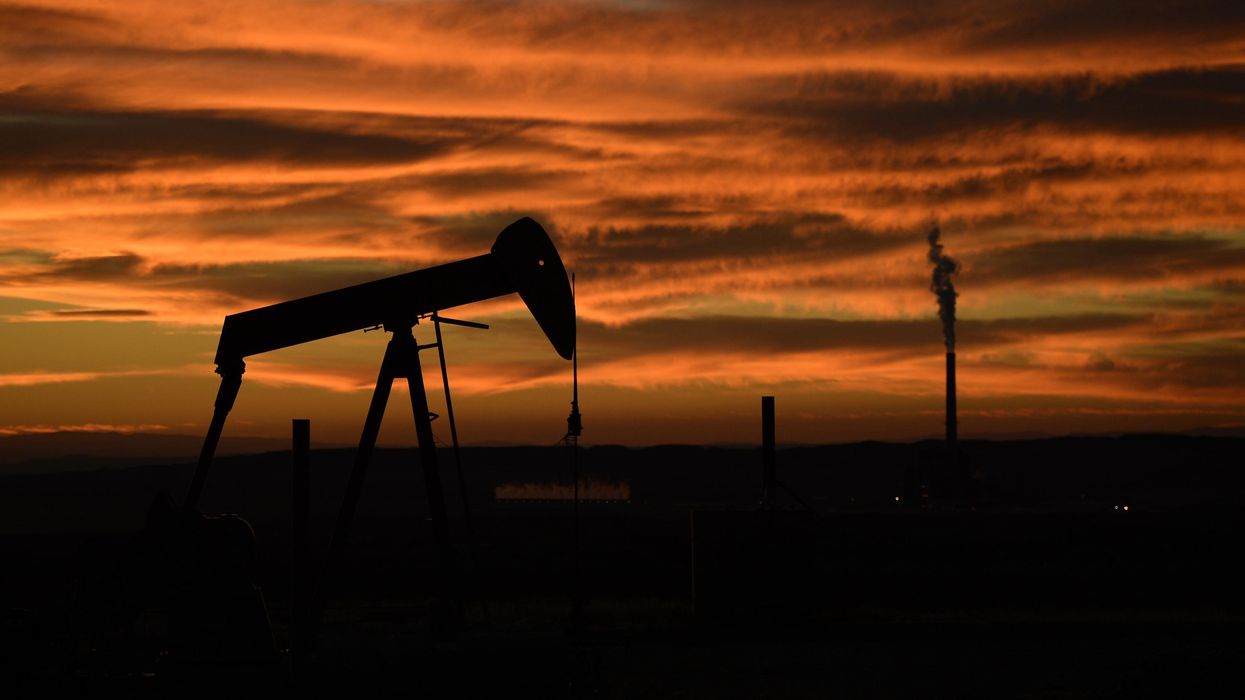
Warning of "tremendous" environmental harm, more planet-heating pollution, and the undermining of White House climate goals, over 100 advocacy groups on Wednesday urged President Joe Biden's agriculture secretary to take action to block a proposed oil rail line in eastern Utah.
"Increased drilling and extraction the railway seeks to induce will boost greenhouse pollution at every step in the process."
The demand came in a letter to Secretary Tom Vilsack and centers on the 85-mile Uinta Basin Railway, which was approved by a federal agency, the Surface Transportation Board, last month. In November, the U.S. Forest Service, an Agriculture Department agency, issued a draft approval for a right-of-way through the Ashley National Forest; a 12-mile stretch of the railway would pass through the forest, including in a roadless area.
The groups are asking Vilsack to stop the Forest Service's plan to approve a right-of-way.
"The administration can halt this filthy oil train in its tracks and demonstrate its commitment curbing climate change," said Randi Spivak, public lands program director at the Center for Biological Diversity, in a statement.
As The Colorado Sun reported earlier this month:
The Utah railroad would connect to the national rail network, allowing trains to transport "waxy crude" to Gulf Coast refineries from the Uinta Basin in northern Utah. The railroad will increase oil production in the Uinta Basin, which has been limited by the fact the viscous crude is too thick to move through a pipeline.
In their letter, the groups push back against an assertion from Forest Service chief Randy Moore that the project is in line with Biden's executive order from last year calling for a "government-wide approach that reduces climate pollution in every sector of the economy" and for permitting decisions to include climate impacts.
Contrary to that executive order, "the intended purpose and stated goal of the railway is to increase fossil fuel extraction on public lands in the Uinta Basin," the groups wrote, pointing to a potential quadrupling of fossil fuel extraction in the basin from 80,000 barrels per day to 350,000 barrels per day.
"Increased drilling and extraction the railway seeks to induce will boost greenhouse pollution at every step in the process: from extraction, to transportation, to refining, to combustion. The infrastructure investment solely enabled by the issuance of this discretionary right-of-way thus contradicts the president's stated climate policy."
The railway additionally threatens "irreversible environmental damage," they wrote.
That potential wreckage includes 400 affected Utah streams. The railway also stands to "strip bare or build on 10,000 acres of wildlife habitat," and in a sagebrush valley, "bulldozers and train traffic would drive imperiled greater sage grouse out of their mating and nesting grounds and, it is feared, wipe them out from the region."
"Virtually the entirety of the railway on the Ashley National Forest, totaling 12 miles, would be built in an inventoried roadless area protected by the Roadless Area Conservation Rule," the groups wrote, "and according to the Forest Service, degrade roadless area values by building five bridges and blasting three tunnels up to 2,100 feet wide."
Citing federal documents, the letter says that as many as 1,809 oil trains, each with roughly 642 barrels of crude oil, would leave the Uinta Basin per year, each one carrying risks of oil spills as they head to refineries on the Gulf Coast, where communities are already suffering from environmental injustice. And the fossil fuel project would come "at a time when Western states are reeling from drought, wildfires, and pollution caused by the climate emergency."
"The harm from this proposed railway will exacerbate the climate emergency, increase the risk of wildfires and oil spills, put pressure on our already strained rail system, and increase pollution while undermining President Biden's goals to address the climate crisis," the letter states.
Spivak, in her statement, framed the railway as clearly undermining the president's climate goals.
"The Unita Basin Railway runs counter to everything Biden says he stands for," she said. "It's a climate-killing fossil fuel behemoth that will endanger Utahns and Coloradoans and worsen the climate emergency. It needs to be stopped now."

While U.S. agribusiness groups are trying to pressure Mexico into abandoning their announced bans on glyphosate herbicide and imports of genetically modified corn by 2024, U.S. suppliers of non-GMO seed and grain see an opportunity to supply Mexico with non-GMO corn.
"Could we supply Mexico? Absolutely," says Bill Niebur, president of High Fidelity Genetics, an Iowa-based non-GMO corn seed company. "In terms of acres, it's not a problem. Instead of criticizing Mexico, let's provide it to them."
Ken Dallmier, CEO of Clarkson Grain, an Illinois-based supplier of organic and non-GMO grains, agrees. "Given time and focus, I think it's completely feasible," he says. "Mexico is a key trading partner, and all the logistics of Mexican grain import come through the U.S. It's matter of planning and market."
"An unbelievable proposal?"
There have been statements of impending doom in the U.S. agriculture sector since the government of Mexico's President Andres Manuel Lopez Obrador issued a decree last December calling for the replacement of controversial glyphosate herbicide and imports of GMO corn in the country by January 31, 2024.
The U.S. reaction may have been best expressed by Rich Nelson, chief strategist with Allendale Inc. "I almost refuse to even look at it because I think it's an unbelievable proposal. I just don't know what to say. I don't," he said in an interview with Western Producer.
At stake are 16.5 million metric tons of corn exports--virtually all GMO--to Mexico each year, which are worth $3 billion. Mexico is the U.S.'s second largest corn buyer after China.
A series of emails obtained using the Freedom of Information Act by the Center for Biological Diversity describe how pesticide industry lobby group, CropLife America, and pesticide and GMO seed producer, Bayer, are working with the Office of the U.S. Trade Representative (USTR) to pressure Mexico into abandoning the bans on glyphosate and GMO corn. The USTR warned Mexico's Economy Secretary, Graciela Marquez Colin, that Mexico's actions threatened the "strength of our bilateral relationship."
According to Vice Minister of Agriculture Victor Suarez, Mexico wants to phase out glyphosate and GMO corn imports because the Mexican government is "committed to a fair, healthy, sustainable, and competitive agri-food system" and to "intensively promote agroecological and sustainable practices and reduce the use of agrochemicals."
Suarez says the main reasons for Mexico's bans are growing concerns about the safety of glyphosate and GMO contamination threats to Mexico's staple and sacred crop--corn.
He cites a growing number of published studies showing negative impacts of glyphosate. "There is rigorous scientific evidence about the toxicity of this herbicide, which demonstrates the impacts on human health and the environment," he says.
Suarez says imported GMO corn poses several risks. "The risk is that imported (GMO) maize will be used as seed and can therefore contaminate the corn of neighboring farms. There is also a risk--and it is something that actually happens--that the imported transgenic yellow maize is used within the commercial and industrial businesses that should work with white (non-GMO) maize for human consumption."
He also cites a study showing that 90.4% of corn tortillas consumed in Mexico contain GMO corn sequences, as did 82% of corn flours, cereals and snacks. He calls the presence of GMO genes in these staple Mexican foods "unacceptable."
"Expectation is to induce imports of non-GMO yellow maize"
Suarez says that Mexico plans to increase production of domestic non-GMO corn to make up for the lost U.S imports with the aim to achieve "food self-sufficiency." The country now produces about 27 million tons of corn each year, most of which are white corn and about 3 million tons of yellow corn. White corn is used to make tortillas and other staple foods, while yellow corn is used primarily for animal feed.
Mexico would need to increase its corn production by about 30% to replace the lost imports.
Suarez says Mexico will rely on its farmers to increase production of non-GMO corn. "These efforts are particularly geared towards small- and medium-scale producers who show significant growth potential in their yields per hectare," he says.
Those farmers account for 90% of all the farmers in Mexico.
But Suarez also says Mexico would be interested in importing non-GMO corn from the U.S. "Imports of yellow maize will prevail for now, and the expectation is to induce imports of non-GMO yellow maize," he says.
U.S. non-GMO corn producers can supply Mexico with non-GMO yellow corn, according to Greg Lickteig, a long-time grain industry veteran and consultant with Omaha Grain. "No question, the U.S. could meet Mexico's demand should they seek only non-GMO corn," he says
Mexico's need for 16.5 MMT or 650 million bushels of corn is less than 5% of the U.S.'s annual corn production, according to Lickteig.
Chris Wiegert, chief supply chain officer at Healthy Food Ingredients, a supplier of identity preserved, organic, and non-GMO specialty ingredients, says meeting Mexico's need for non-GMO corn is "not that big of an issue. We're growing large amounts of non-GMO corn already," he says. In 2020, U.S. farmers planted 7.49 million acres of non-GMO corn.
Dallmier is confident the U.S. can supply Mexico with both yellow and white non-GMO corn. To meet Mexico's demand for non-GMO white corn, the U.S. would have to increase white corn production by 23% from its current one million acres to 1.23 million acres, which is not a big task, according to Dallmier. "Given proper market incentives, the U.S. could easily supply the increased Mexico demand for non-GMO corn," Dallmier says.
Proper market incentives include premiums for farmers to grow non-GMO corn, which requires more management than GMO corn.
"Farmers need competitive seed varieties, stable logistics such as rail, truck, container, and water transportation, risk management tools, and revenue premiums to incentivize them to participate in a different marketplace," Dallmier says.
Farmers may need to be paid a premium to grow non-GMO corn, particularly now that commodity corn prices are now higher.
Iowa farmer George Naylor, who has grown non-GMO corn for many years, says the costs for growing non-GMO corn are comparable to that of GMO. "I'm pretty sure that anybody can raise non-GMO corn for about the same cost of production as GMO. GMO seed corn is going to cost more per acre," he says.
According to estimates by Spectrum Non-GMO seed company, the cost for non-GMO corn seed is about one-half as much as GMO corn seed.
"Excellent non-GMO seed genetics exist"
According to Dallmier, the key to supplying Mexico's non-GMO demand is producing enough non-GMO corn seed. "The primary need will be to work with the seed suppliers, such as Pioneer/Corteva and others to meet this new demand with supply of commercial non-GMO seed," he says.
A large seed company will be required for a project of this scope, according to Wiegert. "You switch a supply chain like this, you have to get a big seed company behind you," he says.
Yields of non-GMO corn seeds are competitive to those of GMO seed, according to field trials conducted by several non-GMO seed companies.
"We are testing non-GMO and GMO hybrids, and our non-GMO products are doing really well.," says Niebur, who is former global vice president of research and development at Pioneer Hi-Bred.
Lickteig is also confident that non-GMO seed companies can deliver. "Excellent non-GMO seed genetics exist, and the seed industry is very capable of creating top-yielding hybrids," he says.
To meet Mexico's 2024 deadline, non-GMO seed production would have to start this year. Dallmier says three years may appear to be a long period of time to ramp up seed production but it's not.
"The seed for 2023 (non-GMO corn crop) will need to be grown in 2022, and this year is when seed companies will need to make parent seed (the seed corn that makes the seed corn) or they will be out of position," he says.
Obstacle vs. opportunity
A big question remains about whether Mexico's GMO corn import ban also applies to corn for animal feed. U.S. Agriculture Secretary Tom Vilsack has been quoted as saying that the ban only applies to corn for food and not feed. But Suarez says Mexico wants to "induce" imports of non-GMO yellow corn, which is used primarily for feed. He also says the interpretation of the decree regarding GMO feed is up to several Mexican government ministries. "The decree refers to the use of genetically modified corn grain in the diet of Mexican women and men, it is not expressly stated that it is directly," he says.
Regardless of whether Mexico needs non-GMO corn for food or food and feed, U.S. suppliers say they can meet the demand.
Niebur says the U.S. should view Mexico's bans on glyphosate and GMO corn not as an obstacle but an opportunity to enhance its trade relationship with Mexico.
"We need to let them know we're very serious and respectful about their needs and challenges and to better understand what they trying to accomplish and work together to see how we can do that," he says.

Climate and conservation advocacy groups joined business, Indigenous, and local political leaders on Thursday in welcoming a new federal report that details the Biden administration's vision for conserving at least 30% of U.S. lands and waters by 2030.
"We need to translate this vision into new and enduring conservation actions on the ground across our country."
--Randi Spivak, Center for Biological Diversity
"It's a big deal that the Biden administration recognizes we're in the midst of a wildlife extinction crisis and a climate emergency. This report is an important rallying cry," said Randi Spivak, public lands director at the Center for Biological Diversity. "There's no time to waste. We need to translate this vision into new and enduring conservation actions on the ground across our country."
In a statement about the administration's report on what supporters call the 30x30 goal, Natural Resources Defense Council president and chief counsel Mitch Bernard emphasized that "this is a critical opportunity for Americans to come together to build a new, more inclusive model of conservation to save nature, and ultimately ourselves."
That message was echoed by Defenders of Wildlife president and CEO Jamie Rappaport Clark, who directed the U.S. Fish and Wildlife Service from 1997 to 2001.
" Science tells us that we need to change course to save species--and ourselves--and that achieving the 30x30 goal is a key part of the solution," she said, citing estimates that about a million species are at risk due to escalating threats. "The recommendations from the administration recognize that we must engage all interested constituencies to create enduring solutions for climate and biodiversity."
Wendy Wendlandt, president of Environment America, said that "from Florida's manatees to my own California desert tortoises, habitat loss threatens iconic species and the ecosystems they depend on. And from orcas off the Washington coast to right whales in the Atlantic, our marine species are at risk. That's why Americans from coast to coast support conservation, and why we're looking forward to working with the administration to do what it takes to preserve our most amazing and important landscapes for centuries to come."
Interior Secretary Deb Haaland, Agriculture Secretary Tom Vilsack, Commerce Secretary Gina Raimondo, and Council on Environmental Quality Chair Brenda Mallory developed the report--entitled Conserving and Restoring America the Beautiful (pdf)--and submitted it to the National Climate Task Force.
In his January Executive Order on Tackling the Climate Crisis at Home and Abroad, President Joe Biden had directed the four officials and heads of other relevant agencies to work with state, local, tribal, and territorial governments, landowners, fishers, and other stakeholders to achieve the 30x30 goal.
"The ambition of this goal reflects the urgency of the challenges we face: the need to do more to safeguard the drinking water, clean air, food supplies, and wildlife upon which we all depend; the need to fight climate change with the natural solutions that our forests, agricultural lands, and the ocean provide," the quartet write in the report.
Their "central recommendation" is the pursuit of a nationwide, decadelong, locally led, and voluntary conservation push guided by eight core principles.
Specifically, the report calls for pursuing "a collaborative and inclusive approach," which includes supporting locally designed efforts and respecting tribal rights, to conserve land and waters "for the benefit of all people."
The report also calls for using science as a guide, building on existing tools and strategies, prioritizing job creation and healthy communities, and respecting voluntary stewardship efforts of landowners and fishers.
The six early priorities the report identifies, based on feedback from the Biden administration's first 100 days, are:
"Indigenous people of this continent have successfully managed complex societies and resource dependent economies for 10,000 years," said Natasha Hayden, an elected tribal representative and owner of a small fishing business in Alaska. "When our communities and businesses are provided a genuine role in policymaking, we can expect to see meaningful results that mirror this legacy for the good of all communities."
"The administration's new process is a major step in the right direction for my tribe, my business, and the perpetual health of the resources we have always depended on," Hayden added.
David Levine, president and co-founder of the American Sustainable Business Council, similarly welcomed the report as "an important step forward in protecting our environment, addressing the climate crisis, and helping communities and sustainable businesses thrive."
In a statement from the Mountain Pact, which mobilizes local elected officials in over 80 Western U.S. communities, Pitkin County, Colorado Commissioner Francie Jacober said: "I feel like I've been holding my breath for something like this since the 1970s. I'm so happy with what the Biden administration is doing. "
"Across the country, nature is in a state of collapse. We're facing a mass extinction of plants and animals which impacts how clean our air is, how pure our water is, and how plentiful our food supplies are," Jacober added. "Every 30 seconds, a football field worth of America's natural areas disappears to roads, houses, pipelines, and other development. That's why President Biden's plan is so critical."
Greenpeace USA senior oceans campaigner Arlo Hemphill also applauded the administration for its "climate-focused, justice-centered plan that honors Indigenous peoples and elevates science," saying that "this visionary report is a critical step that will help slow the loss of nature and ensure that the outdoor world is a more accessible place for all living in the United States."
However, Hemphill also called for going further, adding that "despite the virtues of this report as a historic effort for conservation at home, the U.S. still lacks leadership in advancing these principles on the international stage," and "a truly holistic 30x30 policy would include support for a strong new Global Ocean Treaty that would enable us to extend the work we are doing at home to protect wildlife and fisheries through a network of ocean sanctuaries across international waters."
Various federal lawmakers also expressed support for the administration's 30x30 goal, including Reps. Steny Hoyer (D-Md.), the House majority leader; Chellie Pingree (D-Maine), chair of the House Appropriations Committee; Kathy Castor (D-Fla.), chair of the House Select Committee on the Climate Crisis; and Bruce Westerman (R-Ark.), ranking member of the House Natural Resources Committee.
Meanwhile, other GOP lawmakers are waging what HuffPost reporter Chris D'Angelo called "a dumb disinformation campaign against Biden's climate agenda."

A coalition of 80 U.S. agricultural, consumer, environmental, public health, and worker groups sent a letter Thursday to key figures in the Biden administration calling for them to "respect Mexico's sovereignty and refrain from interfering with its right to enact health-protective policies"--specifically, the phaseout of the herbicide glyphosate and the cultivation of genetically modified corn.
"It is completely unacceptable for U.S. public agencies to be doing the bidding of pesticide corporations like Bayer."
--Kristin Schafer, PANNA
"Mexican President Andres Manuel Lopez Obrador quietly rocked the agribusiness world with his New Year's Eve decree," Timothy A. Wise of the Institute for Agriculture and Trade Policy (ITAP) noted earlier this year. "His administration sent an even stronger aftershock two weeks later, clarifying that the government would also phase out GM corn imports in three years and the ban would include not just corn for human consumption but yellow corn destined primarily for livestock."
"Mexico imports about 30% of its corn each year, overwhelmingly from the United States," Wise added. "Almost all of that is yellow corn for animal feed and industrial uses. Lopez Obrador's commitment to reducing and, by 2024, eliminating such imports reflects his administration's plan to ramp up Mexican production as part of the campaign to increase self-sufficiency in corn and other key food crops."
The groups' letter on the Mexican policies and U.S. interference--published in English (pdf) and Spanish (pdf)--is addressed to recently confirmed U.S. Secretary of Agriculture Tom Vilsack and U.S. Trade Representative Katherine Tai. Its lead author is Kristin Schafer, executive director of Pesticide Action Network North America (PANNA).
"We call on Secretary Vilsack and Trade Representative Tai, as key leaders in the new administration, to respect Mexico's decision to protect both public health and the integrity of Mexican farming," Schafer said in a statement. "It is completely unacceptable for U.S. public agencies to be doing the bidding of pesticide corporations like Bayer, who are solely concerned with maintaining their bottom-line profits."
Fernando Bejarano, director of Pesticide Action Network in Mexico, explained that "we are part of the No Maize No Country Campaign, a broad coalition of peasant organizations, nonprofit NGOs, academics, and consumers which support the presidential decree and fight for food sovereignty with the agroecological transformation of agricultural systems that guarantee the right to produce and consume healthy, nutritious food, free of pesticides and transgenics."
"We reject the pressure from corporations such as Bayer-Monsanto--and their CropLife trade association--which are working in both the United States and Mexico to undermine the presidential decree that phases out the use of glyphosate and transgenic corn," Bejarano said.
The letter highlights Guardian reporting on U.S. government documents obtained by the Center for Biological Diversity through a Freedom of Information Act request. The documents revealed that CropLife America and Bayer AG--which acquired glyphosate-based herbicide developer Monsanto in 2018--worked with U.S. officials to lobby against Mexico's plans.
According to journalist Carey Gillam's mid-February report:
The emails reviewed by the Guardian come from the Office of the U.S. Trade Representative (USTR) and other U.S. agencies. They detail worry and frustration with Mexico's position. One email makes a reference to staff within Lopez Obrador's administration as "vocal anti-biotechnology activists," and another email states that Mexico's health agency (Cofepris) is "becoming a big time problem."
Internal USTR communications lay out how the agrochemical industry is "pushing" for the U.S. to "fold this issue" into the United States-Mexico-Canada Agreement (USMCA) trade deal that went into effect July 1. The records then show the USTR does exactly that, telling Mexico its actions on glyphosate and genetically engineered crops raise concerns "regarding compliance" with USMCA.
Citing discussions with CropLife, the U.S. Environmental Protection Agency (EPA) joined in the effort, discussing in an inter-agency email "how we could use USMCA to work through these issues."
The Guardian also noted correspondence involving the Foreign Agricultural Service of the U.S. Department of Agriculture (USDA).
As the letter to Vilsack and Tai points out: "This interference and pressure from the agrochemical industry is continuing. On March 22nd, industry representatives sent a letter directed to your attention as leaders of USTR and USDA, identifying Mexico's planned phaseout of glyphosate and genetically modified corn as a 'leading concern' for agribusiness interests and the pesticide industry (represented by the pesticide industry's trade group, CropLife America)."
"We strongly object to any interference by U.S. government officials or agribusiness interests in a sovereign state's right to enact policy measures to protect the health and well-being of its people," the letter states. "We urge your agencies to resist and reject these ongoing efforts."
"We welcome the administration's stated commitment to listening to the science, improving public health, protecting the environment, and limiting exposure to dangerous chemicals and pesticides, while holding polluters accountable and prioritizing environmental justice, particularly for communities of color and low-income communities," it adds. "We trust that these stated commitments, as well as your dedication to 'fairness for farmers,' extend equally to other countries and include respect for other nations' and peoples' rights to self-determination."
Other signatories to the letter include the American Sustainable Business Council, Beyond Pesticides, Center for Biological Diversity, Friends of the Earth, Greenpeace USA, Indigenous Environmental Network, ITAP, and Organic Consumers Association.

The U.S. Department of Agriculture on Wednesday announced the official end of a Trump-era policy that could have stripped federal food benefits from more than a million people during the coronavirus pandemic by imposing more draconian work requirements on Supplemental Nutrition Assistance Program recipients.
A federal court allowed the Biden USDA--headed by recently confirmed Agriculture Secretary Tom Vilsack--to withdraw the Trump administration's appeal of an earlier ruling that blocked the policy change, which would have made it more difficult for states to waive work requirements for SNAP beneficiaries despite the ongoing economic crisis.
"Hunger is not an economic motivator--it is a policy failure. SNAP benefits provide the hand up so many Americans need in times of financial instability."
--Rep. Jahana Hayes
"We are pleased to finally put to rest a policy that would have restricted the ability of states to provide nutrition assistance to able-bodied adults without dependents (ABAWDs) during times of high unemployment," Vilsack said in a statement. "The rule would have penalized individuals who were unable to find consistent income, when many low-wage jobs have variable hours, and limited to no sick leave."
"Groups with typically higher unemployment, including rural Americans, Black, Indigenous, Hispanic and People of Color, and those with less than a high school education would have been disproportionately harmed by this cruel policy," Vilsack added.
According to the Trump USDA's own estimates, the rule would have rendered more than 700,000 people ineligible for federal nutrition benefits, a devastating blow for those struggling to put food on the table amid widespread joblessness. Experts argued that the USDA's analysis likely underestimated the number of people who would have been harmed by the policy change.
With hunger still at staggering levels across the U.S.--the latest Census data shows that more than 20 million adults said their households did not have enough to eat last month--Democratic lawmakers and activists celebrated USDA's move to scrap a policy that would have made the crisis much worse.
Rep. Jahana Hayes (D-Conn.), chair of the House Subcommittee on Nutrition, Oversight, and Department Operations, said in a statement Wednesday that "amidst a pandemic in which millions of Americans are struggling to find work, it is especially important to ensure that as many Americans as possible retain eligibility for federal benefits like SNAP."
"Hunger is not an economic motivator--it is a policy failure," Hayes added. "SNAP benefits provide the hand up so many Americans need in times of financial instability. I am pleased USDA has dropped this appeal."

Sen. Bernie Sanders on Tuesday was the lone progressive to vote against Tom Vilsack reprising his role as secretary of agriculture, citing concerns that progressive advocacy groups have been raising since even before President Joe Biden officially nominated the former Obama administration appointee.
"It's great to see the senator stick to his principles and vote against a corporate establishment candidate like Vilsack."
--RootsAction
The Senate voted 92-7 to confirm Vilsack, with Sanders (I-Vt.) and six Republicans opposing his appointment. Sen. Jeanne Shaheen (D-N.H.) was the only member who did not vote.
In a statement on his decision, Sanders first said that "I have known Tom Vilsack for many years and look forward to working with him as our new secretary of agriculture."
"I opposed his confirmation today because at a time when corporate consolidation of agriculture is rampant and family farms are being decimated, we need a secretary who is prepared to vigorously take on corporate power in the industry," Sanders explained. "I heard from many family farmers in Vermont and around the country who feel that is not what Tom did when he last served in this job."
The Hill reports Sanders made similar remarks about Vilsack to journalists after the vote, saying that "I think he'll be fine, but not as strong as I would like."
The progressive group RootsAction praised Sanders on Twitter for taking a stand against Biden's pick to run the U.S. Department of Agriculture (USDA).
Fordham University law professor Zephyr Teachout also welcomed Sanders' move.
"This is the correct vote. Vilsack failed farmers, farmworkers, the land, and the public, and Shirley Sherrod," Teachout tweeted, referencing the former Georgia state director of rural development at USDA who was ousted under Vilsack.
Sherrod, who is Black, recently told The 19th that "I have no ill will towards him, none at all," but added that if Vilsack returned as USDA chief, "he should be ready to get on the ground to make real change this time around. And we need to hold him to it. Black people need to see some real change."
As Common Dreams previously reported, Vilsack has faced criticism for the USDA's treatment of Black farmers when he headed the department during the Obama administration--among other critiques.
Center for Food Safety policy director Jaydee Hanson said in December that Biden's potential selection of Vilsack was "a huge step backwards in our urgent need to support agricultural systems that protect public health, the environment, and mitigate the ongoing climate crisis."
Early Tuesday, in anticipation of Vilsack's bipartisan confirmation, Food & Water Watch executive director Wenonah Hauter--whose group has been raising alarm about him for months now--issued a warning about what to expect going forward.
"We can confidently predict what Tom Vilsack's leadership of the Agriculture Department will look like, because he's led it before. And the prediction is grim," she said. "In his previous stint at USDA, Vilsack backed mass corporate consolidation of our food system at the expense of struggling family farmers. Similarly, he readily advanced industry-driven initiatives allowing companies to inspect their own poultry processing plants, dismantling federal oversight of food and worker safety."
"This administration needs to drastically shift course from the Trump era by supporting sustainable, independent farming, halting the toxic expansion of polluting factory farms, and ultimately, prioritizing consumer health and worker safety," Hauter added. "We have little hope that Tom Vilsack cares to undertake this effort, so we will be pressuring him doggedly to see the light."