
SUBSCRIBE TO OUR FREE NEWSLETTER
Daily news & progressive opinion—funded by the people, not the corporations—delivered straight to your inbox.
5
#000000
#FFFFFF
To donate by check, phone, or other method, see our More Ways to Give page.


Daily news & progressive opinion—funded by the people, not the corporations—delivered straight to your inbox.
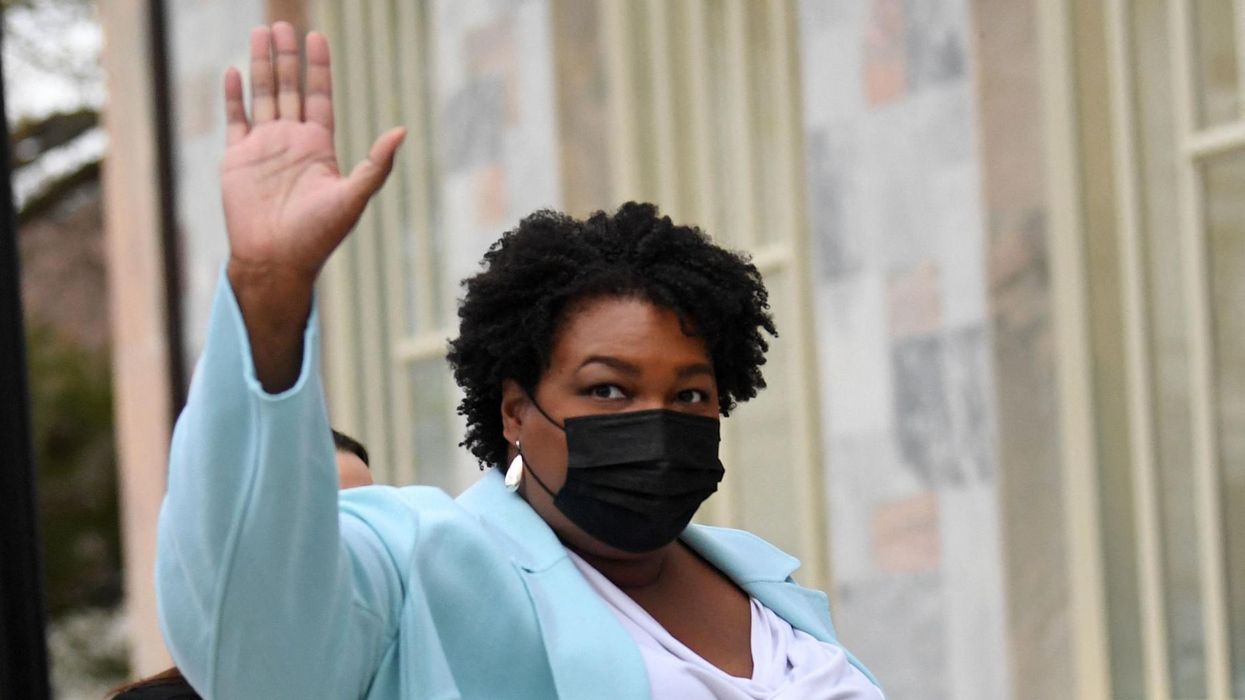
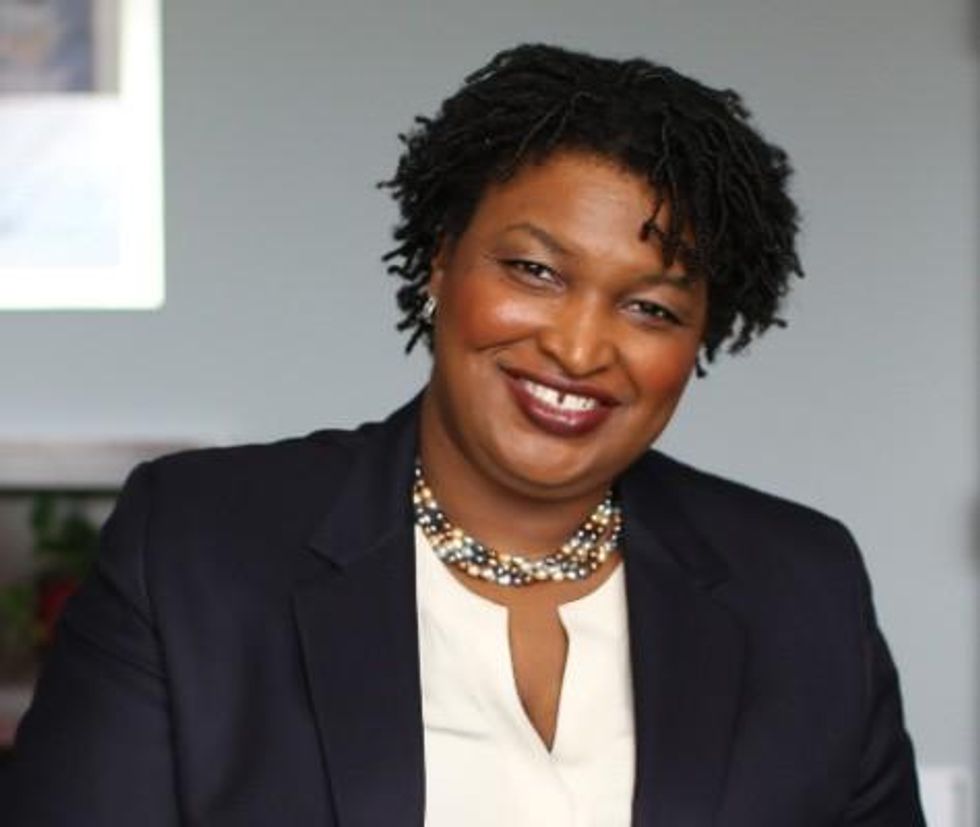
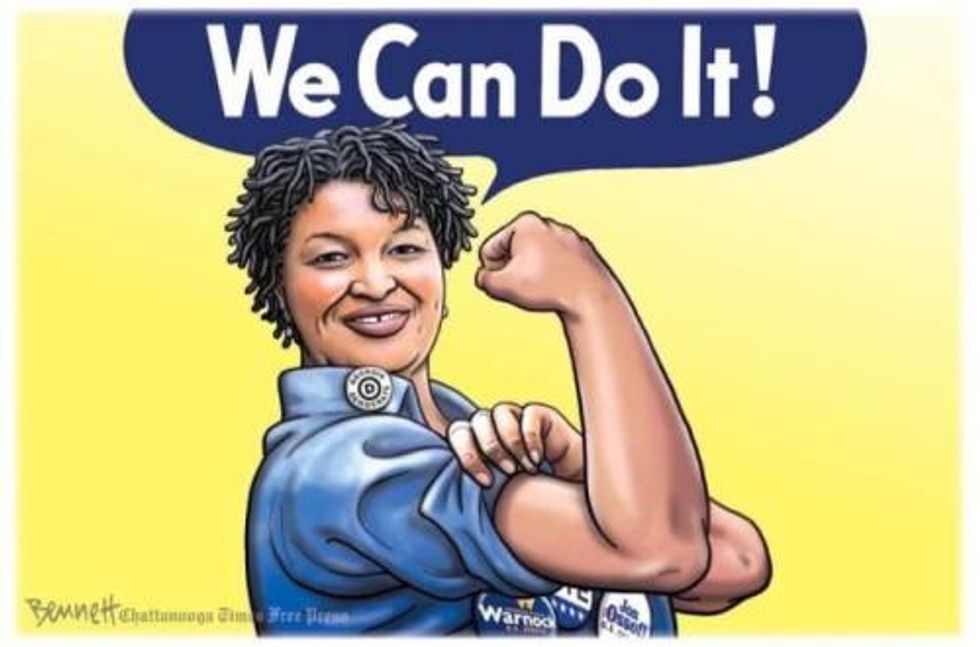
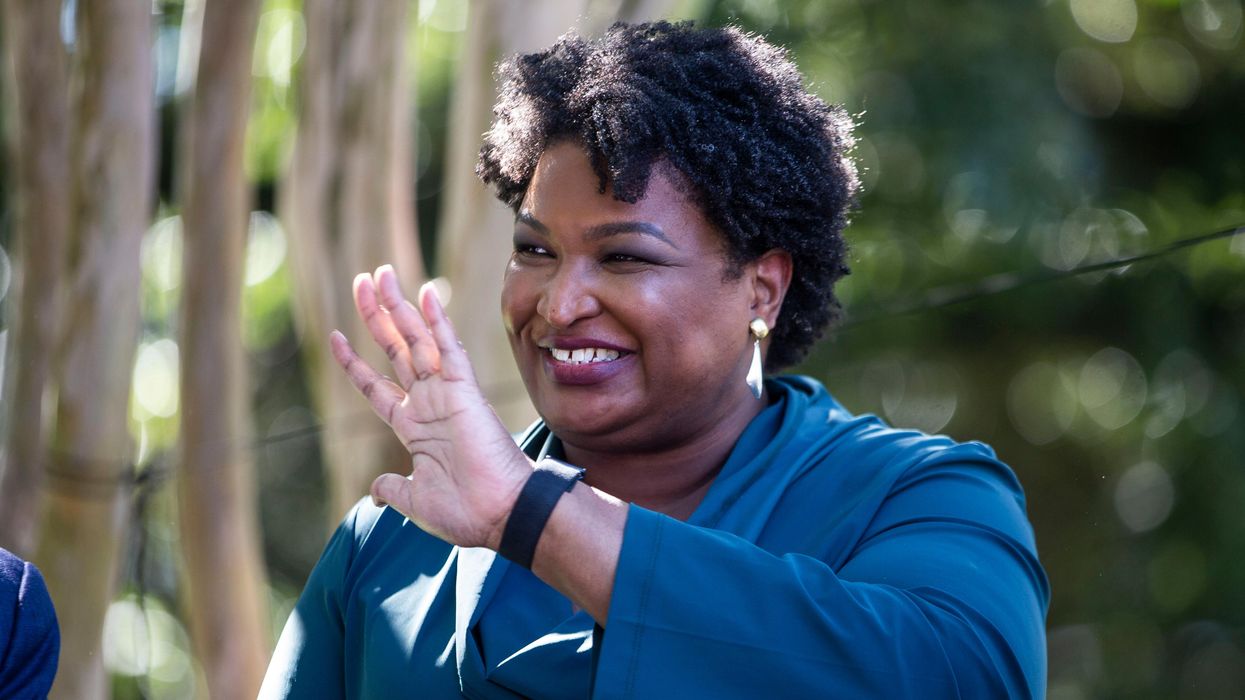
Declaring that "opportunity in our state shouldn't be determined by zip code, background, or access to power," attorney, author, and voting rights campaigner Stacey Abrams announced Wednesday that she would once again seek the Democratic nomination for Georgia governor, setting up a rematch with Republican Gov. Brian Kemp in the November 2022 contest.
"Abrams already came well within striking distance of Brian Kemp in 2018--before she mobilized millions of Democrats to flip Georgia blue in 2020."
"If our Georgia is going to move to its next and greatest chapter, we're going to need leadership," Abrams said in her announcement video. "Leadership that knows how to do the job, leadership that doesn't take credit without taking responsibility, leadership that understands the true pain folks are feeling and has real plans."
"That's the job of governor, to fight for one Georgia--our Georgia," she added. "And now, it's time to get the job done."
Abrams, who served a decade in the Georgia House of Representatives, was the first Black female nominated for a major party's gubernatorial candidacy in U.S. history. She narrowly lost the 2018 Georgia governor's race to Kemp amid widespread evidence of GOP voter suppression efforts.
Democratic Governors Association executive director Noam Lee called Abrams "a powerhouse leader who has spent her life fighting for equal opportunity for all Georgians."
"With a historic campaign built on expanding access to healthcare and creating good-quality jobs, Abrams already came well within striking distance of Brian Kemp in 2018--before she mobilized millions of Democrats to flip Georgia blue in 2020," Lee told The Washington Post. "Now more than ever, it's clear Brian Kemp's days as governor are numbered."
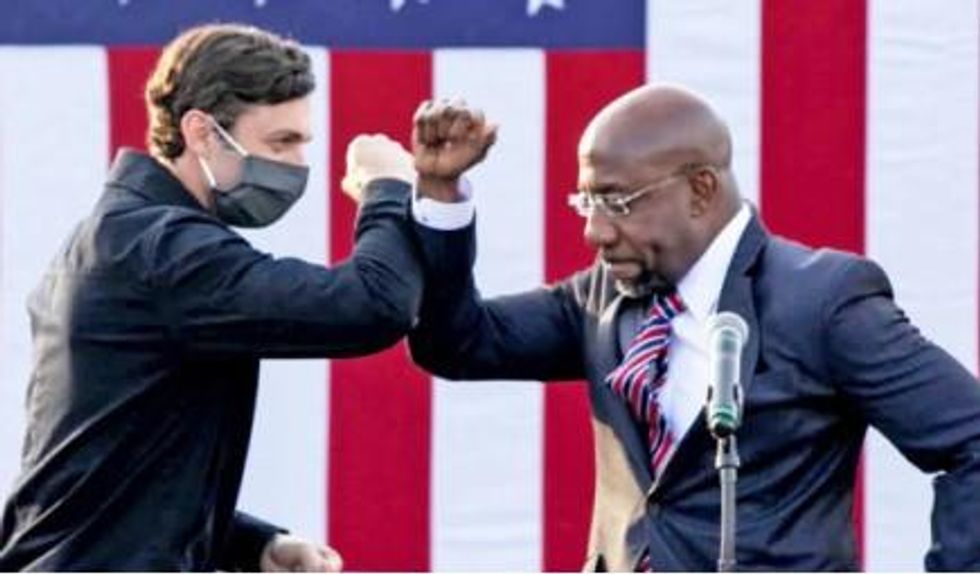
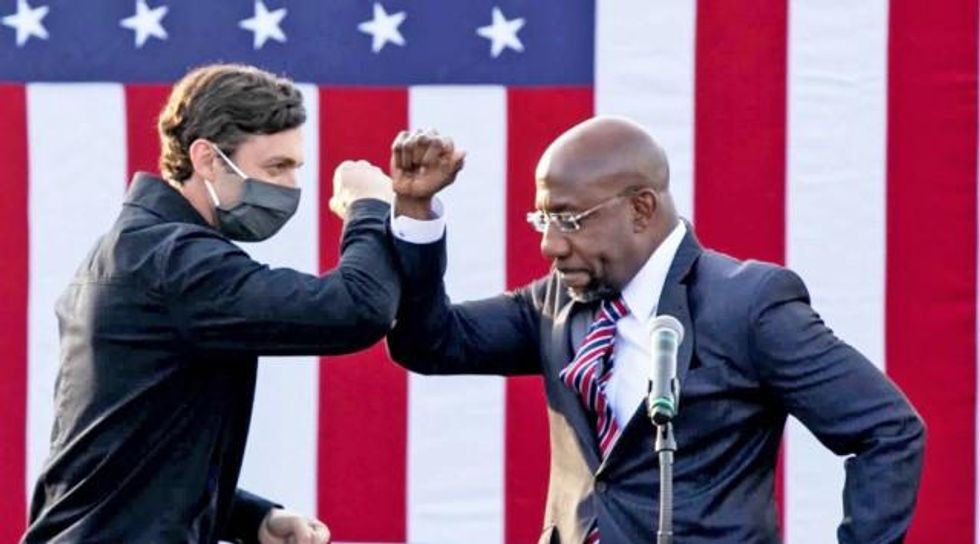
While there was much talk of a 2020 presidential run for Abrams, she instead chose to focus on boosting voter turnout to help ensure that Georgia played a critical role in electing President Joe Biden and that the U.S. Senate passed from Republican to Democratic control with the election of Jon Ossoff and Raphael Warnock in January.
In addition to her pro-democracy work, Abrams has drawn widespread praise for paying down over $1.3 million in medical debt via her Fair Fight political action committee.
"Stacey Abrams' decision to run for governor of Georgia in 2022 is great news for the people of her state and for America."
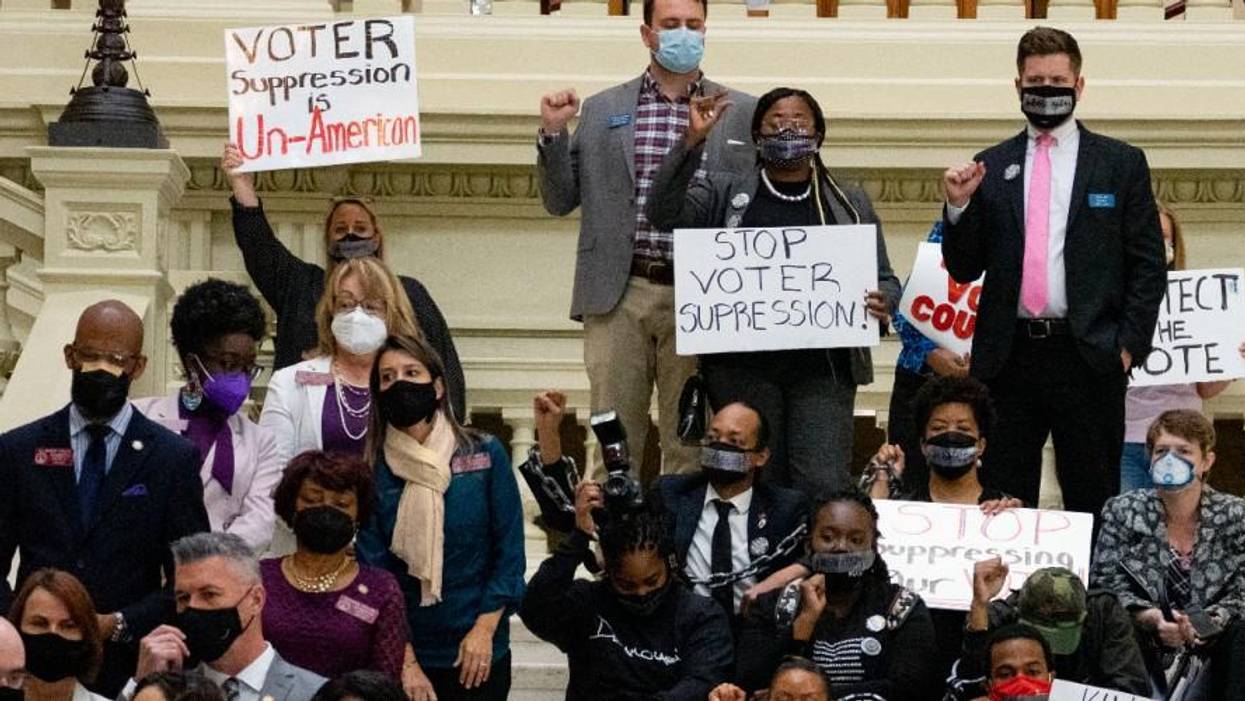
The trouncing suffered by GOP candidates in the November 2020 and January 2021 elections motivated Georgia Republicans to pass one of the nation's most sweeping voter suppression laws, as well as to gerrymander the state's congressional districts to heavily favor the right-wing party.
While Abrams--a self-described "pragmatic" politician--has been criticized by some progressives for being too closely aligned with the corporate right wing of the Democratic Party, at least one progressive advocacy group has already endorsed her candidacy.
"Stacey Abrams' decision to run for governor of Georgia in 2022 is great news for the people of her state and for America," Ben Jealous, president of People for the American Way, said in a statement.
"Stacey has been a leader and a fighter for justice and civil rights throughout the decades I have known her," he added. "She is a person of profound integrity, empathy, courage, and intellect who as governor will work tirelessly to ensure all Georgians have access to the opportunity to succeed and to live healthy and fulfilling lives."
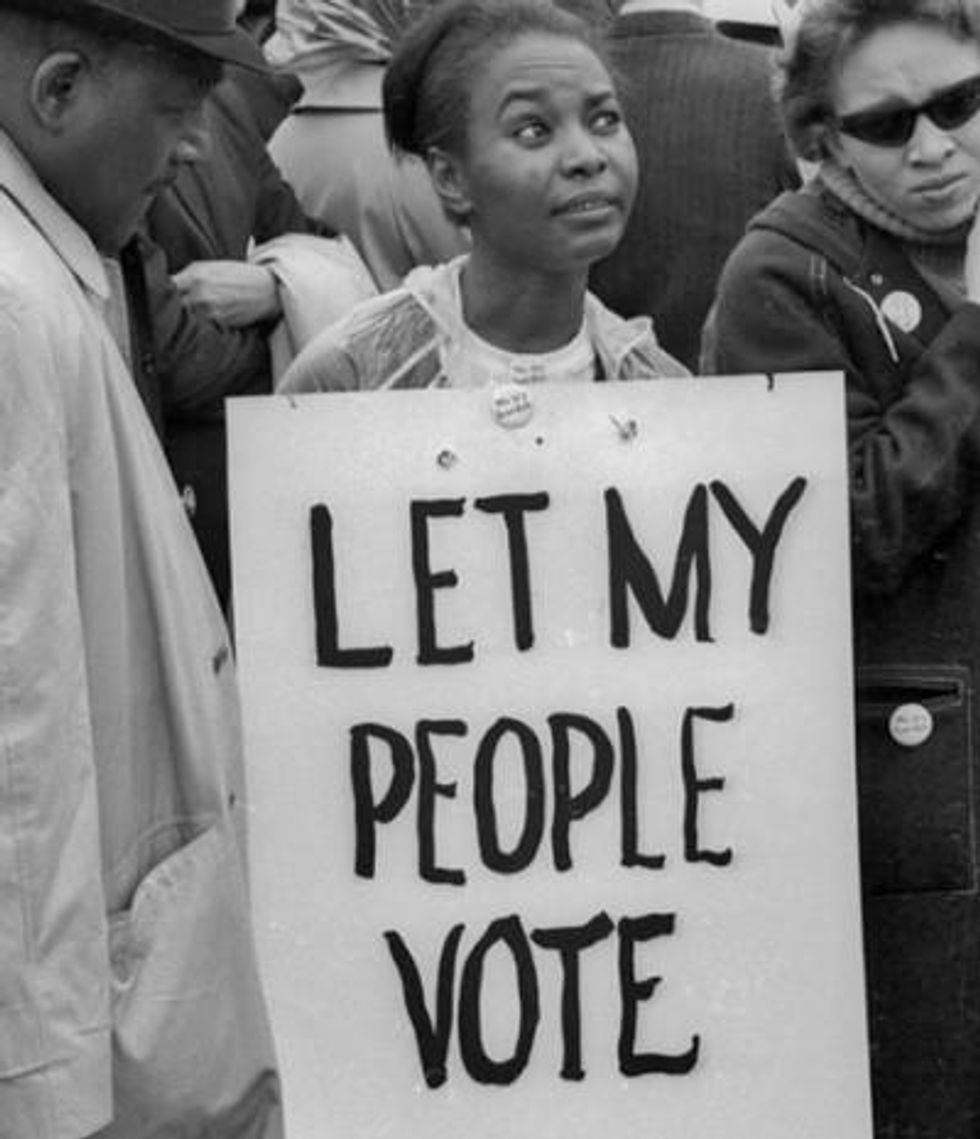
Voting rights advocates within and beyond Georgia ramped up calls for congressional action after the Peach State's Republican lawmakers became the latest to approve a gerrymandered political map intended to give the GOP a political advantage for the next decade.
"Congress must pass federal voting rights legislation. We can't wait any longer."
Following similar moves by GOP-controlled state legislatures in Ohio and Texas, the Georgia General Assembly sent the new congressional map to the desk of Republican Gov. Brain Kemp, who is expected to sign it into law. These redistricting efforts have come as right-wingers in the evenly split U.S. Senate block various voting rights bills and a few Democrats refuse to support killing the filibuster.
The Georgia GOP's map is designed to increase the number of congressional districts the party controls from eight to nine, leaving Democrats with just five. According to an analysis by The Atlanta Journal-Constitution, "Though Georgia's voters are split between the two political parties, none of the state's 14 congressional districts would be competitive."
It's not just the new congressional districts that serve Georgia's GOP. Democracy Docket noted that "the state House and Senate maps... were criticized by Democrats for cementing a Republican advantage in the General Assembly and failing to account for the growth of Georgia's minority population."
Common Cause Georgia executive director Aunna Dennis said in a statement Monday that "when the redistricting process is led by the politicians, the maps will be drawn to benefit the politicians--and that's exactly what state legislators have done today."
"While these maps might be beneficial to the politicians in power, they are a complete disgrace to the voters of Georgia," Dennis declared. "None of the maps accurately reflect the changing population of our state."
"Our preliminary analysis shows that despite population growth in the state being driven largely by Black, Latinx, and Asian populations, and despite the state's share of the white population decreasing by about 5% from 2010 to 2020, the amount of majority-BIPOC districts in these proposed maps have extremely marginal increases," she noted. "In fact, the new congressional map decreases the amount of majority-Black districts from the former district map."
Dennis said the maps were "intentionally designed to silence" communities of color and accused state leaders of continuing "to ignore the voters throughout the entire process." She also reiterated her group's support for independent redistricting commissions, saying that "district lines need to be drawn putting the interests of people, not politicians, first."
The Journal-Constitution reports that Georgia Rep. Mariam Paris (D-142) said the new district lines endanger two Democratic Black women in the state's congressional delegation, Congresswomen Nikema Williams and Lucy McBath.
"At a time when women are already underrepresented, particularly women of color, we should not be drawing maps that target women incumbents to make it harder for them to run and win in new districts," Paris said during the House debate. "But the map before us today does exactly that."
As the newspaper details:
The map redraws the Democratic-leaning district held by McBath, making it more Republican by extending north from metro Atlanta into conservative strongholds in Forsyth and Dawson counties. McBath won reelection last year with 55% of the vote, but under the new map, Republican voters would outnumber Democrats by 15 percentage points in next year's elections, according to the AJC's analysis.
McBath flipped the 6th Congressional District in 2018, winning election in an area that was once a Republican bastion represented by Newt Gingrich, who became speaker of the House and led the GOP to take control of the U.S. House in 1994. Now the district is poised to return to Republican representation.
McBath--whose 17-year-old son was shot and killed in 2012 by a man who confronted him about the volume of his music--said Monday that Kemp, the Republican Party, and the National Rifle Association (NRA) "will not have the final say on when I am done fighting for my son."
Voting rights advocate Stacey Abrams--a Democrat who formerly served as minority leader in the Georgia House of Representatives and narrowly lost the gubernatorial race to Kemp in 2018--suggested in a series of tweets Monday that the new map shows the GOP is struggling to compete in the state.
"The bill will be eagerly signed by a man who has spent more than a decade using his status to disempower voters of color and intimidate the groups and individuals who organize them," Abrams said. "But neither Lucy McBath nor Georgia's organizers and voters of color will give up so easily."
President Joe Biden narrowly won Georgia in 2020--prompting then-President Donald Trump to pressure Kemp to call a special election and to ask Republican Secretary of State Brad Raffensperger to "find" over 11,000 votes, moves that led to a criminal probe in Fulton County.
Mother Jones' Ari Berman, who wrote the book Give Us the Ballot: The Modern Struggle for Voting Rights in America, noted Monday that the new congressional map gives Republicans "64% of seats in state Biden won with 49.5%."
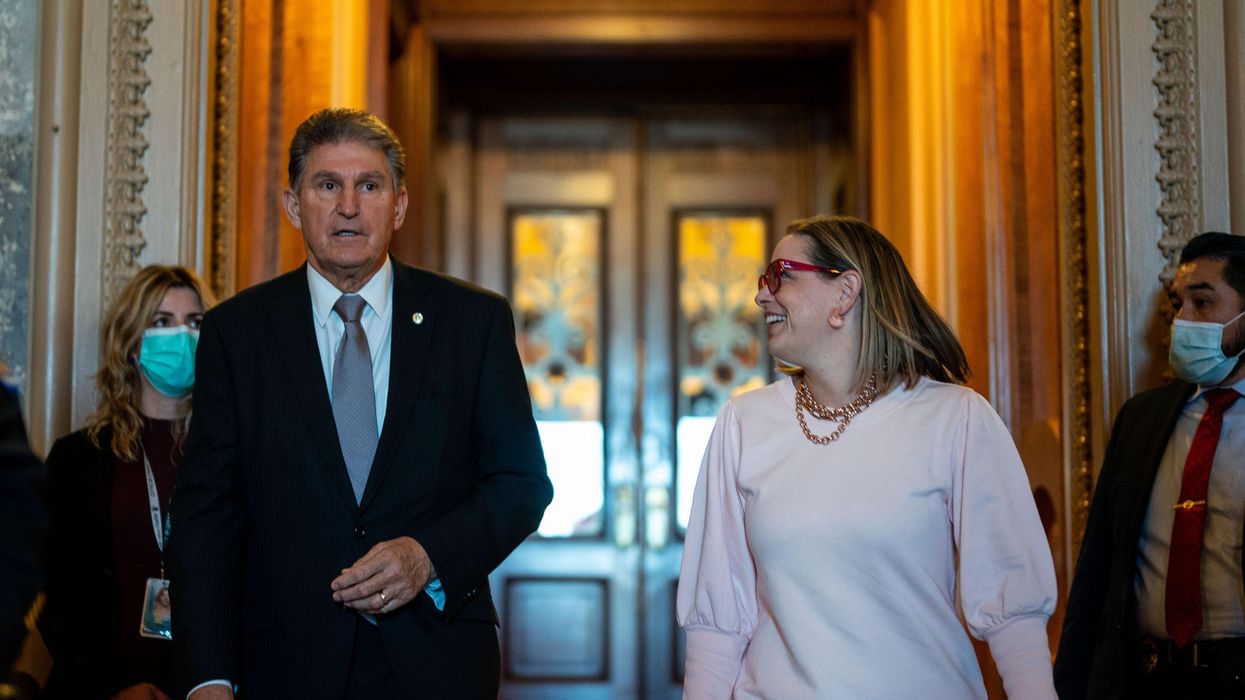
Highlighting that the Georgia map is part of a national trend of GOP state lawmakers trying to give Republican congressional candidates clear advantages, Berman expressed frustration with U.S. Sens. Joe Manchin (D-W.Va.) and Kyrsten Sinema (D-Ariz.), who refuse to support abolishing the filibuster to pass federal voting rights protections.
"It's beyond enraging that Manchin and Sinema continue to say voting rights legislation needs 60 votes when [the] GOP [is] rigging elections and shutting Dems out of power for next decade on simple majority party-line votes," he said, calling it "total asymmetric warfare."
Calls for Senate Democrats to scrap the filibuster have mounted as the chamber's Republicans have blocked the For the People Act, Freedom to Vote Act, and John R. Lewis Voting Rights Advancement Act. The International Institute for Democracy and Electoral Assistance on Monday even labeled the United States a "backsliding" democracy.
"Voters should choose their politicians, not the other way around," tweeted U.S. Sen. Raphael Warnock (D-Ga.). "Today's partisan redistricting decision at Georgia's State Capitol undermines voters' voices and harms our democracy."
"Congress must pass federal voting rights legislation," he added. "We can't wait any longer."
One week after Republican Sen. John Kennedy of Louisiana repeatedly cut off voting rights advocate Stacey Abrams as she tried to explain her objections to the voter suppression law recently passed by GOP lawmakers in Georgia, Abrams on Tuesday shared an uninterrupted video in which she outlined how specific provisions of Senate Bill 202 restrict Democratic-leaning constituencies' access to the ballot.
During a U.S. Senate Judiciary Committee hearing last week on voting rights, Kennedy asked Abrams to "give me a list of the provisions that you object to."
Abrams began to list several anti-democratic components of the new law. She expressed her opposition to provisions that: remove access to the right to vote; shorten the federal runoff period from nine weeks to four weeks; and restrict the time that a voter can request and return an absentee ballot application--before being interrupted by Kennedy.
She went on to mention that the law "eliminates over 300 hours of drop box availability" and "bans nearly all out-of-precinct votes." In addition, Abrams noted, enabling counties to adopt a 9:00 am to 5:00 pm voting window instead of using the previous statewide standard of 7:00 am to 7:00 pm limits the franchise, especially for working-class individuals "who cannot vote during business hours."
After just a couple of minutes, Kennedy "threw in the towel," as political reporter Greg Bluestein put it in The Atlanta Journal-Constitution.
"Okay, I get the idea. I get the idea," said the Republican senator.
But Abrams, the founder of a voting rights group called Fair Fight Action, hadn't finished.
On Tuesday, Abrams tweeted a nearly six-minute video that describes additional provisions that she and other progressive critics of Senate Bill 202 say will make it harder for Georgians--particularly those living in communities of color where Democratic candidates enjoy much stronger support than their Republican counterparts--to vote.
"I know we got cut off before, so let me continue," she began on Tuesday.
In the video, Abrams provides a thorough account of the anti-democratic features of the new Georgia law, which she says:
The new video also has clips from Abrams' interaction with Kennedy last week, including when the senator asked, "Is that everything?"
"Nope!" Abrams responded Tuesday. "With all due respect, I'm not done yet, senator."
Abrams pointed out that GOP lawmakers attempted to include even more restrictive measures in earlier versions of Senate Bill 202.
"Let's not forget that Republicans wanted to eliminate Sunday voting, but we stopped them," Abrams said. "And Republicans wanted to eliminate no excuses absentee voting, but we stopped them. And Republicans wanted to eliminate automatic voter registration."
"But, wait for it, we stopped them," she added.
Senate Bill 202--which Georgia's Republican lawmakers and Gov. Brian Kemp have characterized as an attempt to "restore confidence in the integrity of the state's electoral system"--is part of the GOP's nationwide attack on voting. As of March 24, legislators had introduced 361 bills with restrictive provisions in 47 states, according to the Brennan Center for Justice.
In addition to Georgia, voter suppression bills have been signed into law in Arkansas, Florida, Iowa, and Utah.
Mother Jones journalist Ari Berman, a voting rights expert, has argued that in the wake of former President Donald Trump's failed attempt to reverse the outcome of the 2020 presidential election, state-level Republicans are "weaponizing Trump's lies" about fraud in an attempt to roll back voting rights following last year's historic turnout.
While the GOP has attempted to justify its increasingly extreme voter suppression push by appealing to the need to strengthen "election integrity"--even though President Joe Biden's victory came in an election the federal government's top cybersecurity official called "the most secure in American history"--right-wing figures have on more than one occasion admitted the real reason they are opposed to making voting more accessible is because doing so hurts Republicans' electoral chances.
"If we don't do something about voting by mail, we're going to lose the ability to elect a Republican in this country," Trump ally Sen. Lindsey Graham (R-S.C.) told Fox News host Sean Hannity last November.
In Tuesday's video, meanwhile, Abrams noted that "in Fulton County, our largest county and one that is predominantly African American, the number of drop boxes will be reduced from 38 to eight for no good reason other than Republicans want to make it harder for people of color to vote."
Last month, Biden signed an executive order promoting access to the polls, while House Democrats, without the support of a single Republican, passed the For the People Act, a sweeping set of popular pro-democracy reforms.
Voting rights advocates say that Senate Democrats can "thwart virtually every single one" of the GOP's voter suppression bills by passing the For the People Act and the John Lewis Voting Rights Advancement Act. If Senate Republicans try to stand in the way, progressives say, the Democratic-led Congress will need to eliminate the 60-vote filibuster rule.
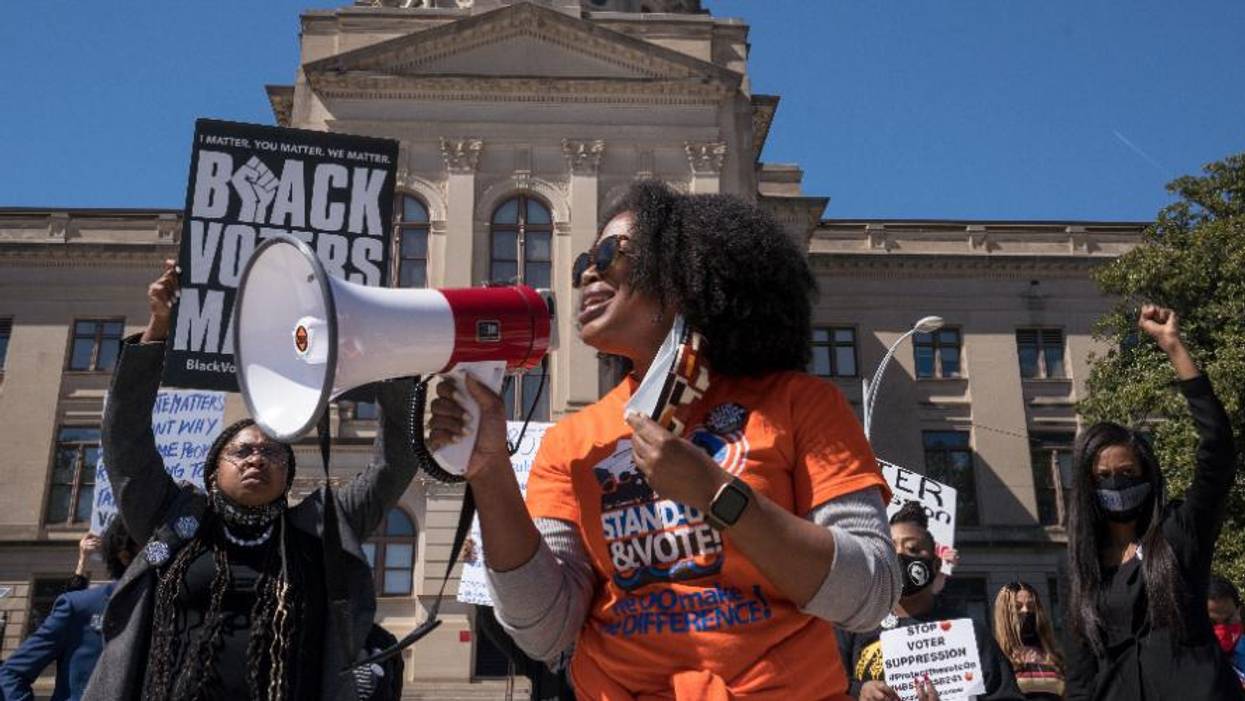
Something's rotten in Georgia, and it's not the peaches: Gov. Brian Kemp just signed into law a regressive omnibus bill containing a number of provisions that will make voting harder. This is the law that infamously makes it a crime to provide food or drink to anyone waiting in line to vote--and Black voters will likely suffer disproportionately because poll closures in predominantly Black communities have led to hours-long lines. In response, voting rights activists--such as members of the New Georgia Project and other groups-- have been calling out corporations that made political contributions to the Republican lawmakers.
Coca-Cola also made political contributions to the very politicians who wrote, passed, and signed this bill into law.
Coca-Cola, for instance, has been the target of plenty of backlash from voting advocates, in part because it's one of the biggest companies based in Georgia. But Coca-Cola also made political contributions to the very politicians who wrote, passed, and signed this bill into law. For example, according to Follow the Money, Coca-Cola gave to Brian Kemp's gubernatorial campaign in 2018. Other corporate donors to Governor Kemp included SunTrust Bank, Philip Morris USA, Koch Industries, Blue Cross Blue Shield of Georgia, Home Depot, Delta Airlines, and Pfizer.
Republican State Rep. Barry Fleming, who authored some of the Georgia legislation, also received corporate donations from companies including United Health Group, Coca-Cola, Philip Morris USA, Comcast, Walmart, Allstate Insurance, AT&T, Publix, SunTrust Bank, Georgia-Pacific, General Motors, and Koch Industries.
This strategic focus on the corporate backers of Republican lawmakers has already had an impact: 72 current and former Black executives from a wide range of companies have all condemned the new Georgia law. This includes Kenneth Chenault, a former CEO of American Express; Kenneth Frazier, the chief executive of Merck; Roger Ferguson Jr., the chief executive of TIAA; Raymond McGuire, a former executive at Citigroup; Ursula Burns, a former chief executive of Xerox; and Richard Parsons, a former chairman of Citigroup. Delta, another Georgia-based company that initially offered a lukewarm endorsement of the bill, reversed course. CEO Ed Bastian wrote a memo to employees, stating, "After having time to now fully understand all that is in the bill, coupled with discussions with leaders and employees in the Black community, it's evident that the bill includes provisions that will make it harder for many underrepresented voters, particularly Black voters, to exercise their constitutional right to elect their representatives. That is wrong."
Meanwhile, the CEO of Coca-Cola, James Quincy, said, "This legislation is wrong, and needs to be remedied, and we will continue to advocate for it both in private and in now even more clearly in public."
This newfound responsiveness on the part of these companies may have been inspired, at least in part, from threats to boycott. This is nothing new: boycotts have historically been used by activists of all political stripes in the United States. The successful Montgomery bus boycotts in the mid-1950s are now famous. But this is far from the only organized abstention used to advance the cause of civil rights. It's largely forgotten now, but Martin Luther King Jr. called for boycotts of companies that had poor civil rights records in his final "Mountain Top" speech. In fact, King called for boycotts of companies including Wonder Bread and, notably, Coca-Cola. "Our agenda calls for withdrawing economic support from you," he said. "Go out and tell your neighbors not to buy Coca-Cola . . ."
The very next day, King was assassinated.
Now, 53 years later, his daughter, Bernice A. King, is calling on Georgia corporations to uphold the pledges they made in 2020 in the wake of the murder of George Floyd. An open letter jointly penned by King, Al Vivian, and John-Miles Lewis, states that in the run-up to the omnibus bill's passage, "Corporations did not go far enough to ensure every voting citizen had fair and equitable access to the most basic of American rights--the right to participate in the electoral process; the right to have a voice in our shared future. The failure of corporate leaders across our state to live up to their racial equity commitments made in the last year disregards and disrespects our fathers' tireless work and jeopardizes the soul of Georgia and the promise of democracy. . . . when the first test came challenging our corporations to move from words to action, to stand on behalf of disenfranchised voters, there was shocking silence. . . . The lack of action is not only ethically wrong and morally reprehensible, it hurts the corporate bottom line. Racism is bad for business."
Now that the legislative session in Georgia is over, the fight moves to the courts. So far three different lawsuits have challenged the new regressive law. It remains to be seen how forcefully Georgia corporations will aid (or oppose) this litigation. Will they put their money where their mouth is and end corporate contributions to the politicians who created this law? If not, they may face more sustained and robust boycotts that hit them where it hurts--although some, like Stacey Abrams, have noted that boycotts don't just hurt companies, they hurt the people who work for them too.
At the end, the letter writers express, corporations should "[u]se your power to retire propagandized politics in the state legislatures and promote the passage of HR1--For the People Act and the John Lewis Voting Rights Advancement Act currently before the Congress."
As Republicans predictably cried foul over Major League Baseball's Friday decision to relocate the 2021 All-Star Game from Atlanta in response to Georgia's restrictive new voting law, prominent Democrats blamed the GOP for the economic toll the move will take on the Peach State.
"Georgia Republicans must renounce the terrible damage they have caused to our voting system and the harm they have inflicted on our economy."
--Stacey Abrams,
Voting rights campaigner
Voting rights campaigner and former Georgia gubernatorial candidate Stacey Abrams--a Democrat whose loss some prominent observers have blamed on voter suppression--weighed in on MLB's decision to deprive their state of an event that generates anywhere from tens of millions of dollars to over $100 million in revenue.
Abrams said in a statement that the Republicans behind the new law passed it "knowing the economic risks to our state" yet "prioritized making it harder for people of color to vote over the economic well-being of Georgians."
"Like many Georgians, I am disappointed that MLB is relocating the All-Star Game," she said. "However, I commend the players, owners, and league commissioner for speaking out."
"Georgians targeted by voter suppression will be hurt as opportunities go to other states," Abrams added. "Georgia Republicans must renounce the terrible damage they have caused to our voting system and the harm they have inflicted on our economy."
In a statement Friday, MLB commissioner Robert D. Manfred Jr. said he "decided the best way to demonstrate our values as a sport is by relocating this year's All-Star Game and MLB draft."
"Major League Baseball fundamentally supports voting rights for all Americans and opposes restrictions to the ballot box," Manfred said. "In 2020, MLB became the first professional sports league to join the nonpartisan Civic Alliance to help build a future in which everyone participates in shaping the United States. We proudly used our platform to encourage baseball fans and communities throughout our country to perform their civic duty and actively participate in the voting process. Fair access to voting continues to have our game's unwavering support."
Manfred said that although the All-Star Game will be relocated, "we will continue with our plans to celebrate the memory of Hank Aaron," the Hall of Famer who played outfield for the Atlanta Braves when he broke Babe Ruth's all-time home run record in 1974, and who was a beloved community leader until his death in January.
The decision to pull the Midsummer Classic from Atlanta came after the state's Republican-controlled Legislature passed, and GOP Gov. Brian Kemp signed into law, a sweeping voting restriction bill that critics say targets minority and urban voters.
As the Washington Post reported at the time, the law will "impose new identification requirements for those casting ballots by mail; curtail the use of drop boxes for absentee ballots; allow challenges to voting eligibility; make it a crime for third-party groups to hand out food and water to voters standing in line; block the use of mobile voting vans, as Fulton County did last year after purchasing two vehicles at a cost of more than $700,000; and prevent local governments from directly accepting grants from the private sector."
Georgia's two Democratic senators had differing views on the MLB move. In a statement, Sen. Raphael Warnock said that "businesses and organizations have great power in their voices and ability to push for change, and I respect the decision of the players to speak out against this unjust law."
"It is not the people of Georgia or the workers of Georgia who crafted this law, it is politicians seeking to retain power at the expense of Georgians' voices," he continued. "Today's decision by MLB is the unfortunate consequence of these politicians' actions."
"It is my hope that businesses, athletes, and entertainers can protest this law not by leaving Georgia but by coming here and fighting voter suppression head on, and hand-in-hand with the community," added Warnock. "Additionally, the urgency to pass federal voter protection laws grows every day, and I will continue to be a leader in that fight."
On the other hand, Jon Ossoff, Georgia's other Democratic senator, strongly opposed the relocation.
"I absolutely oppose and reject any notion of boycotting Georgia," he told the right-wing National Review. "Georgia welcomes business, investment, jobs, opportunity, and events. In fact, economic growth is driving much of the political progress we have seen here."
"Georgia welcomes the world's business," Ossoff added. "Corporations disgusted like we are with the disgraceful voter suppression bill should stop any financial support to Georgia's Republican Party, which is abusing its power to make it harder for Americans to vote."
Two voting rights coalitions have filed separate lawsuits against a sweeping voter suppression law approved last week by Georgia Republicans that critics say "constitutes intentional discrimination" in violation of the U.S. constitution.
"The intent of this new law was to discriminate against minority and poor voters in Georgia."
--Jerry Gonzalez, GALEO
"Georgia state lawmakers are making it more difficult to vote, criminalizing ordinary voter assistance, and then lying to their own constituents to suggest it is for their own good," Damon Hewitt, acting president and executive director of Lawyers' Committee for Civil Rights Under Law, said Monday.
Along with pushing back against GOP claims about the new law--signed by Republican Gov. Brian Kemp last Thursday night--Hewitt highlighted how provisions on early and absentee voting specifically target people of color. "These actions show that discriminatory voter suppression is alive and well," he said, "and it cannot stand."
The latest lawsuit challenging Senate Bill 202 was filed in the U.S. District Court in Atlanta by the Georgia NAACP, the Georgia Coalition for the People's Agenda, the League of Women Voters of Georgia, the GALEO Latino Community Development Fund, Common Cause, and the Lower Muskogee Creek Tribe.
Sunday's suit followed one (pdf) filed Thursday in the same court by the Black Voters Matter Fund, Rise, and the New Georgia Project--founded by voting rights activist Stacey Abrams, a former Democratic politician who narrowly lost the 2018 gubernatorial race to Kemp, then Georgia's secretary of state.
"We promised to use every legal option available to us to fight back against S.B. 202 and our lawsuit does just that," said Rev. James Woodall, state president of Georgia NAACP. "The thinly veiled attempt to roll back the progress we have made to empower Georgians--to use their voices in the democratic process--creates an arbitrary law that does not improve voter confidence, secure election integrity, nor increase access to the ballot box."
"We will continue to stand for what's right on behalf of ALL Georgians," Woodall vowed. "The Georgia NAACP will continue to fight until every voter is able to freely and confidently participate in democracy."
As Kemp prepared to sign the bill Thursday, Aunna Dennis, executive director of Common Cause Georgia, explained that it "consolidates legislative leaders' control over Georgia's State Election Board. It allows state takeover of county elections offices, which includes the ability to certify future elections--and the ability to not certify them."
Dennis, who suggested that "Kemp will be an obvious beneficiary, in his 2022 run for reelection," added Monday that "it's easy to see the reason why" the measure "was rammed through the process without public participation or a fiscal analysis." According to her, "It's a partisan effort to maintain power during the 2022 elections."
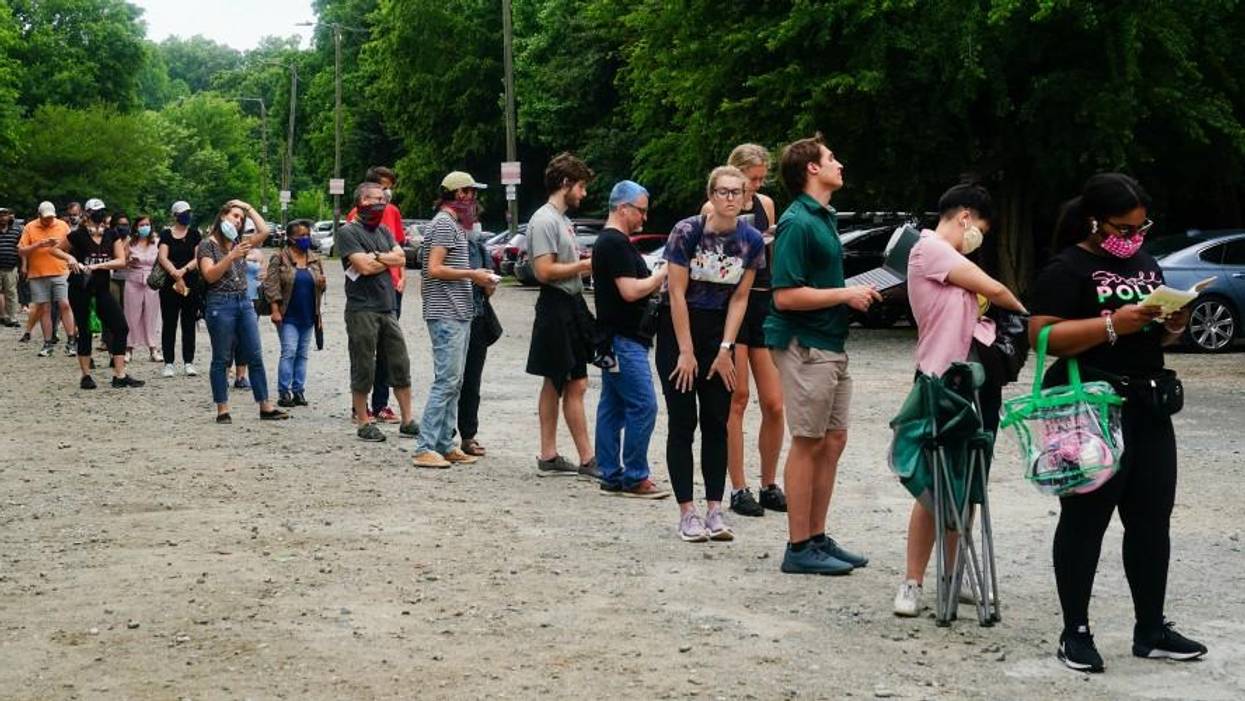
The law also imposes what the latest suit calls "onerous and unnecessary ID requirements on voters," limits early voting and the use of absentee ballot drop boxes, prohibits sending out unsolicited absentee ballots to voters, and even criminalizes handing out food and water to voters who are stuck waiting in long lines.
"It's a partisan effort to maintain power during the 2022 elections."
--Aunna Dennis, Common Cause Georgia
"S.B. 202 is the culmination of a concerted effort to suppress the participation of Black voters and other voters of color by the Republican state Senate, state House, and governor," the complaint says, pointing to that state's recent increases in voters of color and election analyses showing that they "usually provide strong support to Democratic candidates."
"The demographic changes and the voting patterns of voters of color have resulted in evolving political change in Georgia," the complaint continues. "Unable to stem the tide of these demographic changes or change the voting patterns of voters of color, these officials have resorted to attempting to suppress the vote of Black voters and other voters of color in order to maintain the tenuous hold that the Republican Party has in Georgia."
"In other words, these officials are using racial discrimination as a means of achieving a partisan end," the filing says. "These efforts constitute intentional discrimination in violation of the Constitution and Section 2 of the Voting Rights Act."
The earlier suit similarly states that "these unjustified measures will individually and cumulatively operate to impose unconstitutional burdens on the right to vote, to deny or abridge the voting rights of Black Georgians, and to deny Black voters in Georgia an equal opportunity to participate in the electoral process and elect candidates of their choice in violation of Section 2 of the Voting Rights Act."
Asked by reporters on Friday how the White House could respond to the development in Georgia, President Joe Biden said that "we don't know quite exactly what we can do at this point. The Justice Department's taking a look as well." Critics of the law, including Biden, have described it as "Jim Crow in the 21st century."
"The intent of this new law was to discriminate against minority and poor voters in Georgia," said GALEO chief executive officer Jerry Gonzalez. "Our communities will stand together to work against these Jim Crow tactics pushing to take our state backwards."
While S.B. 202 has gained national attention, it is among over 250 measures in 43 states that Republican legislators have introduced this year. National GOP voter suppression efforts have fueled calls for the Democrat-controlled Congress to urgently pass the For the People Act and the John Lewis Voting Rights Advancement Act.
The Republican Party of Georgia advanced its sweeping assault on voting rights Monday by pushing through the state Senate legislation that would roll back no-excuse absentee voting and ramp up voter ID requirements, a move that drew outrage from activists who dubbed the measure "one of the worst voter suppression bills in the country."
As The Atlanta Journal-Constitution explained, SB 241 would "reduce the availability of absentee voting, restricting it to those who are at least 65 years old, have a physical disability, or are out of town." The bill, which now heads to the GOP-led state House of Representatives, would also require Georgians who wish to vote absentee to "provide a driver's license number, state ID number, or other identification."
The measure passed by a vote of 29-20, with every Democratic state senator voting no.
"America is at a turning point right now. Our democracy is in peril and our society divided along increasingly partisan lines," Democratic state Sen. Elena Parent said during tense debate over the GOP bill Monday. "It will not work. Voters see through transparent attempts to cling to power through suppressive and anti-democratic means."
Fair Fight Action, a voting rights organization founded by former Georgia gubernatorial candidate Stacey Abrams, warned that the Republican bill is "an attack on voters--and a blatant attempt by the GA GOP to placate far-right extremists."
"Over 1.3 million Georgians voted by mail in 2020, leading to historic turnout. Now, Georgia Republicans, led by [Lt. Gov.] Geoff Duncan, would ban no-excuse mail voting," the group said. "SB 241 harms Georgians of all political persuasions and undermines Georgia's democracy."
The Georgia Senate's passage of SB 241 came a week after the state's Republican-controlled House approved legislation that would cut the number of available ballot drop boxes, slash weekend early voting days, and intensify voter ID requirements for mail-in ballots, draconian restrictions that come in the wake of two major Democratic U.S. Senate victories in January and President Joe Biden's narrow win in the state in November.
"Collectively, these bills represent the most sustained effort to roll back access to the ballot in Georgia since the Jim Crow era," Ari Berman of Mother Jones reported Monday. "The same is true nationally, where Republicans have introduced 253 bills in 43 states in the first two months of this year to make it harder to vote."
In an interview with Mother Jones, Abrams said that with the Georgia state Republican Party's latest wave of aggressive voter suppression attempts, "we are seeing again and again this version of Jim Crow in a suit and tie."
"It is designed explicitly for the same reason as Jim Crow... to block communities of color from active participation in choosing the leadership that will guide their democracy," said Abrams.
Officials in Georgia's third most populous county came under fire from civil rights advocates Monday after announcing they would slash the number of early voting sites for the state's two critical U.S. Senate runoff elections by more than half.
"While these closures are likely to adversely affect many Cobb County voters, we are especially concerned that these closures will be harmful to Cobb County's Black and Latinx voters because many of the locations are in Black and Latinx communities."
--Civil rights groups
Half a dozen groups including the Georgia NAACP, the ACLU of Georgia, and the Southern Poverty Law Center sent a letter (pdf) to the Cobb County Board of Commissioners and Board of Elections and Registration urging them not to cut back on early voting sites. The officials plan on closing six of the county's 11 advance polling locations, claiming they do not have the resources to keep all of them open.
"While these closures are likely to adversely affect many Cobb County voters, we are especially concerned that these closures will be harmful to Cobb County's Black and Latinx voters because many of the locations are in Black and Latinx communities," the letter states.
According to (pdf) the Center for New Data, of the 10 Georgia polling locations with the highest estimated portion of voters spending longer than 30 minutes on-site, five are slated for closure.
Some 760,000 people live in the county, which lies just northwest of Atlanta. Its population is nearly 29% Black and over 13% Latinx and, although long a Republican stronghold, has become more liberal in recent years.
While Republican nominee Mitt Romney trounced former President Barack Obama by over 12 percentage points in the 2012 presidential election, Democratic nominee Hillary Clinton edged out President Donald Trump by two points in 2016 and President-elect Joe Biden easily defeated Trump by 14 points in 2020, largely on the strength of the very Black and Latinx voters who rights advocates warn would likely be adversely affected by the closure of polling sites during the coronavirus pandemic.
Covid-19, "which is ravaging the nation, has had extremely harsh effects in Black and Latinx communities and makes in-person voting on Election Day an untenable option for many voters," the groups' letter asserts.
"Moreover, due to widespread concerns with the reliability of the United States Postal Service, many voters are not comfortable requesting or casting absentee ballots by mail," the letter states. "As demonstrated by the record turnout during the advance voting period for the 2020 general election, advance voting is the only acceptable option for safe and secure voting for many voters."
Under Georgia law, if a Senate candidate does not receive at least 50% of the vote in a general election, the two top-finishing candidates must face each other in a runoff. On January 5, there will be two such elections, with Democratic challenger Jon Ossoff facing Sen. David Perdue in one and Rev. Raphael Warnock taking on Sen. Kelly Loeffler in the other.
On November 3, Perdue won 49.7% to Ossoff's 47.9%, while Warnock led Loeffler by a wider margin of 32.9% to 29.5%, with the GOP vote being split between Loeffler and Doug Collins, who received 20.0% of the vote.
If both Ossoff and Warnock emerge victorious, Democrats will gain control of the Senate, as incoming Vice President Kamala Harris will cast the tie-breaking vote. If either GOP incumbent wins, Republicans will remain in control of the Senate, posing what is likely to be a constant thorn in the side of President Joe Biden and his agenda.
Early voting for the Georgia Senate runoffs begins December 14.
It's very likely that Stacey Abrams is not governor of Georgia today because in 2018, she and thousands of the state's voters were victims of voter suppression that propelled then-Georgia Secretary of State Brian Kemp into the governor's office. She wasn't quiet about this, not just because the shenanigans probably cost her the election, but because the methods that were overtly employed to suppress the vote were of national significance--and echoed the racist tradition of preventing Blacks from voting in the Jim Crow era.
Today, President Donald Trump is not conceding the state of Georgia to President-Elect Joe Biden, despite having advanced no plausible grounds for disqualifying the 14,000 votes that he trails by in the formal count. It is widely understood that Trump's declaration that "everyone knows that we won the state" is a temper tantrum rather than a serious, evidence-based challenge to the official results in this electorally important Southern state.

For NPR (11/18/20), though, Abrams' and Trump's complaints are more or less the same. "A refusal to concede isn't a new concept to Georgia," wrote Emma Hurt of Atlanta NPR affiliate WABE, because Abrams "also refused to concede to her Republican opponent." The piece does cite a spokesperson for Abrams as arguing that "her situation in 2018 and Trump's today are nothing alike," but it also quotes the official who manages Georgia's voting system as saying that claims of fraud in 2020 and suppression in 2018 are both "false," and that both charges "undermine confidence in the system."
Meanwhile, the fact that Abrams criticized the vote is cited by Kemp's former communications director as justification for Trump's quest to overturn the election:
Stacey Abrams said that she had questions, and she wanted to count the votes, etc., etc. -- so that same opportunity and process should be afforded to the president as well.
Trump's refusal to concede in several states, including Georgia, is a comedy of absurdities and contradictions. Georgia Secretary of State Brad Raffensperger, a committed Republican, has not only defended the state's balloting against Trump's accusations (Yahoo! News, 11/17/20) but also exposed how Sen. Lindsey Graham (R.-S.C.) has pressured him to throw out votes in the president's favor (CNN, 11/17/20). Raffensperger said he and his wife have received threatening text messages warning of consequences if the state doesn't ultimately go to Trump (The Hill, 11/18/20; Washington Post, 11/16/20), including one that read: "You better not botch this recount. Your life depends on it."
These hamhanded efforts to reverse the election results are not the same kind of complaint that Abrams made; they are an example of what she was complaining about, the negation of Black voting power in a state that traditionally disenfranchised African-American citizens. And the record about what Abrams' protested two years ago is clear. For example, the Guardian (11/10/18) reported that 668,000 voters were purged in the state in 2017:
Of those 2017 numbers, investigative reporter Greg Palast told Salon, 200,000 people left the state, died or moved out their district, making them legitimate cancellations. However, through litigation, he got the entire purge list. "Of the 400,000 who supposedly moved, our experts will tell a court that 340,134 never moved--wrongly purged," Palast told the Guardian, saying people had been purged for not voting in an election or two.
New York (12/13/19) wrote:
As Secretary of State since 2010, [Kemp] had eight years to winnow the electorate to his liking before November 2018, and did so by purging 1.4 million voters from the rolls, placing thousands of registrations on hold, and overseeing the closure or relocation of nearly half of the state's precincts and polling sites. The unstated goal -- though it was clear to anyone watching similar efforts by Republicans across the South -- was to reduce the voting power of unfavorable constituencies: black people, poor people, students and others.
Georgia's voter suppression tactics in the 2018 race were even probed by Congress, as reported by the New York Times (3/6/19). House investigators pointed out that voters in largely Black counties waited in voting lines for hours while "hundreds of available voting machines sat unused in government warehouses."
The problem here is that one could be highly critical of Abrams' politics and, if one was a Georgia voter, might not want her to be governor, and still acknowledge that her complaints about voter suppression are substantively different than Trump's public meltdowns. For one thing, she is advocating for a fairer process that would benefit everyone, not just her. Trump just wants to find a way to get around his loss.
And there's even a hint in the piece that NPR knows this. For example, it quotes Myrna Perez, the elections and voting rights director at the Brennan Center, who talks about the partisanship of elections. NPR says that complaints about the election process must be based on "providing evidence to back up claims about the voting system" and a "commitment to the system," but that so far, according to Perez, "Trump has offered neither."
NPR doesn't explicitly say, or quote a nonpartisan source as saying, that Abrams did present substantive evidence of voter suppression. Still, noting the absence of evidence from Trump makes an implicit contrast--one stark enough to raise the question, why make this comparison in the first place?
Despite the piece's suggestion that the two cases are different, the association takes Abrams down a notch, unfairly giving the impression that she, too, was a sore loser like Trump. This comes at a time when many observers have cited her dogged campaigning as one reason Biden did so well in Georgia this year (AP, 11/8/20). She is also looking for a rematch against Kemp in two years (Daily Beast, 11/12/20).
Anjali Enjeti, co-founder of the Democratic get-out-the-vote group They See Blue Georgia, told FAIR:
This headline itself is an egregious false equivalency rooted in toxic both sides-ism that functions to normalize lies and extremism. And the comparison in the headline between an election outcome involving a Black candidate and the rampant, well-documented voter suppression of Black voters in Georgia during the 2018 midterm to a white nationalist president whose political party is still hellbent on throwing out Black votes in the 2020 presidential election -- is racist. NPR should apologize for the headline and replace it.
In short, NPR gave readers a variety of viewpoints, giving the readers the choice of which set of facts they want to accept as true. That's a dangerous gambit for a news organization, who should rather be trying to find the truth in the muck. Enjeti again:
Let's also take a look at the content of the article itself which, at first blush, might seem more objective and balanced than the headline, when really it's not. The writer here interviews members of both political parties about the two elections, and reveals their opinions about the outcomes. But the article fails at the first sentence because the entire premise of the article is based in the very same lie suggested in the headline's question. This is a classic fruit-of-the-poisonous-tree issue in mainstream media. An article based on a falsehood is rooted in fiction, not the truth, and no attempt by the writer to rehabilitate the story will succeed. On the contrary, the article feeds the lie, and gives it a platform, and strongly suggests that the lie was reasonable to begin with, that it was merely a different perspective on the same truth.
NPR makes the fight against racist voter suppression seem like hyperbolic partisanship when placed next to Trump's refusal -- it "minimizes the seriousness of voter suppression," according to Enjeti. Trump is refusing to concede because he doesn't like the outcome. Abrams' protests two years ago were about a systemic wrong committed not just against her, but against the Georgia voting public, especially Black voters.
NPR, in this instance, trivialized the outcry against not just this instance of voter suppression, but the context of historic voter disenfranchisement in the South. NPR might not have meant to do this, but the damage is done.
The report quotes the Brennan Center's Perez calling on "voters to be demanding a bit more of our politicians. That they be more good faith, and that they look at the evidence themselves." A necessary first step, though, is for media outlets to look at the evidence themselves--which is just what NPR did not do.
Demands for accountability and sweeping reforms mounted Saturday after Atlanta police shot and killed Rayshard Brooks, a 27-year-old black man, Friday night amid a wave of global protests against police violence and systemic racism sparked by the death of George Floyd in Minneapolis late last month.
"Sleeping in a drive-thru must not end in death."
--Stacey Abrams, Georgia activist
In a message to Atlanta Mayor Keisha Lance Bottoms on Saturday, the Georgia NAACP tweeted that the city's police department "needs a serious overhaul. The continuation of these kinds of actions require immediate resolution. Instead of seeing an improvement, it continues to happen day after day."
The Georgia NAACP said the Atlanta Police Department (APD) "has had a culture of excessive use of force" and called for Police Chief Erika Shields to be "relieved immediately." The group also demanded the release of "body cam footage and all surveillance video from surrounding buildings" to shed light on Brooks' killing.
Bottoms announced during a Saturday afternoon news conference that Shields offered her resignation, which she accepted. The mayor also said that she does "not believe this was a justified use of deadly force" and she has "called for the immediate termination of the officer" who shot Brooks.
Brooks died following surgery at a local hospital after APD officers were dispatched to a Wendy's restaurant around 10:30 pm Friday to respond to "a complaint of [Brooks] in a vehicle parked in the drive-thru asleep, causing other customers to drive around the vehicle," according to the Georgia Bureau of Investigation (GBI), which is investigating the shooting. The involved officers have not yet been publicly identified.
GBI initially said that after Brooks failed a field sobriety test, "officers attempted to place the male subject into custody. During the arrest, the male subject resisted and a struggle ensued" involving a Taser. In an updated statement Saturday, GBI said, "An earlier account of this incident was based on the officer's body cam which was knocked off during the physical struggle, preventing the capture of the entire shooting incident."
Video footage of Brooks' encounter with APD circulated on social media and appears to show him running away from officers when he was shot. The updated GBI statement said the bureau had "obtained additional surveillance video from the Wendy's restaurant," which was released to the public.
"Agents have also reviewed video posted on social media," GBI added. "These new videos indicate that during a physical struggle with officers, Brooks obtained one of the officer's Tasers and began to flee from the scene. Officers pursued Brooks on foot and during the chase, Brooks turned and pointed the Taser at the officer. The officer fired his weapon, striking Brooks."
Rev. James Woodall, state president of the Georgia NAACP, told reporters Saturday that "this is not the first time a black man has been killed for sleeping." He added that "while Atlanta is often called 'the Black Mecca,' the Atlanta Police Department has a continued history of antagonizing our communities."
The Washington Post reported that during a call with journalists Saturday afternoon,
Woodall stopped short of calling for Bottoms' resignation, but said that it was her responsibility to ensure citizens have "the kind of police department the City of Atlanta deserves." Woodall also called out the lack of public statements from the mayor's office and police department as of early Saturday afternoon.
Woodall said the Georgia NAACP has hired a private investigator and that a press conference would take place Tuesday morning.
According to the Atlanta Journal-Constitution, Woodall was asked if his group has been in contact with Bottoms or APD. "At this present moment," he said, "we have not heard from the mayor herself or the police chief, and the silence is deafening."
Stacey Abrams, a Georgia voting rights activist who ran for governor as a Democrat in 2018, took to Twitter Saturday to demand investigations and accountability in this case as well as broader reforms in local policing. She declared: "Sleeping in a drive-thru must not end in death."
Brooks' death added to the growing outrage over police violence toward people of color, particularly black Americans, that has fueled #DefundPolice demands and demonstrations across the U.S. and in other countries for nearly three weeks.
Saturday also saw demonstrations in other U.S. cities including Washington, D.C. as well as in London, Paris, Prauge, and Perth, the capital of Western Australia. Some events in Europe drew far-right counter-protesters who clashed with police.
This post was updated after Atlanta Mayor Keisha Lance Bottoms announced Saturday that police Chief Erika Shields had resigned.