SUBSCRIBE TO OUR FREE NEWSLETTER
Daily news & progressive opinion—funded by the people, not the corporations—delivered straight to your inbox.
5
#000000
#FFFFFF
To donate by check, phone, or other method, see our More Ways to Give page.


Daily news & progressive opinion—funded by the people, not the corporations—delivered straight to your inbox.
More than 20 years later, the Times continues to diss anyone who got it right on the war after they got it so wrong.
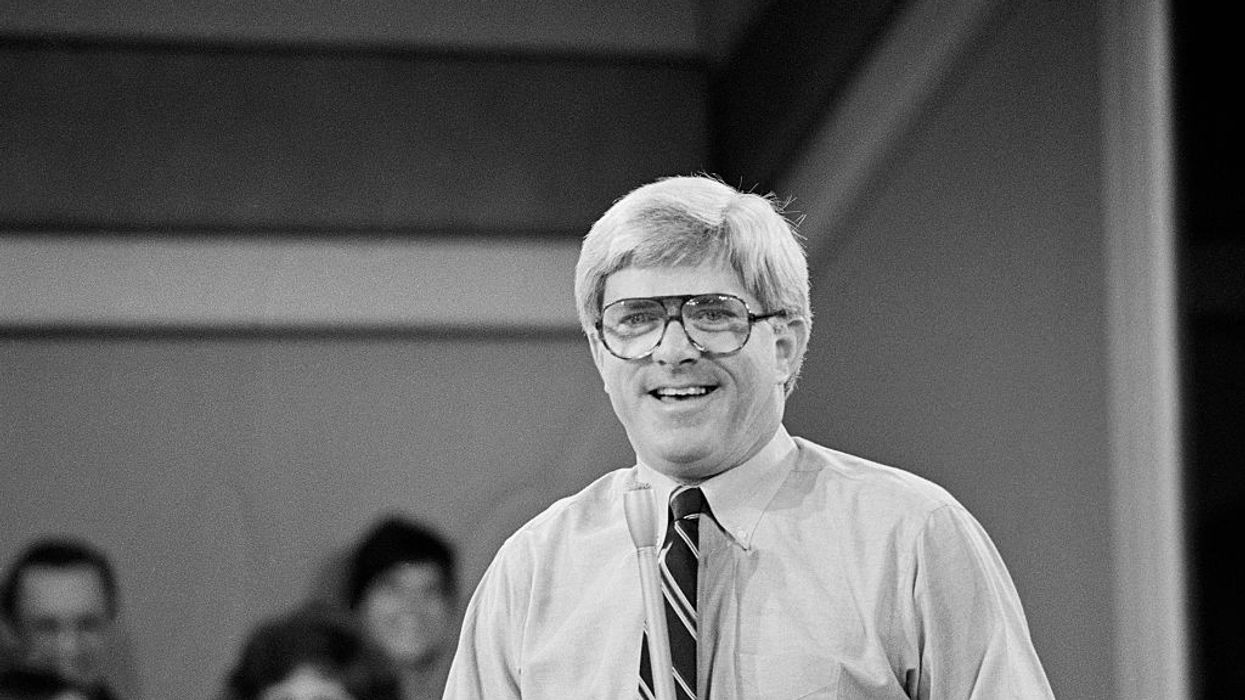
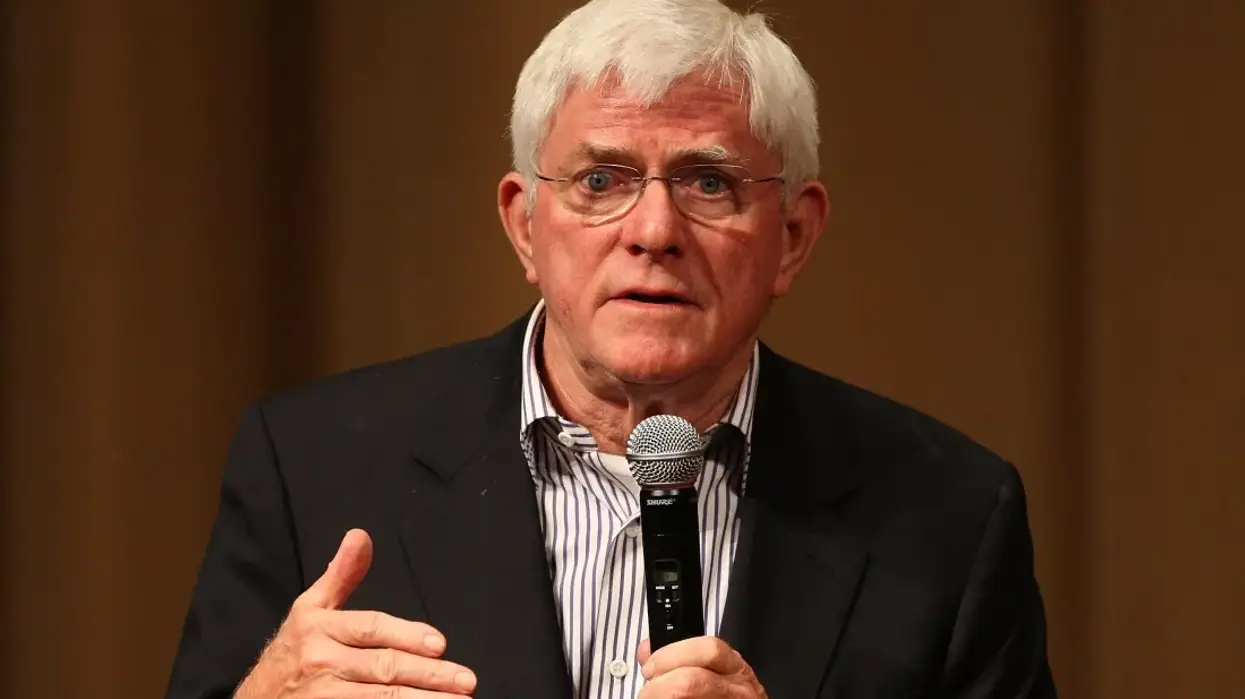
If I were teaching a class called “How to Slime People in a Subtle, Scuzzy Way in the New York Times,” this paragraph from the Times‘ obituary (8/19/24) of Phil Donahue—written by Clyde Haberman, Maggie’s father—would be part of the curriculum:
In 2002, Mr. Donahue tried a comeback with a nightly talk show on MSNBC. Barely six months in, the program was canceled. He said later that network executives were unhappy with his fervent liberalism and his opposition to the looming war in Iraq. (In 2007, he co-produced and co-directed an antiwar documentary, Body of War.) It hardly helped that his ratings lagged far behind those of competitors on Fox News and CNN.
Even now—more than 20 years after the New York Times was catastrophically wrong on the Iraq War—the paper cannot forgive anyone who was right.
1. Yes, Donahue “said later that network executives were unhappy with his fervent liberalism and his opposition to the looming war in Iraq.” Do you know who else said this? MSNBC‘s network executives, in a leaked memo. Get the fuck out of here with the “he said” bullshit.
MSNBC executives said, in a leaked memo, that Donahue was “a difficult public face for NBC at a time of war… because of guests who are anti-war, anti-Bush.” This was reported by CNN (3/5/03), among other outlets, at the time. Unfortunately, these outlets are so obscure that the Times cannot access them.
2. Yes, Donahue’s “ratings lagged far behind those of competitors on Fox News and CNN.” It was also the top-rated show on MSNBC. Sadly, the Times does not know this, because the only place it was reported at the time was in such little-known publications as the New York Times (2/26/03).
The journalist and TV show host, who died Sunday at the age of 88, made his mark on our society. He fought for the underdog. He did it with style and grace and a wonderful sense of humor. He changed my life and the lives of so many others.
Phil Donahue passed away Sunday night, after a long illness. He was beloved by those who knew him and by many who didn’t.
He started as a local reporter in Ohio, was a trailblazer in bringing social issues to a national audience as a daytime broadcast TV host, and then he was pretty-much banished from TV by MSNBC because he—accurately, correctly, and morally—questioned the horrific U.S. invasion of Iraq.
In the 1970s, Phil took progressive issues and mainstreamed them to millions through his syndicated daytime show. He was a pioneer in syndication. He also pioneered on the issues; his most frequent guests on his daytime show were Ralph Nader, Gloria Steinem, and Rev. Jesse Jackson. They appeared dozens of times as Phil boosted civil rights, women’s rights, and consumer rights. He regularly hosted Dr. Sidney Wolfe warning of the greedy pharmaceutical industry and unsafe drugs. Raised a Catholic, he also featured advocates for atheism.
Mainstream media obits will likely focus on his daytime TV episodes that included male strippers or other titillation, but Phil was serious about the issues—and did far more than most mainstream TV journalists to address the biggest issues.
I was a senior producer on Phil’s short-lived MSNBC primetime show in 2002 and 2003. It was frustrating for us to have to deal with the men Phil called “the suits”—NBC and MSNBC executives who were intimidated by the Bush administration and resisted any efforts by NBC/MSNBC to practice journalism and ask tough questions of Washington before our young people were sent to Iraq to kill or be killed. Ultimately, Phil was fired because—as the leaked internal memo said—Donahue represented “a difficult public face for NBC at a time of war.”
But before we were terminated, we put guests on the screen who were not commonly on mainstream TV. We offered a full hour with Barbara Ehrenreich on Labor Day in 2002; a full hour with veteran journalist Studs Terkel; interviews with progressive members of Congress, including Bernie Sanders and Dennis Kucinich; and segments with the "maverick" Texas Observer columnist Molly Ivins; and offered platforms to foreign policy experts like Phyllis Bennis and Laura Flanders as well as Palestinian advocates, including Hanan Ashrawi.
No one on American television cross-examined Israeli leaders like Phil did when he interviewed then-Israeli Foreign Minister Shimon Peres, and later, former Prime Minister Ehud Barak. They seemed stunned—never having faced such questioning from a U.S. journalist.
But “the suits” ruined our show when they took control and actually mandated a quota system favoring the right wing: If we had booked one guest who was antiwar, we needed to book two that were pro-war. If we had one guest on the left, we needed two on the right. When a producer suggested booking Michael Moore—known to oppose the pending Iraq war—she was told she’d need to book three rightwingers for political balance.
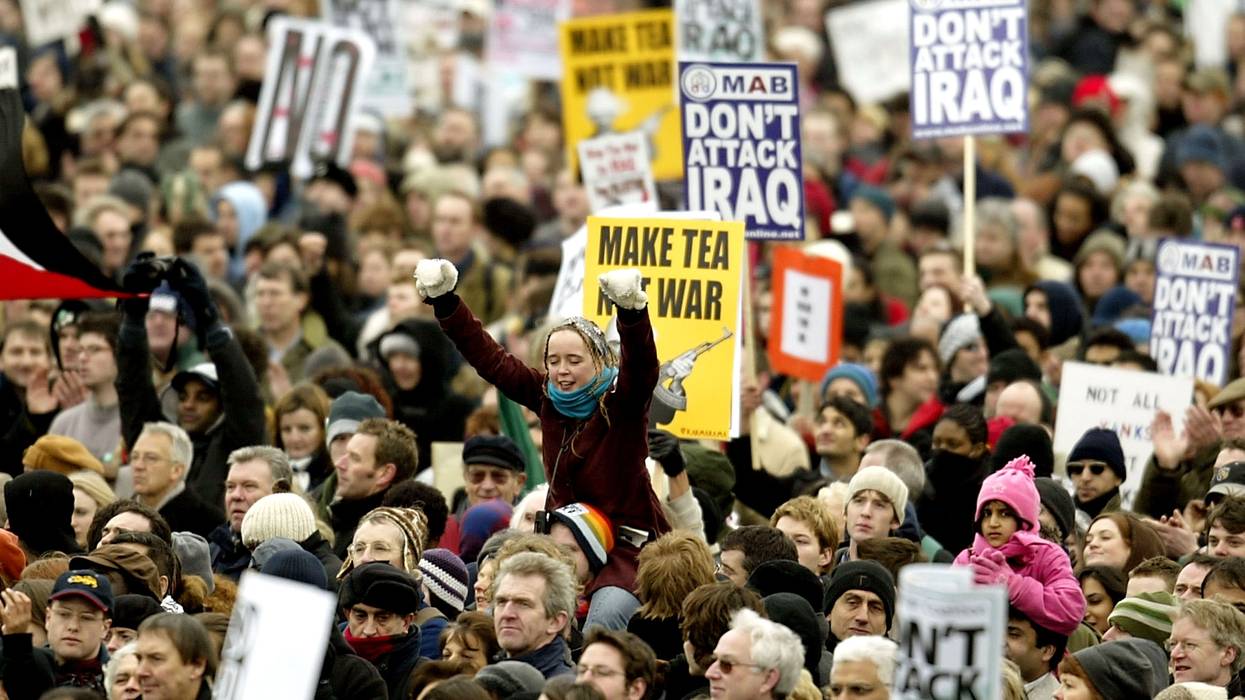
Three weeks before the Iraq war started, and after some of the biggest antiwar mobilizations the world had ever seen (which were barely covered on mainstream TV), the suits at NBC/MSNBC terminated our show.
- YouTubeyoutu.be
Phil was a giant. A huge celebrity who supported uncelebrated indy media outlets. He loved and supported the progressive media watch group FAIR (which I founded in the mid-1980s.)
Phil put Noam Chomsky on mainstream TV. He fought for Ralph Nader to be included in the 2000 presidential debates. He went on any TV show right after 9/11 that would have him to urge caution and to resist the calls for vengeful, endless warfare that would pointlessly kill large numbers of civilians in other countries. He opposed active wars and the Cold War with the Soviet Union. He supported war veterans and produced an important documentary on the topic: “Body of War,” on the life and death of Tomas Young.
Phil Donahue made his mark on our society. He fought for the underdog. He did it with style and grace and a wonderful sense of humor. He changed my life. And others’ lives.
He was inspired by the consciousness-raising groups he saw in the feminist movement and he sought to do consciousness-raising on a mass scale . . . using mainstream corporate TV. He did an amazing job of it.
As we mark the anniversary of the murderous U.S. invasion of Iraq, it's imperative to reclaim the memory of this war not only from the Bush administration officials who waged it, but also from the corporate media system that helped sell it.
"All wars are fought twice, the first time on the battlefield, the second time in memory." -- Viet Thanh Nguyen
As mainstream U.S. media outlets pause to remember the U.S. invasion of Iraq, it's clear that there's a lot they hope we'll forget—first and foremost, the media's own active complicity in whipping up public support for the war.
But the more you dig into mainstream news coverage from that period, as our documentary team did last week when we put together this five-minute montage from our 2007 film War Made Easy, the harder it is to forget how flagrantly news networks across the broadcast and cable landscape uncritically spread the Bush administration's propaganda and actively excluded dissenting voices.
After 20 Years, Will US News Media Finally Admit its Craven Complicity in Iraq War? | WAR MADE EASYwww.youtube.com
The numbers don't lie. A 2003 report by the media watchdog Fairness & Accuracy In Reporting (FAIR) found that in the two weeks leading up to the invasion, ABC World News, NBC Nightly News, CBS Evening News, and the PBS Newshour featured a total of 267 American experts, analysts, and commentators on camera to supposedly help make sense of the march to war. Of these 267 guests, an astounding 75% were current or former government or military officials, and a grand total of one expressed any skepticism.
Meanwhile, in the fast-growing world of cable news, Fox News's tough-talking, pro-war jingoism was setting the standard for ratings-wary executives at most of the more "liberal" cable networks. MSNBC and CNN, feeling the heat of what industry insiders were calling "the Fox effect," were desperately trying to outflank their right-wing rival—and one another—by actively eliminating critical voices and seeing who could bang the war drums loudest.
At MSNBC, as the Iraq invasion approached in early 2003, network executives decided to fire Phil Donahue even though his show had the highest ratings on the channel. A leaked internal memo explained that top management saw Donahue as "a tired, left-wing liberal" who would be a "difficult public face for NBC in a time of war." Noting that Donahue "seems to delight in presenting guests who are anti-war, anti-Bush and skeptical of the administration's motives," the memo warned ominously that his show could end up being "a home for the liberal antiwar agenda at the same time that our competitors are waving the flag at every opportunity."
Two decades later, as we hurtle ever closer to potentially catastrophic new wars, there's been virtually no accountability or sustained reporting in mainstream news media to remind us of their own decisive role in selling the Iraq war.
Not to be outdone, CNN news chief Eason Jordan would boast on air that he had met with Pentagon officials during the run-up to the invasion to get their approval for the on-camera war "experts" the network would rely on. "I think it's important to have experts explain the war and to describe the military hardware, describe the tactics, talk about the strategy behind the conflict," Jordan explained. "I went to the Pentagon myself several times before the war started and met with important people there and said . . . here are the generals we're thinking of retaining to advise us on the air and off about the war, and we got a big thumbs up on all of them. That was important."
As Norman Solomon observes in our film War Made Easy, which we based on his book of the same name, the bedrock democratic principle of an independent, adversarial press was simply tossed out the window. "Often journalists blame the government for the failure of the journalists themselves to do independent reporting," Solomon says. "But nobody forced the major networks like CNN to do so much commentary from retired generals and admirals and all the rest of it . . . It wasn't even something to hide, ultimately. It was something to say to the American people, 'See, we're team players. We may be the news media, but we're on the same side and the same page as the Pentagon.' . . . And that really runs directly counter to the idea of an independent press."
It's an act of forgetting we can ill afford, especially as many of the same media patterns from 20 years ago now repeat themselves on overdrive...
The result was a barely debated, deceit-driven, headlong rush into a war of choice that would go on to destabilize the region, accelerate global terrorism, bleed trillions of dollars from the U.S. treasury, and kill thousands of U.S. servicemembers and hundreds of thousands of Iraqis, most of them innocent civilians. Yet two decades later, as we hurtle ever closer to potentially catastrophic new wars, there's been virtually no accountability or sustained reporting in mainstream news media to remind us of their own decisive role in selling the Iraq war.
It's an act of forgetting we can ill afford, especially as many of the same media patterns from 20 years ago now repeat themselves on overdrive–from the full-scale reboot and rehabilitation of leading Iraq war architects and cheerleaders to the news media's continuing over-reliance on "experts" drawn from the revolving-door world of the Pentagon and the arms industry (often without disclosure).
"Memory is a strategic resource in any country, especially the memory of wars," the Pulitzer Prize-winning novelist Viet Thanh Nguyen has written. "By controlling the narrative of the wars we fought, we justify the wars we are going to fight in the present."
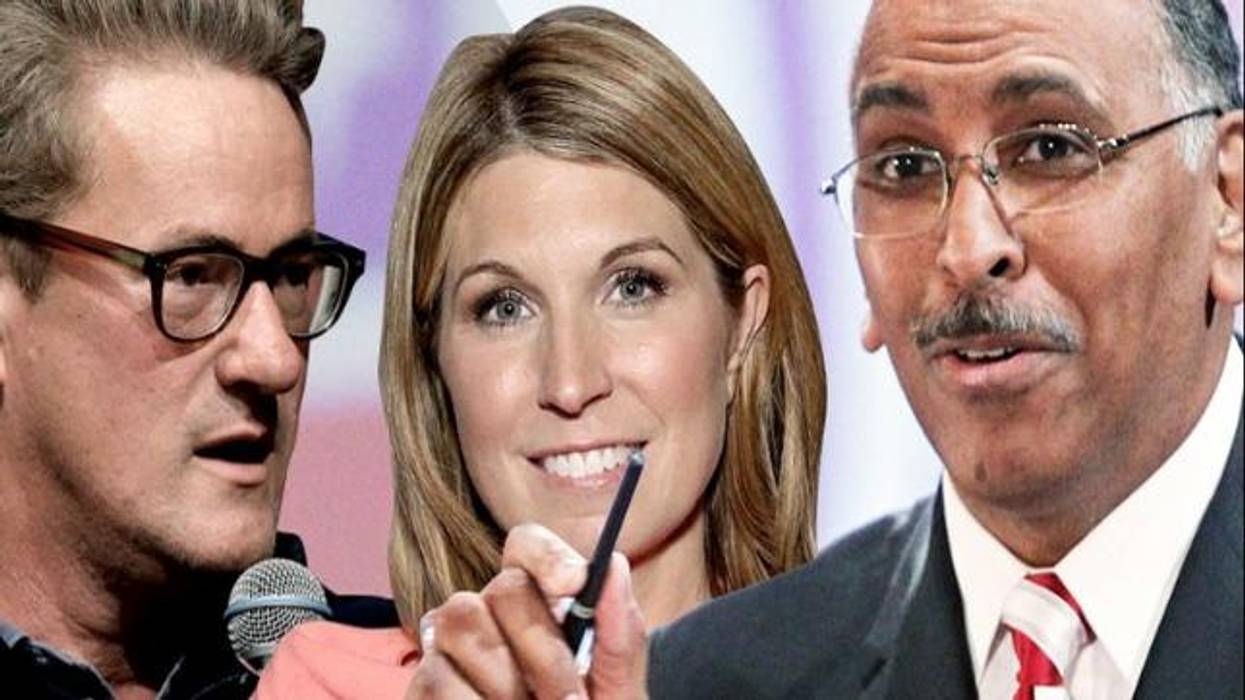
In the wake of Donald Trump's election in 2016, MSNBC had at least two clear options: It could respond to a swelling progressive viewer base by moving left, or it could keep playing the Beltway game and move right, loading up with #NeverTrump Republicans and dumping actual progressives. In choosing the latter -- albeit with a head-fake -- the news channel has significantly skewed its coverage, to the detriment of progressive politics and its own viewers.
"By ignoring the voices of those who are exploring bold solutions and challenging worn-out political orthodoxy, MSNBC is only reproducing the insular outlook that led the Democrats to political disaster over the course of the last decade, culminating in the debacle of 2016."
Oh, there's plenty of Trump-bashing to please MSNBC's booming viewer base. But it's often a cheap thrill, giving scant or no attention to what made Trump's presidency possible in the first place, let alone the challenge of building a coherent alternative. The channel is currently enjoying a ratings high, despite its leadership's centrist intentions, but that's no formula for the long haul, either for MSNBC or America.
"Without doubt, it's Trump and his antics that have provided MSNBC's ratings boom," said Jeff Cohen, author of "Cable News Confidential: My Misadventures in Corporate Media." "A President Hillary Clinton would have continued our country's unequal and militaristic status quo, and all the apologizing for her on MSNBC would have led to boring TV and lousy ratings."
Cohen founded the media watch group FAIR in 1986 (I was an early FAIR volunteer) and later worked on-air at CNN and Fox and as a producer for Phil Donahue at MSNBC, before Donahue's show was axed for political reasons on the brink of the Iraq war (more on that below). Currently director at the Park Center for Independent Media at Ithaca College, Cohen belongs to the long but sparse tradition of independent progressives who've spent time in the innermost bowels of the media establishment and lived to talk about it.
"There are two big problems facing our country, and they have for decades -- right-wing extremism and Democratic corporatism," Cohen said. "MSNBC gives you exactly one-half of that story. It reminds me of the old George Carlin joke: 'Here's a partial score in from the West Coast: Los Angeles 7.'"
Bernie Sanders' 2016 candidacy threw a harsh light on the other half of the story, which helps explain why his supporters get so little MSNBC airtime, in contrast to other venues Cohen cited.
Overtly left-oriented outlets like Democracy Now!, The Young Turks and Common Dreams continue to cover both problems, Cohen observed.
If MSNBC wasn't devoid of strong, public Sanders supporters and other genuine progressives, you'd hear about both problems. Look at who MSNBC's heroes seem to be lately: war hawks and perjurers formerly with U.S. intelligence and the Pentagon. Their parade of ex-military analysts have a track record of getting the facts wrong or dissembling, but that's ancient history not to be discussed as long as they're willing to even tepidly criticize Trump. I hope [Robert] Mueller puts together a strong case, but he's no hero of the left. Nor is [James] Comey. Nor is Gen. Barry McCaffrey.
Sanders' supporters weren't the only ones squeezed out, however. Even a staunch Hillary Clinton supporter like former Salon editor Joan Walsh was recently dumped by MSNBC -- and rapidly hired by CNN -- as the ranks of NeverTrumper contributors continued to swell. There's room for George Will, Bill Kristol and David Frum, and even for dogged Trump apologist Hugh Hewitt, although the logic of listening to these people is virtually nonexistent.
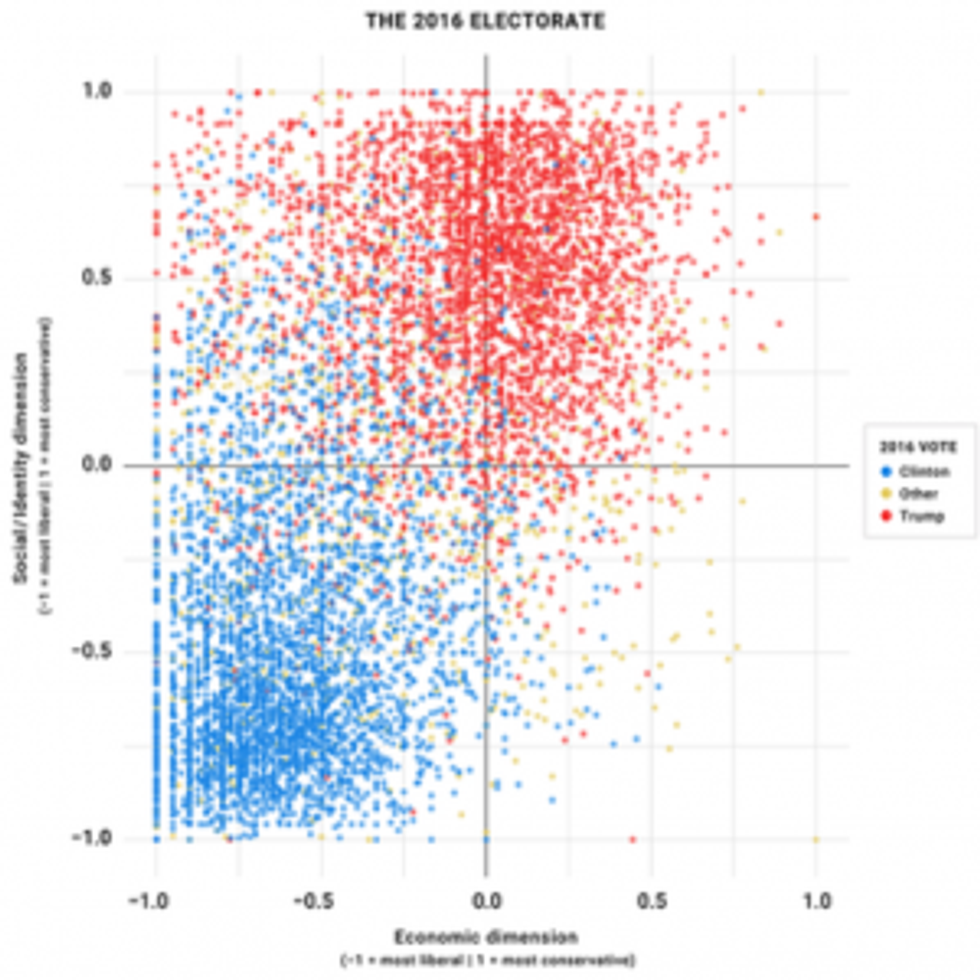
It's not just that these conservatives or conservative-adjacent commentators are associated with so many past political disasters. It's also unfair to present them as representing any significant slice of pubic opinion. In his post-election analysis published in June 2017, Lee Drutman created 12 indices to analyze voters' views, which he also condensed down into two broader ones:
He then produced the following scatterplot graph:

The large, and nearly empty, lower right quadrant represents libertarianism, broadly speaking, which is the home turf of most MSNBC-style Republicans. The dense cluster of blue dots in the lower-left quadrant represent the Democratic base, which is clearly MSNBC's core audience. But there are also many more blue dots (as well as red ones) in the upper-left quadrant than in the lower right. These are, more or less, socially conservative but economically progressive voters to whom the Democrats lost much more ground to than expected in the 2016 election -- exactly the folks who cost Hillary Clinton the election in Pennsylvania, Michigan and Wisconsin. They are being effectively ignored by MSNBC's programing at the same time that the channel's core viewers are being underserved, and treated to a diet that is oversaturated with lower-right NeverTrump Republicans.
A healthy political dialogue, free of corporate dictates, would allow the dominant voices in the lower-left liberal-progressive quadrant to be fully heard in their own terms, rather than constantly being "balanced" with Republicans who do not represent a significant base, even within the Republican and/or conservative coalition. Instead, it would allow liberals and progressives to engage with thoughtful representatives of the upper-left quadrant, who, believe it or not, actually exist.
What's more, that would involve a much richer, more diverse mix of progressive voices, who are now virtually invisible on MSNBC: rural progressives like Nebraska Democratic Party chair Jane Kleeb, for example, or leftist women of color like Current Affairs contributing editor Briahna Joy Gray.
A striking example of what's missing at MSNBC can be seen in how the network virtually ignored the wave of red-state teachers' strikes. On March 2, FAIR published an article noting that except for "one two-minute throwaway report" on a daytime show, MSNBC had not dedicated a single segment to the West Virginia teachers' strike, including on the programs of supposed progressive stalwarts Chris Hayes, Rachel Maddow and Lawrence O'Donnell. Hayes did a short segment later, after the FAIR story posted, but MSNBC returned to generally ignoring the issue since then.
To say that's underselling the importance of these strikes is to put it mildly. A month later, as teachers' strikes had spread to Kentucky, Oklahoma and Arizona, political scientist Corey Robin called them "the real midterms" and described them as epochal. Looking back to the watershed year of 1978, Robin noted that national voters re-elected "a Democratic House and a Democratic Senate by wide margins," despite "two years of a historically unpopular Democratic president" (Jimmy Carter) with tanking approval ratings.
But those weren't the midterms that mattered most, in Robin's account. What really mattered in 1978 was "the passage of Proposition 13 in California, which radically gutted property taxes ... and made it extremely difficult to raise taxes in the future," launching a nationwide right-wing rebellion against taxes that fueled the landslide election of Ronald Reagan two years later. Now, in 2018, the wave of teachers' strikes signals the beginning of a movement, Robin argued, "to confront the real governing order of the past 40 years: the Prop 13 order."
You could see the reality of this unfolding on social media, but you couldn't hear anything close to that analysis on any MSNBC program. Indeed, you couldn't hear any sustained discussion at all, from any side of the issue. Robin's arguments are exactly the sort of thing that belongs on the network, given the reality of voters' views in Drutman's chart.
I asked Robin what other issues he thought MSNBC ought to explore. "I've been fascinated by how Trump and the GOP got completely rolled on the budget, forced to adopt a budget with a lot of the spending that they hate," he said -- a subject that's been noted in the media, but hardly explored in any depth. "I'd also love to get a lot more coverage on all these Democratic primaries: Who are these people running for office? What are their positions, their ideologies, etc.?" That, too, is largely terra incognita, with a few scattered exceptions, which is surprising given the record activity levels of campaign activity. "Last, I'd love to see good reporting on millennials," Robin concluded -- a particularly important subject, given that generation's strong progressive tilt and its obvious near-term electoral importance.
Returning to the teachers' strikes, Elizabeth Catte is an on-the-ground expert who could further enrich the discussion. She's the author of "What You Are Getting Wrong About Appalachia," which, as she puts it, "uses radical history to challenge perceptions of the region as a hub of white, working-class woe." Catte has appeared on MSNBC, but not as the regular contributor she should be. "The lessons of the West Virginia teachers' strike are complex," she told me. "But one takeaway for Democrats, or anyone interested in understanding our current moment, should be that people are desperate for a better range of political options," precisely what MSNBC ought to provide.
"West Virginians have witnessed a remarkable indifference among their elected leaders to the common good, and have instead seen their futures traded away for incentives aimed at fickle corporations and their investors," Catte continued. "Democrats who have seen their fortunes fall in so-called Trump country should prioritize righting this imbalance or face squandering any political momentum these recent collective actions might offer."
A better range of political options necessarily calls for different perspectives on economics -- another way in which MSNBC falls short. Ali Velshi and Stephanie Ruhle, hosts of the daytime business show that bears their names, are well-intentioned but highly conventional economic reporters. To their credit, they enthusiastically debunk a lot of right-wing garbage. But there are plenty of dubious dogmas they simply accept, such as the supposed virtues of balanced budgets, or blaming the federal budget deficit on Social Security and Medicare. MSNBC hardly ever offers time to economists who dispute such claims, such as Dean Baker (defender of Social Security and Medicare and early predictor of the housing bubble crash) or Stephanie Kelton (proponent of Modern Monetary Theory and the universal job guarantee), for example.
In addition, when President Trump recently announced his steel and aluminum tariffs, Velshi and Ruhle pointed out some typical and obvious Trump lies and misdirections, but offered no hint that there are legitimate arguments for protectionism that have a long history. In contrast, Democracy Now! featured a debate between two progressives -- Lori Wallach, author of "The Rise and Fall of Fast Track Trade Authority," and Michael Hudson, author of "America's Protectionist Takeoff 1815-1914" -- which cast both sides of the argument in a very different light.
Numerous other examples could be offered. As indicated above, Drutman analyzed voter views in terms of 12 different issue indices. There are progressive viewpoints that never get aired on MSNBC for virtually every one of those, and of course there is never any sustained dialogue about linking those different progressive viewpoints together.
There are a great many progressive ideas with substantial public support that rarely even get mentioned. The Progressive Change Institute's Big Ideas poll in early 2015 identified 16 ideas with 70 percent support or more, plus dozens more with majority support, that are rarely if ever mentioned on MSNBC. I wrote about it that July, in a story about Bernie Sanders' alignment with popular issues. These included:
PCI and allied groups like the Democratic Socialists of America have identified a solid core of popular progressive ideas that certainly deserve a hearing under any reasonable theory of democracy. Instead of seeing their representatives in policy discussions at MSNBC, we get the same old tired mix of views that failed to excite voters enough to elect Hillary Clinton in 2016.
There's a simple explanation for this: corporate control and the conceptually narrow mindset that accompanies it, especially on matters of foreign policy. This was not immediately obvious when MSNBC cancelled "The Phil Donahue show," as Cohen recalls:
We were terminated by MSNBC because our skeptical questioning about whether it would be wise to invade Iraq and whether cause existed was so totally out of tune with the rest of the channel's programming, which offered little debate on those questions. Internal NBC documents that leaked show that the termination was political and censorial. While we were terminated for asking the right journalistic questions, those who got it so totally wrong saw their careers at MSNBC and elsewhere flourish.
In fact, the idea that MSNBC is a "liberal Fox News" fundamentally misunderstands both the media environment and recent network history. Fox News is a deliberately ideological propaganda station, conceived as such by Roger Ailes long before it ever went live. MSNBC is a commercial enterprise that stumbled into a center-left position simply because that was the available audience, given Fox News' and CNN's prior positioning. But no one master-planned it that way.
In fact, the network has at times lurched more to the right than the left. In 1999, for example, MSNBC paired Oliver North -- yes, he of the Reagan administration and the Iran-contra scandal -- with former federal prosecutor Cynthia Alksne as co-anchors of "Equal Time." This is of course a familiar format to cable news viewers: Rabid right-wingers coupled with tepid centrists who supposedly represent the left.
That was no fluke: At the tail end of the Bill Clinton era, MSNBC was clearly experimenting with a sharp right turn. The network also added shows in 1999 that featured reactionary dinosaur John McLaughlin and the now-infamous Laura Ingraham, then a young conservative bomb-thrower.
Compared to that, today's MSNBC might not look so bad. But compared to what America both wants and needs in terms of new ideas and a new direction, the so-called liberal network is still staggering around in the dark instead of lighting the way. In all the ways touched on above, MSNBC's corporate culture is sharply at odds with the most pressing concerns of its primary audience, not to mention the whole nation. By ignoring the voices of those who are exploring bold solutions and challenging worn-out political orthodoxy, MSNBC is only reproducing the insular outlook that led the Democrats to political disaster over the course of the last decade, culminating in the debacle of 2016. We can't afford that.
Body of War TrailerBody of War Trailer.
Eleven years have passed since the United States invaded Iraq in an unprovoked, unnecessary, unconstitutional action that violated international law.
Not long after the March 2003 military blunder began, journalist Tim Russert asked then-Sen. John Kerry, "Are you sorry you voted for the war?" He answered in a word, "Profoundly."
Only 23 U.S. senators voted no. If there are others among the 77 aye voters who, like now-Secretary of State Kerry, have publicly offered remorse for their misguided vote, kindly notify the Center for Constitutional Rights (CCRJustice.org). Acknowledging a mistake is "manning up" in its finest expression, and the center will publish your mea culpa promptly.
The White House Iraq Group, headed by Karl Rove, brilliantly executed its pre-war propaganda. Rove and his aides summoned select members of Congress to the White House for flattering "private" briefings and given talking points.
Like obedient third graders, these politicians took the floor of their respective chambers and read the prepared alarms aloud, often with identical wording:
"A smoking gun will become a mushroom cloud."
"A gun smokes after it's been fired."
"Saddam has more weapons of mass destruction than Hitler ever had."
"The longer we wait the more dangerous he becomes."
"Saddam is training al-Qaida in bomb making."
The beat went on, the breathing became more rapid and the drums of war grew louder.
Overwhelming support at first
In the end, Congress gave the power to declare war to one man. President Bush took the legislative branch and the American public by the ear and led this nation right into the sword. And just about every major metropolitan newspaper in America supported the decision.
Now, even though the troops have been withdrawn, the impacts of the war will be felt for generations on both sides. Iraq lost anywhere between 100,000 and 1 million civilians. And we lost 4,486 of our soldiers, while more than 100,000 Iraq War veterans are dealing with brain injuries.
I've been lucky enough to join the efforts of some people fighting back against what this misguided war did to them and their families.
They are not members of Congress, but the people most directly affected: the American men and women who served in the armed forces, along with groups in Iraq representing women, children and workers.
They have all been traumatized, but the U.S. government is doing nothing about it.
In Iraq, cancer rates and birth defects have skyrocketed in areas polluted by toxic U.S. munitions, and the invasion and occupation led to massive sectarian violence and a new constitution that strips women and workers of their rights.
Insufficient care for veterans
Here at home, American veterans aren't getting the care they need.
On this anniversary of the Iraq War, I'll be in Washington with the Right to Heal Initiative for a People's Hearing, and together with these brave survivors we will ask the U.S. government to take action.
For all the members of Congress who voted aye, now it's your responsibility to clean up the mess you created.
Watching the nightly news last night was a hair-pulling experience -- even more than normal.
The top story on national TV was the Senate testimony of the top military brass, who basically admitted that the U.S. invasion of Iraq had brought on a disaster.
It wasn't the news that prompted my hair-pulling (who doesn't know Iraq's a disaster?) -- but the way it was reported. On NBC News, viewers saw Defense Secretary Donald Rumsfeld testify that he'd "never painted a rosy picture" of Iraq and that he hadn't been "overly optimistic." And NBC allowed the claim to go unrebutted.
Somehow NBC couldn't dig up the quotes of Rumsfeld saying that he doubted the war would last six months (Feb. 7, 2003) or that US troops "would be welcomed" in Iraq (Feb. 20, 2003) or that "we know where [the WMD] are" (March 30, 2003). The quotes were easily dug up by ThinkProgress.
For me, there was something worse than allowing Rumsfeld's doozy to go unrebutted. It was who NBC News turned to for expert analysis of the testimony: retired General Barry McCaffrey.
I admit that the issue is personal. McCaffrey and I were once TV pundits together -- working for the same boss: NBC/General Electric.
In the months before the invasion of Iraq, I worked at NBC's cable news channel, MSNBC, as an on-air commentator and as senior producer on its most watched show, "Donahue." That show was terminated for political reasons three weeks before the war. I tell the whole story in my upcoming book,"Cable News Confidential: My Misadventures in Corporate Media."
Unlike McCaffrey (and Rumsfeld), I warned over and over on the air that invading Iraq would lead to disaster, a quagmire, and hatred for our country in the Muslim world. I repeatedly questioned the evidence that Iraq was an imminent threat. So did my colleague Phil Donahue in primetime. We were on the money. And now we're off the air.
But TV "experts" like Gen. McCaffrey, who echoed White House claims of an Iraqi threat and cheered our country into the war, are still on the air. And they never have to say they're sorry.
On MSNBC two months before the war, McCaffrey warned that Iraq possessed "thousands of gallons of mustard agents, serin, nerve agent VX still in Iraq."
His prewar commentary left viewers ill-prepared for what would follow a U.S. invasion. Nowadays, he's no Rumsfeld booster -- but McCaffrey was upbeat when it mattered, weeks before the war: "I just got an update briefing from Secretary Rumsfeld and his team on what's the aftermath of the fighting. And I was astonished at the complexity and dedication with which they've gone about thinking through this: humanitarian aid, find the weapons of mass destruction, protect the population, jump-start an Iraqi free media. So a lot of energy has gone into this."
During the invasion, McCaffrey crowed, "Thank God for the Abrams tank and the Bradley fighting vehicle." Unknown to MSNBC viewers, the General sat on the boards of several military contracting corporations -- including IDT, which pocketed millions for doing God's work on the Abrams and Bradley.
Last year, McCaffrey was still standing tough on NBC Nightly News, opposing a timetable for withdrawal.
At yesterday's hearing, Senator Hillary Clinton made a big show of holding Rumsfeld accountable for a war she authorized and has vociferously supported. She's calling on Rumsfeld to resign. That's a good idea.
And if voters want to hold Sen. Clinton accountable for her strong support of the Iraq war, they can vote her out of office as early as September's primary.
But how do we hold NBC and MSNBC and McCaffrey accountable? Too bad there aren't term limits for TV pundits and "experts." For getting such a huge story so totally wrong, one might expect an apology. Don't hold your breath.
As I learned when I worked inside the corporate media beast, there's one obvious solution for news consumers: embrace and build independent media that are not in the clutches of the conglomerates.