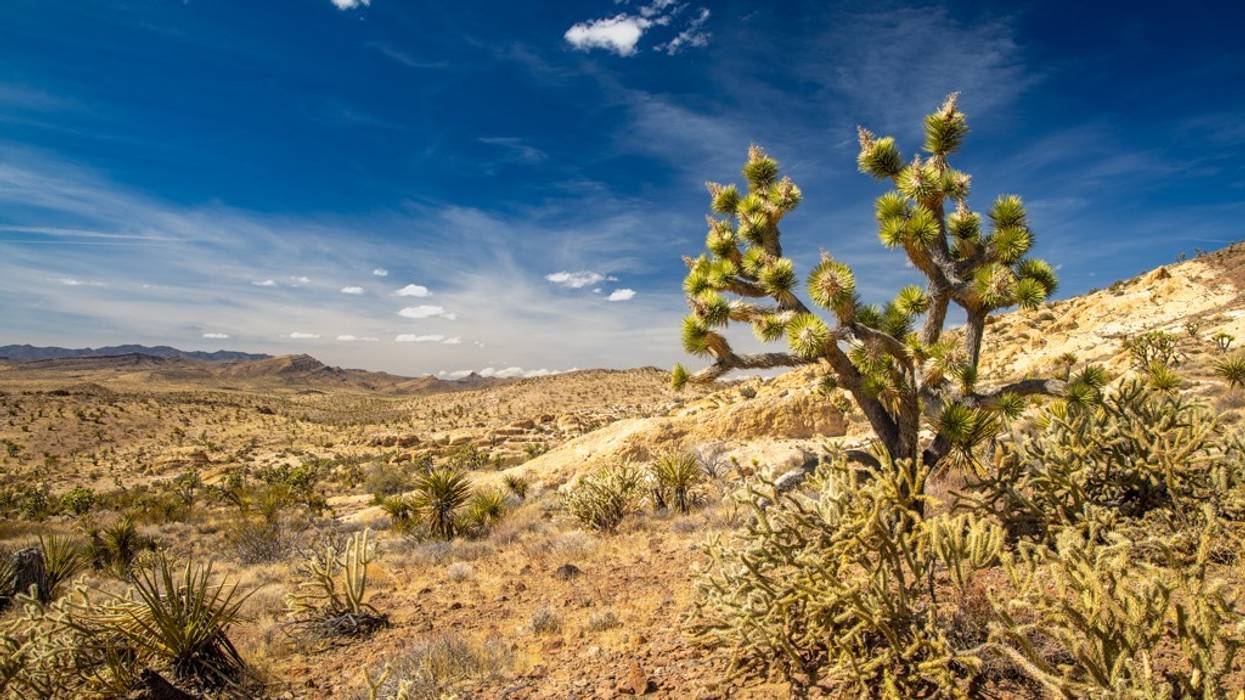
This is no minor bureaucratic maneuver. It is a mass land transfer on a scale most Americans cannot imagine. We are talking about 227 Manhattans, nearly as large as Connecticut, six times the size of Great Smoky Mountains National Park. Every acre could vanish behind a fence, a lease, or a luxury gate, permanently removed from public access.
What they see as inventory for extraction or speculation, we know as wildlife corridors, ancestral sites, and living ecosystems.
And the damage may not stop there. In addition to this directive, an amendment advanced by Sens. Mike Lee (R-Utah) and Steve Daines (R-Mont.) dramatically expands the scope of what land can be targeted next. That amendment opens up as much as 258 million acres, more than half of all public land managed by the BLM and Forest Service, as eligible for future sale. The amendment does not raise the total acreage that must be sold now, but it vastly expands the pool of land that could be nominated for disposal, setting the stage for further mass privatizations.
The sheer scale of the amendment, expanding eligibility to 258 million acres, raises questions about intent. While the bill still caps mandated sales at 3.3 million acres, the broadened eligibility pool may serve several strategic purposes. It positions the smaller number as a “reasonable compromise,” creating the illusion of moderation while setting the legal stage for far greater disposals in future bills. It also appeases private-sector interests by offering a vast catalog of public land to lobby over, speculate on, and nominate for sale. For lawmakers like Sens. Lee and Daines, long committed to shrinking federal land ownership, it advances a deeper ideological goal: redefining public land as provisional and disposable. Even if not all of it is sold now, marking it as eligible redraws the line between what belongs to the people and what can be taken.
Even national monument lands, while currently excluded, may be at risk. The Trump administration’s Department of Justice has argued that a president has the authority to revoke monument protections unilaterally. If that view prevails, another 13.5 million acres of previously protected lands could be opened for sale with the stroke of a pen. That is nearly as much land as the entire state of West Virginia. It is the equivalent of more than 10 Grand Canyon National Parks or over 15,000 Central Parks. All of it currently protected for future generations. All of it just one legal argument away from the auction block.
The Map They Will Not Show You
Behind closed doors, agency and congressional staff, working closely with industry allies, are drawing lines around timber-rich slopes, mineral-heavy ridges, and land primed for private development. What they see as inventory for extraction or speculation, we know as wildlife corridors, ancestral sites, and living ecosystems. These are not forgotten or idle lands. They are part of a shared inheritance now being marked for liquidation.
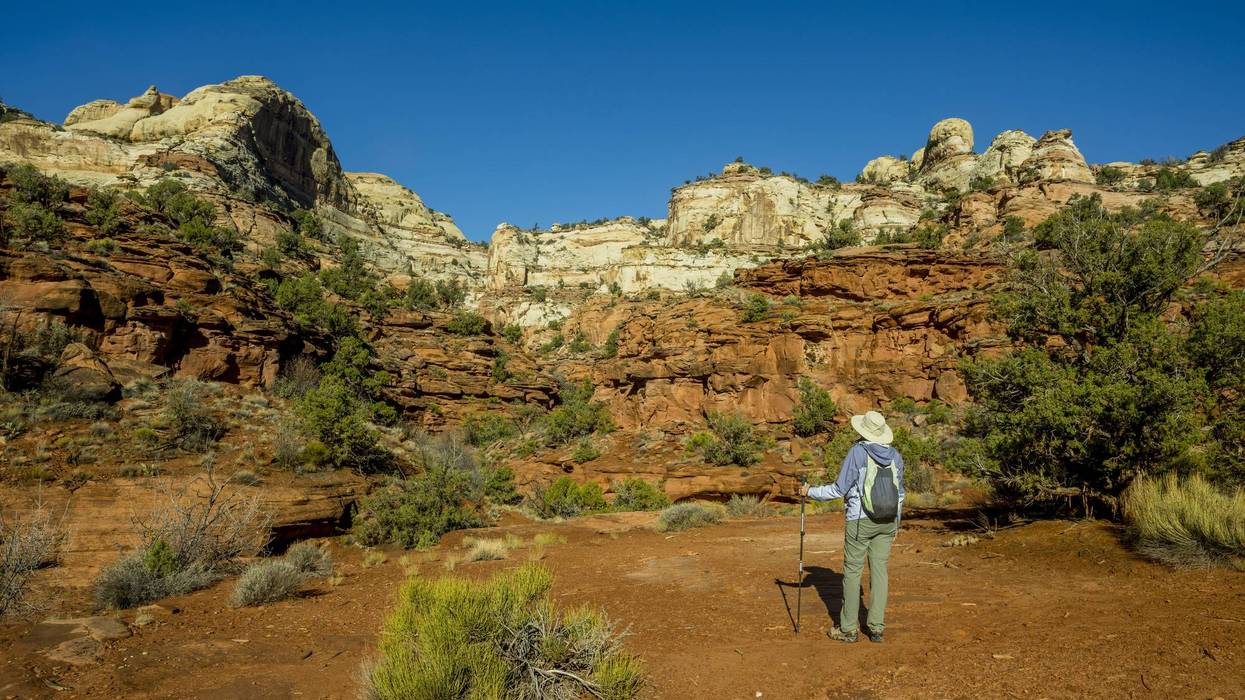
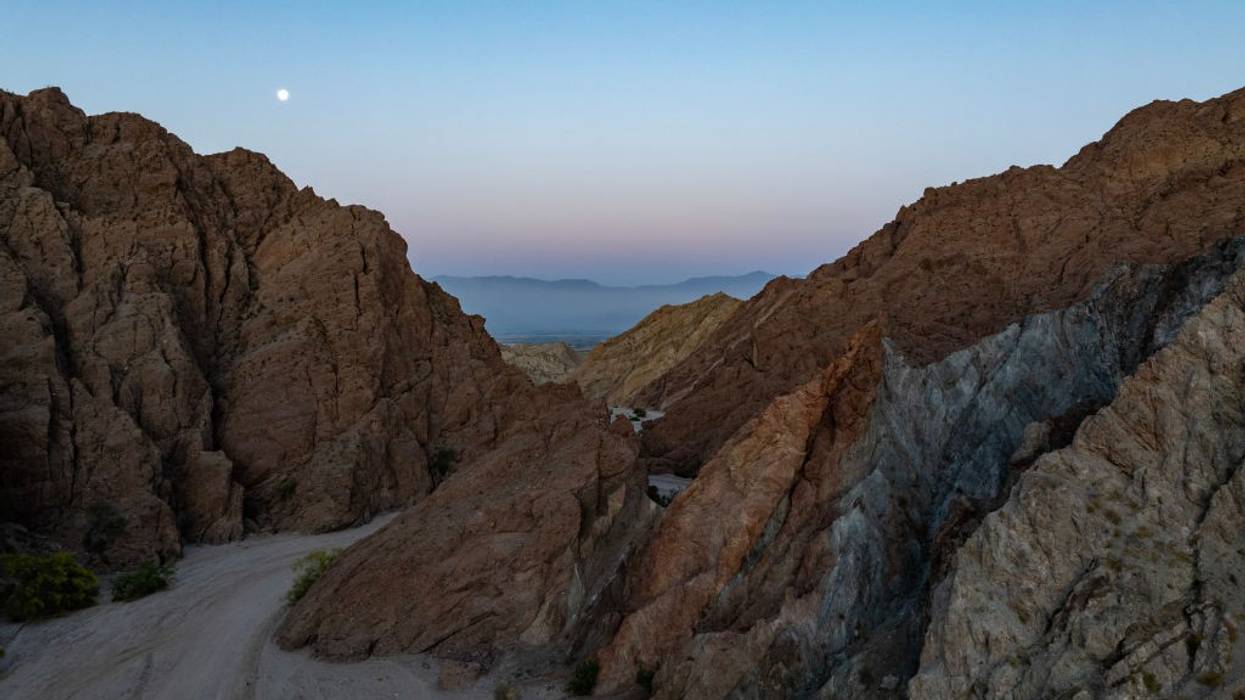
The bill does not define these parcels as protected, but instead excludes only national parks and formally designated wilderness areas as essential for continued public stewardship. This opens the door to the disposal of millions of acres that remain critical for wildlife, water, and people. At risk are places like:
- Tensleep Canyon, Wyoming: granite walls long sought for magnesite and limestone extraction;
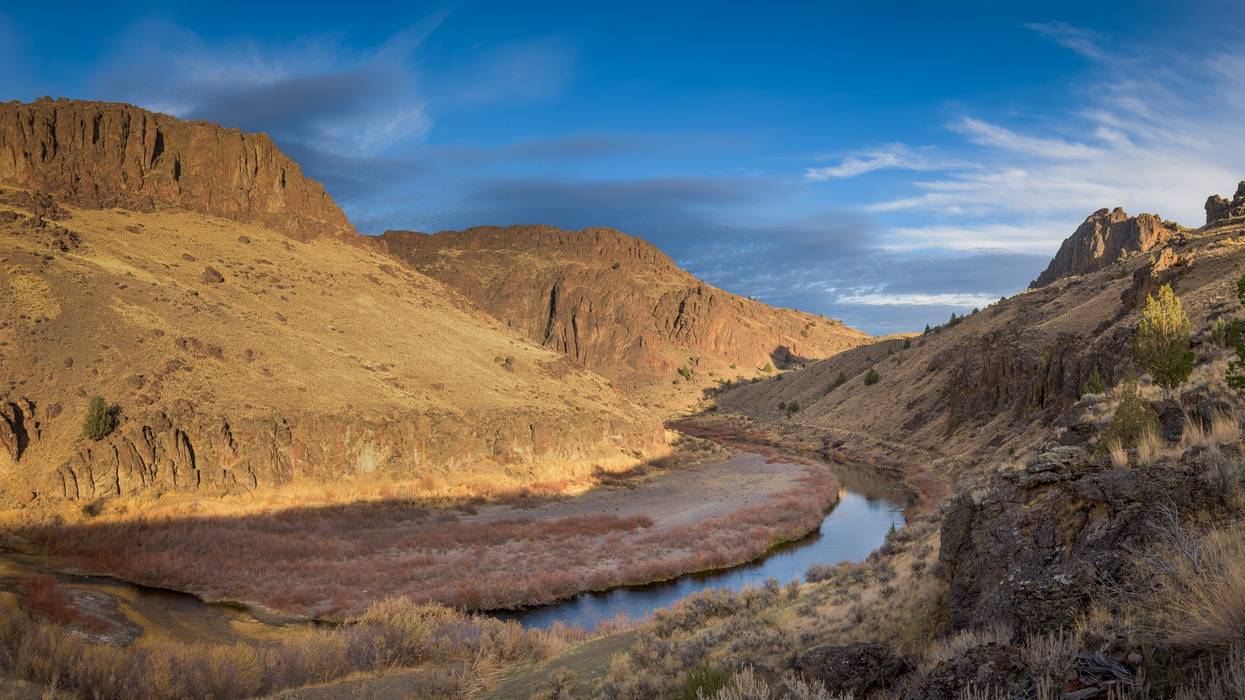
- The Owyhee Canyonlands: This expansive public land, encompassing deep desert canyons across three states, has already been highlighted by several groups most notably the Friends of the Owyhee as a site directly threatened by the Senate land-sale proposal.
- Molalla River, Oregon: a century-old timber corridor still featured in BLM logging plans; and
- Grand Staircase region, Utah: red-rock mesas stripped of nearly 1 million acres of monument protection in 2017, now eyed for coal and uranium leases.
These are only the best-known examples. Many more have already been, and are likely still being, quietly marked by developers, oil and gas firms, and mining consortia.
No hearings. No vote. No chance to object.
The provision does not merely authorize these sales. It mandates them. Each agency must sell between 0.5-0.75% of its total land base through competitive auction within five years. That adds up to between 2.3 and 3.3 million acres. That so-called small fraction still equals more than 3 million acres, roughly the size of Connecticut or nearly one-and-a-half of the area of Yellowstone National Park.
States are granted a “right of first refusal,” but it is a hollow gesture. There is no requirement that land be offered at fair value, no obligation to preserve public access, and no mandate for consultation with Indigenous nations. There are no environmental reviews or affordability conditions. The public has no voice in what is sold or to whom.
These are our lands. Yet we are being shut out of the decision entirely.
Who Wants It, and Who Is Fighting Back
The provision’s primary backers include Sen. Mike Lee of Utah, several Republican members of the Senate Energy and Natural Resources Committee, large residential developers, fossil fuel and mining companies, and private equity firms that see public land as cheap inventory.
But opposition is accelerating. Sens. Martin Heinrich of New Mexico and Ron Wyden of Oregon, both senior Democrats on the Senate Energy and Natural Resources Committee, have pledged to fight the inclusion of the land-sale mandate in the reconciliation bill. Even some Republicans from traditionally pro‑development states, such as Sen. James Risch of Idaho and Sen. Steve Daines of Montana—who cosponsored the amendment enabling large‑scale land sales, but later sought to distance himself by emphasizing narrow scope and expressing opposition—have acknowledged public concern over the lack of transparency and long‑term risks.
It is worth asking whether this land policy is a public act or a private arrangement with public consequences.
Tribal governments, conservation groups, small recreation businesses, and national advocacy organizations like the Theodore Roosevelt Conservation Partnership, Backcountry Hunters & Anglers, and Outdoor Alliance have publicly opposed the public land sell-off provision. They warn that the measure bypasses hearings and public input, threatens access to public lands, and endangers sacred sites, wildlife corridors, and rural economies. The Southern Utah Wilderness Alliance called it a direct threat to Utah’s redrock country, and multiple Indigenous groups have condemned the lack of tribal consultation.
And the land grab is happening in a political context where the Trump family, once again in the White House, is expanding its business empire, including foreign real estate deals. According to Eliot Brown of The Wall Street Journal, India’s richest man, Mukesh Ambani, is one of many international investors pouring money into Trump Organization developments. These include projects in real estate, cryptocurrency, and other sectors that stand to benefit from relaxed land-use and ownership rules. It is worth asking whether this land policy is a public act or a private arrangement with public consequences.
Why You Should Care, Wherever You Live
Public lands do more than store carbon. They store stories. They teach children the sound of a free-running stream. They preserve the last unbroken skies. They support a $1.2 trillion outdoor recreation economy that sustains 5 million jobs and helps recharge watersheds that irrigate crops across the American West.
The land they’re targeting is not empty. It is not surplus. It is alive. It is where the land still speaks in the languages of those who came before. Where every ridge holds a name, every stream a story. It’s where people go to breathe again. To walk without noise. To teach a child how water sounds. It’s where we remember we are small, and that smallness is sacred.
What’s being auctioned is not just land. It is access. It is silence. It is memory, future, belonging, and the last wild chance some people have to feel whole again.
Privatizing these lands is not only an economic and environmental betrayal. It is a moral one. This is not about housing. This is about extraction. This is about raw power, inherited greed, and the open theft of the commons. To do so is to erase the covenant between people and place, to sell the inheritance that binds generations.
And when it’s gone, it’s gone. You don’t replant a thousand-year-old forest. You don’t buy back a clean river. You don’t resurrect what you sold to a bulldozer.
What You Can Do Today
Congress is moving fast, and the window to stop this is closing. The provision to force the sale of public lands is buried deep in a massive budget bill, shielded from public debate and poised to pass quietly behind a smokescreen of competing headlines. This is the moment to act. Delay means disappearance. Once these lands are gone, they do not come back.
- Call your senators. Encourage family and friends to do the same. Capitol switchboard: (202) 224-3121. Urge them to strike the land-sale mandate from the budget bill.
- Text RESIST to 50409 to send messages to your senators through Resistbot. Resistbot has delivered over 35 million letters, with congressional staff confirming they receive and read them. Independent research shows the tool can boost civic engagement and influence legislative awareness.
- Download and share the Wilderness Society’s interactive “public lands at risk” map and policy alerts. These tools are available through their Media Resources page and recent press releases. Use them to spark conversations at trailheads, town halls, and farmers’ markets.
- Submit a letter to your local paper and help raise public pressure before the bill advances further. Letters to the editor are widely read and often monitored by congressional staff. You can also share your message through neighborhood forums, community Facebook groups, or organizations you’re part of.
- Support those on the front lines, including the Wilderness Society, Native American Rights Fund, Southern Utah Wilderness Alliance, Backcountry Hunters & Anglers, the Outdoor Alliance, and the Intertribal Timber Council.
Rep. John D. Dingell, America’s longest-serving member of Congress, often reminded us that public lands are more than state assets. He believed they are held in trust, stating plainly, “In democratic government, elected officials do not have power. They hold power in trust for the people who elected them.”
We were never meant to sell the sacred. But if we stay silent now, the lines on the map will be redrawn without us. The land will forget we were ever part of it.