

SUBSCRIBE TO OUR FREE NEWSLETTER
Daily news & progressive opinion—funded by the people, not the corporations—delivered straight to your inbox.
5
#000000
#FFFFFF
To donate by check, phone, or other method, see our More Ways to Give page.
Daily news & progressive opinion—funded by the people, not the corporations—delivered straight to your inbox.
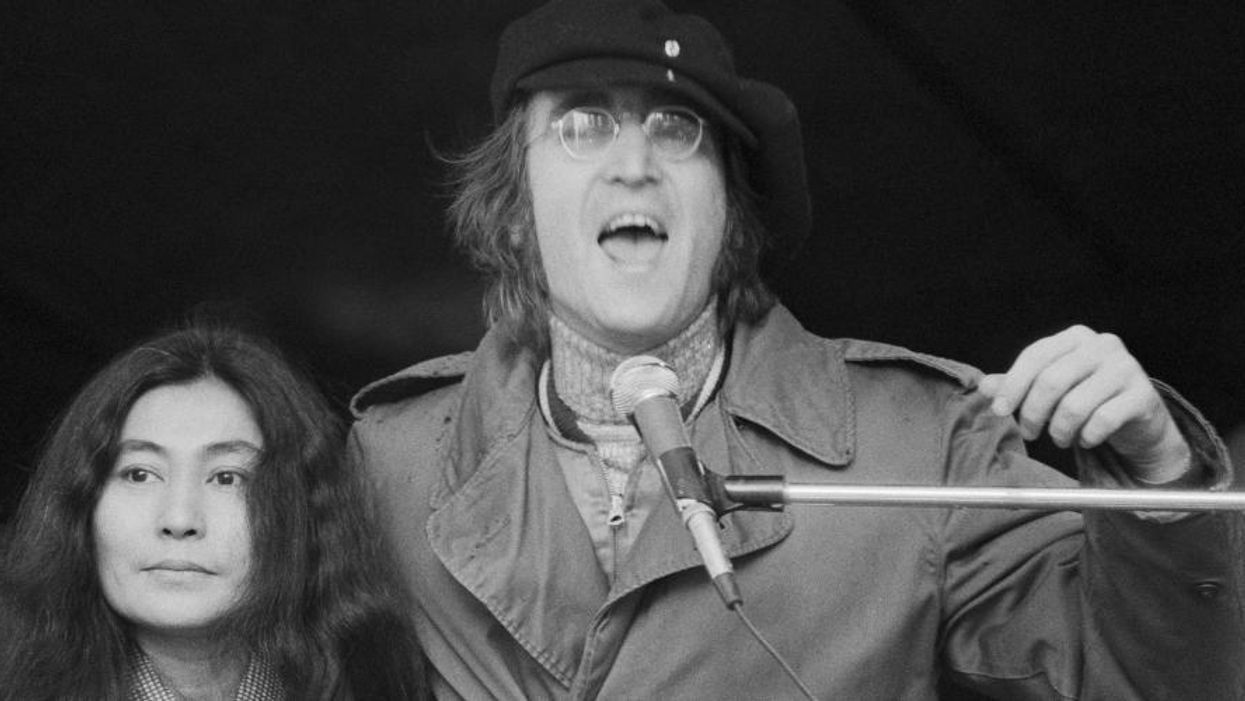
Forty years ago this week, headlines screamed, "John Lennon Gunned Down by Stranger." Yet, for assassin Mark David Chapman, John Lennon was no stranger. Although he had never come within a hundred miles of the former Beatle until that winter, Chapman knew John Lennon very well; so well, in fact, he often believed that he was John Lennon.
The teenage Chapman wore his hair like Lennon's, learned to play guitar, and joined a rock group. He sang Lennon's songs over and over. Like Lennon, Chapman married an older Japanese woman. As a security guard at a Honolulu condominium, he even taped Lennon's name over his own on his ID tag. On the day he quit, Chapman signed out as "John Lennon," crossing the name out with the final stroke of his pen. The murder he was about to commit was a partial suicide.
"Although decades have passed since Lennon was murdered, my emotions remain raw."
John Lennon was killed by the sinister side of the same force that makes millions of people still mourn him and other dead media icons: a sense of personal connection to selected strangers fostered by media that simulate the sights and sounds of face-to-face interactions.
As with real-life friends, we feel bound to our "media friends," not simply because of what they have accomplished and can do but based on a more personal set of feelings about who they are--how their very "presence" in our lives affects us. The natural mental space for a hero is at a distance on some pedestal. The imagined space for a media friend is at our sides--hanging out at home, walking down a street, riding in a car.
The more we see and hear them, the more musicians, actors, sports figures, newscasters, political figures, and talk-show hosts become part of our extended network of social ties. They provide a sense of intimacy, but one without any risk of embarrassment or physical harm. Some of them are there to say, "Good morning;" others to say, "Good night." They sing in our ears as we jog. They hover near us even in the most private scenes of our lives.
We follow the personal and public dimensions of media friends, and their life stages often become key signposts we use to mark and recall periods in our own lives. Conversations among real-life friends often refer to shared media friends. Ironically, relationships with media friends often outlast our relationships with many of our actual friends, neighbors, co-workers, lovers, even spouses.
When a widely shared media friend dies unexpectedly and "before their time," the unusual nature of the relationship explodes in the public sphere. To banish the demons of grief and helplessness, thousands of people spontaneously gather in streets or parks, or hold vigils near the media friend's home or place of death.
That's what happened when John Lennon was gunned down. Strangers embraced and wept. Crowds stood in silent witness or chanted the dead hero's words or songs. Such pain is paradoxical--it feels personal yet is strengthened by the extent to which it is shared with the crowd.
Ironically, but appropriately, the media that give birth to these relationships also provide the most ritualized settings for mourning a media friend's death. Radio and television present specials, retrospectives, and commentaries. "Never before seen" photos and videos are a kind of cultural seance, extending the connection past the grave.
The final irony, then, is that in many ways, the media friend never dies. The only means through which most people came to know him or her--media images and sounds--remain available forever. When a media friend dies, the relationship is embalmed rather than destroyed. Nevertheless, the sense of loss is profound.
John Lennon was fearless in speaking about peace and justice and asking us to imagine a better world. You still can feel and hear both his presence and his painful absence at every antiwar rally, environmental action, and police brutality protest over the last forty years. Indeed, his songs are often part of the soundtracks for progressive political action.
Of course, ties to media friends are often commercially fabricated. And yet, these relationships are still very human, very caring. No analysis of these unreal, but real relationships can explain away or weaken their emotional power. We may never have seen them in the flesh, and they would never have taken note of our own deaths, but when our media friends die or are killed, we feel pain. We worry about their widowed spouses and fret over the children who have lost a parent. We dwell on ways the tragedy could have been avoided. Sometimes, we even feel partly responsible, as if we could have saved or warned them.
I understand the absurdity of many aspects of the relationships with media friends, yet I have also felt all these things. Although decades have passed since Lennon was murdered, my emotions remain raw. Yes, I never really knew him. Yes, he was not even aware of my existence. Yet I found my political voice with his help, and he has inspired millions around the world not to be silent in the face of militarism and injustice. The simple truth is, I still feel him marching beside me now--and I still miss him.
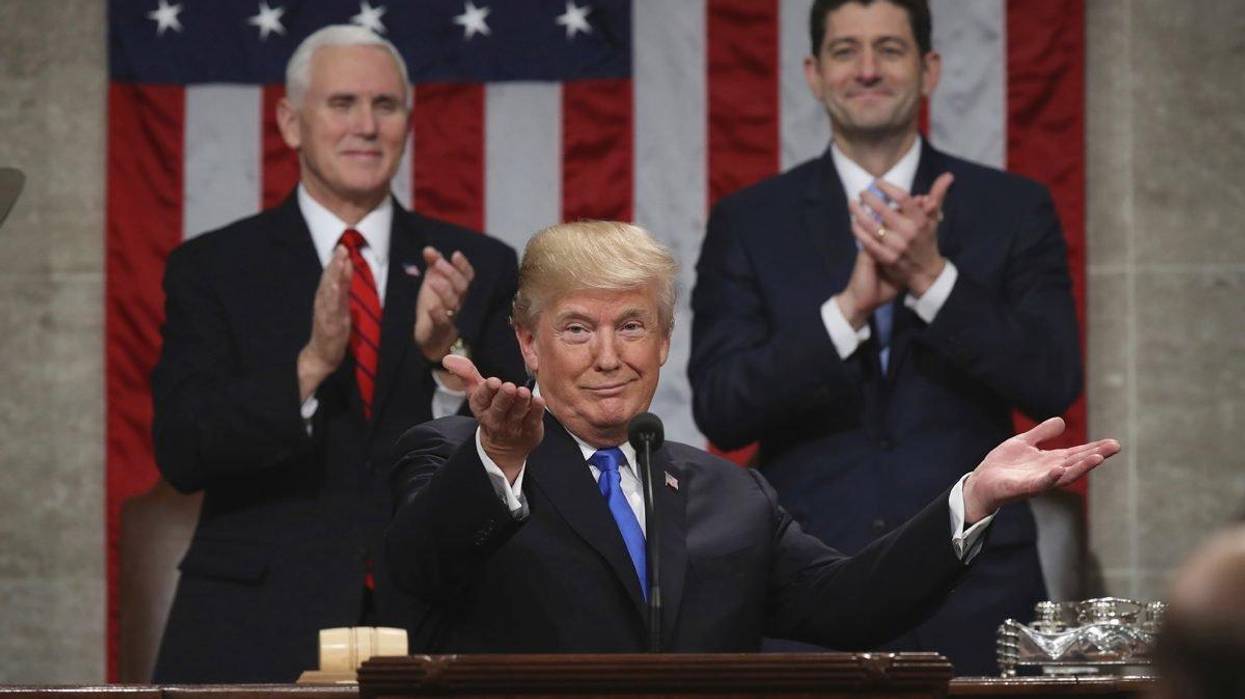
The State of the Union is strong. I mean, President Trump didn't trip and tumble off the platform in a real life homage to Chevy Chase, or press a red Staples button on the podium and announced that he'd just launched a fleet of cruise missiles toward North Korea, or order special counsel Robert Mueller led into the House of Representatives blindfolded and in handcuffs, or gaze out toward Melania and ask for a divorce (since the state of his union is reportedly weak). As one cable TV pundit solemnly declared afterwards, "Donald Trump became president tonight." OK, actually I wrote that at 7:39 p.m., 81 minutes before the speech even began -- but we all know someone must have said that.
The truth? A teleprompter just rolled off the best speech of Donald Trump's presidency, a sniffle-punctuated litany of praise for God, the troops and mythical clean coal from America's first reality-show president. And Teleprompter Trump certainly said ... some of the right things.
He promised Democrats that he's ridiculed, such as Cryin' Chuck Schumer and Sen. Elizabeth "Pocahontas" Warren, that he is now "extending an open hand to work with members of both parties, Democrats and Republicans, to protect our citizens, of every background, color and creed." That statement explicitly excluded 800,000 "Dreamers" facing imminent deportation to nations they barely know, but the president did pledge to work for some kind of deal on immigration and to finally do something about America's crumbling infrastructure.
He also hailed the heroes of Houston's flood and the Las Vegas and congressional softball shootings -- a splendid and praiseworthy moment that nonetheless allowed the president to address those topics without mentioning climate change or America's lax gun laws, two of the many real-life problems that don't exist in Trump World. And any would-be immigration deal was undercut by his shameful willingness to demagogue a handful of murder cases to stir up xenophobia against all migrants, especially brown ones.
This, he called this "a New American Moment" -- but it sounded like an old American moment. In his speech to Congress in 2017, after all, Trump also vowed to work for an immigration deal, saying "I believe Republicans and Democrats can work together to achieve an outcome that has eluded our country for decades." Two paragraphs later in that 2017 speech, he declared solemnly that "I will be asking Congress to approve legislation that produces a $1 trillion investment in infrastructure of the United States."
To quote the late great John Lennon: We'd all love to see the plan.
The empty repetition of things that never seem to actually happen on "Real World: Trump" seems to beg the question of whether the State of Union speech even matters. Spoiler alert: It doesn't, and that problem certainly predates the arrival of Donald Trump. Mostly, these TV events are a 1-hour litany of things that remain unattainable in the age of gridlock. The most memorable moment in my lifetime came in 1975 when Watergate had stripped away so much American pretense that Gerald Ford actually declared the State of the Union is "not good."
Forty-three years later, the real news was not what was in the speech but what was swirling all around it.
The aggrieved First Lady went to the Capitol in a separate limo, the ship that launched a thousand wagging tongues. Some members of the Congressional Black Caucus boycotted the speech, not too surprising considering the president's "shithole countries" slam on Africa or his Charlottesville moral fumble, and other Democrats stayed away, like Illinois Rep. Jan Schakowsky who told CNN she didn't want to listen to "a sexual predator." And an adult-film star allegedly paid $130,000 not to talk about her affair was Trump was teed up to give a rebuttal on ABC's Jimmy Kimmel.
Did I mention that the State of the Union is not good, not at all? In the hours before the speech, CNN and other news outlets were reporting that Trump may refuse to give Mueller an interview about alleged campaign collusion with Russia and obstruction of justice, that he might actually fire Mueller, and that the president is about to release a slanted, classified memo aimed at tarnishing the FBI and taking down Mueller's probe. Meanwhile, the White House is refusing to implement a Russia sanctions law that passed Congress nearly unanimously -- his latest and most serious dictator move. Sen. Claire McCaskill pegged the moment for what it is: A constitutional crisis.
You didn't hear anything about that constitutional crisis from the flag-draped podium last night. That would cut way too close to the truth, and we haven't had that spirit here since 1975. Where's Gerald Ford when you need him?
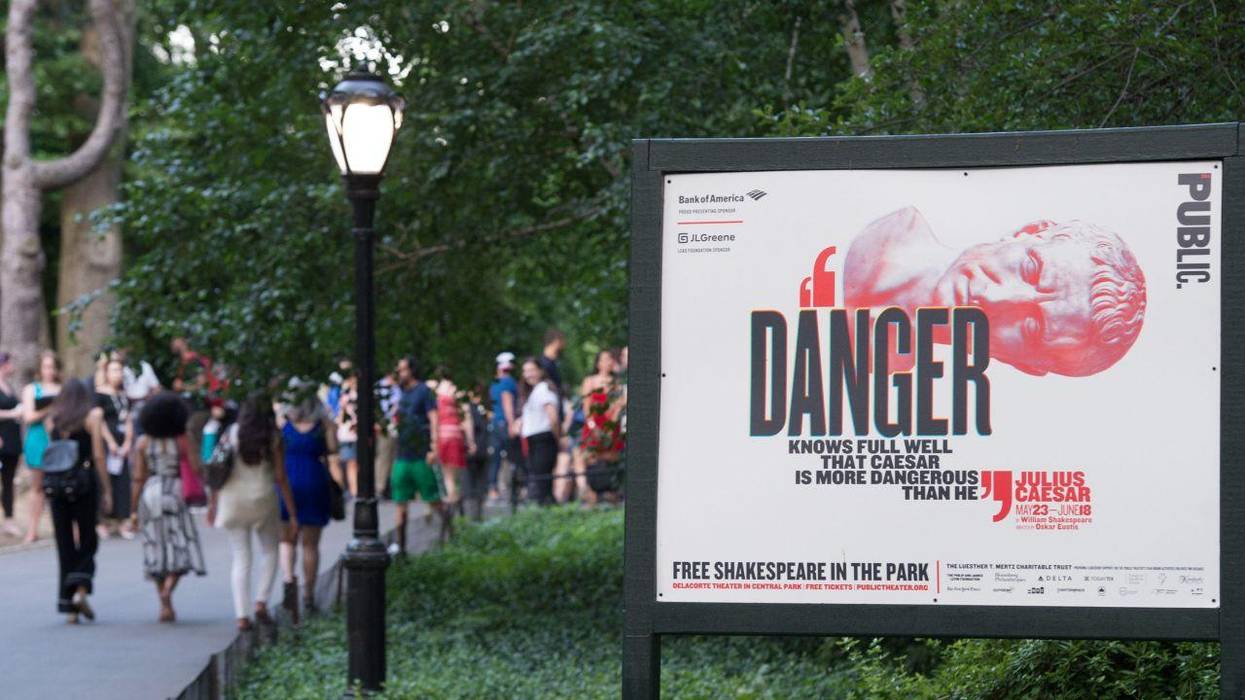
Over in New York's Central Park, just a short distance from our offices, the curtain came down last week on The Public Theater's controversial production of Shakespeare's Julius Caesar. Controversial because the actor playing the assassinated Caesar looked and sounded like Donald Trump, right down to the overlong red necktie and clownish orange-blond nimbus of hair.
But the curtain didn't fall because of the outrage that came tumbling from the right -- including protesters heckling at a couple of the performances and death threats directed at the production's director (not to mention feverish tweets and emails from confused trolls hurled at any theatre company with the word "Shakespeare" in its name).
Nor did it occur because two of The Public Theatre's corporate donors, Bank of America and Delta Air Lines, pulled their sponsorship of the show, a gutless move of appeasement from two businesses, banking and air travel, so well known these days for their dazzling records of customer satisfaction. (Another company, American Express, didn't yank its cash from The Public but tweeted that its money doesn't fund Shakespeare in the Park "nor do we condone the interpretation of the Julius Caesar play.")
No, the fact is, Julius Caesar always was scheduled to end the night that it did. That was to make way for the summer's second Shakespeare in the Park production -- A Midsummer Night's Dream.
Gentle readers will recall that this is the Shakespeare play in which, among a great many other things, a knavish sprite named Puck turns a man into an ass. Such an act once seemed like magic, but given today's political climate, the turning of men into asses has become the rule rather than the exception.
Witness the aforementioned kneejerk reaction of the right, so quick to accuse the left of behaving like snowflakes but themselves so hypersensitive to even the mildest heat that they melt as fast as Frosty the Snowman -- that is, if he was a whiny Fox or talk radio host instead of a jolly happy soul.
We've established before that this is not a crowd that embraces a thoroughgoing knowledge of history in general, and it's probably fair to assume a knowledge of theatrical history not at all. Elsewise they might realize that Julius Caesar is not a play that celebrates political violence but loudly condemns it.
In an email, The Public's artistic director (and director of Julius Caesar) Oskar Eustis wrote:
"Those who attempt to defend democracy by undemocratic means pay a terrible price and destroy the very thing they are fighting to save. For over 400 years, Shakespeare's play has told this story and we are proud to be telling it again in Central Park."
Back in the day, Queen Elizabeth I herself recognized that the playwright's scripts often were thinly veiled depictions of the current political scene in Britain and even of herself. Apparently, she had a thicker skin than the gang at Delta Air Lines or Bank of America -- she kept encouraging Shakespeare with money from the royal purse.
Julius Caesar in particular has always been a play lending itself to parallels with contemporary politics. George Washington hosted an amateur production in Philadelphia during the first full year of his presidency. He didn't seem to take offense. Orson Welles directed and played Brutus in a 1937 staging that drew parallels with the rise of fascism in Europe, even recreating the infamous "Cathedral of Light" at Hitler's Nuremburg rallies.
For the last few years, The Acting Company has been touring the country with a version in which Caesar bears a close resemblance to Barack Obama -- no one has protested. And ever since Trump started to dominate the electoral landscape, several productions have used Julius Caesar as a metaphor for the debilitating illness that pervades our body politic.
Shakespeare scholar James Shapiro recently wrote:
"As long as politicians resemble Caesar and as long as their opponents seek to justify their overthrow, 'Julius Caesar' will continue to matter...
"It is the mark of a tolerant society that we don't try to shut down the expression of words or viewpoints that some might find disagreeable, least of all Shakespeare's, whose works we all share.
"We rely on newspapers to learn what is happening in the world. But we turn to productions of Shakespeare to make sense of it."
But none of this stopped the trolls of the right from throwing a major-league hissy about the show, even if very few of them actually attended a performance. Much of the consternation was based on a video of the play's assassination scene that went viral.
Some, Sean Hannity among them, even suggested that the recent wounding of House majority whip Steve Scalise and four others at a baseball practice in Alexandria, Virginia, somehow was linked to the production of Julius Caesar. "The blood of Steve Scalise is on your hands!" screamed one of those who disrupted a performance. And the president's son, Donald Jr., retweeted conservative commentator Harlan Hill's comment that the shootings were "EXACTLY why we took issue with NY elites glorifying the assassination of our president."
This was and is opportunistic sophistry, an attempt to use tragedy to distract by aiming a fallacious attack at "elites" and the left. The production of Julius Caesar should no more be condemned for its alleged connection to an act of senseless violence than The Catcher in the Rye should be banned because John Lennon's assassin Mark David Chapman was obsessed with the book.
The attack on Scalise and the others was the act of a deeply disturbed man who had made anti-Trump statements on Facebook and elsewhere. And there's no denying that it took place in an atmosphere of elevated hate speech from right and left -- but face it, mostly from the right -- and violence that has only gotten worse since the election, aggravated by the man now president who egged on his supporters at splenetic campaign rallies.
But let's talk about what also really needs discussing. Not just a production of a classic play that offended some, or the unreasoned words and actions of far too many, including men and women in Congress and the White House.
Since we're talking about the freedom to speak out, let's speak out about guns.
For one, given the mental state of the man accused with the Scalise shooting why was he allowed to have weapons? As my colleague Michael Hiltzik at the Los Angeles Times wrote:
"In a country with sensible and intelligent firearms laws, there's no way a person with the history of domestic violence of James Hodgkinson, who has been identified as the shooter, would be permitted anywhere near the weapons he was carrying on June 14 -- and which reportedly he obtained legally."
Too soon? Let's pray for Steve Scalise's continued recovery but not forget his A+ rating from the National Rifle Association or, say, his opposition to stricter gun laws after 26 died in the Sandy Hook shootings of 2014. Hiltzik noted:
"To say Scalise deserves to share blame for this situation is not to say that he deserves the punishment of a grave injury. But nor is this an occasion to ignore the policies he espouses and their relationship to the June 14 event and its aftermath...
"Among the bills he has cosponsored is the National Right-to-Carry Reciprocity Act, a 2011 measure that would have allowed anyone with a valid state-issued concealed firearm permit to carry a concealed firearm in any other state that issues concealed firearm permits, regardless of the other states' standards for issuing those permits. On Jan. 6, 2016, Scalise could be seen on CNN misrepresenting, and then assailing, President Obama's day-old executive order designed to tighten the rules on background checks of gun buyers."
Counting the Scalise incident, according to the website Mass Shooting Tracker, as of June 25, 2017, so far this year there have been 211 mass shootings in the United States. Guns have killed more than 6,800 in America this year; 13,500 have been wounded, according to Chelsea Parsons, vice president of guns and crime policy at the Center for American Progress. In a recent op-ed, Parsons pointed out out the gun fatality rate in this country is 25 times greater than in other high-income countries.
And yes, as the argument goes, more people might have died in Alexandria if Scalise had not had armed police protection with him, but they were trained professionals, not the amateurs -- including members of Congress -- who want to run around with concealed carry permits and handguns wherever they choose.
But that's what the GOP wants. Jonathan Martin reported at The New York Times:
"The Republican majorities on Capitol Hill have blocked every attempt to enact significant gun control legislation, most recently after the massacre of 49 people in an Orlando, Florida, nightclub last June. Measures to block people on the federal terrorism watch list from buying weapons and to close background-check loopholes failed in the Senate.
"And that was before President Trump was elected with far more help from the National Rifle Association than Mitt Romney got in 2012. Mr. Trump received more money from the NRA than any other outside group."
The counterintuitive argument that the answer to guns is more guns is madness. As Marc Antony says in Julius Caesar, during his famous oration at the funeral of the murdered leader, "O judgment! Thou art fled to brutish beasts, and men have lost their reason."
Too soon?
It's the 50th anniversary of the Summer of Love. What better place to celebrate than that fabled era's epicenter, San Francisco's Golden Gate Park, where the DeYoung Museum has mounted a dazzling exhibition, chock full of rock music, light shows, posters, and fashions from the mind-bending summer of 1967?
If you tour the exhibit, you might come away thinking that the political concerns of the time were no more than parenthetical bookends to that summer's real action, its psychedelic counterculture. Only the first and last rooms of the large show are explicitly devoted to political memorabilia. The main body of the exhibit seems devoid of them, which fits well with the story told in so many history books. The hippies of that era, so it's often claimed, paid scant attention to political matters.
Take another moment in the presence of all the artifacts of that psychedelic summer, though, and a powerful (if implicit) political message actually comes through, one that couldn't be more unexpected. The counterculture of that era, it turns out, offered a radical challenge to a basic premise of the Washington worldview, then and now, a premise accepted -- and spoken almost ritualistically -- by every president since Franklin Delano Roosevelt: nothing is more important than our "national security."
And believe me, "national security" should go in those scare quotes as a reminder that it's not a given of our world like Mount Whitney or the buffalo. Think of it as an invented idea, an ideological construct something like "the invisible hand of capitalism" or even "liberty and justice for all." Those other two concepts still remain influences in our public life, but like so much else they have become secondary matters since the early days of World War II, when President Roosevelt declared "national security" the nation's number one concern.
However unintentionally, he planted a seed that has never stopped growing. It's increasingly the political equivalent of the kudzu vine that overruns everything in its path. Since Roosevelt's day, our political life, federal budget, news media, even popular culture have all become obsessively focused on the supposed safety of Americans, no matter what the actual dangers in our world, and so much else has been subordinated to that. The national security state has become a de facto fourth branch of the federal government (though it's nowhere mentioned in the Constitution), a shadow government increasingly looming over the other three.
"The most frightening part of living in a national security state is that the world is transformed into little else but a vast reservoir of potential enemies, all bent on our destruction."
It says much about the road we've traveled since World War II that such developments now appear so sensible, so necessary. After all, our safety is at stake, right? So the politicians and the media tell us. Who wouldn't be worried in a world where the constant "threats to our national security" are given such attention, even if at the highest levels of government no one seems quite sure just which enemies -- ISIS, Iran, Qatar, the Taliban, al-Qaeda, Russia, North Korea -- we should fear most. Who suspected, for example, that Qatar, for so long apparently a U.S. ally in the war against ISIS, would suddenly be cast as that enemy's ally and so a menace to us?
To judge from the increasingly dire warnings of politicians and pundits, the only certainty is that, whoever may be out to get us, we need to be constantly on our guard against new threats. That's where our taxpayer money should go. That's why secrecy rules the day in Washington and normal Americans know ever less about what exactly their government is doing in their name to protect them. It's "a matter of safety,"of course. Better safe than sorry, as the saying goes, and even in a democracy better ignorantthan sorry, too.
The most frightening part of living in a national security state is that the world is transformed into little else but a vast reservoir of potential enemies, all bent on our destruction. Immersed in and engulfed by such a culture, it may be hard to remember, or even (for those under 65) to believe, that half a century ago a mass social movement arose that challenged not only our warped notion of security, but the very idea of building national life on the quest for security. Yet that's just what the counterculture of the 1960s did.
The challenge reveals itself most clearly in that culture's psychedelic light shows with their "densely packed, fluid patterning of shapes and fragmented images... [which] literally absorbed audience members into the show," as the DeYoung's website explains. They were events meant to break down all boundaries, even between audience and performers. Posters advertising rock music and lightshows displayed the same features and added "distorted forms and unreadable, meandering lettering," all meant to "create an intense visual effect similar to that experienced by the shows' attendees."
In them, a vision of life and a message about it still shines through, one that gives us a glimpse, half a century later, into the most basic values and cultural assumptions of that moment and that movement.
Tear Down the Wall
Novelist Ken Kesey, impresario of the Trips Festival that presaged the Summer of Love, summed up the message in three memorable words: "Outside is inside." When the Beatles kicked off that season with the first classic psychedelic record album, Sgt. Pepper's Lonely Hearts Club Band, George Harrison echoed Kesey's vision in his song "Within You Without You," a haunting meditation:
About the space between us all
And the people
Who hide themselves behind a wall of illusion
Never glimpse the truth...
We're all one
And life flows on within you and without you.
What could this possibly have to do with "national security"? Applied to our moment, think of it this way: if we're all one, if outside is indeed inside and within you is without you, then it makes no sense to blame our problems on foreigners and build walls to keep "those people" out of our land and our lives. In Summer of Love terms, it would instead make perfect sense to tear down every wall enclosing our Trumpian world -- walls that are supposed to divide Americans from foreigners, Anglos from Latinos, straights from gays, men from women, elites from the working class, and so on into an endlessly "secure" future.
The Jefferson Airplane, a house band of the Summer of Love, put the message of that moment in an explicitly political context. Presenting themselves as patriotic "Volunteers," they urged Americans to "tear down the walls" so that "we can be together." To be sure, most people remained deaf to such calls. But two summers later, at the Woodstock Festival, a new nation would take an initial step toward creating itself through the revolutionary act of tearing down its own walls and fences. "There was no security," a photographer at Woodstock recalled. "The idea was that it wasn't necessary." By logical extension, today's political borders of all sorts deserve the same treatment because they, too, are unnecessary.
As the hippies came to see it, all the walls and fences we create are more than just unnecessary. They are, as George Harrison sang, illusions born of and built around the fiction of separateness. Recognize that illusion and another one immediately becomes obvious: the fears that spark the obsession with "national security" are largely illusory, too. Yet they are endless because what we are truly trying to fend off is not an external enemy but, in the famed words of President Roosevelt in his first inaugural address, "fear itself."
At about the time Ken Kesey was hosting his Trips Festival, John Lennon of the Beatles discovered The Psychedelic Experience, a book co-authored by LSD gurus Timothy Leary and Richard Alpert. It moved him to sing that there really was nothing to be afraid of: "Turn off your mind relax and float down stream; It is not dying, it is not dying."
The psychedelic rock shows, light shows, and posters were all meant to turn life into that single swirling stream, dissolving every imaginable boundary line, and so teaching that reality itself is just such a stream. To quote the nineteenth-century poet Walt Whitman (as so many did in the Summer of Love), let yourself be "loos'd of limits and imaginary lines" and "you are henceforth secure, whatever comes or goes."
The most widely read San Francisco intellectual of that year, Alan Watts, caught the moment (and pushed it yet further) in the very title of his book, The Wisdom of Insecurity. He spelled out what the light shows and posters communicated in a flash: what we think of as separate places, inside and outside, are merely two intertwined parts, two different ways of describing a single reality. Ditto for self and other, friend and enemy, life and death. The pursuit of security, he suggested even then, creates an illusory separation between friend and enemy in an effort to protect the self and life against the other and feared death. It is, he insisted, always doomed to fail, since all those opposites are inseparable. And ironically, the more we fail, the more frightened we become, and so the more frantically we pursue both the walling off of others and the illusion of security. Far wiser and more life-enhancing, Watts concluded, was to accept the inevitability of insecurity, the truth that in the stream of life, the next moment is always as unpredictable as it is uncontrollable.
Why worry about security at all if, as Lennon announced just as the Summer of Love was reaching full swing,
There's nowhere you can be that isn't where
You're meant to be,
It's easy.
All you need is love.
The English language has no word to describe the state where love (if you'll excuse this word) trumps both security and insecurity. The hippies had little interest in finding a new word to describe how life was truly to be experienced, but perhaps, until something better comes along, a term like non-security -- a state of being unconcerned with the whole issue of security -- will do.
The gospel of non-security went forth from Haight-Ashbury (and New York City's East Village) across the land. Hippies everywhere (even in Nebraska, my wife, who comes from there, assures me) assiduously cultivated such a state of mind. It was perhaps the most essential byproduct of their counterculture and it helped underpin a mass movement, seldom considered in the context of national politics, that remains the most radical and powerful challenge yet to Washington's present ruling passion for "national security" and the vast panoply of 17 intelligence outfits, tens of millions of classified documents, a surveillance apparatus that would have stunned the totalitarian states of the twentieth century, and a military into which taxpayer dollars are invested at an unparalleled rate.
When the Counterculture Met the New Left
Fifty years later, the counterculture's thinking on the subject of security may sound like little more than a quaint and spacy fantasy. Even then, non-security was light-years away from the reality of most Americans in a country that would soon elect Richard Nixon president. California, always at the cutting edge, had already made former Hollywood actor Ronald Reagan governor and so began to pave the superhighway that has now led Donald Trump to the White House.
President Trump and his minions are visibly eager to take money from people in need and lavish it on what is already the world's largest military budget, larger than those of numerous other major powers combined. They are just as eager to spend money on a wall stretching from the Pacific to the Gulf of Mexico, high, wide, and forbidding (or as the president likes to say, "big, fat, [and] beautiful") enough to keep Spanish-speaking foreigners out of the U.S.A. They would also expand the electronic eavesdropping network that can track our every word. And so -- as novelist Kurt Vonnegut would once have said -- it goes. They justify such plans and so much more in the name of -- yes, you guessed it -- "national security" or (more tellingly yet) "homeland security." With such people in power, the very idea of non-security seems beyond utopian, like a concept from outer space.
In some ways that was true in the Summer of Love, too, and not just because, even then, it was so far removed from the reality of a dominant culture that would handily survive its challenge. There was also the brute fact that, when thousands of young people heeded the siren call and traveled to San Francisco's Haight-Ashbury neighborhood to experience that season of love in person, it essentially became another crime- and poverty-ridden inner-city slum. Look magazine journalist William Hedgepath, for instance, found the hippies there "working toward an open, loving, tension-free world," but also found himself "spending the night in a filthy, litter-strewn dope fortress."
"Perhaps it's time to take a retrospective look at that Summer of Love moment, half a century ago, and reacquaint ourselves with the two kinds of radicalism of the time, one promoting a more humane idea of security and the other aimed at building a new kind of life that transcended the question of security altogether."
Before we rush to judgment, however, it's important to remember a reality often overlooked in the history books on hippiedom: most people whose countercultural lives were touched by the gospel of non-security were also touched by, and sometimes swept up in, the much larger political movement to end the war in Vietnam. This meant that their largely unspoken challenge to "national security" was woven together with another kind of challenge, one that came from the more overtly political New Left leadership of that antiwar movement.
Unlike the hippies, the New Left had no particular interest in experiencing the unsaid and undefined. They were eager instead to find precise words to make their anti-establishment case. And they first did so in 1962. That year, members of a group that called itself Students for a Democratic Society drafted a manifesto at a United Auto Workers retreat in Port Huron, Michigan. It, too, ran against the security thinking of that moment by proclaiming that "real security cannot be gained by propping up military defenses, but only through the hastening of political stability, economic growth, greater social welfare, improved education."
Nonetheless, the writers of the Port Huron Statement remained worried about security in a sense that any American of the time would have understood instantly. They, too, divided the world into us and them, friends and enemies, good guys and bad guys. "Economic institutions should be in the control of national, not foreign, agencies," they declared, critiquing America's imperial role in the world. "The destiny of any country should be determined by its nationals, not by outsiders." The best their manifesto could foresee in the world arena was "coexistence" between America and its foes, fueled by economic rather than military competition.
In that sense, radical as it was, the statement offered no direct challenge to the bipartisan consensus that security was every American's most important concern. Indeed, its language on security issues might easily be endorsed today by themost progressive voices in the Democratic Party, and on the issue of national sovereignty, eerily enough, by Donald Trump and his supporters.
Still, the New Left was focused on using rational planning to move toward a future of more genuine security and less fear for all. In such a future, everyone would be able to develop his or her potential to the fullest, free from a major source of insecurity seldom mentioned more than half a century later: rampant technology deployed by a rabid capitalism that values profits above people.
The counterculture went further, even if rather incoherently, aiming to create a present in which the whole question of security, if it didn't simply disappear, would at least become a distinctly secondary concern. It would be a present in which, adapting a phrase of that moment, all you needed was love. Charles Perry, the historian of Haight-Ashbury, recalled one hippie who summed up the difference between his tribe and the more political types this way: "They talk about peace. We are peace."
Each of these sixties critiques of "national security" was, in its own way, utopian in terms of the realities of its moment, and most radicals of the time, however unconsciously, did their best to negotiate a path between the two. Non-security -- an escape from the usual Washington concerns -- remained an ideal then, and today it's hard to even remember that anyone ever challenged the idea that "national security" should dominate our lives, our fears, and our dreams.
Half a century later, it should be clear that Washington's presentquest for "national security" can never end. The national security state itself is a machine that constantly fuels the very fears it claims to fight. In doing so, what it actually condemns Americans to is nothing less than a permanent state of insecurity.
The quest for a more balanced (or even unbalanced) approach to security in the 1960s pointed a way toward at least the possibility of an American world of diminished fears. Now, with a man in the Oval Office who sees enemies everywhere and declares that he alone can save us from them, and with nearly 4 in 10 Americans still approving of the way he's trying to "save" us, if only there were a radical critique of "national security" somewhere in our world.
Perhaps it's time to take a retrospective look at that Summer of Love moment, half a century ago, and reacquaint ourselves with the two kinds of radicalism of the time, one promoting a more humane idea of security and the other aimed at building a new kind of life that transcended the question of security altogether. Perhaps between them they might spark some truly new thinking about how to respond to the power and dominance of our national security state and to a way of life that shuts us down, locks us in, ratchets up our terrors, and offers us a vision of more of the same until the end of time.
When they say that Baby Boomers didn't make anything, don't you believe them. We manufactured Celebrities, by the truckload -- on the TV shows we watched religiously while eating our Pop Tarts after school, on the 45 rpm records we played on those weird little jukeboxes in the diner booth, even in the folded and bent newspapers that our dads brought home on the 5:37. There was only one thing we never thought about as all the newly famous rolled off our star-maker machinery.
That someday they were all going to die.
It was just a couple of months ago we were talking in this space about the so-called flood of celebrity deaths in 2016, and how it actually wasn't some celestial curse. Rather, it was all just a natural consequence of the explosion of popular culture that occurred in the decades after World War II, when wealth, leisure time, the newfangled TV and a new kind of middle class that has never existed before caused more people to be more creative in more ways than anyone had once thought possible. I wrote in December that, if anything, the years ahead would see the loss of more pop icons.
And so it was right on schedule that the gods elected, in the space of just a few hours, to take from us both Chuck Berry, who drew up the blueprints for the classic age of rock 'n' roll, and Jimmy Breslin, who re-invented what you can do with 18 inches of a dead tree. It would be easy to say that while the two were 20th-Century contemporaries (Berry was 90, Breslin 88) who happened to pass away on the same weekend, these impresarios of hot guitar licks and cold newspaper type otherwise had next to nothing in common.
But the strange truth is that Berry and Breslin did have a kind of cosmic bond, because they both emerged from that uniquely American post-war era and celebrated its virtues and occasionally broadcast its rage. And in doing so they channeled the myth and the magic of the Great American Middle Class even as they were also creating it and then amplifying it as loud as the opening riff to "Johnny B. Goode." They also shared a relentless working-class ethic so that Breslin was still pounding a keyboard and Berry was bending his guitar strings almost up to the day they died. They both had maddening flaws, both lived incredibly full lives, and yet their loss still created a shroud of sadness -- and with good reason. Because their vision of an equal-opportunity America, where they saw the promise of falling barriers that is now being replaced with rising walls, is slipping away from us...just as they have.
Chuck Berry had the power of a prophet, someone who picked up his guitar in the middle of the Eisenhower Era and recognized the stirrings of a great cultural revolution before almost anyone else did. Suddenly in a prosperous 1950s, turning 16 didn't automatically mean grim life as a farmhand or on an assembly line; teenagers had joy, time, and disposable dollars that they spent on clothes, cars and especially their own brand of music.
Even though Berry himself was almost 30 when he first hit the charts with 1955's "Maybellene," he had the uncanny ability to understand the thrill for high schoolers of dropping their own dimes in the jukebox and telling Beethoven to "roll over," along with the nascent (if still vague) sense of rebellion against cultural conformity as "you finally lay your burden down" when "School Days" end at the 3 'o clock bell.
At least on the record charts, Berry also had a knack for breaking down racial barriers so smoothly that you almost didn't notice it -- grafting country-flavored guitar riffs onto rhythm 'n' blues while tackling those themes that so resonated with white middle-class teens. But he also pushed within that framework for a vision of racial progress and harmony -- most notably in "Brown Eyed Handsome Man," which was reportedly inspired by Berry witnessing the rough arrest of an Hispanic man. But he turned any anger into a celebration of what "brown-eyed" -- i.e., non-white -- people were starting to achieve even in the often-segregated 1950s.
"Two, three count with nobody on/He hit a high fly into the stand/Rounding third he was headed for home/It was a brown eyed handsome man/That won the game," Berry wrote in 1956, and in the time of Jackie Robinson, Willie Mays and Monte Irvin breaking baseball's color barrier, no one had to ask whom he was singing about.
But the grown-up authorities didn't look as charitably on what this black man was accomplishing as their teenage offspring; Berry was jailed on what some critics always thought was a trumped-up charge in the early 1960s -- right at the time that young Jimmy Breslin was making a name for himself in New York's rough-and-tumble newspaper world.
Raised in the blue-collar, Irish-Catholic enclave of Ozone Park, Queens, Breslin emerged from that world not to escape it but to celebrate it, to become its bard. A few years after Berry celebrated baseball's winners, Breslin -- starting out in journalism as a sportswriter -- covered its lovable losers, the 1962 New York Mets. The experience only seemed to hone his deeply held belief that the stories of the mid-20th Century were those of the foibles and the dignity of the common man.
Breslin's two most famous columns were about the laborer who dug John F. Kennedy's grave in 1963, and the cop who rushed the dying John Lennon to the hospital in 1980. In the first piece, Breslin wrote: "One of the last to serve John Fitzgerald Kennedy, who was the thirty-fifth President of this country, was a working man who earns $3.01 an hour and said it was an honor to dig the grave."
But Breslin's two-fingered odes to everyday people eventually grew a harder edge than did Berry's gentle rock rebellions. Newspaper columnists, for better or worse, have a longer life cycle than rock stars, and with the arrival of the 1970s and '80s, it was Breslin who was there to vent bitterly at the high priests and crooked politicians who betrayed the common man (including his famous description of Rudy Giuliani as "a small man in search of a balcony.") Explained Breslin: "Rage is the only quality which has kept me, or anybody I have ever studied, writing columns for newspapers."
(Believe me, I can identify. Also, in the spirit of full disclosure, I was -- and yet somehow wasn't -- a co-worker of Breslin at New York Newsday in the early 1990s. A week before I started in the Park Avenue office, a spat with a young Asian-American colleague over whether a piece was politically incorrect led to a rant that was definitely politically incorrect -- and then a permanent Breslin boycott of the newsroom. So my closest brush was the great columnist was merely answering his call one night when he filed his piece. "Beautiful," I said -- in what I thought was a tribute to his sarcastic catch-phrase. There was a long silence on other end.)
I think there was something deeper in Breslin's growing rage than merely the human aging process. It's hard to be a bard of the working class when you're watching the working class slowly disappear before your eyes. The overlapping notions that Jimmy Breslin and Chuck Berry celebrated in words and music -- an American society where race and class were hopefully fading as a barrier to opportunity -- had begun to ebb in the face of corporate greed and shuttered factories.
The once unbreakable bond between Breslin's tabloids -- the Post and the Daily News, not to mention the long vanished New York edition of Newsday -- and their vanishing outer-borough blue-collar readership has frayed to the breaking point. At the same time, the egalitarian ideals of a good public schools or racial harmony, the uptempo undergirdings of Berry's best songs, have been subsumed by the opioid crisis in what's now -- but wasn't then -- called the Rust Belt, and by the spasm of anger that was unleashed at the ballot box last November.
Some smart critics -- noting last year's outpouring of middle-aged grief over the loss of cultural totems like David Bowie or Carrie Fisher -- opined that Baby Boomers were really mourning the passing of their own youth. That is unarguably true -- and yet there's something else. We also fear that the almost naively optimistic America that the likes of Breslin and Berry revealed to us once upon a time will be buried with them. And that now we will have to fight these buffoons without their poetry to protect us. Beautiful.
I would just as soon forget the morning after my father was nearly killed in a car accident and I heard my sister in her bedroom cry out as our mother told her.
I would just as soon forget the morning after my father's store burned to the ground, set ablaze after someone living next door to it fell asleep smoking.
Or the morning the pay phone on my college dormitory floor rang and it was my mother telling me my father had died.
I would just as soon forget the morning after Election Day, 1972. I was on the campaign staff of Democratic presidential candidate George McGovern. I had spent the last couple of weeks in Connecticut. They told us we would lose the state by around 100,000 votes, but we put our shoulders to the wheel and managed to lose it by more than a quarter of a million. Richard Nixon beat us everywhere but Massachusetts and the District of Columbia. People knew about Watergate by then but didn't yet care very much. It was a cold, rainy drive back to Washington.
While I'm at it, I'd like to forget the morning after John Lennon was murdered in December 1980. Another cold, rainy day. All of Manhattan was in shock. I took the subway up to 72nd Street and walked to the Dakota, the apartment building where Lennon lived and died. Fans stood on the sidewalks, soaked, holding radios and tape players, blasting his music, leaving sodden flowers and guttering candles on the doorsteps and windowsills.
And, of course, the morning of 9/11 and the morning after and the morning after that. I live a mile and a half from Ground Zero and saw the towers burn. The day after, we were sealed off from the rest of the city, streets closed to everything but emergency traffic. The smells of burning, of melted metal and other horrors intermittently filled the air, as they would for weeks to come.
Finally, I would just as soon forget Wednesday morning of this very week, Nov. 9. Donald Trump made his victory speech around 3 a.m. A few hours later, as daylight broke, the sky was overcast with a bit of rain and much of New York had fallen into the pained silence of a deep funk. Some compared it to the city's mood after 9/11 but no, in 2001 there were almost immediate feelings of defiance and resolve mixed with the loss and sadness. Now there was just bewildered numbness, a physical ache.
But a couple of things buoyed me. For one, Donald Trump lost New York City (except for Staten Island) and New York State big time. Here in Manhattan, he received only 10 percent of the vote. Sure, active Democrats outnumber Republicans in the borough by more than seven to one, but from where I sit, 10 percent's a number for losers.
I know, feeling good about that statistic is a bit of a stretch given the grand scheme of things, but that piddling 10 percent is a reminder that people who live in Manhattan know Donald Trump better than the general population of anywhere else in the country. And we voted no. Loudly.
Maybe we should have been more vocal about this during the election, sent platoons of Manhattanites out into the rest of the country, telling people just what it's been like to live with this guy for the past four-plus decades: The bragging and lies, the crass excesses and raging misogyny, the bankruptcies, the high-rise real estate developments that have contributed to both our gross income inequality and the staggering property costs that increasingly force everyone but the very wealthiest out of their homes and small businesses.
We could have told them about 1989 and how Trump went after five teenagers of color falsely accused of raping a woman jogger in the city's Central Park, how he took out full-page newspaper ads calling for a return to the death penalty as punishment, how even after the five were exonerated on the basis of solid DNA evidence and another man's confession, he refused to apologize and continued to insist on their guilt.
And we could have told them what it's really like to live on this island of diverse nationalities and ethnicities, of many religions and gender orientations, and the resulting, incredible variety of food, fashion, music and art; how once you're unavoidably and insistently immersed in our differences, more often than not they're a cause for celebration and not fear and hate. A lesson yet to be learned by our resident president-elect, who lives in a tower high above such things, but we can hope.
I feel good, too, that by the end of the day on Wednesday, demonstrators had gathered at the Trump International Hotel on Columbus Circle a couple of blocks from our offices, that thousands more gathered in Union Square downtown, and that all of them marched toward Trump Tower on Fifth Avenue, carrying placards and shouting in protest. Similar actions took place in cities across the nation and continue as I write.
Condemning those marches and sounding more like the sheriff of Nottingham than his real job, sheriff of Milwaukee County, Wisconsin, right-wing Trump surrogate David A. Clarke tweeted, "These temper tantrums from these radical anarchists must be quelled. There is no legitimate reason to protest the will of the people." Sorry, sheriff -- dissent is alive and well. Get used to it these next four years.
In my lifetime, we've managed to survive Richard Nixon, Ronald Reagan and two Bushes in the White House. Trump has an excellent chance at being worse than all of them combined. We'll see. It's going to be challenging and often frightening.
I fear there will be plenty more terrible mornings ahead. But as Joe Hill said, "Don't mourn, organize." And so we shall.
It's hard to think of an artist who has used the media as part of their art more than David Bowie did. To me the classic example is 1972's The Rise and Fall of Ziggy Stardust and the Spiders From Mars: As an obscure singer/songwriter, Bowie wrote and recorded an album about an obscure singer/songwriter who rises to superstardom, succumbs to decadence and retires to obscurity--and he used it to rise to superstardom, only to succumb to decadence and retire to obscurity (for a time). It may be the greatest called shot in artistic history.
It's hard to think of an artist who has used the media as part of their art more than David Bowie did. To me the classic example is 1972's The Rise and Fall of Ziggy Stardust and the Spiders From Mars: As an obscure singer/songwriter, Bowie wrote and recorded an album about an obscure singer/songwriter who rises to superstardom, succumbs to decadence and retires to obscurity--and he used it to rise to superstardom, only to succumb to decadence and retire to obscurity (for a time). It may be the greatest called shot in artistic history.
Among many other things, Bowie was a shrewd observer and sharp critic of the media-from his earliest hit, 1969's "Space Oddity," in which Major Tom is told that "the papers want to know whose shirts you wear."
It's a central theme of his pre-Ziggy masterpiece "Life on Mars?" (1971), a haunting meditation on the gap between the consumption (and creation) of media and the experience of life, which grotesquely observes:
It's on America's tortured brow
That Mickey Mouse has grown up a cow
Now the workers have struck for fame
'Cause Lennon's on sale again
1974's Diamond Dogs, which began as Bowie's attempt to translate 1984 into a rock opera idiom, naturally takes on the press as part of Big Brother's apparatus:
I'm having so much fun with the poisonous people
Spreading rumours and lies and stories they made up
You could mistake that for typical rock star griping about bad publicity--though few rock stars would compare those who "wrote up scandal" with "les tricoteuses," the women who knitted by the side of the guillotine during the French Revolution.
His 1975 album Young Americans included "Fame," a bitter attack on celebrity culture that was a collaboration with the same John Lennon who was on sale again in "Life on Mars?" It also includes a portrait of a messianic figure described as "the savage son of the TV tube" in "Somebody Up There Likes Me."
Adopting the Big Brother-ish persona of the Thin White Duke in 1976, at the height of his cocaine-fueled mania, Bowie released on the album Station to Station a song called "TVC 15" that remains ahead of its time as a nightmare vision of total absorption by media, represented by "a very good friend of mine," the singer's "quadraphonic...hologramic" multichannel television set:
I brought my baby home, she sat around forlorn
She saw my TVC 15, baby's gone
She crawled right in, oh my, she crawled right in my
So hologramic, oh my TVC 15
Oh, so demonic, oh my TVC 15
Off cocaine and secluded in Berlin from the fame monster he had ridden so brilliantly, Bowie produced some of the best work of his career--producing a three-album trilogy that concluded with Lodger (1979), which included some of his most direct political commentary in the song "Fantastic Voyage": "And the wrong words make you listen in this criminal world."
In 1980, Bowie released Scary Monsters, after which every album he released was doomed to be described as his best since Scary Monsters. In the album opener "It's No Game," he alluded to the themes of charismatic dictatorship, martyrdom and the power of corporate media that obsessed him from the beginning of his career:
Draw the blinds on yesterday,
And it's all so much scarier
Put a bullet in my brain,
And it makes all the papers
/p>
"And so this is Christmas, and what have you done?" That's the question which John Lennon puts to us in his famous Christmas song. In the chorus, he gets right to the point, to the heart of Christmas: "War is over, if you want it."
For some, that might seem like a leap of faith, but I think John Lennon's theology was better than most. If you want to celebrate Christmas, he says, work for the end of war and the culture of war. Spend your life pursuing a new culture of peace for everyone.
Christmas celebrates the birth of the most active person of nonviolence in the history of the world, as Gandhi once described Jesus. In the Gospel account of Jesus' birth to homeless refugees, angels announce to poor shepherds the coming of peace on earth. He grew up to become a great peacemaker, a nonviolent activist who denounced war and systemic injustice and offered the gift of peace to everyone near and far.
The life of Jesus is a record of pure, radical nonviolence, like Mahatma Gandhi and Martin Luther King, Jr. In the Sermon on the Mount, Jesus taught the methodology and vision of nonviolence--"Offer no violent resistance to one who does evil," "Love your enemies," "Hunger and thirst for justice," "Blessed are the peacemakers." He formed a community of nonviolent resisters and organized a grassroots movement of nonviolence to disarm everyone. He led his campaign of nonviolence from the countryside to Jerusalem where he engaged in dramatic nonviolent civil disobedience and was immediately arrested and killed. But he lived on in the community and the movement, and that creative nonviolence continues today.
To claim the name of Christian is to be a practitioner of Gospel nonviolence. To celebrate the birth of the nonviolent Jesus is to do our part in his ongoing grassroots movement of nonviolence to welcome the gift of peace on earth. "War is over," Jesus announced. "Peace is yours, if you want it. Get involved and join the movement of nonviolence."
To be a Christian is to renounce every trace of violence and carry on Jesus' grassroots movement of Gospel nonviolence. It is to see life through the eyes of peace, and the nonviolent struggle for peace on earth. It means renouncing our own violence and our complicity in the culture of violence. We get rid of our guns, stop supporting the military, serve the poor, welcome the refugee, advocate for justice, and work for disarmament. It means upholding a whole new vision of shared humanity, a whole new world of nonviolence.
What's so interesting is that more than a hundred years ago, Gandhi discovered that every religion is rooted in nonviolence. He realized that nonviolence lay at the heart of Hinduism. With his friend Abdul Gaffer Khan, he learned that nonviolence was central to Islam. His Jewish friends taught him that shalom/nonviolence was key to Judaism. Buddhism, he saw, places nonviolence in the air we breathe. And he began reading the Sermon on the Mount every day and found there what he considered the best blueprint of nonviolence ever written.
We all need to rediscover the nonviolence at the heart of every spiritual tradition. That will help us discern the prejudice and false claims we hear these days. It will also help us pursue a new culture of interfaith nonviolence.
But Christians first and foremost need to rediscover their nonviolence. We have not just ignored the nonviolence of Jesus; we have outright rejected it and mocked it. In its place, we have created cults of violence that have nothing to do with the nonviolent Jesus. In the name of the false gods of war, we justify violence, hatred, corporate greed, racism, guns, warfare and environmental destruction.
Each year, Christmas invites Christians to reject violence and war, to break with the betrayal of past Christian history, and to start over again on the journey of nonviolence in the footsteps of the nonviolent Jesus.
Christmas is a celebration of nonviolence, pure and simple. It invites us to repent of violence and choose once again Jesus' way of nonviolence. It summons us to name warfare as obsolete and get on with the work of practicing nonviolence in our personal lives; joining the global grassroots movement of nonviolence for disarmament and justice; and institutionalizing nonviolent conflict resolution.
Christmas calls us to a high ideal: the abolition of war itself, and along with it, the abolition of poverty, corporate greed, racism, executions, empire, fascism, nuclear weapons, and environmental destruction. This goal is achievable, if we want it.
That's the message of Christmas. Peace is ours, if we want it. John Lennon was right. So were Gandhi and Dr. King. We, too, can side with the voices and visionaries of peace and do our part to hasten the abolition of war and injustice and the coming of a new world of nonviolence.
That's a goal, a vision, a way of life worth celebrating.
It all happened so fast.
The attacks, the sporadic first news reports, the frantic calls to my family in Paris. My stomach in knots, the stream of tweets, the footage of the guy playing Imagine. The bad slogans, the good slogans, the cringe-inducing Facebook posts. The conversation with a friend, whose ex-partner spent hours on the Bataclan floor in a sea of blood before the police arrived.
And then, the condolences for my country.
The condolences expressed by my colleagues.
The condolences expressed by my barista.
The condolences expressed by my doctor.
The condolences expressed by ... Amazon.

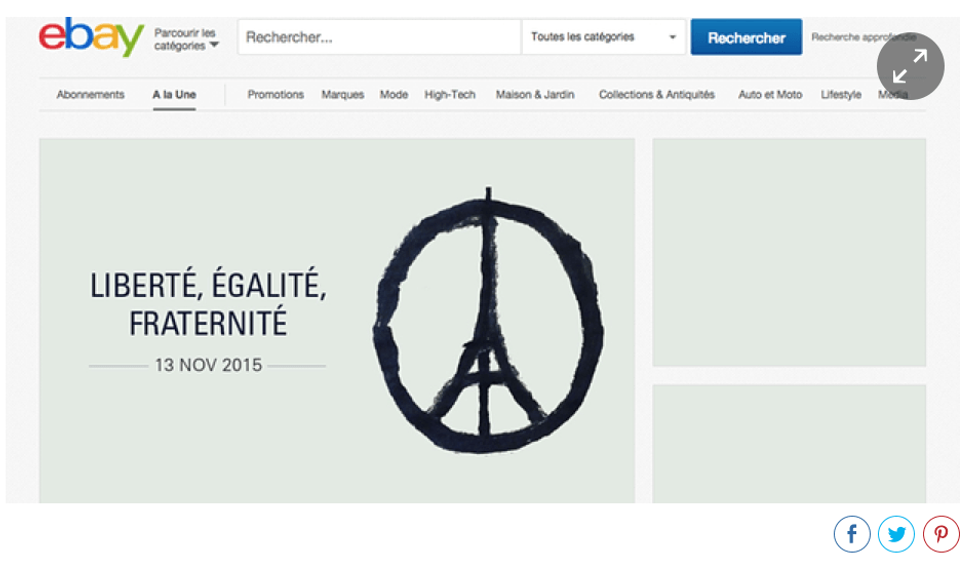
The support expressed by eBay, with a big "Liberte, Egalite, Fraternite" sign plastered across their site.
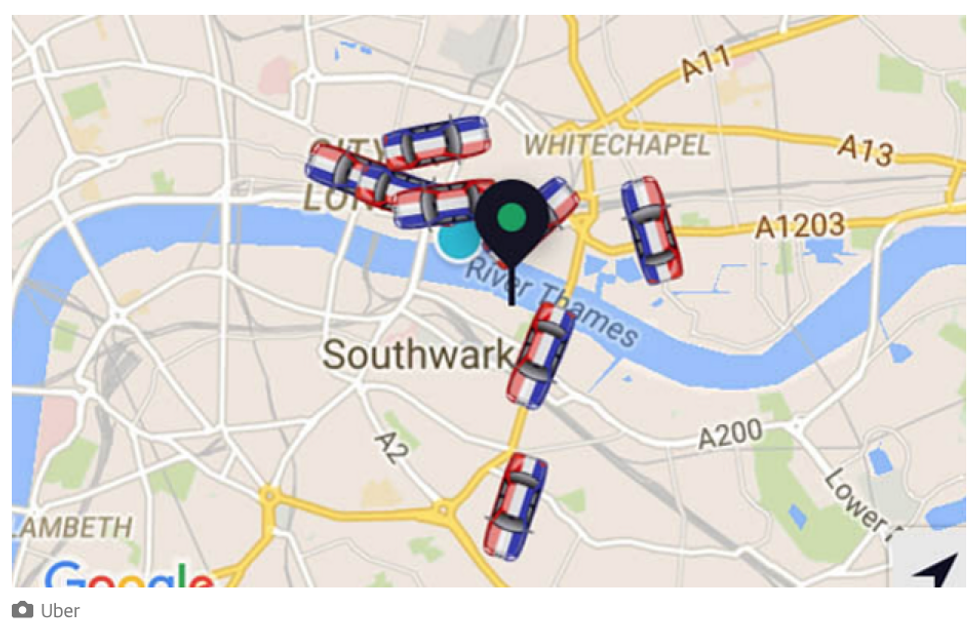
The tribute from Uber, with a sprinkle of tricolor cars across its app.
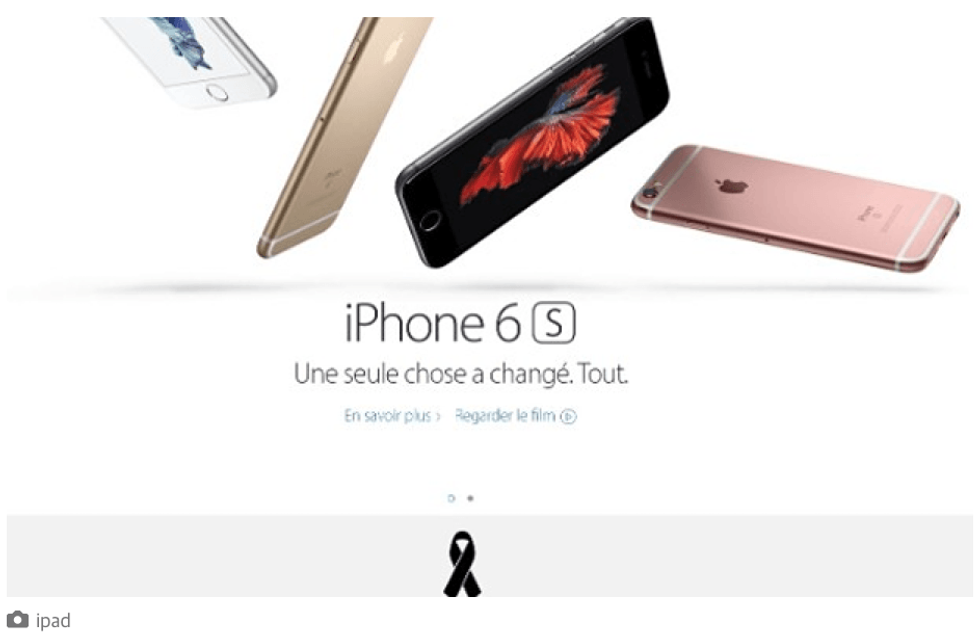
The black ribbon on Apple's website - discreet, but present.
Worse still: a tone-deaf blogpost by a site "honouring France" by making a list of tech products created by French teams (thanks for the kudos - but maybe not the right time).
National grief is a difficult and complicated process. France is, for the third time this year, mourning the loss of its insouciance. Our leaders declared that we were at war. We have to digest the fact that our country produced citizens capable of such all-encompassing hatred. All this is no small task.
The pain is shared by all of us, but a golden rule should apply: don't capitalise on grief, don't profit from it. Perhaps this is why big companies imposing their sympathy on the rest of us leaves a bitter taste in my month: it is hard for me to see these gestures as anything but profiteering.
Companies are now posing as entities capable of compassion, never mind that they cannot possibly speak for all of its employees. This also brings us a step closer to endowing them with a human trait: the capacity to express emotions. They think they're sentient.
If this sounds crazy, it's because it is.
In the US, the debate about corporate personhood is ongoing. The supreme court already ruled that corporations are indeed people in some contexts: they have been granted the right to spend money on political issues, for example, as well as the right to refuse to cover birth control in their employee health plans on religious grounds.
Armed with these rulings, brands continue to colonise our lives, accompanying us from the cradle to the grave. They see you grow up, they see you die. They're benevolent. They're family.
Looking for someone to prove me wrong, I asked Ed Zitron, a PR chief executive, about these kinds of tactics. Zitron points out that tech companies are, in some cases, performing a useful service - as in Facebook's "safety check", T-Mobile and Verizon's free communication with France, and Airbnb's decision to compensate hosts for letting people stay longer for free. Those are tangible gestures - the equivalent of bringing grief-stricken neighbours meals to sustain them, rather than sending a hastily-written card.
Anything else, he says, is essentially good-old free publicity: "an empty gesture, a non-movement, a sanguine pretend-help that does nothing other than promote themselves".
It's hard to disagree with him and illustrates how far brands have further infiltrated our lives since the publication of Naomi Klein's No Logo, which documented advertising as an industry not only interested in selling products, but also a dream and a message. We can now add "grief surfing" to the list.
A fear years back, Jon Stewart mocked this sorry state of affairs:
If only there were a way to prove that corporations are not people, show their inability to love, to show that they lack awareness of their own mortality, to see what they do when you walk in on them masturbating...
Turns out we can't - companies will love you, in sickness and in health, for better and for worse, whether you want it or not.
Yoko Ono's call to honor John's birthday
John Lennon would be 75 today, and the radio played his song Power to the People. Earlier this week a couple thousand people made a peace sign in New York's Central Park in response to Yoko Ono's call to honor John's birthday in this way.
Also today, the Tunisian civil society organizations that came together in a national dialogue won the Nobel Peace Prize! The leader of the Tunisian General Labour Union, Houcine Abass,i said, "It's a prize that crowns more than two years of efforts deployed by the quartet when the country was in danger on all fronts." The other groups in the quartet are the Tunisian Confederation of Industry, Trade and Handicrafts, the Tunisian Human Rights League, and the Tunisian Order of Lawyers.
Tomorrow, my local peace group stands out in our town center to decry the U.S. war crime of bombing a Doctors Without Borders/Medecines Sans Frontieres hospital in Kunduz, Afghanistan and to oppose bombing.
Also this week, United for Peace and Justice set up a Stop War Crimes in Afghanistan Letter to Congress that people can send to their elected representatives.
Bombing countries does not solve problems - it just creates victims as the millions of people fleeing war zones attests. More people are refugees in 2015 than at any time since the end of WW II.
The way forward is clear, we the people need to use our power around the world and protest in such large numbers that the ruling elites end the madness of their wars, and the abominable social policies of austerity. This is happening but tens of thousands aren't enough. All civil society organizations around the globe need to meet, just as the Tunisian groups did, dialogue, arrive at and determine a common agenda and program and work together.
Part of this will involve moving tens of millions of people into the streets to claim our rights to a planet at peace. This is a first step in curtailing the damage we inflict upon our planet, the damage that is causing climate change.
Power To The People - by John Lennon
Power to the people
Power to the people
Power to the people
Power to the people
Power to the people
Power to the people
Power to the people
Power to the people, right on
Say you want a revolution
We better get on right away
Well you get on your feet
And out on the street
Singing power to the people
Power to the people
Power to the people
Power to the people, right on
A million workers working for nothing
You better give 'em what they really own
We got to put you down
When we come into town
Singing power to the people
Power to the people
Power to the people
Power to the people, right on
I gotta ask you comrades and brothers
How do you treat you own woman back home
She got to be herself
So she can free herself
Singing power to the people
Power to the people
Power to the people
Power to the people, right on
Now, now, now, now
Oh well, power to the people
Power to the people
Power to the people
Power to the people, right on
Yeah, power to the peoplePower to the people
Power to the people
Power to the people, right on
Power to the people
Power to the people
Power to the people
Power to the people, right on