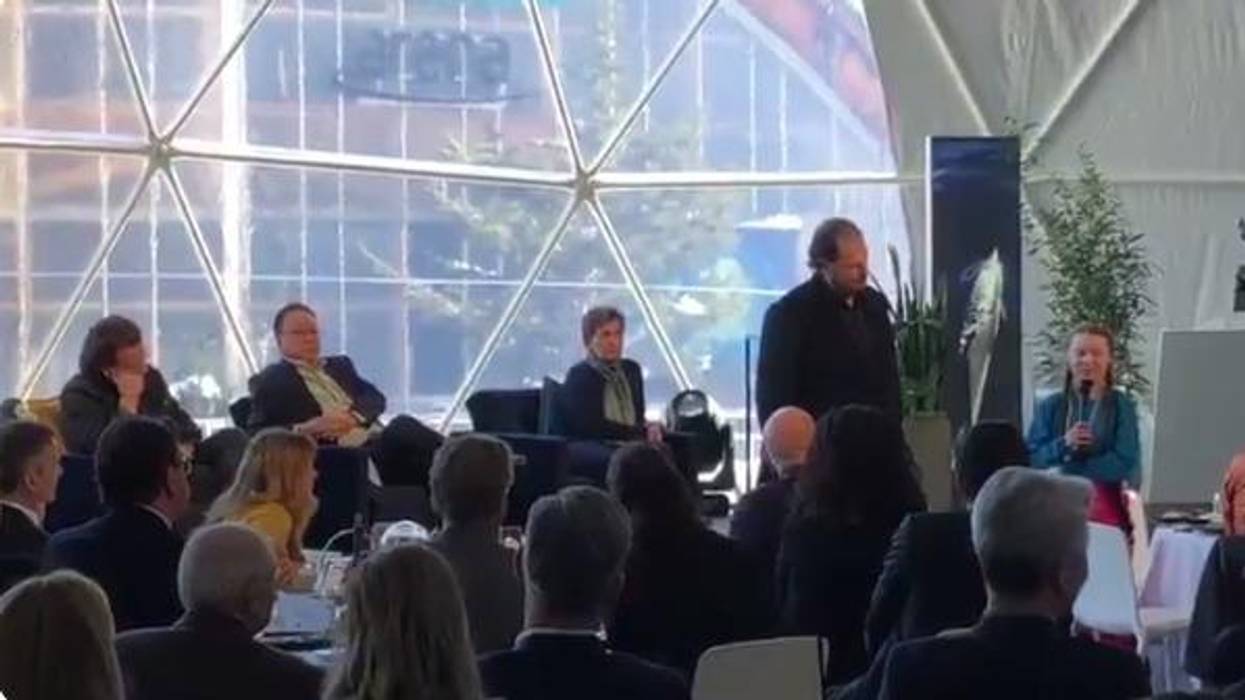

SUBSCRIBE TO OUR FREE NEWSLETTER
Daily news & progressive opinion—funded by the people, not the corporations—delivered straight to your inbox.
5
#000000
#FFFFFF
To donate by check, phone, or other method, see our More Ways to Give page.


Daily news & progressive opinion—funded by the people, not the corporations—delivered straight to your inbox.
"In the dark times that we are living in now," said the preeminent scientist, "if people don't have hope, we're doomed."
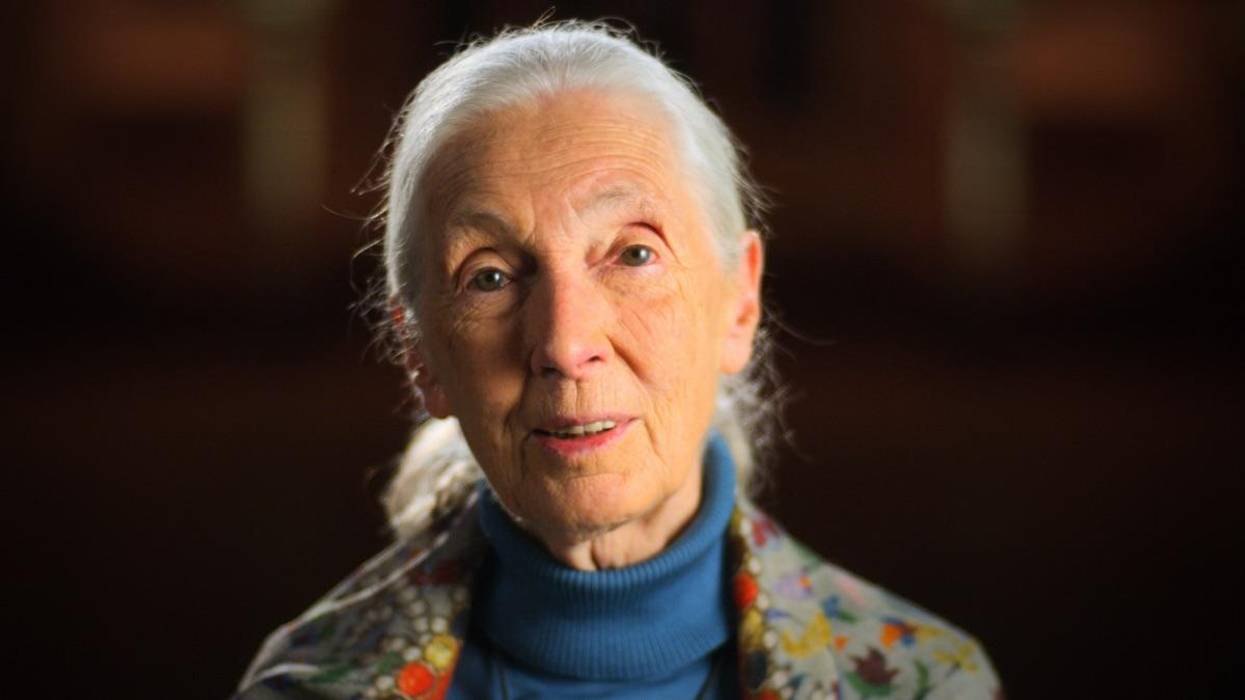
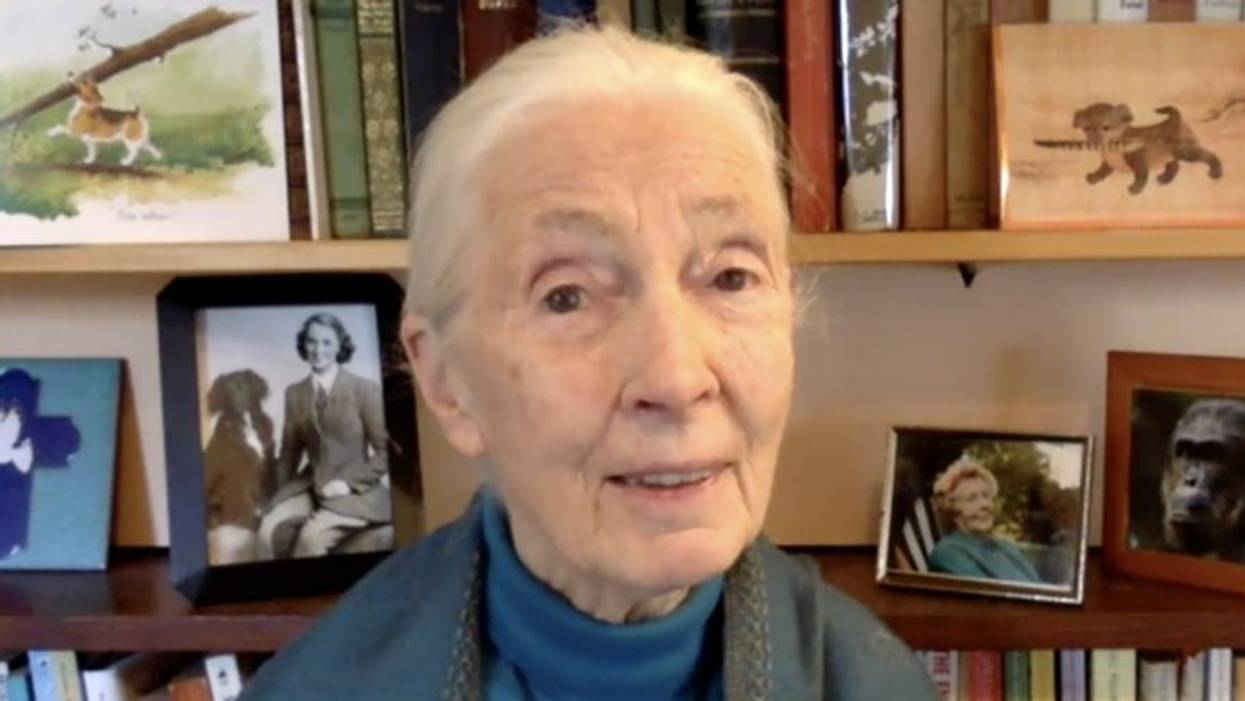
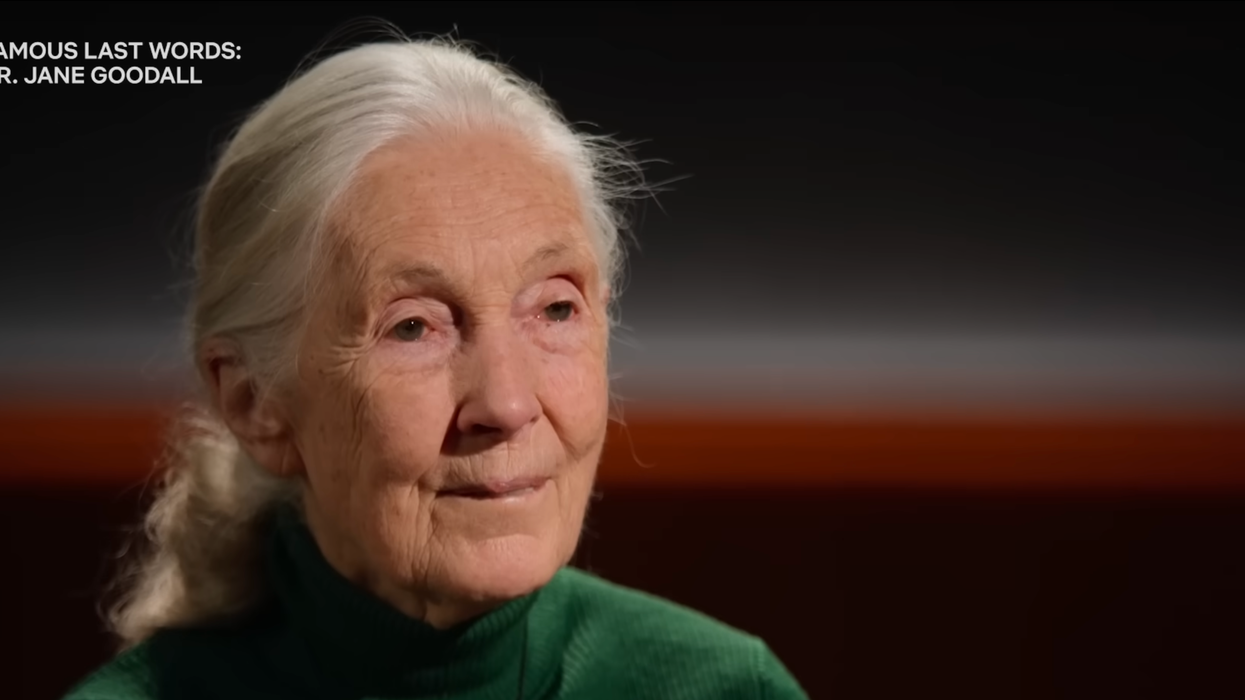
In her final months, renowned conservationist and scientist Jane Goodall secretly sat down for an interview with producers of a newly greenlit show for Netflix—with an agreement in place that the content of the discussion wouldn't be shared publicly until after her death.
The interview turned out to be the first episode of "Famous Last Words," which was released last Friday—two days after Goodall's death at the age of 91.
Goodall used the interview as an opportunity to reflect on her life and work as a groundbreaking primatologist, to send a message of hope to those left on "this beautiful planet Earth," and to unload her deep dissatisfaction with some of the world's most powerful people.
When asked by producer Brad Falchuk whether there was anyone she did not like, Goodall at first did not name names, but said there were "absolutely" people whom she would like to put on one of SpaceX CEO Elon Musk's spaceships, "and send them all off to the planet he's sure he's going to discover."
"Would he be one of them?" Falchuk pressed.
Goodall replied that Musk, the world's richest person and a megadonor to US President Donald Trump, would "host" the expedition, with Trump among the passengers.
Earlier this year, Dr. Jane Goodall sat down for an interview for Brad Falchuk’s new Netflix series, Famous Last Words.
The premise of the series is to interview people on the condition that the interview not air until the subject has passed away. pic.twitter.com/jzhLqRtpQP
— Yashar Ali 🐘 (@yashar) October 5, 2025
"And then I would put [Russian President Vladimir Putin] in there and I would put President Xi [Jinping of China]," said Goodall. "I'd certainly put [Israeli Prime Minister Benjamin] Netanyahu in there and his far-right government. Put them all on that spaceship and send them off."
The interview was filmed amid compounding global crises that are still ongoing—the climate emergency; Western governments' allegiance to and capture by corporations and the ultrarich, including fossil fuel giants that continue to threaten Earth with planet-heating emissions; worsening global inequality; and violent conflicts like Israel's bombardment and starvation of Palestinians in Gaza.
But Goodall urged viewers to resist giving in to a feeling of hopelessness, which would cause them to "become apathetic and do nothing."
Describing herself as "somebody sent to this world to try to give people hope in dark times," Goodall warned:
In the dark times that we are living in now, if people don't have hope, we're doomed, and how can we bring little children into this dark world we've created and let them be surrounded by people who have given up? So even if this is the end of humanity as we know it, let's fight to the very end. Let's let the children know that there is hope if they get together.
"Even if it becomes impossible," she said, "for anybody, it's better to go on fighting to the end than to just give up and say, 'Okay.'"
She added that everyone on Earth "has a role to play."
"Your life matters and you are here for a reason," said Goodall. "Every single day you live, you make a difference in the world and you get to choose the difference that you make."
But the message Goodall wished to send to the world "above all," she said, was that "when we're on planet Earth, we are part of Mother Nature."
"We depend on Mother Nature for clean air, for water, for food, for clothing, for everything," she said. "And as we destroy one ecosystem after another, as we create worse climate change, worse loss of diversity, we have to do everything in our power to make the world a better place for the children alive today and for those that will follow."
"Don't give up. There is a future for you," she said. "Do your best while you're still on this beautiful planet Earth that I look down upon from where I am now."
Scientists, climate advocates, and political leaders were among those who shared an outpouring of gratitude and mourning last week when Goodall's death from natural causes was announced.
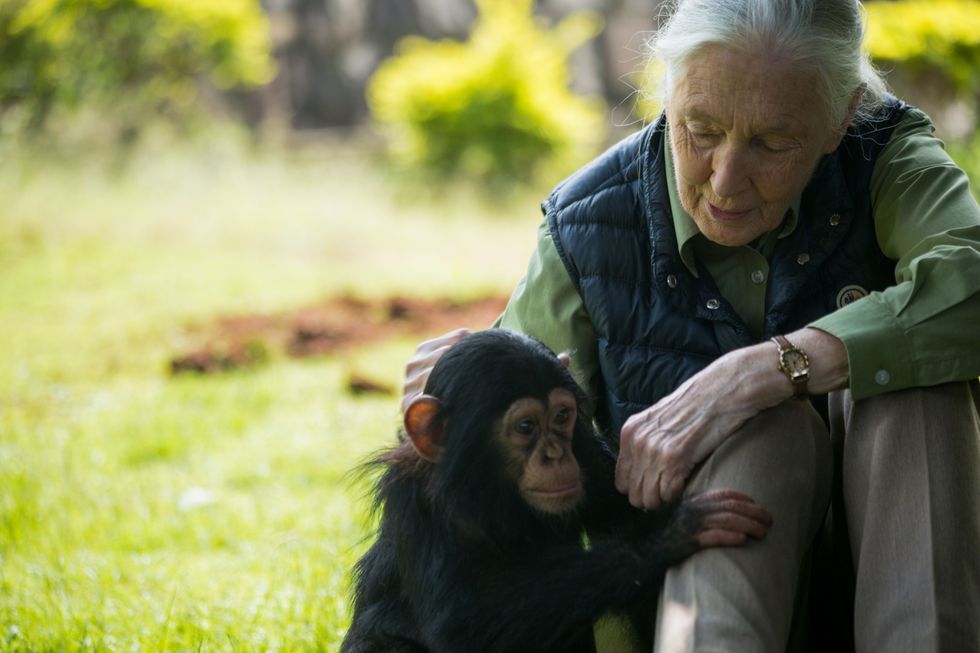
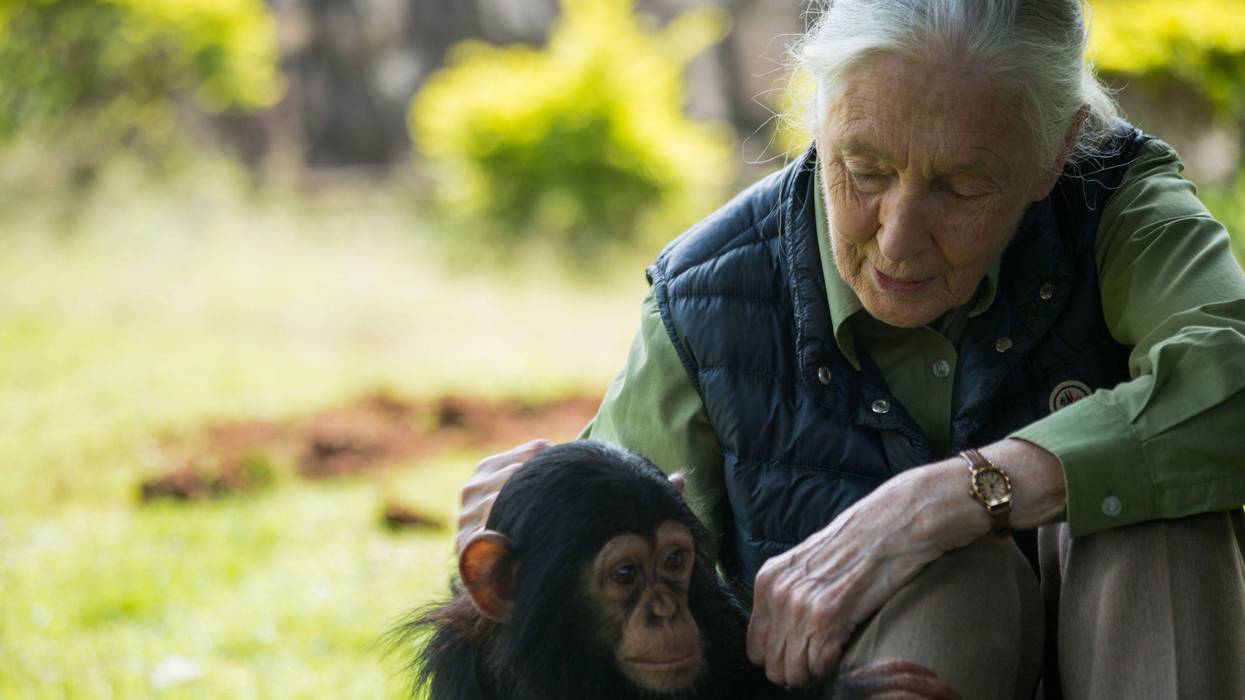
Goodall's pioneering work with chimpanzees led to greater understanding of the primates, other species, biodiversity, and the need to protect the natural world.
“Jane Goodall was fearless in all things," Falchuk told Variety as the episode was released. "She deeply loved humanity and the natural world. It was clear to me in our conversation that she was approaching her final adventure with the same fearlessness, hope, humor, and joy that she approached everything else in life. She was one of the world’s greatest and most beloved champions of good."
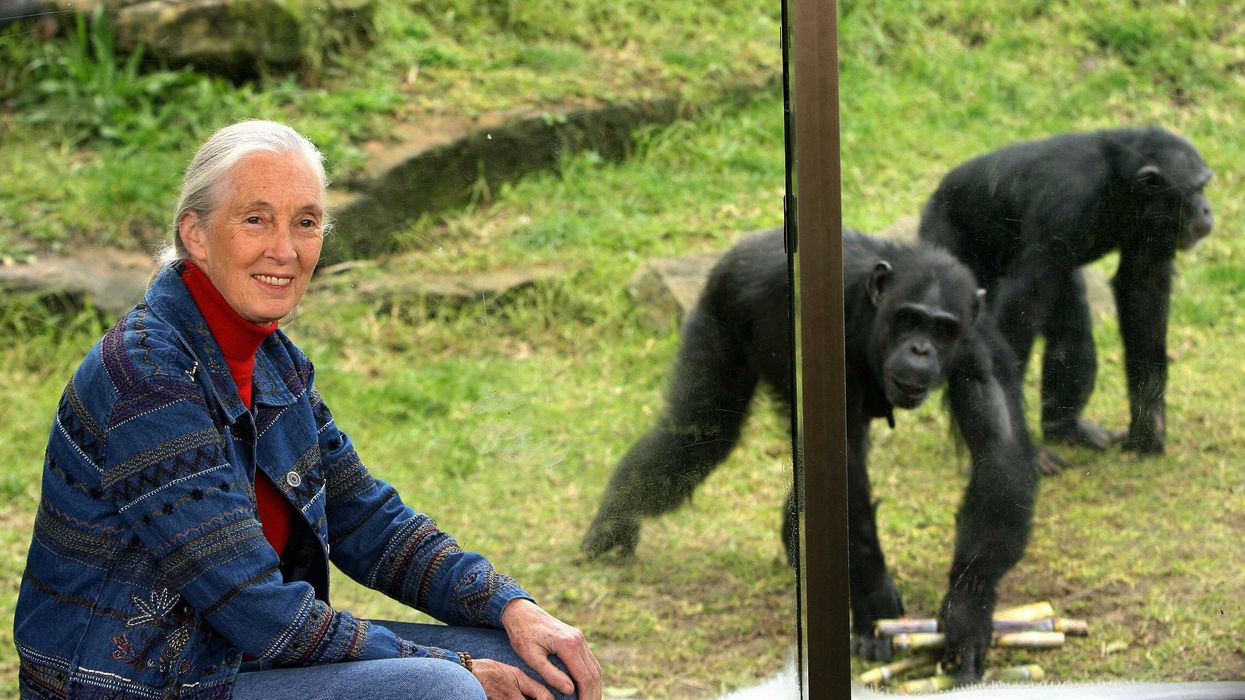
The world has lost one of the best of us. The animals have lost one of their greatest allies to have ever lived. We in the humane education movement have lost a groundbreaking advocate, and, for so many of us, a role model.
When I was a child growing up in the 60s and 70s, watching National Geographic specials on TV, I wanted to be Jane Goodall. Not like her. Her. I could imagine no better life than observing and learning about chimpanzees.
But only Jane Goodall could be Jane Goodall, and I eventually fell into a more traditional path, even going to law school. That didn’t last long. I dropped out by Thanksgiving; read a book by a scientist who taught a chimp named Sarah to communicate through symbolic language; and, with Jane Goodall in mind, went to volunteer in his lab.
When I got there, I was introduced to Sarah. She was isolated in an enclosure, no longer willing to participate in language studies, and prone to temper tantrums. I was advised to keep my distance. The next day, I visited her by myself and felt moved to twirl my finger in the air and say: “Turn around, and I’ll scratch your back.” Sure enough, Sarah turned around, sank down to the floor, and pressed her back against the bars of the cage so I could do so.
“What would Jane think?” I asked myself. I imagined that she would be both angry and heartbroken if she could witness Sarah’s diminished and miserable life. I left that lab a few weeks later. Shortly after that, I discovered my life’s work: humane education.
Most of all, she left us hope, something she talked about frequently, reminding us that hope is generated by our individual and collective acts of positive change.
Little did I know that Jane was about to leave her scientific career behind to be a humane educator herself, realizing with such profound resolve that she needed to try to protect chimps and other animals, vulnerable human communities, and the ecosystems that sustain us all, and the best way to do this was through education. She created Roots and Shoots, a humane education program that has impacted millions of children across the globe. Then she went on to become the most famous, respected, and influential humane educator in the world. Most people probably wouldn’t know to use the term humane educator in association with her. The New York Times’ remembrances of her in the past twenty-four hours didn’t use it, but humane education is exactly what she spent the last half-century of her life doing.
Jane Goodall traveled approximately 300 days out of the year, tirelessly teaching about how we can build a humane, regenerative, peaceable world for animals, people, and the environment. She was on a speaking tour when she died on Oct. 1, 2025, at the age of 91. She was brilliant, kind, funny, and dedicated beyond measure to the work of teaching and spreading a message of compassion in action.
I got to meet Jane a couple of times and speak alongside her, including on the same keynote stage at a humane education conference that the Institute for Humane Education co-led with Roots and Shoots and HEART. Jane’s blurb of my book The World Becomes What We Teach: Educating a Generation of Solutionaries is the primary reason the book became a #1 best seller on Amazon in the philosophy and social aspects of education, and it was among the greatest honors of my life that she wrote the foreword to my recent book, The Solutionary Way. She shared an essay I wrote on her social media, garnering tens of thousands of views. For all I know, you may be reading this because Jane propelled our humane education work forward.
It was a dream come true that I got to publicly share with Jane and the world just how much she meant to me. Apple TV+ launched its programming with the “Dear…” series, highlighting global icons through the people they’d influenced. “Dear Jane” was episode seven, and I was one of those people. I got to tell Jane just how much she had meant to me and how she had shaped my life. I got to thank her.
The world has lost one of the best of us. The animals have lost one of their greatest allies to have ever lived. We in the humane education movement have lost a groundbreaking advocate, and, for so many of us, a role model. But Jane left us everything we need to carry on her legacy. She left us Roots and Shoots, a humane education program any of us can implement; countless videos to learn from; books and stories to read and put into practice in our lives and to spread through our own efforts as humane educators and changemakers. Most of all, she left us hope, something she talked about frequently, reminding us that hope is generated by our individual and collective acts of positive change.
Jane once wrote: “You cannot get through a single day without having an impact on the world around you. What you do makes a difference, and you have to decide what kind of difference you want to make.”
Millions have been impacted by Jane Goodall. Countless people have experienced the joy and honor of hearing her speak and meeting her, and they have their own stories to tell about how she affected them. I hope we’ll all tell our stories. And if Jane Goodall impacted you; if you are heartbroken about her passing, I hope you’ll ask yourself what kind of difference you want to make and then go make that difference. Imagine the world we could create if we all did that.
"Jane Goodall was the best of us. May she rest peacefully, as we carry on."
Legendary English conservationist and primatologist Jane Goodall died Wednesday at the age of 91, eliciting a flood of remembrances from fellow scientists, activists, politicians, and fans of her decades of dedication to protecting the natural world.
Goodall died of natural causes in Los Angeles, California, while on a US speaking tour, according to the Jane Goodall Institute.
"Dr. Goodall's life and work not only made an indelible mark on our understanding of chimpanzees and other species, but also of humankind and the environments we all share," the institute said. "She inspired curiosity, hope, and compassion in countless people around the world, and paved the way for many others—particularly young people who gave her hope for the future."
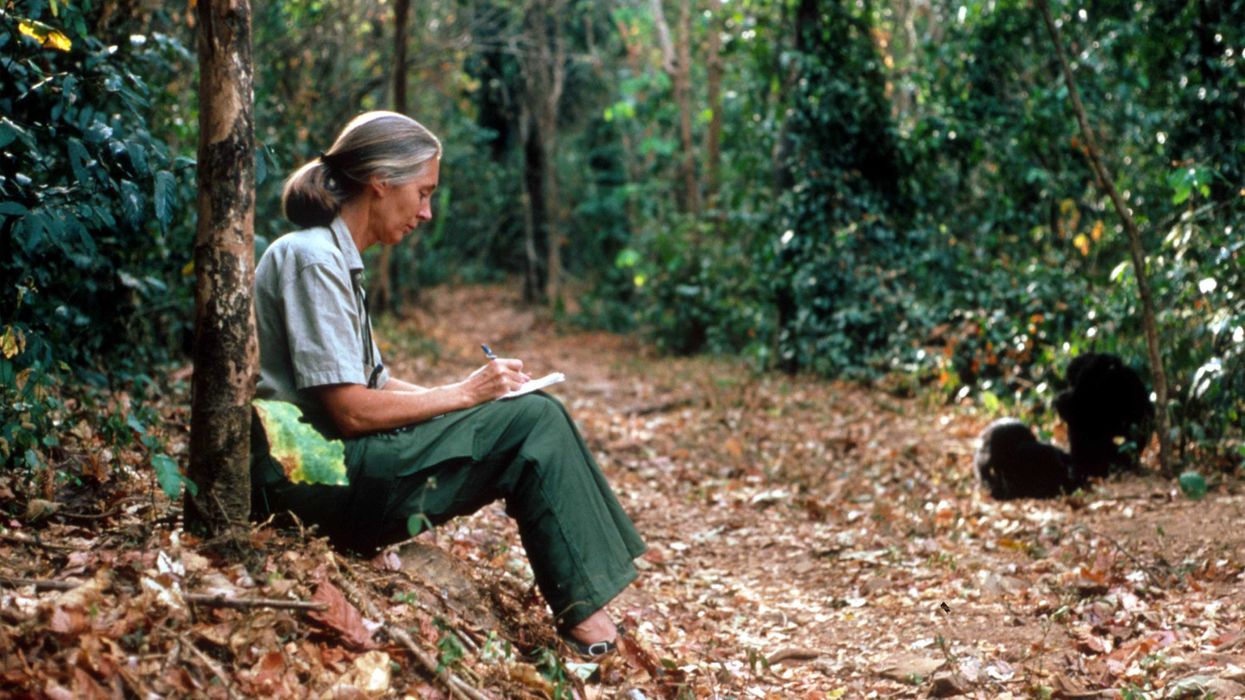
"In 1960 Dr. Goodall established the longest-running wild chimpanzee study in Gombe National Park, Tanzania, which continues to this day," the institute continued. Footage from her early research in Africa was featured in the 2017 documentary Jane.
"She inspired curiosity, hope, and compassion in countless people around the world, and paved the way for many others—particularly young people who gave her hope for the future."
"She pioneered and sustained the Jane Goodall Institute's community-centered conservation initiatives across the chimpanzee range for over four decades," the organization added. "Her legacy includes the creation of JGI's international environmental and humanitarian youth program Roots & Shoots, which is actively driving change in 75 countries and counting around the world."
Social media networks swiftly filled with posts honoring Goodall as a "childhood hero," "patient, passionate revolutionary," and "incredible force for good" whose "love and knowledge and care with animals like chimpanzees helped us all transcend the too often vicious human world."

Abigail Ruth Freeman, director of Science for Society at Research Ireland, wrote on social media Wednesday: "Such a loss for humanity. Her work showed us that traits we conveniently ascribe to humans only are widespread in other animals. That they deserve more respect and compassion, and we could use a little more humility."
The Dian Fossey Gorilla Fund said that "we are deeply saddened by the passing of Dr. Jane Goodall, a groundbreaking primatologist and tireless conservationist. Her pioneering work with chimpanzees transformed our understanding of the species, and her lifelong advocacy inspired generations to protect wildlife and their habitats. Her legacy will continue to guide and inspire all of us in the fight to conserve our planet's precious species."
Goodall was named a United Nations messenger of peace in 2002. Highlighting that honor, UN Secretary-General António Guterres said that he was also "deeply saddened" to learn of her passing, adding: "She is leaving an extraordinary legacy for humanity and our planet. I'm grateful for her lifelong environmental protection efforts and her strong support for the UN."
Author and former US political candidate Marianne Williamson said: "For millions of us she was the consummate role model. Few people have left an imprint on the world of such beauty and significance. A huge spirit was here with us. May she rest in eternal bliss."

American journalist Yashar Ali wrote on his website that "few other people have had an impact on my life like Dr. Goodall."
"Because of her, countless women have pursued careers in biology, ecology, conservation, and other fields in STEM," Ali added. "Over the years, as I have traveled through the world and met some of the most prominent women in all areas of conservation and environmental sciences, all but a few told me they were inspired to get into their field by Jane Goodall's example."
Jane Goodall has died. She devoted her life to advocacy on behalf of chimpanzees and, after living among them,shared valuable insight into their lives. She advocated too for the wellbeing of other primates and the environmentShe has been a magnificent inspiration. Thank you Jane Goodall ♥️🙏🏽♥️
[image or embed]
— Mia Farrow (@miafarrow.bsky.social) October 1, 2025 at 2:41 PM
Some people shared their personal experiences with Goodall. American reporter Leigh Giangreco recalled that "Jane Goodall was one of my first ever interviews as a college journalist, and she had an immense respect for young people, I remember she wanted to hear from us specifically. I will never forget her discoveries or her empathy."
Scottish broadcaster Nicky Campbell said: "We have lost one of the greatest naturalists, zoologists, and activists. A great woman. I had the pleasure of meeting Jane Goodall. I was in awe of her. I will forever be in awe. She gave us so much. She gave her beloved chimps so much. She helped us understand them. And thereby understand ourselves. May this gentle, kind, wise, and wonderful woman rest in peace."
US Congressman Cory Booker (D-NJ) recorded a video about his experience meeting the renowned conservationist.
Thank you Jane Goodall for a lasting legacy of conservation, service to all of us, and for always being brave.
[image or embed]
— Cory Booker (@corybooker.com) October 1, 2025 at 2:46 PM
The US group 314 Action, which works to elect scientists and doctors, pointed out that just last week, its president, Shaughnessy Naughton, "was in the same room with Jane at Climate Week as she continued her lifetime of advocacy, until the very end."
"Jane Goodall was the best of us," the organization added. "May she rest peacefully, as we carry on."