

SUBSCRIBE TO OUR FREE NEWSLETTER
Daily news & progressive opinion—funded by the people, not the corporations—delivered straight to your inbox.
5
#000000
#FFFFFF
To donate by check, phone, or other method, see our More Ways to Give page.
Daily news & progressive opinion—funded by the people, not the corporations—delivered straight to your inbox.
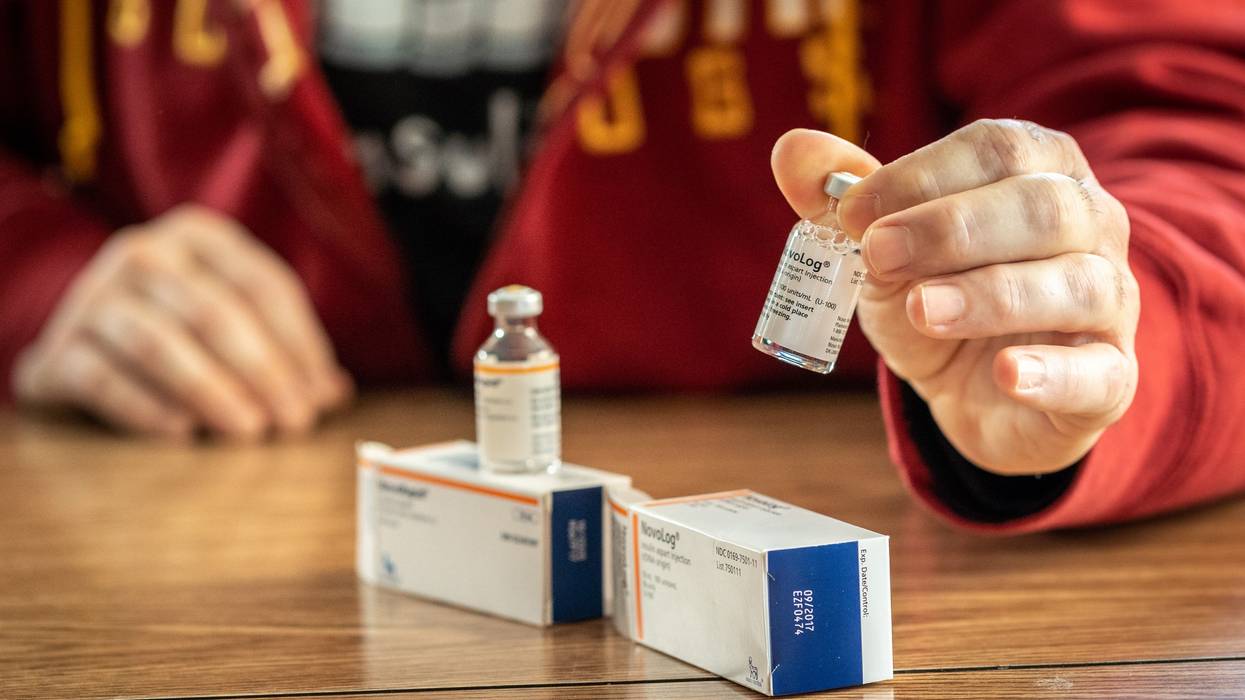
The U.S. "has always accepted that we are the country that overpays relative to the rest of the world," said one health policy expert.
The Biden administration's Medicare drug price negotiations yielded lowered costs for 10 commonly used drugs, and the White House said last month that Americans would save an estimated $1.5 billion in out-of-pocket expenses thanks to the talks—but an analysis out Tuesday found that the U.S. will still be paying far more than other wealthy countries.
Reuters reviewed the maximum prices that Australia, Japan, Canada, and Sweden have agreed to pay for nine of the 10 drugs for which Medicare negotiated prices this year, and found that the U.S. will still be paying more than double the amount for the medications on average.
The new prices are set to go into effect on January 1, 2026, but two of the highest prices the U.S. will still pay are for Imbruvica, for blood cancers, and Stelara, for conditions including Crohn's disease and psoriasis.
Medicare will be charged $9,319 for a 30-day supply of the latter drug, compared to $4,607 in Sweden. For Stelara, the U.S. will pay $4,695 under the negotiated prices—more than four times the amount it costs in Sweden, Australia, and Canada.
For Enbrel, which treats conditions including arthritis, Medicare will pay $2,355 per month—far less than the list price of $7,106, but still more than $1,000 over what Sweden is charged: $709. Australia pays $573, while Canada pays $704, and Japan pays just over $300 for the drug.
"The government negotiations are especially significant for drugs where market forces were most limited and therefore had the least impact on producing price concessions."
Stacie Dusetzina, a professor of health policy at Vanderbilt University, told Reuters that the U.S. has "always accepted that we are the country that overpays relative to the rest of the world."
The analysis comes two weeks after the Brookings Institution published a review of the impact of the United States' first federal negotiations of prescription drug prices, finding that just three of the drugs which had little competition in the market accounted for more than half of the $6 billion the U.S. is expected to save in 2026.
"The government negotiations are especially significant for drugs where market forces were most limited and therefore had the least impact on producing price concessions," said Brookings.
Reuters noted that in other countries, prices generally come down over time, but U.S. drugmakers are able to raise prices annually and often extend patents by making small changes to medications, stopping less expensive generic versions from hitting the market and saving patients money.
Unlike in other wealthy countries, Johns Hopkins Bloomberg School of Public Health scientist Mariana Socal told Reuters, "the longer a drug is in the U.S. market, the more we pay."
With previous list prices well into the hundreds and thousands for the 10 drugs included in negotiations so far, Medicare agreed to pay close to $200 for a 30-day supply for drugs including Xarelto, Jardiance, and Farxiga—medications for which other governments examined by Reuters pay $78 or less, thanks to their longstanding negotiations.
The RAND Corporation found in a study in February that before the Medicare negotiations were included in the Inflation Reduction Act, U.S. health plans paid more than three times as much as other countries for brand-name drugs, even after discounts.
"A contributor to higher U.S. per capita drug spending is faster uptake of new and more expensive prescription drugs in the United States relative to other countries," wrote researchers at the London School of Economics in a study in 2013. "In contrast, the other OECD countries employed mechanisms such as health technology assessment and restrictions on patients' eligibility for new prescription drugs, and they required strict evidence of the value of new drugs."
The researchers suggested pharmaceutical companies in the U.S., like in other countries, should be required "to provide more evidence about the value of new drugs in relation to the cost" and negotiate prices accordingly.
As Merith Basey, executive director of Patients for Affordable Drugs, said in August after the results of the first round of negotiations were announced, advocates are still pushing for far more savings in upcoming talks between Medicare and drug manufacturers, which are expected to start next year.
"We remain committed to expanding the Medicare negotiation program to more drugs," said Basey last month, "and fighting for additional reforms to lower drug prices for all patients who need relief."
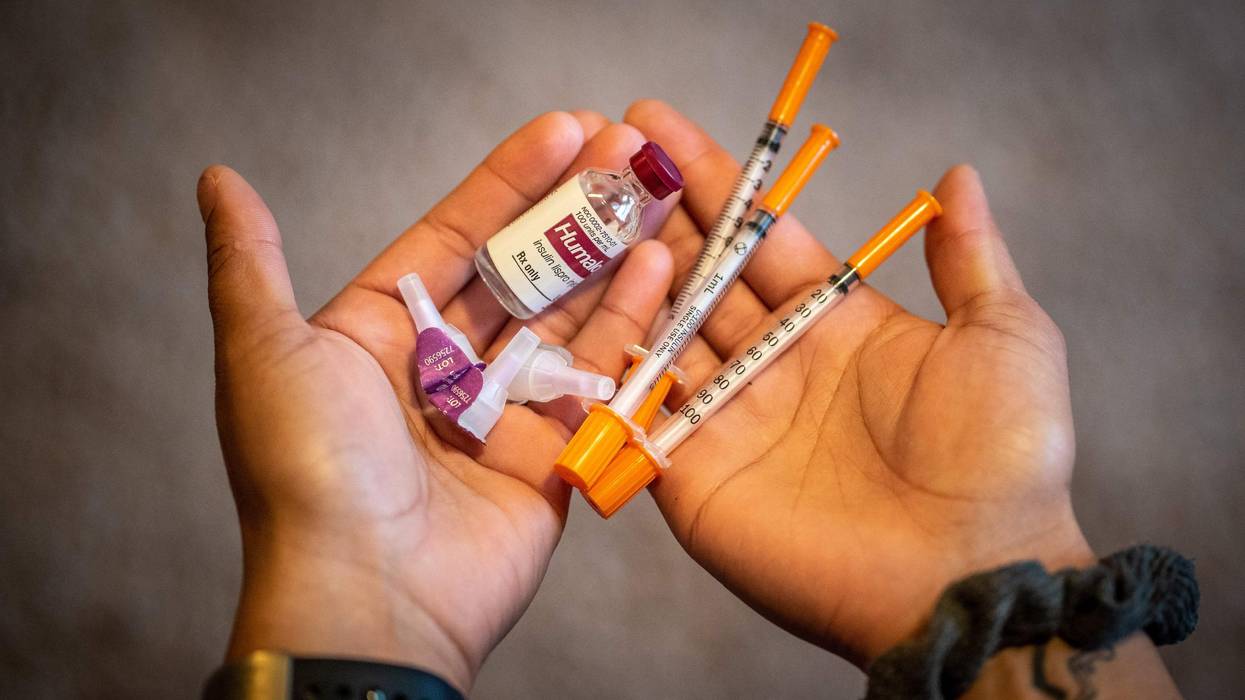
From the $35 insulin co-pay to capping insurance premium costs, the legislation has been health-changing and life-changing.
I was honored to be at the White House this month for the Inflation Reduction Act anniversary event, featuring Americans sharing their stories of saving money and saving lives.
Thank you to the millions of people fighting every day for lower drug prices, to Congress for passing the Inflation Reduction Act, U.S. Vice President Kamala Harris for casting the deciding vote in the Senate, and President Joe Biden for signing it into law.
Meet Bob Parant, from New York. He’s a 71-year-old man who has been living with type 1 diabetes for over fifty years. He lost his leg in 2010, and became eligible for Medicare. Before the Inflation Reduction Act, the last price Bob paid for a vial of insulin was $580, which was “horrendous.”
We have made so much progress on healthcare. But as everyone reading this knows, there is so much more to do.
Listen to Pam Parker, from Maryland: She’s a retired electrician, 62 years old, and has been diabetic since she was 30. “I had to decide, a lot of months, between mortgage, groceries, utilities, and other things… I would juggle my expenses, and really juggle my healthcare.. I would eat less, or ration my insulin to make it last.. I had high blood pressure, I fell into a coma, my kidneys failed… they told me I coded.”
Learn from Robin Craycroft, from Missouri: When she turned 65 and had access to Medicare, the pharmacist told her that one insulin for three months was $3,000. “Everything that we had planned, cancelled, and our life just changed. And I felt such guilt over that… We’re gonna spend $2,000 a month (two insulin vials) to keep me alive. You start going through, am I worth it? Should I do that to [my husband]?”
Hear Steven Hadfield, from North Carolina: “Before the $35 cap, sometimes you had to skip a dose, sometimes you had to not test yourself, watch what you eat because you couldn’t afford it…”
The $35 insulin co-pay cap for people on Medicare is just one of the health-changing and life-changing parts of the Inflation Reduction Act.
This year, people on Medicare have their out of pocket Part D drug costs capped at around $3,500. And next year, the maximum drops down to $2,000. This means seniors on a fixed income won’t have to choose medicine over food or housing or anything else. Also recommended adult vaccines such as the new shingles vaccine are now free for Medicare recipients.
Pharmaceutical companies that raise their prices higher than inflation are required to pay Medicare a rebate, to encourage them to stop price gouging patients. And in 2026, price negotiations for the first 10 drugs under Medicare go into effect: lowering the costs of those drugs for millions of Americans. The savings will continue for patients and taxpayers as more drug prices are negotiated each year.
But the Inflation Reduction Act doesn’t just help people on Medicare. Over 21 million Americans like me get their health insurance through the Affordable Care Act marketplaces. When I was diagnosed with stage 4 cancer in 2017, I did not qualify for financial help for insurance. Thankfully I was able to afford a plan anyway, and to pay the maximum deductible for that year. A bargain compared to the over half a million dollars it cost to save my life.
I am so grateful to still be here, and for the Affordable Care Act made truly more affordable to millions of working Americans like me.
The American Rescue Plan, and then the Inflation Reduction Act, provided financial help for health insurance to many more who needed it. This law caps the cost of premiums at no more than 8.5% of your income, meaning people—especially older folks who face higher premiums, or people in more expensive healthcare markets—don’t get penalized, and can still afford the care they need.
We have made so much progress on healthcare. But as everyone reading this knows, there is so much more to do.
First, we have to defend the advances in the Inflation Reduction Act. A new administration and a new Congress next year means everything we’ve gained could be on the chopping block.
Second, the health insurance tax credits piece expires in 2025. Without that renewal, millions of Americans would go back to being priced out of health insurance.
Third, the Medicare provisions such as the $35 insulin cap, the drug price negotiation, and more, need to be expanded to everyone.
We are grateful to still be here, and to keep fighting until every American can get the healthcare they need. We cannot go back.
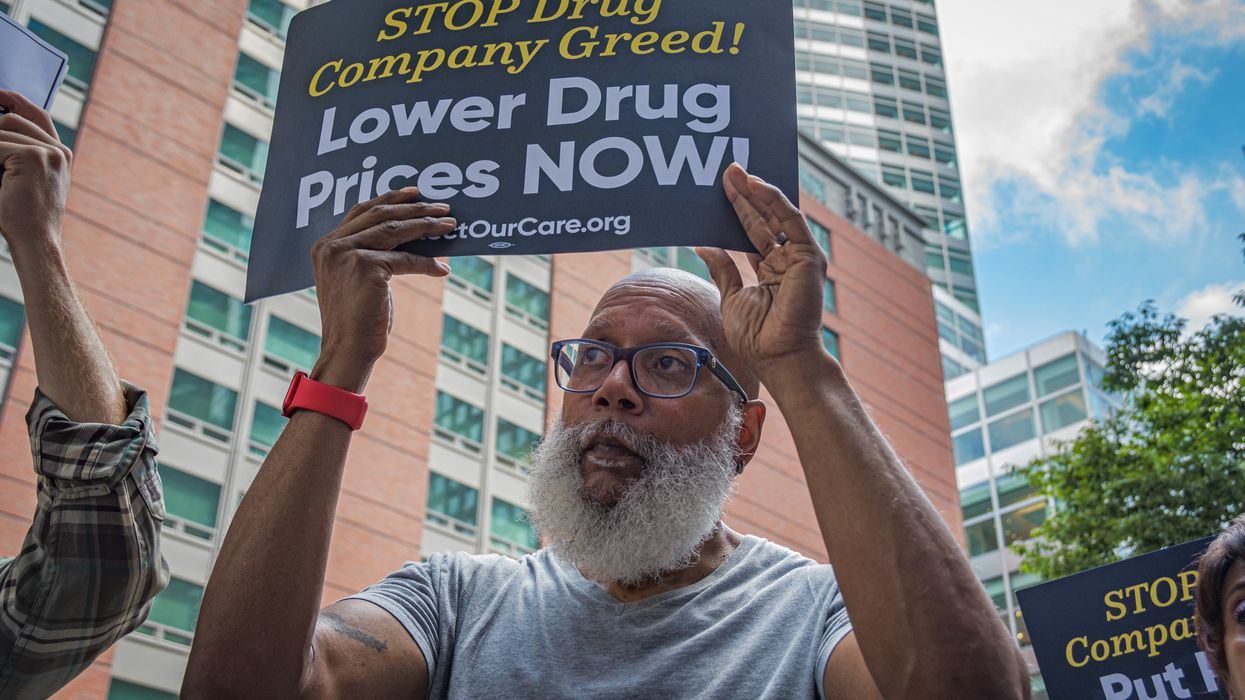
The president’s Inflation Reduction Act contained several provisions affecting drug prices, including three that began to take effect in 2023.
Prices for prescription drugs in America average almost three times as much as in other major nations around the world. Even more, the companies that set those prices are doing everything they can to make sure they stay in the stratosphere: They’ve filed suit to overturn an upcoming reform, having Medicare negotiate the prices of some of the costliest and most commonly used drugs.
The makers don’t think they need to explain themselves, either. If they hadn’t been threatened with subpoenas, their CEOs would never have showed up to waffle their way through a Senate hearing on drug pricing earlier this year.
Lastly, the companies argue that critics of high prices should instead be praising the industry for all the research it carries out to make the drugs available in the first place—failing to mention, of course, the critical role that government funding regularly plays in the development of new drugs.
If you wonder how patients could be harmed by lower drug prices, feel free to ask the Pharmaceutical Research and Manufacturers of America.
A big contributor to insane drug prices is the billions spent on those incessant drug commercials. Hour after hour, eyes glazing over, TV watchers are bombarded with happy-time ads for Rinvoq, Skyrizi, Dupixent, Sanofi, Jardiance, on and on and then some.
Thank heaven for mute buttons; more to the point, thank heaven that the Biden administration is leading the way to somewhat less insanity.
The president’s Inflation Reduction Act contained several provisions affecting drug prices, including three that began to take effect in 2023. The bill capped the price of insulin at $35 a month, made some vaccines free, and required drug companies that raised prices faster than the rate of inflation to pay rebates to Medicare.
Here’s President Joe Biden taking a victory lap during his State of the Union address: “That’s not just saving seniors money, it’s saving taxpayers money. We cut the federal deficit by $160 billion because Medicare will no longer have to pay those exorbitant prices…”
Other cost-saving provisions are coming as well. Starting in 2025, out-of-pocket prescription drug costs for retirees covered under Medicare Part D will be capped at $2,000. Annual limits after 2025 will be adjusted based on inflation rates.
Medicare-negotiated drug prices, mentioned earlier, have an effective date of 2026 (unless, of course, they get derailed by Big Pharma). Negotiations between Medicare and the makers are already underway for the first 10 covered drugs; all by themselves, those 10 accounted for over $3.4 billion in out-of-pocket costs in 2022.
Drug prices could fall even more sharply under the terms of the proposed 2025 budget for the Department of Health and Human Services. Instead of Medicare-negotiated prices for 10 drugs, the number would rise to 50 per year.
Presidents also have the power to make things happen without congressional legislation, and a Biden executive order could result in allowing states to import lower-cost drugs in bulk from Canada. The Food and Drug Administration approved Florida’s request early this year, and other states are hoping to follow. (Full disclosure: Florida’s Republican Gov. Ron DeSantis and former President Donald Trump also pushed for FDA’s approval.)
Drug companies reflexively oppose lower drug prices, so of course they reflexively oppose imports from Canada. A statement from their trade association said they were “considering all options for preventing this policy from harming patients.”
If you wonder how patients could be harmed by lower drug prices, feel free to ask the Pharmaceutical Research and Manufacturers of America. Another question too: Ask if they could please, please, please cut down on those commercials (or better yet, just end them).
"The court has rejected AstraZeneca's self-serving arguments and essentially said the company didn't have a leg to stand on," said one advocate.
The president of consumer advocacy group Public Citizen on Friday urged Big Pharma to "drop its far-fetched lawsuits and accept that the era of Medicare price negotiation is here to stay," after a federal judge in Delaware rejected drug company AstraZeneca's case challenging provisions under the Inflation Reduction Act.
AstraZeneca Pharmaceuticals LP et al. v. Becerra et al. is one of several cases that drug companies have filed against the federal government seeking to block Medicare from negotiating drug prices on behalf of patients—as the governments of every other high-income country do, with Americans paying as much as four times what people in countries such as the United Kingdom and Canada pay for their medications.
The company claimed that the Centers for Medicare & Medicaid Services violated the Administrative Procedure Act.
Chief Judge Colm Connolly in the U.S. District Court for the District of Delaware ruled that "because AstraZeneca's participation in Medicare is not involuntary, AstraZeneca does not have a protected property interest in selling drugs to the government at prices the government will not agree to pay. Accordingly, AstraZeneca's due process claim fails as a matter of law."
"Drug corporations have no constitutional right to price gouge Medicare, contrary to Big Pharma's claims."
In other words, said Patients for Affordable Drugs (P4AD), the judge emphasized that "the company's desire for higher prices does not supersede the government's ability to protect patient interests."
"On behalf of patients across this country, we are encouraged but not surprised that the court has rejected AstraZeneca's self-serving arguments and essentially said the company didn't have a leg to stand on," said Merith Basey, the group's executive director. "This ruling sends a clear message that Big Pharma's greed cannot continue to be prioritized over patients' well-being and underscores the importance of Medicare negotiation to begin to rein in exorbitant drug prices."
"The judge's decision reaffirms that pharmaceutical companies like AstraZeneca have the option to participate in Medicare voluntarily, accepting slightly lower negotiated prices if they wish to access a market worth billions," added Basey. "Once again, a judge has reviewed drug company claims, and the result has gone against the drug company and for the people of the United States."
AstraZeneca's drug Farxiga, which is used to treat Type 2 diabetes, was one of 10 medications selected by the Biden administration last year for the first round of negotiations under the Inflation Reduction Act's (IRA) Medicare Drug Price Negotiation Program. In 2022, the company reported nearly $4.4 billion in revenue from Farxiga.
P4AD said Connolly's ruling was a victory for patients like Karen, a Pueblo West, Colorado resident.
"I am on Medicare and was prescribed Farxiga with a bill of over $600 for a three-month supply. I am on a fixed income and can no way afford that amount of money," Karen told the group, which has signed onto amicus briefs in seven different cases regarding Medicare price negotiations.
Tony Carrk, executive director of Accountable.US, noted that Big Pharma previously spent millions lobbying against the drug price negotiation provisions in the IRA.
“Big drug company executives are stopping at nothing to price gouge Americans and pad their profits," said Carrk. "Now they are trying to do it by clogging the judicial system with meritless lawsuits. Today's ruling is a victory for the Biden administration's historic cost-lowering program and for seniors who need lower prescription drug costs."
Robert Weissman, president of Public Citizen, pointed out that the IRA's restraints on Big Pharma's price gouging are only "modest" but will make a difference to seniors, saving $100 billion over a decade.
"In response, Big Pharma has launched a flurry of preposterous lawsuits against the Medicare drug negotiation provisions in the Inflation Reduction Act," said Weissman. "As Public Citizen has argued in amicus briefs, drug corporations have no constitutional right to price gouge Medicare, contrary to Big Pharma's claims."
Weissman said his expects that with seven pending cases, "today's decision is the first of many rejecting Big Pharma's attack on the act's effort to rein in exorbitant prescription drug prices."
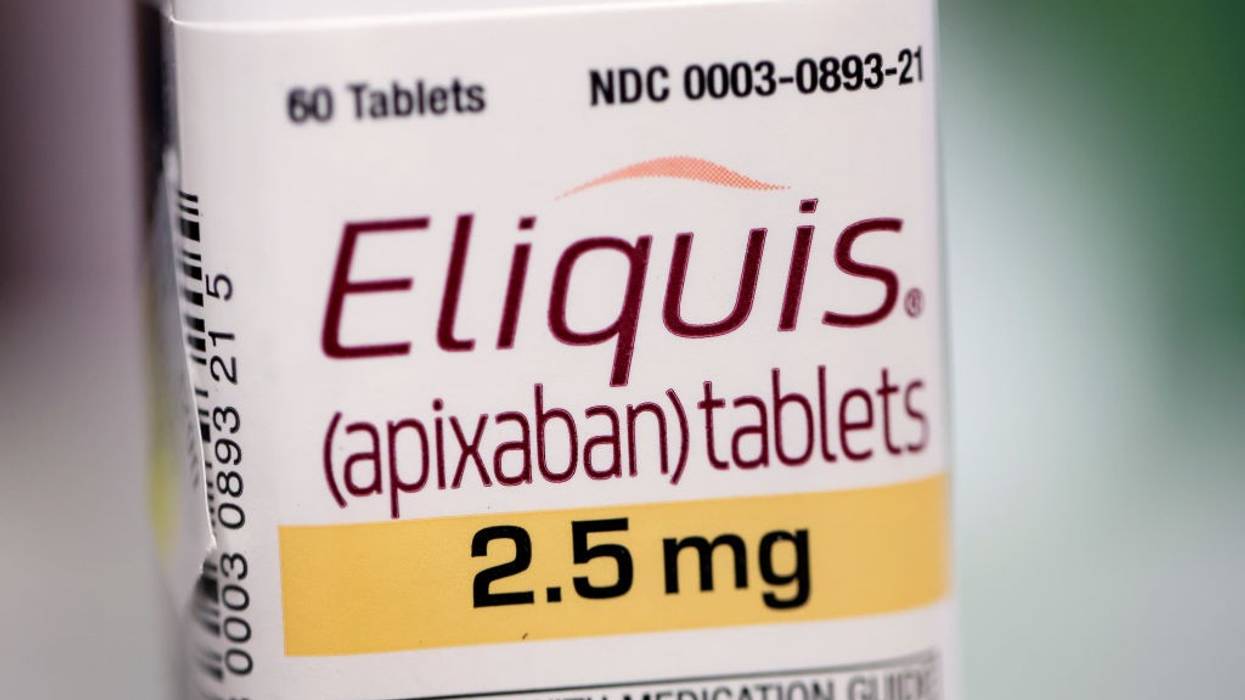
The judge said plaintiff the Chamber of Commerce "demonstrated neither a strong likelihood of success nor irreparable harm."
A federal judge in Ohio on Friday blocked an attempt by corporate interests to stop Medicare's historic negotiation of certain drug prices with pharmaceuticals.
Medicare gained the power to negotiate drug prices as part of the Inflation Reduction Act (IRA), but the several industry groups and drug makers have sued to forestall the program, arguing that it is unconstitutional, CNN explained. One of those groups was the U.S. Chamber of Commerce, which filed its lawsuit in June. The Ohio judge Friday rejected its request for a preliminary injunction to block the program before October 1, the date by which pharmaceuticals must agree to negotiate or not.
"This is the first major blow to Big Pharma in its legal battles to block the drug price negotiation provisions under the Inflation Reduction Act," Peter Maybarduk, director of the Access to Medicines program at Public Citizen, said in a statement.
"The Biden-Harris Administration won’t stop fighting for what we know to be true: that nothing in the Constitution prohibits Medicare from negotiating drug prices."
"The Chamber’s lawsuit lacks merit," Maybarduk contined. "The court made the right decision not to grant the injunction, which would have caused needless patient suffering and treatment rationing."
Judge Michael Newman of the Southern District of Ohio, a Trump appointee, ruled that the chamber "demonstrated neither a strong likelihood of success nor irreparable harm," as CNBC reported.
"Consequently, their request for immediate preliminary injunctive relief... is denied," Newman concluded.
Newman also rejected the Biden administration's request to dismiss the case. Instead, he gave the Chamber of Commerce until October 13 to answer some questions about its argument and the administration until October 27 to renew its motion to dismiss.
While the chamber had argued the negotiation program was unconstitutional for multiple reasons, Newman pointed out that drug companies are not forced to participate in Medicare.
"As there is no constitutional right (or requirement) to engage in business with the government, the consequences of that participation cannot be considered a constitutional violation," he said.
The Biden administration celebrated the news.
"Today’s ruling from the Southern District of Ohio affirms that Medicare will move forward with negotiating lower prices for millions of seniors," Press Secretary Karine Jean-Pierre said in a statement. "And, the Biden-Harris Administration won’t stop fighting for what we know to be true: that nothing in the Constitution prohibits Medicare from negotiating drug prices."
The administration announced the first 10 drugs to be subject to negotiations in August. They included the blood-clot treatment Eliquis, Jardiance, Xarelto, Januvia, Farxiga, Entresto, Enbrel, Imbruvica, Stelara, and several Novo Nordisk insulins, according to CNN.
With the injunction blocked, "drug companies should agree to participate in the negotiation program in good faith," Maybarduk said. "The program is an important first step in ending the exorbitant prices charged to Medicare enrollees. It’s time for Big Pharma to drop their lawsuits and drop their prices.”

The California Democrat accused Johnson & Johnson—makers of the $160,000-per-year leukemia drug Imbruvica—of floating a "flimsy legal theory" in a "desperate attempt to protect profits."
U.S. Rep. Ro Khanna on Wednesday ripped a senior Johnson & Johnson attorney after she repeatedly dodged questions regarding the legal justification for the pharmaceutical giant's lawsuit alleging government efforts to negotiate lower drug prices are "unjust taking."
At a House Oversight Committee hearing, Khanna (D-Calif.) grilled J&J assistant general counsel Aviva Weis over the company's federal lawsuit, which argues that Medicare drug price negotiations—an overwhelmingly popular provision of the Inflation Reduction Act (IRA)—violate the First and Fifth amendments of the U.S. Constitution.
The J&J suit—and litigation separately initiated by Merck, Bristol Myers Squibb, Astellas, the U.S. Chamber of Commerce, and the industry lobby Pharmaceutical Research and Manufacturers of America (PhRMA)—alleges in part that the IRA mandate runs afoul of the takings clause, which states, "Nor shall private property be taken for public use, without just compensation."
Referring to Imbruvica—one of the first 10 drugs tapped by the Biden administration for Medicare price negotiations—Khanna told Weis that "you've got a pill for leukemia patients, you sell it for $484 per capsule, that's $160,000 a year, you make $22 billion over that over the last 10 years, and you're making $65 billion in profit."
"Now, we have passed, as a Congress, and the president has signed a bill, saying: 'You know what? Let Medicare negotiate to try to bring that price down,'" the congressman continued. "And you, in your department—'cause you're assistant general counsel—have filed a lawsuit saying that negotiation would be an 'unjust taking.'"
When Weis tried to avoid saying whether she believes that federal agencies negotiating drug prices with pharmaceutical companies constitutes "taking," Khanna said:
I guess I don't understand how, being the assistant general counsel, you can come before the United States Congress when you're suing the United States government, saying that we are taking your property. Now, that's a very serious charge... and you don't know whether it's a taking?
Khanna asserted that it's necessary for federal agencies to negotiate drug prices so that pharmaceutical firms "don't make $65 billion in profits every year and so leukemia patients don't pay $160,000" for a year's supply of Imbruvica.
"I think it is shameful what you and the pharmaceutical companies have done in suing the United States government to protect those profits," he added, "and you are totally unprepared to answer a single question about what the takings clause is and the justification for that lawsuit."
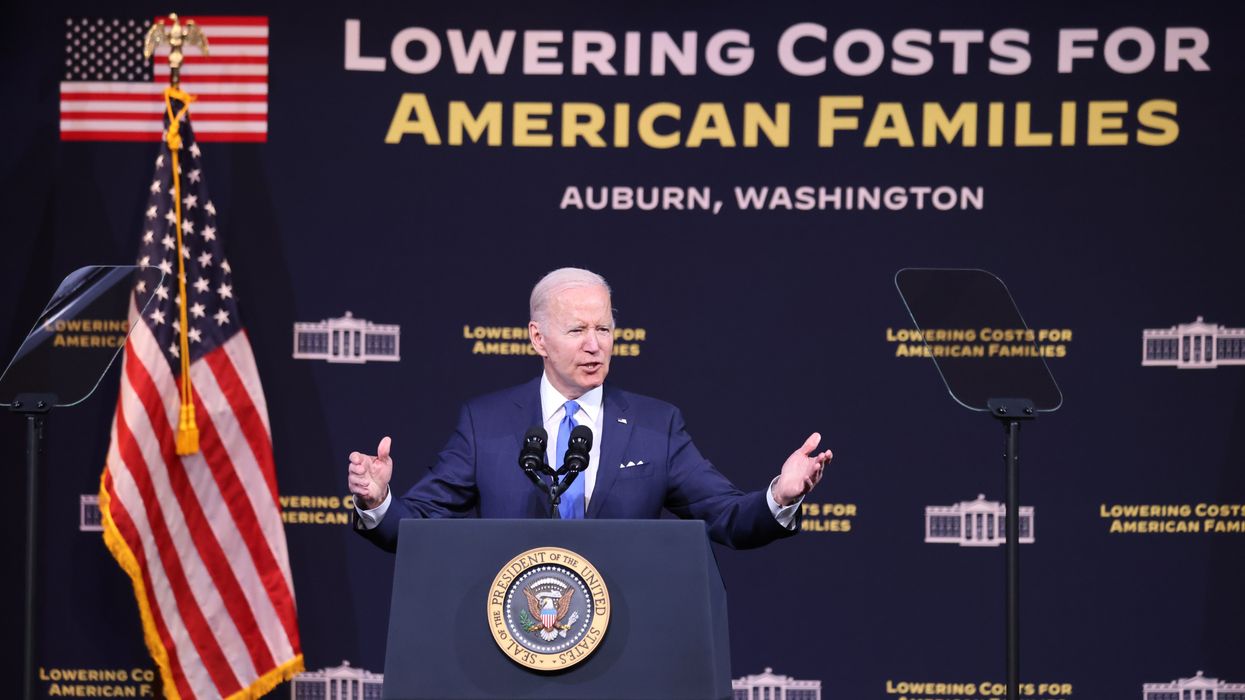
Under the president’s anti-inflation policy passed last year, our Medicare program can now negotiate drug prices on our behalf, which will drastically lower what we are now forced to pay to the profiteers for certain drugs.
We human beings sometimes do some terrible things in pursuit of the almighty dollar. But to our credit, one moral line most humans don’t cross is to gouge sick people on the price of medicines their lives depend on.
Unless, of course, you count executives of giant pharmaceutical corporations as human beings. Gouging patients is their preferred business model.
It’s a scream, then, to watch Big Pharma fall into a sky-is-falling fit over our government’s long-overdue move to give patients some bargaining power over this monopolistic industry. Under President Joe Biden’s anti-inflation policy passed last year, our Medicare program can now negotiate drug prices on our behalf.
Mega-drug outfits like Johnson & Johnson, Merck, and Bristol Myers spend more on advertising, exorbitant executive salaries, lobbying, and big stockholder payouts than on research.
This will drastically lower what you and I are now forced to pay to the profiteers for certain drugs.
For decades, Congress has coddled the corporate gougers who maintain by far the biggest lobbying army in Washington, allowing them to manipulate patent laws and rig the system. As a result, we Americans pay two-to-three times more than people in other countries for the exact same medicines.
“Oh,” wail drug executives, “bloated profits give us the incentive to keep developing innovative new cures.” Hold it right there, Slick—most basic drug development is done by tax-funded medical researchers, not brand-name market hucksters.
Mega-drug outfits like Johnson & Johnson, Merck, and Bristol Myers spend more on advertising, exorbitant executive salaries, lobbying, and big stockholder payouts than on research. Still, these same greedhounds are suing Biden, howling that making them negotiate is an unconstitutional “taking” of their income.
But hello—these scoundrels have been taking our income, health, and lives for years.
I’m with Biden on this—as is 80% of the public (including 77% of Republicans) who favor making the gougers negotiate. To stay informed and involved, connect with Public Citizen at citizen.org.

"We will not relinquish these commonsense reforms while high drug prices remain a matter of life and death for so many Americans," a coalition said of the Inflation Reduction Act's medication pricing policies.
As health advocacy groups and patients celebrate the one-year anniversary of U.S. President Joe Biden signing the Inflation Reduction Act, a coalition on Wednesday urged pharmaceutical industry executives and allies to withdraw their "unconscionable" legal challenges to the IRA's medication policies and "instead negotiate lower drug prices."
The coalition gathered in Washington, D.C. for a livestreamed delivery of over 150,000 petition signatures and a letter from more than 70 organizations to the U.S. Chamber of Commerce.
In addition to the lobbying group's leadership, the letter is addressed to executives of other chambers of commerce; the trade association Pharmaceutical Research and Manufacturers of America (PhRMA); and the drug firms Merck & Co., Bristol Myers Squibb Company, Janssen Pharmaceuticals, and Astellas Pharma U.S.
"For top-selling drugs worldwide, drug corporations consistently make more money from U.S. sales than the rest of the world combined," the letter explains. "Drug corporations' prices for Medicare Part D even outstrip those paid by other government health programs, like Medicaid and the Department of Veterans Affairs."
"Aging Americans and people with disabilities and chronic health conditions bear the brunt of these excessive prices," the letter adds. "No one should have to go into debt, go without lifesaving medicines or choose between prescriptions and other basic needs like groceries and rent. Yet millions across this nation do."
The coalition celebrated that the IRA enacted "enormously popular" reforms—such as empowering Medicare to negotiate lower prices with pharmaceutical companies—which "are projected to save patients and consumers tens of billions of dollars and expand access while ensuring innovation and drug corporations' ability to achieve enormous financial success."
"We stand with patients across the country whose lives and well-being depend on access to affordable prescription drugs," the groups declared. "We will not relinquish these commonsense reforms while high drug prices remain a matter of life and death for so many Americans."
The signatories include American Economic Liberties Project, Be a Hero, Center for Popular Democracy, Doctors for America, Families USA, Health Care for America Now Education Fund, Interfaith Center on Corporate Responsibility, MomsRising, Our Revolution, Patients for Affordable Drugs, People's Action, Physicians for a National Health Program, Protect Our Care, Public Citizen, and Social Security Works.
"Pharmaceutical corporations have long shown that they care about nothing but profits. So it is not surprising that they are attempting to use the courts to subvert the will of the people and block Medicare from using its bulk purchasing power to get better prices," Alex Lawson, executive director of Social Security Works, said in a statement.
Still, campaigners forcefully called out the industry. Be a Hero co-executive director Ady Barkan charged that "Big Pharma's insatiable appetite for profit above all else is shameful," while Protect Our Care chair Leslie Dach said that "drug companies' greed knows no bounds" and stressed that "Americans are cutting pills and skipping doses" to save money.
Others also took aim at industry allies, with Public Citizen president Robert Weissman saying that "it's a disgrace that the U.S. Chamber of Commerce is fronting for Big Pharma against the interests of the mom-and-pop businesses it purports to represent."
The U.S. Department of Health and Human Services is supposed to designate up to 10 single-source drugs used in the Medicare Part D prescription program for the first round of negotiations, set to start October 1 and continue through next August.
However, that process could be delayed by federal cases—including one in Ohio involving multiple chambers of commerce. Earlier this week, Doctors for America, Families USA, Patients for Affordable Drugs Now, Protect Our Care, and Public Citizen filed an amicus brief in opposing a preliminary injunction motion in that case.
"It's clear where big drug companies and the Chamber of Commerce stand: profits over millions of older adults and people with disabilities who can't afford their prescription drugs," Yael Lehman, senior director of strategic partnerships at Families USA, said Wednesday.
"But we know families themselves feel differently—the reforms they are trying to tear away from millions of people who rely on Medicare for their health are extremely popular across all political and ideological spectrums," Lehman continued. "They need to drop their egregious lawsuit and stop making money from price gouging families' access to health and healthcare."
That sweeping support for the IRA drug pricing reforms is motivating action on the ground, as Analilia Mejia and DaMareo Cooper, co-executive directors of the Center for Popular Democracy, highlighted.
"Our affiliates Make the Road NY, SPACES in Action, Texas Organizing Project, and Arkansas Community Organizations are rallying Wednesday to put our people over profits," they said. "We fought for years to get Medicare the power to negotiate lower drug prices—which we did through the Inflation Reduction Act—and we're going to keep fighting until healthcare is a human right in America."
Mark Hannay of Metro New York Health Care for All and Health Care for America Now's New York State Network said that "New Yorkers are fed up with being ripped off by drug corporations, and strongly support Medicare's new drug price negotiation program created as part of the Inflation Reduction Act."
"We call on these corporations to recognize political reality that their decadeslong profiteering off patients across the U.S. is over, and it's now time to come to the table and negotiate lower prices," Hannay added. "They'll still make plenty of profits regardless, just as they do in other countries with national health programs."
"This lawsuit is a desperate attempt by the industry to beat back popular legislation that would curtail Big Pharma's ability to price gouge Medicare," said one consumer advocate.
Merck on Tuesday became the first pharmaceutical company to sue the Biden administration over a recently enacted law that empowers Medicare to directly negotiate the prices of a small number of high-cost prescription medicines with drug makers—a change that could threaten Merck's bottom line.
Filed in a federal court in Washington, D.C., Merck's lawsuit characterizes the drug price negotiation policy established by the Inflation Reduction Act as "tantamount to extortion" and claims the "singular purpose of this scheme is for Medicare to obtain prescription drugs without paying fair market value."
The lawsuit against the Health and Human Services Department (HHS) and the Centers for Medicare and Medicaid Services (CMS) also alleges that the drug price negotiations make "a mockery of the First Amendment" by "conscripting companies to legitimize government extortion."
The suit asks the court to "declare that the program effects compensable takings under the Fifth Amendment, and enjoin its compelled 'agreements' under the First Amendment."
Patient advocates and lawmakers responded with disdain to Merck's lawsuit, which likely won't be the last from an industry that fights aggressively to maintain its power to drive up prices at will. The Centers for Disease Control and Prevention released data last week showing that more than 9 million Americans are delaying medication refills, skipping doses, and taking smaller dosages than prescribed due to high costs.
"Merck is doing everything it can to protect its profits at the expense of patients who need their prescriptions to stay healthy and get treatment for everything from cancer to diabetes," said Sen. Patty Murray (D-Wash.), a senior member of the Senate Health, Education, Labor, and Pensions Committee. "While big drug companies may not want to be at the negotiating table, the American people are sick and tired of giant pharmaceutical corporations putting their executives' paychecks above patients."
Keytruda, Merck's cancer drug, carries an annual list price of $175,000, and the U.S. government has spent billions helping patients cover the cost of the medicine in recent years.
"Merck is claiming the U.S. Constitution requires the U.S. government and people to be suckers. That's not true," Robert Weissman, president of the consumer advocacy group Public Citizen, said in a statement Tuesday. "This lawsuit is a desperate attempt by the industry to beat back popular legislation that would curtail Big Pharma's ability to price gouge Medicare and secure monopoly profits. Full stop."
"While Big Pharma's litigation gambit plays out, it is critical that the federal government continue its preparation for price negotiations," Weissman added. "Delay in the commencement of long-overdue negotiations will result in billions of dollars in excess costs for taxpayers and consumers."
"No one needs to read Merck's fancy lawyer talk or PR spin to know what this is all about—it is about them wanting to continue to fleece taxpayers and gouging seniors."
In September, CMS is expected to release a list of the first 10 Medicare Part D drugs that will be subject to direct price negotiations. Manufacturers of the selected drugs will then have until the following month to sign an agreement to conduct negotiations, and the agreed-upon prices will take effect in 2026.
Dozens of additional prescription drugs covered by Part D or Part B will be subject to price negotiations in the years following 2026. Though the prices of just a small number of drugs will be negotiated under the Inflation Reduction Act provisions, the policy could have a significant impact given that a sliver of medicines accounts for a large percentage of Medicare's prescription drug spending.
The Congressional Budget Office concluded earlier this year that "price negotiation will lower average drug prices in Medicare and will reduce the budget deficit by $25 billion in 2031."
As The New York Times noted Tuesday, Merck's Keytruda "could be among the first products targeted when negotiations begin in 2028 on drugs administered in a healthcare setting."
"Merck had been expecting to bring in significant revenue from a new formulation of Keytruda it is developing that can be more easily given under the skin," the Times reported. "That could be subject to negotiation, too, under the government's plans for the program."
Margarida Jorge, head of the Lower Drug Prices Now campaign, said Tuesday that Merck's lawsuit is "nothing but a political stunt motivated by the same shameless greed that we're used to seeing from drug corporations that have made decades of inflated profits at the expense of patients' health and taxpayers' hard-earned money."
"No one needs to read Merck's fancy lawyer talk or PR spin to know what this is all about—it is about them wanting to continue to fleece taxpayers and gouging seniors so they can keep sky-high profits and soaring executive pay," said Jorge. "It's time for big drug corporations like Merck to give up their monopoly control over prices and negotiate fair prices for the medicines we need."