

SUBSCRIBE TO OUR FREE NEWSLETTER
Daily news & progressive opinion—funded by the people, not the corporations—delivered straight to your inbox.
5
#000000
#FFFFFF
To donate by check, phone, or other method, see our More Ways to Give page.
Daily news & progressive opinion—funded by the people, not the corporations—delivered straight to your inbox.
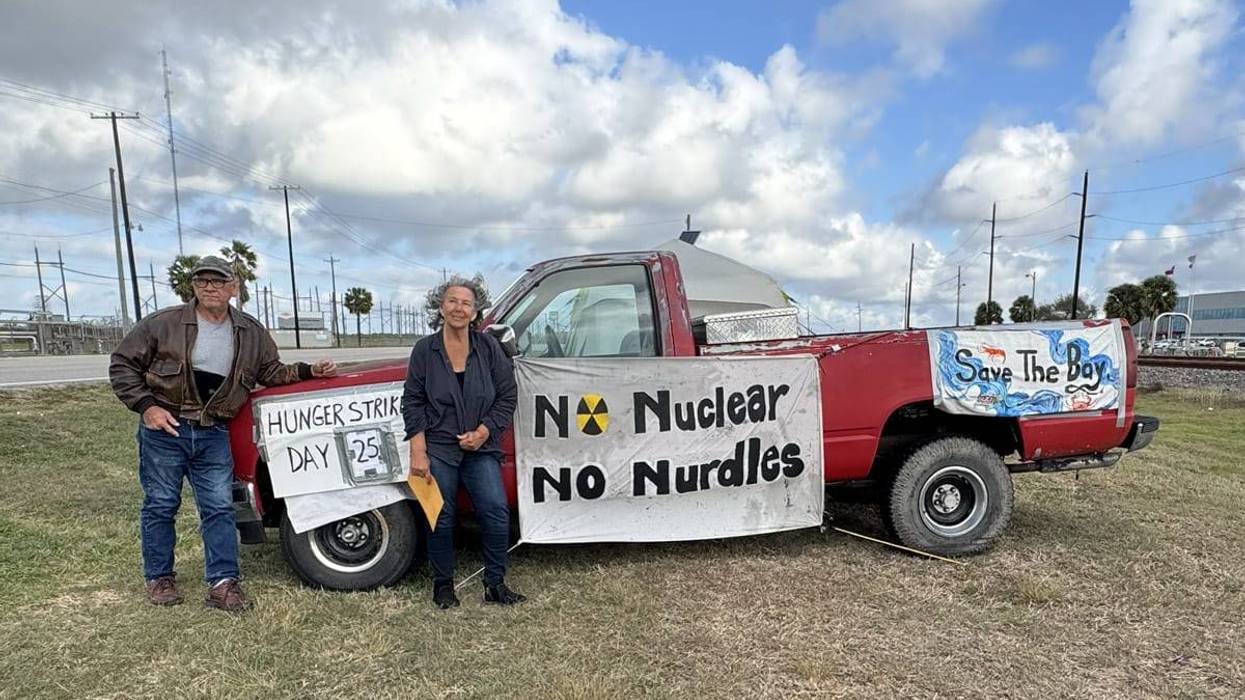
We are building a new and sustainable economy on our terms. This is what Dow wants to take away from us; I refuse.
I’m a 77-year-old shrimper from the Texas Gulf Coast, and the AI revolution has reached my town. Early this year, Dow Chemical announced global cuts to 4,500 jobs as it moves toward artificial intelligence. News of the layoffs tore through our rural community of Seadrift–where some of the thousand people work at the local Dow facility–with the devastation of a hurricane. Replacing workers with robots might be Dow’s latest blow, but this toxic industry has wronged my hometown of Seadrift for 70 years.
I recently completed a 30-day hunger strike on the public property (ditch) outside of Dow Chemical, during which time the sheriff actually arrested me while I was attempting to deliver my letter of demands to a company representative here in my hometown.
For decades, Dow has illegally dumped plastic and chemical waste into the local bays and waterways, which have sustained this fishing community for more than 170 years. Now, the company wants government approval for a new permit that would legalize plastic pollution at the Seadrift plant, and allow the construction of experimental nuclear reactors to power it.
As a native Seadrifter, I say: No.
Industry promised us prosperity, but we lost our economy and our heritage.
Dow is planning massive job cuts right now, despite collecting $177 million in bank finance since 2019—which is more funding than any other petrochemical company currently expanding in the US, according to a new report, "Toxic Finance."
What lasting good have these toxic pollution factories ever done for this community?
My family made a living on the water for four generations, and I’ve been a shrimper all my life. I remember when Union Carbide (now Dow) and Formosa Plastics came to our communities with glossy pamphlets and slick presentations. Our elected officials made a devil’s bargain, and “a little pollution” turned into billions of plastic pellets and tons of chemicals in our water.
When the local bays got sick, the communities started dying with it. First, as in Formosa Plastic’s case, industry bought out the ranchers; then an elementary school; and finally, through a class action suit, bought out citizens and now own their homes. Local businesses have been boarded up throughout the county. As a young woman, I worked at Froggy’s fish house; now, it’s a concrete slab. Four more were bulldozed. A hundred boats used to launch from our docks at the start of shrimp season; today, we’re lucky if we have five. Industry promised us prosperity, but we lost our economy and our heritage. As the old saying goes, our downtown died by a thousand cuts.
I always knew it was a raw deal, but at least some of us got steady jobs… at least for a little while. Now, Dow can’t even deliver on that meager promise. Instead, Dow joins the likes of Amazon, UPS, and dozens of other multinational corporations looking to replace American workers with artificial intelligence.
Nobody from Dow has even responded to me after 30 days of fasting and living in a tent outside of their facility, despite acknowledging receipt of my demand letter to Dow's CEO. To be clear, I will not rest until this company:
On a bright note, the Texas Commission on Environmental Quality (TCEQ) has confirmed that a public meeting about Dow’s proposed changes to the water discharge permit will be held at some unspecified time in the future… and so, the fight continues!
Believe me, dear folks, people still have power. I sued Formosa Plastics and won the largest citizen lawsuit settlement under the Clean Water Act in US history—$50 million plus additional fines because the company can’t stop polluting the bay—all of which has gone into a public trust designed to restore the fishing communities, the bays, and the local environment.
Our trust funded a cooperative of 250 fisherfolk working together to revitalize our seafood industry, which now has its own office, a processing plant, and a 60-acre oyster farm that will grow to become the largest in the Gulf. We are building a new and sustainable economy on our terms.
This is what Dow wants to take away from us. I refuse.
Will you join me in fighting back against corporate greed?

The plan to remove more than 370 tons of toxic waste from Bhopal and transport it to another city has been denounced as a "farce and greenwashing publicity stunt."
After more than 370 tons of hazardous waste from the deadliest industrial disaster in history arrived in the town of Pithampur in central India, two men were filmed in the city on Friday dousing themselves in liquid before they were set on fire in an apparent self-immolation protest.
The men poured the flammable liquid on themselves in a crowd of protesters and were then set on fire by another demonstrator.
They were taken to a hospital after the self-immolation and are "safe now," the administrative head of Dhar district, where Pithampur is located, told Agence France-Presse.
Note: The below video contains graphic images.
The protest took place 40 years and one month after a chemical disaster at a factory owned by the American company Union Carbide in Bhopal.
On December 2, 1984, a tank storing the toxic chemical methyl isocyanate, which Union Carbide used to produce pesticides, shattered from its concrete casing—allowing about 40 tons of the deadly gas to drift across the city of more than 2 million people.
The disaster killed roughly 3,500 people in the following days from direct exposure to the poisonous chemical, and 25,000 people are estimated to have died overall as the contamination has been linked to deadly illnesses including cancers, lung disease, and kidney disease.
Large numbers of babies have been born with severe disabilities, to parents affected by the gas leak, and a high rate of stillbirths in the area has been reported.
But Union Carbide—now owned by Dow Chemical—and the Indian government have never carried out an operation to remove all the contamination from Bhopal's groundwater, which has been found to contain levels of carcinogenic chemicals that were 50 times higher than what's accepted by the U.S. Environmental Protection Agency.
Dow Chemical has denied liability for the accident, citing a 1989 settlement with the Indian government. The deal also gave about $500 to each person identified as a victim at the time—but nothing was set aside for most people who later developed health problems.
Last month, on the 40th anniversary of the disaster, the Madhya Pradesh high court ordered the government to begin removing the toxic waste and a plan was devised for the transport of more than 370 tons of sealed waste, which would be taken to a plant in Pithampur—150 miles away—and incinerated.
The plan has garnered condemnation from both Pithampur residents and people in Bhopal as well as campaigners who have demanded justice for Bhopal for decades.
The incineration is expected to take six months and to create nearly 1,000 tons of toxic residue, which will be buried in landfills—prompting fears that the damage and public health threats in Bhopal will spread to Pithampur.
The Hindu reported that police used water cannons and batons to disperse some protesters who tried to march toward the facility where the waste was delivered on Wednesday.
In Bhopal, Rachna Dhingra, a coordinator of the International Campaign for Justice in Bhopal, told The Guardian that the plan to move the contamination was a "farce and greenwashing publicity stunt to remove a tiny fraction of the least harmful waste," which had already been placed in containers and moved to a warehouse in 2005.
"There's still 1.2 million tons of poisonous waste leaching into the ground every day that they refuse to deal with," said Dhingra. "We can see for ourselves the birth defects and chronic health conditions. All this does is take the heat off the government and lets the U.S. corporations off the hook."
"It does nothing," said Dhingra, "to help the people in Bhopal who for decades have been seen as expendable."

We should never forget that Dow Chemical was behind the infamous 1984 chemical leak in India. Neither should we forget the courage of those who have never stopped fighting for justice on behalf of the victims.
Shortly before midnight on December 2, 1984, a terrible cloud, consisting of tons of the deadly gas methyl isocyanate (MIC), along with other chemicals, began to leak into the atmosphere from the storage tank of the U.S. multinational corporation Union Carbide Corporation (UCC)’s pesticide plant on the outskirts of Bhopal in central India.
The immediate consequences of the mass poisoning were catastrophic. As many as 10,000 people are believed to have died within three days of the leak.
As the world marks the 40th anniversary of the Bhopal Gas Tragedy, what lessons should we take from what happened on that awful night? I think perhaps there are at least three important ones. Firstly, and perhaps most obviously, is that a single tragic event can have consequences that last generations.
As well as those who succumbed to the gas in the first few hours, many thousands more people were exposed to it, and they continue to suffer from a range of chronic and debilitating illnesses. It is now estimated that more than 22,000 people have died as a direct result of exposure to the leak, while more than half a million people continue to suffer some degree of permanent injury.
Shockingly, it is not only people exposed to the gas directly who have been affected. Over the years that followed, a large number of children born to gas-exposed parents have been affected by growth retardation, birth defects and other medical conditions.
As well as those who succumbed to the gas in the first few hours, many thousands more people were exposed to it, and they continue to suffer from a range of chronic and debilitating illnesses.
Meanwhile, to this day, thousands of tons of toxic waste remain buried in and around the abandoned plant. This has contaminated residents’ water supplies and harmed their health, adding to the already dismal health status of gas-exposed residents.
As well as the health impacts, the tragedy has pushed already impoverished communities into further destitution. In many families, the main wage earner died or became too ill to work. Women and children suffered disproportionately.
An unfortunate second lesson of the Bhopal tragedy is how easy it has been for UCC to escape accountability. Pitted against the largely poor victims of the gas disaster was the hugely powerful and enormously rich multinational corporation, which escaped providing the survivors, their children and grandchildren with adequate compensation and medical care.
The catastrophic gas leak was the foreseeable result of innumerable operational failures at the plant, but from the start, UCC’s response to the disaster was inadequate and callous. For example, although thousands of people were dying from gas exposure, or suffering agonizing injuries, UCC withheld critical information regarding MIC’s toxicological properties, undermining the effectiveness of the medical response. To this day, UCC has failed to name any of the chemicals and reaction products that leaked along with MIC on that fateful night.
In 1989, without consulting Bhopal Gas Tragedy survivors, the Indian government and UCC reached an out-of-court compensation settlement for $470 million. This amount was less than 15 percent of the initial amount sought by the government, and far less than most estimates of the damage at the time. Thousands of claims were not registered at all, including those of gas-exposed children under the age of 18, and children born to gas-affected parents who, time later showed, were also severely affected.
There have been numerous attempts to hold UCC and individuals to account, either through criminal or civil claim proceedings launched in India and the U.S. But these have had no or very limited results.
One challenge has been created by the restructuring of the business entities involved in the tragedy. UCC sold off the India-registered subsidiary that operated the plant. It was then, in turn, bought by another giant U.S. corporation, the Dow Chemical Company (Dow). To this day, Dow shamefully claims it bears no responsibility since it “never owned or operated the plant” and that UCC only became a subsidiary of Dow 16 years after the accident.
In 2010, the Chief Judicial Magistrate’s Court in Bhopal found seven Indian nationals, as well as UCC’s India-based subsidiary guilty of causing death by negligence. By contrast, U.S. individuals and companies have escaped punishment, and there is significant evidence that the U.S. authorities have helped protect them.
Companies have a responsibility to respect human rights wherever they operate. Dow may not have caused the gas leak, but it became directly linked to the tragedy after it bought UCC. The company boasts of following the highest human rights standards, but its continued failure to respond to the urgent needs of the survivors is utterly disgraceful.
But there is a third lesson to draw from the Bhopal Gas Tragedy and its aftermath. It can be found in the inspiring story of the survivor groups and their supporters, who over 40 years have refused to give up their fight for justice. They have initiated or intervened in many legal actions; conducted scientific research into the contamination and health impacts; and they have launched practical initiatives in the absence of sufficient state and corporate support. For example, in 1994, survivor groups fundraised for the Sambhavna Trust Clinic and they later opened the Chingari Rehabilitation Centre. Thousands of gas- and contamination-affected adults and children have benefitted from the highly specialized and professional medical care and rehabilitation provided by these institutions – unparalleled by any of the government-run facilities.
Their campaigning has also meant that Dow has never been able to disassociate itself from the Bhopal disaster. Until it finally addresses the needs of the survivors, their campaign will continue.
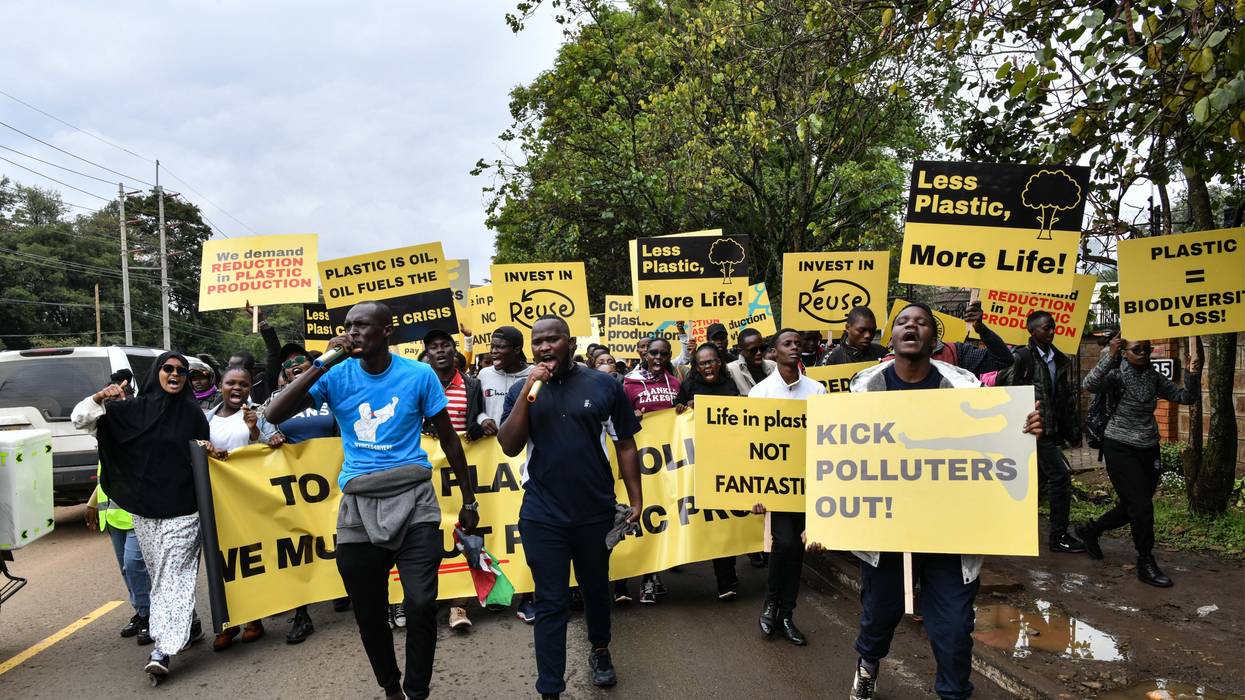
"The only way to curb our catastrophic plastic pollution problem is to cut plastic production, but the industry is spending big to block action at every level to protect their profits," said one campaigner.
Major multinational corporations attending negotiations for a global plastics treaty in an effort to weaken the agreement spent tens of millions of dollars on lobbying and political contributions during the 2022 election cycle, revealed an analysis published Friday by the Center for Biological Diversity.
As Common Dreams reported this week, 143 fossil fuel and chemical industry lobbyists registered to attend the third session of the Intergovernmental Negotiating Committee (INC-3) in Nairobi, Kenya, which is scheduled to run through Sunday. That's more than the combined delegations from 70 nations, and far surpasses the 38 members of a scientists' coalition participating in the negotiations.
Representatives of companies including ExxonMobil, Chevron, Coca-Cola, PepsiCo, and Dow are among the registered attendees. Industry lobby groups representing hundreds of companies are also attending the talks, including the American Chemistry Council, the American Fuel and Petrochemical Manufacturers, and the International Council of Beverages Associations.
"These companies came to Nairobi to make sure the world doesn't get strong protections against the plastic havoc they've been wreaking."
With over $20 million spent on lobbying and campaign contributions during the 2022 election cycle, the American Chemistry Council topped the Center for Biological Diversity's (CBD) list, which is based on data from the government watchdog group OpenSecrets. Boeing spent more than $17 million, while Chevron shelled out nearly $15 million.
"These companies came to Nairobi to make sure the world doesn't get strong protections against the plastic havoc they've been wreaking," David Derrick, a CBD attorney attending INC-3, said in a statement. "We knew that industry had way too much influence over the global plastics treaty as well as our political system at home, but these dollar amounts highlight how far petrochemical and consumer goods companies will go to keep polluting."
INC-3 is focused on the so-called zero draft of the legally binding plastics treaty. On Thursday, the fourth day of talks, delegates completed a first reading of the zero draft, with participating nations submitting suggestions for what they believe should be included in the treaty's first draft, which will be the basis of negotiations at INC-4, scheduled to take place next October and November in Ottawa, Canada.
Susan McCarthy, media and external affairs director at World Wildlife Fund U.S., said that "what is worrying... is the voluminous amount of suggestions that member states have submitted."
"This creates the temptation for member states to veer towards compromises that have the potential of watering down the eventual treaty in an effort to include as many suggestions as possible," she continued. "Whittling down a massive list to a number of key priorities can also be onerous, and can result in the convergence we're seeing now fragmenting as member states push for their suggested items."
"Fragmentation can occur as different member states may have different priorities, such as political affiliations or a preference to base decisions only on scientific evidence, which could drive the decision-making process in opposing directions," McCarthy added.
Derrick asserted that "the only way to curb our catastrophic plastic pollution problem is to cut plastic production, but the industry is spending big to block action at every level to protect their profits."
"The world has a historic chance to make a difference in the relentless flood of plastic pollution that's harming so many," he added. "We can't let a relatively small number of profit-hungry companies derail such an important opportunity to fix our plastic problem at its source."
In a year when many U.S corporations enjoyed record-breaking profits, some of the wealthiest companies in the nation paid little-to-no taxes according to a new analysis--or even accepted tax refunds--while working Americans continued paying their normal tax rates and faced rising prices for essentials.
"These are some of the largest companies in the world, pulling in billions of profits; yet none will owe a cent in federal income taxes."
That's according to a Center for American Progress (CAP) analysis released Tuesday that found 19 Fortune 100 companies paid effective tax rates in the single digits, if they paid anything at all.
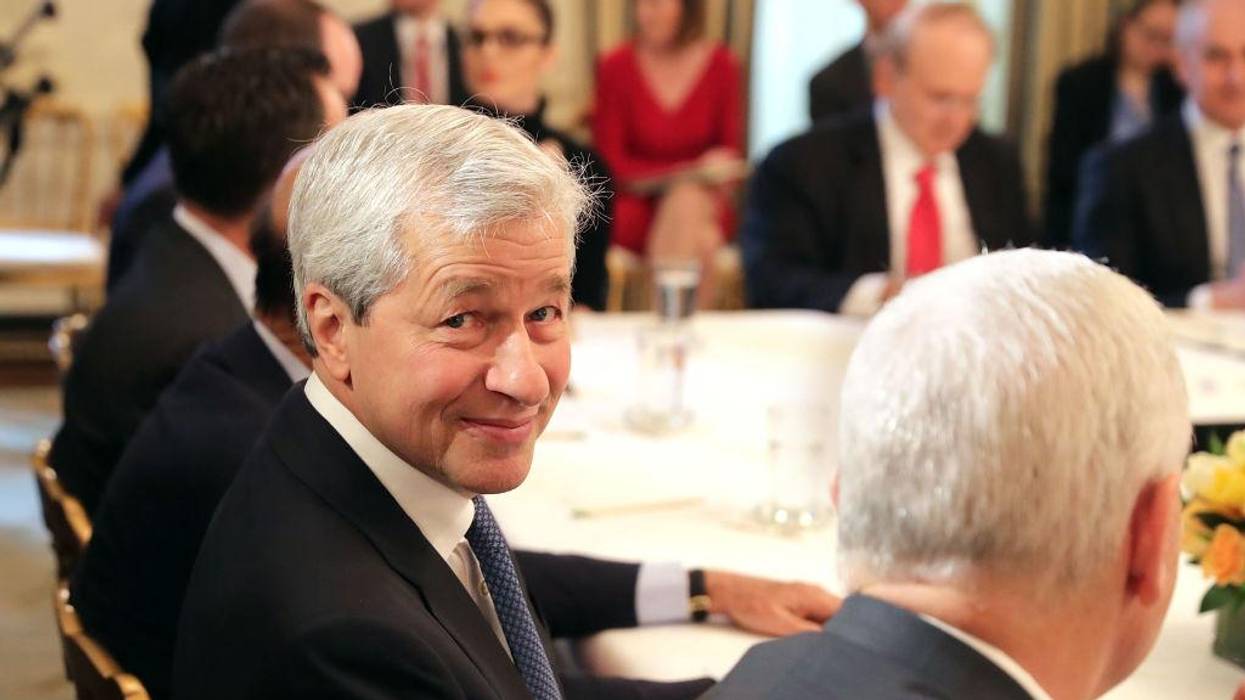
The highest-earning Fortune 100 company, JPMorgan Chase, reported pre-tax earnings of $48.2 billion in 2021, but paid less than 6% in federal taxes despite an official corporate tax rate of 21%.
Amazon.com, which earned $35.1 billion in the U.S. in 2021, paid only 6.1% in federal taxes--all while its growth in profits over the past two years outpaced the wages the company paid its 1.1 million U.S. workers and while the company spent more than $4 million on union-busting to fend off organizing efforts at its warehouses.
"Corporations are looting America," said former Labor Secretary Robert Reich in response to CAP's report.
As Reich noted, CAP's analysis showed that four Fortune 100 companies--AT&T, Charter Communications, American International Group (AIG), and Dow--will receive an income tax benefit, or refund, instead of paying taxes for 2021.
After earning $29.6 billion in 2021, AT&T reported a tax refund of $1.2 billion. Charter Communications reported a refund of $12 million after earning $6 billion, AIG will receive $216 million from the federal government despite $9.8 billion in earnings, and Dow will receive $46 million after earning $1.5 billion.
"These are some of the largest companies in the world, pulling in billions of profits; yet none will owe a cent in federal income taxes," wrote Ryan Koronowski, Jessica Vela, Zahir Rasheed, and Seth Hanlon at CAP. "As their investor filings show, many corporations pay a much lower actual--or 'effective'--rate on their profits because of the many ways they can reduce their taxable income under the current tax system. The low tax rates for these companies worsen an already unjust increase in inequality."
Of the Fortune 100 companies that actually paid taxes in CAP's analysis, UPS paid the highest tax rate at just 9.9%--still well below the tax rate established by President Donald Trump's so-called Tax Cuts and Jobs Act of 2017 (TCJA). General Motors paid the lowest tax rate, paying 0.2% in federal taxes on $9.4 billion in earnings.
"Policymakers must act now to ensure that large, profitable corporations pay their fair share."
Large companies outside the Fortune 100 also managed to avoid paying taxes despite earning billions in 2021, according to the report. Software company Salesforce earned $2.7 billion but effectively paid $0 in federal income taxes, Duke Energy paid effectively no taxes on $3.7 billion in U.S. earnings, and Netflix paid an effective tax rate of just 1.1% on 5.3 billion in earnings.
"Is anyone else tired of paying more in taxes than corporations making billions of dollars?" asked political advocacy group Progress Iowa.
CAP cited two other reports showing how the wealthiest U.S. companies are avoiding taxes despite soaring profits. The financial data company FactSet collected data showing that S&P 500 corporations' four most profitable quarters happened in 2021, while the Institute for Taxation and Economic Policy (ITEP) conducted an analysis "concluding that former President Donald Trump's TCJA allowed many companies to pay $0 in taxes."
The group noted that with control of the White House and both chambers of Congress, the Democratic Party could change the status quo and ensure wealthy corporations pay their fair share in taxes, as President Joe Biden tried to last year by proposing a 15% minimum corporate tax and measures to stop corporate tax dodging as part of the Build Back Better Act.
"Polls show that raising taxes on corporations is among the most popular elements of President Biden's economic agenda," said CAP. "Policymakers must act now to ensure that large, profitable corporations pay their fair share."

A Greenpeace investigation revealed Monday that the Biden administration appears sympathetic to oil and chemical industry giants--not the public, scientists, and public health advocates--regarding a push in Europe to curb the use of microplastics in everyday products.
According to a report by Unearthed Greenpeace UK's investigative journalism unit, a senior policy advisor at the Environmental Protection Agency (EPA) named Karissa Kovner exchanged emails with the American Chemical Council (ACC) in April 2019 regarding a proposal by the Swiss government to list microplastic UV-328 in the Stockholm Convention, the U.N.'s global treaty on chemicals that don't easily break down in nature.
"As much of the world works to take action to address the impacts of the plastic pollution crisis, the U.S. government should be stepping forward to lead, not echoing the world's worst polluters."
--John Hocevar, Greenpeace USA
UV-328's inclusion in the treaty would lead to a ban on its production and use, which is currently common in plastic products, rubber, paints, coatings, and cosmetics, said Unearthed.
ACC officials forwarded an email to Kovner about the proposal, to which she said, "Wow-- that's quite a precedent. Holy moly."
The ACC then told Kovner the Swiss government's push is the "first concrete proposal" to label UV-328 as a persistent organic pollutant (POP).
"Welcome to our future," Kovner said.
Kovner's comments were made when she was serving under former President Donald Trump, but she appears to still be leading the EPA's work on chemicals under Biden; in late March she represented the EPA as a senior policy advisor for international affairs at the ACC's GlobalChem conference.
"While you might expect Trump's EPA to align with the oil and chemical industry against protections for the American people from potentially harmful plastic chemicals, the Biden administration must do better," said John Hocevar, Greenpeace USA oceans campaign director. "As much of the world works to take action to address the impacts of the plastic pollution crisis, the U.S. government should be stepping forward to lead, not echoing the world's worst polluters."
The microplastic that Kovner, the ACC, and the European Chemical Industry Council (CEFIC) expressed concern about regulating has been classified as a substance of very high concern because it persists in the environment and accumulates in organisms.
v> Microplastics have been detected in oceans; birds' eggs and minks' vital organs in the Arctic, sparking fear among Indigenous communities there that it could affect them as well; raindrops; household items; and human breast milk.
"We are no longer just poisoning the environment with our waste--we are poisoning ourselves. This is more than a solid waste or ocean pollution crisis. It is now an environmental justice, international human rights, climate, and public health issue."
--Rep. Alan Lowenthal (D-Calif.)
Scientists say more research is needed to determine UV-328's effects on human health, but many have raised concerns about its persistence in the environment.
"The assumption is that if a chemical doesn't degrade, we are altering our environment in a permanent way and we shouldn't be doing that," said Laura Vanenberg, a professor at University of Massachusetts Amherst. "When we start finding chemicals in human breast milk, it is not good. It means it is going into babies during vulnerable developmental periods."
Although the European Chemicals Agency (ECHA) concluded in 2014 that UV-328 meets its toxicity criteria and that long-term exposure can have impacts on vital organs including the liver or kidneys, chemical trade groups have argued that pollution linked to the microplastic may have come from other sources and that there has not been "sufficient rate of transfer to remote areas."
Kovner said last year that the EPA and chemical trade groups "felt differently" than many scientists regarding "long-range transport" of UV-328--one of five criteria showing a chemical qualifies as a POP and should be listed in the Stockholm Convention.
The EPA official was echoing a claim made by CEFIC in April 2019, when it argued at length to the ECHA that long-range transport of UV-328 has not been proven and that the microplastic should not be banned without such proof.
"The industry is basically saying that until they have polluted enough--until they have created a big enough problem--we can't do anything about it," said Vandenberg.
Dr. Zhanyun Wang, a senior scientist at ETH Zurich and a member of the Stockholm Convention's scientific committee, said scientists and policymakers must work with the data they have to make regulatory decisions.
"We don't have to stop everything [with regards to regulation] until we have very solid scientific evidence," Wang told Unearthed. "There is concern about the continued releases and accumulation of this chemical in the environment and organisms, which could cause long-term, poorly mitigable, adverse effects on biodiversity, ecosystem services or human health."
Oil and chemical giants including ExxonMobil, Dow Chemical, DuPont, Ineos, BP, and Shell are among those represented by the trade groups Kovner appeared to align herself and the EPA with.
Rep. Alan Lowenthal (D-Calif.), who along with Sen. Ed Markey (D-Mass.) reintroduced legislation regarding plastic pollution in March, told Unearthed that the Biden administration "must seek to lead on this issue domestically and internationally to address the issue associated with the production, disposal, and waste of plastics."
"We are no longer just poisoning the environment with our waste--we are poisoning ourselves," said Lowenthal. "This is more than a solid waste or ocean pollution crisis. It is now an environmental justice, international human rights, climate, and public health issue."

A court in France on Monday heard a case brought by a French-Vietnamese woman against over a dozen multinational corporations she accuses of causing grievous harm by selling the defoliant Agent Orange to the United States government, whose use of the deadly chemical during the Vietnam War has killed, maimed, or seriously sickened hundreds of thousands of people to this day.
"I asked myself, what have I done to transmit this incurable disease to my children? Now I know that I am not at fault."
--Tran To Nga,
Agent Orange victim
Agence France-Presse reports the suit was brought by Tran To Nga, 78, an activist and journalist who was working in Vietnam when she was exposed to Agent Orange. Tran suffers from diabetes and a blood disorder she transmitted to her second daughter; her first daughter died of a heart defect when she was 17 months old. Tran also contracted tuberculosis twice, had cancer, and suffers from an extremely rare insulin allergy.
Initially, Tran blamed herself for the afflictions that have plagued her and her children.
"I asked myself, what have I done to transmit this incurable disease to my children?" she said in a 2015 France 24 interview.
"Now I know that I am not at fault," she said. "We can identify the culprit of my children's illnesses... It's these dioxins."
In 2014, Tran sued 14 companies that made or sold Agent Orange, including Monsanto--now owned by the German firm Bayer--and Dow Chemical for their roles in selling the chemical to the U.S. government.
Agent Orange contains TCDD dioxin, a known carcinogen and one of the most toxic chemicals ever invented. In addition to numerous cancers, research has shown that Agent Orange exposure causes severe birth defects, diabetes, spina bifida, cardiovascular, digestive, neurological, respiratory, skin, and other ailments.
The U.S. government knew about the dangers of Agent Orange when the John F. Kennedy administration approved Operation Ranch Hand (pdf) in 1961 as part of a growing counterinsurgency operation in Vietnam.
"When we initiated the herbicide program in the 1960s, we were aware of the potential for damage due to dioxin contamination in the herbicide," Dr. James R. Clary, a former senior scientist at the Chemical Weapons Branch of the U.S. Air Force Armaments Development Laboratory, later admitted.
"We were even aware that the military formulation had a higher dioxin concentration than the civilian version due to the lower cost and speed of manufacture," added Clary. "However, because the material was to be used on the enemy, none of us were overly concerned."
The communist Viet Cong insurgency against the oppressive U.S.-backed Ngo Dinh Diem dictatorship was proving more difficult to defeat than anticipated by U.S. planners, who sought novel ways to combat the resistance. In a bid to deny fighters the cover provided by the dense jungle foliage, the U.S. sprayed an estimated 76 million liters (20 million gallons) of Agent Orange over Vietnamese, Laotian, and Cambodian rainforests.
Agent Orange was also sprayed over farmland, as U.S. planners sought to eradicate the crops that were feeding Viet Cong and North Vietnamese fighters, their families, and supporters.
The effects on the people of Vietnam have been devastating. As many as 4.8 million Vietnamese were exposed, with the country's government claiming 400,000 deaths and millions of cancer cases caused by the decadelong spraying. More than 50,000 babies over three generations have suffered severe birth defects, which will continue to affect future generations.
Soil and water contamination due to Agent Orange continue to sicken and kill to this day. Around 800,000 Vietnamese currently require medical and other assistance due to the lingering effects of exposure.
Tens of thousands of U.S., South Vietnamese, South Korean, and Australian troops were also exposed to Agent Orange, which has caused serious health problems for many of them, and some of their children.
While U.S. victims of Agent Orange were awarded $180 million in a class-action lawsuit in 1984, nearly all attempts by the people of Vietnam to gain desperately needed direct compensation have been rejected by the U.S. government and American courts.
This, despite a U.S. promise as part of the 1973 Paris Peace Agreement to pay $3.25 billion over a five-year period, plus an additional $1.5 billion, in reparations to Vietnam. Not a penny was paid.
"We were aware of the potential for damage due to dioxin contamination in the herbicide... However, because the material was to be used on the enemy, none of us were overly concerned."
--Dr. James R. Clary,
former senior U.S. military scientist
Vietnamese also watched with great interest as Monsanto was ordered to pay $289 million in damages to an American man who said that its Roundup weed killer caused his cancer.
Since 2007, the U.S. Congress has appropriated (pdf) nearly $60 million for dioxin cleanup and related healthcare services in Vietnam as relations between Washington and Hanoi have improved, but victims' advocates say this is nowhere near enough, as some 6,000 children are diagnosed with congenital deformities each year due to Agent Orange.
Tran says her lawsuit is meant for these and other victims who have been denied relief over the decades.
"I'm not fighting for myself, but for my children and the millions of victims," she told AFP.
Vietnam is not the only place the U.S. has used toxic weapons in recent decades. The firing of depleted uranium rounds in Iraq during the 1991 Gulf War, the 1999 NATO air war against Yugoslavia, and during 2003-2011 Iraq War have been blamed for a rise in birth defects and other often deadly ailments.

Floodwaters unleashed by a dam failure in central Michigan have reached a Dow Chemical facility and Superfund site, the company admitted Wednesday, raising the possibility that the flood could turn into a full-fledged environmental catastrophe.
At 10:00am EST, Dow announced that "there were flood waters commingling with on-site containment ponds" at its facility.
"Midland, Michigan is home to Dow Chemical, one of the world's largest chemical companies," Climate Power communications director Meghan Schneider tweeted Tuesday night. "Dow's facilities appear to be at the heart of the floodwaters--this has the potential to be a major environmental disaster."
As the New York Times reported, the danger of the breach to the chemical site is clear:
With much of Midland expected to be underwater by later on Wednesday, it was likely that the floodwaters would breach the levees designed to protect the Dow compound, said Allen Burton, a professor of earth and environmental sciences at the University of Michigan. This meant that, at the site itself, flooding could reach storage tanks, potentially releasing chemicals onto farmland and residential areas that line the river downstream, he said.
The Superfund cleanup sites are downriver from the century-old plant, which for decades had released chemicals into the nearby waterways. The concern downriver, Dr. Burton said, is that contaminated sediments on the river floor could be stirred up by the floodwaters, spreading pollution downstream and over the riverbanks.
Union of Concerned Scientists research scientist Jacob Carter told Common Dreams that President Donald Trump's assault on environmental regulations bears some of the blame for the current catastrophe.
"This is another example of the Trump administration putting vulnerable communities in harms way by sidelining science" said Carter. "There was an Executive Order that called for Superfund sites to update their infrastructure to protect them from future extreme floods, but it was trashed by the Trump administration a week before Hurricane Harvey hit."
The flood is the result of drenching rains and a decaying infrastructure in the city that has led to the weakening of the dams holding back the Tittabawassee River.
The Sanford and Edenville dams breached, leading to water cascading toward the city of Midland, which is expected to be under nine feet of water, and the Dow plant.
According to the Washington Post:
Major flooding begins when the Tittabawassee River hits 28 feet; flood stage is at 24 feet. As of 6:30am Wednesday, river gauges reported a level of 34.28 feet and rising.
"The flooding in Midland County poses significant risks of spreading pollution from the Tittabawassee River that has suffered from decades of contamination and illegal dumping by Dow Inc.--making it one of the most contaminated rivers in Michigan," said Michigan League of Conservation Voters executive director Lisa Wozniak. "High water levels also threaten the integrity of Dow's facility, which we know houses dangerous chemicals. Michiganders deserve full transparency from Dow, state and local officials regarding any contamination that results from this catastrophic event -- and the immediate cleanup of it."
The owner of the Sanford Dam, Boyce Hydro Power LLC, was dinged multiple times by federal regulators for not repairing damages. In 2018, the company's license was revoked, with regulators claiming Boyce had "failed for many years to comply with significant license and safety requirements, notwithstanding having been given opportunities to come into compliance."
"The catastrophic flooding we are seeing in Midland is a culmination of the impacts of the increased strange and severe weather events that are amplified by climate change," said Wozniak, "and this latest event highlights the importance of big thinking right now from leaders around how to plan properly with our changing climate to keep our families safe."
Infrastructural issues like the ones in Midland run the risk of making things worse as the climate crisis exacerbates extreme weather events.
"Can we link the record rainfall in Michigan, which is collapsing dams and leading to 'catastrophic' flooding, to climate change?" tweeted UC Santa Barbara professor Leah Stokes. "Yes."

Just two weeks after the Trump administration outraged scientists, environmentalists and public health advocates with its decision to not ban chlorpyrifos, European regulators announced Friday that the pesticide, which is linked to brain damage in children, "does not meet the criteria required by legislation for the renewal of its approval in the European Union."
"The approval period for chlorpyrifos expires in January 2020, and the manufacturers' application for renewal is currently being evaluated under the E.U.'s peer review system for approval of pesticides," the European Food Safety Authority said in a statement Friday. The main manufacturer of the pesticide is the U.S.-based Dow Chemical Company.
The agency's statement explained that "although the peer review is not yet fully completed, the European Commission asked EFSA to provide a statement on the available results of the human health assessment."
"EFSA has identified concerns about possible genotoxic effects as well as neurological effects during development, supported by epidemiological data indicating effects in children," the agency concluded. "This means that no safe exposure level--or toxicological reference value--can be set for the substance."
The announcement out of Europe was celebrated by Environmental Working Group president Ken Cook, who had decried the U.S. Environmental Protection Agency's move. At the time, he said, "Siding with pesticide corporations over the health and well-being of kids is the new normal at the EPA."
Cook declared in a new statement Friday, "The E.U. is doing what the science demands: putting public health ahead of the narrow interests of the pesticide industry."
"Tragically for Americans kids and their parents," he added, "the Trump administration is kowtowing to chemical agribusiness and allowing a dangerous pesticide to be sprayed on foods children eat every day."
The Trump EPA's decision last month--which critics said ignored assessments from the agency's own experts--came after a federal court, in April, ordered the administration to stop stalling and issue a decision on the ban requested by advocates within 90 days. The agency ended household use of chlorpyrifos in 2000, but farmers are still allowed to use it on crops such as apples, cherries, corn, oranges, and peaches.

Denouncing his "strong ties to corporate agribusiness and pesticide companies," over 240 groups urged the Senate on Wednesday to reject the nomination of Scott Hutchins, President Donald Trump's pick for chief scientist at the U.S. Department of Agriculture.
"The election last week demonstrates that people across the country are tired of this administration's dangerous anti-science, pro-industry agenda," declared Tiffany Finck-Haynes, pesticides and pollinators program manager with Friends of the Earth. "We urge the Senate to listen to the American people and reject this pesticide industry loyalist who will put corporate profits over farmers, public health, and our environment."
If appointed Under Secretary of Agriculture for Research, Education, and Economics--a position with "broad implications for the future of American agricultural science and policy-making"--Hutchins would be the third Dow executive at the USDA, making the cozy relationship between the Trump administration and the agribusiness giant even more clear.
In a letter to Senate Agriculture Committee chairman Pat Roberts (R-Kan.) and ranking member Debbie Stabenow (D-Mich.), the massive coalition opposed to Hutchins warns that by appointing someone that "spent over 30 years of his career working at Dow Agro Sciences with a focus on pesticides," the Trump administration has once more demonstrated its willingness to put its "unhealthy relationship" with Dow Chemical ahead of the "health and safety of the American public and our environment."
The letter from the coalition--which includes ActionAid USA, Family Farm Defenders, and Interfaith Worker Justice--states:
Scott Hutchins has a history of defending the toxic pesticide chlorpyrifos. In 2001, Hutchins expressed disappointment that Dow needed to limit uses of the pesticide, complaining that the Food Quality Protection Act (FQPA) put Dow's organophosphates under scrutiny.
Hutchins encourages growers to use pesticides, even when less toxic alternatives are available. In a 2006 presentation, Hutchins claimed, "Integrative Pest Management does/should NOT advocate avoidance of technology." While many practitioners of Integrative Pest Management view the practice as a way to significantly reduce synthetic pesticide use and utilize them as a "last resort," Hutchins has co-opted the term to encourage pesticide application.
"Should Scott Hutchins gain control of USDA's research programs," the letter continues, "he could use the agency's infrastructure and grant making to advance his harmful vision of chemical intensive agriculture under the guise of ecologically sustainable practices."
According to Jim Goodman, board president of the National Family Farm Coalition, one of the signatory groups, "In nominating Scott Hutchins to the position of Chief Scientist at USDA, the Trump Administration has, again, proven that they are more interested in promoting the agenda and profit of industrial agribusiness over scientific integrity, the protection of public health, and the well-being of farmers, farm workers, and rural communities."
The Senate Agriculture Committee announced Tuesday that Hutchins' hearing would be held Nov. 28.