
SUBSCRIBE TO OUR FREE NEWSLETTER
Daily news & progressive opinion—funded by the people, not the corporations—delivered straight to your inbox.
5
#000000
#FFFFFF
To donate by check, phone, or other method, see our More Ways to Give page.


Daily news & progressive opinion—funded by the people, not the corporations—delivered straight to your inbox.
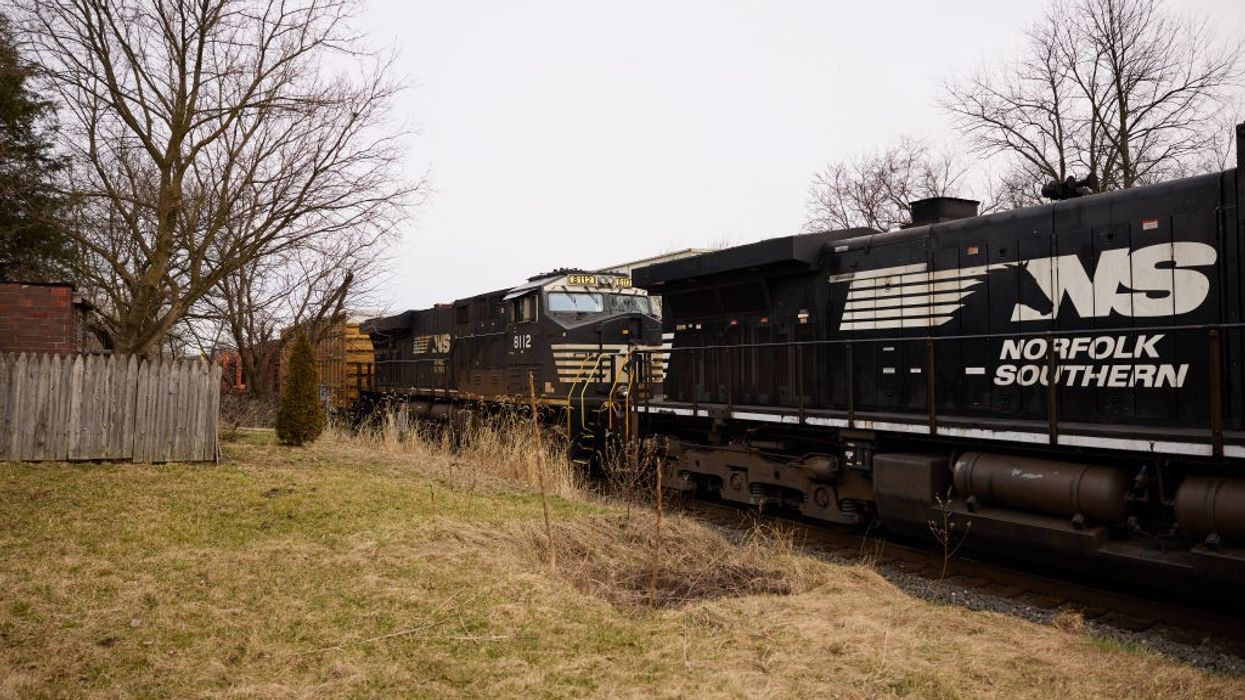
The toxic rail derailment in East Palestine, Ohio, was a symptom of a privatized rail system that prioritizes profit over public safety.
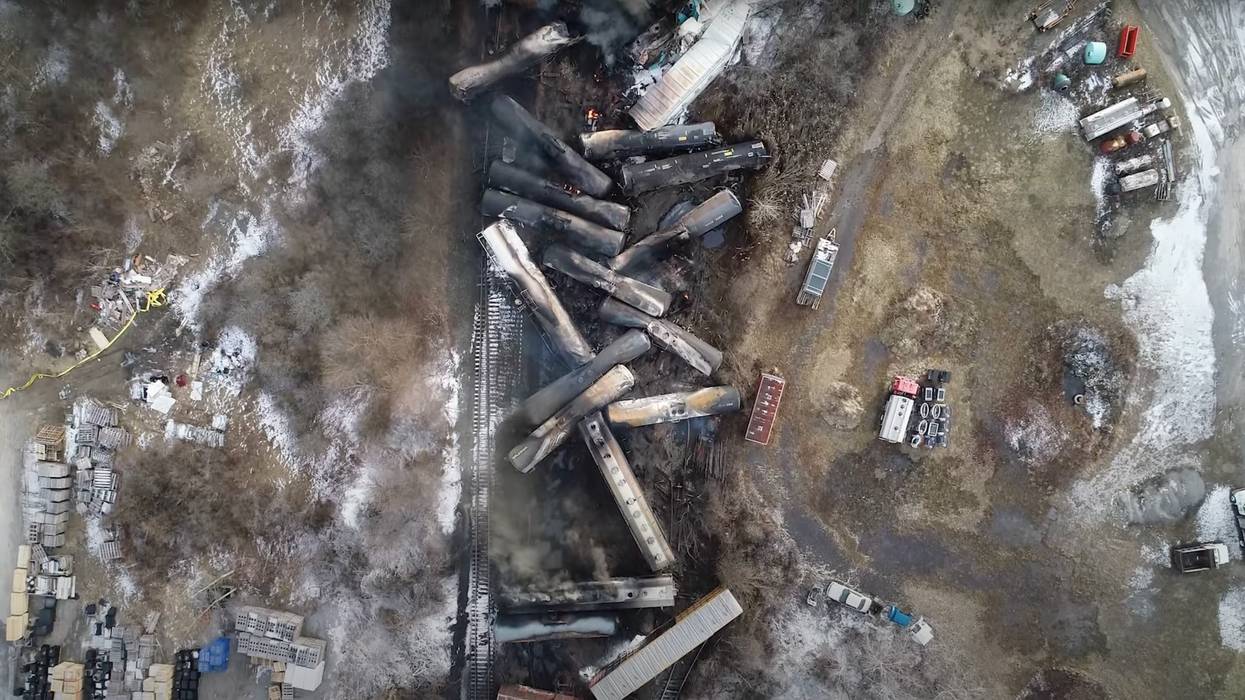
The National Transportation Safety Board announced in June that the infamous East Palestine, Ohio, freight train derailment was caused by a defective wheel bearing.
But that technical issue does not tell the whole story.
Federal investigators found that the railway company Norfolk Southern failed to communicate information to emergency responders in a timely manner, which contributed to the exposure of responders and the public to post-derailment hazards.
According to the June 2024 NTSB report abstract on the derailment and hazardous materials release, Norfolk Southern’s delayed transmission of consist information “also delayed the Ohio State Patrol’s recommendation to the incident commander that the shelter-in-place order be replaced by an evacuation.”
Norfolk Southern officials and contractors also provided misleading and incomplete information while advocating for an unnecessary vent and burn of tank cars carrying vinyl chloride. A vent-and-burn action is, according to the Federal Railroad Administration (FRA), a response of last resort.
A public rail system would directly benefit workers, trackside communities, small shippers, farmers, passengers, and the environment.
Norfolk Southern began planning the vent and burn shortly after the derailment, rejecting three other removal methods that could have been far less dangerous to responders and the people of East Palestine.
While there may be some temptation to view the catastrophic derailment in East Palestine as an unfortunate fluke, the truth is that disastrous events are predictable features of the American rail system.
Under the private ownership of the Class I railroads, we have seen time and again the callous prioritization of profit over people. For the sake of short-term profit, inspections are cut short, tracks and equipment are not maintained, and the rail workforce is gutted — features of an industrial system that calculates derailments as part of the cost of doing business.
The Class I railroads’ — the largest domestic rail carriers — pursuit of short-term profit has led to critical understaffing, longer trains, diminished maintenance of tracks and equipment, inadequate inspections, and other underinvestments that leave rail workers and trackside communities vulnerable to derailments and disasters.
The Class I railroad robber barons are perfectly willing to risk the lives of workers and people living in trackside communities so long as it means more money for them and their shareholders. This is not hyperbole.
Between 2013 and 2022, the rate of rail accidents rose 28 percent as a result of the implementation of Precision Scheduled Railroading (PSR). In short, the philosophy of PSR can be summed up as “speed over safety.” Since 2015, over 50,000 railroad workers — nearly 30 percent of the rail workforce — have been laid off. The workers who remain on the railroads experience chronic fatigue as a result of unpredictable schedules and critical understaffing.
Last spring, it was reported that Union Pacific, one of the six Class I rail carriers, undermined government safety assessments and retaliated against workers who reported rail car flaws. In 2023, the FRA found that 73% of Union Pacific locomotives have federal defects.
According to the NTSB, Norfolk Southern interfered with the East Palestine investigation and abused its status as a party to the probe. NTSB Chair Jennifer Homendy revealed that she was threatened by Norfolk Southern during a private exchange with a senior company executive two weeks prior to the NTSB East Palestine board meeting.
These are but a few examples of the criminality and nefariousness that characterize the privately owned rail system. What’s more, even if one puts aside moral questions regarding the behavior of the Class I railroads, one finds an industry being strangled to death by a get-rich-quick scheme that victimizes workers and trackside communities, cheats small shippers, and — because the rail robber barons are completely allergic to capital expenditure —dooms the US rail system to degradation and ossification.
Another concern is how the American rail system is regulated. While the FRA is ostensibly tasked with overseeing and regulating US railroads, this arrangement becomes murky when one considers the significant degree of industry influence.
The Association of American Railroads (AAR), the industry group representing the interests of North America’s major rail corporations, sets its own safety standards and works closely with the FRA, effectively as an independent regulatory body. AAR even manages the FRA’s Transportation Technology Center through its wholly-owned subsidiary, Transportation Technology Center, Inc.
In the NTSB investigation of the East Palestine derailment, AAR’s standards for hot bearing alerts and alarms came under scrutiny, as they served as the guide for Norfolk Southern’s own criteria that contributed to the disaster. It is worth noting that under the Trump presidency, railroad industry executive Ronald Batory was made FRA administrator, further blurring the line between government regulator and regulated industry.
With the foxes running the henhouse, simple demands for more and better regulation of the railroad industry are inadequate. The real solution, advocated by Railroad Workers United (RWU) and allied organizations across the country, is public ownership of the railroads.
Last spring, RWU launched the Public Rail Ownership (PRO) campaign, building a diverse coalition including rank-and-file unionists, environmentalists, progressives, community activists, and others calling for a rail system that operates in the public interest.
The campaign has hosted webinars, published scholarly works such as Maddock Thomas’s “Putting America Back on Track: The Case for a 21st Century Public Rail System,” and attended union conferences to make its case.
What a publicly owned and operated rail system in the United States will look like has yet to be determined, but there are models that can serve as guides.
The task at hand is massive, and the road ahead is fraught with challenges. However, there is little hope for any improvement of the US rail system so long as it remains in the hands of the irresponsible and unaccountable Class I robber barons.
The rail system in the US is, compared to other countries, an anomaly in that it is predominantly owned by private companies. This was not always the case, and there’s inspiration to be found in US history for the development of a 21st century public rail system.
During World War I, the US rail system was nationalized amid a consensus that the private rail system was unable to serve the needs of the country during wartime. Under the control of the US Railroad Administration (USRA), the railroads operated far more efficiently and effectively than they had under private ownership.
Working conditions and service improved drastically, winning the support of workers, shippers, and much of the public. The nationalized rail system was so popular among rail workers that in a 1918 American Federation of Labor-sponsored referendum, the vote to keep the nation’s railroads in public hands was overwhelmingly in favor: 306,720 to 1,466.
A public rail system would directly benefit workers, trackside communities, small shippers, farmers, passengers, and the environment. The Class I carriers have made it clear that they have no intent to expand rail, or take the crucial step towards full catenary electrification.
Under public ownership, the fetters of the short-term profit motive would be cast off the rail system, opening the door to large-scale infrastructure modernization and expansion projects, creating jobs in construction and spurring economic development in neglected areas of the country. A publicly owned and operated rail system would also create thousands of railroad jobs, as the stripped-to-the-bone PSR model advocated by the Class I carriers would be destined for the dustbin.
The task at hand is massive, and the road ahead is fraught with challenges. However, there is little hope for any improvement of the US rail system so long as it remains in the hands of the irresponsible and unaccountable Class I robber barons. RWU and its allies invite all organizations and individuals to get involved in the Public Rail Ownership campaign, and help make public rail a reality. For more information, please visit publicrailnow.org.
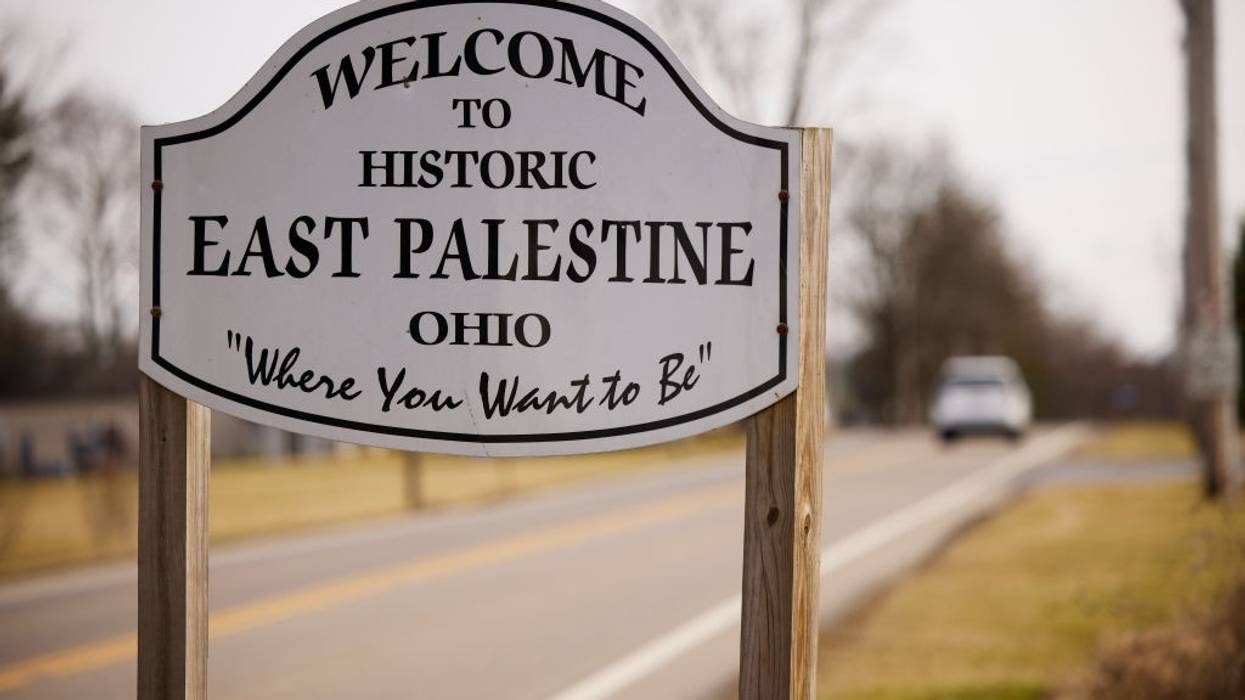
Attorney General Dave Yost is now suing the Norfolk Southern rail company on behalf of Ohio for the reckless endangerment of residents' health. The recent train derailment in East Palestine, Ohio required locals to evacuate their homes, adding to the ongoing list of recent environmental disasters in the US. Since then, the crisis has garnered much-deserved attention, including a federal attempt to utilize multiple agencies such as the Environmental Protection Agency (EPA) and Department of Transportation to support the community following the event.
What most people don’t know is that less than 15 miles from East Palestine, there are two federal prisons housing thousands of incarcerated individuals and employing a large correctional staff to support its operations—a population unable to quickly escape such a disaster.
Unfortunately, it is nothing new that those who live and work within correctional facilities are exposed to environmental hazards. In fact, 134 federal and state prisons are located within a mile of a Superfund cleanup site, which are known to release toxins that are harmful to human health. Documenting this risk, recent research shows that correctional facilities in the Southwest are nearly six times more likely to have excess arsenic in their water systems than surrounding communities.
These environmental hazards aren’t without health impacts, which could be one reason why both those impacted by incarceration and those who work in correctional facilities have shorter life expectancies than the general public. One such study provides evidence for this connection by showing that 13% of deaths in Texas prisons were related to excessive heat in facilities without air conditioning.
Environmental injustice examines how environmental hazards, such as air pollution and waste contamination, disproportionately impact racial/ethnic minority and poor communities as a result of intentional policies and lack of regulations. For example, researchers from the EPA have documented that Black individuals are at higher risk of being exposed to air pollution, confirming environmental injustice as a form of structural racism.
Further, while attention has been given to social phenomena such as redlining and zoning codes as key tenets of environmental injustice, the carceral state has not received as much attention in its role in exposing minority populations to environmental hazards. This is surprising given that correctional facilities are located in places that are unhealthy for humans and also that incarceration disproportionately impacted communities of color. Nearly 1 in 3 Black men will be incarcerated during their lives, and Black and Latinx are disproportionately represented in the corrections occupation. Thus, addressing environmental injustice requires attention towards abolishing mass incarceration.
Advocacy around these issues is being led by those most impacted, including JustLeadershipUSA—a national advocacy organization led by those who have been involved in the criminal legal system. I support the organization’s call for the passage of the Correctional Facility Disaster Preparedness Act, a bill introduced by Senator Duckworth which would require the Bureau of Prisons to generate annual reports of disaster damage to Congress.
Further, the Biden-Harris administration has a unique opportunity to prioritize those within the carceral system in its environmental regulations and preparedness planning. A national gathering of those formerly and currently incarcerated as well as correctional staff and unions should be convened to discuss how to systematically include and prioritize them across parts of the administration focused on occupational and environmental health hazards, such as the EPA.
Last, in the case of East Palestine, Ohio, those who live and work in the nearby prisons must not be excluded in any legal actions taken moving ahead. A decade ago, a coal industry watchdog filed a lawsuit suing a company for dumping coal ash which was impacting nearby communities in rural Pennsylvania. The lawsuit included the 50 families in the town but failed to include the incarcerated individuals in the men’s prison nearby. Under no circumstances should this be the case for lawsuits regarding the environmental health negligence in Ohio.
Mass incarceration has been woven into the fabric of American society, especially for Black, Brown, and poor communities. With our current climate crisis, another environmental disaster will probably happen sooner than any of us would like. Achieving environmental justice requires prioritizing and including those who live and work in correctional facilities as a high-risk population for environmental hazards - and it has to start now because answering the calls for justice is long overdue.
"The longer we wait to act on rail safety, the deeper the railroad industry can dig in their claws and lobby against progress," warned Rep. Chris Deluzio.
Two trains operated by BNSF derailed in Washington state and Arizona on Thursday as the rail industry and its Republican allies in Congress fight bipartisan safety legislation introduced in the wake of the toxic crash in East Palestine, Ohio.
The Associated Press reported that the Washington derailment spilled 5,000 gallons of diesel fuel on tribal lands along Padilla Bay. State authorities said the fuel spill does not appear to have flowed toward the water—though such an assurance is cold comfort amid the disaster in eastern Ohio, where residents' concerns about the long-term impacts of the wreck on local water, soil, and air quality remain high more than a month after the crash.
In Arizona, eight BNSF train cars derailed Thursday near the state's border with California and Nevada, though it's unclear whether any spills occurred. The crash reportedly involved a train carrying corn syrup.
More than 1,000 trains derail in the United States each year, but the Norfolk Southern disaster in East Palestine has brought greater scrutiny to the industry's dangerous cost-cutting and lax safety practices—turning wrecks that would typically be consigned to local news coverage into national headlines.
With each derailment since early February, calls for substantive action in Congress to rein in the powerful industry have grown louder.
Under pressure from rail workers and others, a bipartisan group of lawmakers introduced legislation earlier this month that would impose stronger regulations on trains carrying hazardous materials—an effort that rail industry lobbying has defeated in the past.
While rail unions welcomed some provisions of the bill as decent starting points, they warned the measure has major loopholes and exceptions that rail giants wouldn't hesitate to exploit.
"If the language is not precise, the Class 1 railroads will avoid the scope of the law without violating the law, yet again putting the safety of our members and American communities into harm's way," said Eddie Hall, national president of the Brotherhood of Locomotive Engineers and Trainmen. "You can run a freight train through the loopholes."
Predictably, the rail industry is working to further water down the legislation or kill it entirely, pumping donations to Republican allies and running ads in major media outlets touting its supposedly ironclad commitment to safety.
Sludge's David Moore reported earlier this week that the PAC for Union Pacific—one of the largest Class 1 railroads in the U.S.—"made $15,000 in contributions last month, all to Republicans in the House and Senate, given less than two weeks after the Ohio derailment."
"Several House Republicans on committees that oversee transportation have sought to delay the bipartisan legislation to boost rail safety rules," Moore noted, "saying more information is needed after a potentially-lengthy study."
Rep. Troy Nehls (R-Texas), chair of the House Transportation and Infrastructure Subcommittee on Railroads, Pipelines, and Hazardous Materials, parroted industry talking points earlier this month when making the case against regulatory action, saying U.S. railroads have a "very high success rate of moving hazardous material—to the point of 99-percent-plus."
Days before Nehls' comment, the Association of American Railroads (AAR) declared in an ad appearing in a Politico newsletter that "while 99.9 percent of all hazmat shipments that move by rail reach their destination safely, we know a single incident can have significant impacts."
The AAR has dismissed demands for comprehensive rail safety reforms as "political."
In the Senate, meanwhile, John Thune (R-S.D.)—a former registered rail lobbyist—has emerged as a potentially key opponent of rail safety legislation, telling The Hill earlier this month that "we'll take a look at what's being proposed, but an immediate quick response heavy on regulation needs to be thoughtful and targeted."
During congressional testimony last week, Norfolk Southern CEO Alan Shaw refused to endorse the bipartisan Railway Safety Act, another indication that rail giants will continue their longstanding opposition to popular regulatory changes.
Over the past two decades, according to a recent OpenSecrets analysis, the rail industry has spent more than $650 million on federal lobbying.
"The longer we wait to act on rail safety, the deeper the railroad industry can dig in their claws and lobby against progress," Rep. Chris Deluzio (D-Pa.), a lead sponsor of separate rail safety legislation, warned Thursday.
"I've had fear and now this just put the anxiety over the top," said one local resident.
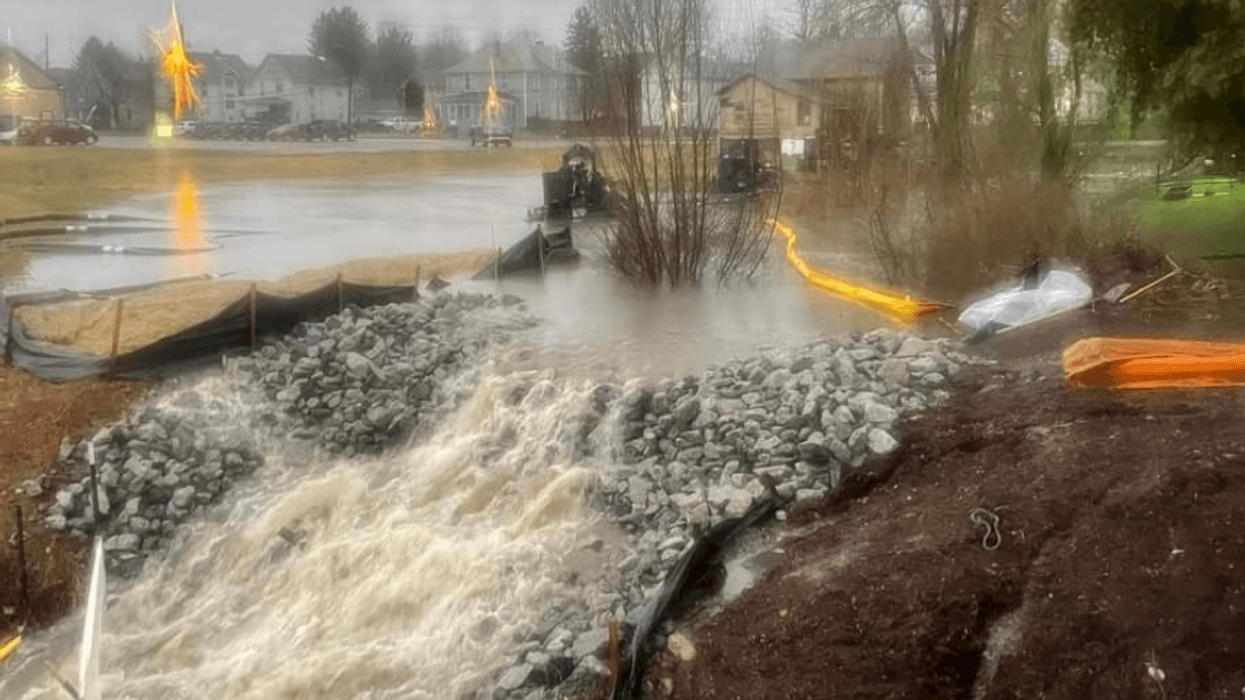
The collapse Friday night of a makeshift dam designed to hold back wastewater and new concerns by local groups and residents about the nearby incineration of contaminated soil from last month's train derailment are the latest anxiety-producing woes to beset the community of East Palestine, Ohio.
Watchdogs on the ground reported that the dam broke after heavy rains in the area on Friday.
According to local Channel 19 News:
Residents tell 19 News heavy rain has caused Leslie Run Creek to rise, and spill over the makeshift dam, near the derailment sight. 19 News was able to obtain several photos of water from that manmade dam covering the Main Street area of town.
Residents fear the contaminated water may seep into homes or businesses—causing another level of fear for those who live in the area.
Local resident Eric Cozza told the news outlet he was scared of what the released waters could do to the community. "I fear that now the chemical is in the ground, it's going to leech towards the water ducts, our aquifer for drinking water," Cozza said. "I'm concerned that the park is now contaminated. Kids won't be able to play there or walk through there on their way to school."
Status Coup News, which has been reporting from East Palestine and speaking with residents since the disaster occurred, reported Friday night that flooding from the breached dam was going "into The Original Roadhouse restaurant parking lot where a lot of locals eat and drink."
The outlet also reported that the pictures of the broken dam posted to social media were taken by local resident Neko Figley, who was told by contractors to leave the area because it was "super dangerous to be here right now.”
River Valley Organizing, a multi-racial, working-class group active in the Ohio River Valley region, said in a statement Friday that residents of East Palestine are still being ignored a month after 38 rail cars of a Norfolk Southern train went off the tracks on February 3.
"It's been one month since our lives were turned upside down," the group said, "but we still aren't getting what we need from the government or Norfolk Southern. We heard the people of this community loud and clear: they want safe homes, and independent environmental and health testing—now."
On Saturday, The Guardian reported on fresh fears over the incineration of contaminated soil that was taken from the crash site, not least because one of the nearby facilities where the material is being taken has a history of EPA violations. According to the Guardian:
The new plan is "horrifying," said Kyla Bennett, a former [EPA] official now with the Public Employees for Environmental Responsibility non-profit. She is one among a number of public health advocates and local residents who have slammed Norfolk Southern and state and federal officials over the decision. [...]
Incinerating the soil is especially risky because some of the contaminants that residents and independent chemical experts fear is in the waste, like dioxins and PFAS, haven't been tested for by the EPA, and they do not incinerate easily, or cannot be incinerated.
"Why on earth would you take this already dramatically overburdened community and ship this stuff a few miles away only to have it deposited right back where it came from?" Bennett asked.
She further told the Guardian that the "most important thing in my mind is the human health and health of the environment" and that burning this toxic material under such conditions flies "in the face of basic human decency and science."
Penn Future, a watchdog for air and water quality in neighboring Pennsylvania, said the incineration plans are very worrying.
"The plan to incinerate dioxin and PFAS contaminated soil from Norfolk Southern's toxic spill deeply troubles us and will continue to build distrust and anxiety," the group said. "It's not clear the plan will work and puts communities down wind at risk of contamination."
According to an update from the office of Ohio's Republican Gov. Mike DeWine, the Ohio EPA has reported that approximately 1,700 tons of solid waste have been removed from the disaster site in East Palestine as of Friday.
Of that waste, reports The Chronicle-Telegram, 660 tons has gone to Heritage Thermal Services—the company with a litany of past violations—in East Liverpool, Ohio, which is in Columbiana County not far from East Palestine. Another 190 tons was hauled to the Giles incinerator for in-state burning and 880 tons of the solid waste was shipped out of state to landfills in Michigan and Indiana.
Meanwhile, 3.2 million gallons of liquid wastewater have been collected in the area with the large majority going out of state, to facilities in Michigan and Texas, for deep-well injection.
Amanda Kiger, director of River Valley Organizing, said one of her concerns was the incineration of toxin-laden materials so close to the residents still reeling in East Palestine.
EPA and other government officials, she told the Guardian, "are just dumping more shit on Columbiana county,” Kiger said."They say, 'We already poisoned them so it doesn't matter if we poison them more.'"
As for Cozza, who spoke with 19 News about the dam breach and whose family has already been diagnosed with skin irritations, he said the odor of chemicals is now back in the area.
"I have fear," he said. "I've had fear and now this just put the anxiety over the top."
"Every day that this community doesn't have relocation options," said local organizers, "is another day this community is in crisis."
At a town hall meeting in East Palestine, Ohio Thursday night, hundreds of residents had their first chance to directly confront the rail company responsible for the train derailment that took place in the town last month, and used the opportunity to share their outrage over Norfolk Southern's failure to keep residents safe following its release of toxic chemicals from the crash site.
Residents called on the company representative present at the meeting to "do the right thing" and ensure Norfolk Southern pays to evacuate anyone who wants to leave the town following the controlled release of vinyl chloride, a carcinogenic chemical that was carried by several of the cars on the train that derailed.
The burning of vinyl chloride can send hydrogen chloride and phosgene—which was used in chemical warfare during World War II—into the environment. The chemicals are known to cause headaches, vomiting, and rashes, among other symptoms.
"Every day that this community doesn't have relocation options, independent environmental testing, comprehensive health monitoring, and safe disposal of this toxic waste, is another day this community is in crisis."
Those symptoms, as well as lingering chemical smells, have been reported by East Palestine residents since the February 3 derailment, despite officials' claims that the area is safe.
Tests on more than 150 private well systems and municipal water has not shown disconcerting contamination levels thus far, according to officials, but locals reported serious concerns about the long-term safety of their town.
"Get my grandchildren out of here!" one man demanded as the Norfolk Southern representative said the company feels "horrible" about the derailment, which prompted a temporary evacuation of some residents.
"If you care about us, get our grandkids out," he added.
As "CBS Mornings" reported, other East Palestine residents told the representative and state and federal officials who attended the meeting that they feel "stuck" in the town as their symptoms persist.
One woman told the officials she has witnessed "kids vomiting, nosebleeds, numbness in their mouth, numbness in their fingers."
The meeting was held weeks after Norfolk Southern officials backed out of attending a previous town hall meeting in the days after the crash, citing safety concerns.
Last week, the EPA ordered Norfolk Southern to take full responsibility for cleaning up any contamination, issuing a legally binding order that also required the company to take part in public meetings.
Ahead of the Thursday meeting, the EPA also ordered testing in East Palestine for dioxins, which can also form when vinyl chloride is burned. Dioxins are already present in the environment and are a byproduct of fuel burning, and the agency has held off on testing for them. River Valley Organizing (RVO), a local grassroots organization, said public pressure from locals pushed officials to conduct the testing.
Earlier this week, RVO released a list of five demands from East Palestine residents that were agreed upon at another community meeting, including:
The company has removed 2.1 million gallons of wastewater and 1,400 tons of solid waste so far, but its shipment of the waste to towns in Texas and Michigan have led to outcry from locals and officials, leading the EPA to order a temporary pause on the shipments this week.
"Every day that this community doesn't have relocation options, independent environmental testing, comprehensive health monitoring, and safe disposal of this toxic waste," said RVO on Friday, "is another day this community is in crisis."
"The culprit is corporate greed, not a secret conspiracy."
This is a developing story... Please check back for possible updates...
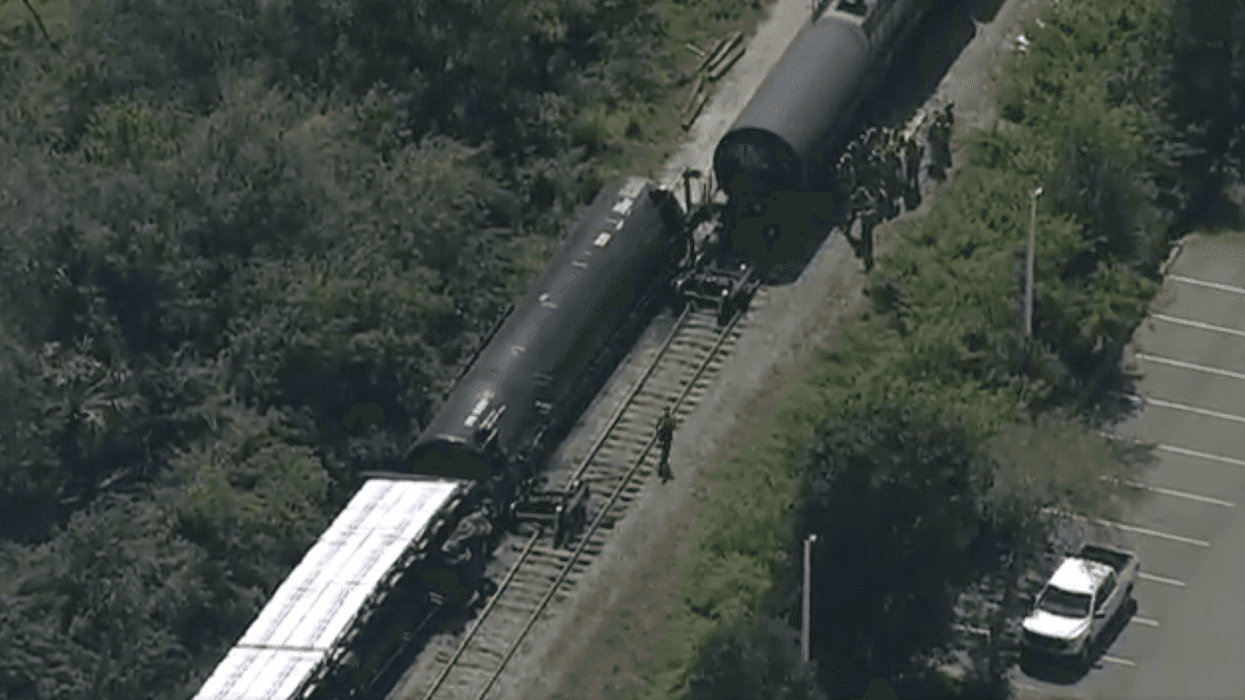
Shortly after two progressive lawmakers unveiled legislation that would require more stringent federal regulations for trains carrying hazardous materials, a train carrying propane fuel through Manatee County, Florida derailed and made the latest case for far-reaching action, according to advocates.
Brittany Muller of WFLA News Channel 8 reported that "one tanker carrying 30,000 gallons of propane has rolled off the tracks."
South Manatee Fire Rescue was responding to the derailment, Muller said, in which at least six train cars had left the tracks.
Spectrum News 13 reported that "five railcars and two propane tankers have derailed at the site" and that no injuries or propane leaks were evident.
Citing South Manatee Fire District Chief Robert Bounds, ABC7 reported that "more than 150 feet of track has been mangled and will have to be replaced.
"It may take between 1-3 days to transfer the propane from the tankers involved," according to the outlet.
Noting that the exact details of the derailment and the damage done are not yet known, labor-focused media organization More Perfect Union said the "culprit" behind the accident—like the environmental disaster still unfolding in East Palestine, Ohio after a derailment earlier this month—is "corporate greed."
As Common Dreams reported Tuesday, aggressive lobbying by the railroad industry has resulted in lax regulations, defining a "high-hazard" train as one carrying hazardous materials in at least 20 consecutive cars or 35 total.
Rail companies have also adopted a scheduling system that prioritizes speed over safety, pushed to have smaller train crews, and refused to provide paid sick leave to workers.
"Images taken at the site of the derailment show how severely the track has been mangled, and further demonstrate the need to listen to unions rail workers," said More Perfect Union, "and take decisive regulatory action."
The residents of East Palestine impacted by this massive toxic spill are left drinking bottled water while being assured everything is fine. But everything is not fine.
On February 3rd, a massive train derailment in East Palestine,Ohio blanketed the town with a toxic brew of spilled chemicals and gasses, fouling the air, polluting waterways and killing thousands of fish and frogs. Local residents are suffering ailments ranging from respiratory distress, sore throats, burning eyes and rashes, all with unknown long-term consequences. The two mile long freight train was operated by Norfolk Southern Corporation, It’s been called a “bomb train,” as among its 141 cars were tankers that can hold up to 32,000 gallons each of highly flammable toxic chemicals. In addition to the spill, an out-of-control fire raged for days followed by a “controlled” burn of the train’s most toxic cargo, releasing a huge mushroom cloud of fire and smoke. This catastrophe could have been prevented, had it not been for lax regulation and the outsized lobbying power of corporations like Norfolk Southern.
Five days after the accident occurred, local residents who had been evacuated were told it was safe to return home. This did not sit well with Emily Wright, who works for River Valley Organizing, a community group in the Ohio River Valley, which includes East Palestine.
“There’s five miles in between where I’m at and where the derailment was,” Wright said on the Democracy Now! news hour. “You should be OK [officials said]. They kept saying the same thing over and over again in the media and in the press conferences: ‘There’s no toxins in the air. There’s no toxins. Don’t worry.’”
Despite official assurances, Emily Wright was worried. “We started in my home experiencing nausea — sorry to be explicit, but — diarrhea. My father has bilateral asbestosis from working in the mill. So, these industries are killing us in more than one way. And he couldn’t breathe well.”
By that time, the risk of exposure had grown, as had fears of a potentially massive explosion. So, Wright and her neighbors were told to “shelter in place.”
“Twenty-five million Americans live in an oil train blast zone,” Emily Wright continued, “This is in the poorest parts of America, going from Conway, Illinois, to Pennsylvania, cutting through Appalachia. You know, they continue to do, you know, safety issues, lower safety concerns, not worry about us, because we are the people that historically cannot fight back.”
While the train was two miles long and heavy, and carried a dizzying array of hazardous chemicals, its braking system relied on technology dating back to the Civil War. This brake mechanism functions like bumper cars, when the engine in front slows, the car behind it bumps into it and it brakes, and so on down the line. A much more modern and effective braking system, known as ECP, for “Electronically Controlled Pneumatic brakes,” is already in use. Amtrak passenger trains have this system, as do trains carrying nuclear waste.
As reported by The Lever News in the wake of the derailment, in 2014 the Obama administration enacted a rule, to go into effect in 2023, that would have mandated ECP brakes on trains carrying the type of hazardous materials on this latest bomb train. Norfolk Southern and other industry leaders contributed over $6 million to Republican campaigns while lobbying against the rule. In 2018, the Trump administration rescinded it. The Biden administration and Transportation Secretary Pete Buttigieg to date have done nothing to reinstate it.
In addition to blocking safety rules, Norfolk Southern and other rail giants have been slashing costs to increase profits.
“At the root of it all is really cutbacks to staffing,” Ross Grooters, a locomotive engineer and co-chair of the Railroad Workers United union, said on Democracy Now! “You have companies that are making obscene amounts of money…you have fewer people doing a lot more work faster. You have across-the-board cutbacks on the maintenance of cars, on the maintenance of locomotives, on the maintenance of track. This is critical infrastructure. And then you have increasingly long and heavy trains, like the one we saw here, where these trains have a greater propensity to derail.”
As the Lever News investigation revealed, while lobbying to block safety rules, arguing that the braking systems, for example, would be too costly to implement, Norfolk Southern spent $1 billion on stock buybacks in order to boost its share price.
Meanwhile, the residents of East Palestine, and many more in an increasing area impacted by this massive toxic spill, are left drinking bottled water while being assured everything is fine.
“We really need a federal emergency to be declared,” said Emily Wright, on Democracy Now! once again, on the day EPA Administrator Michael Regan visited East Palestine, “We need FEMA here. There are short-term and long-term effects that will be some of the greatest this nation has ever seen in a train derailment.”