

SUBSCRIBE TO OUR FREE NEWSLETTER
Daily news & progressive opinion—funded by the people, not the corporations—delivered straight to your inbox.
5
#000000
#FFFFFF
To donate by check, phone, or other method, see our More Ways to Give page.
Daily news & progressive opinion—funded by the people, not the corporations—delivered straight to your inbox.
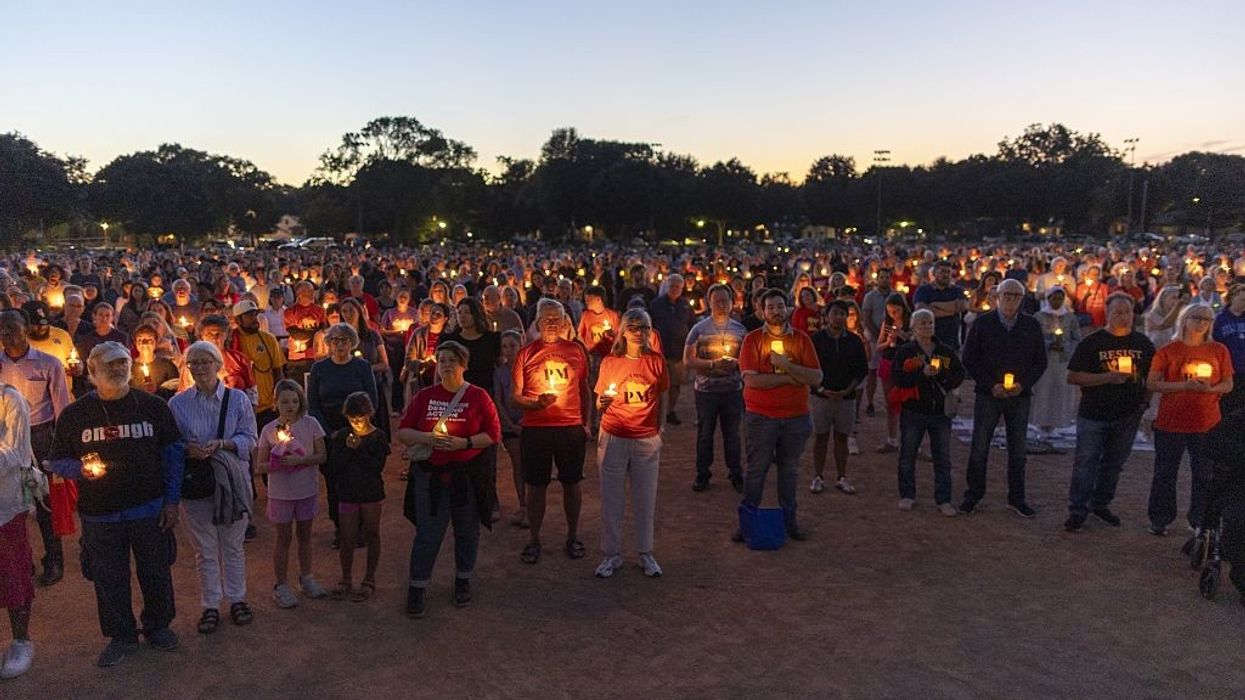
The consciousness of fear won’t go away, but our sense of what constitutes power over it—what constitutes God—must, and will, continue to evolve.
Who am I (now)? I’m still trying to figure this out. It’s a harder job, I fear, even than putting all my dishes, all my clothes, all my books and miscellany away. I have moved, as I’ve noted, from my house of 40 years—from the city of Chicago, where I lived for almost half a century—to a retirement community in Appleton, Wisconsin, to be near my family.
Yeah, it’s called a retirement community, not an old folks’ home or some other cynically realistic name, which is fine with me, even though, dadgummit, I ain’t retired. But as I sit at my computer today—my primary writing day—I feel the urge to retire, aka, give up, shrug, and do nothing except kill time. At the same time, a terrifying cry rips through me. I’ve gotta keep writing! Never has this cry felt more urgent.
My life is totally different now, but my journey, to face the soul of the unknown, to carve understanding from it and put it into words, continues. Yes, things are different. The unknown is larger and more profound for me than it’s ever been. and I feel, in a way, more lost than I’ve felt since childhood. So my writing has to confront a paradox. How can I presume to write with certainty if I don’t know what I’m talking about? I see only one way forward: Intensify the honesty I bring to my words—personalize it—and in the process turn certainty into complexity.
I say this as I try to transition beyond the sheerly personal columns I’ve written in the last two months, as my life has changed, and look again at the world at large, which, oh Lord, continues to run amok... from the school shooting last week in Minneapolis to the bombing and starvation and endless horror in Gaza and around the world, which “world leaders” continue to inflict on those dubbed the enemy, or children of the enemy (and thus the future enemy).
This is my world. I feel, ever more deeply, the dehumanization that is inextricably a part of the global boundaries—national and personal, political and spiritual—we have created, and which we sustain with an us-vs.-them militarism that puts the whole planet in danger. Even as I age, I cannot let myself grow dull to this. I can only scream: No-o-o-o!
And I quote part of a poem I wrote in the wake of the 1999 Columbine massacre, about a vigil gun-rights advocates held in defiance of President Bill Clinton’s visit to the site of the horror. They held signs that said “Gun Control Kills Kids” and “We Will Never Give Up Our Guns.” The poem is called “Vigil.”
...I am in awe
of the deadeye imperturbability
of the armed righteous,
who look upon the world’s suffering
and see targets.
They stand in potent prayer
with hands clasped
and arms extended,
judgment on a hairtrigger,
God in the recoil.
I believe them.
I believe they believe
in their own innocence
and the innocence of guns,
to clean, to cradle,
to cherish and employ.
What you have to understand
is the good they do,
picking off home invaders,
the furtive dark-clad,
the malevolent, the incomprehensible,
the hungry.
More innocent still
is the worship of guns
and the worship of the gods
they allow us to become...
The consciousness of fear won’t go away, but our sense of what constitutes power over it—what constitutes God—must, and will, continue to evolve. This is the hope I pray and bleed for. This is the hope I carry in my heart as I hobble through my new apartment, reminding myself that our journey isn’t over.
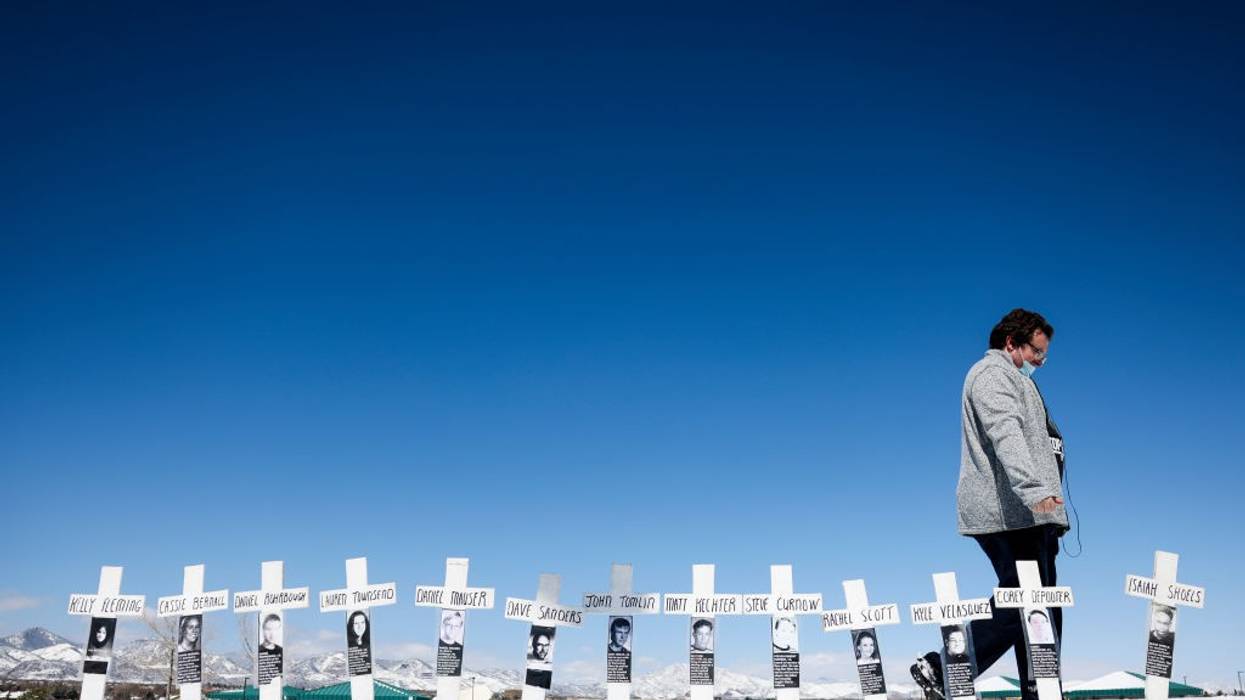
The mass atrocity may be over, but our meditations on such violence do not end and perhaps still we have much to learn.
Here’s an anniversary no one wants to celebrate: The Columbine school shooting — April 20, 1999 — just passed its 25th anniversary. Fifteen dead (including the two shooters), twenty-one injured. A new era begins . . .
Why, why, why bring up such a horrific event? Perhaps because it hasn’t stopped.
Even though I sit here in the comfort of my study, feeling perfectly safe, I can’t emotionally disentangle myself from the news, which is always, in one way or another, about the human need to kill itself — or rather, the human assumption that it’s divided from itself, and “the other,” whoever that other is, either needs to be killed or is, at best, expendable. For instance:
“The Senate has passed $95 billion in war aid to Ukraine, Israel and Taiwan, sending the legislation to President Joe Biden after months of delays and contentious debate over how involved the United States should be in foreign wars.”
So AP informs us, and immediately scenarios of screaming children, bombed aid workers, home and hospitals reduced to rubble, flash before me. No, these are not abstract scenarios! Part of me and part of you lie trapped in that rubble, or stunned and grieving over the sudden loss of your whole family. And all we seem to do is continue funding the process that makes this happen, as though a larger understanding of our existence is not available — certainly not at the level of global politics.
What is power? Is it simply and sheerly us vs. them, good vs. evil? Every war on Planet Earth is sold with this advertising slogan. Perhaps this is why I find myself thinking about the Columbine shootings — and all the mass shootings since then. Define an enemy, then kill it. This is what we learn in history class — but would-be mass shooters, caged in their own isolation, cross a line. They take this lesson personally.
And there’s a world of possibility that welcomes them, oh so ironically. In this world, the sword is mightier than the pen (or anything else). Power means power over. . . something. So if you’re a lost or wounded soul, imagining an enemy that needs to be destroyed is probably enormously tempting. If the world is going on without you, maybe you should do something to stop it. And the “world of possibility” — by which I mean far more than merely the “gun culture,” but the entirety of our culture of scripted violence, from global politics to the media to the entertainment industry — makes the loner’s imagined and insane solution, defining and killing an enemy, an actual possibility.
At the time of the Columbine shootings, I had begun writing poetry. This was in the wake of my wife’s death, in 1998, from pancreatic cancer. Poetry allowed me to deal with the shattered narrative of my life, and pretty soon I had expanded the terrain of my poetry beyond my personal grief to, well, life itself, including the horrific strangeness of the news. And I happened to read, after Columbine, a news account of President Clinton visiting the school and meeting with students in the gymnasium. And outside the school, gun-rights advocates held what they called a vigil, holding signs that declared “Gun Control Kills Kids” and “We Will Never Give Up Our Guns.”
What struck me about it the most was the idea that this was a “vigil,” which implied something more than simply a protest — an expression of anger and disagreement. A vigil dug deeper, seemingly entering the soul. Guns were a source of power and power was the source of one’s humanity, so stripping away the right to own one had a deep, spiritual impact.
I wrote a poem in response to the vigil — I called it “Vigil” (I quoted part of it in an earlier column) — attempting to address my feelings about the total scenario: the shooting itself, Americans’ deeply desired availability of guns, the impact of that availability on society’s lost souls. Here’s part of the poem, focusing on the lost souls:
. . . The violent seed
in a boy’s soul
must sprout.
It is meant to ripen
into courage,
endurance and grace.
But when it bursts open
in another dream —
the dream of permanent armament
and the grandeur of self-defense —
what happens to the boy?
What happens when soft,
immature fingers
find their way
around the deadly toys
of grown men, and
the desperate possible
co-opts the reverie?
The unimaginable
is suddenly commonplace:
burst lesson plans,
bookbags abandoned
in terrified heaps
and young lives frozen
in their yearbook photos.
This is our nightmare.
I acknowledge that the sword is probably mightier than the poem, but a poem can ask questions that the sword can’t: Why? Where are we headed? What world comes next? Does armed defense — whether of home or country — ever go wrong, ever turn into poison? All humans have a dark side; is killing it in the other guy our only option, and what are the consequences of doing so? Can power be with others, even those with whom we are in serious conflict, rather than simply over them? And if so, how can we begin reorganizing the world’s relationship with itself? What’s stopping us?
Until we’re willing to say, men’s gun violence, we’ll continue to miss the mark, falling short of any campaign to prevent these massacres.
Maybe there won’t be a copycat mass shooting to grotesquely mark the 25th anniversary of the Columbine massacre on April 20, 1999. But just as we can be certain there will be another solar eclipse, it’s only a matter of time before a hail of bullets will block out the sun for another community somewhere in America. What’s also true? Expect the shooter to be male, probably white.
In an effort to prevent mass shooters from attaining posthumous fame, today the media rarely reveals their names. Back in 1999, after high school seniors Dylan Klebold and Eric Harris murdered 12 classmates and a teacher in Littleton, Colorado, their names were widely broadcast and published.
A quarter century later, despite substantive actions to prevent mass shootings by a number of states—and, with vice president Kamala Harris now overseeing the first-ever White House Office of Gun Violence Prevention—we still lead the world in this particular brand of murder. USA! USA! USA! (As horrific as the April 13 murder of six by an Australian man at a mall outside of Sydney was, he was only wielding a knife. I shudder to think of the level of carnage if he had been brandishing an AR-15, the weapon of choice in most mass shootings.)
Sure, there are rare occasions when women pull the trigger, but as certain as I am that we’ll never hear a news report begin with the words, “A gunwoman opened fire today…,” I believe that to minimize mass shootings, we must move the question of the gender of the shooter from the periphery to the center of a long overdue national conversation.
Australia, you might recall, banned automatic and semi-automatic weapons after a mass shooting in Port Arthur, Tasmania, on April 28, 1996. There a gunman opened fire in a cafe, slaughtering 35 and wounding 23. Then-prime minister John Howard, a conservative politician in office for just six weeks, was able to push through sweeping gun control legislation 12 days after the shooting.
The legislative package he shepherded through banned selling and importing semi-automatic and automatic rifles, and shotguns, and required gun purchasers to explain the reason—and wait 28 days—before buying a firearm. Most significantly, the Australian law required a mandatory gun buyback. The government confiscated and destroyed nearly 700,000 firearms, cutting in half the number of households that possessed guns.
Prime Minister Howard said at the time, “People used to say to me, ‘You violated my human rights by taking away my gun.’ I’d tell them, ‘I understand that. Will you please understand the argument [that] the greatest human right of all is to live a safe life without fear of random murder?’”
Why, in 2024—a quarter century after Columbine, 12 years after Sandy Hook, eight years after Orlando, six years after Las Vegas, two years after Uvalde, and six months after Lewiston—is it so hard for U.S. legislators and gun owners to understand that?
In a world where leaders of all stripes use the term “a just war” with a straight face, working to prevent mass shootings feels more within our grasp then say, ending the war in Gaza. What to do first? Change how we talk about the issue. That means refusing to speak out against generic “gun violence.” Until we’re willing to say, men’s gun violence, we’ll continue to miss the mark, falling short of any campaign to prevent mass shootings.
This is not a condemnation of men. The vast majority of men are not mass shooters. For decades, I worked at a men’s center, published a magazine promoting a new definition of manhood, and championed revisiting how we socialize boys, as early as preschool. More and more men are rejecting conventional masculinity.
The weakened, shell-of-itself National Rifle Association coined the oft cited cliché, “Guns don’t kill people. People do” more than a century ago. Variations have long been used to thwart gun control legislation. It’s astonishing how little pushback there’s been.
“People kill people?” Really? Sure, there are rare occasions when women pull the trigger, but as certain as I am that we’ll never hear a news report begin with the words, “A gunwoman opened fire today…,” I believe that to minimize mass shootings, we must move the question of the gender of the shooter from the periphery to the center of a long overdue national conversation.
Now is a good time to listen again to entertainers Martin Mull and Steve Martin. They had it right when they penned the satirical sea shanty, “Men” with its one word chorus: Men, men, men, men.
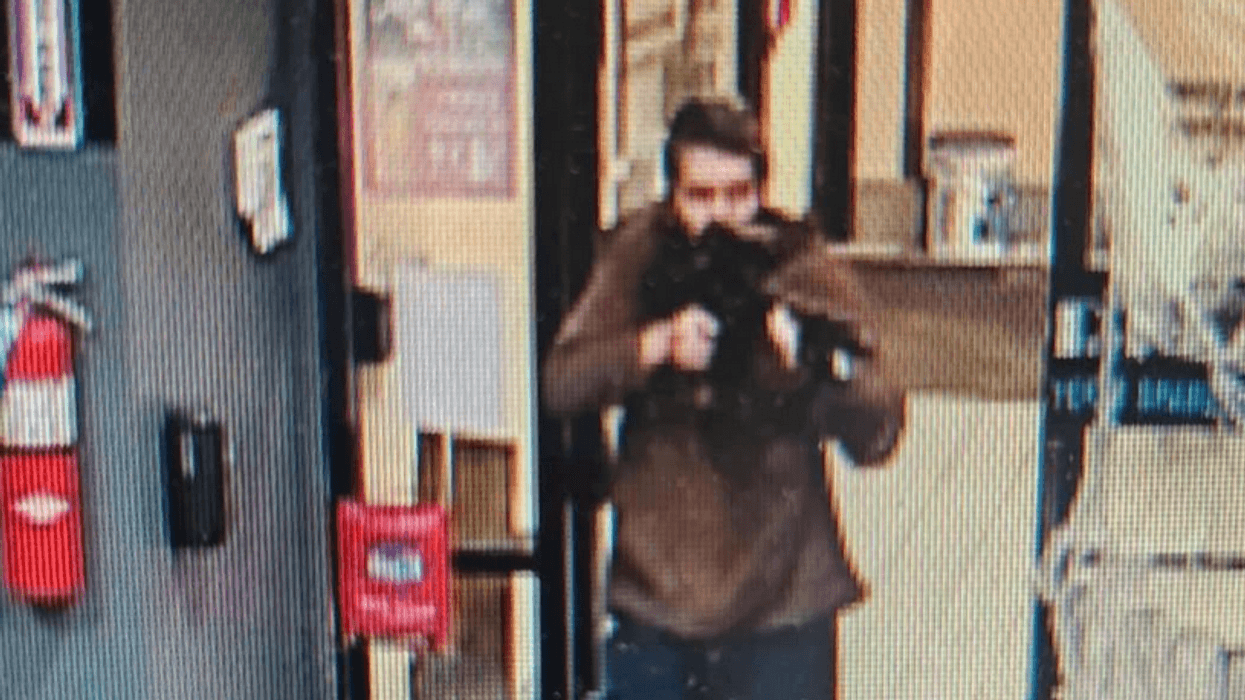
In our years-long struggle to eradicate the scourge of mass shootings, could we be approaching a tipping point?
Another American first. We’re closing in on 600 mass shootings in 2023 and—good news, people—there’s still two months left in the year. Can we get to 650? 700? USA! USA! USA!
Banks. Bars. Beauty Salons. Big box stores. Bowling alleys. Concerts. Colleges and universities. Convenience stores. Dance studios. Gas station. Grocery stores. Halloween parties. Houses of worship. Massage parlors. Mushroom farms. Movie theaters. Nail salons. Nightclubs. Restaurants. Schools. Shopping malls. Spas. Please forgive me if I missed other venues where (primarily) white men hunt to kill in the land of the free and the home of the brave.
While the Maine shooter was clearly suffering a mental health crisis, don’t let that fact distract you from the larger truth: The shooter, once again, was male.
On October 25, a 40-year-old white male Army reservist murdered 18 people and wounded 13 in Lewiston, Maine. Even before authorities discovered that he had died by suicide, a Maine congress member did a 180, reversing his views on gun control. Rep. Jared Golden, a Democrat, told a press conference:
I have opposed efforts to ban deadly weapons of war like the assault rifle used to carry out this crime. The time has now come for me to take responsibility for this failure—which is why I now call on the United States Congress to ban assault rifles like the one used by the sick perpetrator of this mass killing in my hometown of Lewiston.
Don’t hold your breath waiting for Congress to take up his proposal. The best newly installed Speaker of the House, evangelical Christian and staunch gun control opponent Rep. Mike Johnson (R-La.), could manage to offer was, “This is a dark time in America… Prayer is appropriate at a time like this, that this senseless violence can stop.” That’s it, Mr. Speaker? That’s your “Sandy Hook” promise? WWJD?
One of Maine’s most famous residents, author Stephen King, wrote on social media, “It’s the rapid-fire killing machines, people. This is madness in the name of freedom. Stop electing apologists for murder.”
King, whose titanic body of work includes the aptly named 1982 novel, The Dark Tower: Gunslinger, is just the latest prominent voice calling to stop the madness. What’s true, and what continues too often to go unexamined amid the horror of the latest mass shooting, is the gender of the shooter. While the Maine shooter was clearly suffering a mental health crisis, don’t let that fact distract you from the larger truth: The shooter, once again, was male.
Last December, commemorating the 10th anniversary of Sandy Hook, I reiterated my long-standing assertion that:
If we are ever to radically reduce, if not prevent, this almost exclusively U.S. phenomenon, the murderer’s gender must move from the periphery to the center of the discussion. If we refuse to turn our attention, resources, and political muscle to asking why the killers are almost always white men, we will be doomed to a never-ending cycle: murder, outrage, mourning, repeat.
April 20, 2024, will mark the 25th anniversary of the mass shooting at Columbine High School in Littleton, Colorado, where two alienated young white males, 17- and 18-years-old, slaughtered 13 and wounded 21. Imagine if we had begun back then paying attention to how we raise boys, beginning in preschool? How many alienated, lonely, and bullied males might we have helped to live a healthy boyhood and a productive manhood? It’s not too late. The warning signs are often right in front of us.
While a dysfunctional House of Representatives is highly unlikely to take up my suggestion anytime soon for Congress to authorize the CDC to begin a pilot study of Head Start preschool boys, that’s not a reason to stop trying. There are plenty of staff in both the Senate and the House who would gladly run with this idea.
Despite my doom and gloom, I believe we are inching closer to reaching the “100th monkey effect”: the phenomenon in which a new behavior or idea inexplicably begins to quickly spread from one group to all related groups as soon as a critical number of members begins to exhibit the new behavior or acknowledge the new idea. In other words, in our years-long struggle to eradicate the scourge of mass shootings, could we be approaching a tipping point?
You may say I’m a dreamer, but I’m not the only one.
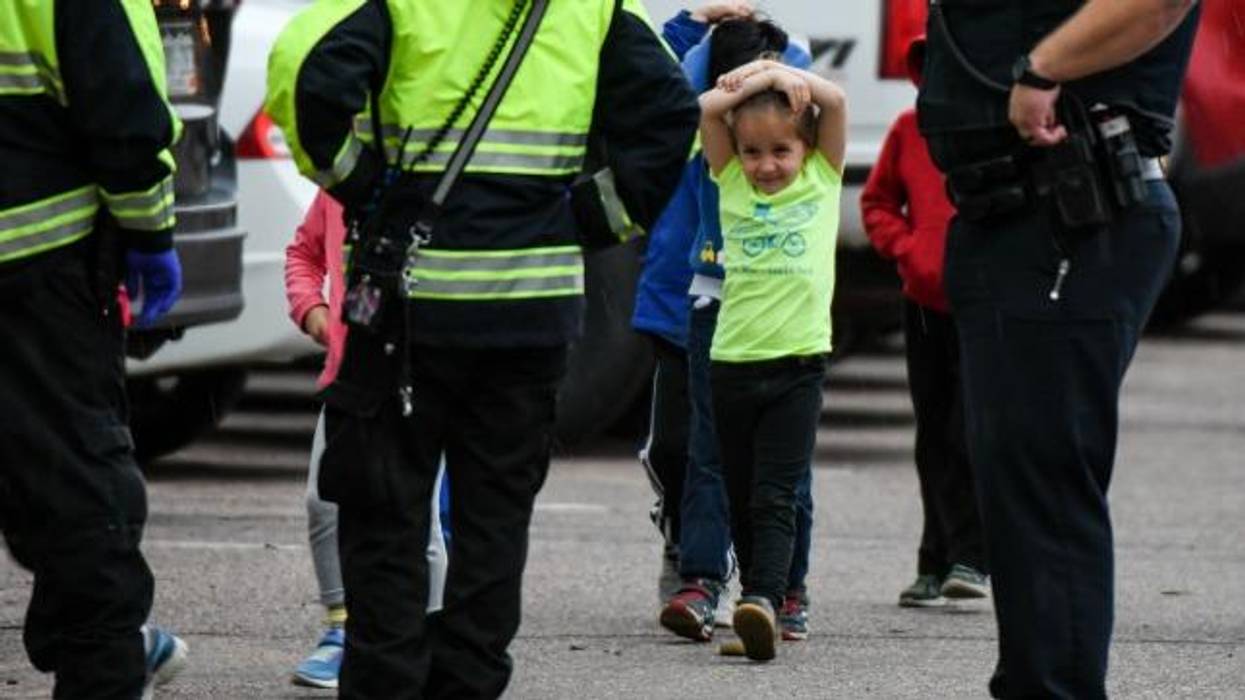
March For Our Lives, the gun violence prevention movement, called for an end to #GenerationLockdown following the latest school shooting.
Two suspects opened fire at the Denver-area STEM School Highlands Ranch Tuesday. Kendrick Castillo, 18, died. He was just days away from graduation. Eight others were injured.
It was the fourth school shooting in Colorado since the Columbine High School massacre on April 20, 1999, the Denver Post reported.
March For Our Lives, which was formed in the wake of the Parkland, Florida mass shooting last year, demanded an end to such violent acts. The group said people must not to "grow numb" to the tragedies and urged political leadership tackle the gun violence epidemic.
The group made the calls in a Twitter thread that included video from local Denver7 News of young STEM students boarding a bus outside the school.
A passage from a New York Times report on the Highlands Ranch shooting offered a brief encapsulation of "generation lockdown."
"I heard a gunshot," said Makai Dixon, 8, a second grader who had been training for this moment, with active shooter drills and lockdowns, since he was in kindergarten. "I'd never heard it before." (Emphasis added.)
The head coach for the Denver Nuggets, who lives in the community of Highlands Ranch, weighed in on the shooting as well.
"I know thoughts an prayers are never enough," Michael Malone said at a press conference Tuesday ahead of a game in Denver. "Something must change."
A candlelight vigil is being held at the school Wednesday evening for those affected by the shooting.
Wow! Westworld is back with a vengeance. Literally.
If you thought those pesky robots were gonna stop with just killing their creator who killed their other creator, you were in for quite a surprise.
Oh yeah, spoiler alert. If you haven't seen the show, keep reading anyway, because this column isn't really about the TV show--it's about humanity--and you can get a good glimpse of that anywhere, not just HBO.
Man, do those brilliant writers of that blood-drenched series know their audience or what? I mean after just two second season episodes the cable network signed on for a third season.
And the special effects! Holy blood splatter! They can digitally reproduce an exploding skull with the best of them. Not to mention the way the on-screen scientists thought of everything. Seriously, brains running down the window, what could be more authentic?
I have to admit, I don't like confessing what a light-weight I am. But I had serious nightmares after watching the seemingly indiscriminate killing done by all those borderline sentient automatons. I mean, they were intended to be used and discarded by society and then: Bam! They're terrorizing and annihilating everyone they can get their hands on!
How in the world could Jonathan Nolan and Lisa Joy come up with such a frightening scenario? I mean, who in the world could conjure anything so petrifying? Like, could anyone imagine the fear we're expected to feel for those actors? Portraying the sitting duck victims of such senseless violence? Nobody can imagine that!
Except maybe those Parkland kids.
Or the students that went to Columbine. Maybe a few of the Newtown first graders who lost their recess buddies before they lost their baby teeth. Maybe they could tell us. Perhaps Sargeant Carrio of the Newtown police has an idea how gruesome reality really is. His grizzly narration of entering the elementary school and searching "piles of bodies" to see if anyone survived are no doubt the sort of chilling truisms we need when watching a pretend program riddled with gun violence. I mean no fiction writer can beat that line where Carrio explains how he found all those little tiny bodies were under that one dead adult. Silly teacher tried to the old human shield trick. That one never works--not even in the movies.
Now that I think of it, the survivors of that gore-filled Orlando nightclub understand the fear the actors on Westworld are trying to convey. According to news reports, truckloads of blood-soaked survivors could tell a horror story or two.
I know what you're thinking. I'm going to bring up those poor unfortunate souls in Las Vegas next. Perhaps I'll mention the church congregation wiped out in Sutherland Springs, Texas. Now that was a scene so like television, it almost makes ya think that the gun nuts who oppose rational gun control measures can't afford HBO, or don't even have a TV!
No. I won't harp on the big famous shootings to remind you that the Parkland kids, the Orlando Nightclub people, the Aurora movieplex crowd all know the terror of watching friends' bodies explode and therefore deserve our unwavering respect and continued protection for as long as those memories fill their heads. No, I'll mention the five folks gunned down outside the Marcus Garvey Apartments in Brooklyn on Tuesday. One dead guy took a bullet in the guts, another in the head, and we now know from Westworld, those sorts of things made an unpleasant mess of people.
I hear the NRA and others are picking on these mass shooting survivors and I don't know what kind of ignoramus ridicules a person who has lived through a real live scene from Westworld. But if HBO's blockbuster program has taught me anything, it's that those survivors have some scenes in their head that will horrify them as long as they live. Scenes that weren't invented to entertain--just like the guns that killed their friends weren't invented to keep anyone safe.
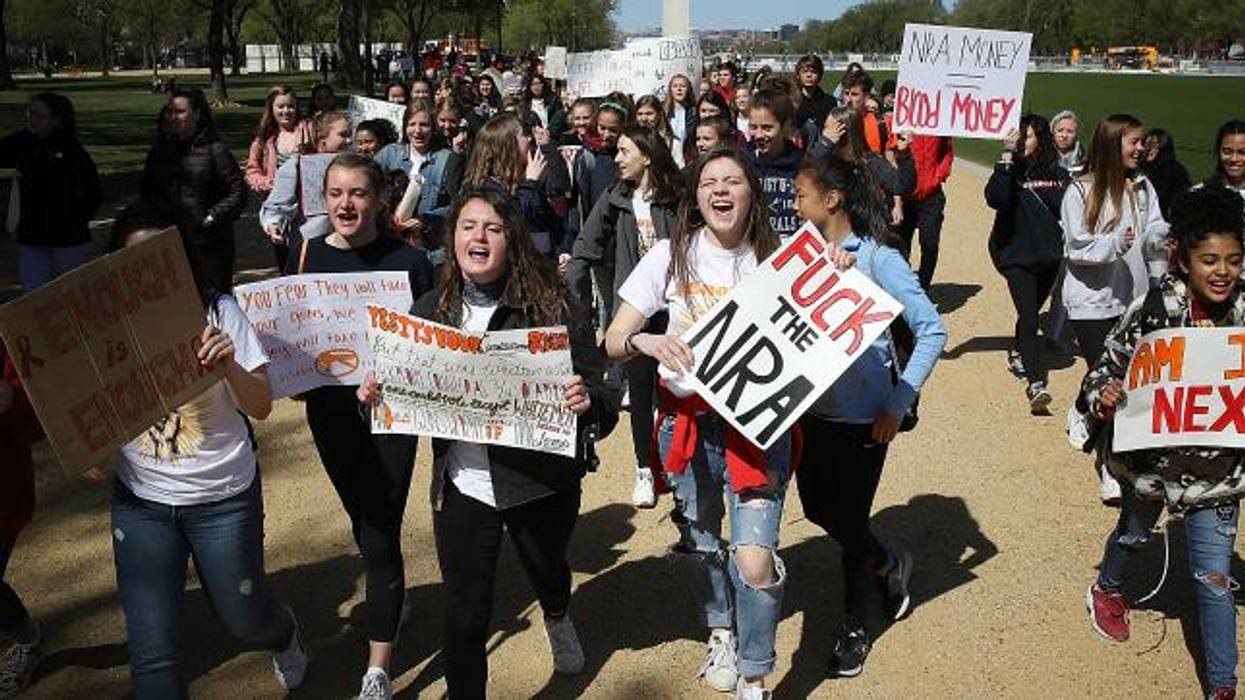
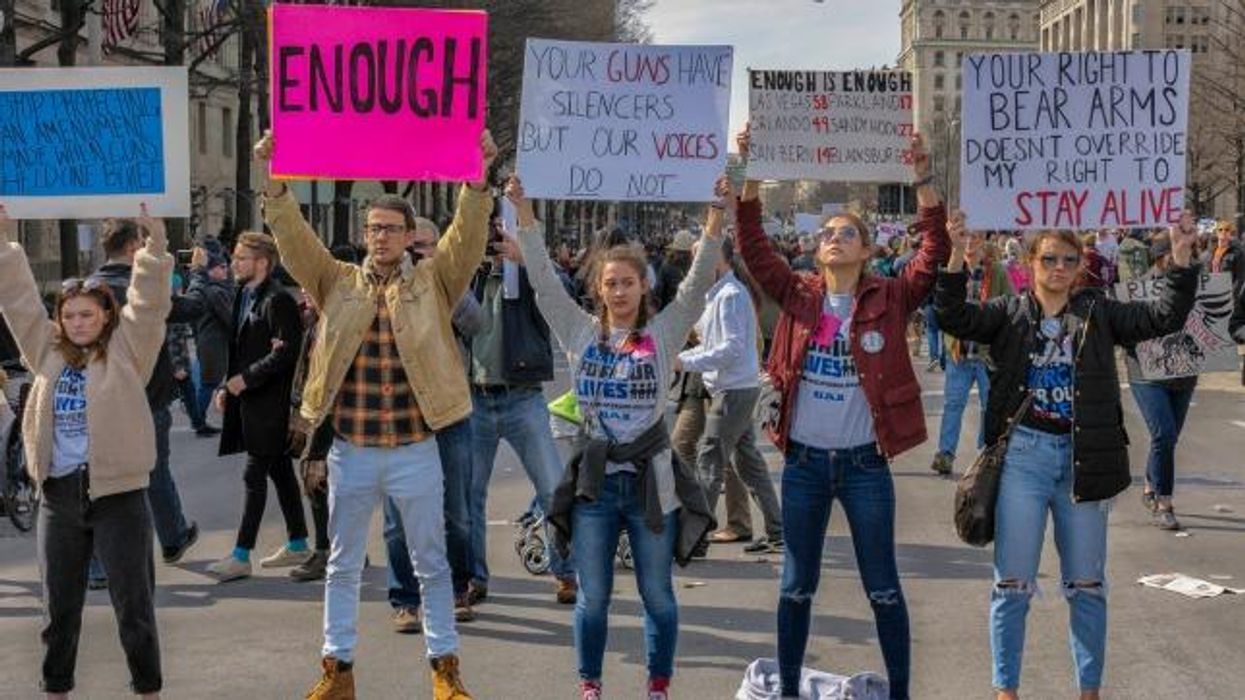
Students walked out of classrooms across the country at 10am local time on Friday--the 19th anniversary of the Columbine school massacre--for the latest in a series of recent youth-led demonstrations to demand stricter gun laws.
Student protesters and their supporters shared updates from walkouts throughout the country with the hashtag #NationalSchoolWalkout.
Mounting calls to enhance gun control through state and federal legislation have come in response to a series of mass school shootings--most recently in February, when a gunman killed 17 people at Marjory Stoneman Douglas High School in the Parkland, Florida. Parkland survivors have played key roles in driving this national movement to end gun violence.
In solidarity with students from more than 2,000 U.S. high schools who planned to protest on Friday, students from Chapel Hill, North Carolina walked out while chanting, "Guns don't die. Children do."
Students in Washington, D.C. gathered outside the U.S. Capitol and the White House to remember victims of gun violence, including those killed at Columbine High School in Colorado in 1999. On Thursday, students from Columbine High School hosted a "Vote For Our Lives" rally to register local teens ahead of the November midterm elections.
"This movement is the next step in the series of pressure points placed on politicians to take action," the event organizers said in a statement. Referencing another nationwide walkout last month, they added, "We walked out, then we marched, and now we vote."
Speaking at a rally outside Plantation High School in Florida, junior Romy Giler reminded her peers that the movement's demands for legislative action are also motivated by mass shootings at a movie theater in Aurora, Colorado; Pulse night club in Orlando, Florida; and a country music concert in Las Vegas, Nevada--the deadliest shooting in U.S. history.
"We can't just stop at schools," she said. "Concerts, night clubs, and movie theaters are, sadly, places we have to consider as well--places we regularly go to with our friends to have fun."
Acknowledging the walkouts, marches, and town halls that have swept the nation since February, Giley concluded, "We have changed opinions on gun control but there is nothing stopping these senseless acts of violence until legislators do something."
Another district in Florida canceled its planned walkouts after a 17-year-old male student was shot at Forest High School in Ocala. Police said Friday that the victim sustained nonlife-threatening injuries and the 19-year-old suspect--who is not a student--was taken into custody.
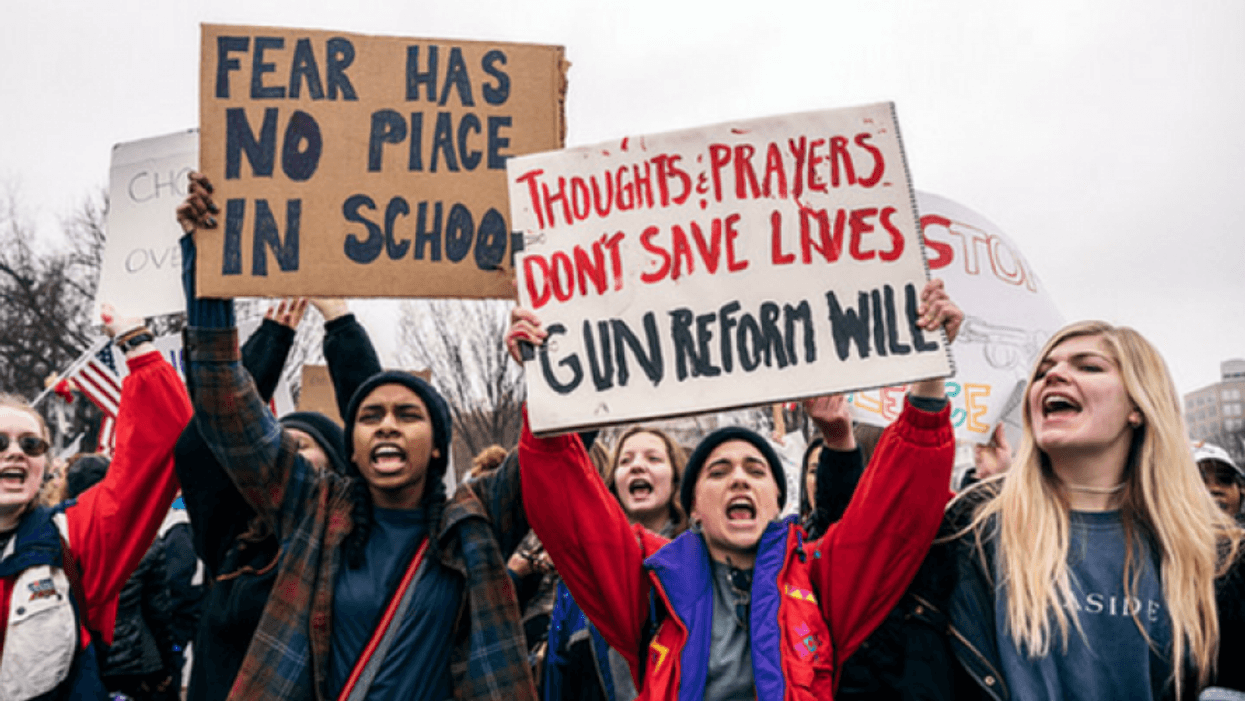
One day ahead of a national student-led walkout to demand action to end gun violence, new research shows that "in less than 18 years, we have already seen more deaths related to school shootings than in the whole 20th century.
"In less than 18 years, we have already seen more deaths related to school shootings than in the whole 20th century."
--Antonis Katsiyannis, Clemson University
The study, published by Springer's Journal of Child and Family Studies, found that mass school shootings--defined as incidents involving at least four victims, excluding the shooter--have culminated in a "deadly epidemic" in the United States.
Since the 21st century started, 13 lone shooters have killed at least 66 people and injured 81 more in mass school shootings. By contrast, 55 people were killed and 260 were injured during the previous century.
"One alarming trend is that the overwhelming majority of 21st-century shooters were adolescents, suggesting that it is now easier for them to access guns, and that they more frequently suffer from mental health issues or limited conflict resolution skills," noted lead author and Clemson University professor Antonis Katsiyannis.
The report details preventative measures that could be enacted and strengthened in an effort to curb this epidemic. Proposals include implementing school-based mental health services and expanding background checks for anyone who tries to buy a gun, as well as banning assault weapons.
Acknowledging that an issue of this scale requires action on various levels, Katsiyannis pointed out that "preventative efforts not only require policy and legislative action but increased and targeted funding across federal, state, local and private sectors."
The study's findings bolster the demands driving the student-led protests that have taken the nation by storm since mid-February, when a gunman killed 17 people at a high school in the Parkland, Florida.
The next action is scheduled for Friday, the 19th anniversary of the Columbine massacre. Students across the country plan to wear orange and walk out of their schools to demand stricter gun laws.
As the ACLU has done for past demonstrations, the legal advocacy group is circulating resources for students ahead of Friday's walkout.
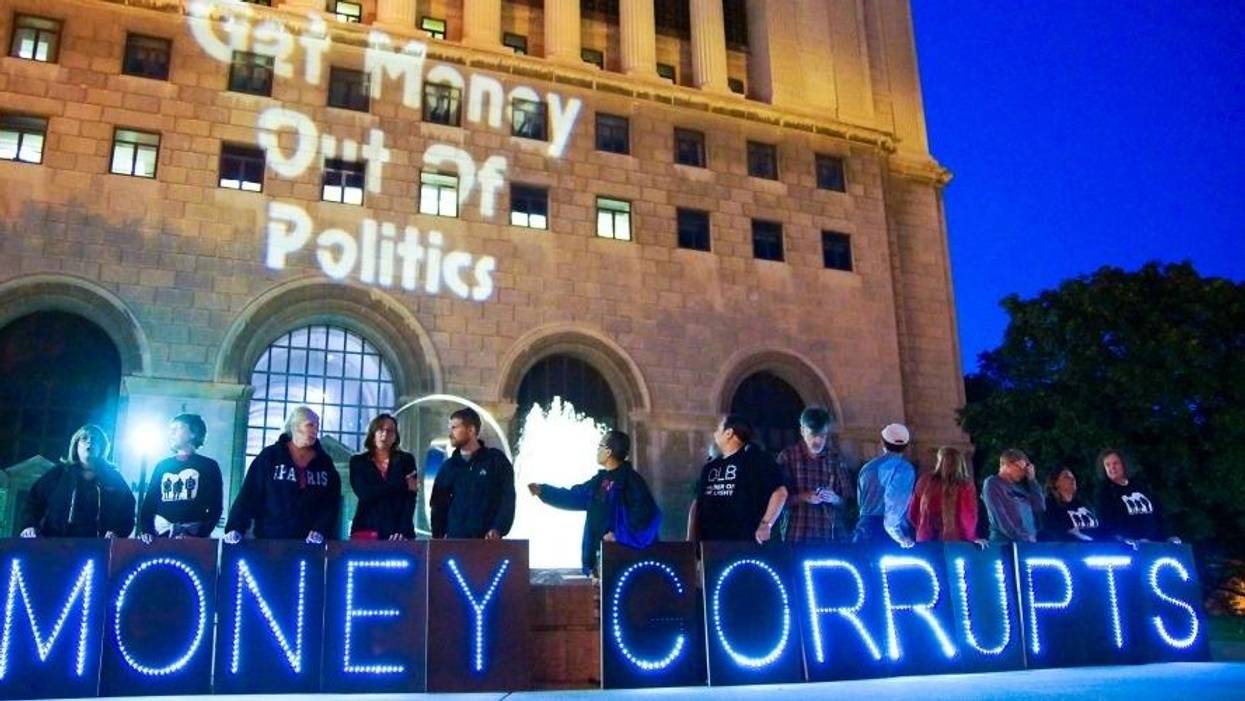
I grew up in Littleton, Colorado, just a few blocks away from Columbine High School. I was fourteen years old when two heavily armed students walked into their school and started shooting innocent classmates. Our quiet community was left overwhelmed with anger, frustration, and sadness. I remember coming downstairs before school the next day, to find my mother, a school teacher, weeping uncontrollably as the news reported the aftermath of the tragedy, and all I could do was cry with her. The feeling of powerlessness was almost unbearable and I know so many families of victims of gun violence are feeling that same sense of powerlessness.
That was 19 years ago and we've had over 70 mass shootings since then. Since 1968 more Americans have been killed by gunfire than have died in all of the wars in American history combined.
Despite overwhelming popular support for stricter gun control laws including background checks, a three day waiting period, and a ban on assault weapons, and high-capacity magazines, and other common sense-reforms to help to prevent mass-shootings, Congress has been unwilling to act because of pressure from the powerful special interests.
Since 2010, the National Rifle Association has spent over $120 million to ensure the interest of gun manufacturers are represented over the safety of our families and the will of the people. But Americans all over the country are waking up to the broken system of pay-to-play politics that plagues Congress.
At the CNN town hall on gun policy in America, when a student from Stoneman Douglas High School in Parkland, Florida asked Senator. Marco Rubio if he would pledge to "not accept another donation from the NRA," the live studio erupted in applause, followed by a standing ovation that lasted over 20 seconds.
We need to amend the U.S. Constitution to end the domination of the big money gun lobby and their influence over our lawmakers.
If we're going to end gun violence in America, we need bold solutions that address the root cause of this public health crisis. We need to amend the U.S. Constitution to end the domination of the big money gun lobby and their influence over our lawmakers.
Because of a handful of controversial and misguided 5/4 Supreme Court rulings, corporations like gun manufacturers, are allowed to spend unlimited money to buy access and influence in Congress. As a result, lawmakers pass laws or sometimes block laws from being passed to appease their donors and benefit their bottom-line. This was the case with the bipartisan Manchin-Toomey gun proposal to expand background checks in 2013 after the Sandy Hook massacre. If the gun lobby had not worked so hard to defeat that bill, the Parkland massacre may have been avoided.
The only way to end this type of pay-to-play corruption is to overturn the Supreme Court with a Constitutional amendment. There is already widespread cross-partisan support across the country to do it. 19 states and over 800 cities and towns have passed resolutions with support from Republicans, Democrats, and independents formally calling on Congress to amend the U.S. Constitution to limit the influence of money in politics. In Montana, Colorado, California, and Washington voters have approved similar resolutions through ballot initiatives.
Nearly every generation has amended the Constitution to restore or strengthen our democratic institutions. Now it's our turn. Ahead of the 2018 midterm election, we plan to ask every single federal candidate to pledge to support the 28th Amendment and end the influence of big money and special interests in campaigns and election. When voters head to the polls on November 6, we want them to know whether or not their next member of Congress will represent 'We the People' or corporate special interests.

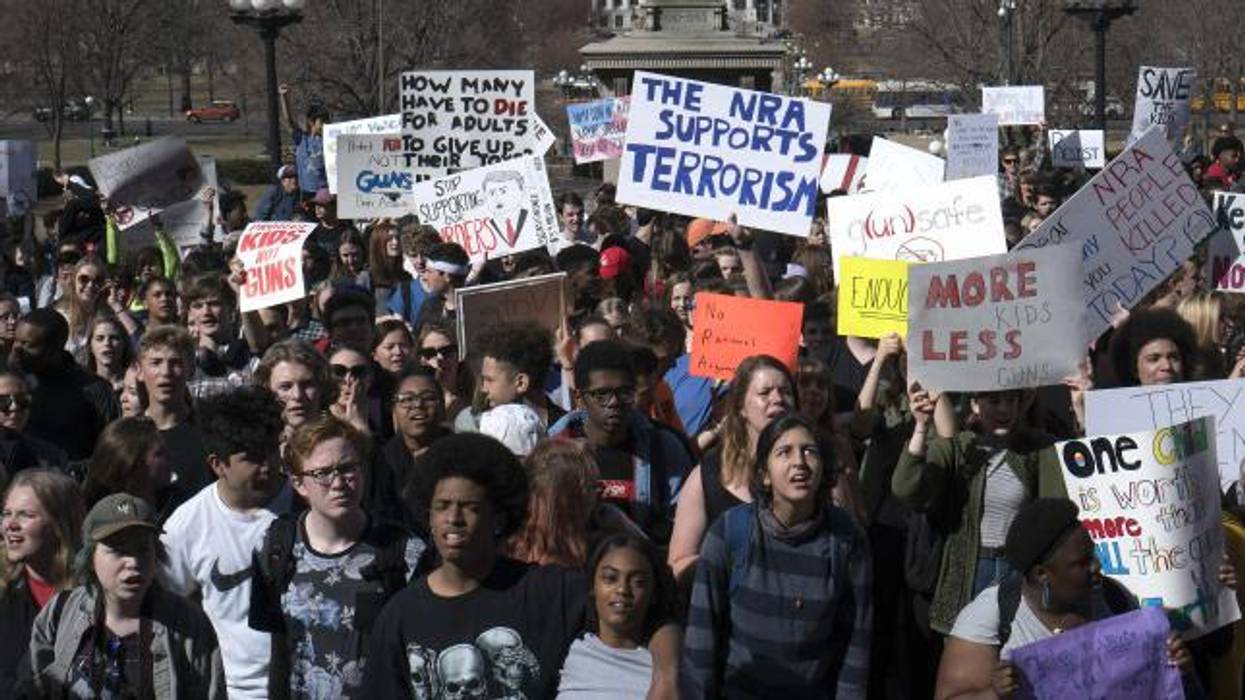
Students, parents, and teachers walked out of thousands of high schools across the country on Wednesday to demand legislative action to address gun violence in the United States.
The national "Enough" walkout is part of a student-led movement to call for gun control reform after 17 people were killed at a high school in Parkland, Florida last month--just the latest in a series of deadly mass shootings. Students will also head to Washington, D.C. for the "March for Our Lives" on March 24 and are planning a second nationwide walkout for April 20, the 19th anniversary of the Columbine High School shooting.
Using the hashtags #Enough, #NationalSchoolWalkout, and #NationalWalkoutDay, protesters and journalists shared on social media photos, videos, and anecdotes from Wednesday's demonstrations.
Parkland, Florida
Students at Marjory Stoneman Douglas High School--the site of last month's massacre--filed out into the football field for a 17-minute moment of silence.
Atlanta, Georgia
In Atlanta, about 600 students at Booker T. Washington High School left their classrooms to "take a knee" in a silent protest, taking inspiration from a number of famous athletes who have protested police brutality and institutionalized racism in recent months.
Boston, Massachusetts & Portland, Maine
Many students in New England, including in Boston and Portland, Maine, attended protests despite their schools being closed after heavy snow on Tuesday and Wednesday. Boston students marched to the State House to demand their legislators enact tougher gun control laws.
Granada Hills, California
In Granada Hills, California, students and teachers arranged themselves on the football field at Granada Hills Charter High School to spell out the word "ENOUGH," while a gong sounded 17 times for the 17 people who were killed in Parkland.
Littleton, Colorado
At Columbine High School in Colorado, the site of an infamous mass shooting in 1999, students walked out and released balloons in memory of those killed in Florida.
New York, New York
Students in New York City gathered outside one of President Donald Trump's hotels, and shouted: "Hey hey, NRA, how many kids did you kill today?"
Walking out alone...but not really alone
Rosa Rodriquez, a sophomore at Sayreville War Memorial High School in New Jersey--which reportedly threatened to suspend participants--was interviewed by local media about being the only student from her school to walk out.
And Justin Blackman, a student at Wilson Preparatory Academy in Wilson, North Carolina, also walked out by himself to mark the day.
Washington, D.C.
As Democratic members of Congress joined students outside the U.S. Capitol Building in D.C., the demonstrators greeted Sen. Bernie Sanders (I-Vt.) with cheers. Addressing the crowd over chants of "Bernie, Bernie," Sanders said: "I am absolutely delighted and proud that you are here today. What you are doing is of national significance. You're leading this country in the right direction. Thank you all."