

SUBSCRIBE TO OUR FREE NEWSLETTER
Daily news & progressive opinion—funded by the people, not the corporations—delivered straight to your inbox.
5
#000000
#FFFFFF
To donate by check, phone, or other method, see our More Ways to Give page.
Daily news & progressive opinion—funded by the people, not the corporations—delivered straight to your inbox.
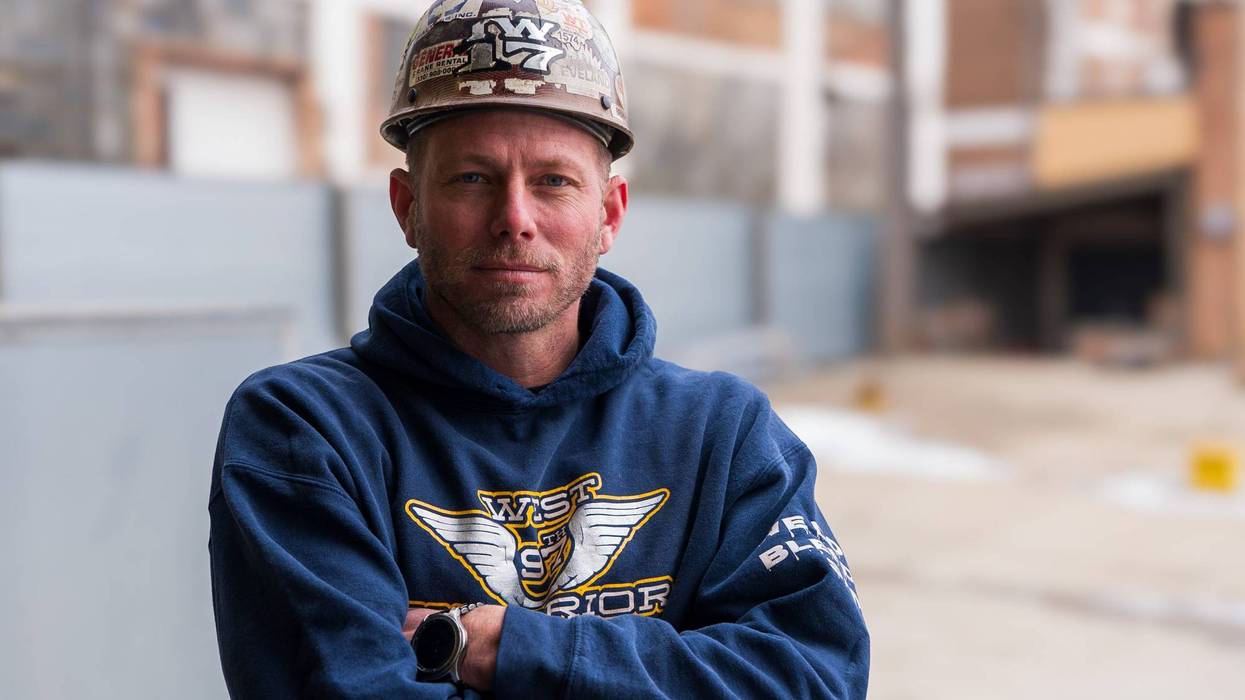
"Brian Poindexter—a working-class ironworker and champion for all—is going to make sure Max Miller doesn't get another term in the halls of power," said one Democratic campaigner.
Democratic congressional candidate Brian Poindexter on Sunday joined a growing chorus of people across the political spectrum arguing that Republican Rep. Max Miller shouldn't remain a member of the US House of Representatives over domestic abuse allegations.
"No one credibly accused of holding a gun to his wife's head and breaking their 2-year-old daughter's collarbone belongs in the halls of power," said Poindexter, a union ironworker challenging the GOP incumbent in Ohio's 7th Congressional District, in a post on the platform X. "Help defeat Max Miller in November."
Poindexter's social media post, which links to his fundraising webpage, came after he told Ohio journalist Jessie Balmert on Saturday night, "These allegations are very serious, and I don't know if he should resign or not, but what I would say is that if these allegations are true, he should be in jail."
The Democrat's post also came as Miller wrapped up a nearly 20-minute livestream on X in which he makes clear that he is not dropping out of the race (the deadline for Republicans to replace him on the ballot is Wednesday). Miller also denied abusing his ex-wife Emily Moreno—the daughter of US Sen. Bernie Moreno (R-Ohio)—and their child.
Emily Moreno discovered bruises on their young daughter and took her to the emergency department. As Mother Jones' Abby Vesoulis reported last month, "Records of the investigation into potential child abuse show that Moreno told detectives that Miller had previously thrown hot water at her, shoved her, and held a gun to her head; therefore, she couldn't rule out that Miller caused their daughter’s fracture."
The Cuyahoga County Division of Children and Family Services found that any potential child abuse was unsubstantiated—meaning there wasn't enough evidence to determine neglect or abuse—but Mother Jones reviewed legal filings in which "Moreno alleges that Miller was an absentee father and abusive husband whose history of violence and misconduct dates back more than a decade."
Responding to the Sunday morning video, Emily Moreno's spokesperson, Stefan Mychajliw, said that "it is shameful that Max Miller decided to go on a bizarre and lie-filled rant about his ex-wife to desperately try to save his political career. There is a documented trove of evidence that Miller has a history of violent and dangerous behavior and no amount of victim shaming will change that."
"It is despicable and abhorrent that Miller lied on an unhinged and humiliating video for their daughter to watch one day," the spokesperson continued. "No loving parent would have ever used their daughter as a PR pawn to save their own political career. Miller can lie and spin on X, but he cannot do so under oath in a court of law. We are confident that justice will prevail in court."
Her senator father also weighed in with a lengthy post on X, saying in part that "our priority has always been protecting our daughter and our granddaughter. Out of concern for the safety of my family, I hoped to keep this matter private, but Max Miller’s increasingly erratic and dangerous behavior has made that impossible... He should not serve in the House of Representatives. I believe Max Miller needs to seek professional help to end the clear pattern of abuse he has left in his wake."
Miller replied to the senator directly, writing: "If my daughter said the same thing to me, I personally wouldn't wait two years before holding him accountable. You know this isn't true, and the only reason you are speaking out now is to hide from your own media circus. This is all political."
As Mother Jones' Vesoulis noted Sunday:
Emily Moreno is not the only woman that Miller has been accused of perpetrating violence against. In 2021, Politico cited multiple witnesses in reporting that Miller had thrown a woman down the stairs after she rejected his advances. That woman recently told Mother Jones that the night in question remains “one of the more traumatic nights of my life.”
During the first Trump administration, Miller’s behavior toward women also came under scrutiny when former White House press Secretary Stephanie Grisham accused a fellow Trump staffer of assaulting her. Miller sued Grisham for defamation at the time, stating in his lawsuit that people knew she was referring to him. Miller denied hurting her, too, and the two reached a confidential settlement in the lawsuit. Grisham is now suing Miller for violating the terms of that settlement.
The video sparked a fresh wave of support for Poindexter. Cameron Kasky, a mass shooting survivor and gun violence prevention advocate who previously ran for Congress as a Democrat, said Sunday: "Miller stated: 'If I had assaulted her, would she have offered to cook me dinner six days later?' Ruin this man's life. And donate to his opponent."
Adam Carlson, founding partner of the polling firm Zenith Research, shared a link for donating to Poindexter alongside a short clip of Miller's video and said that "OH-07 is a flippable district," pointing to statewide election results going back to 2018.
Former Republican Illinois Congressman Adam Kinzinger replied to the video by blasting Miller as "an evil clown."
Calling the video "an absolutely appalling 'defense,'" US Rep. Sarah McBride (D-Del.) said that "Max Miller is clearly unfit to hold power, including as a member of Congress."
Mari Manoogian, a former Democratic Michigan state legislator who now leads The Next 50, a group focused on electing younger Democrats, said that "Brian Poindexter—a working-class ironworker and champion for all—is going to make sure Max Miller doesn't get another term in the halls of power. Brian will be one hell of a congressman."
The US National Domestic Violence Hotline can be reached at 1-800-799-SAFE (7233), by texting "START" to 88788, or through chat at thehotline.org. It offers 24/7, free, and confidential support. DomesticShelters.org has a list of global and national resources.
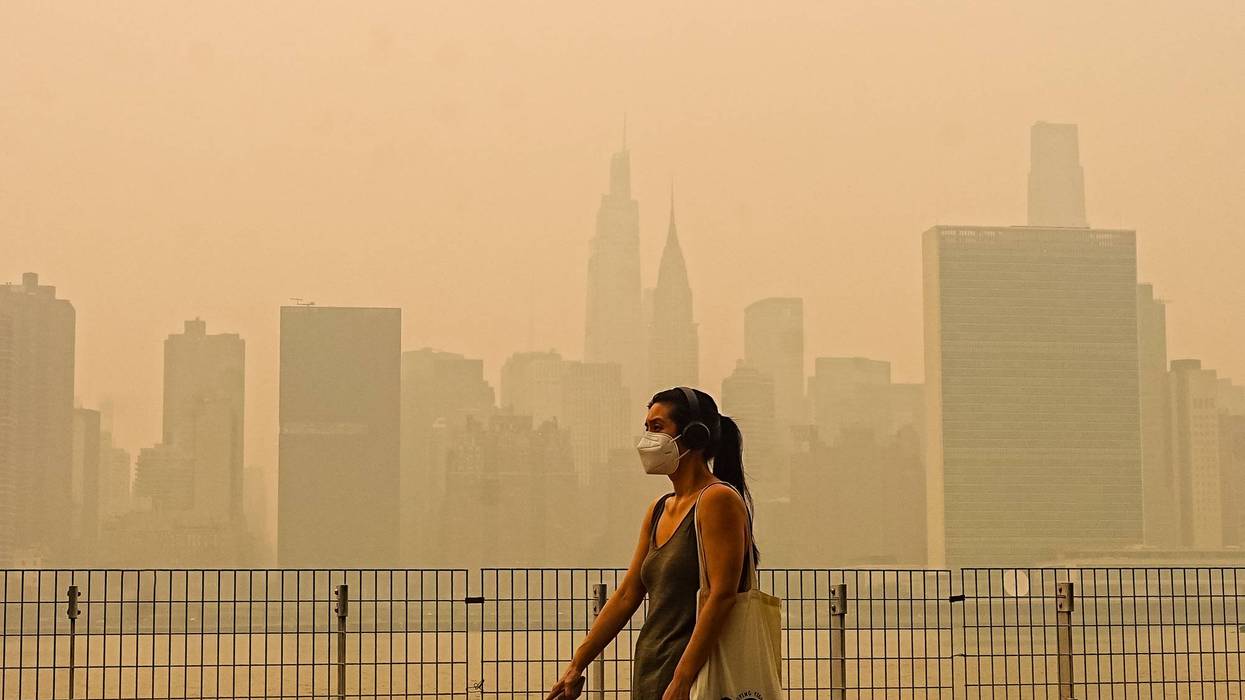
"When wildfires hit America, Canada sends firefighters," said one journalist. "When wildfires hit Canada, America sends tariffs."
A day after a Republican senator pledged to introduce legislation sanctioning Canada for the wildfire smoke impacting various US communities this week, President Donald Trump on Friday threatened the United States' northern neighbor with new tariffs.
"We are holding Canada responsible for the fact that they are not properly maintaining their Forests, and Brush therein, and the United States is being unnecessarily invaded by filthy, polluted, and unhealthy air, the quality of which is dangerous, and totally unacceptable!" Trump wrote on his Truth Social platform. "I will call the Prime Minister during the day to find out what they are going to do about it."
"The cost is incalculable! Canada has refused to engage in basic Forest Management and Debris Removal, knowing that such refusal will lead to exactly this result," Trump continued. "This is Willful Negligence, and becoming a yearly occurrence, costing the United States Billions of Dollars, which cost of this pollution must of necessity be added to the TARIFFS Canada is currently paying."
Melanie D'Arrigo, a campaigner for single-payer healthcare in the United States, responded, "So can Canada hold US oil companies, their lobbyists, and the congresspeople they bribe for the climate crisis that increases droughts and the risk of these wildfires?"
"When Trump talks about increasing tariffs on Canada, he's talking about Americans paying more for the things they need—because the increased costs are paid by American consumers," she also stressed.
According to the Canadian Broadcasting Corporation, when asked for a comment on Trump's post, a spokesperson for Canada's Embassy in Washington, DC only said Ambassador Mark Wiseman has "engaged directly with key administration and Hill officials regarding the wildfire emergency in Canada, our efforts to address it, and the impact of wildfire smoke on Canada and the US."
CBC noted that a day earlier, four Michigan Republicans in the US House of Representatives had made similar statements in a letter to Prime Minister Mark Carney, who didn't address the missive when asked about it, but told reporters in French that "climate change is everyone's responsibility—truly everyone's—including the United States."
Big Oil-backed Trump has notably rejected scientific conclusions about the fossil fuel-driven climate emergency on the world stage and, throughout both terms, made various policy decisions that serve industry polluters—even as his own government continues to publish climate science.
While Carney has publicly embraced climate science, the Liberal leader has also recently faced criticism for "pouring fuel on the flames of the climate emergency" by "expanding tar sands and the fracked gas industry."
Meanwhile, the fires raging across Canada—and prompting air quality alerts across the US Midwest and Northwest—have spurred calls for "Nuremberg trials for Big Oil," given that the burning of fossil fuels has made the blazes more extreme and frequent.
Despite the science, Republicans on Capitol Hill seem hell-bent on strictly blaming Canadian forest management. Sen. Bernie Moreno (R-Ohio), a key ally of Trump and the fossil fuel industry, said Thursday on the social media platform X that "I'll be introducing a bill next week to sanction Canada and the responsible Canadian government officials for this atrocity."
Replying to the post, climate reporter Kate Aronoff wrote that a "major function of this site during climate-fueled disasters now is providing a space for right-wingers to beta test increasingly insane talking points for avoiding the obvious."
More Perfect Union producer Jordan Zakarin also fired back on X, writing, "The United States sanctioning another country, much less Canada, for pollution and environmental destruction is the stuff of bad satire."
Fossil Free Media director Jamie Henn said, "How about sanctioning the companies fueling the climate crisis that’s making these fires more frequent and intense?"
Democrats in Washington, DC "should introduce a Make Polluters Pay bill that taxes oil and gas companies' record profits and uses the revenue for wildfire relief, air purifiers, and all the adaptations we need to... deal with these climate disasters they helped create," he proposed.
Sen. Bernie Sanders, a Vermont Independent who caucuses with Democrats, also took aim at Republican climate lies in a lengthy social media post on Thursday, noting that "in both the United States and Canada, this heat and drought is driving longer and more intense wildfire seasons, including the more than 800 wildfires across Canada and northern Minnesota that are currently causing dangerous levels of air pollution for at least 115 million people across 20 states."
"NO, Mr. President: Climate change is not a hoax. It is reality. And your ignorance is putting our kids and grandkids at risk in exchange for the short-term profit of your billionaire friends in Big Oil," Sanders said. "Our job: Reject President Trump's lies and take on the crisis of climate change and the greed of the fossil fuel industry by transitioning our energy system to energy efficiency and sustainable forms of power. When we do that, we cut carbon emissions, reduce energy bills, and create millions of good union jobs."
Cassidy DiPaola, communications director for the Make Polluters Pay campaign, charged that "blaming Canada for these wildfires is like blaming a homeowner when an arsonist sets their house on fire. Canada is choking on the same smoke we are, and sanctioning our closest ally doesn't clear a single acre of burned forest or stop the next fire from starting."
"If Republicans actually wanted to hold someone responsible, they'd go after the fossil fuel companies whose executives knew what their products were doing to the planet and buried the science anyway," she argued. "Instead, Congress is moving in the opposite direction, weighing legislation that would grant the fossil fuel industry total immunity from climate liability. And if Republicans wanted policies that actually protect their constituents' health, they'd support climate superfund bills that fund public health programs, help wildfire survivors rebuild, and prepare communities for the risks still ahead."
Moreno's bill, she added, "is a shameless attempt to make sure the blame lands anywhere but on the fossil fuel industry, and everyday Americans will pay the price for that misdirection while the companies that caused this crisis walk away untouched."