SUBSCRIBE TO OUR FREE NEWSLETTER
Daily news & progressive opinion—funded by the people, not the corporations—delivered straight to your inbox.
5
#000000
#FFFFFF
To donate by check, phone, or other method, see our More Ways to Give page.
Daily news & progressive opinion—funded by the people, not the corporations—delivered straight to your inbox.
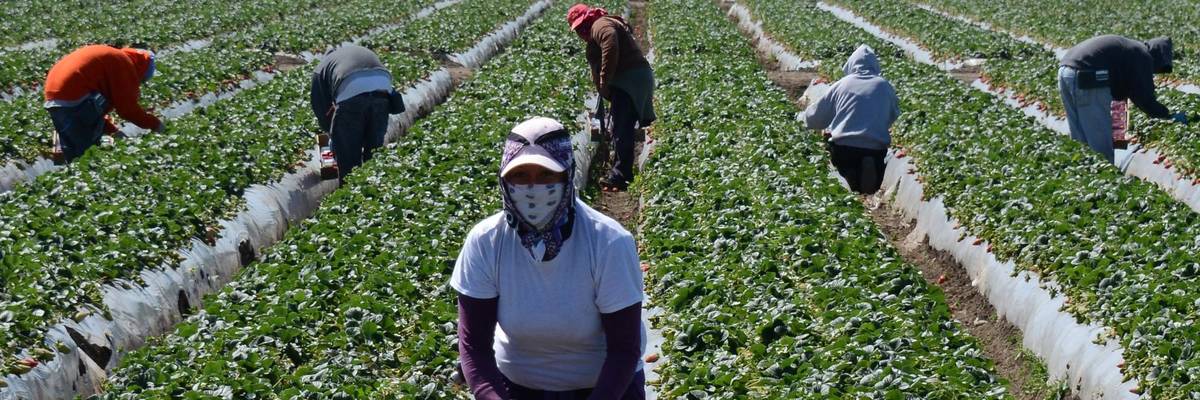
Undocumented workers are the backbone of our service and agricultural industries; it’s time to make sure they can access the benefits they pay into.
During the pandemic more than 46.2 million people relied on unemployment insurance to make ends meet. However, not everyone was able to access that support. Undocumented workers, who make up the backbone of industries like construction, care work, agriculture, and many other industries we all rely on, were left behind.
Working people who are undocumented are taxpayers and contribute significantly to state and local taxes, collectively paying an estimated $11.74 billion a year. And yet, they cannot access the benefits their labor contributes to. Unemployment insurance is a particularly poignant example because their employers pay into the state and federal unemployment insurance trust fund for them—and yet, those workers are left in the cold when they face the catastrophe of job loss, unable to access those funds.
Unemployment insurance in the U.S. was established thanks to the organizing of unions and workers, who demanded a safety net for all during the Great Depression. The importance of unemployment insurance was shown again during the Covid-19 pandemic, when unprecedented job loss affected 22.4 million of us—mainly lower income workers, immigrants, and the working class. Direct cash support in the form of stimulus checks and other pandemic supports like the expanded Child Tax Credit was the lifeline for working people and families, but excluded undocumented workers and their families.
Unemployment insurance is a cornerstone of our safety net, just as undocumented workers are the cornerstone of our food and agriculture system, of care work, and of many other industries we all rely on.
Some states stepped up to fill that gap. The largest support fund was New York’s Excluded Workers Fund, a $2.1 billion cash fund for workers who were excluded from unemployment insurance, including undocumented workers and freelancers. This victory was achieved thanks to the hard work and organizing of a broad coalition across labor and immigrant rights organizations. These checks helped families put food on the table, and also helped make sure local economies stayed stable during the pandemic. However, this relief was temporary.
While these successful support funds raised hope that we would see a more inclusive economy post-pandemic, most state efforts to make unemployment benefits permanent for all workers have stalled. Legislation to include undocumented workers in unemployment insurance in California passed the state legislature, but was vetoed by Gov. Gavin Newsom, who called it too expensive. Both Washington and New York’s legislatures have failed to advance bills that would include all workers in unemployment insurance.The one bright spot is Colorado, which last year established the first ever unemployment benefits program for undocumented workers.
The story of Dolores, an activist in Washington state with OneAmerica, an immigrant rights movement building organization, shows just how crucial it is that workers are able to access benefits in the case of job loss, regardless of citizenship status. Her husband, the primary breadwinner for their family, was laid off for six months when the Covid-19 pandemic began. If he had access to unemployment insurance, they wouldn’t have had to live through the fear and insecurity of deciding between paying their rent or feeding their family. Four years later they are still paying off their missed rent payments. Washington could be next to establish an unemployment insurance system for people like Dolores and her husband, using the funds their employer already pays in for them to the state unemployment insurance fund.
The 10.5 million undocumented workers in the U.S. work across all kinds of industries, but they are the backbone that makes sure agriculture, which is a $1.26 trillion economy—works. Farmers already have trouble finding enough workers to fill their labor needs; to harvest cherries in Washington, to pack tomatoes in California’s central valley, and to help raise cattle and pack chicken in Texas, Alabama, and Kentucky. As we look to the future, extreme weather events due to climate change will mean farmers will face difficult choices, food costs will rise, and it will be even more critical to make sure that the workforce that picks and plants our food has a safety net to rely on if they lose their job.
For survivors of sexual violence who are undocumented, the ability to access unemployment insurance would offer greater flexibility and economic security, which is the foundation of seeking and experiencing safety. Having access to cash benefits is one of the key ways that survivors are able to finally leave unsafe situations, providing freedom from harm for themselves and for their families.
Unemployment insurance is a cornerstone of our safety net, just as undocumented workers are the cornerstone of our food and agriculture system, of care work, and of many other industries we all rely on. Including them in unemployment insurance would provide safety and economic security for working people and their families, benefitting all of us.
The next time you sit down to a meal, I urge you to contact your local officials and let them know how important it is that every single working person in the U.S., especially the many undocumented working people who planted, harvested, and packed the food on your table—are able to access benefits in the case of job loss.
Dolores is a pseudonym used in this article to protect the individual’s identity.
Dear Common Dreams reader, It’s been nearly 30 years since I co-founded Common Dreams with my late wife, Lina Newhouser. We had the radical notion that journalism should serve the public good, not corporate profits. It was clear to us from the outset what it would take to build such a project. No paid advertisements. No corporate sponsors. No millionaire publisher telling us what to think or do. Many people said we wouldn't last a year, but we proved those doubters wrong. Together with a tremendous team of journalists and dedicated staff, we built an independent media outlet free from the constraints of profits and corporate control. Our mission has always been simple: To inform. To inspire. To ignite change for the common good. Building Common Dreams was not easy. Our survival was never guaranteed. When you take on the most powerful forces—Wall Street greed, fossil fuel industry destruction, Big Tech lobbyists, and uber-rich oligarchs who have spent billions upon billions rigging the economy and democracy in their favor—the only bulwark you have is supporters who believe in your work. But here’s the urgent message from me today. It's never been this bad out there. And it's never been this hard to keep us going. At the very moment Common Dreams is most needed, the threats we face are intensifying. We need your support now more than ever. We don't accept corporate advertising and never will. We don't have a paywall because we don't think people should be blocked from critical news based on their ability to pay. Everything we do is funded by the donations of readers like you. When everyone does the little they can afford, we are strong. But if that support retreats or dries up, so do we. Will you donate now to make sure Common Dreams not only survives but thrives? —Craig Brown, Co-founder |
During the pandemic more than 46.2 million people relied on unemployment insurance to make ends meet. However, not everyone was able to access that support. Undocumented workers, who make up the backbone of industries like construction, care work, agriculture, and many other industries we all rely on, were left behind.
Working people who are undocumented are taxpayers and contribute significantly to state and local taxes, collectively paying an estimated $11.74 billion a year. And yet, they cannot access the benefits their labor contributes to. Unemployment insurance is a particularly poignant example because their employers pay into the state and federal unemployment insurance trust fund for them—and yet, those workers are left in the cold when they face the catastrophe of job loss, unable to access those funds.
Unemployment insurance in the U.S. was established thanks to the organizing of unions and workers, who demanded a safety net for all during the Great Depression. The importance of unemployment insurance was shown again during the Covid-19 pandemic, when unprecedented job loss affected 22.4 million of us—mainly lower income workers, immigrants, and the working class. Direct cash support in the form of stimulus checks and other pandemic supports like the expanded Child Tax Credit was the lifeline for working people and families, but excluded undocumented workers and their families.
Unemployment insurance is a cornerstone of our safety net, just as undocumented workers are the cornerstone of our food and agriculture system, of care work, and of many other industries we all rely on.
Some states stepped up to fill that gap. The largest support fund was New York’s Excluded Workers Fund, a $2.1 billion cash fund for workers who were excluded from unemployment insurance, including undocumented workers and freelancers. This victory was achieved thanks to the hard work and organizing of a broad coalition across labor and immigrant rights organizations. These checks helped families put food on the table, and also helped make sure local economies stayed stable during the pandemic. However, this relief was temporary.
While these successful support funds raised hope that we would see a more inclusive economy post-pandemic, most state efforts to make unemployment benefits permanent for all workers have stalled. Legislation to include undocumented workers in unemployment insurance in California passed the state legislature, but was vetoed by Gov. Gavin Newsom, who called it too expensive. Both Washington and New York’s legislatures have failed to advance bills that would include all workers in unemployment insurance.The one bright spot is Colorado, which last year established the first ever unemployment benefits program for undocumented workers.
The story of Dolores, an activist in Washington state with OneAmerica, an immigrant rights movement building organization, shows just how crucial it is that workers are able to access benefits in the case of job loss, regardless of citizenship status. Her husband, the primary breadwinner for their family, was laid off for six months when the Covid-19 pandemic began. If he had access to unemployment insurance, they wouldn’t have had to live through the fear and insecurity of deciding between paying their rent or feeding their family. Four years later they are still paying off their missed rent payments. Washington could be next to establish an unemployment insurance system for people like Dolores and her husband, using the funds their employer already pays in for them to the state unemployment insurance fund.
The 10.5 million undocumented workers in the U.S. work across all kinds of industries, but they are the backbone that makes sure agriculture, which is a $1.26 trillion economy—works. Farmers already have trouble finding enough workers to fill their labor needs; to harvest cherries in Washington, to pack tomatoes in California’s central valley, and to help raise cattle and pack chicken in Texas, Alabama, and Kentucky. As we look to the future, extreme weather events due to climate change will mean farmers will face difficult choices, food costs will rise, and it will be even more critical to make sure that the workforce that picks and plants our food has a safety net to rely on if they lose their job.
For survivors of sexual violence who are undocumented, the ability to access unemployment insurance would offer greater flexibility and economic security, which is the foundation of seeking and experiencing safety. Having access to cash benefits is one of the key ways that survivors are able to finally leave unsafe situations, providing freedom from harm for themselves and for their families.
Unemployment insurance is a cornerstone of our safety net, just as undocumented workers are the cornerstone of our food and agriculture system, of care work, and of many other industries we all rely on. Including them in unemployment insurance would provide safety and economic security for working people and their families, benefitting all of us.
The next time you sit down to a meal, I urge you to contact your local officials and let them know how important it is that every single working person in the U.S., especially the many undocumented working people who planted, harvested, and packed the food on your table—are able to access benefits in the case of job loss.
Dolores is a pseudonym used in this article to protect the individual’s identity.
During the pandemic more than 46.2 million people relied on unemployment insurance to make ends meet. However, not everyone was able to access that support. Undocumented workers, who make up the backbone of industries like construction, care work, agriculture, and many other industries we all rely on, were left behind.
Working people who are undocumented are taxpayers and contribute significantly to state and local taxes, collectively paying an estimated $11.74 billion a year. And yet, they cannot access the benefits their labor contributes to. Unemployment insurance is a particularly poignant example because their employers pay into the state and federal unemployment insurance trust fund for them—and yet, those workers are left in the cold when they face the catastrophe of job loss, unable to access those funds.
Unemployment insurance in the U.S. was established thanks to the organizing of unions and workers, who demanded a safety net for all during the Great Depression. The importance of unemployment insurance was shown again during the Covid-19 pandemic, when unprecedented job loss affected 22.4 million of us—mainly lower income workers, immigrants, and the working class. Direct cash support in the form of stimulus checks and other pandemic supports like the expanded Child Tax Credit was the lifeline for working people and families, but excluded undocumented workers and their families.
Unemployment insurance is a cornerstone of our safety net, just as undocumented workers are the cornerstone of our food and agriculture system, of care work, and of many other industries we all rely on.
Some states stepped up to fill that gap. The largest support fund was New York’s Excluded Workers Fund, a $2.1 billion cash fund for workers who were excluded from unemployment insurance, including undocumented workers and freelancers. This victory was achieved thanks to the hard work and organizing of a broad coalition across labor and immigrant rights organizations. These checks helped families put food on the table, and also helped make sure local economies stayed stable during the pandemic. However, this relief was temporary.
While these successful support funds raised hope that we would see a more inclusive economy post-pandemic, most state efforts to make unemployment benefits permanent for all workers have stalled. Legislation to include undocumented workers in unemployment insurance in California passed the state legislature, but was vetoed by Gov. Gavin Newsom, who called it too expensive. Both Washington and New York’s legislatures have failed to advance bills that would include all workers in unemployment insurance.The one bright spot is Colorado, which last year established the first ever unemployment benefits program for undocumented workers.
The story of Dolores, an activist in Washington state with OneAmerica, an immigrant rights movement building organization, shows just how crucial it is that workers are able to access benefits in the case of job loss, regardless of citizenship status. Her husband, the primary breadwinner for their family, was laid off for six months when the Covid-19 pandemic began. If he had access to unemployment insurance, they wouldn’t have had to live through the fear and insecurity of deciding between paying their rent or feeding their family. Four years later they are still paying off their missed rent payments. Washington could be next to establish an unemployment insurance system for people like Dolores and her husband, using the funds their employer already pays in for them to the state unemployment insurance fund.
The 10.5 million undocumented workers in the U.S. work across all kinds of industries, but they are the backbone that makes sure agriculture, which is a $1.26 trillion economy—works. Farmers already have trouble finding enough workers to fill their labor needs; to harvest cherries in Washington, to pack tomatoes in California’s central valley, and to help raise cattle and pack chicken in Texas, Alabama, and Kentucky. As we look to the future, extreme weather events due to climate change will mean farmers will face difficult choices, food costs will rise, and it will be even more critical to make sure that the workforce that picks and plants our food has a safety net to rely on if they lose their job.
For survivors of sexual violence who are undocumented, the ability to access unemployment insurance would offer greater flexibility and economic security, which is the foundation of seeking and experiencing safety. Having access to cash benefits is one of the key ways that survivors are able to finally leave unsafe situations, providing freedom from harm for themselves and for their families.
Unemployment insurance is a cornerstone of our safety net, just as undocumented workers are the cornerstone of our food and agriculture system, of care work, and of many other industries we all rely on. Including them in unemployment insurance would provide safety and economic security for working people and their families, benefitting all of us.
The next time you sit down to a meal, I urge you to contact your local officials and let them know how important it is that every single working person in the U.S., especially the many undocumented working people who planted, harvested, and packed the food on your table—are able to access benefits in the case of job loss.
Dolores is a pseudonym used in this article to protect the individual’s identity.