
SUBSCRIBE TO OUR FREE NEWSLETTER
Daily news & progressive opinion—funded by the people, not the corporations—delivered straight to your inbox.
5
#000000
#FFFFFF
To donate by check, phone, or other method, see our More Ways to Give page.


Daily news & progressive opinion—funded by the people, not the corporations—delivered straight to your inbox.
"Violent crime has been dropping nationwide for three years. Now Trump comes in and claims that magically that's all his doing."
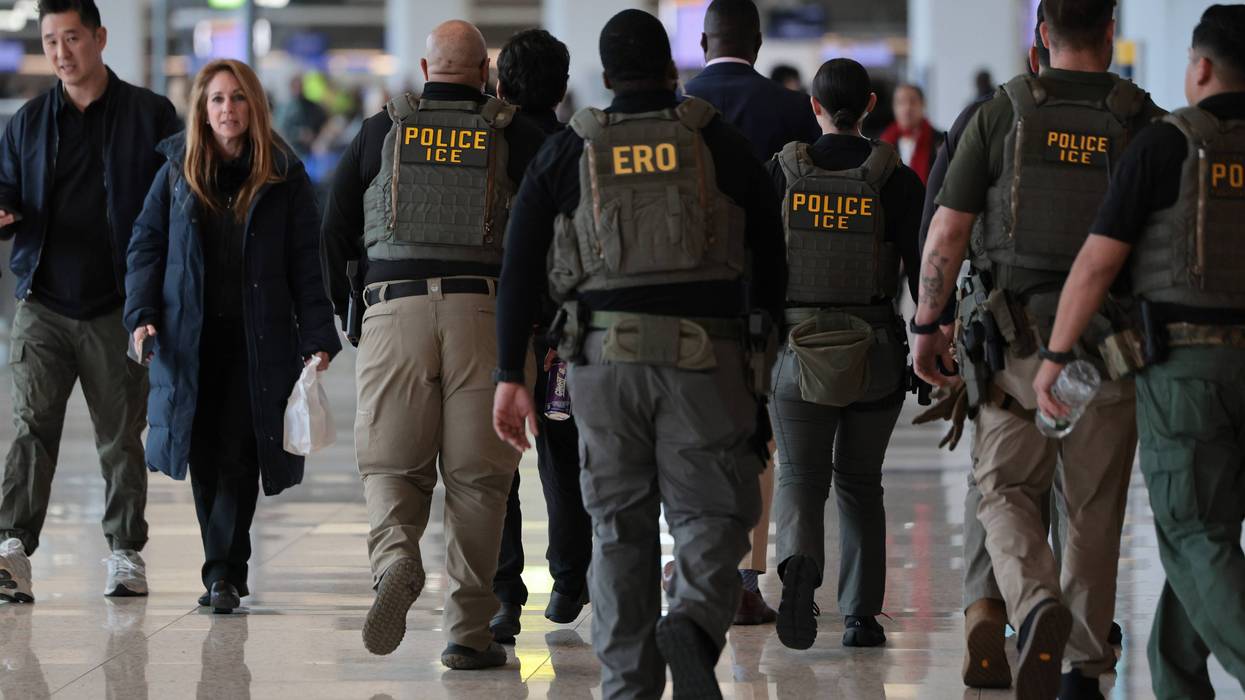
The US Department of Homeland Security is trying to give President Donald Trump's "mass deportation" crusade credit for a decline in violent crime, even though the trend began well before he took office.
Linking to a report from Axios detailing the decline in violent crime across US cities over the past year, the department’s account on X wrote that "under the leadership" of Trump and Secretary of Homeland Security Markwayne Mullin, "violent crime is PLUNGING in cities across the country.”
"By removing criminal illegal aliens from our nation, we’re making our communities SAFE again," it continued.
The report draws on quarterly data from 67 major US law enforcement agencies, collected by the Major Cities Chiefs Association, which is often cited as a source for previewing crime trends before the annual FBI reports are released in the fall.
The first-quarter data show significant declines in crime rates from the first quarter in March 2025 that "show up across every major region, suggesting a systemic, nationwide trend," according to Axios.
However, as the report acknowledges, this drop in crime is not a new phenomenon, but the continuation of "a nationwide decline that began after the pandemic-era crime spike... with drops beginning in the second half of the [Joe] Biden presidency and continuing under Trump."
According to FBI data, homicides fell by 22.7% from January-June 2023 to January-June 2024, while robbery decreased 13.6%, rape decreased 17.7%, and aggravated assault decreased 8.1%.
Aaron Reichlin-Melnick, a senior fellow at the American Immigration Council, called it "total BS" for DHS to give Trump credit for this past year's drops.
"Violent crime has been dropping nationwide for three years," he said. "Now Trump comes in and claims that magically that's all his doing."
Crediting Mullin in particular is especially odd, considering that he had held the role of secretary of homeland security for just over a week when the yearlong data collection period ended on March 31.
But at any rate, there's little reason to believe that immigration enforcement bears much responsibility for the continued crime decline.
A study of incarceration data by the libertarian Cato Institute published in March found that between 2010 and 2024, the incarceration rate for undocumented immigrants was 44% lower than that of native-born US citizens, while that for legal immigrants was 75% lower.
Notably, the data includes undocumented people detained by Immigration and Customs Enforcement (ICE) for immigration-related offenses, meaning that the rate of violent crimes committed by undocumented immigrants is likely even lower relative to citizens.
And while the Trump administration has claimed to target "the worst of the worst" immigrants for deportation by ICE, The Guardian found that 77% of those who entered deportation proceedings for the first time in 2025 had no criminal convictions.
Nearly half of those who did had only been convicted of traffic or immigration-related offenses. Just 9% had been convicted of assault, while only 1% were for sexual assault, and just 0.5% were for homicide.
Reichlin-Melnick said: "There is no evidence at all that deportations have reduced crime rates. None. Zero."
In fact, it's possible that the Trump administration's aggressive ramp-up of deportations has made it harder to fight violent crime.
In September, amid Trump's military occupations and surges of immigration agents into cities like Chicago, Cato received records showing that more than 25,000 federal officers—including more than 2,800 with the FBI, 2,100 with the Drug Enforcement Agency (DEA), and 1,700 with the Bureau of Alcohol, Tobacco, and Firearms (ATF) had been diverted to assist with immigration enforcement. This amounts to more than 1 in 5 FBI agents, nearly half of DEA agents, and over two-thirds of ATF agents.
The Marshall Project wrote about how this shift in priorities was taking shape:
In May, the FBI ordered its agents to scale back investigations of white-collar crime and focus on immigration instead. In Baltimore, FBI agents on the city’s domestic terrorism squad were investigating online child predators when they were ordered to work full-time on immigration enforcement, MSNBC reported. About 10 agents were reportedly reassigned from building cases against what the FBI described as a “nihilistic violent extremist” group in order to help the Department of Homeland Security arrest immigrants.
“It’s a good time to be an American-born criminal,” Jason Houser, formerly ICE’s chief of staff under Biden, told The Marshall Project at the time. “When the FBI, DEA, ATF are all doing checkpoints in [Chicago’s] Little Italy tomorrow, the human trafficking, the sex trafficking, the Jeffrey Epsteins, the fentanyl traffickers—they don’t quit.”
You could have been born here, gone to school here, worked here, served in this country’s military, followed the laws, learned the language and history, and yet still not be American enough to belong.
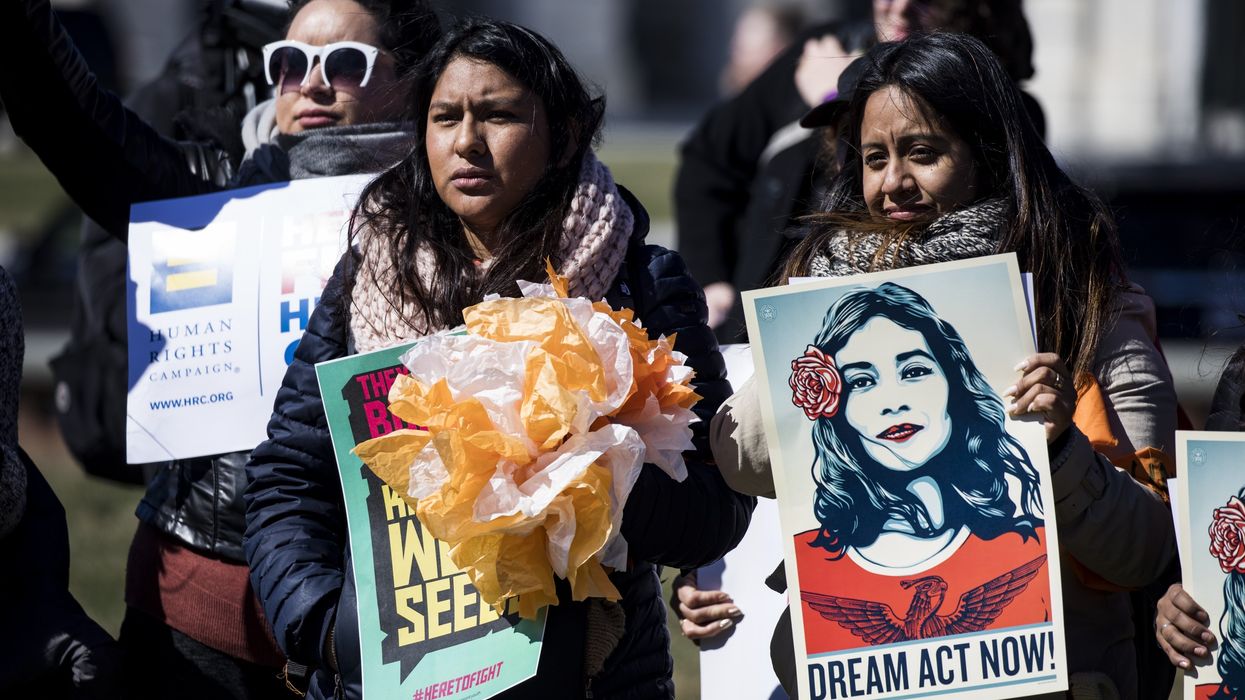
On December 4, Senators Dick Durbin and Lisa Murkowski reintroduced the bipartisan Dream Act to Congress—24 years after it was first introduced. If passed, it would create a pathway for citizenship for people who were brought to the US as children and meet certain requirements.
The Dream Act, whether now or in 2001, is a commonsense measure. Even if one believes that undocumented immigrants have committed a crime, their children are innocent. To meet the eligibility requirements, they must have proficiency in English; be knowledgeable of US history; not have committed any serious crimes; and have either served in the military, worked, or gained an education. These are not the “illegal alien gang members” that President Donald Trump insists must be deported.
Trump himself acknowledges this. In a 2024 interview with Kristen Welker, he said, “In many cases, they become successful. They have great jobs. In some cases, they have small businesses, some cases they might have large businesses. And we’re going to have to do something with them.” When Welker asked him to clarify whether he wants “them to be able to stay,” he replied, “I do.”
Unfortunately, that doesn't matter. The Dream Act will fail again. Trump’s Department of Homeland Security has already tried to strip 525,000 DACA recipients of their benefits this year. DHS Assistant Press Secretary Tricia McLaughlin has even urged recipients to self-deport, noting that they “are not automatically protected from deportations.”
What it means to be an American is not something Trump gets to decide.
In fact, Trump is one Supreme Court decision away from creating a new class of Dreamer.
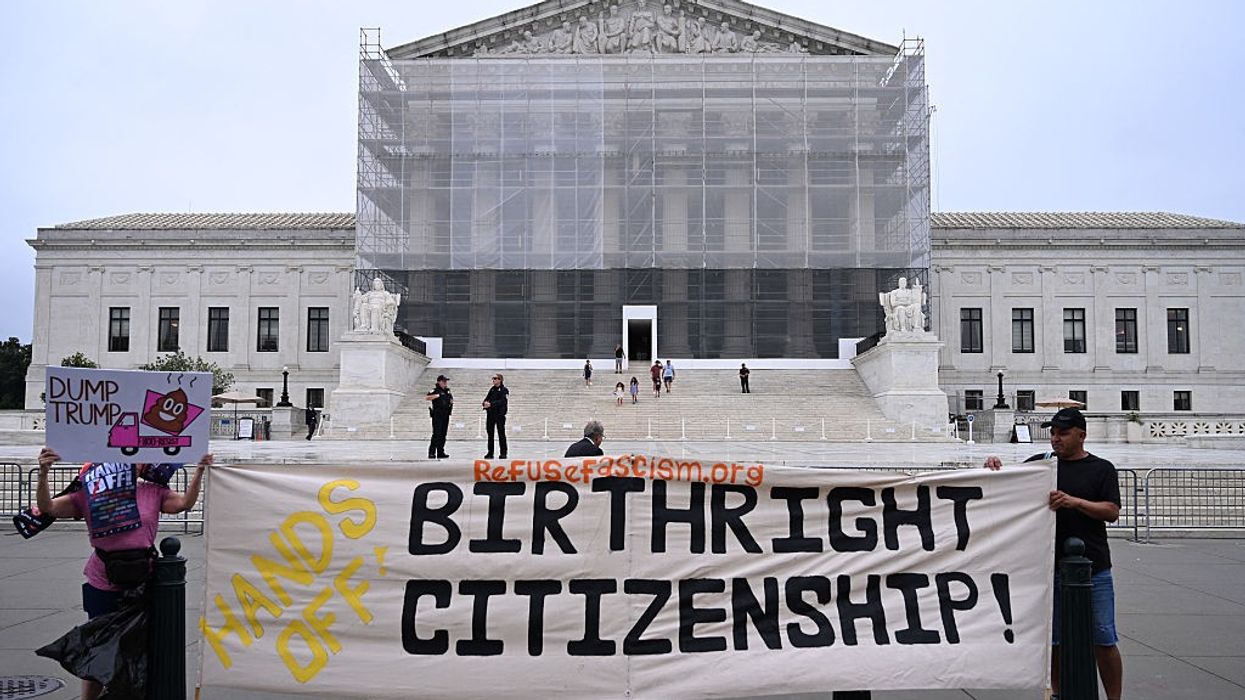
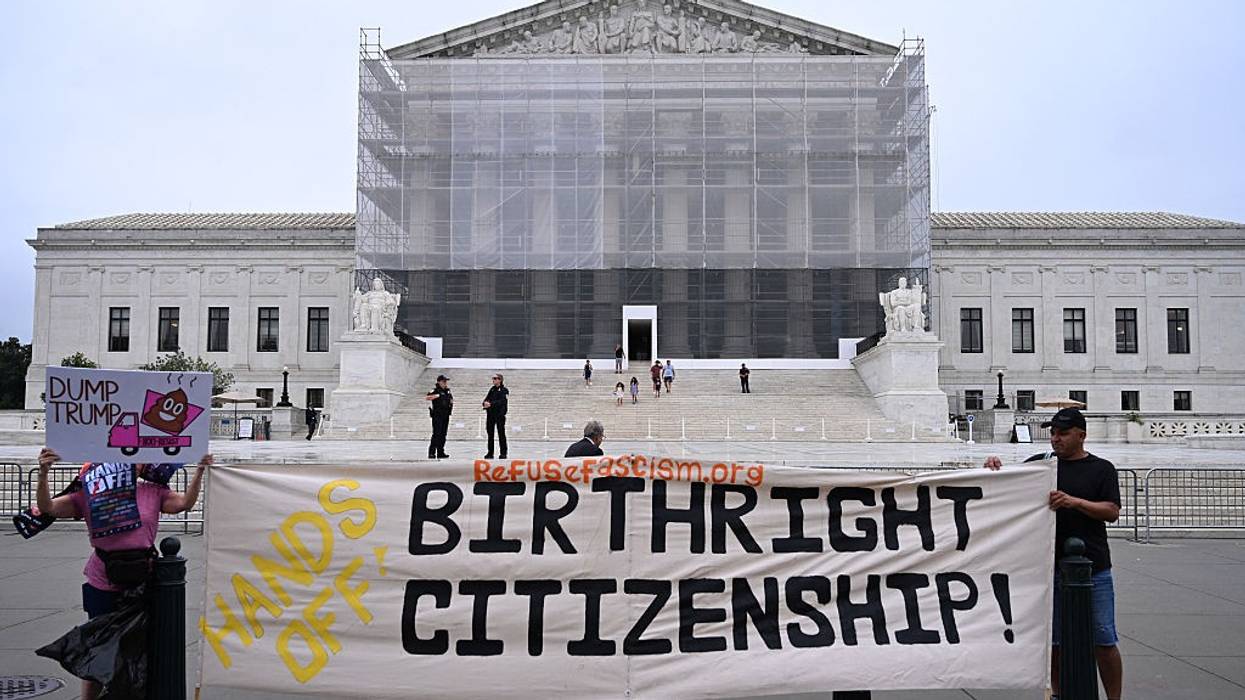
On December 5, the Supreme Court agreed to hear Trump’s challenge to birthright citizenship. His executive order would deny citizenship to children born in the US of undocumented immigrants or those on temporary visas.
Those children, despite being born here, will effectively become neo-Dreamers. Another group of people whom the US government would be failing to recognize and protect. The major difference between Dreamers and these neo-Dreamers would be the basis of their belonging—the reason why, despite everything, they are Americans.
The Dreamers are American by virtue of having lived and built a life here. Their identity, values, and communities are tied to the US. As Marie Gonzalez-Deel explains, “No matter what, I will always consider the United States of America my home. I love this country. Only in America would a person like me have the opportunity to tell my story to people like you. Many may argue that because I have a Costa Rican birth certificate, I am Costa Rican and should be sent back to that country. If I am sent back there, sure I'd be with my Mom and Dad, but I'd be torn away from loved ones that are my family here, and from everything I have known since I was a child.” The Dreamers are American by action and deed.
For the neo-Dreamers, the justification would rest largely on the legality and constitutionality of their birthright claim. The neo-Dreamers would be American by right.
The Dreamers and neo-Dreamers represent two different ways of conceptualizing what it means to be an American. Yet, for the Trump administration, neither is sufficient. You could have been born here, gone to school here, worked here, served in this country’s military, followed the laws, learned the language and history, and yet still not be an American. But then, who is?
Trump claims that he’s “America First.” But who exactly is he putting first? Whether it's defunding the Supplemental Nutrition Assistance Program, letting Obamacare subsidies expire, limiting states’ ability to regulate artificial intelligence, conducting military-style raids in American cities, rolling back Environmental Protection Agency air quality protections, recommending controversial vaccine schedules, imposing tariffs that raise prices for everyone, eliminating the SAVE student loan repayment plan, or dismantling the Consumer Financial Protection Bureau, his policies overwhelmingly harm US citizens and immigrants alike.
In Trump’s America, only the Trump family and the ultra wealthy benefit. So perhaps instead of focusing on him, we should start thinking about what we, as Americans, think about who we are and what we represent. I’ll start: To me, Americans have contributed to the US and allowed the US to shape their lives and sense of self. By contributing, I don’t simply mean in the economic sense. Cultural and interpersonal contributions are just as if not more significant. We are more than laborers. The value we add to our communities cannot be reduced to GDP or market value.
By shaping their lives and sense of self, I don’t simply mean assimilation or acculturation. Being with others is always a two-way street. Each of us enriches the lives of others, and our lives are enriched in turn. We grow together.
A community, at its core, is a collective achievement. Citizens and immigrants, in many diverse ways, work together to maintain and nourish that achievement. We build together. Whatever problems we face, we solve them together. And yes, sometimes, we stumble and lose our way together. Progress is not a straight line. But we must never lose sight of who we are and what we represent.
What it means to be an American is not something Trump gets to decide. It’s our country, we decide.
If the Supreme Court rules in his favor, it could pave the way for any president (or wannabe-monarch) to redefine citizenship at their discretion.
The Supreme Court has agreed to hear a lawsuit regarding the constitutionality of President Donald Trump’s executive order to restrict the right to birthright citizenship. If the Supreme Court rules in Trump’s favor, then children born in the US would be denied citizenship if their parents are undocumented or residing in the country under temporary legal status.
Let’s not mince words here: Trump’s executive order is cruel and xenophobic. Children born of undocumented immigrants or visa holders have committed no crimes. They are not responsible for the circumstances of their birth. There is also no legitimate legal basis. The 14th Amendment is clear: “All persons born or naturalized in the United States, and subject to the jurisdiction thereof, are citizens of the United States and of the State wherein they reside.”
None of these facts matter to Trump. His administration would readily tear families apart and see children born into a second-class status simply because their births were not to his liking.
This is only the beginning of the cruelty that his birthright ban would unleash. If the Supreme Court rules in his favor, it would pave the way for any president (or wannabe monarch) to redefine citizenship at their discretion. After all, if simply being born in the US is not enough to guarantee citizenship, then what is? Where do we draw the line?
Trump cannot be allowed to define who is a citizen.
Well, if you’re Trump, then it’s the color line. For the Trump administration, not all babies are created equal. Restricting birthright citizenship is their way of preventing “hundreds of thousands of unqualified people” from acquiring the “privilege of American citizenship.” It is about dissuading the wrong kinds of people from having the wrong kinds of babies.
Sound far-fetched? Well, consider this: Trump, the self-proclaimed “fertilization president” (gross!), has sought to expand access to in vitro fertilization (IVF). As Trump puts it, we want “beautiful babies in this country, we want you to have your beautiful, beautiful, perfect baby. We want those babies, and we need them.”
Mehmet Oz, the administrator for the Centers for Medicare and Medicaid Services, champions the future of “Trump babies.” Vice President JD Vance literally says he wants “more babies in the United States of America.” The Trump White House insists that they need “growing numbers of strong, traditional families that raise healthy children.”
But, if that’s true, then what is the purpose of Trump’s executive order? If they want more babies to be born in this country, then why push to deny babies their legitimate birthright? It’s because Trump is pro-baby so long as it’s the right kind of baby.
Beautiful, healthy, strong and perfect—those are the babies Trump wants. And those are the babies that, in his view, migrants do not have.
Trump has explicitly said that migrants have “bad genes” that cause them to commit crimes. That they are “not humans, they’re animals.” He has said that migrants from South America, Africa, and Asia are “poisoning the blood of our country”—a view that parallels Hitler’s own rhetoric about “blood poisoning” and race mixing. He calls Somalis “garbage” and says that “I don’t want them in our country, I’ll be honest with you… their country is no good for a reason.” He believes this about migrants, and he believes it extends to their children. This pseudoscientific eugenic drivel is at the core of his executive order.
That is the real danger of Trump’s birthright ban. As it stands, birthright citizenship provides a clear-cut metric. Aside from two niche exceptions, if you were born here, you are from here. There’s no loophole to exploit. There’s no definition to reevaluate and abuse. There’s no place for prejudice, discrimination, or bigoted understandings of what it means to be an American. There’s no ambiguity regarding who belongs. The simplicity of birthright is precisely its strength.
It’s also precisely why the Trump administration wants to undo it. Birthright citizenship is a strong barrier against the administration’s most fascist impulses to recreate “the meaning and value of American citizenship.” As he said on the campaign trail, “If I win, the American people will be the rulers of this country again. The United States is now an occupied country.” His current administration similarly claims that Europe faces “civilizational erasure” if it does not restrict migration and preserve its “Western identity.”
If Trump’s mission is, as he explicitly says, to liberate the US and protect Western values threatened by migration, then he won’t stop with the children of undocumented immigrants. Trump cannot be allowed to define who is a citizen. For the good of the nation and for future generations, we cannot let him succeed.