SUBSCRIBE TO OUR FREE NEWSLETTER
Daily news & progressive opinion—funded by the people, not the corporations—delivered straight to your inbox.
5
#000000
#FFFFFF
To donate by check, phone, or other method, see our More Ways to Give page.
Daily news & progressive opinion—funded by the people, not the corporations—delivered straight to your inbox.
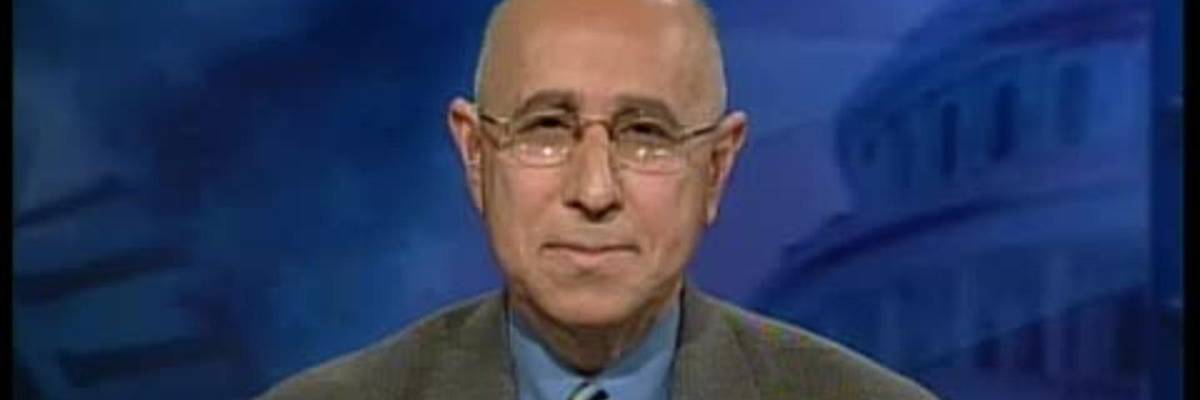
Said Arikat on Charlie Rose.
In yet another demonstration of anti-Palestinianism in the U.S. mainstream, there is no outcry over Twitter's arbitrary suspension of Said Arikat, longtime D.C. correspondent for Al-Quds newspaper.
It was big news when Elon Musk suspended the Twitter accounts of at least nine tech journalists last week (over alleged dox-ing) and then reinstated them this week after Twitter users demanded as much.
The only reason for Arikat’s suspension would seem to be that he is Palestinian and speaks up for Palestinians.
But in yet another demonstration of anti-Palestinianism in the U.S. mainstream, there has been scarcely any attention given to the arbitrary suspension of Said Arikat, a fixture at the State Department briefings as the longtime Washington correspondent for Al-Quds newspaper, a Palestinian publication.
Arikat said he woke up on December 3 to read a notice from Twitter that his account had been “permanently suspended after careful review”. No reason was given; and despite the assurance that he could appeal the suspension if he thought the decision was wrong, Twitter has not responded to numerous letters Arikat has sent the media giant.
The only reason for Arikat’s suspension would seem to be that he is Palestinian and speaks up for Palestinians. His case has elicited no concern in the press. Let alone efforts to discover the pretext for the action.
Al-Quds is clearly being targeted as a Palestinian source. Today there is news that Facebook has shut down the official page of the Al-Quds newspaper.
In recent days Said Arikat has been smeared in the Zionist press as “anti-Israel” because of his questions of U.S. policy at State Department briefings. A month ago, the Jerusalem Post attacked Arikat as a supposed propagandist and conceded that he has wide influence on social media.
Arikat’s last action on twitter was a retweet on December 2 of a tweet by Dana Ben-Shimon, the Palestinian affairs correspondent for a Zionist newspaper, Israel Hayom, about what Palestinians were describing on social media as the “Cold Blooded Execution” of an unarmed man, Ammar Mufleh, 23, in Huwara south of Nablus by Israeli forces during an attempted arrest. The killing has rightly drawn international outrage.
Arikat’s suspension is outrageous and unfair. He has retweeted news items thousands of times in recent years without incident. As anyone who has followed his questions at the State Department and his tweets and writings and appearances knows, the 74-year-old is a courtly and soft-spoken reporter (formerly the spokesperson for the United Nations in Iraq) with a point of view reflecting the interests of the Palestinian community, particularly Jerusalem.
At this website, we rely on Arikat to raise important human rights issues with the State Department. Otherwise, State would often face no scrutiny whatsoever for its unbreakable support for Israel. Like when Arikat stood up for Shireen Abu Akleh after her killing last May.
“As bad as Twitter is, I think it’s been positive for the Palestinian people,” Arikat says.
December 2, Arikat’s last day on Twitter, was unremarkable. As is customary, he retweeted a number of tweets he found newsworthy, including comments by Peter Beinart, Noura Erakat, Benzion Sanders of Breaking the Silence, and citations of Arikat’s own article that day (on the pillorying of UN special rapporteur Francesca Albanese over her former criticisms of the Israel lobby). He went to bed that night after retweeting the execution tweet by Dana Ben-Shimon.
Arikat also says that his DM’s were hacked in the last month, and some people received DMs purporting to be from him that were not.
As a dean of State Department reporters, who has been in that briefing room for more than 20 years, Arikat tells me that several mainstream reporters have reached out to him in sympathy, but none has actually done anything to publicize the outrage. Hey folks– let’s put our shoulders to the wheel, this is a no-brainer.
P.S. Arikat’s suspension came up at a State briefing on Dec. 16. Spokesperson Vedant Patel was critical in a nuanced manner of the tech journalists’ suspensions by Twitter. “It is certainly difficult to square how these removals are consistent with promoting free exchange. But again, social media companies make their own independent decisions on content moderation, and I’m just not going to speak to those actions.”
Arikat interjected, “By the way, they suspended me without explanation.”
Patel repeated the boilerplate: “Our support for free speech and freedom of the press is well documented.”
Dear Common Dreams reader, It’s been nearly 30 years since I co-founded Common Dreams with my late wife, Lina Newhouser. We had the radical notion that journalism should serve the public good, not corporate profits. It was clear to us from the outset what it would take to build such a project. No paid advertisements. No corporate sponsors. No millionaire publisher telling us what to think or do. Many people said we wouldn't last a year, but we proved those doubters wrong. Together with a tremendous team of journalists and dedicated staff, we built an independent media outlet free from the constraints of profits and corporate control. Our mission has always been simple: To inform. To inspire. To ignite change for the common good. Building Common Dreams was not easy. Our survival was never guaranteed. When you take on the most powerful forces—Wall Street greed, fossil fuel industry destruction, Big Tech lobbyists, and uber-rich oligarchs who have spent billions upon billions rigging the economy and democracy in their favor—the only bulwark you have is supporters who believe in your work. But here’s the urgent message from me today. It's never been this bad out there. And it's never been this hard to keep us going. At the very moment Common Dreams is most needed, the threats we face are intensifying. We need your support now more than ever. We don't accept corporate advertising and never will. We don't have a paywall because we don't think people should be blocked from critical news based on their ability to pay. Everything we do is funded by the donations of readers like you. When everyone does the little they can afford, we are strong. But if that support retreats or dries up, so do we. Will you donate now to make sure Common Dreams not only survives but thrives? —Craig Brown, Co-founder |
It was big news when Elon Musk suspended the Twitter accounts of at least nine tech journalists last week (over alleged dox-ing) and then reinstated them this week after Twitter users demanded as much.
The only reason for Arikat’s suspension would seem to be that he is Palestinian and speaks up for Palestinians.
But in yet another demonstration of anti-Palestinianism in the U.S. mainstream, there has been scarcely any attention given to the arbitrary suspension of Said Arikat, a fixture at the State Department briefings as the longtime Washington correspondent for Al-Quds newspaper, a Palestinian publication.
Arikat said he woke up on December 3 to read a notice from Twitter that his account had been “permanently suspended after careful review”. No reason was given; and despite the assurance that he could appeal the suspension if he thought the decision was wrong, Twitter has not responded to numerous letters Arikat has sent the media giant.
The only reason for Arikat’s suspension would seem to be that he is Palestinian and speaks up for Palestinians. His case has elicited no concern in the press. Let alone efforts to discover the pretext for the action.
Al-Quds is clearly being targeted as a Palestinian source. Today there is news that Facebook has shut down the official page of the Al-Quds newspaper.
In recent days Said Arikat has been smeared in the Zionist press as “anti-Israel” because of his questions of U.S. policy at State Department briefings. A month ago, the Jerusalem Post attacked Arikat as a supposed propagandist and conceded that he has wide influence on social media.
Arikat’s last action on twitter was a retweet on December 2 of a tweet by Dana Ben-Shimon, the Palestinian affairs correspondent for a Zionist newspaper, Israel Hayom, about what Palestinians were describing on social media as the “Cold Blooded Execution” of an unarmed man, Ammar Mufleh, 23, in Huwara south of Nablus by Israeli forces during an attempted arrest. The killing has rightly drawn international outrage.
Arikat’s suspension is outrageous and unfair. He has retweeted news items thousands of times in recent years without incident. As anyone who has followed his questions at the State Department and his tweets and writings and appearances knows, the 74-year-old is a courtly and soft-spoken reporter (formerly the spokesperson for the United Nations in Iraq) with a point of view reflecting the interests of the Palestinian community, particularly Jerusalem.
At this website, we rely on Arikat to raise important human rights issues with the State Department. Otherwise, State would often face no scrutiny whatsoever for its unbreakable support for Israel. Like when Arikat stood up for Shireen Abu Akleh after her killing last May.
“As bad as Twitter is, I think it’s been positive for the Palestinian people,” Arikat says.
December 2, Arikat’s last day on Twitter, was unremarkable. As is customary, he retweeted a number of tweets he found newsworthy, including comments by Peter Beinart, Noura Erakat, Benzion Sanders of Breaking the Silence, and citations of Arikat’s own article that day (on the pillorying of UN special rapporteur Francesca Albanese over her former criticisms of the Israel lobby). He went to bed that night after retweeting the execution tweet by Dana Ben-Shimon.
Arikat also says that his DM’s were hacked in the last month, and some people received DMs purporting to be from him that were not.
As a dean of State Department reporters, who has been in that briefing room for more than 20 years, Arikat tells me that several mainstream reporters have reached out to him in sympathy, but none has actually done anything to publicize the outrage. Hey folks– let’s put our shoulders to the wheel, this is a no-brainer.
P.S. Arikat’s suspension came up at a State briefing on Dec. 16. Spokesperson Vedant Patel was critical in a nuanced manner of the tech journalists’ suspensions by Twitter. “It is certainly difficult to square how these removals are consistent with promoting free exchange. But again, social media companies make their own independent decisions on content moderation, and I’m just not going to speak to those actions.”
Arikat interjected, “By the way, they suspended me without explanation.”
Patel repeated the boilerplate: “Our support for free speech and freedom of the press is well documented.”
It was big news when Elon Musk suspended the Twitter accounts of at least nine tech journalists last week (over alleged dox-ing) and then reinstated them this week after Twitter users demanded as much.
The only reason for Arikat’s suspension would seem to be that he is Palestinian and speaks up for Palestinians.
But in yet another demonstration of anti-Palestinianism in the U.S. mainstream, there has been scarcely any attention given to the arbitrary suspension of Said Arikat, a fixture at the State Department briefings as the longtime Washington correspondent for Al-Quds newspaper, a Palestinian publication.
Arikat said he woke up on December 3 to read a notice from Twitter that his account had been “permanently suspended after careful review”. No reason was given; and despite the assurance that he could appeal the suspension if he thought the decision was wrong, Twitter has not responded to numerous letters Arikat has sent the media giant.
The only reason for Arikat’s suspension would seem to be that he is Palestinian and speaks up for Palestinians. His case has elicited no concern in the press. Let alone efforts to discover the pretext for the action.
Al-Quds is clearly being targeted as a Palestinian source. Today there is news that Facebook has shut down the official page of the Al-Quds newspaper.
In recent days Said Arikat has been smeared in the Zionist press as “anti-Israel” because of his questions of U.S. policy at State Department briefings. A month ago, the Jerusalem Post attacked Arikat as a supposed propagandist and conceded that he has wide influence on social media.
Arikat’s last action on twitter was a retweet on December 2 of a tweet by Dana Ben-Shimon, the Palestinian affairs correspondent for a Zionist newspaper, Israel Hayom, about what Palestinians were describing on social media as the “Cold Blooded Execution” of an unarmed man, Ammar Mufleh, 23, in Huwara south of Nablus by Israeli forces during an attempted arrest. The killing has rightly drawn international outrage.
Arikat’s suspension is outrageous and unfair. He has retweeted news items thousands of times in recent years without incident. As anyone who has followed his questions at the State Department and his tweets and writings and appearances knows, the 74-year-old is a courtly and soft-spoken reporter (formerly the spokesperson for the United Nations in Iraq) with a point of view reflecting the interests of the Palestinian community, particularly Jerusalem.
At this website, we rely on Arikat to raise important human rights issues with the State Department. Otherwise, State would often face no scrutiny whatsoever for its unbreakable support for Israel. Like when Arikat stood up for Shireen Abu Akleh after her killing last May.
“As bad as Twitter is, I think it’s been positive for the Palestinian people,” Arikat says.
December 2, Arikat’s last day on Twitter, was unremarkable. As is customary, he retweeted a number of tweets he found newsworthy, including comments by Peter Beinart, Noura Erakat, Benzion Sanders of Breaking the Silence, and citations of Arikat’s own article that day (on the pillorying of UN special rapporteur Francesca Albanese over her former criticisms of the Israel lobby). He went to bed that night after retweeting the execution tweet by Dana Ben-Shimon.
Arikat also says that his DM’s were hacked in the last month, and some people received DMs purporting to be from him that were not.
As a dean of State Department reporters, who has been in that briefing room for more than 20 years, Arikat tells me that several mainstream reporters have reached out to him in sympathy, but none has actually done anything to publicize the outrage. Hey folks– let’s put our shoulders to the wheel, this is a no-brainer.
P.S. Arikat’s suspension came up at a State briefing on Dec. 16. Spokesperson Vedant Patel was critical in a nuanced manner of the tech journalists’ suspensions by Twitter. “It is certainly difficult to square how these removals are consistent with promoting free exchange. But again, social media companies make their own independent decisions on content moderation, and I’m just not going to speak to those actions.”
Arikat interjected, “By the way, they suspended me without explanation.”
Patel repeated the boilerplate: “Our support for free speech and freedom of the press is well documented.”