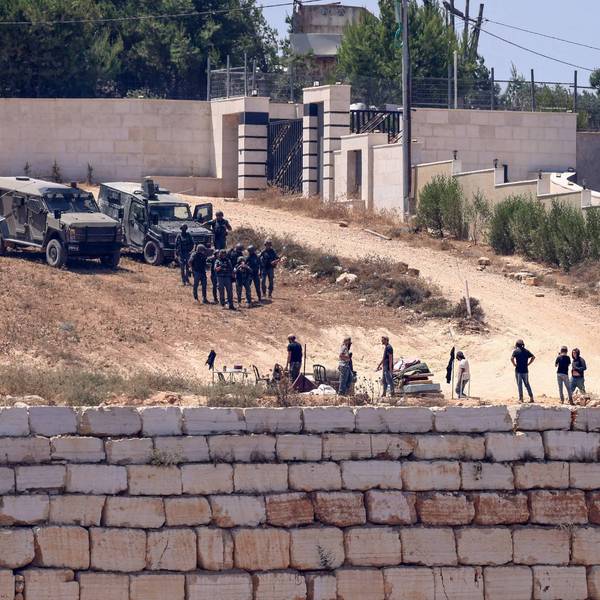
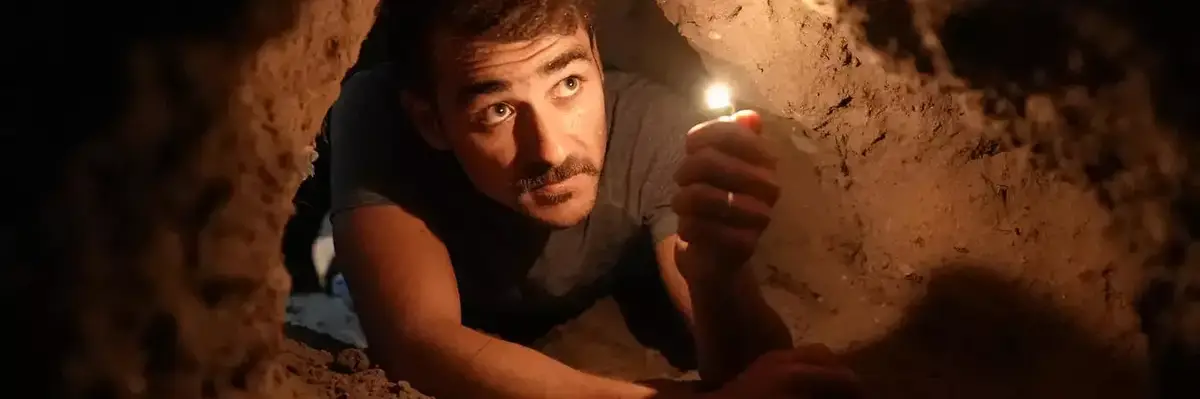
A reenactment from the film Palestinian Prison Break shows a prisoner trying to dig a tunnel out of a facility.
Prison Break Film Shows Palestinians Resilience in the Face of Israeli Injustice
These wasted lives should be written about, read about, and made into films. We need to ensure that their stories and their voices are not silenced.
Stories revolving around prison breaks, such as The Shawshank Redemption, The Great Escape, and Escape From Alcatraz, have long intrigued audiences with their adrenaline-fueled narratives and raw human emotions.
But few films have been able to capture Palestinian prisoners' sheer audacity, spotlighting their ongoing yearning for freedoms that have been taken away.
Palestinian Prison Break, a new documentary by the visionary filmmaker Mohammad Sawwaf, follows six attempts to escape from maximum-security Israeli prisons between 1987 and 2004, taking us on a journey that delves deep into the meaning of freedom for Palestinian prisoners. It explores the psyches of the imprisoned and imprisoner alike.
The prisoner's mind is like a whirlpool, turning and turning, trying to deal with one key dilemma: how to reclaim one's stolen freedom. As freed Palestinian prisoner Imad al-Din al-Saftawi, who was held in Israeli occupation jails for 18 years, said in the film, "To be imprisoned is the worst thing that could happen in your life."
The Israeli prison system has been using ever-more punitive measures to make its jails - which are located at remote, isolated sites —even more secure.
These include dogs trained to detect suspicious activity, surveillance equipment, and watchtowers. Given such tough measures, one might think escape sounds far-fetched. But do such strict conditions deter or break prisoners' wills? Unlikely.
Human spirit
At its heart, Palestinian Prison Break is a testament to the resilience of humans in their fight for freedom. The human spirit does not accept imprisonment. Likewise, Palestinian prisoners do not accept all the structural injustices that they endure.
The director weaves together personal stories, interviews, testimonials, and reenactments to create an authentic portrayal of their escape attempts.
Watching this film, I was immediately reminded of the brave Gilboa prison break, where six Palestinian political prisoners escaped in 2021, tunneling their way out of the prison with a spoon. It served as a stark reminder of the determination of those seeking freedom, even from seemingly impregnable confines.
The film explores the deprivation that the featured prisoners endured, which drove them on in their desire to escape. And these were not only material deprivations and restricted access to personal belongings and resources. Mohammad Abu Jamous, one of the ex-prisoners interviewed, perfectly summed it up: "I was deprived of my dad and mum, my family, my youth. My life was wasted in prison."
The film reminded me of these lines from a poem by Mahmoud Darwish, widely considered the national poet of Palestine:
My home has changed,
And when I eat
And the amount of tobacco has changed
And the color of my clothes, and my face, and my figure
And even the moon
This profound poem and the film both vividly capture the changes that suddenly occur in the lives of political prisoners, and the deprivation that they endure.
Remarkable luck
The six meticulously devised escape plans were diverse, creative, and used simple tools, the only ones accessible to the prisoners. One involved sawing through the steel bars of a window in the toilets with a smuggled hacksaw. Another saw prisoners cutting the metal bars of a prison gate during break time, taking advantage of temporary chaos in the facility due to ongoing construction work.
Other cases involved prisoners tunneling under a bed to the visiting room's toilet, while dressing as women so they could leave along with visiting families; or digging a tunnel with rudimentary tools, such as steel nails.
I was struck by how remarkable luck combined with the forces of nature helped prisoners navigate their way to freedom. Saftawi tells of how a dense fog suddenly descended on their escape day, blanketing the prison and momentarily distracting the guards.
"The moment I started climbing down [from a prison window to the ground], the guard dogs left at the same time," he said.
The escapees recognized all too well the risks they were taking; that they might be captured and their sentences lengthened, or that they could suffer additional punishments, such as restrictions on family visits. But the taste of freedom was worth it, and they would rather fight than surrender. They sacrificed much for their freedom.
In one case, Saftawi's hand was injured on a barbed-wire fence surrounding a prison facility in Gaza while he was escaping in 1987. He recalls: "That was the most painful moment. To be free, I would have dismembered my hand in the barbed wire."
Wasted lives
While incarcerated, the prisoners often found solace and support in one another during their relentless pursuit of freedom. If one prisoner hatched a plan, everyone would support it.
Those forced from their homes and families, locked up in hostile places, said they felt compelled to tell their stories.
"It is our duty to share these narratives in all media, not to entertain but to educate," Sawwaf told Middle East Eye.
At the film's end, the director highlights how the prisoners' wishes were reduced to only meeting their mothers, as both suffered the weight of longing and absence.
Tears fell down my cheeks as I watched a prisoner ask his mother not to die. His mother replied, "I am putting a sword by my hand, and if the angel of death comes, I will tell him not to take my soul before my son comes home."
I loved this film, and it's vital that more documentaries and films about Palestinian prisoners' experiences are made. This is the least we can do to honor their lives and struggles.
These wasted lives should be written about, read about, and made into films. We need to ensure that their stories and their voices are not silenced.
The views expressed in this article belong to the author and do not necessarily reflect the editorial policy of Middle East Eye.
An Urgent Message From Our Co-Founder
Dear Common Dreams reader, It’s been nearly 30 years since I co-founded Common Dreams with my late wife, Lina Newhouser. We had the radical notion that journalism should serve the public good, not corporate profits. It was clear to us from the outset what it would take to build such a project. No paid advertisements. No corporate sponsors. No millionaire publisher telling us what to think or do. Many people said we wouldn't last a year, but we proved those doubters wrong. Together with a tremendous team of journalists and dedicated staff, we built an independent media outlet free from the constraints of profits and corporate control. Our mission has always been simple: To inform. To inspire. To ignite change for the common good. Building Common Dreams was not easy. Our survival was never guaranteed. When you take on the most powerful forces—Wall Street greed, fossil fuel industry destruction, Big Tech lobbyists, and uber-rich oligarchs who have spent billions upon billions rigging the economy and democracy in their favor—the only bulwark you have is supporters who believe in your work. But here’s the urgent message from me today. It's never been this bad out there. And it's never been this hard to keep us going. At the very moment Common Dreams is most needed, the threats we face are intensifying. We need your support now more than ever. We don't accept corporate advertising and never will. We don't have a paywall because we don't think people should be blocked from critical news based on their ability to pay. Everything we do is funded by the donations of readers like you. When everyone does the little they can afford, we are strong. But if that support retreats or dries up, so do we. Will you donate now to make sure Common Dreams not only survives but thrives? —Craig Brown, Co-founder |
Stories revolving around prison breaks, such as The Shawshank Redemption, The Great Escape, and Escape From Alcatraz, have long intrigued audiences with their adrenaline-fueled narratives and raw human emotions.
But few films have been able to capture Palestinian prisoners' sheer audacity, spotlighting their ongoing yearning for freedoms that have been taken away.
Palestinian Prison Break, a new documentary by the visionary filmmaker Mohammad Sawwaf, follows six attempts to escape from maximum-security Israeli prisons between 1987 and 2004, taking us on a journey that delves deep into the meaning of freedom for Palestinian prisoners. It explores the psyches of the imprisoned and imprisoner alike.
The prisoner's mind is like a whirlpool, turning and turning, trying to deal with one key dilemma: how to reclaim one's stolen freedom. As freed Palestinian prisoner Imad al-Din al-Saftawi, who was held in Israeli occupation jails for 18 years, said in the film, "To be imprisoned is the worst thing that could happen in your life."
The Israeli prison system has been using ever-more punitive measures to make its jails - which are located at remote, isolated sites —even more secure.
These include dogs trained to detect suspicious activity, surveillance equipment, and watchtowers. Given such tough measures, one might think escape sounds far-fetched. But do such strict conditions deter or break prisoners' wills? Unlikely.
Human spirit
At its heart, Palestinian Prison Break is a testament to the resilience of humans in their fight for freedom. The human spirit does not accept imprisonment. Likewise, Palestinian prisoners do not accept all the structural injustices that they endure.
The director weaves together personal stories, interviews, testimonials, and reenactments to create an authentic portrayal of their escape attempts.
Watching this film, I was immediately reminded of the brave Gilboa prison break, where six Palestinian political prisoners escaped in 2021, tunneling their way out of the prison with a spoon. It served as a stark reminder of the determination of those seeking freedom, even from seemingly impregnable confines.
The film explores the deprivation that the featured prisoners endured, which drove them on in their desire to escape. And these were not only material deprivations and restricted access to personal belongings and resources. Mohammad Abu Jamous, one of the ex-prisoners interviewed, perfectly summed it up: "I was deprived of my dad and mum, my family, my youth. My life was wasted in prison."
The film reminded me of these lines from a poem by Mahmoud Darwish, widely considered the national poet of Palestine:
My home has changed,
And when I eat
And the amount of tobacco has changed
And the color of my clothes, and my face, and my figure
And even the moon
This profound poem and the film both vividly capture the changes that suddenly occur in the lives of political prisoners, and the deprivation that they endure.
Remarkable luck
The six meticulously devised escape plans were diverse, creative, and used simple tools, the only ones accessible to the prisoners. One involved sawing through the steel bars of a window in the toilets with a smuggled hacksaw. Another saw prisoners cutting the metal bars of a prison gate during break time, taking advantage of temporary chaos in the facility due to ongoing construction work.
Other cases involved prisoners tunneling under a bed to the visiting room's toilet, while dressing as women so they could leave along with visiting families; or digging a tunnel with rudimentary tools, such as steel nails.
I was struck by how remarkable luck combined with the forces of nature helped prisoners navigate their way to freedom. Saftawi tells of how a dense fog suddenly descended on their escape day, blanketing the prison and momentarily distracting the guards.
"The moment I started climbing down [from a prison window to the ground], the guard dogs left at the same time," he said.
The escapees recognized all too well the risks they were taking; that they might be captured and their sentences lengthened, or that they could suffer additional punishments, such as restrictions on family visits. But the taste of freedom was worth it, and they would rather fight than surrender. They sacrificed much for their freedom.
In one case, Saftawi's hand was injured on a barbed-wire fence surrounding a prison facility in Gaza while he was escaping in 1987. He recalls: "That was the most painful moment. To be free, I would have dismembered my hand in the barbed wire."
Wasted lives
While incarcerated, the prisoners often found solace and support in one another during their relentless pursuit of freedom. If one prisoner hatched a plan, everyone would support it.
Those forced from their homes and families, locked up in hostile places, said they felt compelled to tell their stories.
"It is our duty to share these narratives in all media, not to entertain but to educate," Sawwaf told Middle East Eye.
At the film's end, the director highlights how the prisoners' wishes were reduced to only meeting their mothers, as both suffered the weight of longing and absence.
Tears fell down my cheeks as I watched a prisoner ask his mother not to die. His mother replied, "I am putting a sword by my hand, and if the angel of death comes, I will tell him not to take my soul before my son comes home."
I loved this film, and it's vital that more documentaries and films about Palestinian prisoners' experiences are made. This is the least we can do to honor their lives and struggles.
These wasted lives should be written about, read about, and made into films. We need to ensure that their stories and their voices are not silenced.
The views expressed in this article belong to the author and do not necessarily reflect the editorial policy of Middle East Eye.
Stories revolving around prison breaks, such as The Shawshank Redemption, The Great Escape, and Escape From Alcatraz, have long intrigued audiences with their adrenaline-fueled narratives and raw human emotions.
But few films have been able to capture Palestinian prisoners' sheer audacity, spotlighting their ongoing yearning for freedoms that have been taken away.
Palestinian Prison Break, a new documentary by the visionary filmmaker Mohammad Sawwaf, follows six attempts to escape from maximum-security Israeli prisons between 1987 and 2004, taking us on a journey that delves deep into the meaning of freedom for Palestinian prisoners. It explores the psyches of the imprisoned and imprisoner alike.
The prisoner's mind is like a whirlpool, turning and turning, trying to deal with one key dilemma: how to reclaim one's stolen freedom. As freed Palestinian prisoner Imad al-Din al-Saftawi, who was held in Israeli occupation jails for 18 years, said in the film, "To be imprisoned is the worst thing that could happen in your life."
The Israeli prison system has been using ever-more punitive measures to make its jails - which are located at remote, isolated sites —even more secure.
These include dogs trained to detect suspicious activity, surveillance equipment, and watchtowers. Given such tough measures, one might think escape sounds far-fetched. But do such strict conditions deter or break prisoners' wills? Unlikely.
Human spirit
At its heart, Palestinian Prison Break is a testament to the resilience of humans in their fight for freedom. The human spirit does not accept imprisonment. Likewise, Palestinian prisoners do not accept all the structural injustices that they endure.
The director weaves together personal stories, interviews, testimonials, and reenactments to create an authentic portrayal of their escape attempts.
Watching this film, I was immediately reminded of the brave Gilboa prison break, where six Palestinian political prisoners escaped in 2021, tunneling their way out of the prison with a spoon. It served as a stark reminder of the determination of those seeking freedom, even from seemingly impregnable confines.
The film explores the deprivation that the featured prisoners endured, which drove them on in their desire to escape. And these were not only material deprivations and restricted access to personal belongings and resources. Mohammad Abu Jamous, one of the ex-prisoners interviewed, perfectly summed it up: "I was deprived of my dad and mum, my family, my youth. My life was wasted in prison."
The film reminded me of these lines from a poem by Mahmoud Darwish, widely considered the national poet of Palestine:
My home has changed,
And when I eat
And the amount of tobacco has changed
And the color of my clothes, and my face, and my figure
And even the moon
This profound poem and the film both vividly capture the changes that suddenly occur in the lives of political prisoners, and the deprivation that they endure.
Remarkable luck
The six meticulously devised escape plans were diverse, creative, and used simple tools, the only ones accessible to the prisoners. One involved sawing through the steel bars of a window in the toilets with a smuggled hacksaw. Another saw prisoners cutting the metal bars of a prison gate during break time, taking advantage of temporary chaos in the facility due to ongoing construction work.
Other cases involved prisoners tunneling under a bed to the visiting room's toilet, while dressing as women so they could leave along with visiting families; or digging a tunnel with rudimentary tools, such as steel nails.
I was struck by how remarkable luck combined with the forces of nature helped prisoners navigate their way to freedom. Saftawi tells of how a dense fog suddenly descended on their escape day, blanketing the prison and momentarily distracting the guards.
"The moment I started climbing down [from a prison window to the ground], the guard dogs left at the same time," he said.
The escapees recognized all too well the risks they were taking; that they might be captured and their sentences lengthened, or that they could suffer additional punishments, such as restrictions on family visits. But the taste of freedom was worth it, and they would rather fight than surrender. They sacrificed much for their freedom.
In one case, Saftawi's hand was injured on a barbed-wire fence surrounding a prison facility in Gaza while he was escaping in 1987. He recalls: "That was the most painful moment. To be free, I would have dismembered my hand in the barbed wire."
Wasted lives
While incarcerated, the prisoners often found solace and support in one another during their relentless pursuit of freedom. If one prisoner hatched a plan, everyone would support it.
Those forced from their homes and families, locked up in hostile places, said they felt compelled to tell their stories.
"It is our duty to share these narratives in all media, not to entertain but to educate," Sawwaf told Middle East Eye.
At the film's end, the director highlights how the prisoners' wishes were reduced to only meeting their mothers, as both suffered the weight of longing and absence.
Tears fell down my cheeks as I watched a prisoner ask his mother not to die. His mother replied, "I am putting a sword by my hand, and if the angel of death comes, I will tell him not to take my soul before my son comes home."
I loved this film, and it's vital that more documentaries and films about Palestinian prisoners' experiences are made. This is the least we can do to honor their lives and struggles.
These wasted lives should be written about, read about, and made into films. We need to ensure that their stories and their voices are not silenced.
The views expressed in this article belong to the author and do not necessarily reflect the editorial policy of Middle East Eye.