SUBSCRIBE TO OUR FREE NEWSLETTER
Daily news & progressive opinion—funded by the people, not the corporations—delivered straight to your inbox.
5
#000000
#FFFFFF
To donate by check, phone, or other method, see our More Ways to Give page.
Daily news & progressive opinion—funded by the people, not the corporations—delivered straight to your inbox.
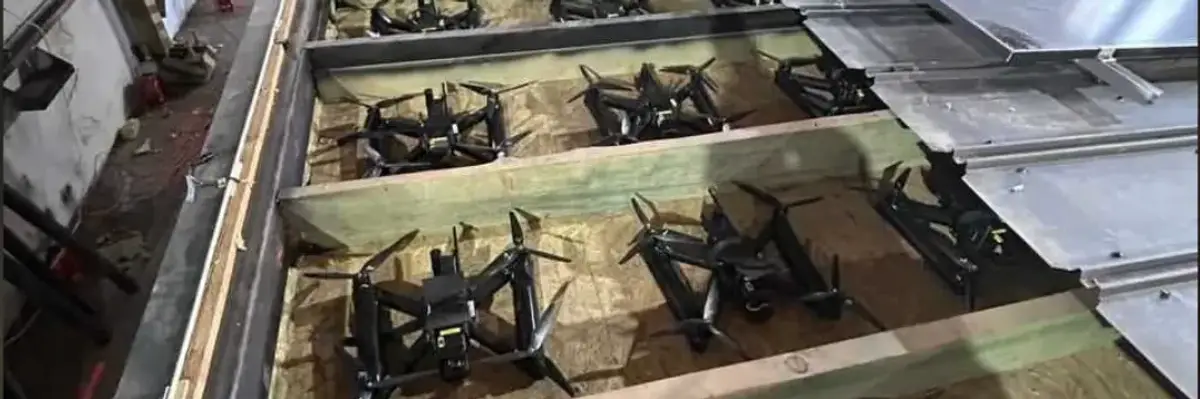
A picture purporting to show the drones used in the attack placed in the roofs of "mobile wooden cabins" which were then being transported by truck when they were launched.
At least some of the unmanned drones were reportedly concealed in the false roofs of small houses earlier shipped to Siberia and possibly elsewhere in the country.
Ukraine on Sunday launched a clandestine attack, code-named "Spider Web," on Russian military airfields on Sunday in what observers are calling one of the most sophisticated and "spectacular" operations of the war between the two nations, now in its fourth year since Russia's 2022 invasion.
While a fleet of Ukraine drones, which appeared to have been smuggled into Russia ahead of the surprise attack, reportedly took out dozens of aircraft deep inside Russian territory, a Russian bombing of a Ukraine base claimed the lives of a dozen soldiers.
- YouTubewww.youtube.com
According to the Guardian:
On the eve of peace talks, the drone attack on four separate airfields was part of a sharp ramping up of the three-year war, with Russia launching waves of drones at Ukraine, while Moscow said sabotage was to blame for two train derailments that left seven people dead.
Video from several military airfields across Russia showed destroyed aircraft and planes engulfed in flames, though the full extent of the damage remained unclear.
The military operations came ahead of the peace negotiations set to take place in Istanbul, Turkey on Monday.
Politico, citing an unnamed official within Ukraine's secret service known as the SBU, reports the operation was authorized and carried out at the highest levels:
The SBU official said that to prepare for the operation, called "Pavutyna" [or "spider web"), Ukrainian operatives delivered FPV drones to Russia territory along with mobile wooden housings.
"Later, in the Russian Federation, the drones were hidden under the roofs of housings, already placed on trucks. At the right moment, the roofs of the housings were opened remotely, and the drones flew to strike the Russian bombers," the official said.
The Ukraine-based Kyiv Independent adds:
Unconfirmed videos posted on social media show FPV drones being launched from trucks parked near the airfields.
Irkutsk Oblast Governor Igor Kobzev later confirmed "a drone attack on a military unit in the village of Sredny" and said the "source" of the drones was a "truck."
Murmansk Governor Andrey Chibis later confirmed that "enemy drones have attacked the territory of the Murmansk region" but gave no further details.
"According to witnesses on the ground and local officials, these drones were launched from sites near the airbases," said Al Jazeera's Dorsa Jabbari, reporting from Moscow. "That means this was an elaborate operation, most likely by the Ukrainians, that involved a number of people inside Russia."
If the extent of the damage is confirmed, the Guardian noted in its reporting, "the attacks in Siberia would mark Ukraine's most damaging drone strike of the war to date, amid an escalation in cross-border incursions before planned peace talks in Istanbul on Monday. Among the aircraft reportedly hit were Tu-95 and Tu-22 strategic bombers, which Russia uses to fire long-range missiles at Ukrainian cities."
Dear Common Dreams reader, It’s been nearly 30 years since I co-founded Common Dreams with my late wife, Lina Newhouser. We had the radical notion that journalism should serve the public good, not corporate profits. It was clear to us from the outset what it would take to build such a project. No paid advertisements. No corporate sponsors. No millionaire publisher telling us what to think or do. Many people said we wouldn't last a year, but we proved those doubters wrong. Together with a tremendous team of journalists and dedicated staff, we built an independent media outlet free from the constraints of profits and corporate control. Our mission has always been simple: To inform. To inspire. To ignite change for the common good. Building Common Dreams was not easy. Our survival was never guaranteed. When you take on the most powerful forces—Wall Street greed, fossil fuel industry destruction, Big Tech lobbyists, and uber-rich oligarchs who have spent billions upon billions rigging the economy and democracy in their favor—the only bulwark you have is supporters who believe in your work. But here’s the urgent message from me today. It's never been this bad out there. And it's never been this hard to keep us going. At the very moment Common Dreams is most needed, the threats we face are intensifying. We need your support now more than ever. We don't accept corporate advertising and never will. We don't have a paywall because we don't think people should be blocked from critical news based on their ability to pay. Everything we do is funded by the donations of readers like you. When everyone does the little they can afford, we are strong. But if that support retreats or dries up, so do we. Will you donate now to make sure Common Dreams not only survives but thrives? —Craig Brown, Co-founder |
Ukraine on Sunday launched a clandestine attack, code-named "Spider Web," on Russian military airfields on Sunday in what observers are calling one of the most sophisticated and "spectacular" operations of the war between the two nations, now in its fourth year since Russia's 2022 invasion.
While a fleet of Ukraine drones, which appeared to have been smuggled into Russia ahead of the surprise attack, reportedly took out dozens of aircraft deep inside Russian territory, a Russian bombing of a Ukraine base claimed the lives of a dozen soldiers.
- YouTubewww.youtube.com
According to the Guardian:
On the eve of peace talks, the drone attack on four separate airfields was part of a sharp ramping up of the three-year war, with Russia launching waves of drones at Ukraine, while Moscow said sabotage was to blame for two train derailments that left seven people dead.
Video from several military airfields across Russia showed destroyed aircraft and planes engulfed in flames, though the full extent of the damage remained unclear.
The military operations came ahead of the peace negotiations set to take place in Istanbul, Turkey on Monday.
Politico, citing an unnamed official within Ukraine's secret service known as the SBU, reports the operation was authorized and carried out at the highest levels:
The SBU official said that to prepare for the operation, called "Pavutyna" [or "spider web"), Ukrainian operatives delivered FPV drones to Russia territory along with mobile wooden housings.
"Later, in the Russian Federation, the drones were hidden under the roofs of housings, already placed on trucks. At the right moment, the roofs of the housings were opened remotely, and the drones flew to strike the Russian bombers," the official said.
The Ukraine-based Kyiv Independent adds:
Unconfirmed videos posted on social media show FPV drones being launched from trucks parked near the airfields.
Irkutsk Oblast Governor Igor Kobzev later confirmed "a drone attack on a military unit in the village of Sredny" and said the "source" of the drones was a "truck."
Murmansk Governor Andrey Chibis later confirmed that "enemy drones have attacked the territory of the Murmansk region" but gave no further details.
"According to witnesses on the ground and local officials, these drones were launched from sites near the airbases," said Al Jazeera's Dorsa Jabbari, reporting from Moscow. "That means this was an elaborate operation, most likely by the Ukrainians, that involved a number of people inside Russia."
If the extent of the damage is confirmed, the Guardian noted in its reporting, "the attacks in Siberia would mark Ukraine's most damaging drone strike of the war to date, amid an escalation in cross-border incursions before planned peace talks in Istanbul on Monday. Among the aircraft reportedly hit were Tu-95 and Tu-22 strategic bombers, which Russia uses to fire long-range missiles at Ukrainian cities."
Ukraine on Sunday launched a clandestine attack, code-named "Spider Web," on Russian military airfields on Sunday in what observers are calling one of the most sophisticated and "spectacular" operations of the war between the two nations, now in its fourth year since Russia's 2022 invasion.
While a fleet of Ukraine drones, which appeared to have been smuggled into Russia ahead of the surprise attack, reportedly took out dozens of aircraft deep inside Russian territory, a Russian bombing of a Ukraine base claimed the lives of a dozen soldiers.
- YouTubewww.youtube.com
According to the Guardian:
On the eve of peace talks, the drone attack on four separate airfields was part of a sharp ramping up of the three-year war, with Russia launching waves of drones at Ukraine, while Moscow said sabotage was to blame for two train derailments that left seven people dead.
Video from several military airfields across Russia showed destroyed aircraft and planes engulfed in flames, though the full extent of the damage remained unclear.
The military operations came ahead of the peace negotiations set to take place in Istanbul, Turkey on Monday.
Politico, citing an unnamed official within Ukraine's secret service known as the SBU, reports the operation was authorized and carried out at the highest levels:
The SBU official said that to prepare for the operation, called "Pavutyna" [or "spider web"), Ukrainian operatives delivered FPV drones to Russia territory along with mobile wooden housings.
"Later, in the Russian Federation, the drones were hidden under the roofs of housings, already placed on trucks. At the right moment, the roofs of the housings were opened remotely, and the drones flew to strike the Russian bombers," the official said.
The Ukraine-based Kyiv Independent adds:
Unconfirmed videos posted on social media show FPV drones being launched from trucks parked near the airfields.
Irkutsk Oblast Governor Igor Kobzev later confirmed "a drone attack on a military unit in the village of Sredny" and said the "source" of the drones was a "truck."
Murmansk Governor Andrey Chibis later confirmed that "enemy drones have attacked the territory of the Murmansk region" but gave no further details.
"According to witnesses on the ground and local officials, these drones were launched from sites near the airbases," said Al Jazeera's Dorsa Jabbari, reporting from Moscow. "That means this was an elaborate operation, most likely by the Ukrainians, that involved a number of people inside Russia."
If the extent of the damage is confirmed, the Guardian noted in its reporting, "the attacks in Siberia would mark Ukraine's most damaging drone strike of the war to date, amid an escalation in cross-border incursions before planned peace talks in Istanbul on Monday. Among the aircraft reportedly hit were Tu-95 and Tu-22 strategic bombers, which Russia uses to fire long-range missiles at Ukrainian cities."