

SUBSCRIBE TO OUR FREE NEWSLETTER
Daily news & progressive opinion—funded by the people, not the corporations—delivered straight to your inbox.
5
#000000
#FFFFFF
To donate by check, phone, or other method, see our More Ways to Give page.
Daily news & progressive opinion—funded by the people, not the corporations—delivered straight to your inbox.
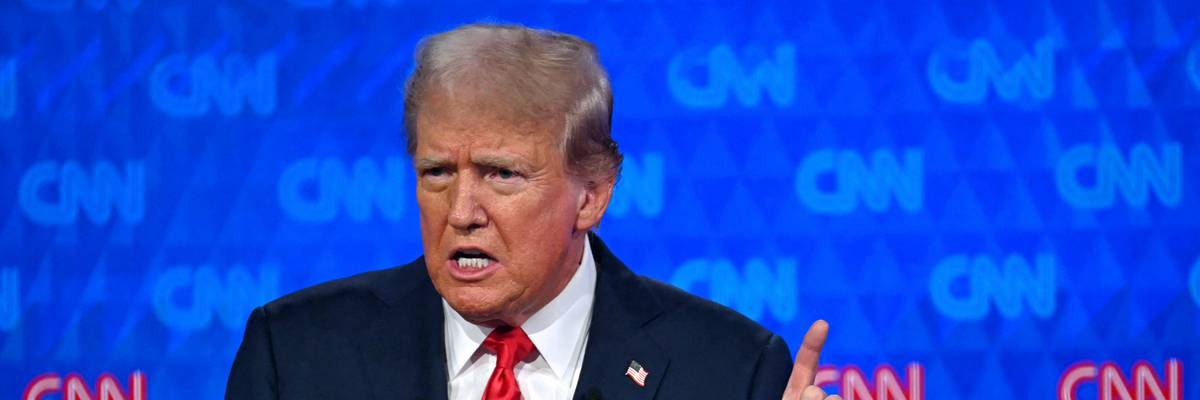
Presumptive Republican presidential nominee Donald Trump speaks during a debate with President Joe Biden in Atlanta, Georgia on June 27, 2024.
The U.S. Supreme Court's immunity decision has reportedly emboldened the presumptive GOP nominee to pursue his far-right agenda and authoritarian aims "without fear of punishment or restraint."
Presumptive Republican nominee Donald Trump—who has pledged to be a dictator on "day one" if elected to another four years in the White House—is reportedly preparing to exploit the U.S. Supreme Court's ruling Monday that current and former presidents are entitled to sweeping immunity from criminal prosecution.
Citing unnamed advisers to the former president, Axios reported Tuesday that if Trump is reelected in November, he "plans to immediately test the boundaries of presidential and governing power, knowing the restraints of Congress and the courts are dramatically looser than during his first term."
"They're screaming the quiet part, and yet Democrats are mostly focused on renominating a sundowning 81-year-old losing to him in key swing state polls," The Lever's David Sirota wrote in response to Axios' reporting, referring to President Joe Biden.
Facing mounting calls to drop his reelection campaign following his disastrous debate performance against Trump last week, Biden said in an address following the Supreme Court's decision in Trump v. United States that the ruling means "there are virtually no limits on what a president can do."
"I know I will respect the limits of the presidential power, as I have for three and a half years," said Biden. "But any president, including Donald Trump, will now be free to ignore the law."
Among the steps Trump—who celebrated the ruling—intends to take swiftly upon assuming office following a possible November victory, according to Axios, are setting up "vast camps" to "deport millions of people," moving to "fire potentially tens of thousands of civil servants" and replace them with "pre-vetted loyalists," and centralizing "power over the Justice Department," which the former president has repeatedly threatened to wield against his political opponents.
Trump has also pledged to gut environmental rules—which the Supreme Court also targeted in recent rulings—and ram through climate-wrecking drilling projects, moves backed by the powerful oil and gas industry that's helping finance his campaign.
"Thanks to Monday's Supreme Court ruling, Trump could pursue his plans without fear of punishment or restraint," Axios reported.
“It's coming, fast and furious, if he's elected.”
Being a dictator on Day One. Swapping civil servants for “pre-vetted loyalists.” Threatening to “target and even imprison critics.” Pardoning insurrectionists. Jacking up prices with new tariffs. And more: https://t.co/sEiORyvMOt
— Elizabeth Warren (@ewarren) July 2, 2024
While Trump made his support for such actions clear well before the U.S. Supreme Court's Monday ruling, the decision is likely to embolden the twice-impeached former president who, since leaving office, has been indicted by a federal grand jury on election-subversion charges and convicted of 34 felony counts of falsifying business records.
The high court's ideologically divided 6-3 decision in the immunity case has already impacted both legal proceedings, with Manhattan prosecutors agreeing Tuesday with the former president's request to delay his criminal sentencing on the 34 felony charges as the judge on the case examines whether the Supreme Court's ruling has any bearing on the conviction.
In the separate election-subversion case, the Supreme Court's ruling further pushes back a trial as the judge now has to determine which of the actions described in the indictment qualify as "official" duties that—according to the high court's right-wing supermajority—are entitled to "absolute immunity" from criminal prosecution.
"So, yes, all this will delay Trump's trial. In that sense, he gets what he craved," Michael Waldman, president and CEO of the Brennan Center for Justice, wrote Monday. "But the implications are far worse for the structure of American self-government."
"We read sonorous language in the majority opinion that 'the president is not above the law,'" Waldman added. "But just in time for Independence Day, the Supreme Court brings us closer to having a king again."
"The Framers of the Constitution, wary of reestablishing the monarchy they overthrew, carefully limited the chief executive's powers. And six justices just crowned him king."
Liberal Justice Sonia Sotomayor wrote in her dissent against Monday's decision that the Supreme Court's majority has effectively endorsed assassinations of political rivals, orchestration of a military coup to remain in power, and the acceptance of bribes in exchange for pardons as legitimate and unprosecutable uses of presidential authority.
"The relationship between the president and the people he serves has shifted irrevocably," Sotomayor wrote. "In every use of official power, the president is now a king above the law."
Slate legal journalist Mark Joseph Stern echoed Sotomayor, writing that "it is unclear, after Monday's decision, what constitutional checks remain to stop any president from assuming dangerous and monarchical powers that are anathema to representative government."
"The immediate impact of the court's sweeping decision will be devastating enough, allowing Donald Trump to evade accountability for the most destructive and criminal efforts he took to overturn the 2020 election. But the long-term impact is even more harrowing," Stern wrote. "All future presidents will enter office with the knowledge that they are protected from prosecution for even the most appalling and dangerous abuses of power so long as they insist they were seeking to carry out their duties, as they understood them."
"The Framers of the Constitution, wary of reestablishing the monarchy they overthrew, carefully limited the chief executive's powers," he added. "And six justices just crowned him king."
Dear Common Dreams reader, It’s been nearly 30 years since I co-founded Common Dreams with my late wife, Lina Newhouser. We had the radical notion that journalism should serve the public good, not corporate profits. It was clear to us from the outset what it would take to build such a project. No paid advertisements. No corporate sponsors. No millionaire publisher telling us what to think or do. Many people said we wouldn't last a year, but we proved those doubters wrong. Together with a tremendous team of journalists and dedicated staff, we built an independent media outlet free from the constraints of profits and corporate control. Our mission has always been simple: To inform. To inspire. To ignite change for the common good. Building Common Dreams was not easy. Our survival was never guaranteed. When you take on the most powerful forces—Wall Street greed, fossil fuel industry destruction, Big Tech lobbyists, and uber-rich oligarchs who have spent billions upon billions rigging the economy and democracy in their favor—the only bulwark you have is supporters who believe in your work. But here’s the urgent message from me today. It's never been this bad out there. And it's never been this hard to keep us going. At the very moment Common Dreams is most needed, the threats we face are intensifying. We need your support now more than ever. We don't accept corporate advertising and never will. We don't have a paywall because we don't think people should be blocked from critical news based on their ability to pay. Everything we do is funded by the donations of readers like you. When everyone does the little they can afford, we are strong. But if that support retreats or dries up, so do we. Will you donate now to make sure Common Dreams not only survives but thrives? —Craig Brown, Co-founder |
Presumptive Republican nominee Donald Trump—who has pledged to be a dictator on "day one" if elected to another four years in the White House—is reportedly preparing to exploit the U.S. Supreme Court's ruling Monday that current and former presidents are entitled to sweeping immunity from criminal prosecution.
Citing unnamed advisers to the former president, Axios reported Tuesday that if Trump is reelected in November, he "plans to immediately test the boundaries of presidential and governing power, knowing the restraints of Congress and the courts are dramatically looser than during his first term."
"They're screaming the quiet part, and yet Democrats are mostly focused on renominating a sundowning 81-year-old losing to him in key swing state polls," The Lever's David Sirota wrote in response to Axios' reporting, referring to President Joe Biden.
Facing mounting calls to drop his reelection campaign following his disastrous debate performance against Trump last week, Biden said in an address following the Supreme Court's decision in Trump v. United States that the ruling means "there are virtually no limits on what a president can do."
"I know I will respect the limits of the presidential power, as I have for three and a half years," said Biden. "But any president, including Donald Trump, will now be free to ignore the law."
Among the steps Trump—who celebrated the ruling—intends to take swiftly upon assuming office following a possible November victory, according to Axios, are setting up "vast camps" to "deport millions of people," moving to "fire potentially tens of thousands of civil servants" and replace them with "pre-vetted loyalists," and centralizing "power over the Justice Department," which the former president has repeatedly threatened to wield against his political opponents.
Trump has also pledged to gut environmental rules—which the Supreme Court also targeted in recent rulings—and ram through climate-wrecking drilling projects, moves backed by the powerful oil and gas industry that's helping finance his campaign.
"Thanks to Monday's Supreme Court ruling, Trump could pursue his plans without fear of punishment or restraint," Axios reported.
“It's coming, fast and furious, if he's elected.”
Being a dictator on Day One. Swapping civil servants for “pre-vetted loyalists.” Threatening to “target and even imprison critics.” Pardoning insurrectionists. Jacking up prices with new tariffs. And more: https://t.co/sEiORyvMOt
— Elizabeth Warren (@ewarren) July 2, 2024
While Trump made his support for such actions clear well before the U.S. Supreme Court's Monday ruling, the decision is likely to embolden the twice-impeached former president who, since leaving office, has been indicted by a federal grand jury on election-subversion charges and convicted of 34 felony counts of falsifying business records.
The high court's ideologically divided 6-3 decision in the immunity case has already impacted both legal proceedings, with Manhattan prosecutors agreeing Tuesday with the former president's request to delay his criminal sentencing on the 34 felony charges as the judge on the case examines whether the Supreme Court's ruling has any bearing on the conviction.
In the separate election-subversion case, the Supreme Court's ruling further pushes back a trial as the judge now has to determine which of the actions described in the indictment qualify as "official" duties that—according to the high court's right-wing supermajority—are entitled to "absolute immunity" from criminal prosecution.
"So, yes, all this will delay Trump's trial. In that sense, he gets what he craved," Michael Waldman, president and CEO of the Brennan Center for Justice, wrote Monday. "But the implications are far worse for the structure of American self-government."
"We read sonorous language in the majority opinion that 'the president is not above the law,'" Waldman added. "But just in time for Independence Day, the Supreme Court brings us closer to having a king again."
"The Framers of the Constitution, wary of reestablishing the monarchy they overthrew, carefully limited the chief executive's powers. And six justices just crowned him king."
Liberal Justice Sonia Sotomayor wrote in her dissent against Monday's decision that the Supreme Court's majority has effectively endorsed assassinations of political rivals, orchestration of a military coup to remain in power, and the acceptance of bribes in exchange for pardons as legitimate and unprosecutable uses of presidential authority.
"The relationship between the president and the people he serves has shifted irrevocably," Sotomayor wrote. "In every use of official power, the president is now a king above the law."
Slate legal journalist Mark Joseph Stern echoed Sotomayor, writing that "it is unclear, after Monday's decision, what constitutional checks remain to stop any president from assuming dangerous and monarchical powers that are anathema to representative government."
"The immediate impact of the court's sweeping decision will be devastating enough, allowing Donald Trump to evade accountability for the most destructive and criminal efforts he took to overturn the 2020 election. But the long-term impact is even more harrowing," Stern wrote. "All future presidents will enter office with the knowledge that they are protected from prosecution for even the most appalling and dangerous abuses of power so long as they insist they were seeking to carry out their duties, as they understood them."
"The Framers of the Constitution, wary of reestablishing the monarchy they overthrew, carefully limited the chief executive's powers," he added. "And six justices just crowned him king."
Presumptive Republican nominee Donald Trump—who has pledged to be a dictator on "day one" if elected to another four years in the White House—is reportedly preparing to exploit the U.S. Supreme Court's ruling Monday that current and former presidents are entitled to sweeping immunity from criminal prosecution.
Citing unnamed advisers to the former president, Axios reported Tuesday that if Trump is reelected in November, he "plans to immediately test the boundaries of presidential and governing power, knowing the restraints of Congress and the courts are dramatically looser than during his first term."
"They're screaming the quiet part, and yet Democrats are mostly focused on renominating a sundowning 81-year-old losing to him in key swing state polls," The Lever's David Sirota wrote in response to Axios' reporting, referring to President Joe Biden.
Facing mounting calls to drop his reelection campaign following his disastrous debate performance against Trump last week, Biden said in an address following the Supreme Court's decision in Trump v. United States that the ruling means "there are virtually no limits on what a president can do."
"I know I will respect the limits of the presidential power, as I have for three and a half years," said Biden. "But any president, including Donald Trump, will now be free to ignore the law."
Among the steps Trump—who celebrated the ruling—intends to take swiftly upon assuming office following a possible November victory, according to Axios, are setting up "vast camps" to "deport millions of people," moving to "fire potentially tens of thousands of civil servants" and replace them with "pre-vetted loyalists," and centralizing "power over the Justice Department," which the former president has repeatedly threatened to wield against his political opponents.
Trump has also pledged to gut environmental rules—which the Supreme Court also targeted in recent rulings—and ram through climate-wrecking drilling projects, moves backed by the powerful oil and gas industry that's helping finance his campaign.
"Thanks to Monday's Supreme Court ruling, Trump could pursue his plans without fear of punishment or restraint," Axios reported.
“It's coming, fast and furious, if he's elected.”
Being a dictator on Day One. Swapping civil servants for “pre-vetted loyalists.” Threatening to “target and even imprison critics.” Pardoning insurrectionists. Jacking up prices with new tariffs. And more: https://t.co/sEiORyvMOt
— Elizabeth Warren (@ewarren) July 2, 2024
While Trump made his support for such actions clear well before the U.S. Supreme Court's Monday ruling, the decision is likely to embolden the twice-impeached former president who, since leaving office, has been indicted by a federal grand jury on election-subversion charges and convicted of 34 felony counts of falsifying business records.
The high court's ideologically divided 6-3 decision in the immunity case has already impacted both legal proceedings, with Manhattan prosecutors agreeing Tuesday with the former president's request to delay his criminal sentencing on the 34 felony charges as the judge on the case examines whether the Supreme Court's ruling has any bearing on the conviction.
In the separate election-subversion case, the Supreme Court's ruling further pushes back a trial as the judge now has to determine which of the actions described in the indictment qualify as "official" duties that—according to the high court's right-wing supermajority—are entitled to "absolute immunity" from criminal prosecution.
"So, yes, all this will delay Trump's trial. In that sense, he gets what he craved," Michael Waldman, president and CEO of the Brennan Center for Justice, wrote Monday. "But the implications are far worse for the structure of American self-government."
"We read sonorous language in the majority opinion that 'the president is not above the law,'" Waldman added. "But just in time for Independence Day, the Supreme Court brings us closer to having a king again."
"The Framers of the Constitution, wary of reestablishing the monarchy they overthrew, carefully limited the chief executive's powers. And six justices just crowned him king."
Liberal Justice Sonia Sotomayor wrote in her dissent against Monday's decision that the Supreme Court's majority has effectively endorsed assassinations of political rivals, orchestration of a military coup to remain in power, and the acceptance of bribes in exchange for pardons as legitimate and unprosecutable uses of presidential authority.
"The relationship between the president and the people he serves has shifted irrevocably," Sotomayor wrote. "In every use of official power, the president is now a king above the law."
Slate legal journalist Mark Joseph Stern echoed Sotomayor, writing that "it is unclear, after Monday's decision, what constitutional checks remain to stop any president from assuming dangerous and monarchical powers that are anathema to representative government."
"The immediate impact of the court's sweeping decision will be devastating enough, allowing Donald Trump to evade accountability for the most destructive and criminal efforts he took to overturn the 2020 election. But the long-term impact is even more harrowing," Stern wrote. "All future presidents will enter office with the knowledge that they are protected from prosecution for even the most appalling and dangerous abuses of power so long as they insist they were seeking to carry out their duties, as they understood them."
"The Framers of the Constitution, wary of reestablishing the monarchy they overthrew, carefully limited the chief executive's powers," he added. "And six justices just crowned him king."

