

SUBSCRIBE TO OUR FREE NEWSLETTER
Daily news & progressive opinion—funded by the people, not the corporations—delivered straight to your inbox.
5
#000000
#FFFFFF
To donate by check, phone, or other method, see our More Ways to Give page.
Daily news & progressive opinion—funded by the people, not the corporations—delivered straight to your inbox.
"Not having her around, especially during Christmas, will be very difficult," said sister Lina Abu Akleh. "There will be an empty seat around the table."
Relatives of Shireen Abu Akleh, the Palestinian-American Al Jazeera reporter shot dead by Israeli occupation forces in May, marked their first Christmas without their beloved family member Sunday by vowing to "make sure her legacy continues to be remembered."
Lina Abu Akleh, Shireen's sister, told Al Jazeera that December was always a "happy month," a time when the busy journalist usually took a break from work to spend time with family.
"I still feel like I'm in this nightmare. And it's just not ending."
"Not having her around, especially during Christmas, will be very difficult… There will be an empty seat around the table," Shireen's 27-year-old sibling said.
"I still feel like I'm in this nightmare. And it's just not ending," she added. "She was so present in our lives that for us to lose her in this sudden and heinous way makes it so difficult to comprehend."
Abu Akleh's colleagues also lamented their first Christmas without her.
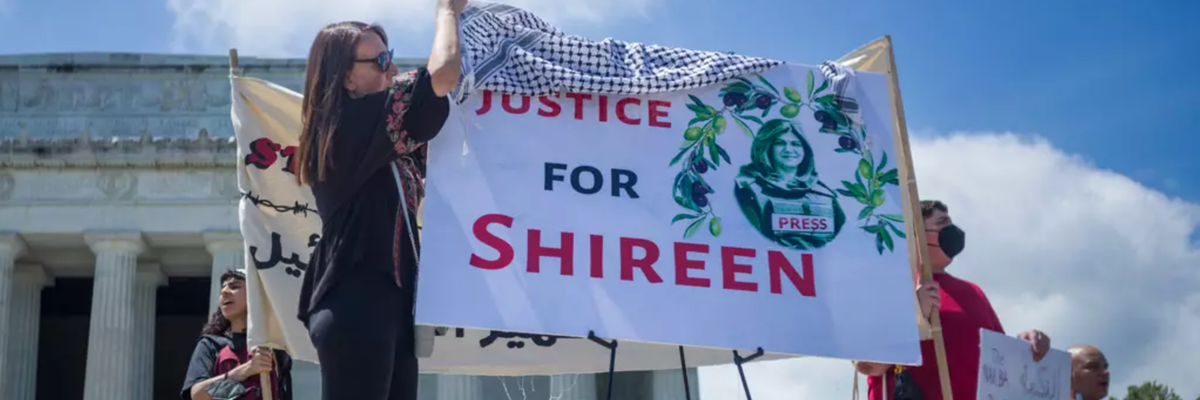
"The joy is missing, but hope in a better tomorrow will never die," tweeted Al Jazeera English producer Rania Zabaneh. "We'll never stop talking about you, demanding #JusticeForShireen, 227 days on and every day."
Abu Akleh—known throughout the Middle East as the "voice of Palestine"—and other journalists were covering a May 11 Israel Defense Forces (IDF) raid on Jenin in the illegally occupied West Bank when she was shot dead by a sniper. Al Jazeera producer Ali Samodi was shot in the back but survived.
After initially trying to deny that its forces killed Abu Akleh, Israel admitted that there was a "high possibility" that the journalist was "accidentally hit" by army fire. Israeli officials declined to launch a criminal investigation of the killing.
An independent probe by London-based Forensic Architecture and the Palestinian human rights group Al-Haq in September revealed evidence that an Israeli sniper repeatedly shot at Abu Akleh—who was wearing a helmet and flak vest clearly identifying her as a journalist—and for two minutes also fired at anyone who tried to come to her aid.
Investigations by international media outlets, rights groups, the United Nations Human Rights Office, and others concluded that Abu Akleh was killed by Israeli fire. In the United States, the Biden administration said in July that Abu Akleh was "likely" but unintentionally shot by an Israeli soldier, a move critics condemned as a "whitewash."
Last month, the FBI launched its own probe into Abu Akleh's killing.
Abu Akleh's relatives and Al Jazeera are seeking justice at the International Criminal Court, where the Qatar-based news network earlier this month filed a lawsuit against the Israeli military over the killing.
Lina Abu Akleh told Al Jazeera that knowing Shireen would be fighting for justice if she were still alive is what keeps her going.
"She was optimistic, always, that justice will prevail," she said.
Dear Common Dreams reader, It’s been nearly 30 years since I co-founded Common Dreams with my late wife, Lina Newhouser. We had the radical notion that journalism should serve the public good, not corporate profits. It was clear to us from the outset what it would take to build such a project. No paid advertisements. No corporate sponsors. No millionaire publisher telling us what to think or do. Many people said we wouldn't last a year, but we proved those doubters wrong. Together with a tremendous team of journalists and dedicated staff, we built an independent media outlet free from the constraints of profits and corporate control. Our mission has always been simple: To inform. To inspire. To ignite change for the common good. Building Common Dreams was not easy. Our survival was never guaranteed. When you take on the most powerful forces—Wall Street greed, fossil fuel industry destruction, Big Tech lobbyists, and uber-rich oligarchs who have spent billions upon billions rigging the economy and democracy in their favor—the only bulwark you have is supporters who believe in your work. But here’s the urgent message from me today. It's never been this bad out there. And it's never been this hard to keep us going. At the very moment Common Dreams is most needed, the threats we face are intensifying. We need your support now more than ever. We don't accept corporate advertising and never will. We don't have a paywall because we don't think people should be blocked from critical news based on their ability to pay. Everything we do is funded by the donations of readers like you. When everyone does the little they can afford, we are strong. But if that support retreats or dries up, so do we. Will you donate now to make sure Common Dreams not only survives but thrives? —Craig Brown, Co-founder |
Relatives of Shireen Abu Akleh, the Palestinian-American Al Jazeera reporter shot dead by Israeli occupation forces in May, marked their first Christmas without their beloved family member Sunday by vowing to "make sure her legacy continues to be remembered."
Lina Abu Akleh, Shireen's sister, told Al Jazeera that December was always a "happy month," a time when the busy journalist usually took a break from work to spend time with family.
"I still feel like I'm in this nightmare. And it's just not ending."
"Not having her around, especially during Christmas, will be very difficult… There will be an empty seat around the table," Shireen's 27-year-old sibling said.
"I still feel like I'm in this nightmare. And it's just not ending," she added. "She was so present in our lives that for us to lose her in this sudden and heinous way makes it so difficult to comprehend."
Abu Akleh's colleagues also lamented their first Christmas without her.
"The joy is missing, but hope in a better tomorrow will never die," tweeted Al Jazeera English producer Rania Zabaneh. "We'll never stop talking about you, demanding #JusticeForShireen, 227 days on and every day."
Abu Akleh—known throughout the Middle East as the "voice of Palestine"—and other journalists were covering a May 11 Israel Defense Forces (IDF) raid on Jenin in the illegally occupied West Bank when she was shot dead by a sniper. Al Jazeera producer Ali Samodi was shot in the back but survived.
After initially trying to deny that its forces killed Abu Akleh, Israel admitted that there was a "high possibility" that the journalist was "accidentally hit" by army fire. Israeli officials declined to launch a criminal investigation of the killing.
An independent probe by London-based Forensic Architecture and the Palestinian human rights group Al-Haq in September revealed evidence that an Israeli sniper repeatedly shot at Abu Akleh—who was wearing a helmet and flak vest clearly identifying her as a journalist—and for two minutes also fired at anyone who tried to come to her aid.
Investigations by international media outlets, rights groups, the United Nations Human Rights Office, and others concluded that Abu Akleh was killed by Israeli fire. In the United States, the Biden administration said in July that Abu Akleh was "likely" but unintentionally shot by an Israeli soldier, a move critics condemned as a "whitewash."
Last month, the FBI launched its own probe into Abu Akleh's killing.
Abu Akleh's relatives and Al Jazeera are seeking justice at the International Criminal Court, where the Qatar-based news network earlier this month filed a lawsuit against the Israeli military over the killing.
Lina Abu Akleh told Al Jazeera that knowing Shireen would be fighting for justice if she were still alive is what keeps her going.
"She was optimistic, always, that justice will prevail," she said.
Relatives of Shireen Abu Akleh, the Palestinian-American Al Jazeera reporter shot dead by Israeli occupation forces in May, marked their first Christmas without their beloved family member Sunday by vowing to "make sure her legacy continues to be remembered."
Lina Abu Akleh, Shireen's sister, told Al Jazeera that December was always a "happy month," a time when the busy journalist usually took a break from work to spend time with family.
"I still feel like I'm in this nightmare. And it's just not ending."
"Not having her around, especially during Christmas, will be very difficult… There will be an empty seat around the table," Shireen's 27-year-old sibling said.
"I still feel like I'm in this nightmare. And it's just not ending," she added. "She was so present in our lives that for us to lose her in this sudden and heinous way makes it so difficult to comprehend."
Abu Akleh's colleagues also lamented their first Christmas without her.
"The joy is missing, but hope in a better tomorrow will never die," tweeted Al Jazeera English producer Rania Zabaneh. "We'll never stop talking about you, demanding #JusticeForShireen, 227 days on and every day."
Abu Akleh—known throughout the Middle East as the "voice of Palestine"—and other journalists were covering a May 11 Israel Defense Forces (IDF) raid on Jenin in the illegally occupied West Bank when she was shot dead by a sniper. Al Jazeera producer Ali Samodi was shot in the back but survived.
After initially trying to deny that its forces killed Abu Akleh, Israel admitted that there was a "high possibility" that the journalist was "accidentally hit" by army fire. Israeli officials declined to launch a criminal investigation of the killing.
An independent probe by London-based Forensic Architecture and the Palestinian human rights group Al-Haq in September revealed evidence that an Israeli sniper repeatedly shot at Abu Akleh—who was wearing a helmet and flak vest clearly identifying her as a journalist—and for two minutes also fired at anyone who tried to come to her aid.
Investigations by international media outlets, rights groups, the United Nations Human Rights Office, and others concluded that Abu Akleh was killed by Israeli fire. In the United States, the Biden administration said in July that Abu Akleh was "likely" but unintentionally shot by an Israeli soldier, a move critics condemned as a "whitewash."
Last month, the FBI launched its own probe into Abu Akleh's killing.
Abu Akleh's relatives and Al Jazeera are seeking justice at the International Criminal Court, where the Qatar-based news network earlier this month filed a lawsuit against the Israeli military over the killing.
Lina Abu Akleh told Al Jazeera that knowing Shireen would be fighting for justice if she were still alive is what keeps her going.
"She was optimistic, always, that justice will prevail," she said.

