SUBSCRIBE TO OUR FREE NEWSLETTER
Daily news & progressive opinion—funded by the people, not the corporations—delivered straight to your inbox.
5
#000000
#FFFFFF
To donate by check, phone, or other method, see our More Ways to Give page.
Daily news & progressive opinion—funded by the people, not the corporations—delivered straight to your inbox.
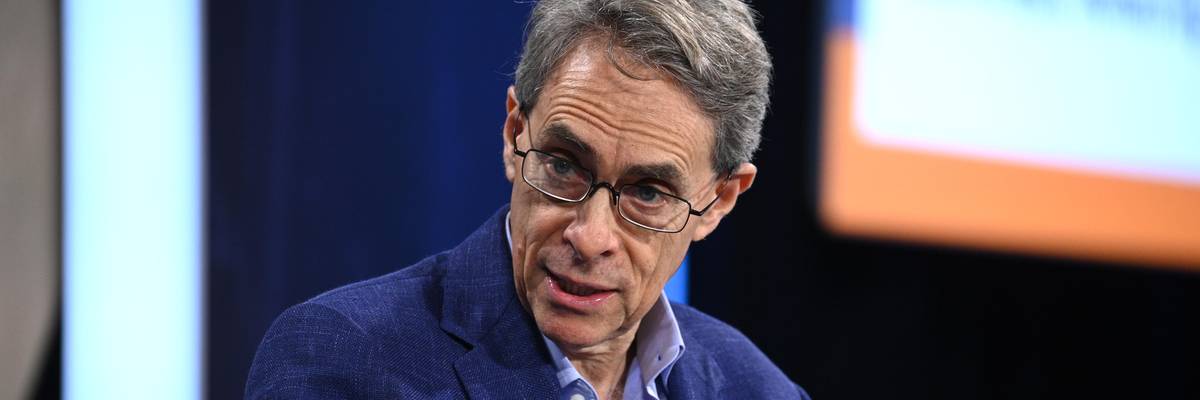
Kenneth Roth, former executive director of Human Rights Watch, speaks on stage during the 2022 Concordia Annual Summit on September 20, 2022 in New York City.
"How is the Kennedy School," asked Roth, "going to ensure that this episode conveys a renewed commitment to academic freedom rather than just exceptional treatment for one well-known individual?"
Human rights and free expression advocates on Thursday said the Harvard Kennedy School finally made "the right decision" after the prestigious public policy school's dean announced he was reversing his opposition to a fellowship for longtime human rights campaigner Kenneth Roth.
Dean Douglas Elmendorf's earlier refusal to support the one-year fellowship—first reported by The Nation earlier this month—was met with condemnation from Roth, free speech advocacy groups, and more than 1,000 students, faculty, and alumni of the school who accused the dean of retaliating against Roth for his criticism of Israel's violent anti-Palestinian policies.
Elemendorf reportedly told colleagues that he was concerned about analyses by Human Rights Watch (HRW), the international group led by Roth for three decades until his retirement last year, which concluded—as have other groups including the Israel-based B'Tselem and the United Nations—that Israel has imposed apartheid on Palestinians for decades.
"The problem of people penalized for criticizing Israel is not limited to me, and most scholars and students have no comparable capacity to mobilize public attention."
On Thursday, the dean sent a letter to the school community saying it had been "an error... not to appoint him as a fellow" at the Harvard Kennedy School's Carr Center for Human Rights Policy.
Sunjeev Bery, executive director of global human rights group Freedom Forward, applauded the move as a "victory for human rights and academic freedom."
Roth released a statement saying he was "thrilled" that Elmendorf "rescinded his decision to block the fellowship" and expressed gratitude to students and faculty members who had shared their "overwhelming disapproval of Dean Elmendorf's original decision."
He called on Elmendorf to provide more transparency about his decision-making process. Roth earlier this month said he believed the decision to veto the fellowship offer stemmed from pressure from anti-Palestinian rights sentiments among Harvard donors.
Elmendorf "still has not said anything about the 'people who matter to him' whom he said were behind his original veto decision," Roth said Thursday.
Roth also said he still has concerns about the larger issue of academic freedom at Harvard, particularly for students and teachers who lack his international platform.
"Given my three decades leading Human Rights Watch, I was able to shine an intense spotlight on Dean Elmendorf's decision, but what about others?" he said. "The problem of people penalized for criticizing Israel is not limited to me, and most scholars and students have no comparable capacity to mobilize public attention."
"How is the Kennedy School, and Harvard," he asked, "going to ensure that this episode conveys a renewed commitment to academic freedom rather than just exceptional treatment for one well-known individual?"
Dear Common Dreams reader, It’s been nearly 30 years since I co-founded Common Dreams with my late wife, Lina Newhouser. We had the radical notion that journalism should serve the public good, not corporate profits. It was clear to us from the outset what it would take to build such a project. No paid advertisements. No corporate sponsors. No millionaire publisher telling us what to think or do. Many people said we wouldn't last a year, but we proved those doubters wrong. Together with a tremendous team of journalists and dedicated staff, we built an independent media outlet free from the constraints of profits and corporate control. Our mission has always been simple: To inform. To inspire. To ignite change for the common good. Building Common Dreams was not easy. Our survival was never guaranteed. When you take on the most powerful forces—Wall Street greed, fossil fuel industry destruction, Big Tech lobbyists, and uber-rich oligarchs who have spent billions upon billions rigging the economy and democracy in their favor—the only bulwark you have is supporters who believe in your work. But here’s the urgent message from me today. It's never been this bad out there. And it's never been this hard to keep us going. At the very moment Common Dreams is most needed, the threats we face are intensifying. We need your support now more than ever. We don't accept corporate advertising and never will. We don't have a paywall because we don't think people should be blocked from critical news based on their ability to pay. Everything we do is funded by the donations of readers like you. When everyone does the little they can afford, we are strong. But if that support retreats or dries up, so do we. Will you donate now to make sure Common Dreams not only survives but thrives? —Craig Brown, Co-founder |
Human rights and free expression advocates on Thursday said the Harvard Kennedy School finally made "the right decision" after the prestigious public policy school's dean announced he was reversing his opposition to a fellowship for longtime human rights campaigner Kenneth Roth.
Dean Douglas Elmendorf's earlier refusal to support the one-year fellowship—first reported by The Nation earlier this month—was met with condemnation from Roth, free speech advocacy groups, and more than 1,000 students, faculty, and alumni of the school who accused the dean of retaliating against Roth for his criticism of Israel's violent anti-Palestinian policies.
Elemendorf reportedly told colleagues that he was concerned about analyses by Human Rights Watch (HRW), the international group led by Roth for three decades until his retirement last year, which concluded—as have other groups including the Israel-based B'Tselem and the United Nations—that Israel has imposed apartheid on Palestinians for decades.
"The problem of people penalized for criticizing Israel is not limited to me, and most scholars and students have no comparable capacity to mobilize public attention."
On Thursday, the dean sent a letter to the school community saying it had been "an error... not to appoint him as a fellow" at the Harvard Kennedy School's Carr Center for Human Rights Policy.
Sunjeev Bery, executive director of global human rights group Freedom Forward, applauded the move as a "victory for human rights and academic freedom."
Roth released a statement saying he was "thrilled" that Elmendorf "rescinded his decision to block the fellowship" and expressed gratitude to students and faculty members who had shared their "overwhelming disapproval of Dean Elmendorf's original decision."
He called on Elmendorf to provide more transparency about his decision-making process. Roth earlier this month said he believed the decision to veto the fellowship offer stemmed from pressure from anti-Palestinian rights sentiments among Harvard donors.
Elmendorf "still has not said anything about the 'people who matter to him' whom he said were behind his original veto decision," Roth said Thursday.
Roth also said he still has concerns about the larger issue of academic freedom at Harvard, particularly for students and teachers who lack his international platform.
"Given my three decades leading Human Rights Watch, I was able to shine an intense spotlight on Dean Elmendorf's decision, but what about others?" he said. "The problem of people penalized for criticizing Israel is not limited to me, and most scholars and students have no comparable capacity to mobilize public attention."
"How is the Kennedy School, and Harvard," he asked, "going to ensure that this episode conveys a renewed commitment to academic freedom rather than just exceptional treatment for one well-known individual?"
Human rights and free expression advocates on Thursday said the Harvard Kennedy School finally made "the right decision" after the prestigious public policy school's dean announced he was reversing his opposition to a fellowship for longtime human rights campaigner Kenneth Roth.
Dean Douglas Elmendorf's earlier refusal to support the one-year fellowship—first reported by The Nation earlier this month—was met with condemnation from Roth, free speech advocacy groups, and more than 1,000 students, faculty, and alumni of the school who accused the dean of retaliating against Roth for his criticism of Israel's violent anti-Palestinian policies.
Elemendorf reportedly told colleagues that he was concerned about analyses by Human Rights Watch (HRW), the international group led by Roth for three decades until his retirement last year, which concluded—as have other groups including the Israel-based B'Tselem and the United Nations—that Israel has imposed apartheid on Palestinians for decades.
"The problem of people penalized for criticizing Israel is not limited to me, and most scholars and students have no comparable capacity to mobilize public attention."
On Thursday, the dean sent a letter to the school community saying it had been "an error... not to appoint him as a fellow" at the Harvard Kennedy School's Carr Center for Human Rights Policy.
Sunjeev Bery, executive director of global human rights group Freedom Forward, applauded the move as a "victory for human rights and academic freedom."
Roth released a statement saying he was "thrilled" that Elmendorf "rescinded his decision to block the fellowship" and expressed gratitude to students and faculty members who had shared their "overwhelming disapproval of Dean Elmendorf's original decision."
He called on Elmendorf to provide more transparency about his decision-making process. Roth earlier this month said he believed the decision to veto the fellowship offer stemmed from pressure from anti-Palestinian rights sentiments among Harvard donors.
Elmendorf "still has not said anything about the 'people who matter to him' whom he said were behind his original veto decision," Roth said Thursday.
Roth also said he still has concerns about the larger issue of academic freedom at Harvard, particularly for students and teachers who lack his international platform.
"Given my three decades leading Human Rights Watch, I was able to shine an intense spotlight on Dean Elmendorf's decision, but what about others?" he said. "The problem of people penalized for criticizing Israel is not limited to me, and most scholars and students have no comparable capacity to mobilize public attention."
"How is the Kennedy School, and Harvard," he asked, "going to ensure that this episode conveys a renewed commitment to academic freedom rather than just exceptional treatment for one well-known individual?"